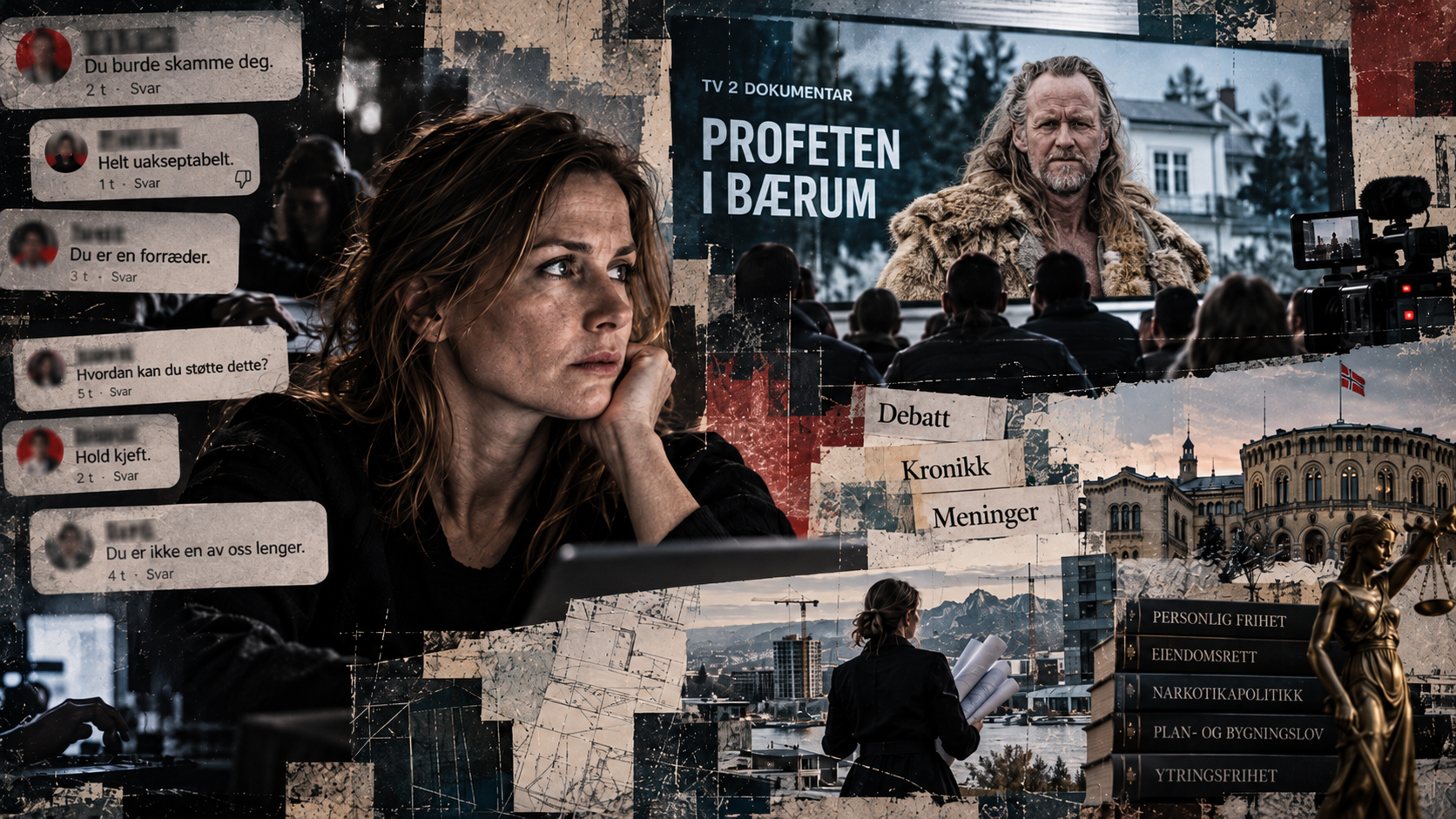
It is hardly possible to follow Norwegian media without running into the debate following TV 2’s documentary series “The Prophet in Bærum”. The case has generated headlines, op-eds, opinion pieces and extensive discussion on social media.
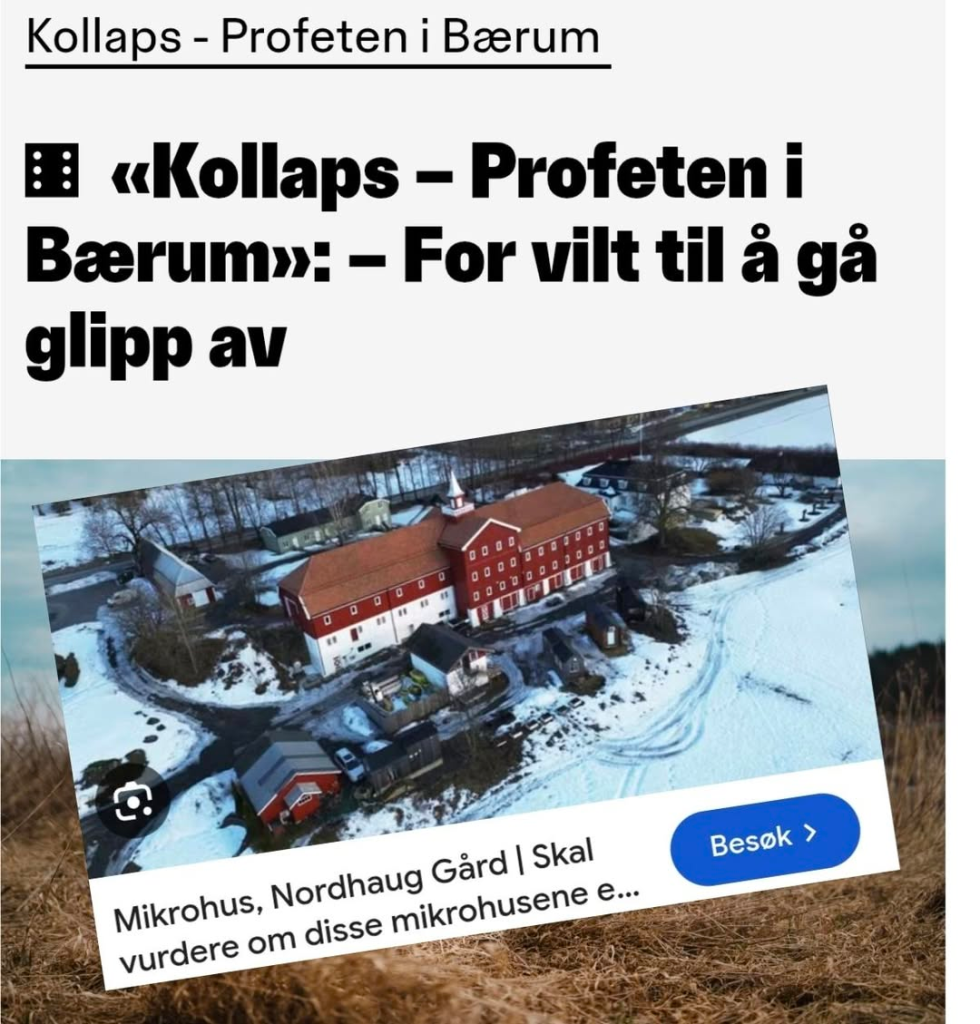
Photo: Unknown. Source: Screenshot of an aerial photo of Nordhaug farm.
Many have strong opinions about the community portrayed in the documentary. Not all contributions are equally well considered, and at times the debate has taken on a highly personal character.
One of those who has engaged is architect Dorota Dawidowicz. On her social media she has commented on the case, but has tried to keep the focus on concrete issues rather than personal attacks.
Dawidowicz distances herself from parts of the community described in the documentary. At the same time, she believes that several of the fundamental values she herself stands for can also be shared by people she otherwise disagrees with.
As an active member of the Liberalistene party, she cares about personal freedom, property rights and more liberal legislation, including on drugs. She believes it must be possible to defend liberal principles without having to support every action or community associated with them.
“It is strange and sad”
What has made the strongest impression on Dawidowicz, she says, are the reactions she has received from people she regards as like-minded.
“I have received an incredible number of hate messages recently, including from people who share many of the same views on life as I do. I find that both strange and sad,” she says.
She believes that a discussion about freedom, property rights and state regulation should be possible without disagreement turning into harassment and personal attacks.
For Dawidowicz, this is also a question of principle: where is the line between defending people’s freedom and accepting actions one personally considers problematic?
She stresses that supporting personal freedom does not mean one must automatically defend every choice other people make. In the same way, she believes that criticism of specific actions does not necessarily imply a desire for more state control.
Wants more liberal legislation
Dawidowicz has worked as an architect for many years and has been engaged in issues relating to planning and building legislation. She is critical of what she sees as unnecessarily extensive public regulation, and wants greater room for individual freedom and responsibility.
Through her political involvement in Liberalistene, she hopes to push Norwegian legislation in a more liberal direction.
That is why she finds it especially frustrating when the opposition comes from people she thought she shared important principles with.
“We don’t have to agree on everything. But if we believe personal freedom is important, we must also be able to tolerate others having independent opinions and asking critical questions,” she says.
For Dawidowicz, it is possible to be critical of a particular community while defending the principles of freedom of expression, property rights and limited state interference.
A debate that should be able to handle disagreement
The debate following “The Prophet in Bærum” is about more than the documentary and the people who appear in it. It has also raised questions about how the public sphere handles criticism, disagreement and controversial opinions.
Dawidowicz does not want to make her own experience the main issue in a debate that is about far more. She nonetheless believes the reactions she has received illustrate a problem that deserves attention.
When people are met with harassment for asking questions or expressing disagreement, public discourse risks becoming less open.
For someone who wants a more liberal model of society, this is a paradox: freedom and tolerance can hardly be defended only when others agree with us.
Disagreement is not the same as hostility. And defending the freedom of others does not mean one must agree with everything they do.