
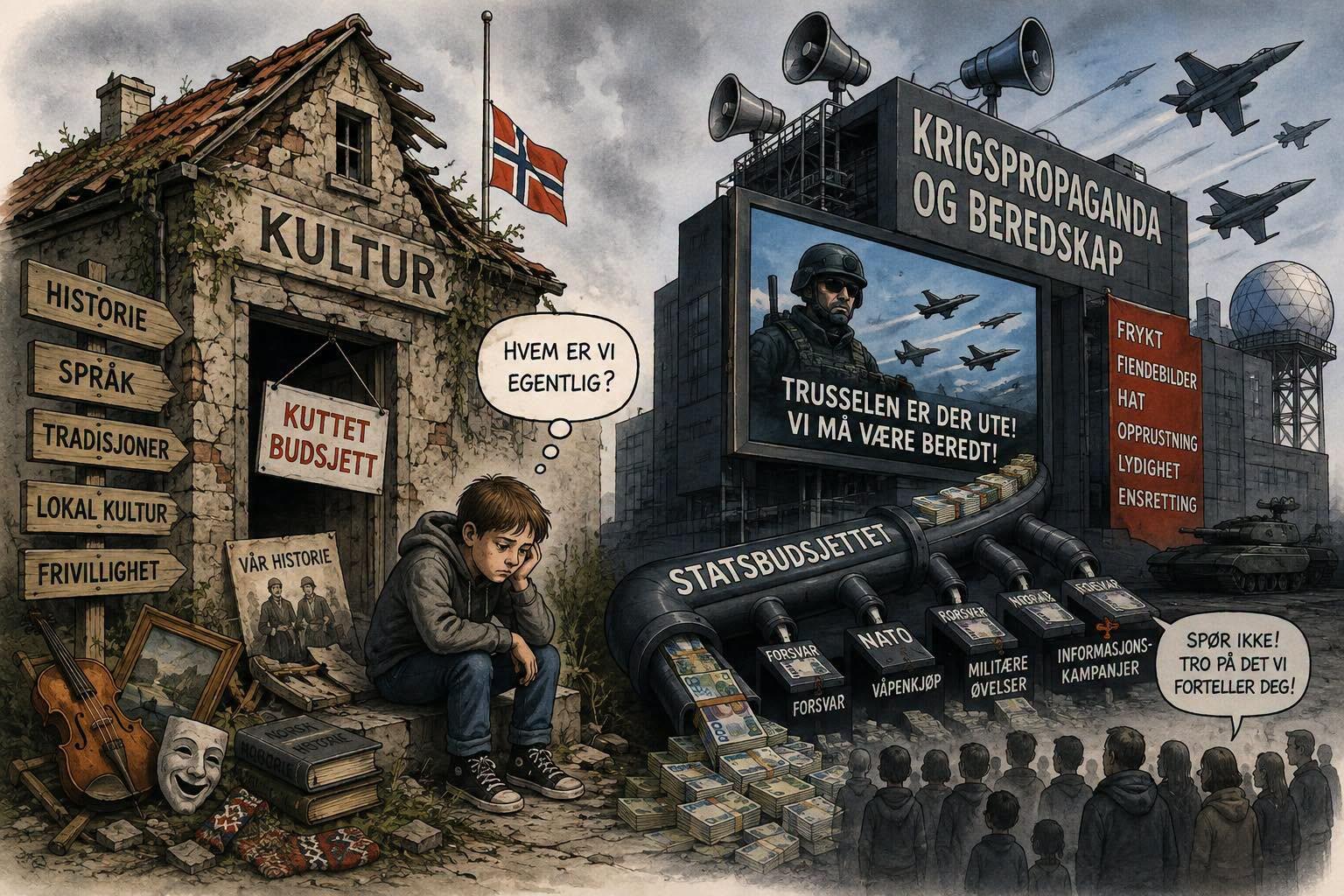
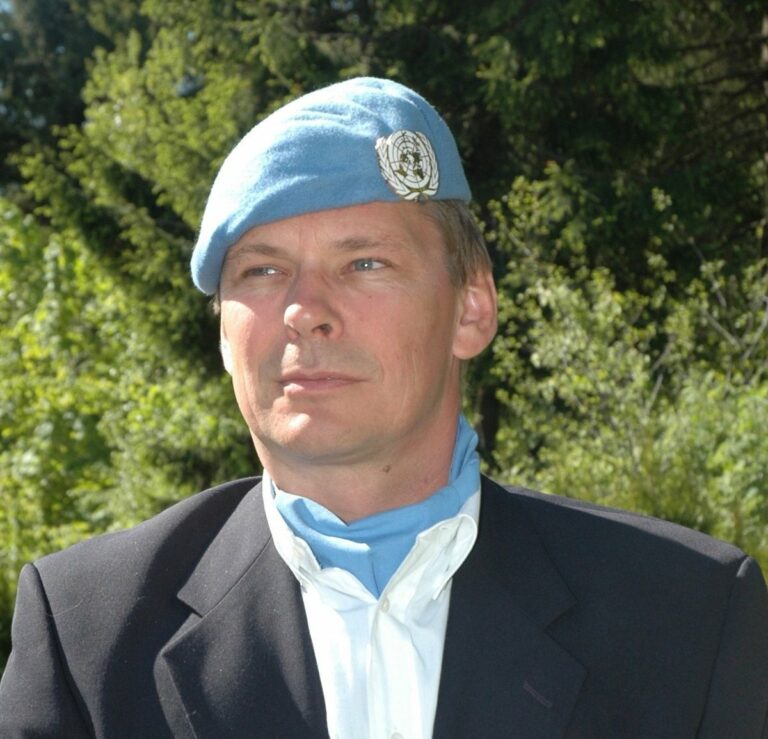
It is food for thought. We spend enormous sums preparing for war, while the Norway we claim to be defending is gradually emptied of content. Culture is not decoration that can be cut when the spreadsheet gets tight. Culture is history, language, identity and belonging. It is the glue that holds a society together. Yet it seems to have become easier to find money for new weapons systems, military exercises and preparedness campaigns than for local culture houses, historical societies, marching bands, museums and voluntary organisations.
Between information and propaganda
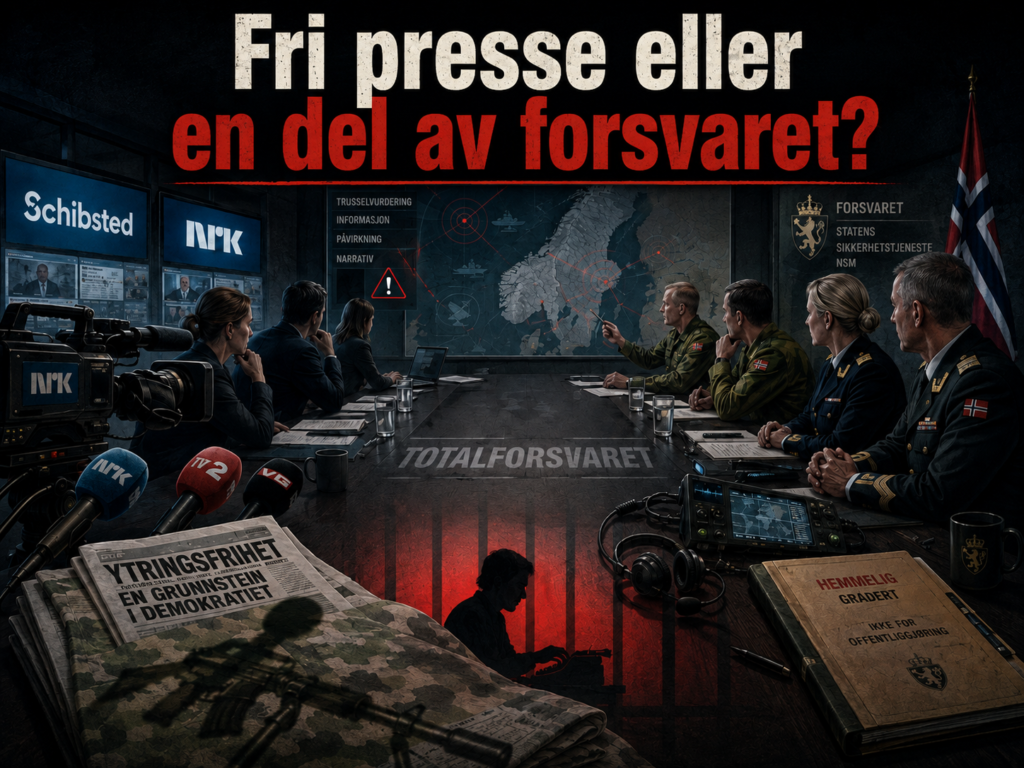
At the same time, the population is bombarded with messages about threats, enemy images and the need for more rearmament. It is called information and preparedness. But when the same message is repeated day after day, we should also dare to ask when information becomes war propaganda. If the state spends ever more effort telling the population whom to fear, while paying less attention to teaching us who we ourselves are, we have a serious problem.
For what is Norway really today? Have we become so afraid of highlighting our own history that we would rather pretend Norwegian culture is just a random quantity? I believe we have gone too far. Norwegian children should of course learn about Norwegianisation, abuse and dark chapters. But they should also learn the story of the fisherman, the farmer, the sailor, the industrial worker, the wartime seaman and all those who built this country before the oil fund, the consulting industry and billion-kroner budgets. They should know how Norway went from poverty to welfare society, how voluntary work built local communities, and why 1814, 1905, the occupation and the reconstruction still matter.
A Norway being Americanised
At the same time, Norway is being Americanised at a pace almost no one discusses. Norwegian children live on American platforms, watch American series, follow American influencers and use ever more English words. Many know international brands better than their own local history. Companies give Norwegian jobs English titles, universities use English where Norwegian could have been used, and advertising is filled with a language that makes Norway ever less Norwegian. We do not need to travel to the US. The US is already in the pocket of almost every child.
Then comes the immigration debate. Here too it has become hard to say the obvious: integration requires that there is something to integrate into. A country that is itself unsure of its culture, language and history will also struggle to make demands of new citizens. Expecting people who settle in Norway to learn Norwegian, know the country’s history and respect basic social norms should not be controversial. It should be the very foundation of integration.
Yet the word nationalism is used almost as a warning sign as soon as someone speaks warmly about Norwegian identity. At the same time, the same people are expected to be willing to sacrifice ever more to defend the country. That does not add up. The will to defend does not come from fighter jets or the prime minister’s speeches. It comes from belonging. People defend a country because the country means something to them, because they know its history, because the language, the landscape, the culture and the community feel like theirs.
Strange priorities
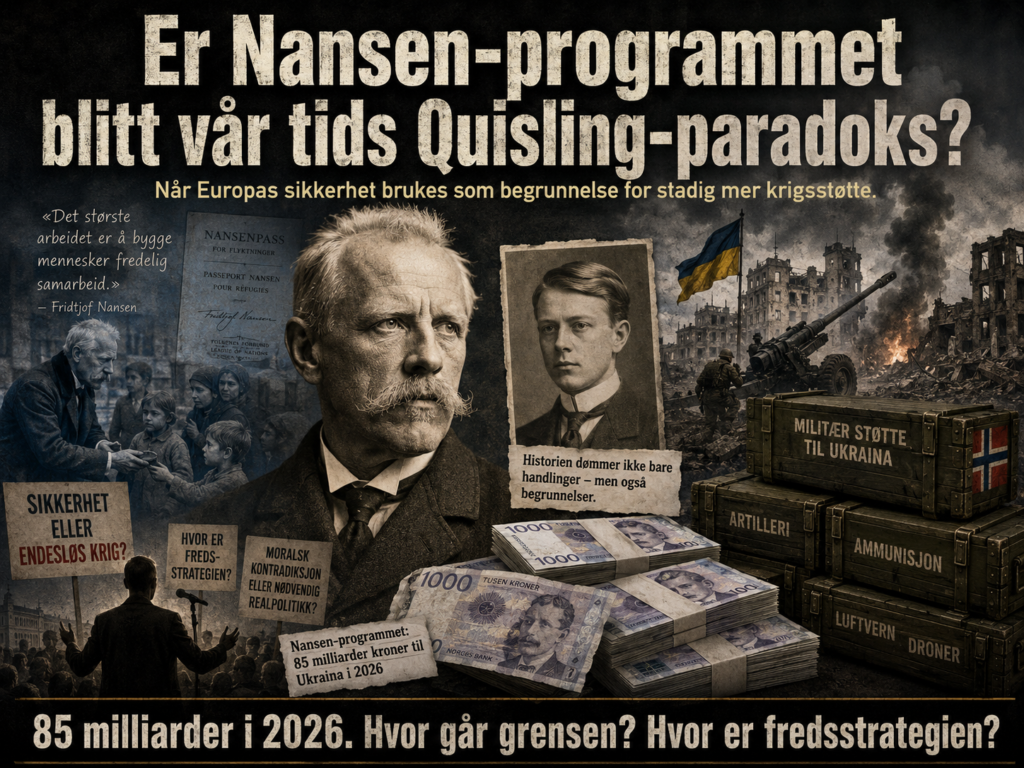
That is why today’s priorities are so strange. We can spend hundreds of billions on military defence, while culture must stand cap in hand. We can fund ever stronger messages of war and preparedness, but local cultural services must cut opening hours, events and activity. We can tell young people they may need to be prepared for war, but spend far less energy telling them what kind of Norway earlier generations actually built.
Perhaps Norway needs cultural preparedness as much as military preparedness. Teach the children history. Look after the dialects. Protect the Norwegian language. Strengthen voluntary work, museums, marching bands, historical societies and local meeting places. Stop treating culture as an expense item that can be shaved off every time the state finds a new military project to fund.
For a people that does not know its history loses its direction more easily. And a country that puts more effort into preparing its population for war than into preserving its own culture should perhaps ask itself the most uncomfortable question of all: what is actually left to defend the day we can afford all the weapons but have forgotten who we are?
Se og hør mer
Videoer, klipp og innslag knyttet til temaet.