
A resource – until he asks questions
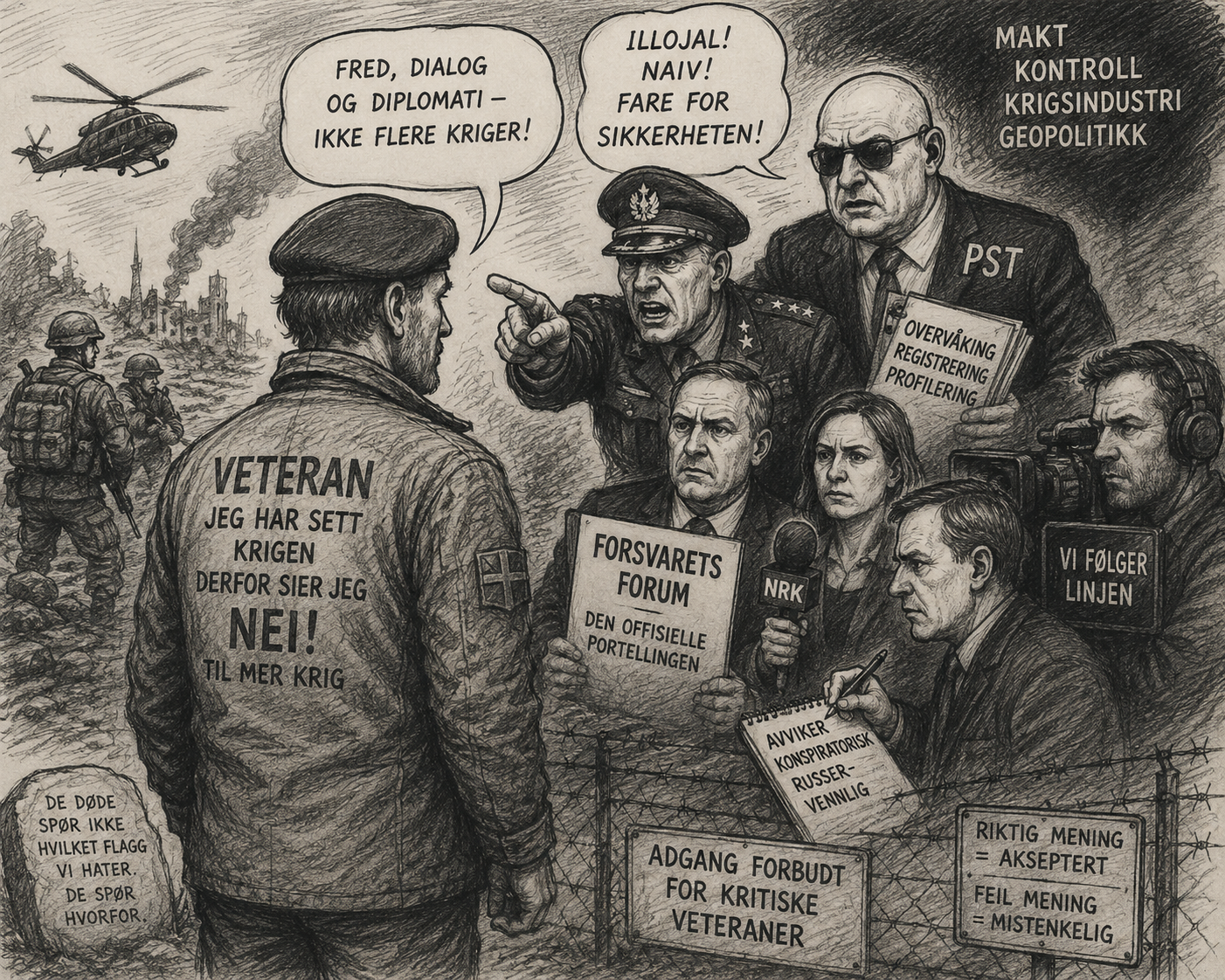
As long as the veteran turns up on commemoration days, wears his medals, praises the armed forces and stays within the politically accepted narrative, he is often described as a resource. But if the same veteran starts asking why we are rearming, why diplomacy is given low priority, why enemy images are cultivated, or why Norway is moving ever deeper into great-power politics, the tone can suddenly change.
Then the veteran is no longer just a veteran. Then he becomes “controversial”. His contacts become interesting. His travels become interesting. His opinions become interesting. Whom he meets, whom he talks to and what questions he asks can be interpreted in the most suspicious light. And if he refuses to repeat the right phrases about Russia, NATO, Ukraine or today’s security policy, he can quickly find his loyalty called into question.
This is what should worry us. When did it become disloyal to hate war? When did it become suspicious that a former soldier wants negotiations rather than more shells? When did peace work become something the security apparatus should view with scepticism?
A symbol, not a voice
Perhaps the most uncomfortable thing is that parts of the defence and security community seem to prefer the veteran as a symbol rather than the veteran as an independent voice. The veteran is to be used in speeches about the nation, the flag and the willingness to sacrifice, but preferably not to use his own experience to ask uncomfortable questions.
For a veteran who has seen war can be hard to handle politically. He knows that war is not a video game. He knows that “precision weapons” still kill people. He knows that civilians always pay. He knows that young soldiers are sent out on the basis of decisions taken far from the battlefield. And he knows that almost all wars eventually end around a table, after thousands or millions have paid the price for politicians not sitting down there earlier.
That is why the war-critical veteran can be far more uncomfortable than an academic, commentator or political activist. He cannot as easily be dismissed as someone who “doesn’t understand security policy”. He has stood in the middle of its consequences.
The role of the media
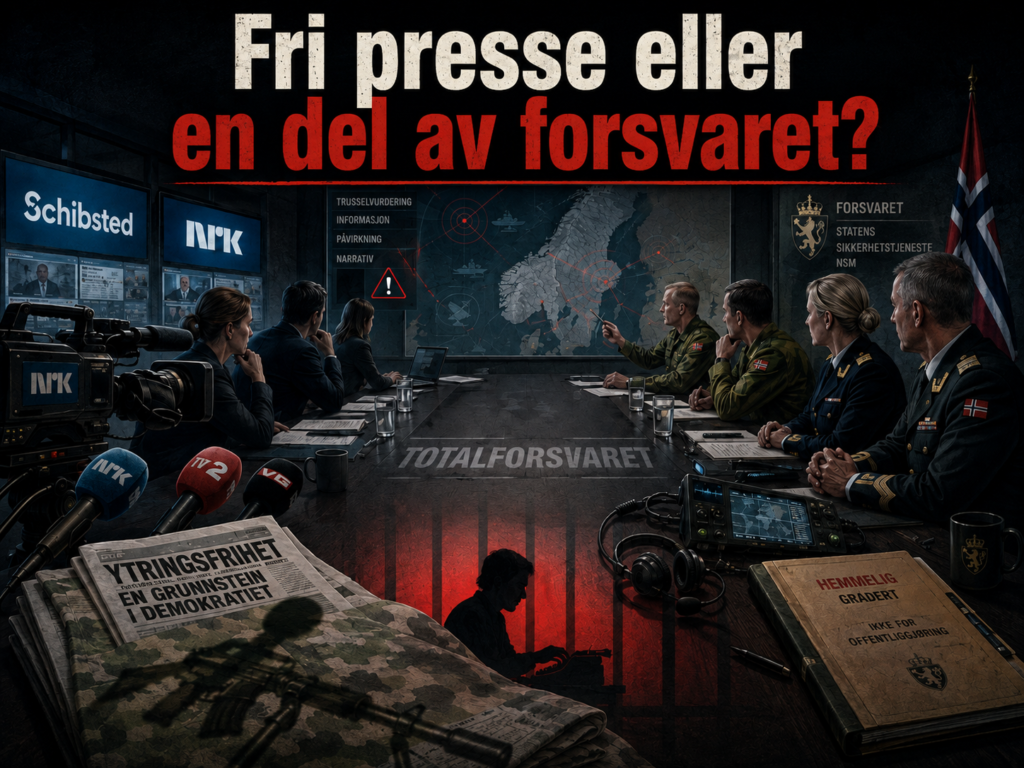
Then comes the next problem: the media. We now have a public climate in which parts of the media function almost as extended loudspeakers for security policy. Generals, intelligence officials, defence politicians and weapons experts get enormous space, while those who challenge the premises are often reduced to deviants.
The critical veteran can thus end up in a strange situation. First his uniform is used as proof of national pride. Then his opinions are used as grounds for suspicion when he no longer says what those in power want to hear.
It is a dangerous development. A democracy is not measured by how well it treats those who agree with power. It is measured by how it treats people who challenge it.
No claim to obedience
The armed forces must accept criticism. The intelligence services must accept criticism. NATO must accept criticism. The government must accept criticism. And the media must accept criticism. None of these institutions should be entitled to political obedience from people simply because they once wore a uniform.
On the contrary. The veteran perhaps has a special moral right to warn against war. He has seen the price. He has felt the fear. He has seen how quickly lofty political words disappear when the bombs fall.
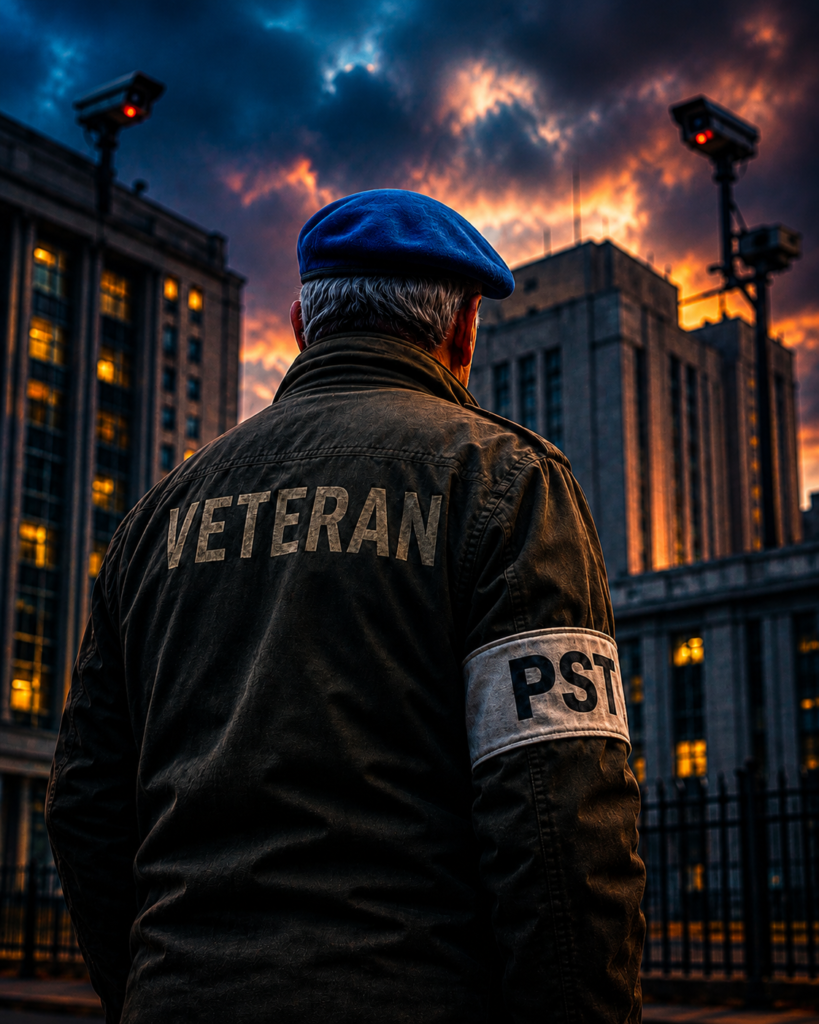
That is why warning lights should flash when veterans working for dialogue and peace experience suspicion, surveillance, exclusion or public branding.
This does not mean veterans are above criticism. Nor does it mean all their analyses are correct. But it does mean their voices should be met with arguments, not suspicion.
When the state begins to fear the veteran who says “enough war”, we should perhaps ask who has really lost their compass.
For the most dangerous veteran for a system that lives off enemy images is perhaps not the one carrying a weapon. It is the veteran who has laid down his weapon, looked back on what he experienced and said:
This must never become normal.
Se og hør mer
Videoer, klipp og innslag knyttet til temaet.