
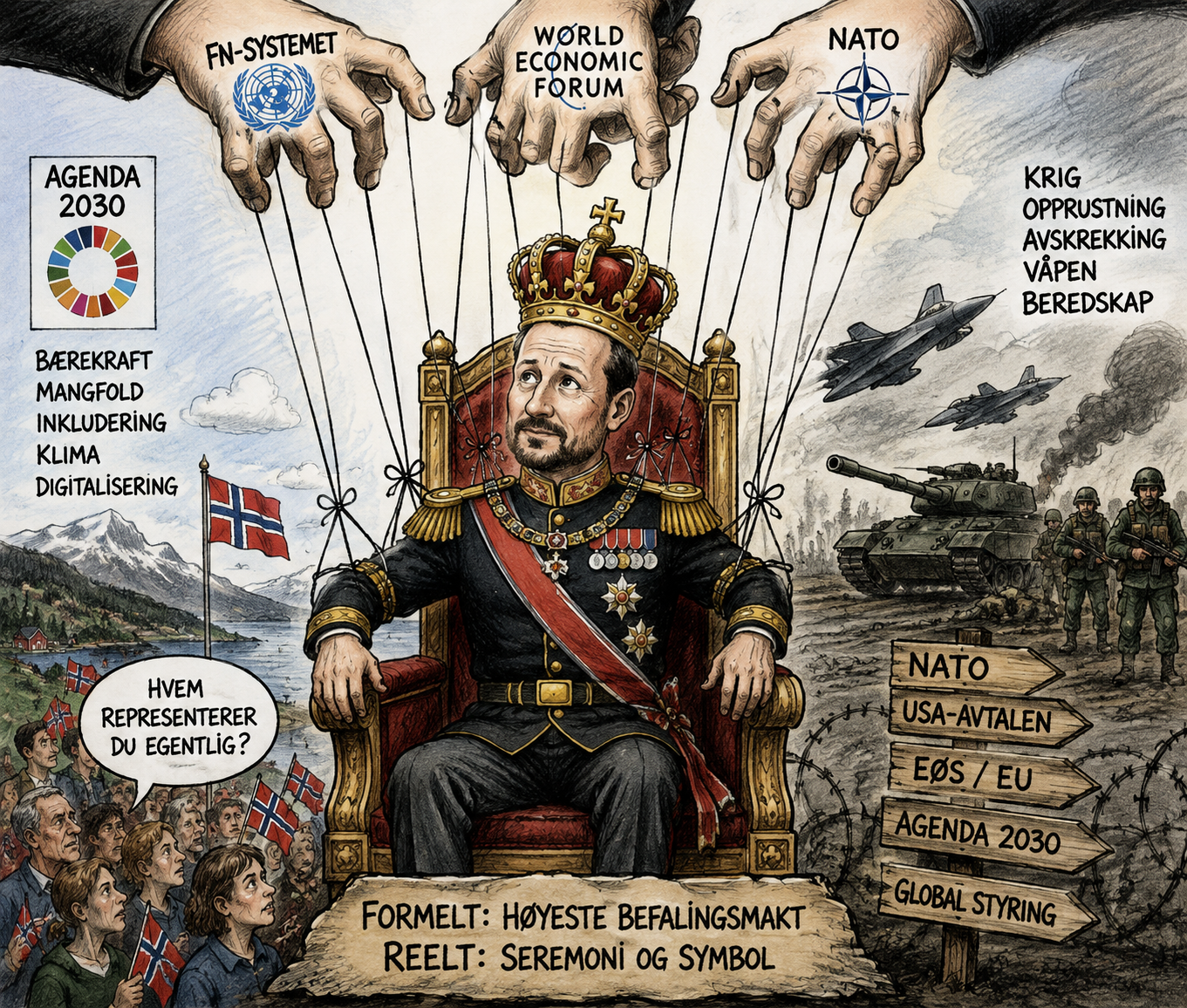
It is this paradox I believe we must start discussing openly. Not because Haakon VIII has necessarily done anything wrong, but because he takes the throne at a time when the very substance of Norwegian sovereignty is changing dramatically. As crown prince, Haakon was for many years involved in international circles and programmes. He was a goodwill ambassador for the UN Development Programme, worked actively on the UN Sustainable Development Goals and was linked to the World Economic Forum’s Young Global Leaders network. Such connections are not in themselves evidence of anything undemocratic. But they make it all the more important to ask how closely Norway’s future head of state should be tied to global networks that Norwegian voters can neither elect nor remove.
Power without democratic insight
For here lies a democratic problem that far too few want to discuss. A government can be voted out. A member of parliament can lose their mandate. A municipal leadership can be replaced. But international organisations, foundations, conference networks, expert forums and supranational structures often operate far from the ordinary voter’s control. They set the agenda, develop goals, recommendations and standards and influence policy across borders. Once such goals are built into national policy, it can seem as though the debate has already been settled.
This is what worries me most. Not conspiracies, but power without sufficient democratic insight.
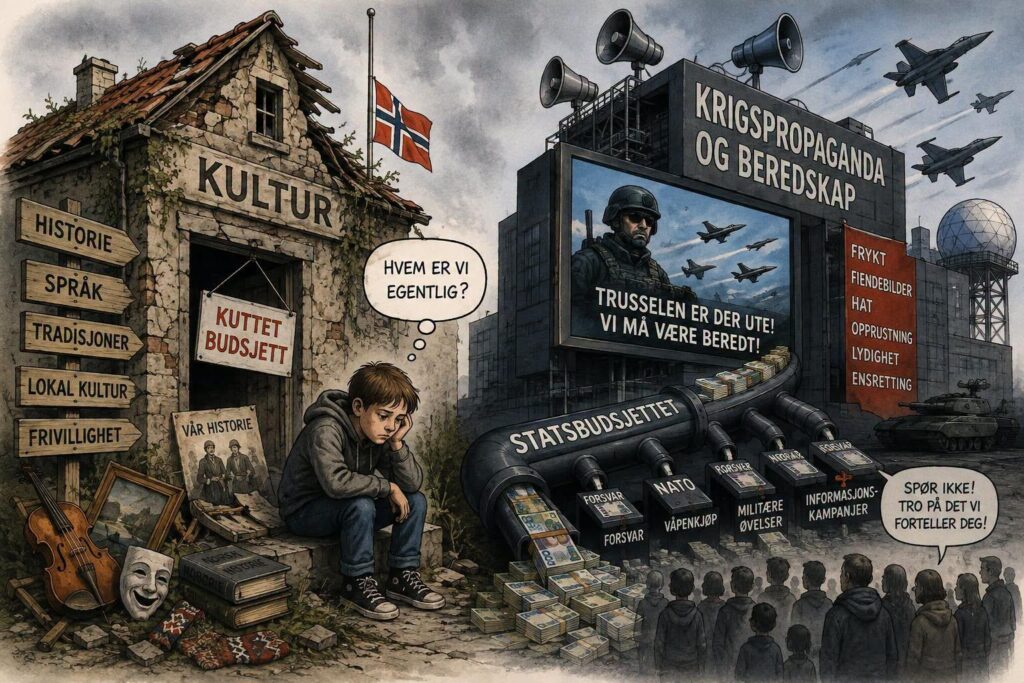
Agenda 2030 has become part of Norwegian public policy. The EEA means large amounts of regulation enter Norway through a system in which Norway does not have the same voting rights as EU member states. NATO has gained an ever stronger role in Norwegian defence and security policy. Through several agreements, Norway has opened up for closer military cooperation with the US and other allies. At the same time, enormous sums are spent on rearmament, weapons, preparedness and military capacity.
Each individual decision can be defended. But that does not mean the sum should not be questioned.
For how much power can be moved out of Norway before the words national independence become empty?
And what is the king to be when this happens?
At the top on paper, a spectator in practice
The Constitution makes the paradox almost grotesque. Article 25 still states that the King is Commander-in-Chief of the armed forces of the Realm. Article 26 states that the King has the right to call up troops, commence war in defence of the country, make peace and enter into and terminate alliances, while important treaties require the consent of the Storting. On paper these are strong formulations. In practice everyone knows that it is not the king personally who decides Norway’s war, defence or foreign policy.
So we are left with a king who is formally at the top, but in reality on the sidelines.
That should worry more people.
For if the king is not to have political power, he should at least use the moral authority the office still holds. Earlier kings represented something more than ceremony. Haakon VII became a symbol of resistance and Norwegian independence. Olav V became the people’s king. Harald V often spoke of community, respect and human dignity.
A king for peace
Today we perhaps need more than ever a king who dares to remind the country of peace.
For what happened to peace policy?
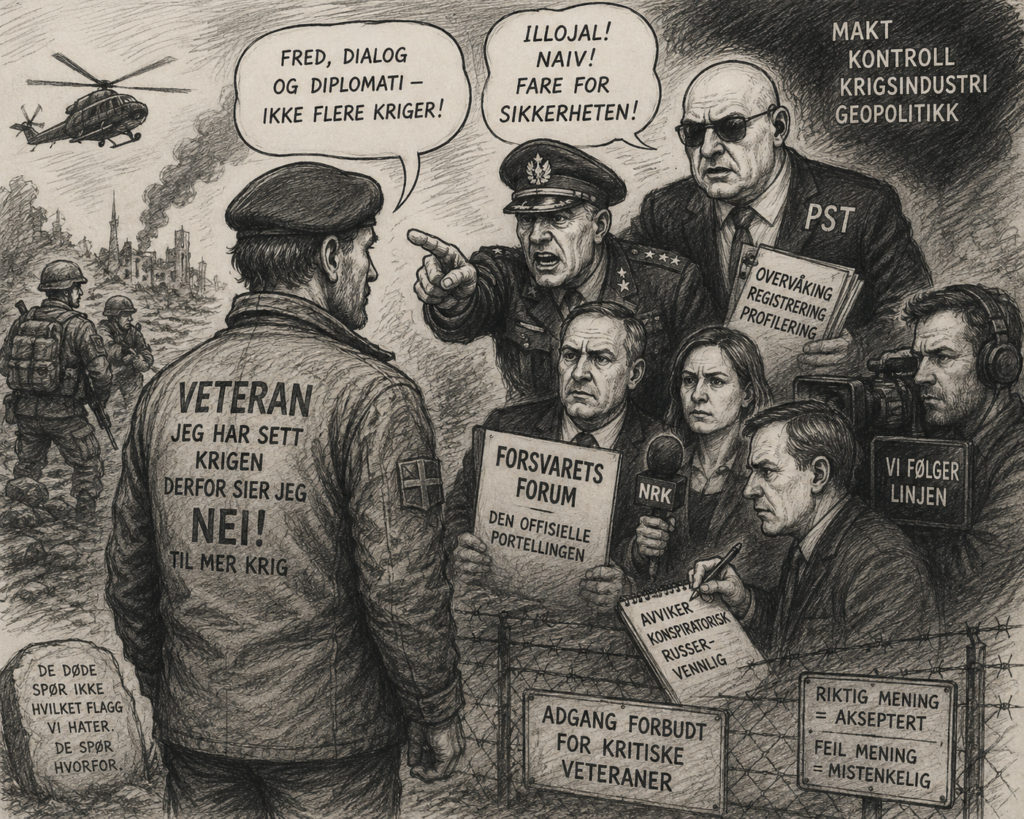
Almost everything now is about preparedness, weapons, deterrence, Russia, military capacity and how much more money should be spent on the armed forces. It is as if the word peace has become suspect. As if dialogue is weakness. As if every call for diplomacy must be defended.
This is a dangerous development.
A country that only prepares for war eventually risks also thinking as if war is inevitable.
This is precisely where the king should be able to play a role. Not as a politician, but as a corrective. He can ask questions party politicians no longer dare to ask. He can speak about the people who will bear the consequences of political decisions. The soldiers. The veterans. The families. The civilians. The young people growing up in a Europe where the rhetoric of war is once again being normalised.
The king’s independence
But then the king must also have clear independence.
He cannot appear as a poster figure for UN programmes one day and global business the next, while also being expected to be a completely neutral national symbol. This does not mean the UN or the World Economic Forum are necessarily working against Norway. It means the royal house should understand how important distance, openness and trust are.
A king does not need more international networks.
He needs the trust of his own people.
I therefore want full openness about the king’s international positions, former board seats, patronages, networks and commitments. Not because all of this is suspect, but because democracy never loses from more openness.
The opposite is far more dangerous. If Norwegian citizens begin to get the impression that the real political directions are decided in rooms they never get access to, by people they have never voted for, trust in democracy will gradually erode.
Then fine speeches about popular rule will be of little help.
More than a motto
I have lived under four kings. That is why I follow Haakon VIII with great interest. I hope he will not become the king who just stands and watches while Norwegian independence is gradually emptied of content and the rhetoric of war takes over from peace policy.
I hope he dares to become a clear voice for peace, human dignity, Norwegian independence and democratic control.
For “All for Norway” cannot just be a motto.
It must be a promise.
And if the king is truly to be the king of all Norway, his loyalty must be entirely unambiguous. Not to international networks, not to the political fashion in Brussels, Washington or Davos, but to the Norwegian people and Norwegian democracy.
Otherwise we must in the end ask the uncomfortable question: what do we actually need a king for who formally stands at the top, but who on the most important questions of war, peace and national independence is left standing as a spectator?
“All for Norway” must be more than a motto. It must be a promise to stand up for peace, popular rule and Norwegian interests.
Good luck, King Haakon VIII, with this important work. I support you.
Se og hør mer
Videoer, klipp og innslag knyttet til temaet.