
From safety net to adversary
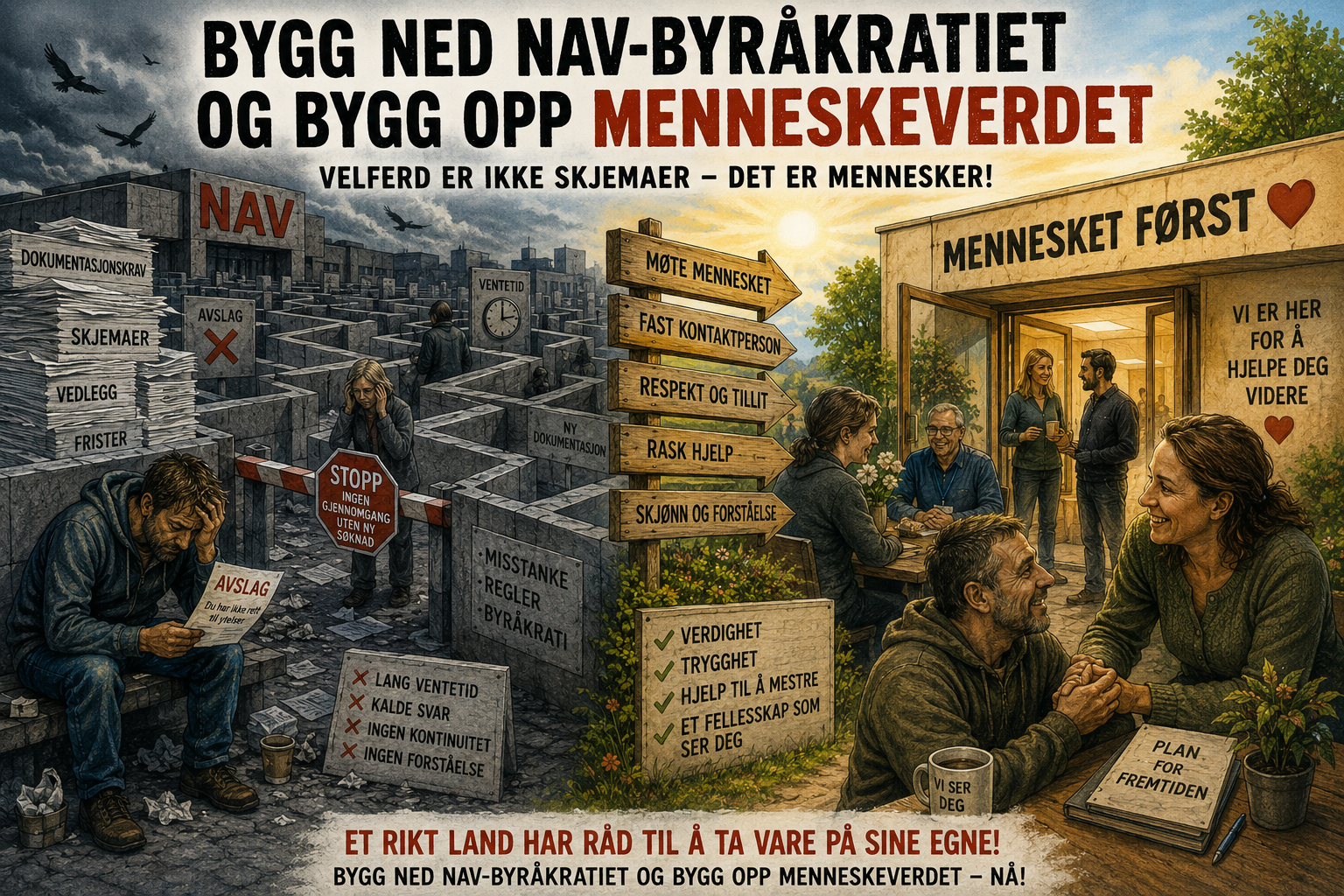
NAV has to far too great an extent developed from a safety net into an adversary. People who are already ill, exhausted or under financial pressure are sent into a system of forms, documentation requirements, deadlines, waiting and standardised answers. Instead of being met with the question of how the system can help, many feel they constantly have to prove that they actually need help.
When the human factor disappears, much of the point of the welfare state disappears too. A seriously ill person does not primarily need a portal, a code or a new digital inbox. They need a human being. A permanent contact person. Someone who knows the case, the history and the burden. Not yet another unknown case officer asking for the same documentation all over again.
Empty bottles rather than NAV
I have spoken to people who say they have given up on NAV. They cannot face more applications, more appeals or more rejections. Some say they would rather go out collecting bottles for the deposit or begging to get money for food than go another round with the system. That should make every politician ashamed.
For what is actually left of the Norwegian welfare state if people in one of the world’s richest countries find it easier to look for empty bottles or beg than to get help from the state they have paid taxes to all their lives?
Veterans at war with the bureaucracy
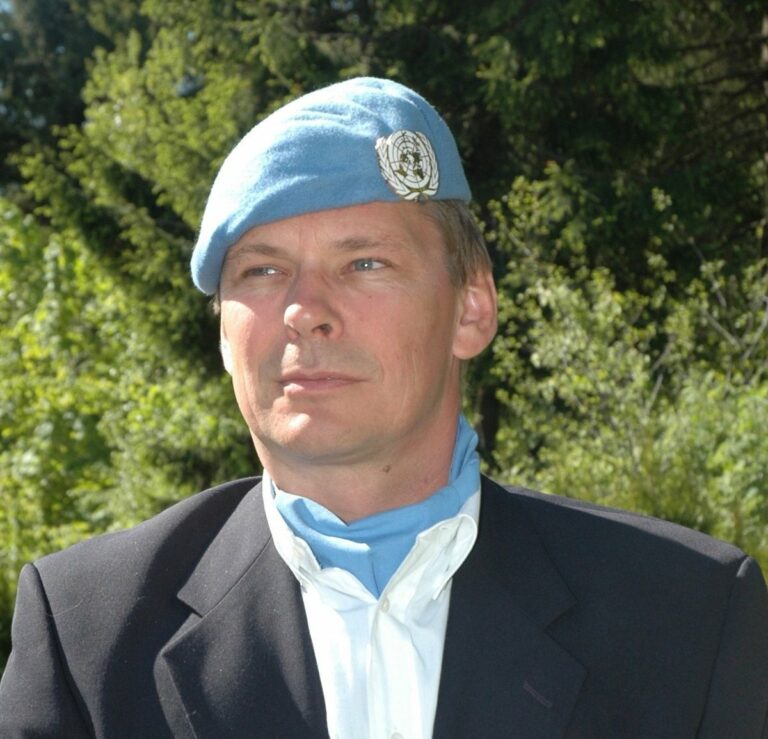
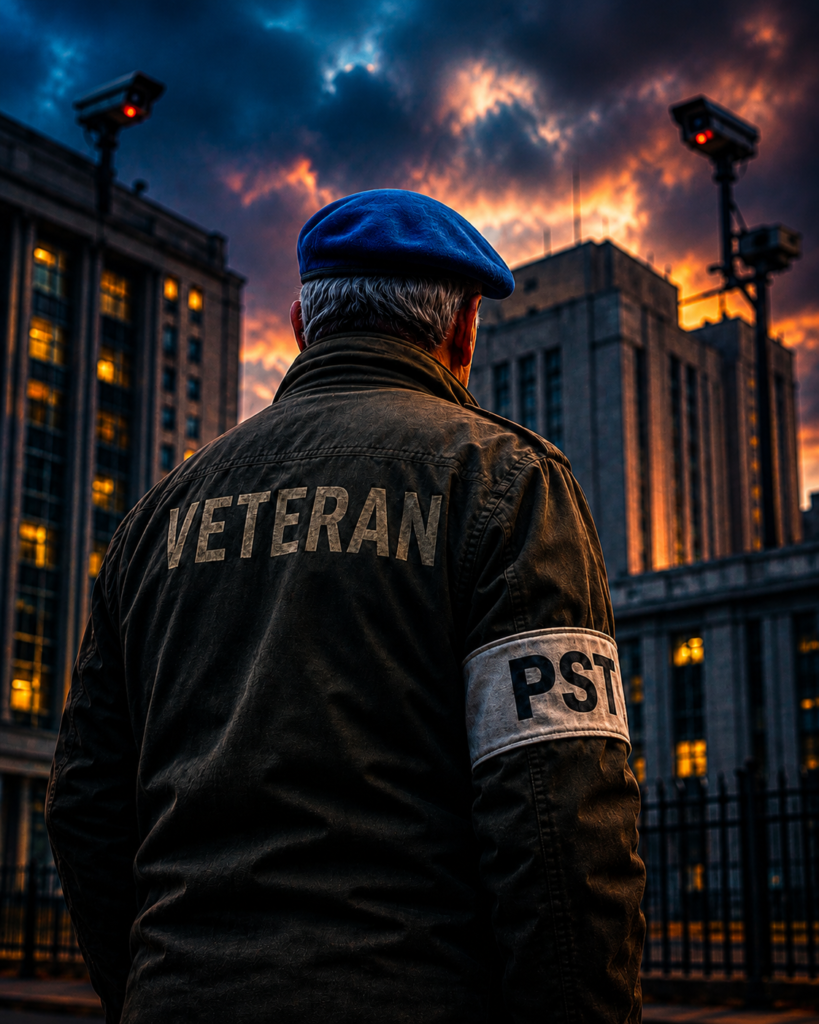
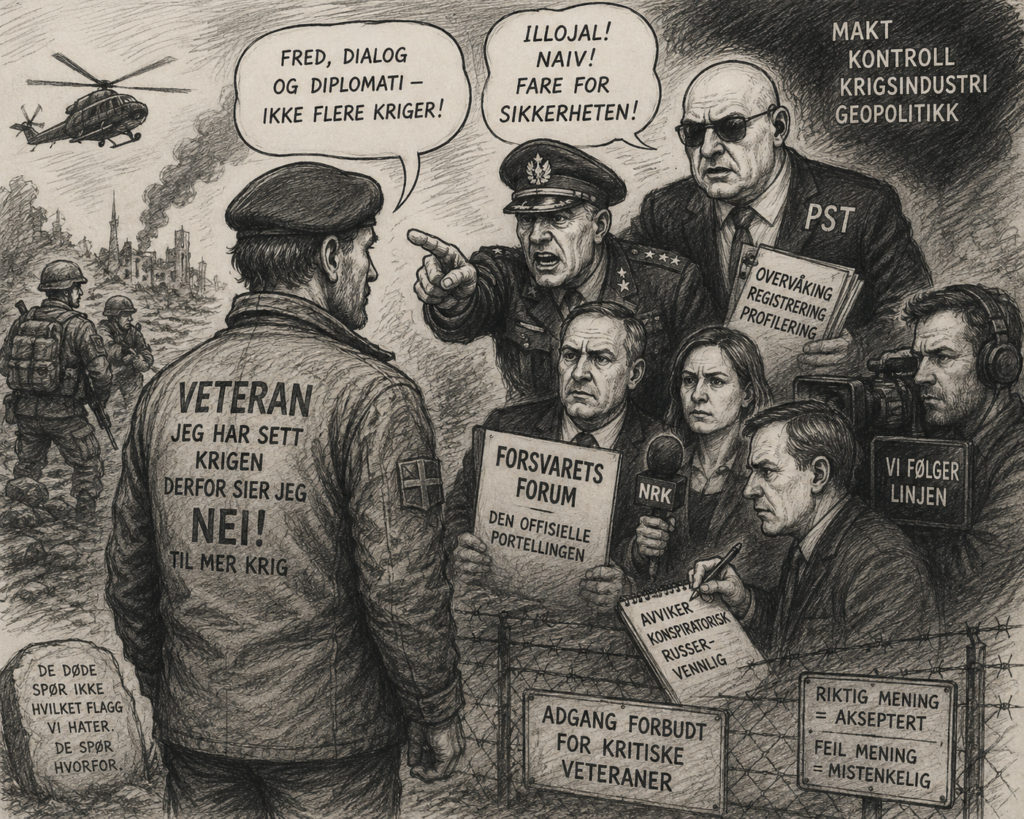
I also see this among veterans I have met and talked to over many years. Some come home from service with burdens that are not always visible on the outside. Society should then meet them with knowledge, respect and quick help. Instead, some find they have to start a new battle at home, this time against the system, to be understood, believed and given the healthcare or follow-up they need.
It is shameful.
People who have gone abroad in service for Norway should not have to come home and fight a new war against the bureaucracy. When veterans feel they must fight their way through waiting times, documentation, rejections and lack of understanding to get help, society has failed its responsibility. A country that sends people out on demanding service also has a moral responsibility when they come home.
A question of priorities
We like to tell ourselves that Norway is a society with small differences, strong safety nets and great social security. But fine words mean little if people fall between the cracks and feel that the system is more concerned with limiting payments than with helping them move on.
At the same time, we see how quickly politicians can find tens of billions when the money is to be spent outside the country’s borders. In 2026 Norway has allocated enormous sums to Ukraine and other international purposes. There may be good arguments for much of this support, but it must still be permissible to ask a very basic question. Why does it often seem easier to allocate billions abroad than to make sure our own sick, vulnerable and veterans do not have to fight for basic help?
This is not about Norway turning its back on the rest of the world. It is about priorities. A state has a responsibility for its own citizens. That responsibility cannot always come after every other consideration.
We cannot be world champions of solidarity abroad while having people at home who feel treated as suspects when they ask for help. Control is necessary, and abuse must be stopped, but the whole system can never be organised around suspicion. Then it also hits those who genuinely need help.
People must be put back at the centre
Many of us therefore demand more than a new NAV reform with new department names, more computer systems and new slogans. We need a new human principle at the base. We need permanent contact persons, real accessibility, clear decisions, shorter waiting times, greater respect for medical assessments, more discretion and less bureaucracy. Above all, we need a culture where the starting point is to help, not to reject.
Dismantle the NAV bureaucracy and rebuild human dignity. That should be the starting point for any new reform.
For when people in a rich country would rather collect bottles or beg than face NAV again, and when veterans who have served Norway must fight a new battle to be seen and get help, it is no longer a question of individual cases.
Then the system has begun to lose its legitimacy.
And then it is not the users who must adapt to NAV. Then NAV must be rebuilt, with the human being at its centre.


Se og hør mer
Videoer, klipp og innslag knyttet til temaet.