A strategy spanning three presidencies
The story Ramos Milanés tells did not begin this year. It stretches across several US presidencies. Under the Obama administration, diplomatic relations were restored and more than 20 bilateral cooperation agreements were signed. Americans—still formally barred from travelling to Cuba as ordinary tourists—made use of cultural, scientific, religious and other authorised travel categories, including the “People to People” programme. According to Ramos Milanés, Cuba at one point received more than 1.5 million American visitors. He also describes a sharp increase in air traffic and says US companies began managing hotels in Havana and Varadero.
When Trump first came to power, this was immediately reversed. Cuba was placed on the US list of states alleged to sponsor terrorism—a decision which, according to Ramos Milanés, immediately cut the country off from large parts of the international banking system. The Biden administration effectively retained all the sanctions imposed during Trump’s first term and removed Cuba from the terrorism list only one week before leaving office. When Trump began his second presidency on 20 January 2025, Cuba was returned to the list that same day.
The pressure has continued since then. Executive Order 14380 of 29 January 2026 established a mechanism allowing additional tariffs to be imposed on goods from countries that directly or indirectly supply oil to Cuba. Executive Order 14404 of 1 May 2026 authorised the blocking of property and financial interests belonging to foreign persons designated by US authorities, including on the basis of their activities in key sectors of the Cuban economy or their links to the Cuban government and persons already under sanctions.
Ramos Milanés describes these as the most damaging of the new measures. He adds that they have been followed by further sanctions against Cuban institutions and senior officials, as well as threats of action against actors outside the United States that maintain relations with sanctioned entities.
When the oil ran out
According to Ramos Milanés, the consequences of this regime are direct and tangible. Venezuela, Cuba’s principal oil supplier under a bilateral agreement, was itself severely affected by sanctions and could no longer deliver the agreed volumes. The ambassador notes that several Caribbean countries have historically maintained similar energy cooperation with Venezuela.
According to Ramos Milanés, Mexico supplied Cuba with oil throughout 2025. Following the executive order of 29 January 2026, Mexico continued to express a willingness to supply oil but had not yet found a way to do so without risking US retaliation. Formally, the order allows the United States to impose additional tariffs on goods from countries supplying oil to Cuba; the ambassador describes its practical effect as a boycott of oil sales to the country.
He says the only major oil delivery Cuba had received in the relevant period after this was a tanker carrying approximately 100,000 tonnes, which arrived in March—enough for a few weeks of consumption. When asked by Perspektiv, he confirmed that the vessel was Russian.
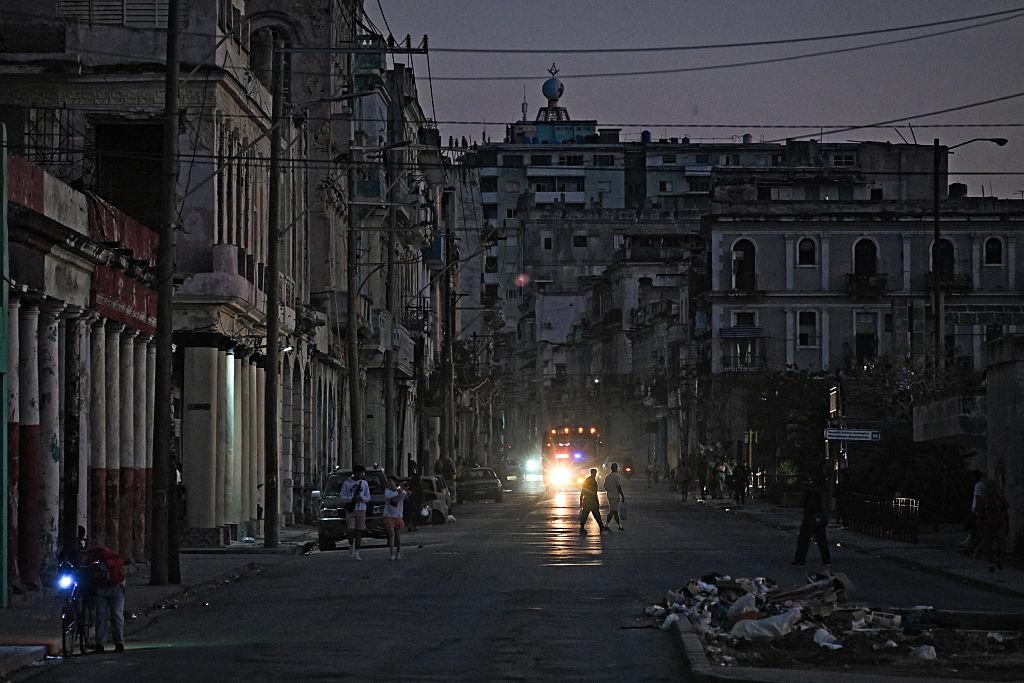
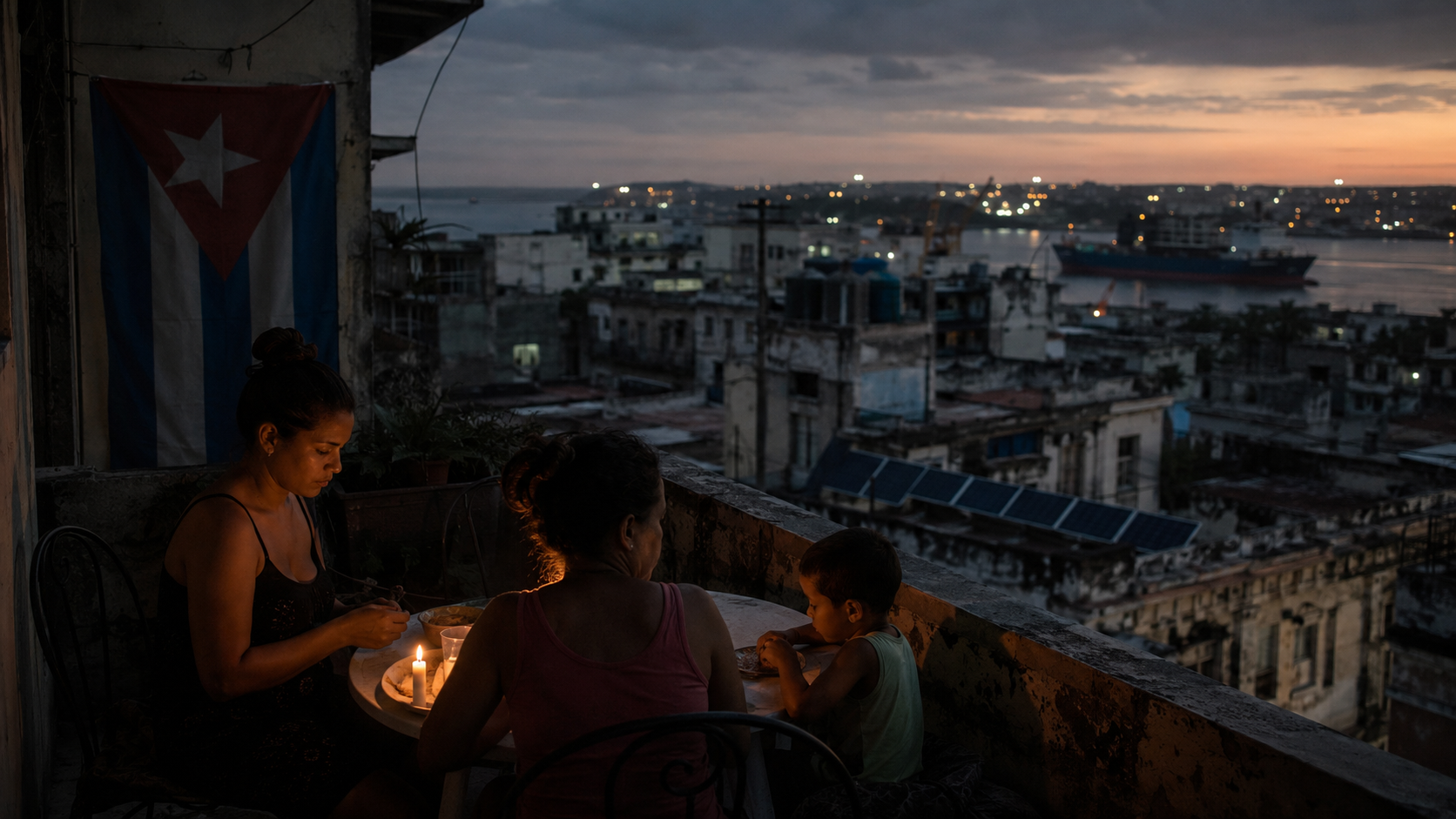
The result, according to the ambassador, is power cuts that at times last between 16 and 20 hours, with electricity rationed so that households receive a few hours of power per day on a rotating basis. The situation has become so serious that containers of humanitarian aid—mainly food and other critical supplies—remain stranded in Cuba because there is no fuel to transport their contents onwards. Ramos Milanés says the United Nations asked the US authorities for permission to import fuel for this purpose but received no positive response.
The healthcare system is also bearing the consequences directly. Ramos Milanés cites figures from the Cuban health authorities indicating that more than 100,000 people are awaiting medical procedures because hospitals lack electricity and resources. Around 12,000 of them are said to be children. According to the ambassador, parts of higher education have also had to return to remote teaching and independent study, much as they did during the pandemic.
Solar power as an emergency measure
At the same time, Ramos Milanés describes an extensive energy transition in response to the crisis. According to him, Cuba has accelerated a strategic programme to expand solar energy, with the aim of having it account for 30 per cent of electricity generation by 2030. The contribution of renewable energy to electricity generation is said to have risen from around three per cent to more than ten per cent during 2025.
During the interview, the ambassador mistakenly used the unit “gigawatts” when describing this expansion. Cuban government sources state that more than 1,000 megawatts of solar power capacity were installed in 2025. That is therefore the figure used here.
According to Ramos Milanés, the solar panels are primarily Chinese. The challenge is that solar energy is generated efficiently for only a few hours around midday and that Cuba—unlike Norway—has no hydropower to provide a stabilising alternative. The country is therefore also working to refine its own heavy, sulphur-rich crude oil into fuel that can be used in several power plants. According to the ambassador, a refinery in Santiago de Cuba recently produced approximately 20,000 tonnes of such fuel.
Ramos Milanés says the Cuban authorities are scheduled to present a comprehensive reform programme to the National Assembly in July. Among other measures, the programme is intended to reduce the number of ministries from 27 to 20, decentralise decision-making authority to the municipalities and give state-owned and private companies greater freedom to choose trading partners for imports and exports. It also aims to link state and private actors more closely. Private actors could, for example, help modernise state-owned factories, thereby increasing production and sales.
The disappearance of Western tourism
Tourism, historically one of Cuba’s most important sources of income, has been hit hard. Ramos Milanés says international companies have been pressured to scale back or withdraw from parts of their operations in Cuba. He mentions, among others, the Spanish hotel chains Meliá and Iberostar and their cooperation with the Cuban tourism company Gaviota. The ambassador did not specify how many hotels were involved or provide exact figures for the decline in tourism and air traffic.
During the interview, Perspektiv pointed to an asymmetry in the situation: while European airlines such as Air France and Iberia had suspended their Cuba routes, US carriers such as American Airlines and JetBlue continued to fly there. Ramos Milanés confirmed this and described the contrast as noteworthy.
According to the ambassador, the disappearance of several European routes is partly due to Cuba’s limited capacity to refuel aircraft. Airlines must therefore make an expensive stopover—for example in Mexico—to refuel. Norwegians wishing to travel to Cuba generally have to fly via Amsterdam and then Panama or Mexico, he says, making the journey longer and more expensive. He also points to Norwegian travel advice recommending against non-essential travel and says the number of Norwegian tourists is consequently very low.
Diversifying towards BRICS
At the same time, Cuba is attempting to develop alternative economic relationships. The country has long traded with China and Vietnam and has in recent years sought to expand cooperation with BRICS countries, including Brazil, India and Russia. India has increased both its trade with and investment in Cuba in recent years, including in the tourism sector. Russia cooperates with Cuba on electricity generation and, according to Ramos Milanés, was behind the oil delivery mentioned above. The ambassador also points to alternative payment channels outside the Western banking system, while stressing that he does not know all the technical details. Such workarounds—for example via China—can make transactions both complicated and expensive.
According to Ramos Milanés, Cuba has the world’s largest nickel reserves—a mineral of major strategic importance to modern industry and technology—as well as domestic oil and gas production. In his view, this suggests that US sanctions are not motivated solely by ideology but may also be driven by economic interests. He also says that, during the period of normalisation, Trump sent a technical team to Cuba to explore investment opportunities in tourism, including golf courses and resorts. The ambassador was himself uncertain of the precise year, and no agreement was concluded.
The Monroe Doctrine and the threat of confrontation
Finally, Ramos Milanés connects the sanctions pressure to a broader geopolitical pattern. As he presents it, the United States seeks to restore its uncontested leadership in Latin America, weaken China’s growing influence in the region and, in practice, revive the central premise of the Monroe Doctrine: that the entire American continent falls within the US sphere of interest. According to the diplomat, Washington has interfered in the internal affairs of a number of countries in recent years—including Ecuador, Bolivia, Colombia, Venezuela and Nicaragua—with Cuba as a principal political target precisely because it insists on remaining sovereign and socialist.
Asked whether US setbacks elsewhere might lead Washington to direct greater attention towards Cuba, Ramos Milanés replies that this is close to the rhetoric Trump himself has employed. At the same time, he hopes the US authorities understand that a military campaign against Cuba would not be easy.
Popular support under pressure
Asked how the Cuban population is experiencing the situation, Ramos Milanés describes an aggressive information campaign running in parallel with the economic pressure. He believes US media and actors on social media are attempting to place responsibility for the crisis on the Cuban authorities and undermine support for the revolution.
The ambassador believes support for the government and the revolution remains extensive. As examples, he cites a petition which he says gathered more than 6.5 million signatures in one month, and this year’s May Day rally in Havana. Around one million people normally take part, he says. Despite the severe lack of transport, nearly half a million are said to have participated this year. Many walked or found other ways to reach the rally.
The diplomat emphasises that Cuba does not want war and has repeatedly called for dialogue and negotiations. Cuba is also open to US investment and trade, he says, but the country’s social order cannot be a subject for negotiation.
Ramos Milanés also discussed how Cuba’s defence is organised. He rejected the interviewer’s assumption that Cubans keep weapons in their homes. Instead, the weapons are stored locally and can, according to him, be made available if the population is mobilised for defence. Many Cubans have been trained to use them.
He further clarified that Cuba is not subjected to a physical naval blockade in which US forces stop ships bound for the island. The siege is economic: companies that own or operate vessels calling at Cuban ports may, according to him, be subjected to sanctions. Ships can still sail to the country, but the threat of sanctions makes trade, payments and transport more difficult and expensive.
The Norwegian Foreign Ministry’s silence: Political cowardice disguised as principle
Norway’s relationship with Cuba was a central subject of the conversation. Ramos Milanés highlighted what Norway has in fact contributed: research cooperation on fisheries and aquaculture lasting more than a decade, humanitarian assistance following hurricane damage in the eastern provinces, and support during an outbreak of chikungunya fever. Year after year, Norway has also voted in favour of the UN resolution opposing the US blockade and has helped approve cooperation programmes with Cuba through organisations including UNDP, UNICEF and the World Food Programme.
The ambassador said Norway had previously sent humanitarian assistance following hurricanes and other crises, but that no such aid had been sent so far this year. He also said the Norwegian authorities are aware of the gravity of the situation through their ongoing contact with Cuba. At the same time, he was careful to speak positively about both the historical and the existing cooperation.
An earlier programme in petroleum technology—through which more than 300 Cuban specialists received training in Norway, according to the ambassador—was discontinued after Norway decided it would no longer fund international cooperation in the petroleum sector. Cuba still wants access to Norwegian technology and investment in this field, as well as cooperation in fisheries, solar energy and biomass.
The ambassador also raised the risks facing companies seeking to cooperate with Cuba. In his assessment, Norwegian and European actors may be exposed to US sanctions pressure if they invest or trade in the country. He described this as one of Cuba’s greatest problems and called for a political response from the European Union and European countries such as Norway.
Ramos Milanés notes that the EU has its own rules intended to counter the extraterritorial application of US sanctions. In his view, however, the Union has not enforced these protections effectively enough to defend European companies and citizens. Pointing to Meliá and Iberostar, he asks whether these companies have in practice felt protected by the EU—or abandoned.
It is Perspektiv, not Ramos Milanés, that directs the following criticism at the Norwegian authorities.
The interview was conducted on Thursday, 18 June. That same day, following a telephone conversation with the Norwegian Ministry of Foreign Affairs’ press duty officer at 1:34 p.m., Perspektiv sent the Ministry an extensive written request for comment.
We asked for the government’s official position on Cuba. We asked whether practical cooperation had been reduced, why no new humanitarian assistance had been provided this year, and whether US secondary sanctions affect Norwegian authorities, companies or organisations seeking to cooperate with Cuban actors. We also asked the Ministry to state whether it had advised Norwegian actors to refrain from cooperation, and to explain how Norway can claim to oppose the US embargo if US sanctions pressure is nevertheless allowed to restrict Norwegian-Cuban relations in practice.
The Ministry did not answer the questions.
This is not a minor matter. The Ministry received specific, written and verifiable questions about Norwegian foreign policy, Norway’s aid priorities and the freedom of action available to Norwegian actors. It had every opportunity to correct the premises, document the cooperation and explain the government’s policy. It chose not to do so.
Norway likes to present itself as a humanitarian superpower, a defender of international law and an independent voice in international affairs. But principles that are voiced only in the UN chamber and disappear when they risk costing political capital in Washington are not principles. They are reputation management.
Voting against the embargo once a year is easy. The real test comes when the Norwegian authorities must answer whether US threats actually restrict Norwegian trade, aid, investment and cooperation. Then, there is silence.
This silence comes as Cuba, according to the information presented in the interview, experiences power cuts lasting up to 20 hours, severe fuel shortages, hospitals with long surgical waiting lists and difficulties distributing humanitarian supplies. The Ministry was asked to explain Norway’s policy in the face of this. It did not answer.
It is difficult to read this silence as anything other than political evasion. Norway wants credit for opposing the embargo but refuses to account for whether it submits to its effects in practice. The government wants to be associated with humanitarian ideals but will not explain why new assistance is absent when the need is acute. It wants to speak about a rules-based international order but avoids questions about whether another country’s sanctions dictate Norwegian choices.
If US secondary sanctions do not affect Norwegian policy, the Ministry can say so. If cooperation with Cuba is extensive and unchanged, it can document it. If the absence of new humanitarian assistance is due to budgetary priorities or other substantive reasons, the government can explain them.
When none of this happens, the public is left with a ministry that wants recognition for its principles but cannot tolerate questions about how those principles are put into practice. This is not diplomatic prudence. It is institutional cowardice.
The questions remain unanswered.
*Editorial note:* The interview was translated from English and edited for clarity and length. Verbal repetition and incomplete sentences have been removed. Information not independently verified is explicitly attributed to Ramos Milanés or the Cuban authorities. The figure of more than 1,000 MW of installed solar power capacity was checked against a Cuban government source.