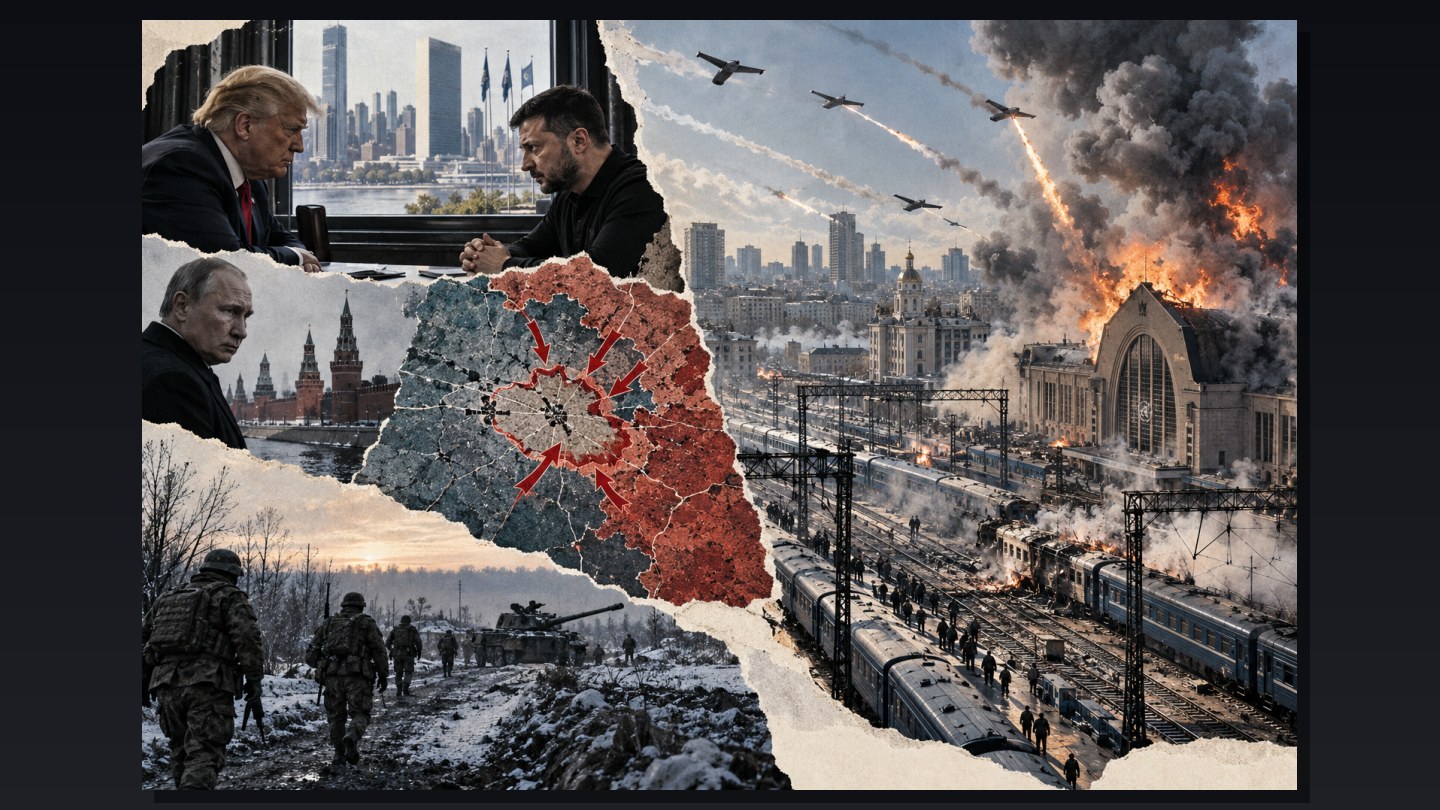
But perhaps this is precisely the moment when Europe must do the opposite. Perhaps the US withdrawal is not only a threat but a historic opportunity. An opportunity to free Europe from the American war doctrine that for far too long has rested on the brutal notion that more war will create more peace.
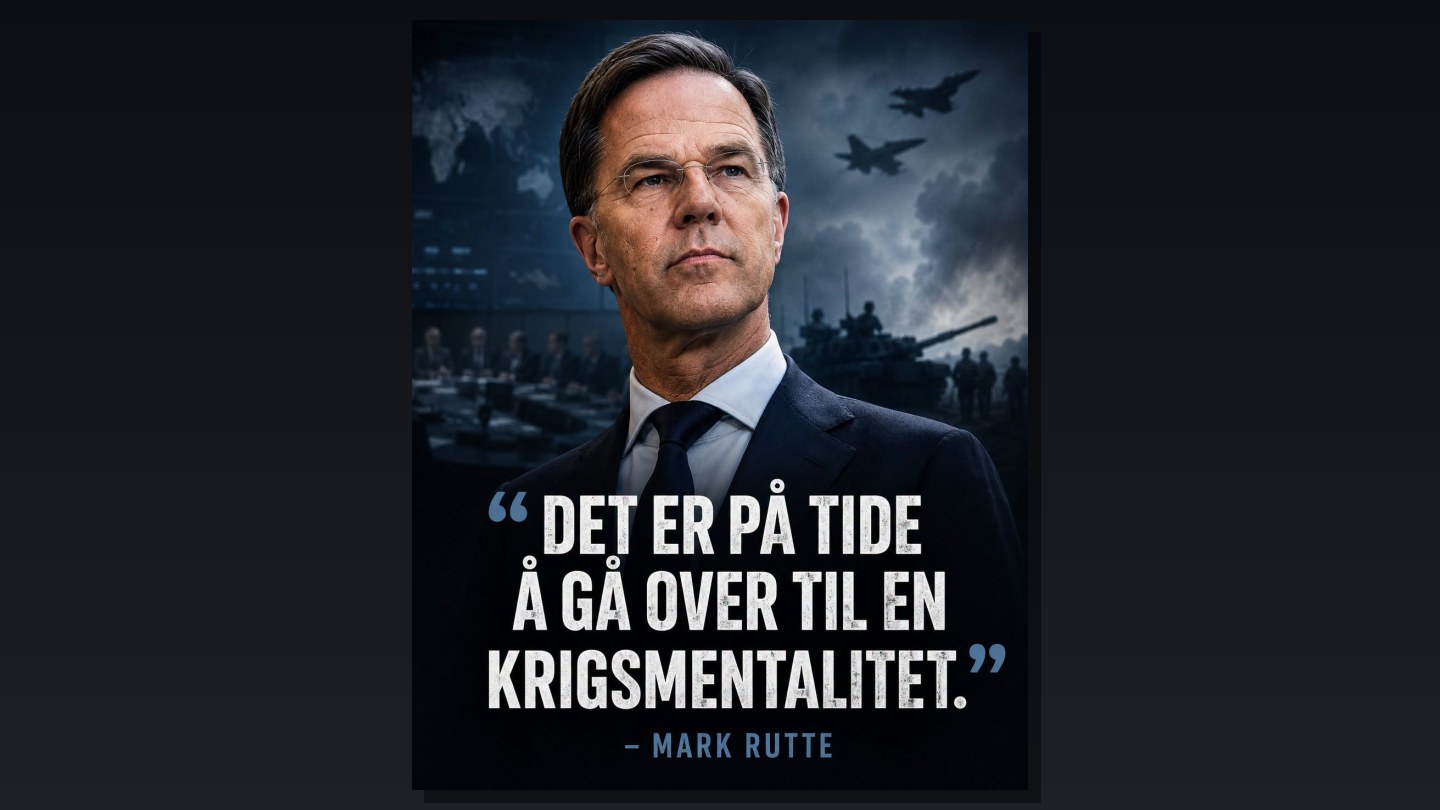
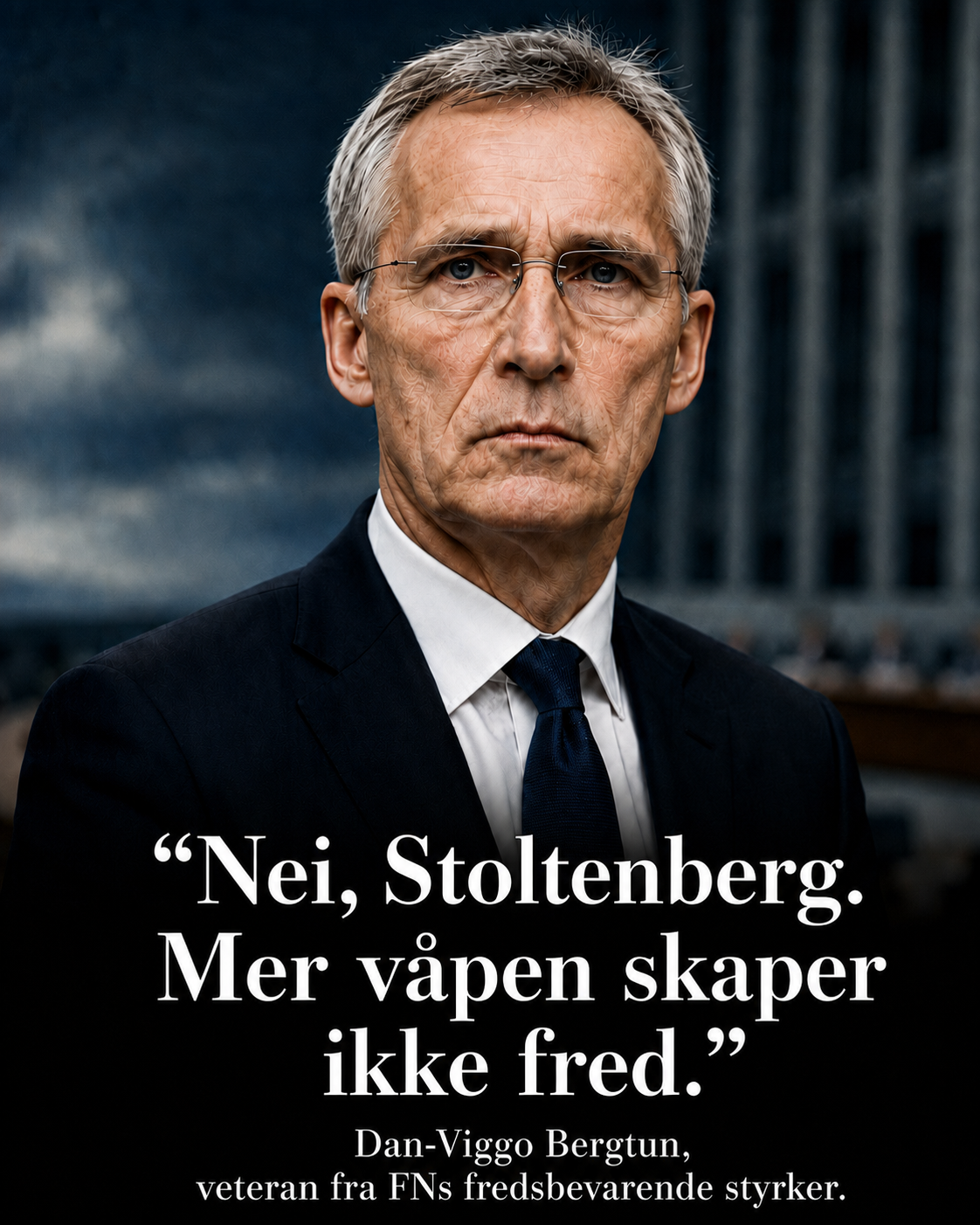
No, Stoltenberg. More weapons do not create peace.
They create more fear, more distance, more hatred and more dead. They create new fronts, new enemy images and new generations growing up with war as the normal state of affairs. To claim that ever more weapons are the road to peace is not security policy. It is madness made into a system.
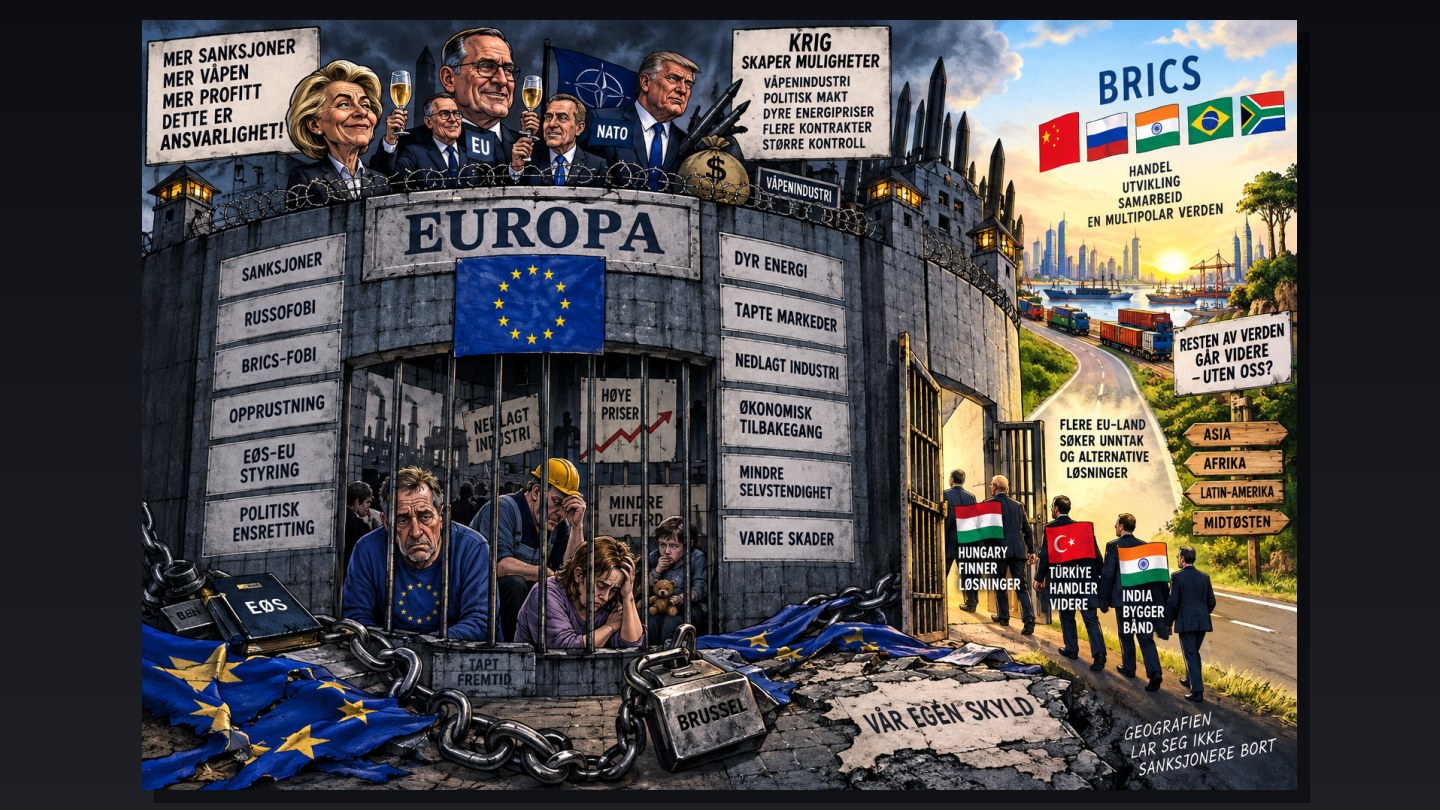
We have heard the lie before. You must rearm to create peace. You must send more weapons to shorten the war. You must threaten more to become safer. You must close every diplomatic channel to force a solution. But where has this led us? To a Europe more frightened, more divided and more militarised than in decades. To a continent where diplomacy is treated almost as treason, while arms manufacturers, security politicians and war commentators get to define reality.
This is the warmongers’ doctrine: to get peace, more war is needed. That doctrine must go.
Europe must now mobilise for peace. Not as a decorative after-dinner speech, but as a powerful overarching political strategy. Peace requires work. Peace requires courage. Peace requires diplomats, agreements, open lines of contact, confidence-building measures, ceasefire attempts and a willingness to talk even to those one dislikes. It is easy to call for more weapons from safe offices. The hard part is building a way out of the destruction.
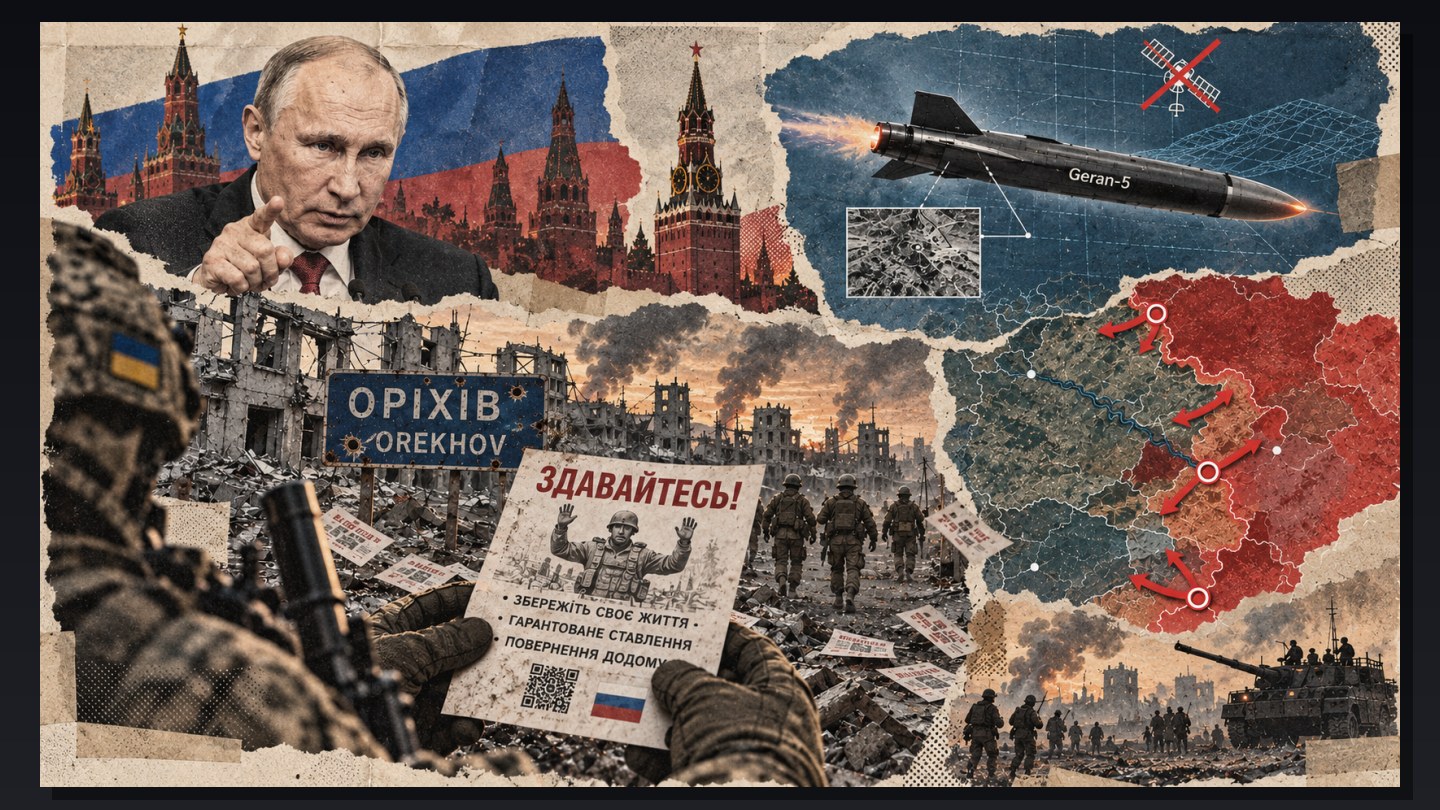
For peace is not created when nations stop understanding each other’s motives. Peace is not created when whole peoples are reduced to enemy images. Peace is not created when fear replaces reason and propaganda replaces conversation. When one loses the ability to see the other side’s fears, interests and historical experiences, one also loses the ability to build lasting security.
Europe is heading precisely there. We are reacting like a frightened continent that knows only one reflex: more weapons, more suspicion and more confrontation. But if security is understood only as military power, we lose the very foundation of peace. Then war becomes a self-fulfilling prophecy.
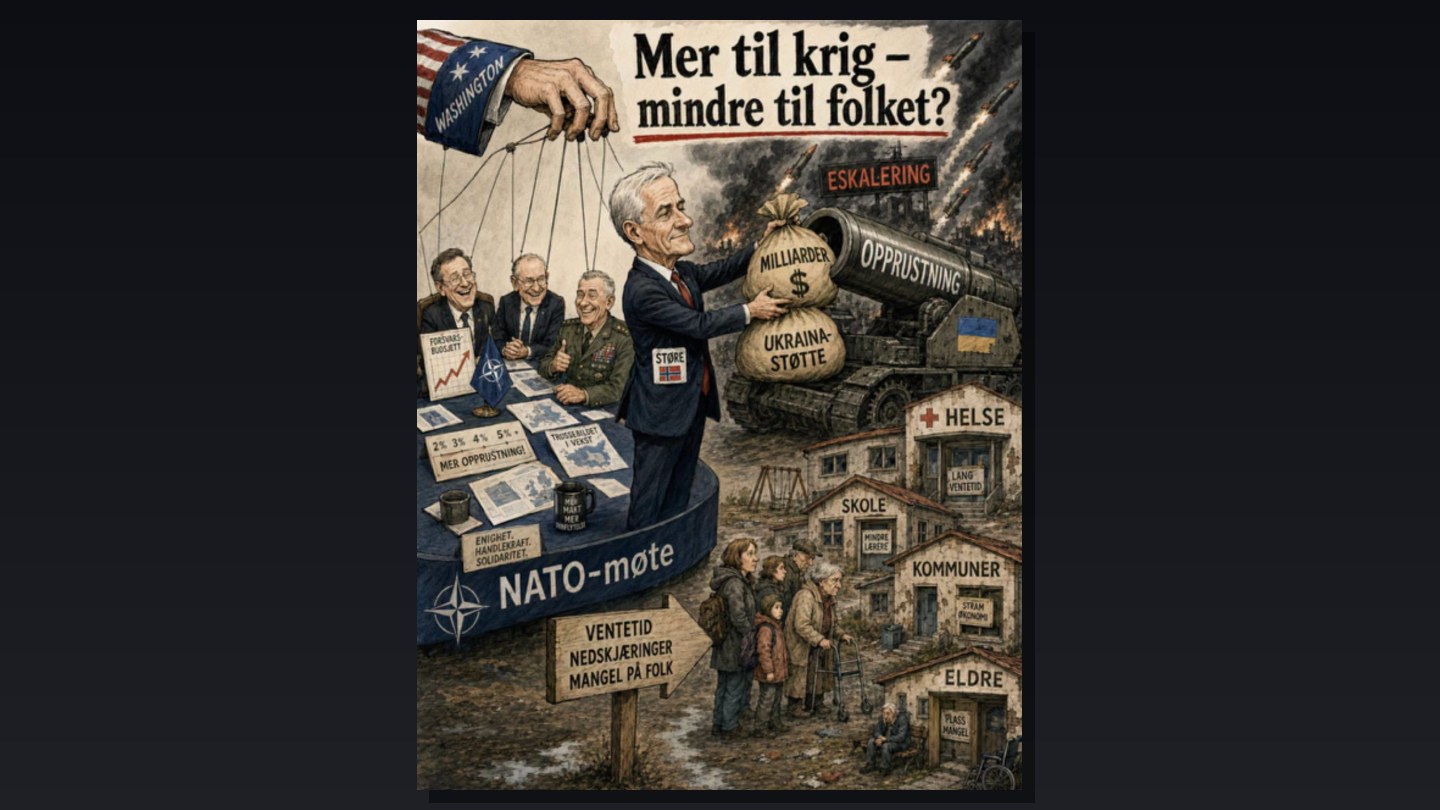
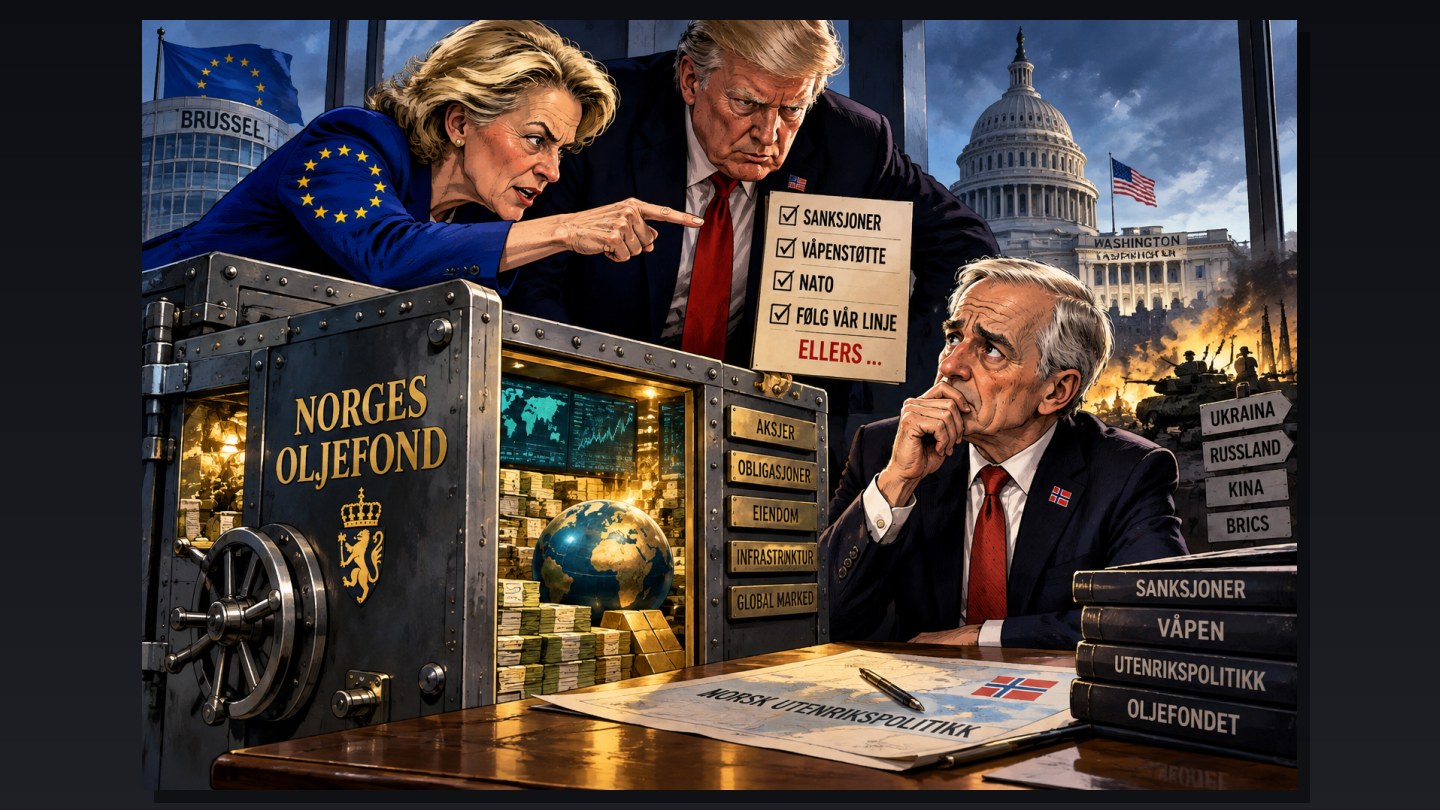
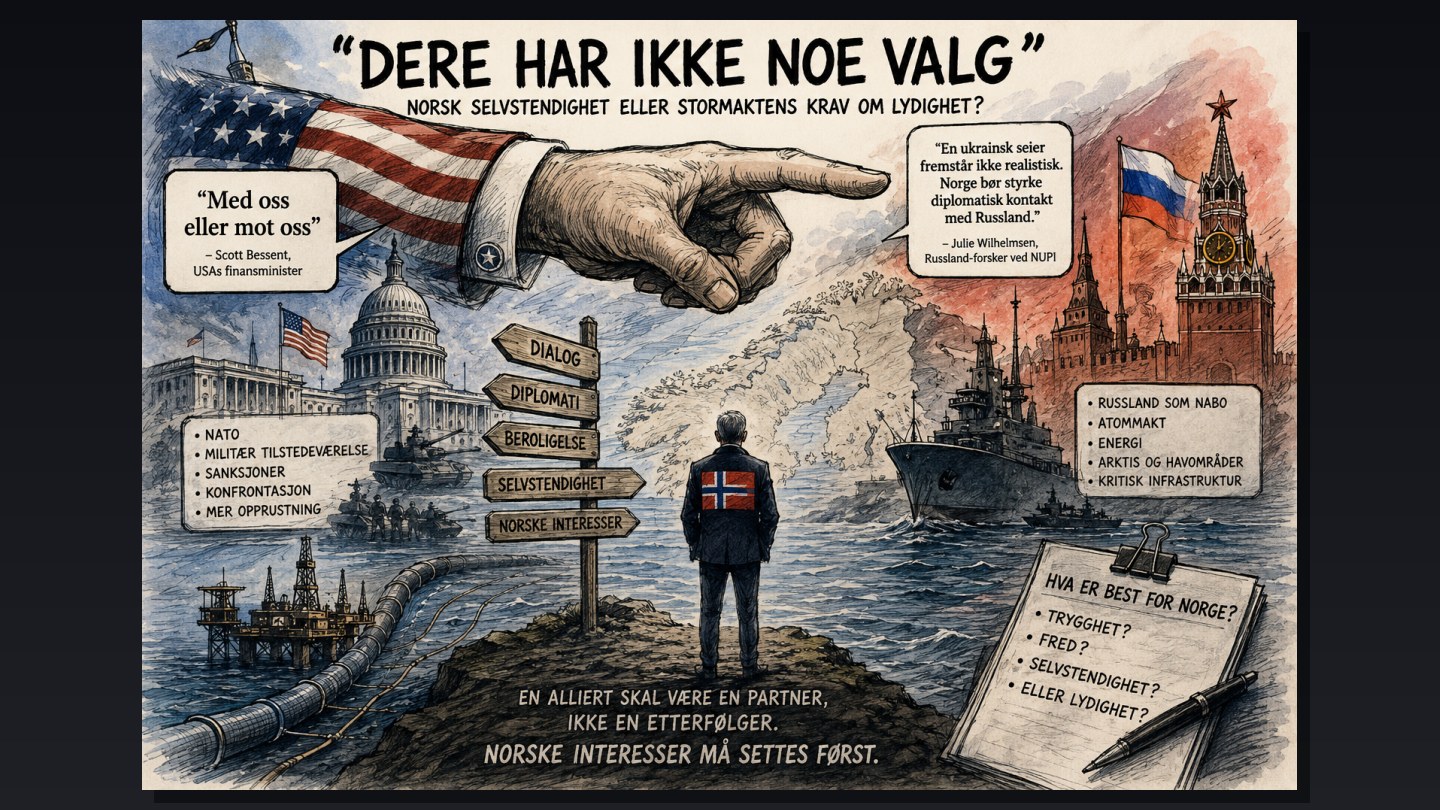
For a long time the United States has had a dominant role in Europe’s security policy. It has made Europe dependent, obedient and increasingly unable to think for itself. When Washington points out the enemy, Europe follows. When Washington demands sanctions, European citizens pay the bill. When Washington plays geopolitical power games, European soil becomes the front line.
That must end.
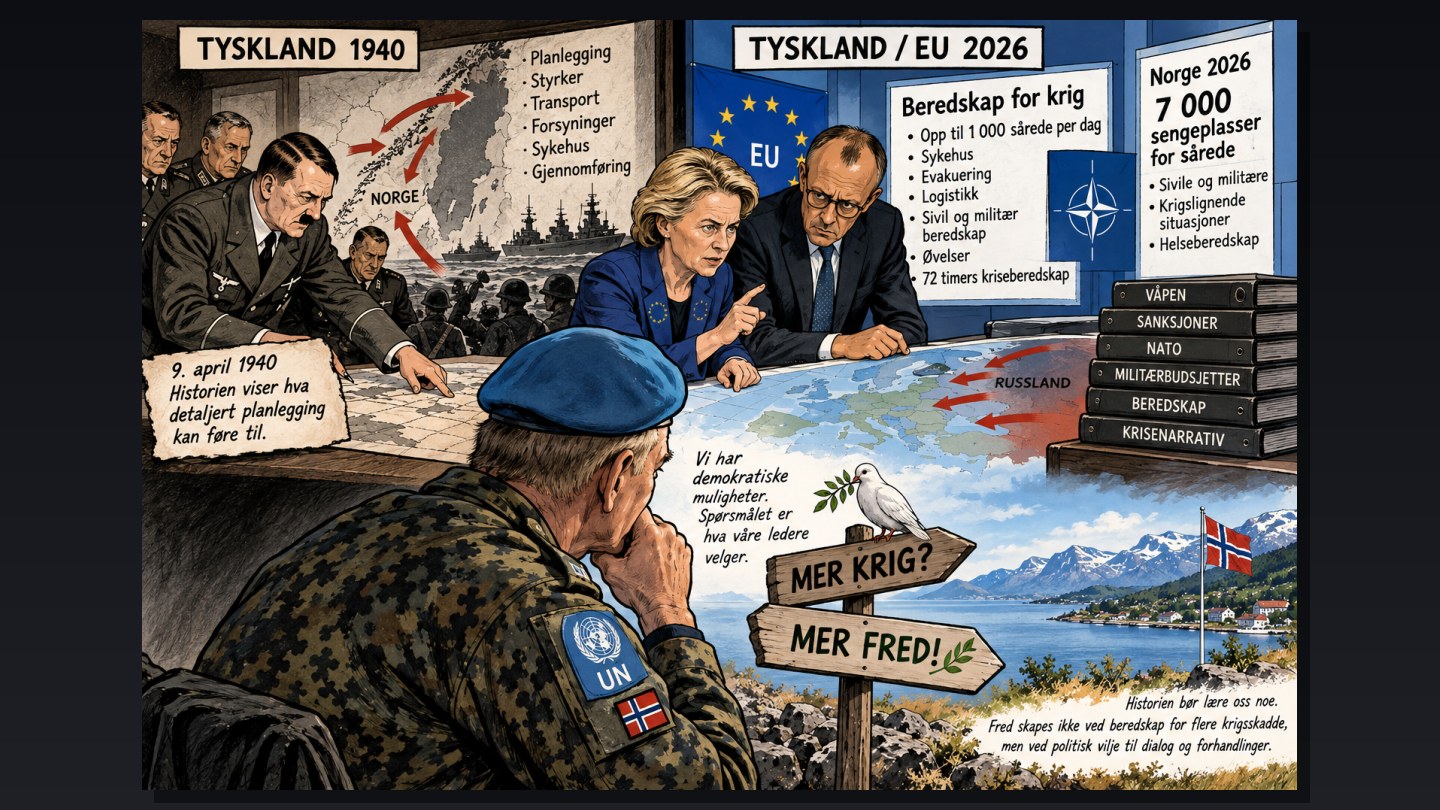
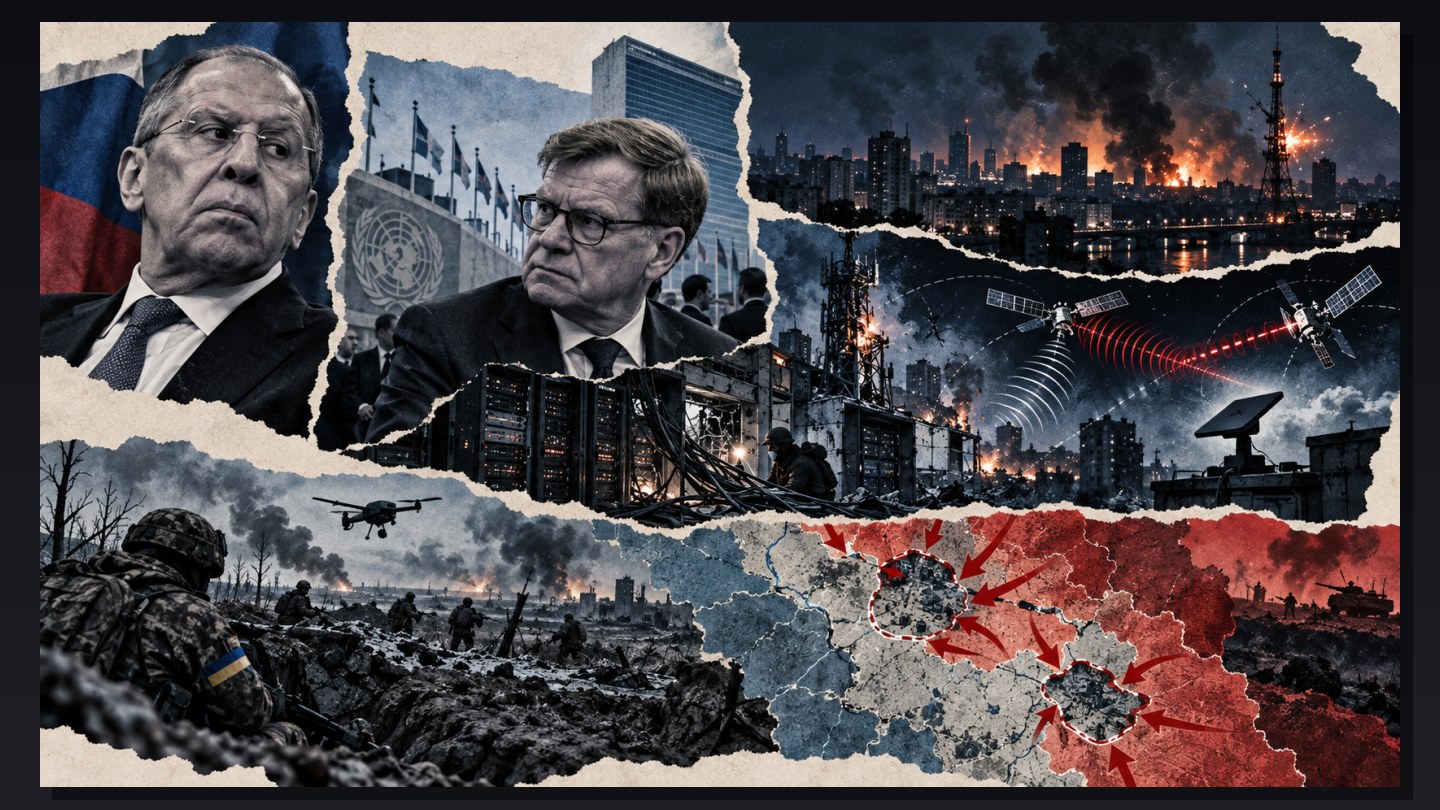
Europe cannot go on being a military outpost for American strategies. It is not American cities that will be hit first if the conflict between Russia and NATO escalates. It is European cities. It is European energy supply, railways, ports, cables, airports and civilian society. It is our children and grandchildren who will live with the consequences of the policy now being pursued.
That is why Europe needs a new course. Not capitulation. Not submission. Not blind faith in Russia. But a European line of peace that starts from the fact that Russia is our neighbour, not a country that can be removed from the map. Europe cannot live in eternal hostility with its largest neighbour without being destroyed from within.
And this is where Norway should step forward.
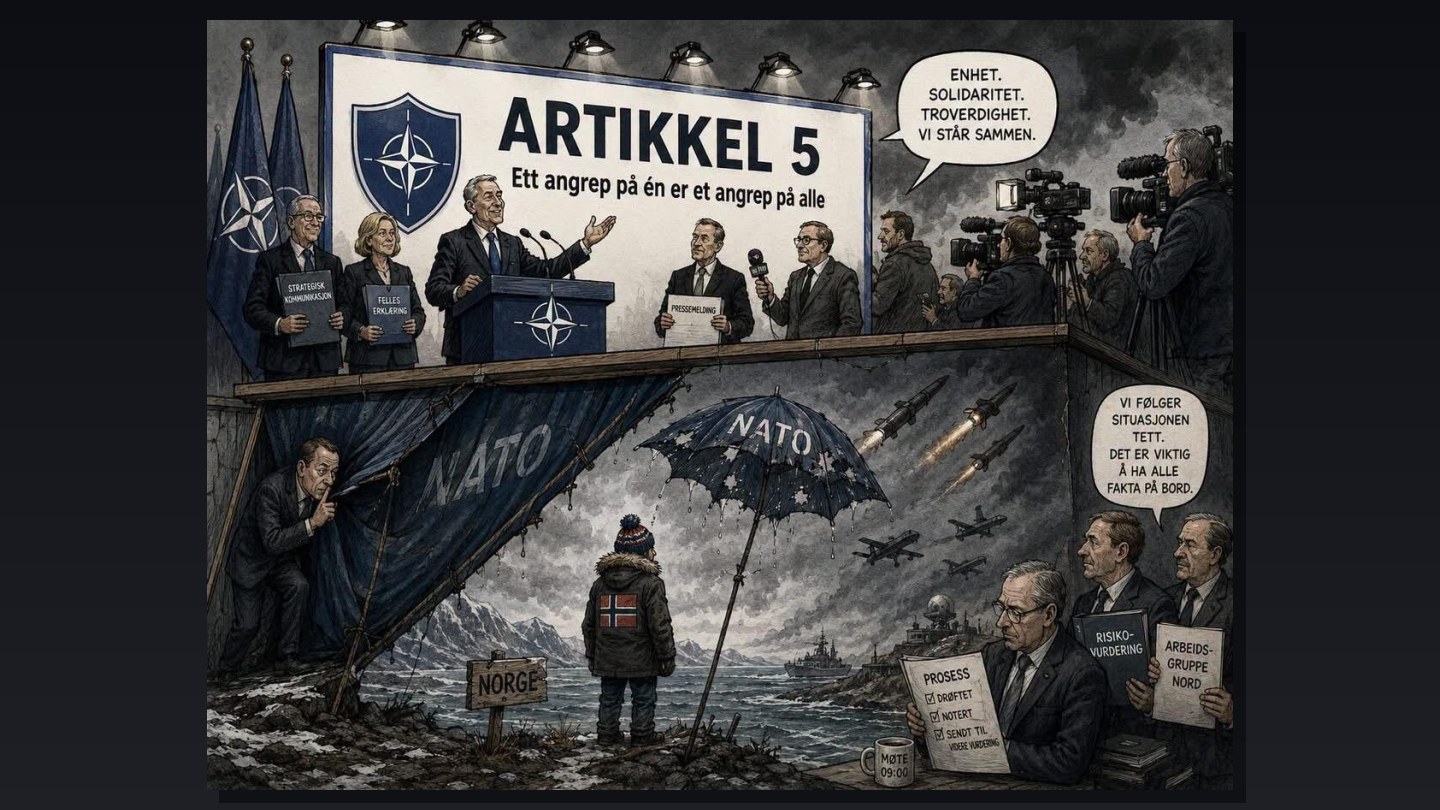
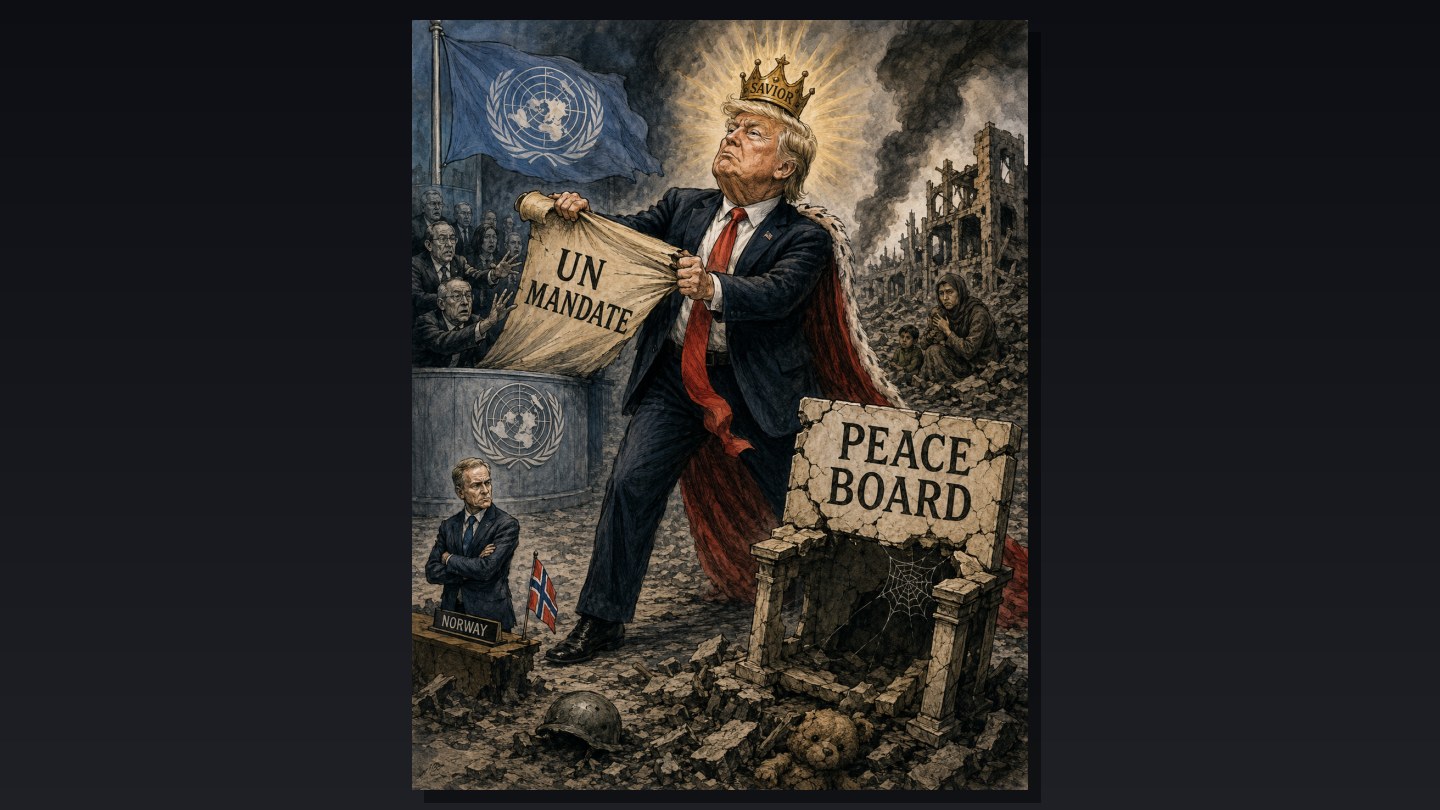
Norway should be a leading nation in this peace work. Not as a hanger-on to Washington. Not as an obedient microphone for NATO’s hardest voices. Not as a small state shouting war to appear big. Norway should once again become a country that brings people together, negotiates and builds bridges. A country that dares to say what ought to be obvious: no, more weapons do not create peace. More weapons make war deeper, costlier and more dangerous.
Peace work is not weakness. It is the highest expression of political responsibility.
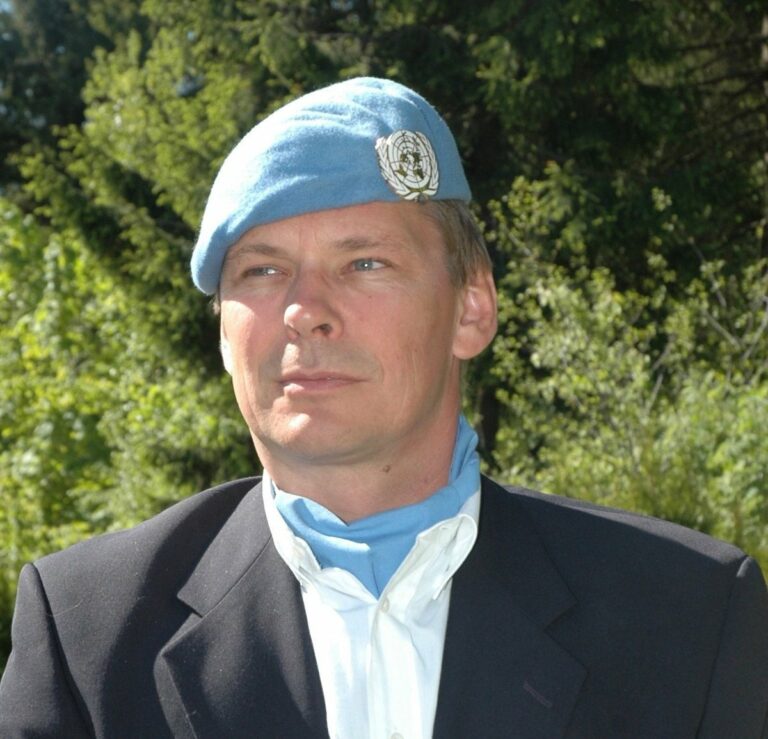
We have the history for it. We have the geography for it. We have the neighbourliness for it. We have the experience from the High North, where stability has never only been about weapons, but also about balance, contact and predictability. We have veterans, diplomats, peace organisations and people who know that war is not theory. War is destroyed lives, shattered families and generations who pass their trauma on.
Yet Norwegian leaders today behave as if the only road to security is to run ever closer after the warmongers in NATO and Washington. That is not wisdom. It is dangerous obedience. When Norway should raise the language of peace, we repeat the language of war. When Norway should demand negotiations, we send ever new signals of rearmament. When Norway should be a bridge-builder, we let ourselves be made into a front line.
This is a betrayal of the Norwegian peace tradition.
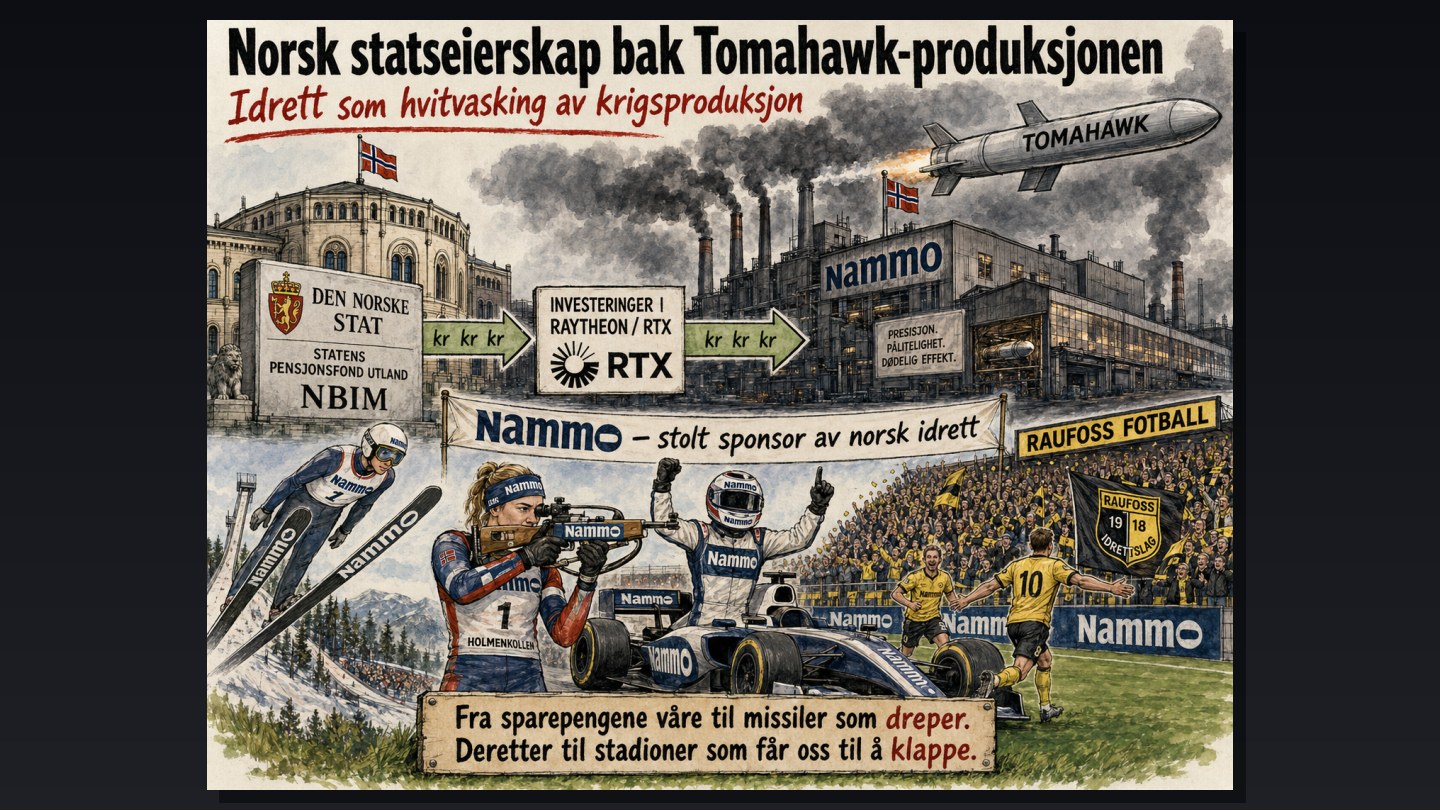
We must dare to ask: who benefits from the war continuing? Who benefits from keeping fear alive? Who benefits from European countries emptying their welfare coffers to buy weapons? It is rarely ordinary people. It is rarely the soldiers at the front. It is rarely the families who lose their sons. It is the arms industry, the power politicians and the ideological warmongers who always find new reasons why peace must be postponed.
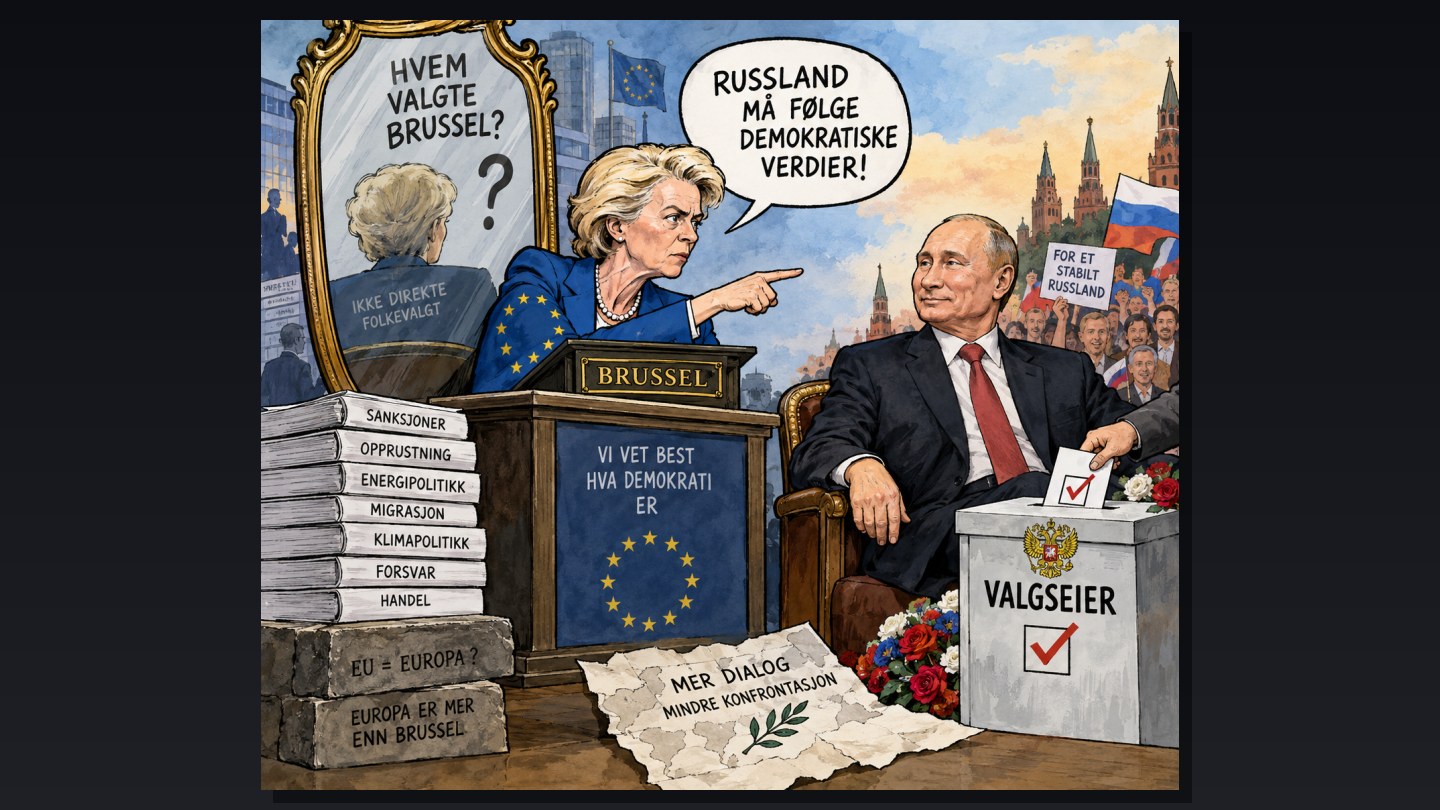
Europe must stop letting these forces control the language. When someone asks for negotiations, they are called weak. When someone warns against escalation, they are called naive. When someone asks about peace, they are cast under suspicion. This is how democracy slowly dies. Not with a single coup, but with a political climate in which only one opinion is allowed: more war.
As the US gradually withdraws, Europe must not fill the vacuum with an even harder European war policy. Then we will simply have swapped American control for European self-harm. Instead we must use the moment to say: now we mobilise for peace.
Norway must take the initiative for peace conferences. Norway must demand open diplomatic channels. Norway must work for a ceasefire, talks and a European security arrangement that is not built on eternal hostility. Norway must dare to talk to Russia — not because we accept everything Russia does, but because peace is never built with silence.
The warmongers’ time must be over. Europe does not need more doctrines promising peace through more war. Europe needs a peace doctrine that puts human lives, diplomacy and security before the interests of the arms industry and the great powers.
If the US withdraws, Europe must finally rise. And Norway should go first. Not to march further towards war, but to show Europe the way back to peace.
No, Stoltenberg. More weapons do not create peace.