
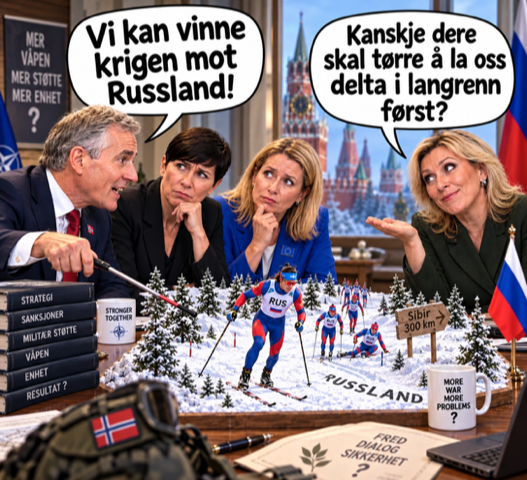
For what exactly is the principle when athletes are to be held responsible for what their country’s government does? And why does the principle seem to be applied so differently depending on which passport the athlete holds?
Special rules for Russian athletes
Russian and Belarusian athletes are still subject to special rules. As recently as 2 September 2026, FIS decided that they may take part in FIS competitions if approved as individual neutral athletes. They may not represent their country, use national symbols, flag, uniform or anthem, and participation is limited to individual events. They must also sign a declaration of neutrality and can be sanctioned if the conditions are breached.
So it is not enough to be a skier. A Russian must in practice pass political and administrative screening before being allowed on the start line.
So I venture to ask: why precisely Russia and Belarus?
Wars without consequences for sport
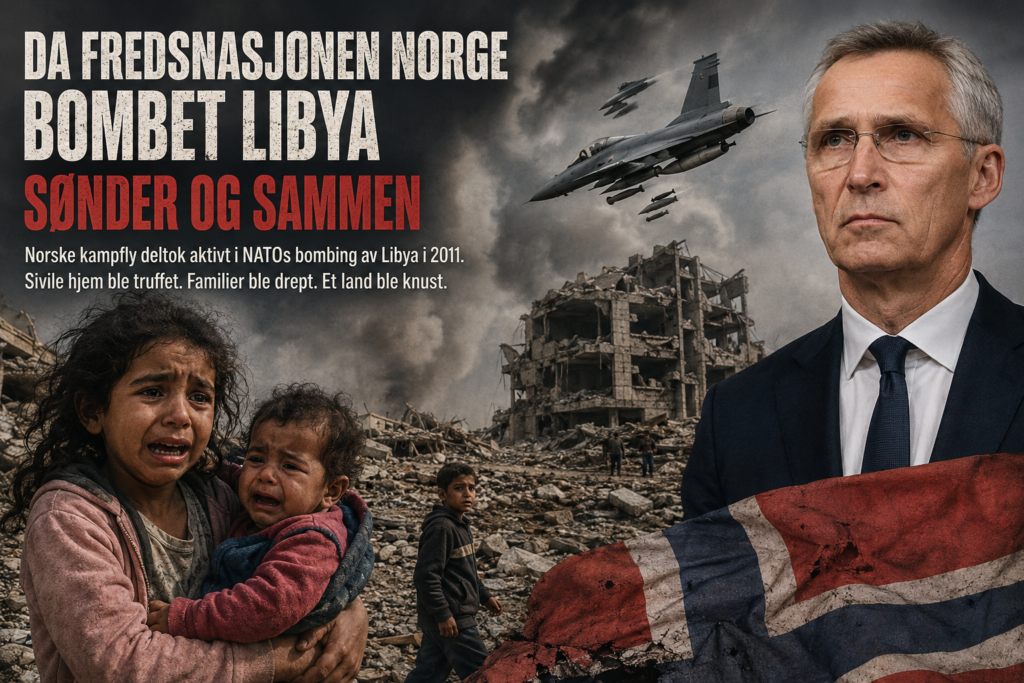
The United States has been involved in a long series of wars and military operations since the Second World War. Vietnam, Iraq, Afghanistan and Libya are just a few examples. NATO countries took part in several of these operations, and Norway itself took part militarily in Afghanistan and Libya. Yet I cannot remember American or Norwegian cross-country skiers having to compete without a flag because their governments had sent fighter jets or soldiers to other countries.
No one demanded that a Norwegian skier sign a statement distancing themselves from the bombing of Libya before receiving their bib.
And what about Israel?
Israel’s warfare in Gaza has triggered an extensive international debate precisely about unequal treatment in sport. Researchers at the Istituto Affari Internazionali wrote directly in 2025 about what they called a double standard: Russia was met with extensive sporting sanctions, while Israel was not treated in the same way.
Principles must apply to everyone
This does not mean the answer should necessarily be to ban Israeli, American or Norwegian athletes. On the contrary. Perhaps it shows how wrong it becomes once we decide that skiers, swimmers and figure skaters are to be held responsible for their governments’ wars.
If the principle is that an athlete should be punished because the state they come from wages war, the principle must apply to everyone. Then we must start compiling a historical account of which countries have bombed whom, which wars were contested under international law, who sold weapons and which governments supported which military operation.
The World Cup start list would then become rather short.
A simpler alternative
The alternative is far simpler: let athletes be athletes.
A Russian cross-country skier does not necessarily have more influence on the Kremlin than a Norwegian skier had on the decision to send Norwegian F-16s over Libya. An American track athlete did not decide on the invasion of Iraq. An Israeli swimmer does not decide the government’s military strategy in Gaza.
Interestingly, the IOC itself has previously formulated precisely this basic principle. In connection with the Russia case, the IOC wrote that it wanted fair competitions without discrimination and did not want to punish athletes for their governments’ decisions if the athletes themselves were not involved. At the same time, the IOC believed that the situation after the escalation of the war in Ukraine in 2022 created a special dilemma.
But a principle that is only applied against certain countries eventually stops looking like a principle.
Sport as a meeting place
This is therefore about far more than Russian skiers. It is about whether international sport should be a meeting place between people when politics fails, or yet another arena for geopolitical power struggles.
I believe we should choose the former.
Let the Russian ski. Let the American run. Let the Israeli swim. Let Ukrainians, Palestinians, Norwegians and everyone else compete under the same rules. Punish doping and other cheating and rule-breaking related to sport. But be very careful about making individual people collectively responsible for the actions of states.
And if our Norwegian skiers get beaten by a Russian?
Then we will have to do something truly radical.
We will have to train better!!!!
Se og hør mer
Videoer, klipp og innslag knyttet til temaet.