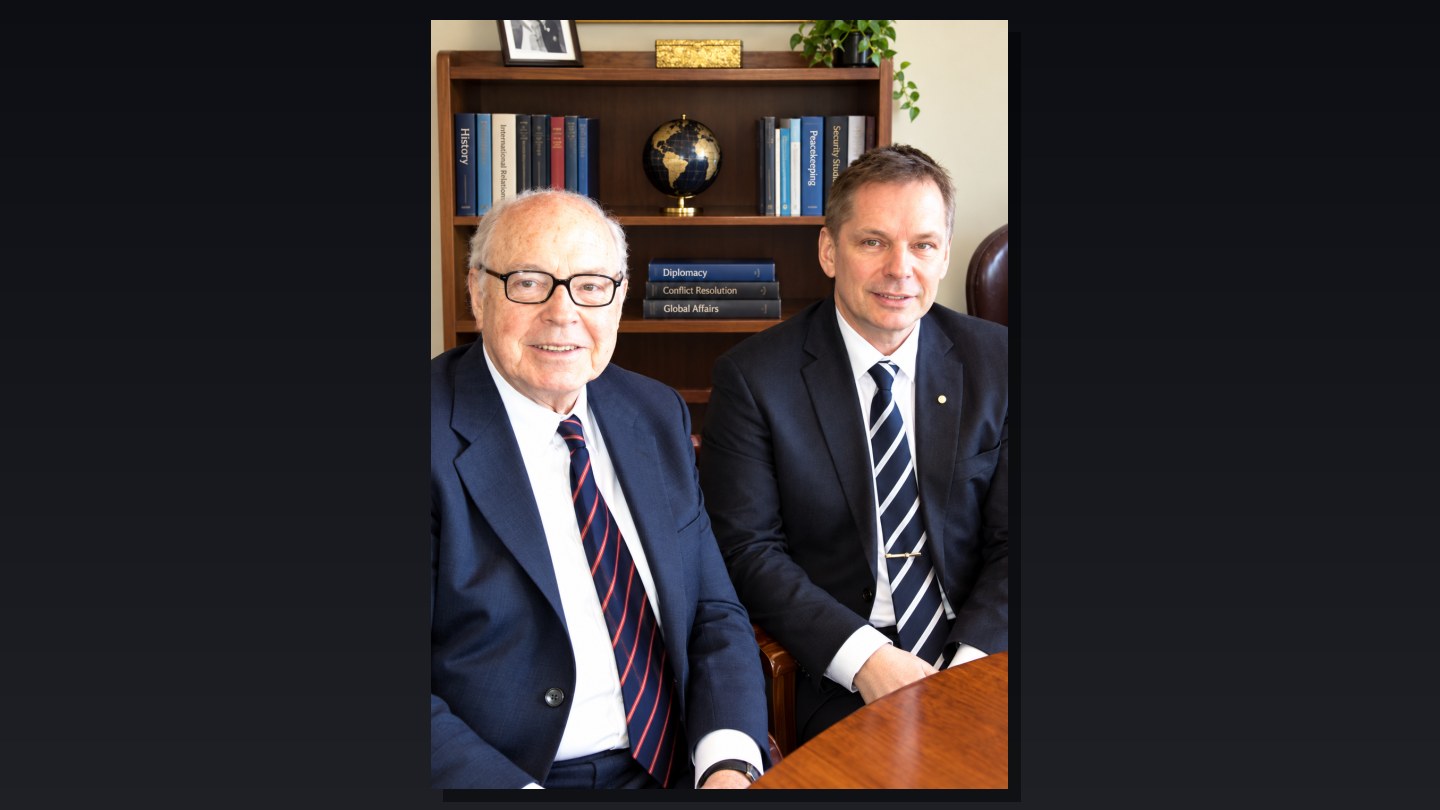
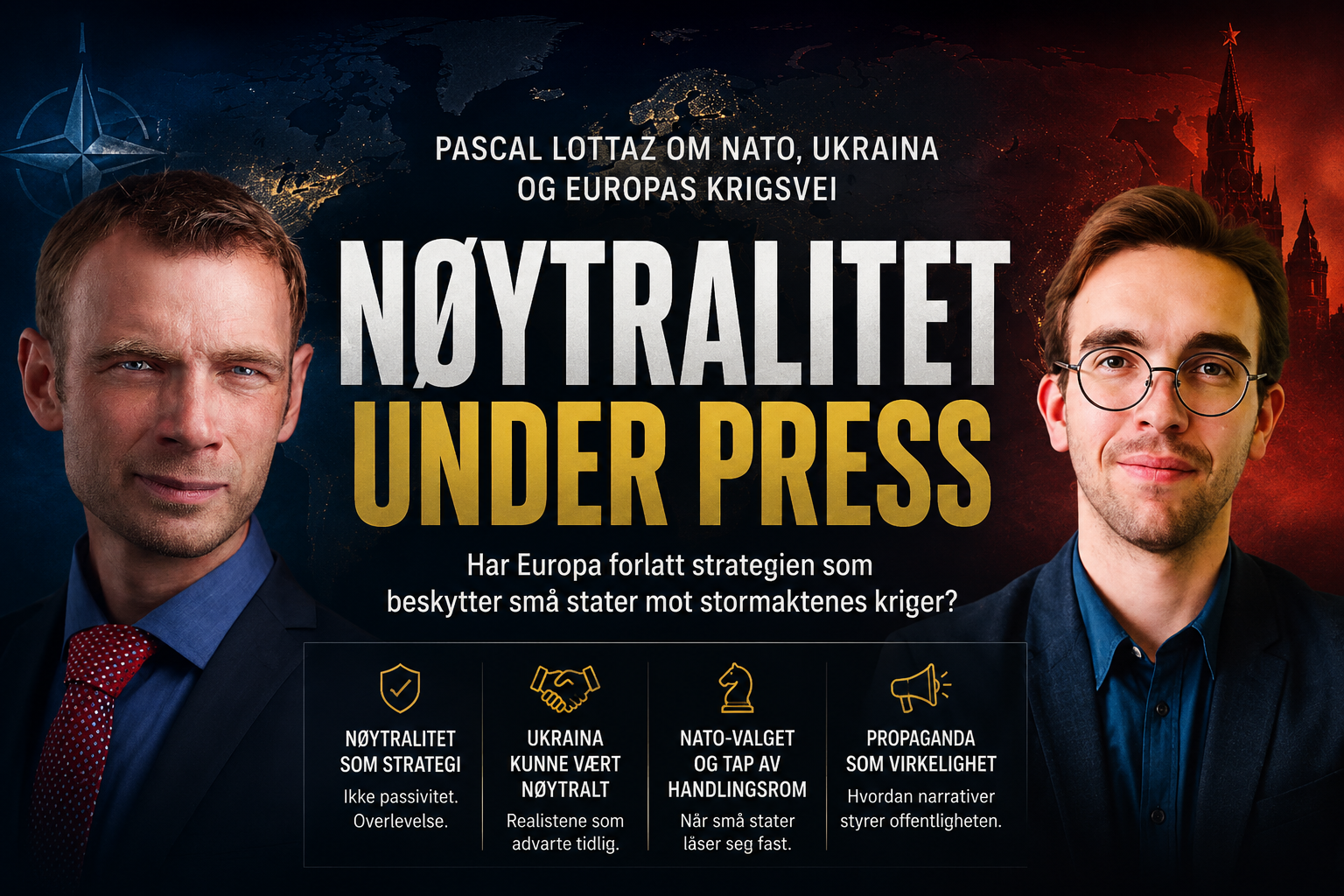
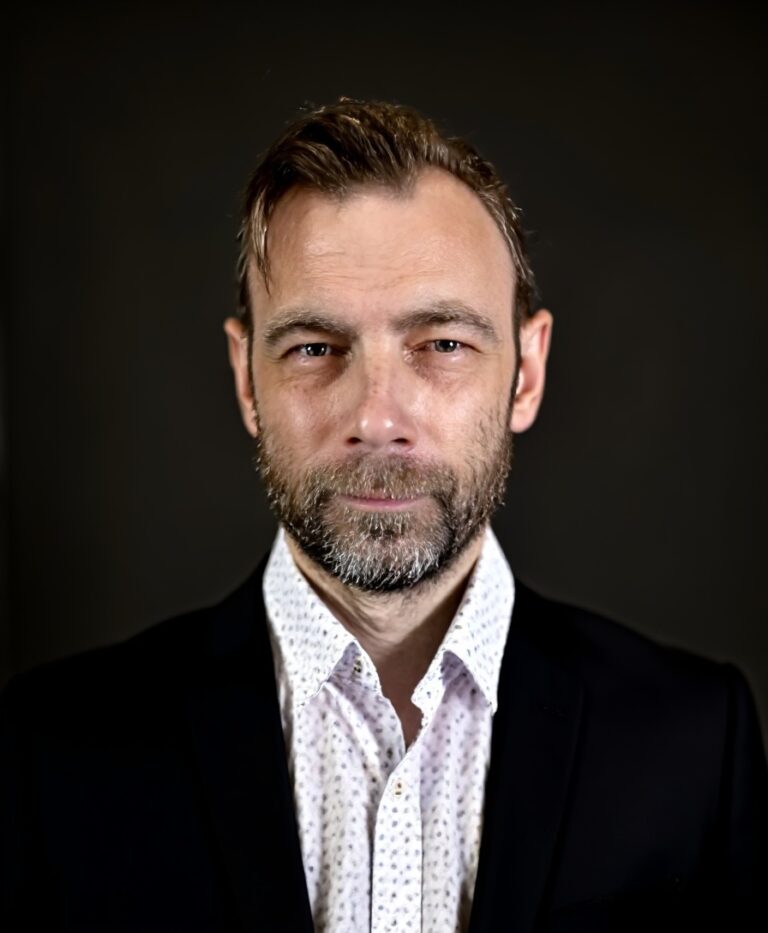
In conversation with the Swiss academic Pascal Lottaz, associate professor at Kyoto University and one of the most prominent researchers on neutrality in international politics, one question lingers: has Europe abandoned one of the few strategies that can actually protect small and medium-sized states from the great powers’ self-destructive conflicts?
Lottaz heads the research network Neutrality Studies and has made neutrality his main academic field. It is a concept that in our time is often presented as moral evasion, as if a state had only two decent choices: either to take the “right side” in the war, or to become complicit in the other side’s crimes. But this way of thinking is not only ahistorical. It is dangerous.
For neutrality is not passivity. It is not indifference. It is not a childish notion that all people are kind and that conflicts disappear if one simply refuses to take sides. On the contrary. Neutrality rests on a brutal recognition of reality: great powers behave like great powers. Small countries survive by preserving room for manoeuvre.
Lottaz cites Thucydides and the classic formulation that “the strong do what they can and the weak suffer what they must”. But he also points to another, less quoted insight: that the ideal of the neutral state is to be a friend to all and an enemy to none.
That is not an expression of naivety. It is a security-policy method.
Norway ought to understand this better than most. During the First World War, Norway remained formally neutral. That did not prevent losses, especially in the merchant fleet, but it kept the state out of the total destruction that struck large parts of Europe. Sweden, Switzerland and several other countries made similar choices during the Second World War, with varying degrees of pressure, compromise and moral dilemmas. But they preserved their continuity as states.
The point is not that neutrality is always pure, simple or morally uncomplicated. The point is that the alternative is often worse.
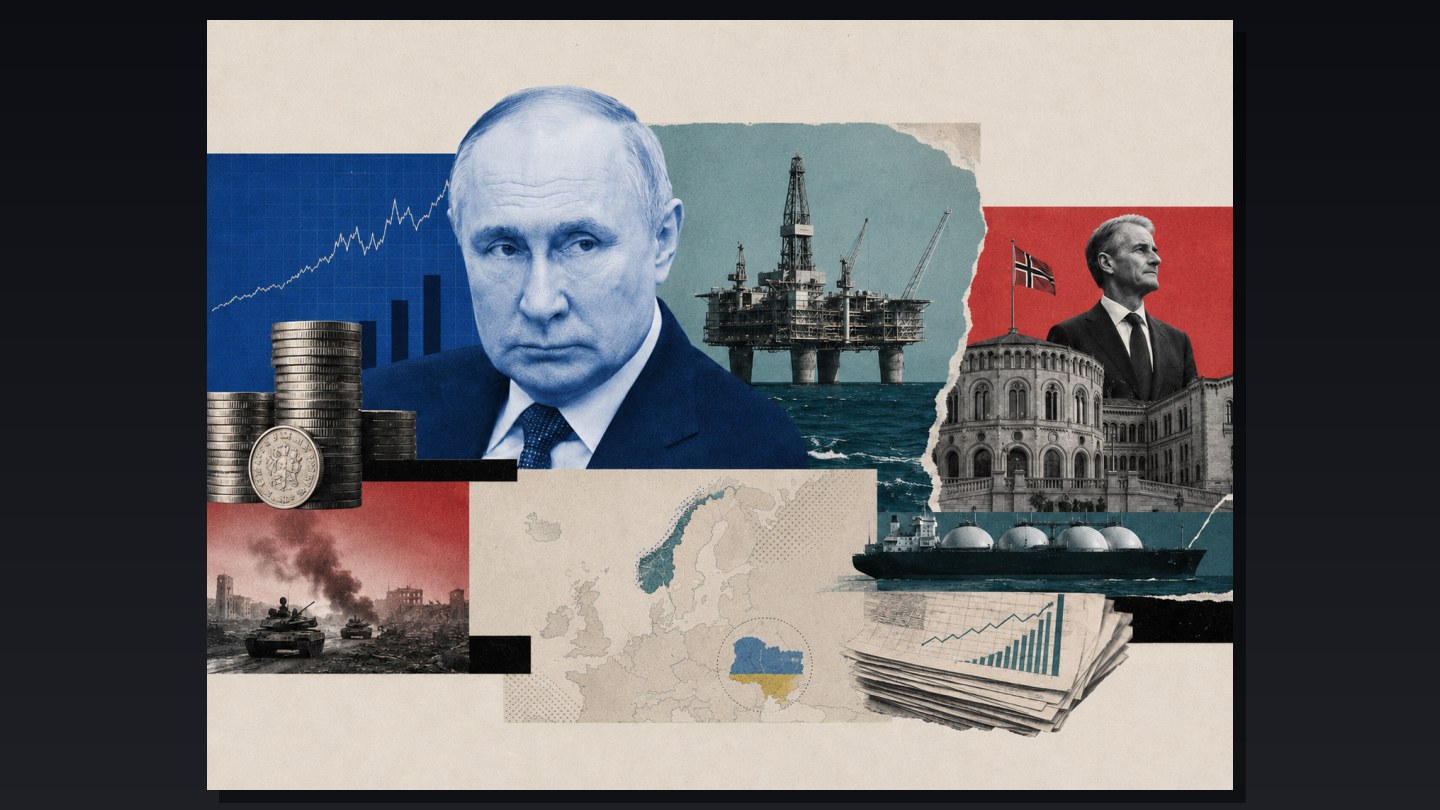
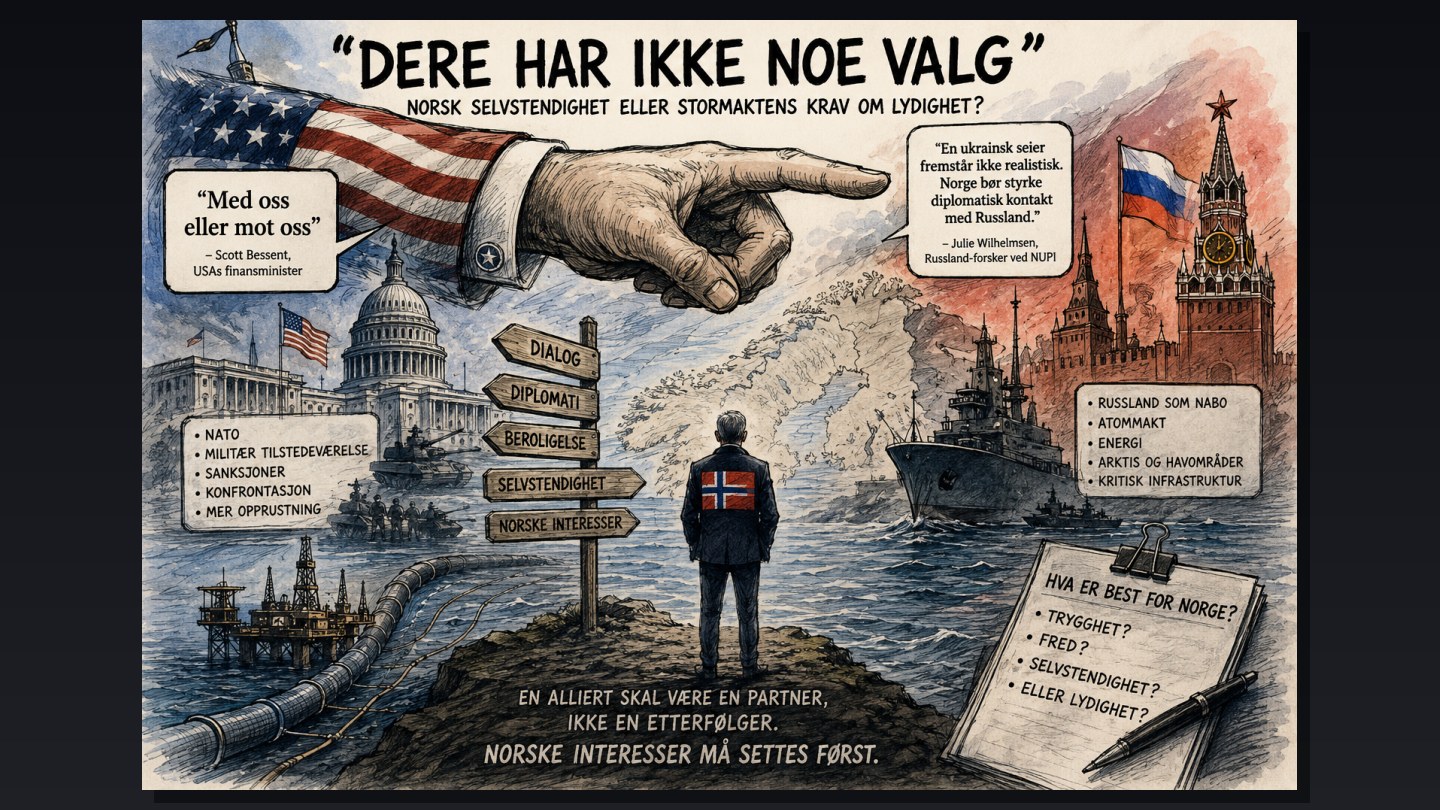
Today Europe has moved in the opposite direction. Finland and Sweden have given up their historic positions and joined NATO. In Norway this is presented as a natural and almost inevitable reaction to Russia’s invasion of Ukraine. But Lottaz believes it must also be understood as a loss of freedom of choice. When a country joins a military bloc, it simultaneously locks itself into the bloc’s future conflicts.
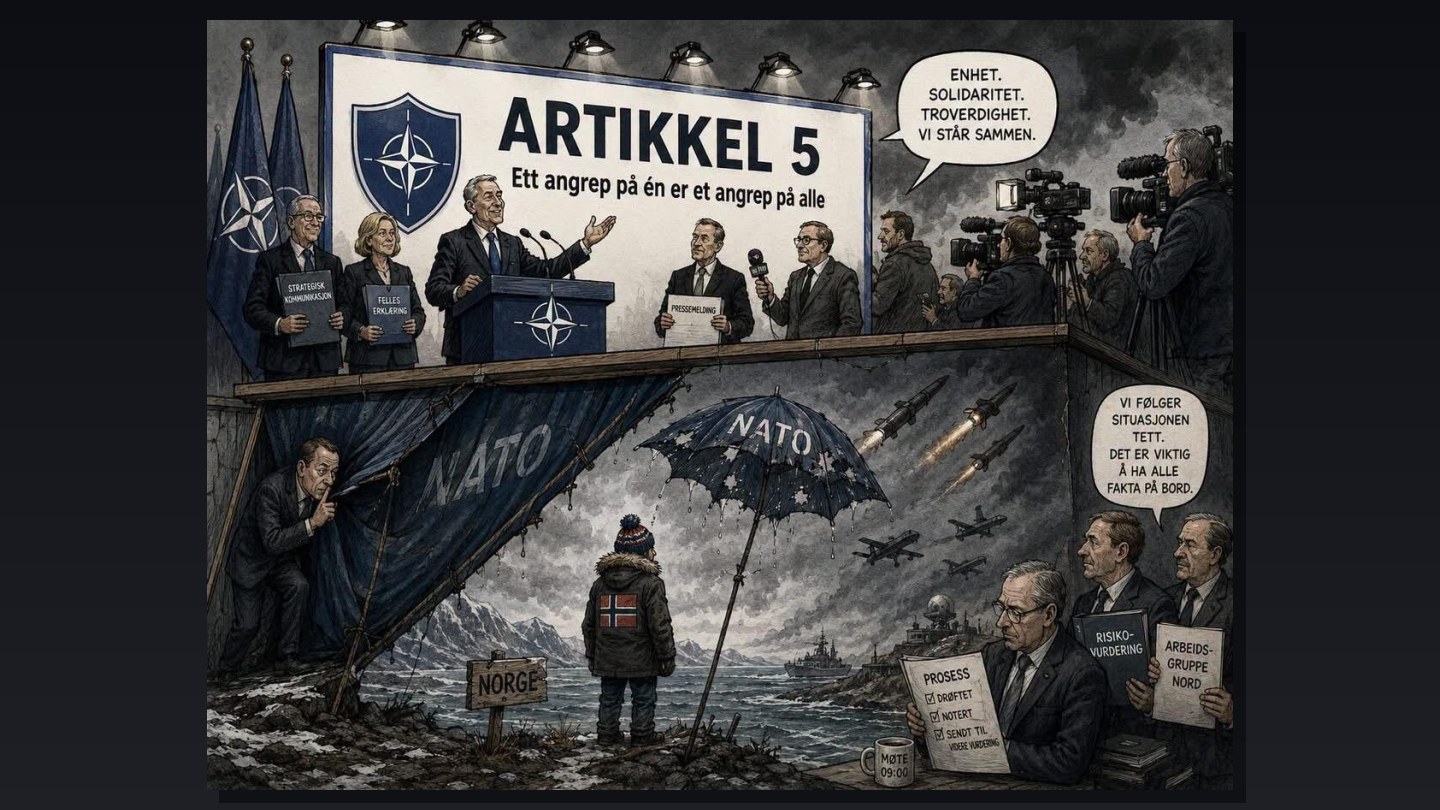
This is something that is almost never discussed in the Norwegian public debate. NATO membership is described as insurance. But every insurance policy has conditions. Article 5 is often presented as an automatic war guarantee, but Lottaz points out that the text does not necessarily oblige member states to take military action in every situation. Nevertheless, the political expectation is obvious: membership means entering a logic in which other people’s wars can quickly become one’s own.
Before Sweden and Finland joined NATO, they still had formal room to say no. Had a conflict between Russia and the Baltic states escalated, Stockholm and Helsinki could in principle have said: we regret this, but we are not going to war with Russia over Riga. That room for manoeuvre has now been sharply reduced.
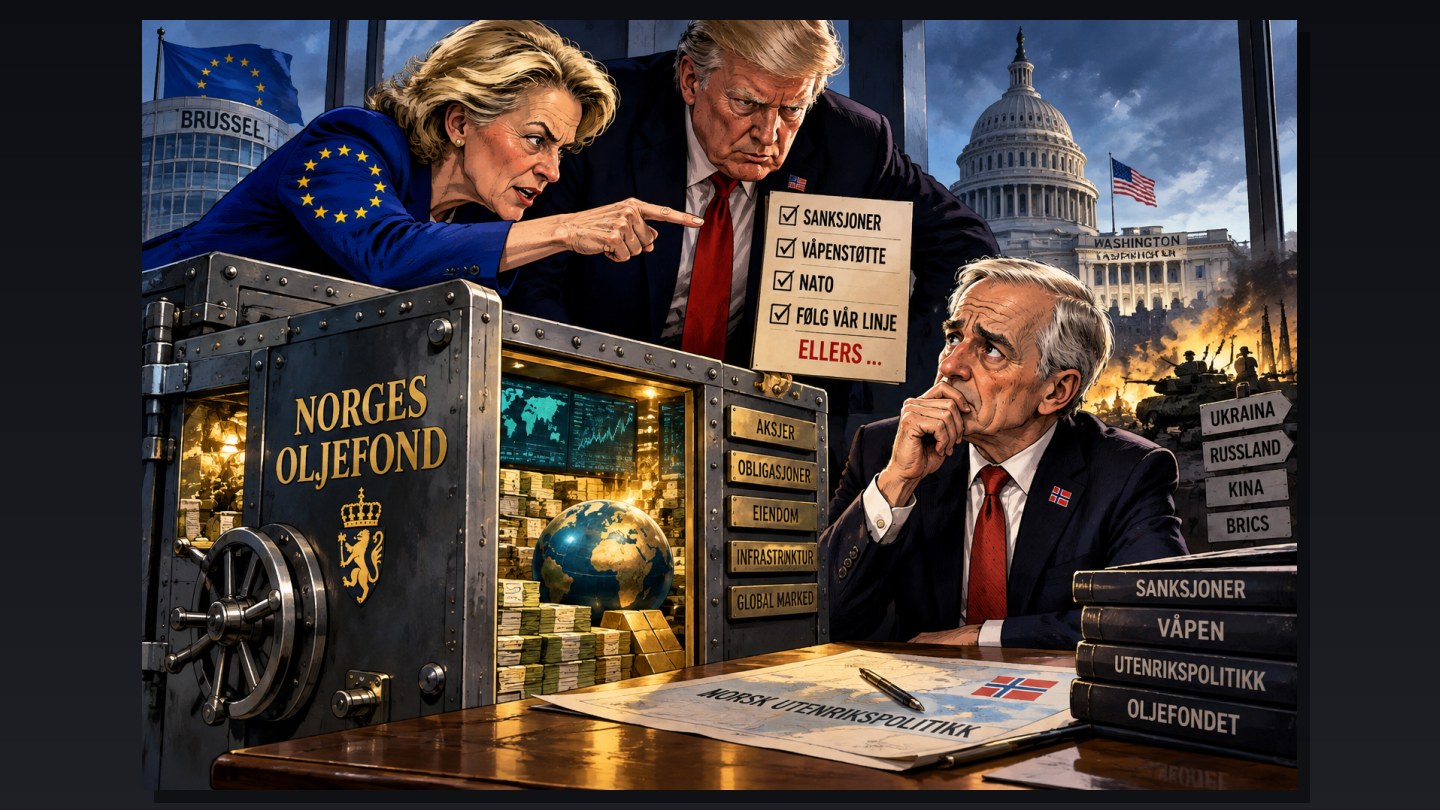
The same applies to Norway, except that Norway long ago grew accustomed to the role of loyal alliance partner. We have become so used to thinking of American and NATO-led security as the very definition of security that we no longer ask what happens if the alliance’s strategy is itself part of the problem.
Lottaz believes Ukraine’s tragedy is the clearest example. In his assessment, Ukrainian neutrality could have prevented the war. This was not a marginal view before 2022. Realists such as John Mearsheimer, former US ambassador Jack Matlock, George Kennan and even Henry Kissinger warned in various ways against pushing Ukraine into the Western military structure. Not because they necessarily sympathised with Russia, but because they understood that Russia would perceive it as an existential threat.
That is exactly what realism tried to warn against: not what we think Russia ought to feel, but what Russia would actually react to.
The Western public has long confused morality with strategy. It is assumed that if one’s own intentions are good, one’s own actions must also have good consequences. But international politics does not work that way. If the other party perceives your actions as a threat, it helps little that you describe them as democracy, freedom or European values.
This is perhaps the most serious weakness in today’s Norwegian security-policy debate. It is almost completely incapable of seeing the world from the perspective of other states.
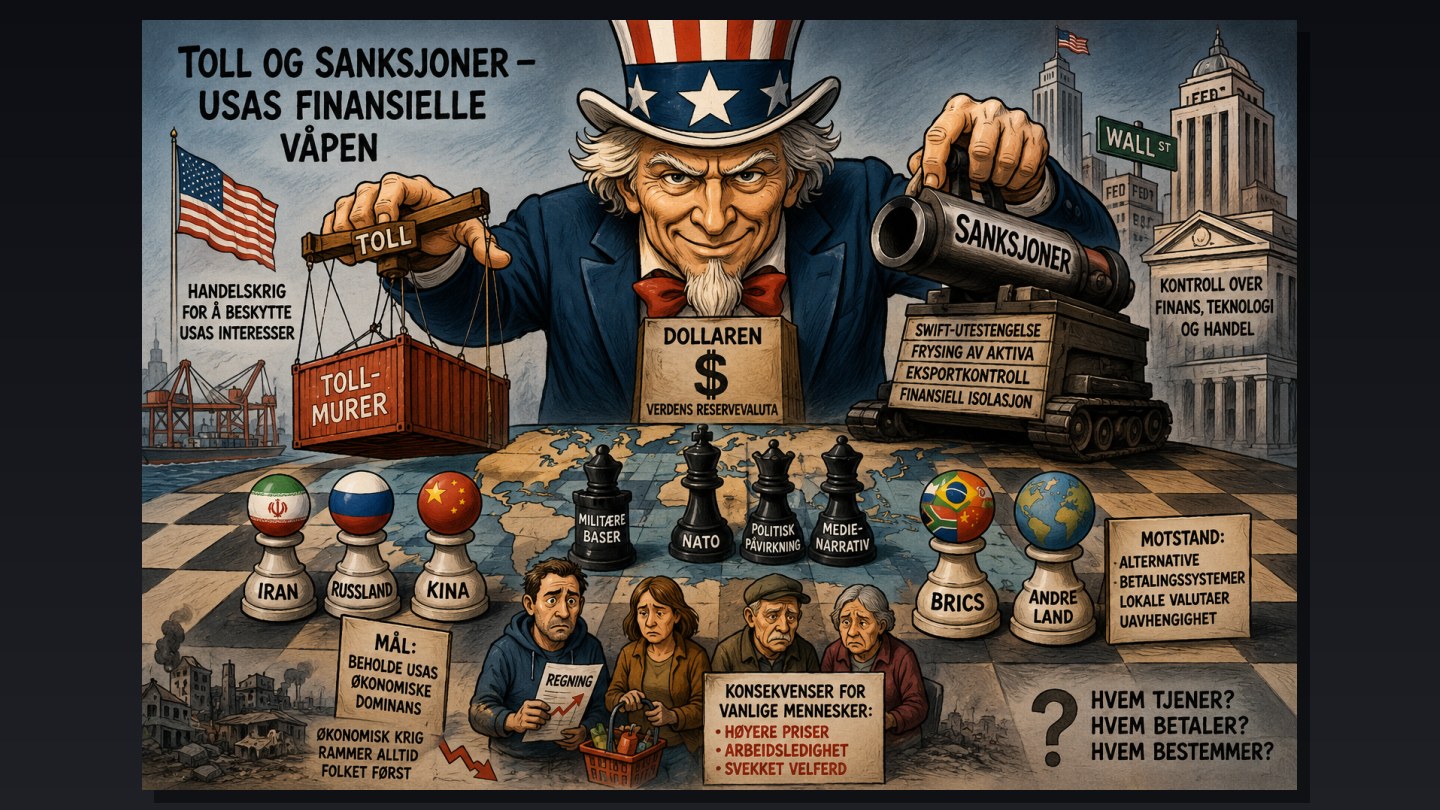
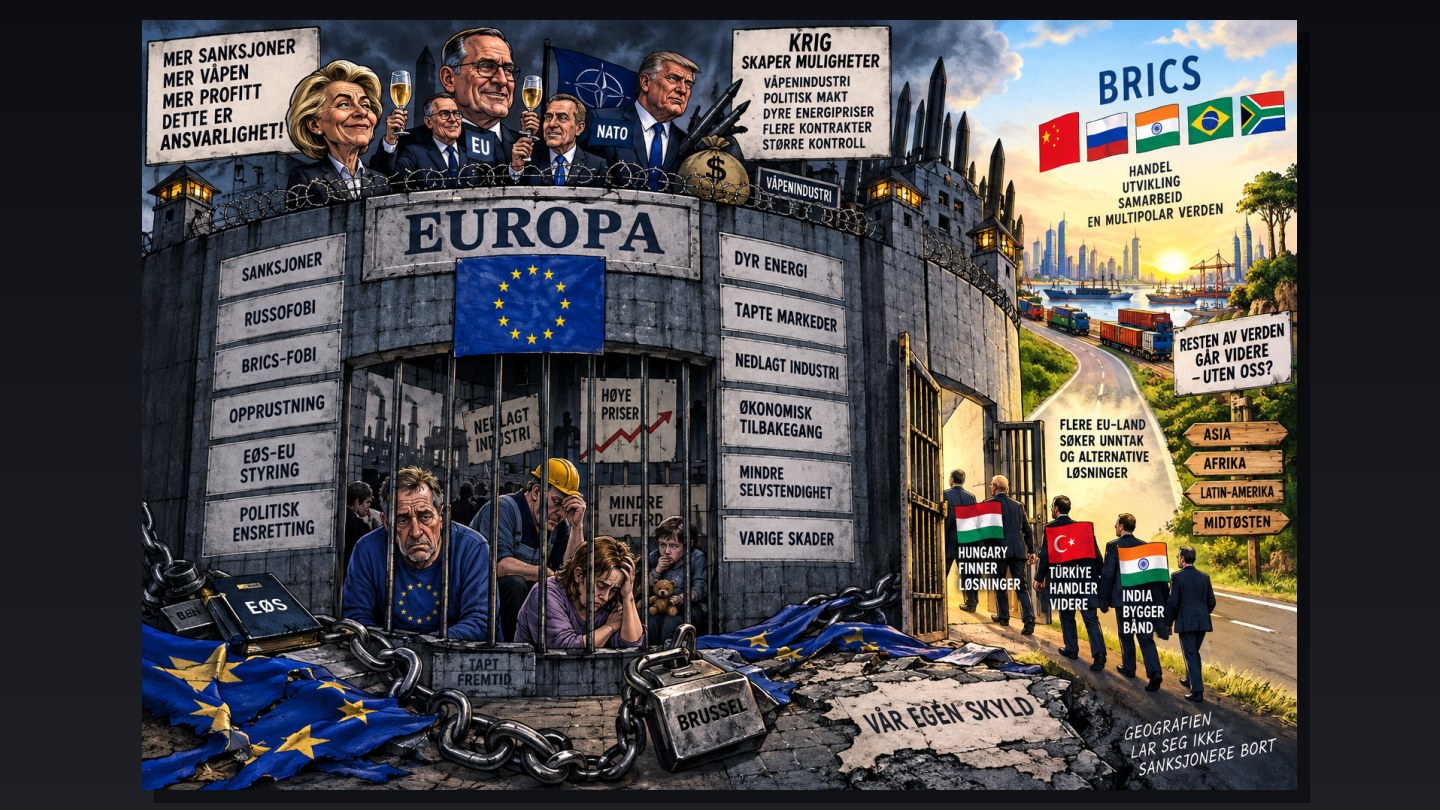
NATO enlargement is described as peaceful, because NATO itself claims to be a defensive alliance. Western arms deliveries are described as stabilising, because they are sent to the “right side”. Sanctions are described as morally necessary, even when they hit civilian populations and push the world into new economic blocs. When Russia, China or Iran react to what they themselves perceive as strategic encirclement, the reaction is portrayed as irrational aggression, not as a predictable result of power politics.
And so we are back in the classic Western blind spot: we believe our own instruments of power are neutral, while other people’s instruments of power are expansionist.
Lottaz goes further. He believes Europe is now in the process of abolishing the very idea of a functioning relationship with Russia. What is the plan for Finland, Sweden, Norway and the rest of Europe? Eternal hostility? Two, three, four hundred years of deterrence? No trade, no open borders, no normal diplomatic relations, no practical coexistence?
It sounds like security policy. In reality it is a recipe for permanent crisis.
For what is actually the end goal? Is Russia to be defeated militarily? Is Moscow to be occupied? Is a nuclear power spanning eleven time zones to be forced into capitulation without resorting to the most extreme means the state possesses? These are questions that should be asked every time Norwegian politicians repeat that Ukraine must be supported “for as long as it takes”. For as long as it takes to do what?
If the answer is Russian capitulation, the policy is not only unrealistic. It is suicidal.
Watch the interview
In the interview, Pascal Lottaz explains why neutrality has historically been a survival strategy for small and medium-sized states, why Ukrainian neutrality could have been an alternative to war, and why, in his view, Finland’s and Sweden’s NATO membership does not necessarily make the Nordic region safer.
The propaganda that calls itself reality
One of the most interesting points in the conversation concerns not only diplomacy, but the role of the media. Lottaz describes today’s Western information space as a propaganda system that has succeeded precisely because it does not look like propaganda.
In the Soviet Union, he says, people usually knew they were reading propaganda. In today’s Europe, many believe they are informed because they follow the established media. The problem is that they often do not get a broader picture, but a frame of reality repeated so consistently that it is experienced as objective.
This is a precise description of the Norwegian debate on Ukraine, Russia and NATO.
The Norwegian media have not only reported on the war. They have largely functioned as custodians of a particular interpretation of it. Russia acts. Ukraine reacts. NATO defends. The West helps. Those who challenge this narrative are met not with counter-arguments, but with suspicion.
One must not explain Russia’s security thinking, because that is “understanding Putin”. One must not question NATO enlargement, because that is “repeating the Kremlin’s narrative”. One must not talk about the Minsk agreements, the 2014 coup, Donbas or Western interference, because that shifts the focus away from “the unprovoked aggression”.
In this way the public sphere becomes not a space for analysis, but a loyalty test.
This also explains why neutrality has become an almost suspect concept. In a mature political culture, neutrality would be a natural strategic alternative to discuss. In today’s Norway it is quickly interpreted as a sign of moral failure. But it is not moral superiority that lies behind this rejection. It is bloc mentality.
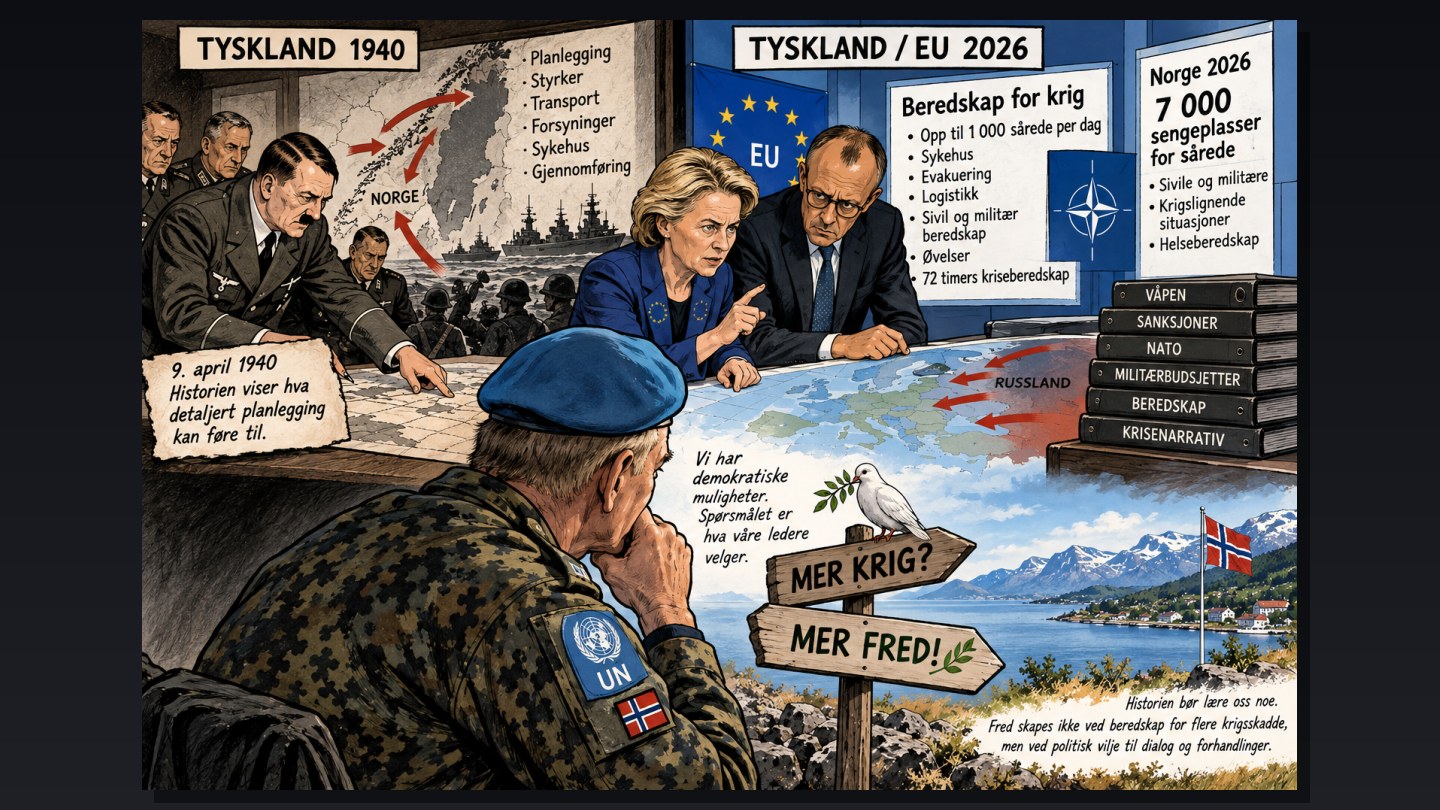
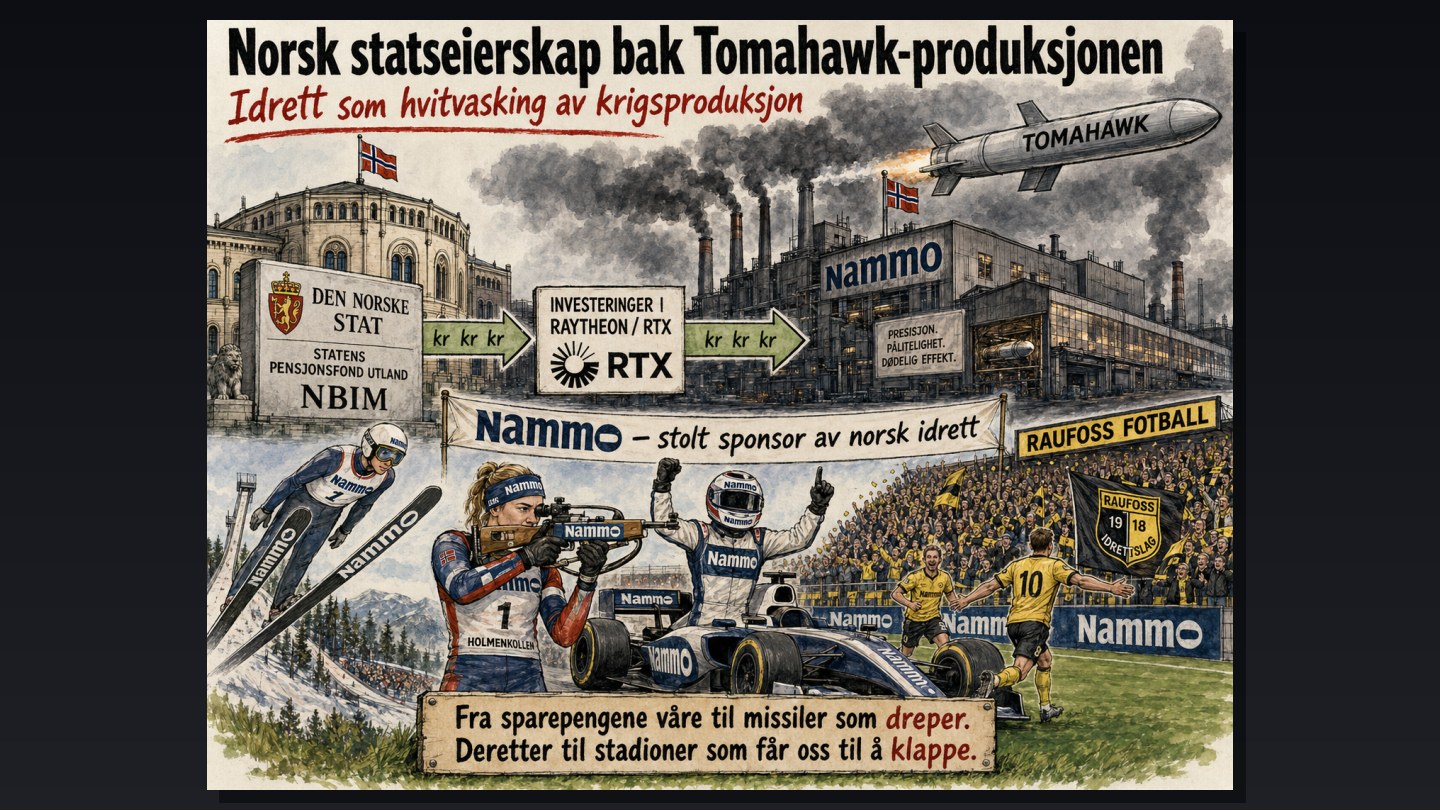
For decades Norway has cultivated its self-image as a nation of peace, while integrating itself ever more deeply into the military structure of the US and NATO. We talk about international law, but took part in the bombing of Libya. We talk about sovereignty, but accept that American bases and American priorities take up ever more space in Norwegian security policy. We talk about democracy, but treat fundamental disagreement on foreign policy as a threat to democracy.
This is where Lottaz’s perspective becomes particularly relevant to Norway. For neutrality is not only about Ukraine, Switzerland or Austria. It is about whether small states should still have the right to think for themselves.
If all security is to be defined through NATO, there is in practice no longer any independent Norwegian security thinking. There is only alliance loyalty, wrapped in moral phrases.
Europe’s most dangerous illusion
The greatest danger now is not only the war in Ukraine. It is that Europe has lost the ability to imagine a future other than confrontation.
Lottaz points out that the European discussion is in reality not about peace, but about what form of Russian defeat is acceptable. The only peace scenario given room in the official debate is one in which Russia gives up. But if Russia is not about to give up — if, on the contrary, Russia believes it is fighting an existential war and is willing to see it through — then the entire European strategy is built on a fantasy.
And fantasies are dangerous when they steer nuclear-weapons policy.
It is possible to dislike Russia. It is possible to condemn the invasion of Ukraine. It is possible to believe that Ukraine’s suffering is real and tragic. But none of these positions exempts us from thinking strategically. A policy built solely on moral indignation, without a realistic picture of the balance of power, often ends up prolonging the very suffering it claims to want to stop.
This is the brutal strength of neutrality: it forces us to ask what can actually work, not just what sounds right.
For Norway, this ought to be an uncomfortable but necessary question: what really serves Norwegian security? Being a bridge between parties, or becoming yet another plank in an ever more militarised Western front line? Preserving room for manoeuvre, or surrendering it to an alliance increasingly driven by American priorities? Contributing to negotiations, or applauding a war that cannot be won without catastrophic escalation?
Neutrality is not always possible. But the absence of neutrality makes war far more likely.
It is this insight that is now disappearing from Europe. And that is precisely why it must be reclaimed.
For small states, the most important question is not whom they love most. The most important question is how they survive when the great powers lose their minds.
Sources: Interview with Pascal Lottaz. Kyoto University describes Lottaz as an associate professor whose research topic is “Neutrality in International Relations”. The Neutrality Studies Institute describes the project as an international research project on neutrality and non-alignment in international relations, founded and led by Lottaz at Kyoto University.