
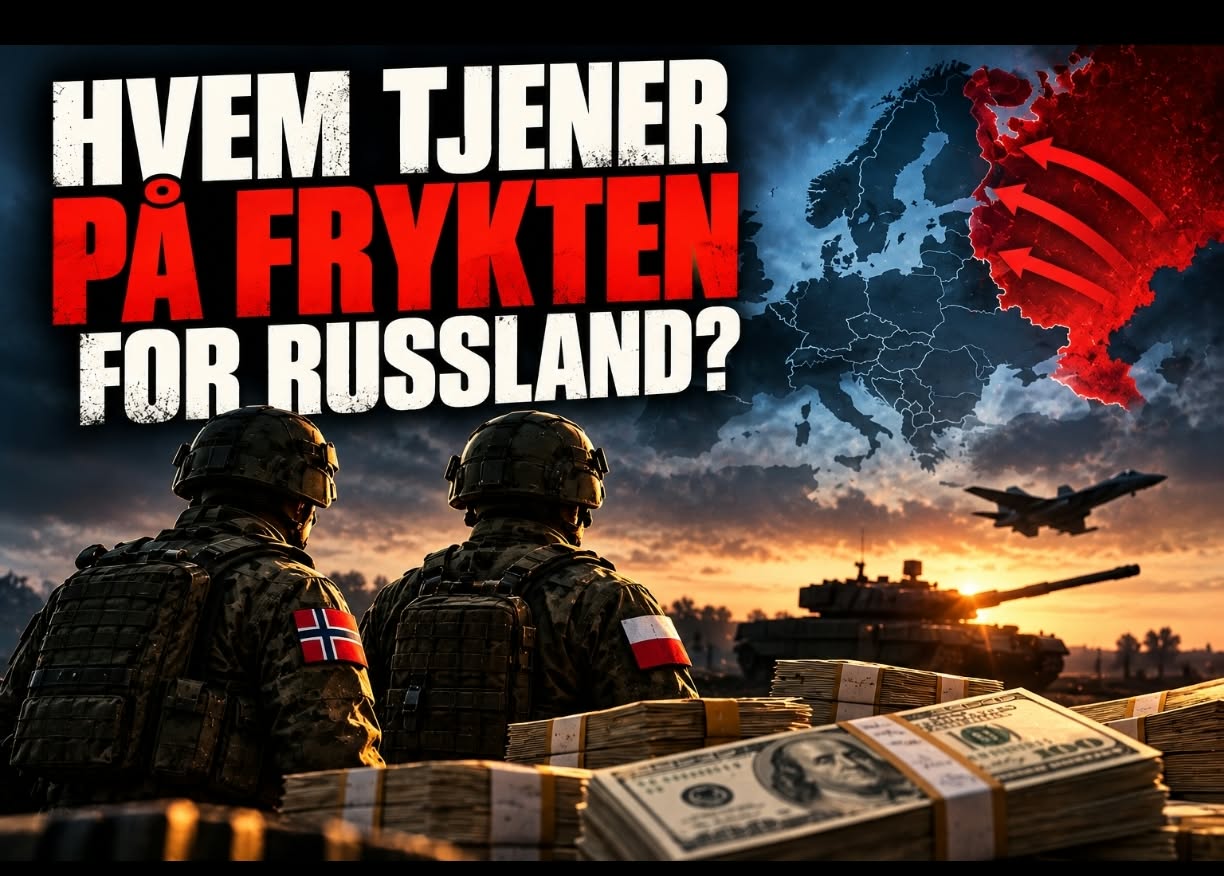

Is Russia really as weak as some Western experts claim? Or is a great power with considerable military, economic and strategic resources being underestimated?
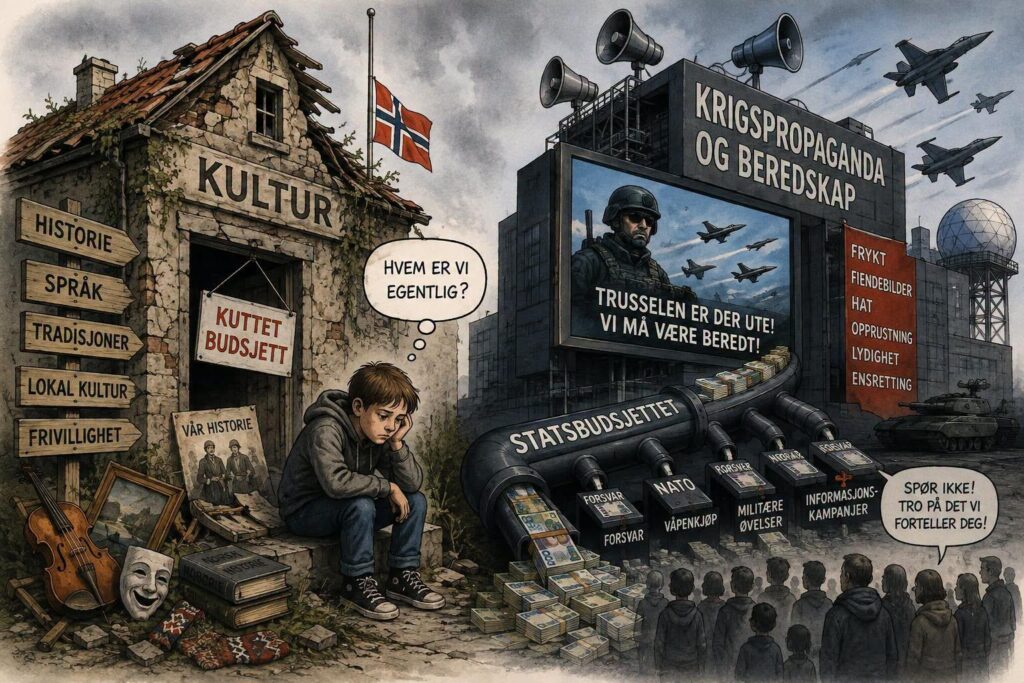
Russia is often portrayed as both weak and dangerous. The country is described as heading for defeat, while the threat from Russia is used to justify ever larger military spending. Whether Russia is strong or weak, the conclusion is often the same: we must rearm.
But who benefits from this narrative?
When experts make fear credible
In “Russophobia: Propaganda in International Politics”, the Norwegian political scientist Glenn Diesen describes how political narratives gain credibility through experts, think tanks and institutions that appear independent.
When an arms manufacturer recommends more missiles, we see a salesman. When a security expert recommends the same, we see an authority.
The arms industry does not need to buy particular opinions. It can support conferences, seminars and research communities that already promote a worldview shaped by military rivalry and rearmament. There is no need to control what the experts say. It may be enough to fund the arenas where they are heard.
It therefore becomes important to ask who funds the security debate, and which interests gain the most influence.
Poland – a historic opportunity or a historic burden?
The Polish geopolitical analyst Jacek Bartosiak, founder of Strategy&Future, described the weakening of Russia’s imperial project in 2022 as a historic opportunity for Poland.
In this narrative, the war in Ukraine also becomes an opportunity to change the balance of power in Europe. Poland is given a role that goes beyond defending its own territory. At the same time, it is increasingly emphasised that Poland and Norway are close allies with shared security interests.
But what kind of future are these countries being prepared for?
The Poles have a historic slogan: “Za wolność naszą i waszą” – “For our freedom and yours”. It expresses a long tradition of Polish participation in other peoples’ struggles for freedom. But in today’s geopolitical situation it also raises an uncomfortable question:
When Bartosiak speaks of Poland’s historic opportunity, is this an opportunity for Polish society – or an invitation to take on a new historic burden in the West’s conflict with Russia?
Is Poland being prepared for yet another role as Europe’s frontline state, ready to fight “for our freedom and yours”? And what role is Norway to play in this development?
Norway – from low tension to rearmament
Norway has long combined NATO membership with a policy of low tension in the High North. Now the security debate is increasingly dominated by deterrence, military preparedness and extensive arms procurement.
At the same time, Norway has a significant defence industry. Rearmament also means jobs, export revenue and billion-kroner contracts.
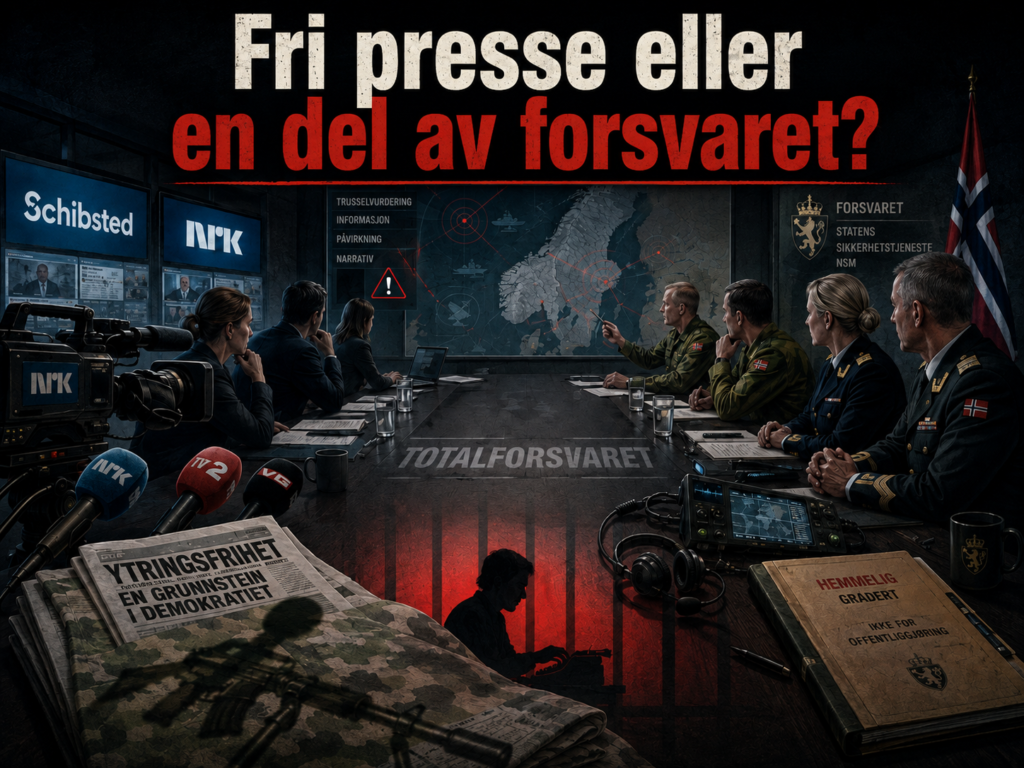
Who funds the security conferences? Who supports the expert communities? Which companies and organisations have the greatest influence on how threats and solutions are presented?
When the debate is primarily about how we should prepare for war, who is talking about how war can be avoided?
Fear is also a market
As early as 1961, US President Dwight Eisenhower warned against the power of the military-industrial complex. Today we must also turn our attention to the think tanks, experts and media that shape our understanding of security.
The most effective influence does not need to be built on lies. It may be enough to repeat one narrative so often that other perspectives disappear from the debate.
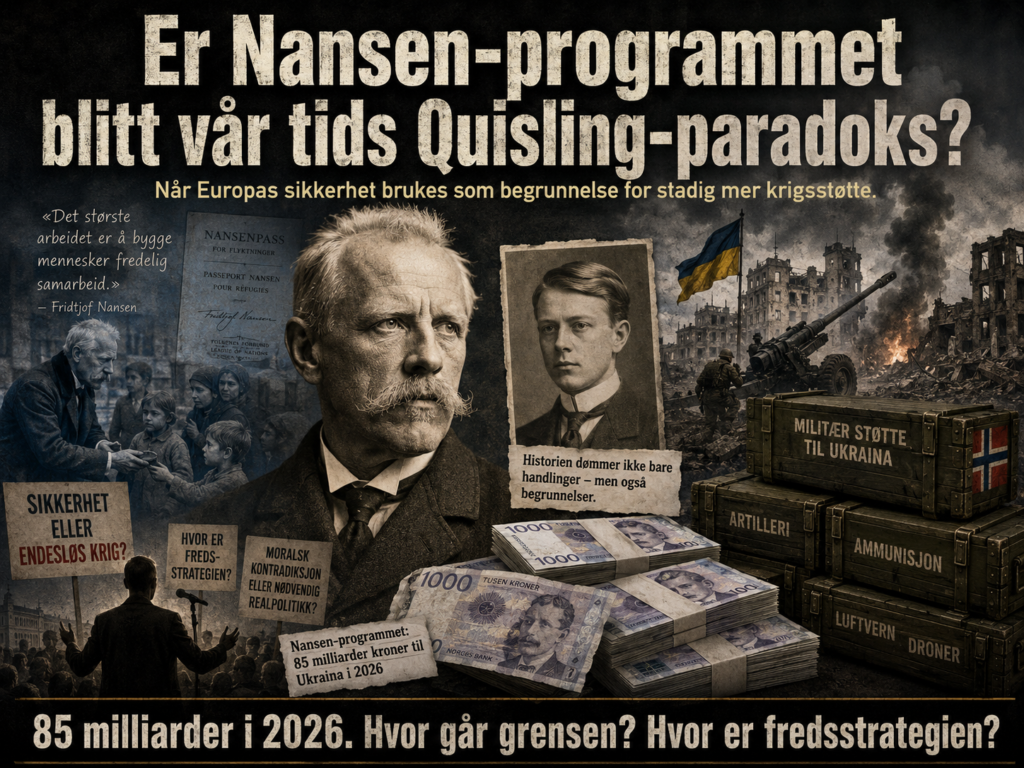
For the arms industry, rearmament can mean large revenues. For ordinary people, it also means economic costs, rising tension and the risk of war.
That is why Norwegians and Poles should ask a question that rarely gets enough space in the security debate:
WHO HAS AN INTEREST IN US CONSTANTLY PREPARING FOR WAR – AND WHO WILL FIGHT WHEN IT COMES?
Se og hør mer
Videoer, klipp og innslag knyttet til temaet.