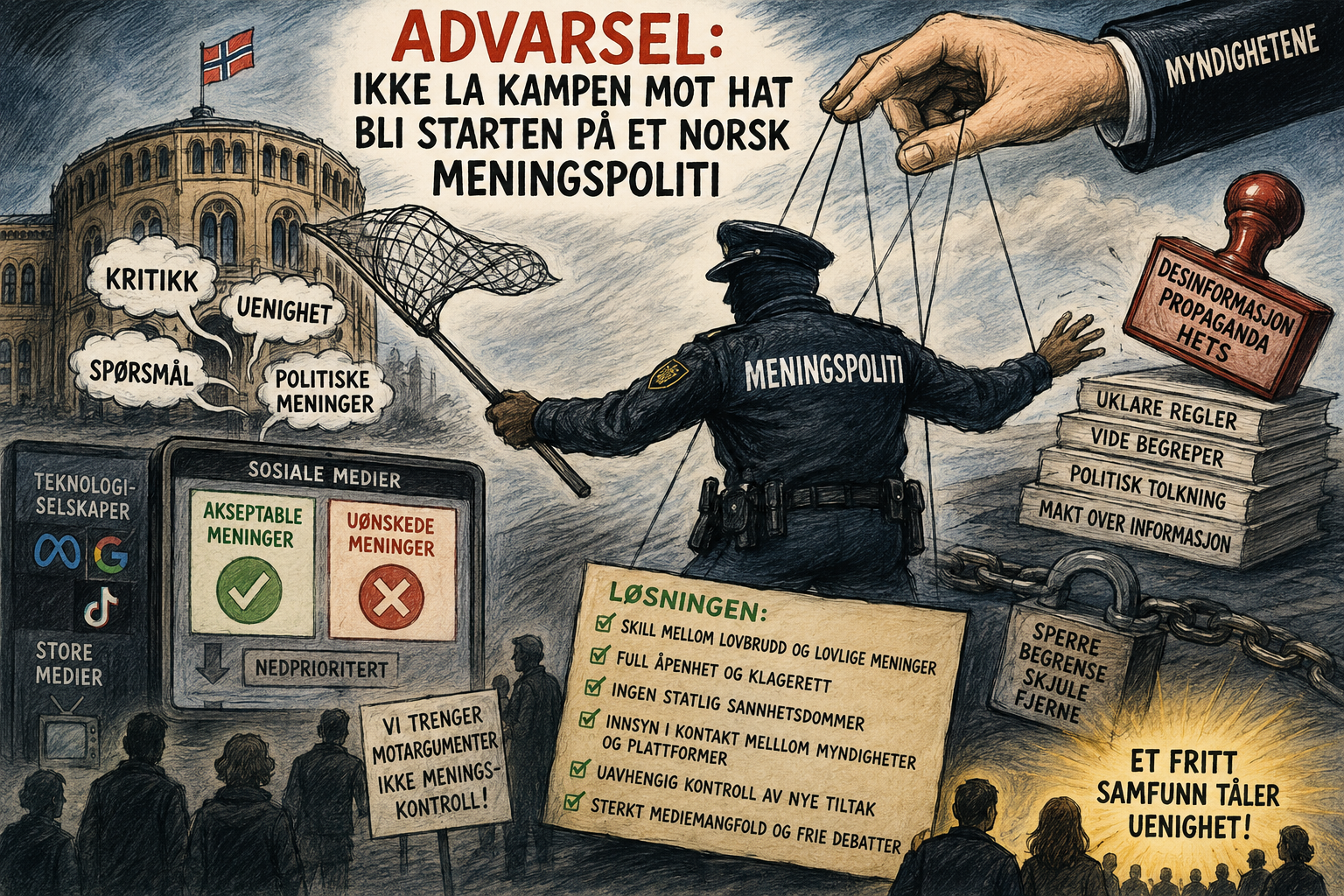
I believe we must now warn far more clearly than before. For while politicians say democracy must be protected, the desire for more regulation, more control, more restrictions and stronger interventions against what is shared on digital platforms is growing. Each individual decision can be explained with good intentions. But the sum can be far more serious than what is presented publicly.
Who defines propaganda?
Who actually decides what propaganda is? Who gets to define what disinformation is? When does sharp criticism of the government become “harassment”? When is opposition to NATO, the EU, Norway’s Ukraine policy, immigration policy or other heavy political issues deemed so problematic that its visibility should be limited? These are not academic questions. This is about power over public debate.
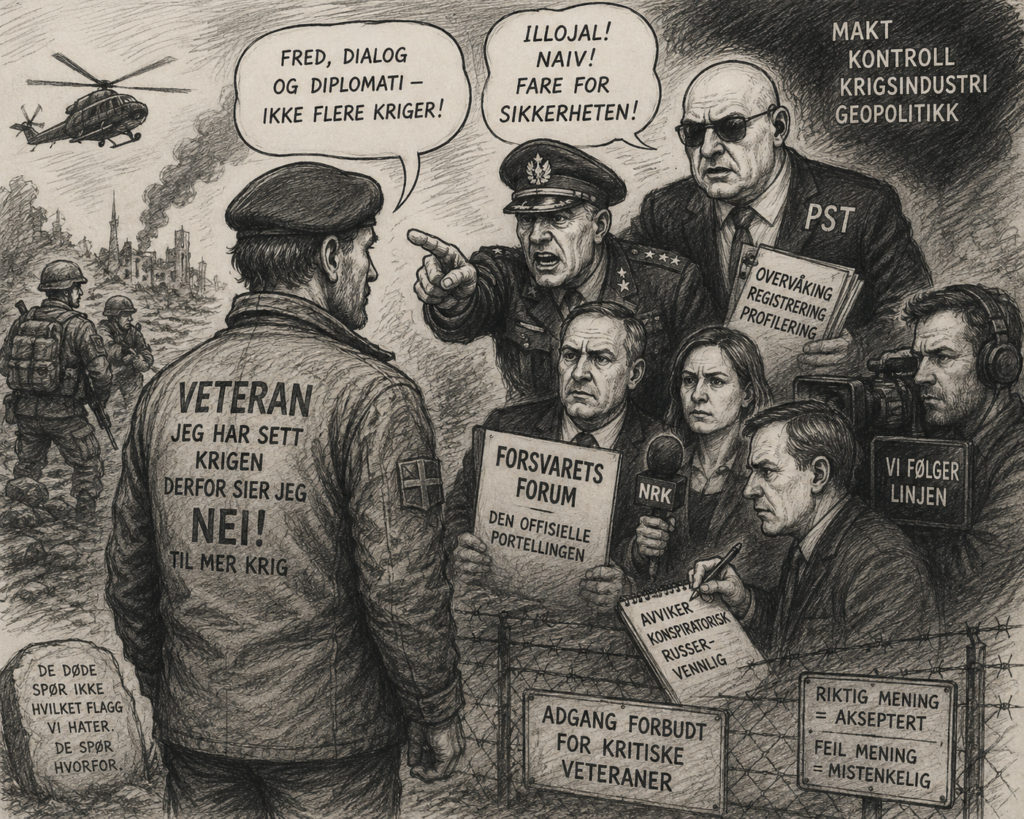
In a democracy it must be fully lawful to claim that the government is pursuing the wrong policy. It must be lawful to believe that Norwegian media cover a war in a biased way. It must be lawful to be strongly critical of NATO, the EU, Russia, Ukraine, Israel, Palestine or the Norwegian authorities without automatically being labelled propaganda, extremism or disinformation. If such labels become political weapons, they can be used to push unwanted voices out of public life without anyone formally having to ban them.
Modern censorship
Modern censorship does not need to look like the bans and blacked-out newspaper pages of old. It can happen through algorithms, downranking, labelling, limited reach, closed accounts and unclear rules that ordinary users barely have a chance to understand. You can still write, but almost no one gets to see it. You are not formally censored, but your voice has in practice been made weaker. That is precisely why we should be on guard.
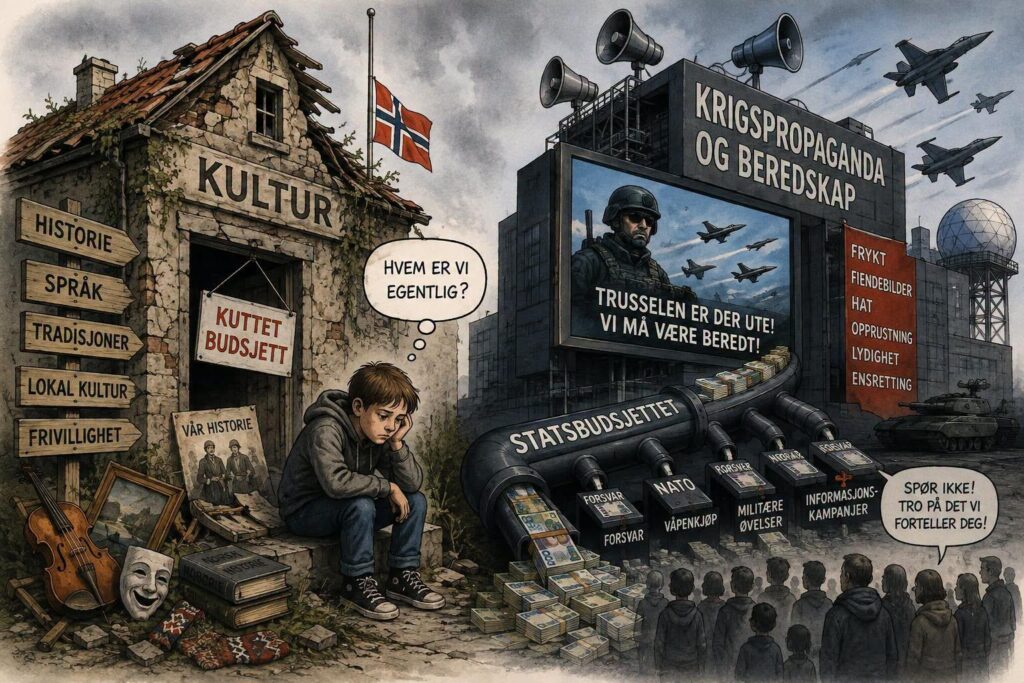
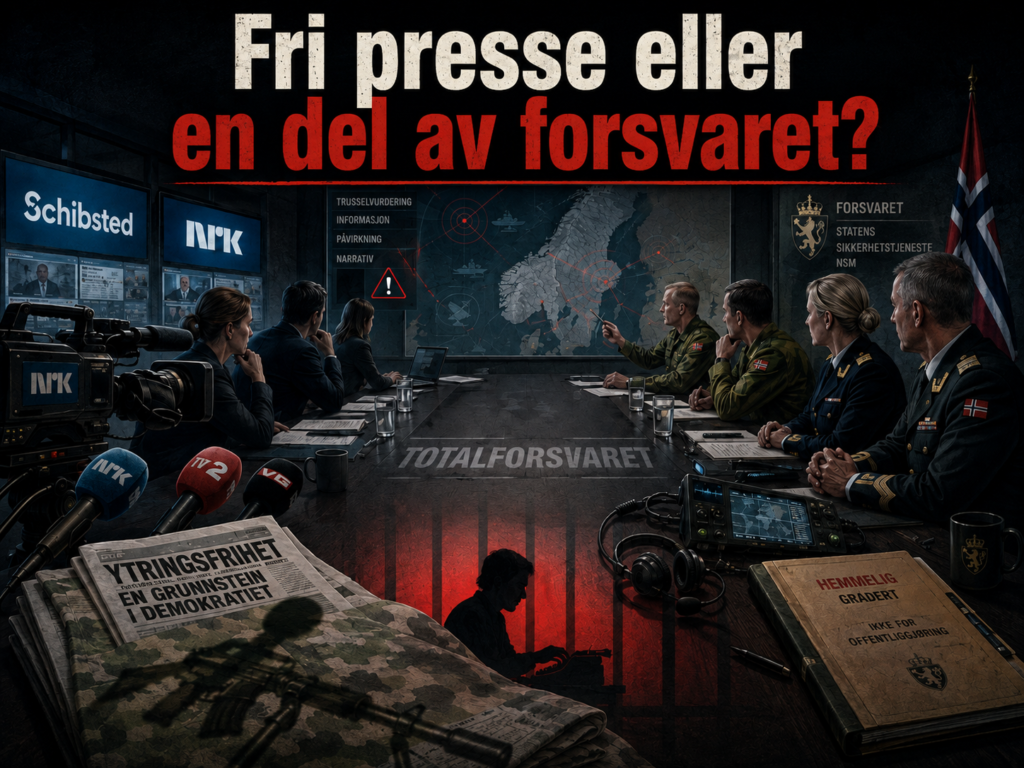
At the same time, there is reason to question the relationship between the state, the largest media houses and the global technology companies. The authorities want to fight disinformation. The media want to appear as guarantors of quality-assured information. The tech companies control the algorithms and decide which posts are lifted up or disappear into the dark. When these forces simultaneously pull towards more control, it must be legitimate to ask whether we are creating a system in which very few actors have disproportionate power over what the population sees and hears.
I am not saying that Norwegian politicians sit in a closed room and have agreed on how political dissent is to be removed… or are they? A coordinated game is not even necessary for the result to be dangerous. It is enough that authorities, media, organisations and tech companies develop the same concepts, the same priorities and the same view of what “responsible” information is. Political conformity can then grow quite openly, while everyone involved claims they are just protecting democracy.
Four steps for freedom of expression
But criticism of this is not enough. We must also talk about the solution.
-The first must be a razor-sharp distinction between illegal acts and lawful opinions. Threats, incitement to violence, targeted harassment and other offences should be handled by the police and the courts. Political disagreement should not be treated as a security problem just because it is uncomfortable, sharp or provocative.
-The second must be full transparency. If a post is restricted, labelled, hidden or removed, the user must be given a concrete reason. Which rule has been broken? Who assessed the case? Have authorities or other public bodies been involved? And most important of all: there must be a real right of appeal. No one should have their voice digitally reduced without knowing why.
-The third must be that the state never becomes the judge of truth. The authorities’ task is to enforce the law, not to decide which political interpretations are correct. Disinformation must first and foremost be met with documentation, open debate, fact-checking and counter-arguments. The best medicine against bad opinions is better arguments, not less freedom of expression.
-The fourth should be far greater oversight of contact between authorities and social media platforms. If public bodies ask for content to be removed, restricted or reviewed, this must be open to scrutiny. The Storting should receive regular reports on how many requests Norwegian authorities have sent to tech companies about posts, accounts or political content. Democratic control requires transparency.
We should also demand that all new measures that may restrict digital expression be strictly assessed against the Constitution’s protection of freedom of expression and the European Convention on Human Rights. An independent body should be able to check whether the measures go too far. Those who make the rules cannot also be the only ones assessing whether the rules are democratic.
And we need stronger media diversity, not weaker. A healthy democracy needs alternative media, critical commentators, difficult questions and people who challenge the established understanding of reality. Some will be wrong. Some will provoke. Some will express themselves badly. That is the price of a free society.
Threats must be investigated. Incitement to violence must be met with the law. But lawful political opinions must be met with political arguments, not with digital barriers, hidden algorithms or political labels.
Censorship disguised as care
The most dangerous form of censorship is the one that comes disguised as care. The one that tells us everything is done for our safety, for democracy and to protect us from influence. For once the tools have been built, there is no guarantee they will always be used as carefully.
The question is therefore not only what today’s government will do with such tools. The question is what a future government can do with them.
Freedom of expression is not tested when everyone agrees. It is tested when someone says something those in power dislike.
That is why the solution is simple in principle but demanding in practice: enforce the law against threats and violence, but keep your hands well away from lawful political opinions. Ensure transparency, the right of appeal and democratic control. Meet propaganda with information and opinions with arguments.
We do not need a thought police.
We need a society that can tolerate disagreement.
Se og hør mer
Videoer, klipp og innslag knyttet til temaet.