
And is it the population that must now pay the bill?
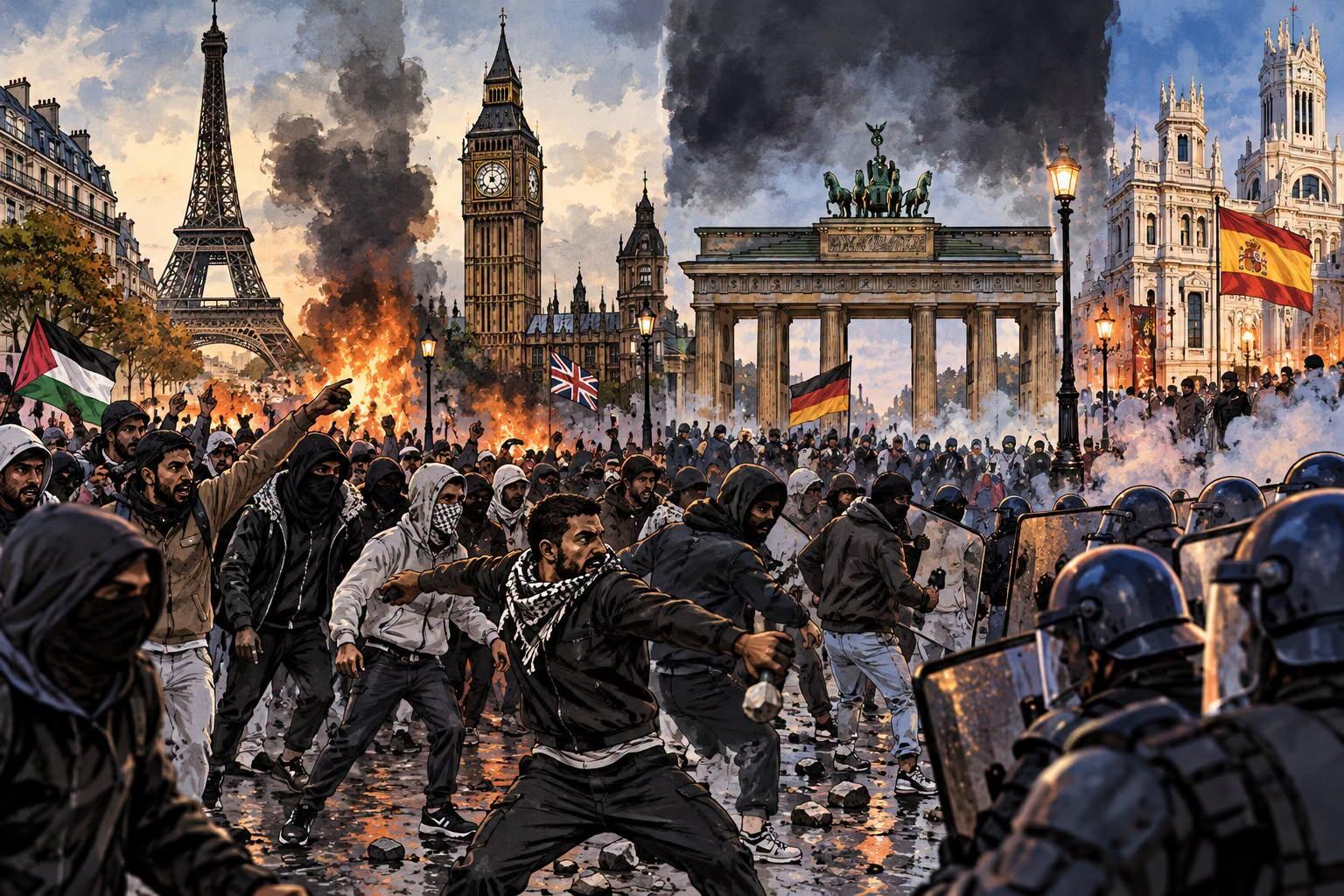
France is a particularly serious example of how complex the problems have become. Paris and several of its suburbs have for many years experienced social unrest, violent riots, crime and major integration challenges. At the same time, the country has been marked by demonstrations against economic austerity, political decisions and social inequality. Not all of these conflicts are about immigration, but integration and the relationship between different population groups have become a central part of the French public debate.
Paris should therefore be a wake-up call for the rest of Europe.
When fear of the racist label steers the debate
How could the tensions be allowed to develop this far? Why have the authorities failed to secure better integration, safety and equal opportunities? And why is the debate so often reduced to a battle between those who demand a stricter immigration policy and those who warn against racism?
It must be possible to discuss the consequences of immigration without being viewed with suspicion. Demanding control of the borders, respect for national laws and clear expectations of integration is not in itself racism.
But precisely the fear of the racist label may have contributed to necessary discussions being postponed. Critics have claimed for years that politicians and the media have been more concerned with protecting their own moral reputation than with discussing the economic and social consequences of immigration. Whether this fully explains the political development is another matter. But the question deserves a serious answer.
Because the consequences of political decisions do not disappear just because the debate becomes uncomfortable.
Housing must be built. Schools must have capacity. The health service must work. The police must be able to maintain public safety. The labour market must give people the opportunity to support themselves. And municipalities must have the finances to handle the tasks the state imposes on them.
When immigration exceeds the capacity to integrate people in a responsible way, the problems can grow. When exclusion takes hold, society risks increased distrust and deeper divisions.
This is not the collective fault of immigrants. It is the authorities’ responsibility to pursue a policy that works.
Norway must learn from Europe’s mistakes – before the bill arrives
Norway, too, must ask these questions before the challenges become harder to handle. We already have debates about youth crime, gang environments, integration, municipal finances and pressure on public services. Discussing what role immigration plays in these challenges must be legitimate. At the same time, we must distinguish between documented connections and political claims.
We do not need more fine speeches about diversity if we do not at the same time dare to talk about requirements, responsibility and consequences.
Norway must have control over the scale of immigration. Asylum applications must be processed quickly and fairly. People without legal residence must be returned when the legal conditions are met. Serious crime must have consequences, and deportation must be considered where the law allows it.
Integration must involve language training, work, respect for Norwegian law and participation in society. At the same time, the authorities must ensure that people are actually given the opportunity to succeed.
We must also dare to discuss the economics. How much do reception, settlement and integration cost? What are the long-term expenses and revenues? How many people can municipalities receive without the quality of other services deteriorating?
These are questions citizens are entitled to have answered.
Europe’s problems cannot be solved by blaming all immigrants. Nor can they be solved by branding every critic as xenophobic. Both destroy the possibility of a necessary and objective debate.
Racism must be fought. But the fight against racism must never be used as a justification for avoiding critical questions about immigration policy.
What is happening in Europe’s major cities shows how serious social conflicts can become when trust between citizens and the authorities is weakened. Norway must learn from both the mistakes and the solutions of other countries.
If Europe’s leaders have postponed necessary decisions for fear of being called racists, they have done their people a serious disservice.
Because it is not the politicians alone who must live with the consequences.
It is the families, the local communities, the schools, the municipalities and the generations to come.
And the biggest political mistake we can make now is to keep silent about problems that require action.
The question, therefore, is not whether we dare to have the debate.
The question is how much it will cost if we don’t.
Se og hør mer
Videoer, klipp og innslag knyttet til temaet.