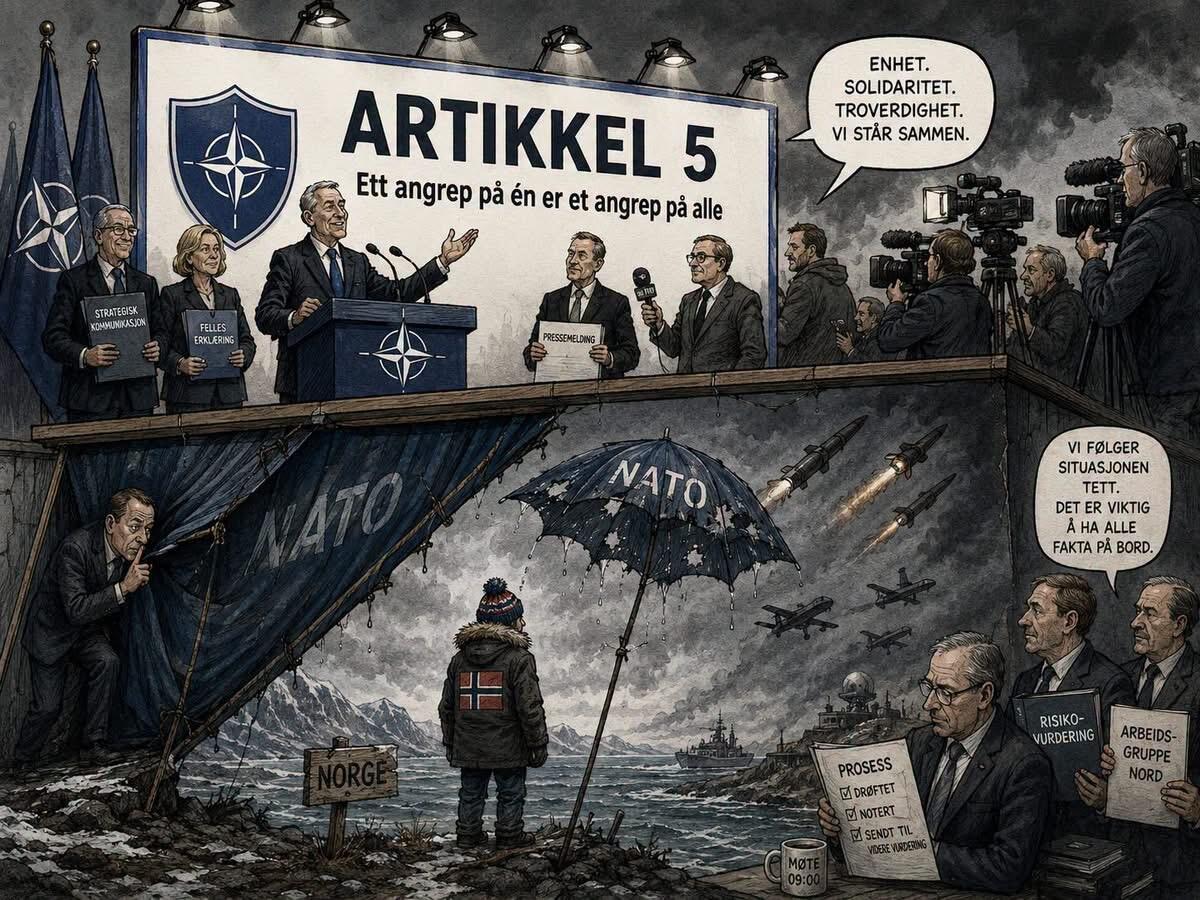
But perhaps that is exactly why we must ask the question: is Article 5 a real guarantee, or has it become NATO’s biggest PR stunt?
To most Norwegians, Article 5 has been sold as a kind of automatic rescue package. If Norway is attacked, NATO comes. If Finnmark is hit, the Americans come. If missiles strike Norwegian infrastructure, the alliance stands united.
But that is not how Article 5 works.
It does not automatically mean war. It does not automatically mean military assistance. It means that each member state decides for itself what measures it considers necessary. That may be soldiers. It may be weapons. It may be logistics. But it may also be meetings, condemnations, declarations and political theatre.
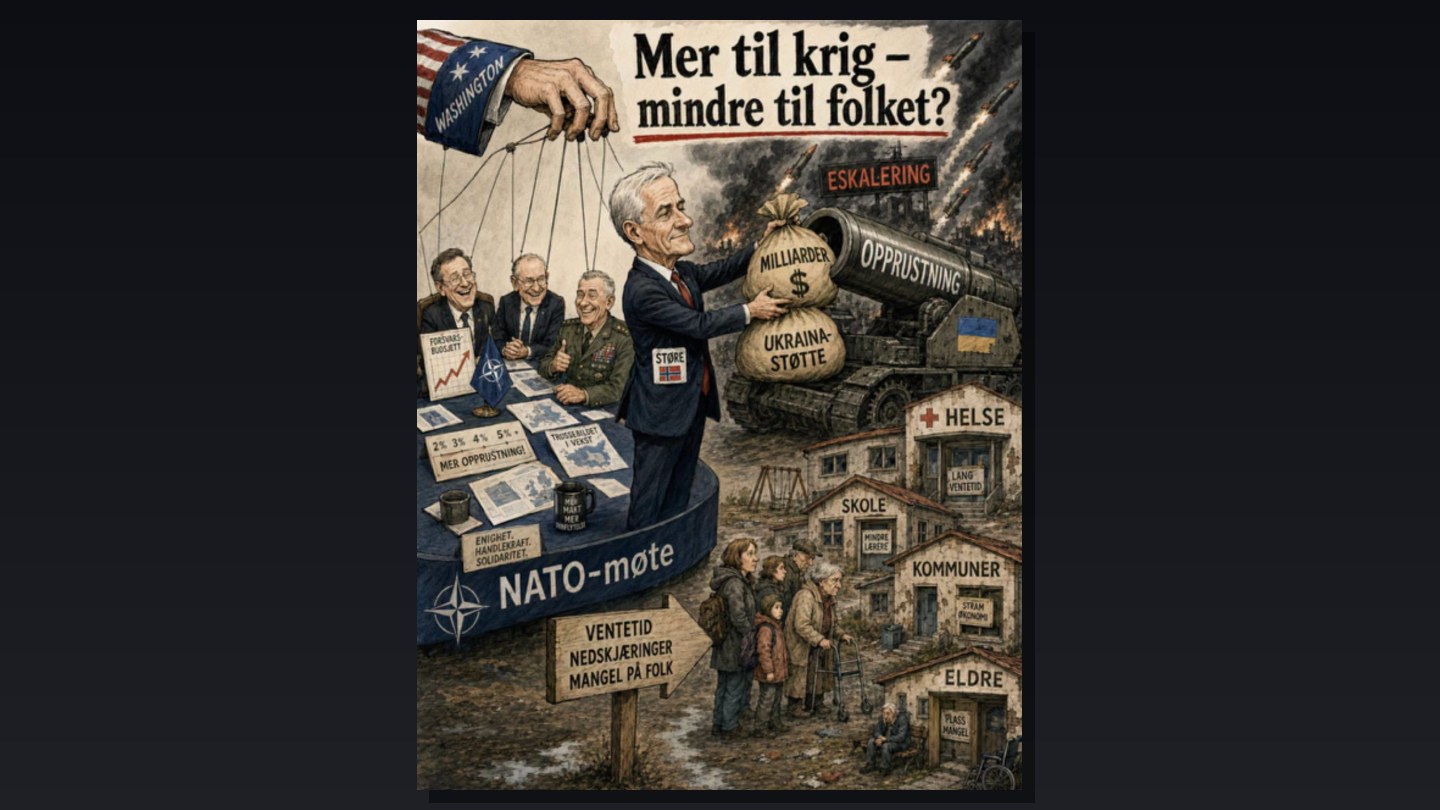
Nevertheless, NATO uses Article 5 as a selling point for ever more rearmament. Every time the population is to be frightened into accepting new bases, new weapons, new multi-billion packages and closer ties to American war strategy, Article 5 is held up as the sacred text of security.
But what is security worth if it only works when the great powers find it politically convenient?
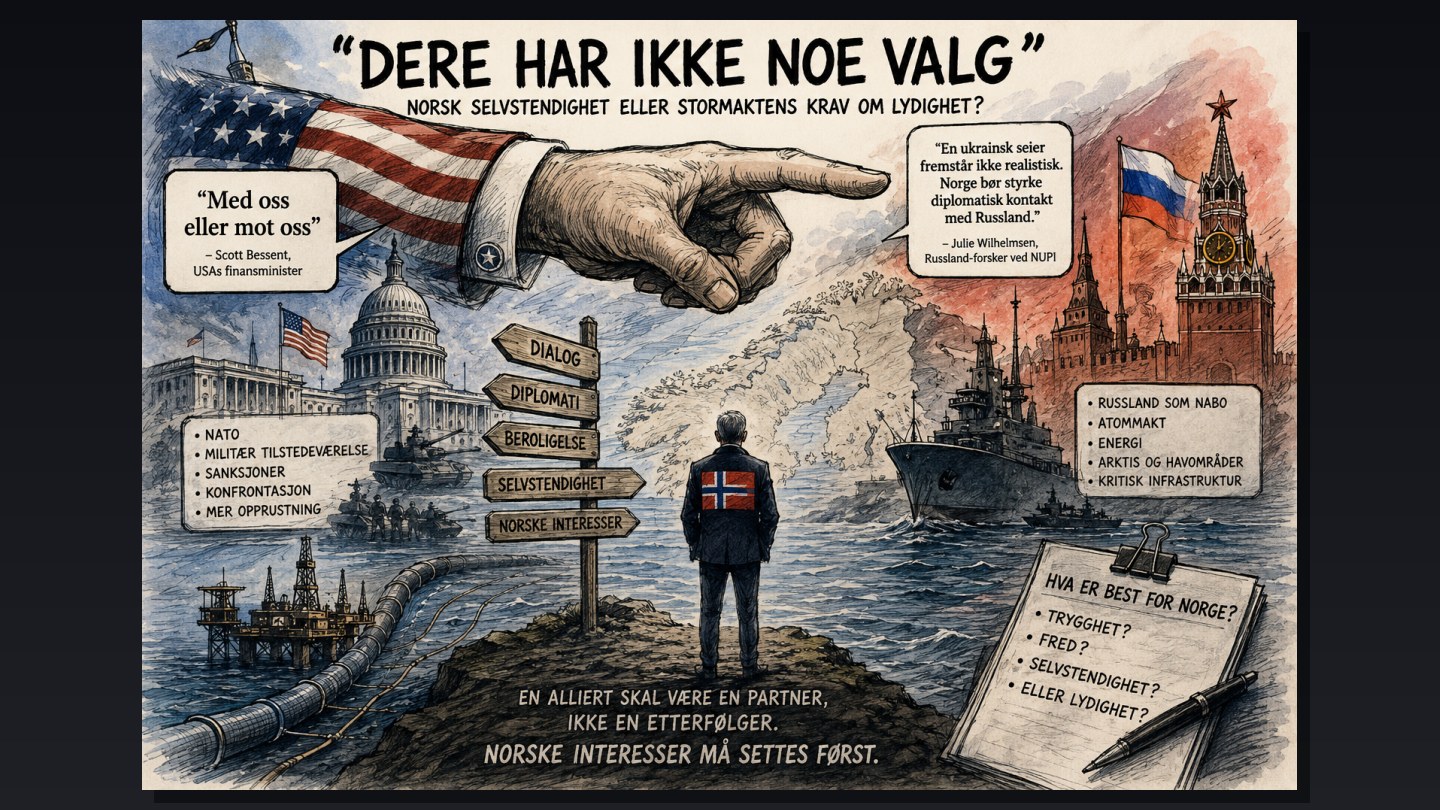
Norway has today made itself more dependent on NATO than ever before. We give up freedom of action, open areas to allied use, tie ourselves more closely to the US and take part in ever more aggressive rhetoric against Russia. At the same time, the people are told this is harmless, because NATO protects us.
But what if the opposite is true?
What if Article 5 does not primarily protect Norway, but makes Norway take greater risks? What if small countries are lured into moving closer to the front line because they believe the great powers’ soldiers will automatically come when things catch fire?
This is the dangerous illusion.
Great powers never act primarily out of idealism. They act out of their own interests. The US will not sacrifice New York for Kirkenes unless it believes it serves American interests. Germany will not automatically risk Berlin for Norwegian symbolic politics. France, the UK and Italy will assess the situation as all states do when things get serious: what will this cost us?
It is brutal, but true.
Article 5 has only been invoked once, after 11 September 2001. Then it was the US that had been attacked. Then the alliance stepped up. But when smaller countries are pressured, threatened, hit by cyberattacks, sabotage or border incidents, everything immediately becomes less clear. Then come the lawyers. Then come the press releases. Then come the diplomatic formulations.
And then one discovers that the sacred guarantee has footnotes.
Norwegian politicians would rather not talk about this. It fits poorly with the narrative that NATO is our life insurance. It fits poorly with a policy in which Støre and others have bound Norway ever more tightly to a war alliance increasingly steered from Washington.
Because if Article 5 is not an absolute guarantee but a political judgement, then Norway has built its security policy on a dangerous misunderstanding.
A small country must never hand over its judgement to other people’s great-power games. We need a defence for Norway, not just a role on NATO’s strategic map. We need diplomacy, independent analysis and political courage. We need leaders who dare to ask what actually serves Norwegian interests, not just what earns applause in Brussels and Washington.
The most serious thing is that Article 5 is used to dampen popular opposition. It makes rearmament sound safe. It makes bases sound natural. It makes war rhetoric sound responsible. It makes Norwegian citizens believe the risk is smaller than it actually is.
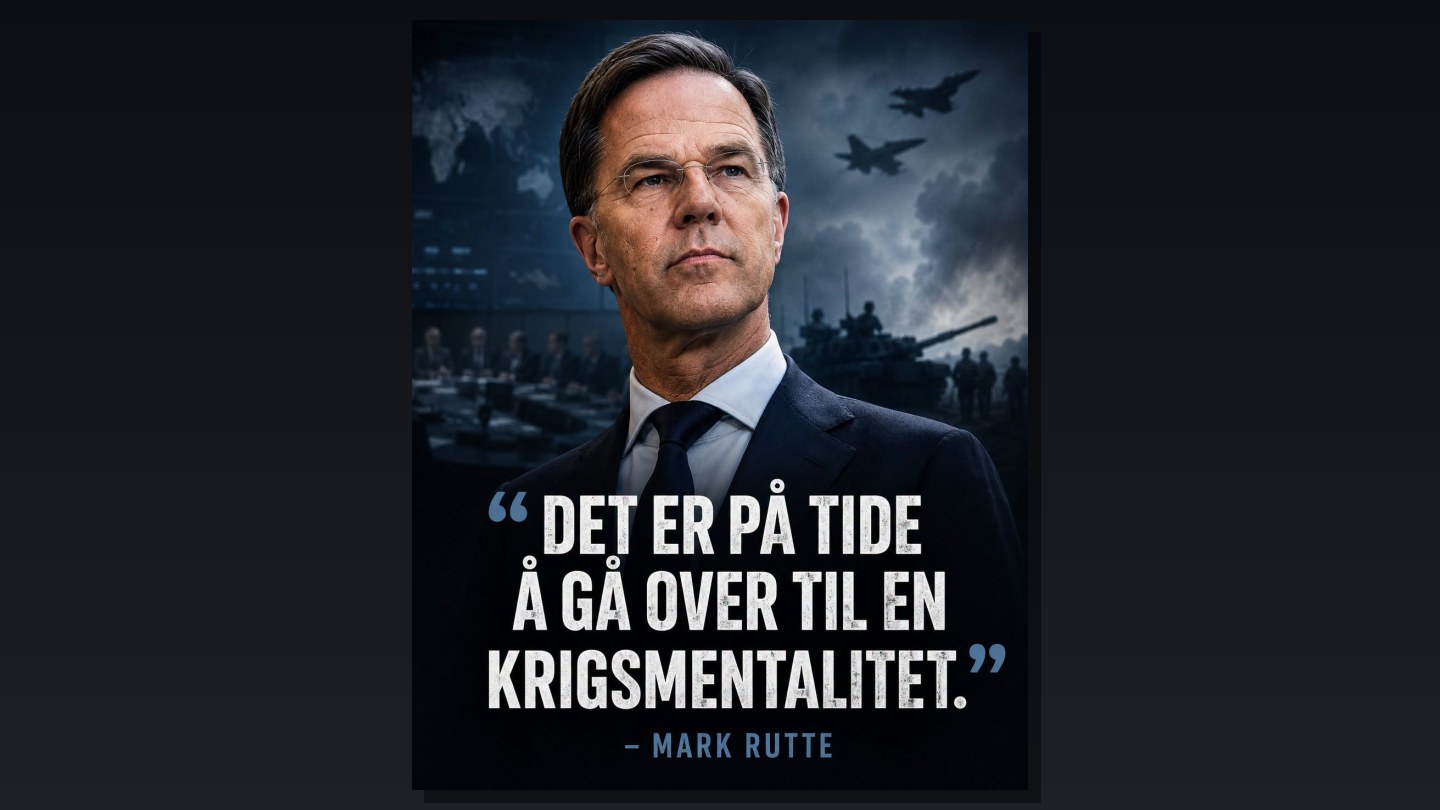
But once war comes, slogans will not help. Press conferences will not help. It will not help that Rutte, Støre or others have said the alliance stands united.
Then only one thing counts: what do they actually do?
And the answer is not a given.
Article 5 is therefore not the unbreakable guarantee the people have been told about. It is a political promise, packaged as security. It is NATO’s strongest advertising poster. It works best as long as it does not have to be tested.
Norway should not base its future on advertising posters.
We need less blind NATO loyalty and more Norwegian wisdom. Less fear propaganda and more peace policy. Less faith that others will rescue us, and more responsibility for keeping Norway out of war.
Because on the day Article 5 is truly tested, it may turn out that NATO’s greatest promise was also NATO’s greatest bluff.