NATO’s summit in Ankara deserved a far more honest name. It was in reality a missile summit, setting the course for a Europe with more long-range weapons, larger stockpiles and sharply expanded military production. Tomahawk is central to this development.
Tomahawk is not an ordinary defensive weapon. It is an extremely long-range attack missile, designed to penetrate another country’s territory, fly low beneath the radar and strike targets deep inside enemy territory. The weapon can be used against command centres, military installations and strategic infrastructure far behind the front.
The defence industry calls it precision, deterrence and strategic capability. More honest language would say that Tomahawk is a killing weapon. It is designed to blow up, destroy and kill when political and military leaders give the order.
Norway is not outside the production.
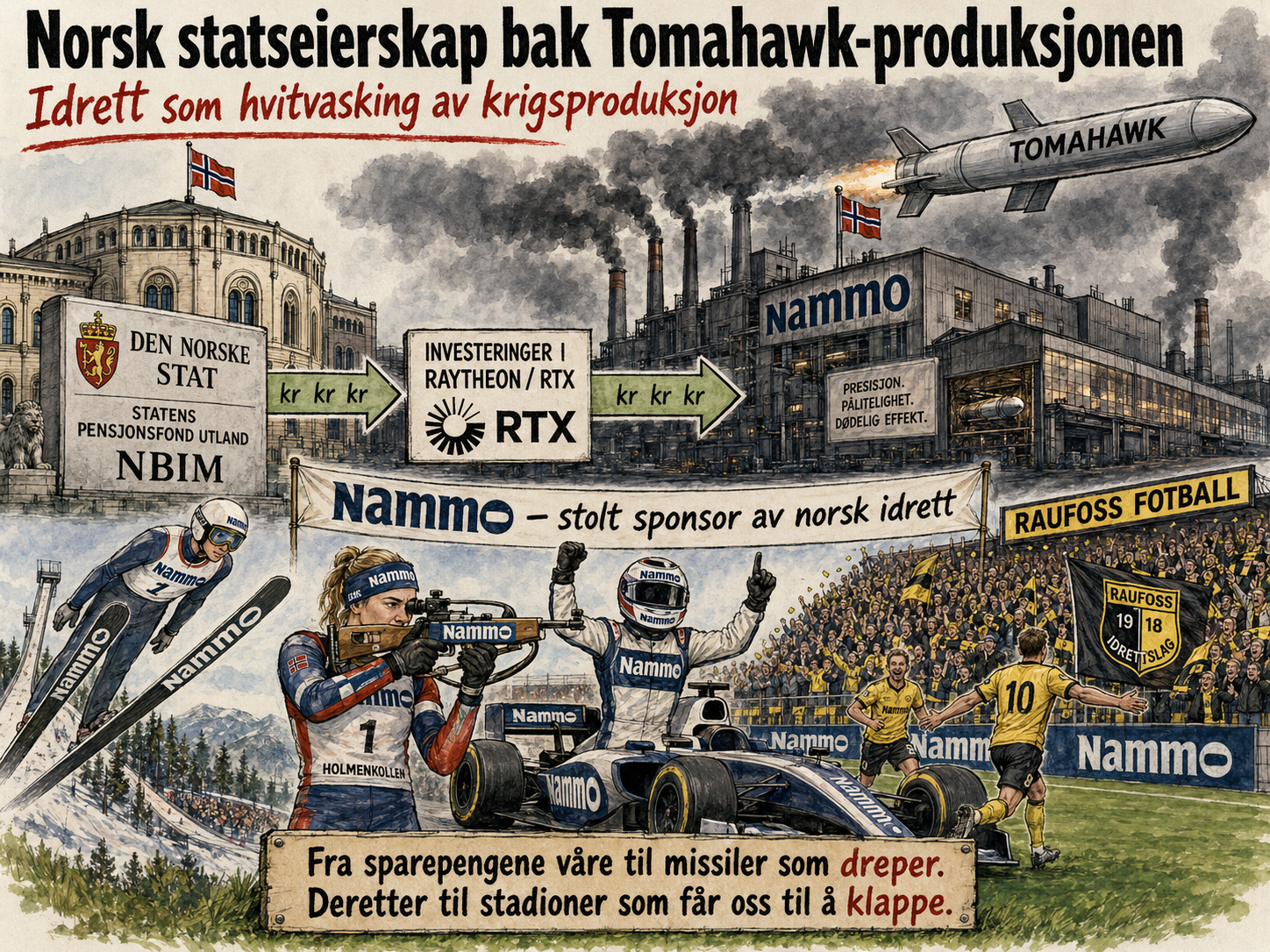
In Nammo’s own product information, the American subsidiary Nammo Defense Systems Inc. states that it produces a “Tomahawk Fin Deployment Actuator”, part number NDS PN 30760-7. This is the mechanism that ensures the missile’s fins or control surfaces unfold after launch. The component helps stabilise the missile and allows it to be steered towards the target.
Production is linked to Nammo’s operations in Arizona. It is not documented that this particular Tomahawk part is produced at Raufoss. But that does not remove the group’s responsibility. Nammo is a Norway-based group headquartered at Raufoss, and the Norwegian state owns 50 per cent of the company.
It is therefore correct to state that a Norway-based, half state-owned arms group supplies a specific, named component to the Tomahawk programme.
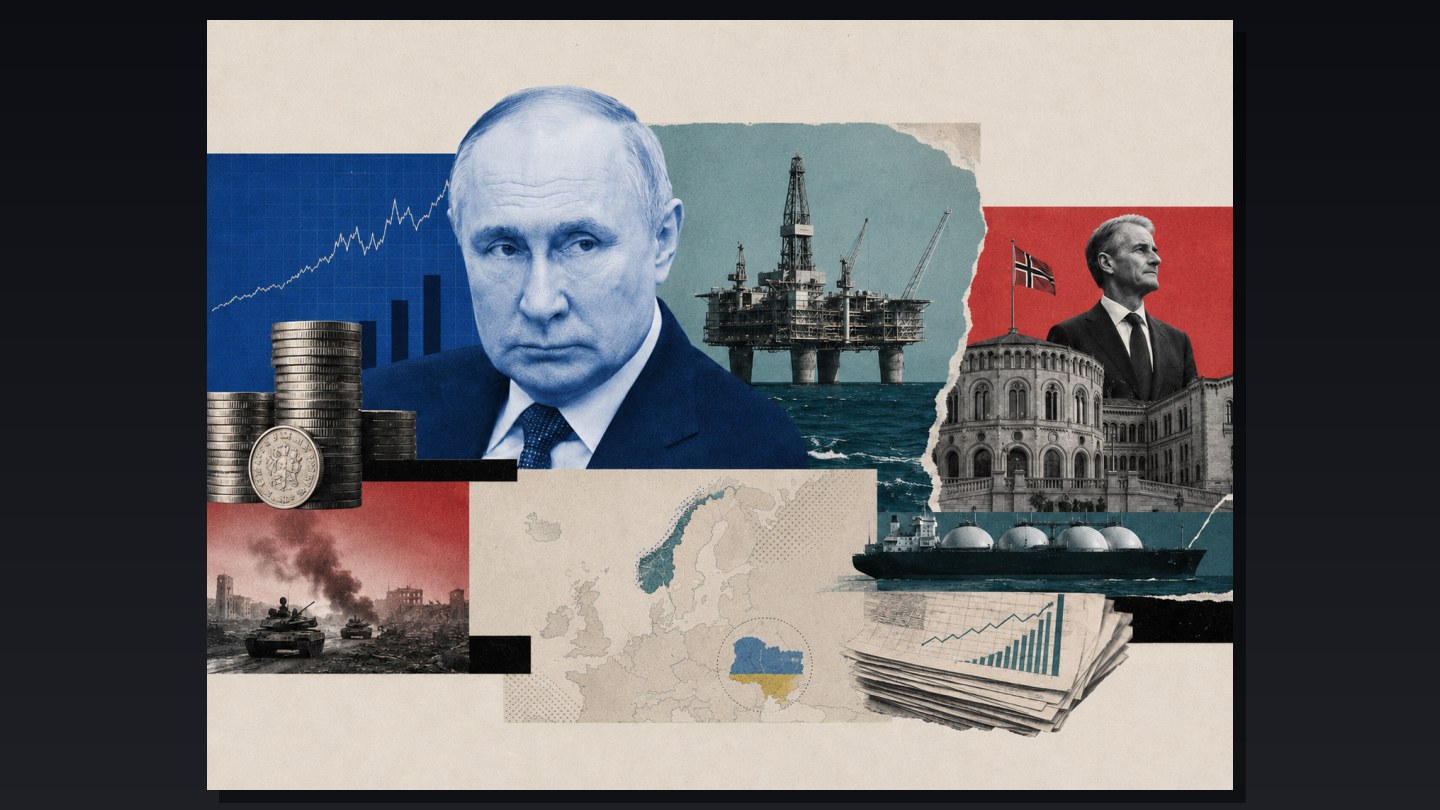
At the same time, through the Oil Fund, Norway is a co-owner of RTX Corporation, the group that owns Raytheon, the main manufacturer of Tomahawk. At the end of 2025, according to publicly reported holdings, the Oil Fund held around 16.7 to 17.3 million RTX shares, corresponding to roughly 1.24 to 1.28 per cent of the company. The value was an estimated 30 to 35 billion kroner. Norges Bank’s foreign exchange reserves also held RTX shares worth around 508 million kroner.
Norway thus stands on both sides of the production line. Through Nammo, the state is a direct co-owner of a group that produces a Tomahawk component. Through the Oil Fund, the state is an investor in the group that owns the end manufacturer.
When more Tomahawks are ordered, Nammo’s order intake can grow. When RTX earns more, the value of Norway’s investment can rise. This is the brutal reality of the war economy.
At the same time, Nammo is trying to build an entirely different public image of itself. The company profiles itself through sport, children, young people, community, achievement and healthy values. Nammo itself states that the group supports local sports clubs and has supported both the women’s national biathlon team and the women’s national ski jumping team. The company has also had a long-standing partnership with the national ski jumping team, with the Nammo logo visible on the athletes’ equipment.
Nammo is also the main sponsor of Raufoss Fotball. The club describes the company as a mainstay of its marketing, and the stadium bears the Nammo name. The sponsorship is linked to top-level football, women’s football, work with children and young people and the club’s social activities.
In motorsport, Nammo has sponsored the Norwegian racing driver Dennis Hauger. The company has emphasised that the sponsorship is meant to give Nammo greater visibility in the United States, with its logo on both the car and the race suit. In 2025 the car was referred to as the “Nammo Dallara”, and the partnership was continued into the 2026 IndyCar season.
These are legal sponsorship agreements, and the sports clubs are not in themselves doing anything wrong by accepting support. The money can create activity, community and opportunities for children and young people.
But we must dare to discuss what the sponsorship does for the arms manufacturer’s reputation.
When the logo of a group that produces ammunition, rocket motors and parts for Tomahawk is placed on ski jumping suits, biathlon arenas, racing cars and football shirts, positive associations are created between the arms industry and some of the things Norwegians love most.
Children see the Nammo name at the football stadium. Families see it on athletes. The public associates the logo with gold medals, speed, community and local pride — not with explosions, destroyed buildings and people hit by the weapons.
In my view, this works as sportswashing of war production.
Nammo describes its sponsorship as social responsibility. I believe it also helps make the arms industry more normal, more popular and less uncomfortable to talk about. The harsh reality of the production halls is wrapped in sporting joy, Norwegian flags and smiling athletes.
It is a striking contrast. On the one hand, a Nammo company produces an essential mechanism for a long-range attack missile. On the other, the group uses sport to build trust, visibility and an image of caring for children, young people and local communities.
We must be able to criticise this without attacking the athletes or the volunteers. The responsibility lies with the group’s management, its owners and the Norwegian state, which both receives the value from arms production and benefits from the positive reputation-building.
According to publicly reported plans, Germany is to acquire and deploy Tomahawk. There have also been discussions about spreading American weapons technology and licensed production to more European countries and to Ukraine. It is not yet documented that Ukraine or Germany has been licensed to produce Tomahawk itself, and this must not be presented as an established fact.
But the trend is clearly towards long-range weapons and production expertise spreading to more countries. Today’s allies cannot be guaranteed to remain Norway’s friends for ever. History shows that regimes, interests and alliances can change far faster than weapons stockpiles disappear.
A Tomahawk missile has no loyalty. It follows the coordinates programmed into it.
Norwegian state ownership of Nammo means Norwegian responsibility. It is not enough to point out that the component is produced in Arizona, or that the US decides how the finished weapon is used. One cannot supply an essential part for a missile, profit from its production and at the same time claim to stand outside the end product.
Nor can this reality be covered up with ski jumping suits, biathlon arenas, racing cars and football shirts.
All of this is public information. A half state-owned Norwegian group takes part in Tomahawk production, while Norwegian state money is also invested in the group that owns the main manufacturer.
Behind the joy of sport stands an industry that produces weapons for war.
The Norwegian people deserve to see the whole picture.