
“IS CIVIL WAR UNDER WAY WHILE MACRON AND BRUSSELS LOOK THE OTHER WAY?”
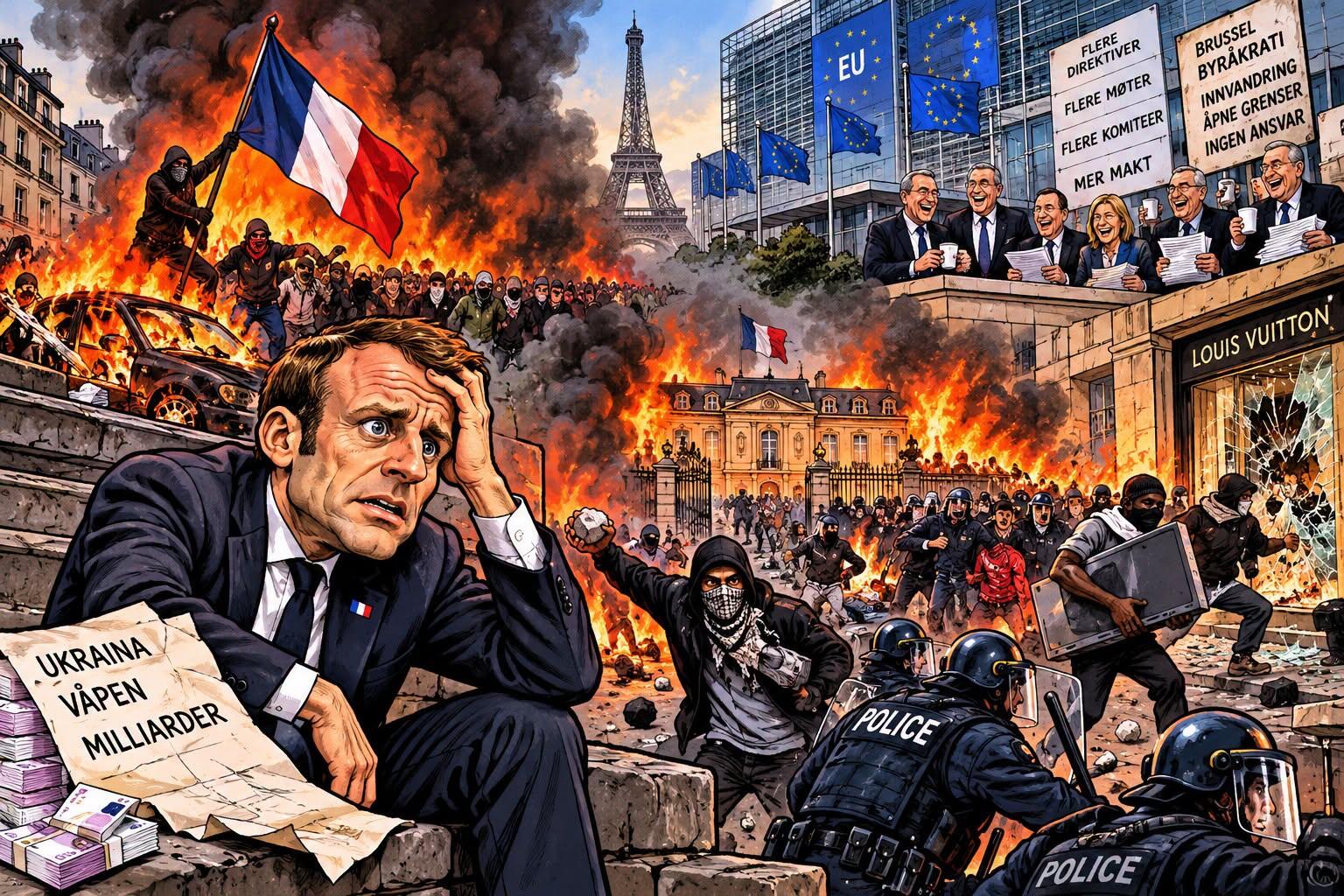
I call these the signs of an emerging civil war. Not a traditional war between two armies, but a dangerous internal social conflict in which ever sharper divisions challenge the authority of the state.
The figures from French media are serious.
According to Le Monde, 6,059 people were arrested between 28 September and 5 October. By 8 October the figure had risen to 6,877. During the demonstrations on 17 October, between 550,000 and 800,000 people took to the streets, according to various estimates.
Nearly one million demonstrators, thousands of arrests and widespread violent clashes. What will it take before Europe’s political leaders wake up?
Limoges city hall was hit by fire. In Marseille, public buildings were attacked. In Paris, shops were looted, barricades erected and the police attacked. Violent groups came right up to the presidential palace.
The vast majority of demonstrators are not violent. But when criminal groups exploit the crowds for looting, arson and attacks, it is the authorities’ responsibility to intervene.
And where is Macron?
France has one of Europe’s strongest military forces, nuclear weapons, special forces and an extensive police apparatus. Yet the country is seeing public buildings attacked and the police under heavy pressure.
If the police cannot protect critical infrastructure, the authorities must consider additional security, including military resources within the bounds of the law. That does not mean the army should be used against peaceful demonstrators. It means that citizens are entitled to protection.
But Macron seems more preoccupied with international military ambitions.
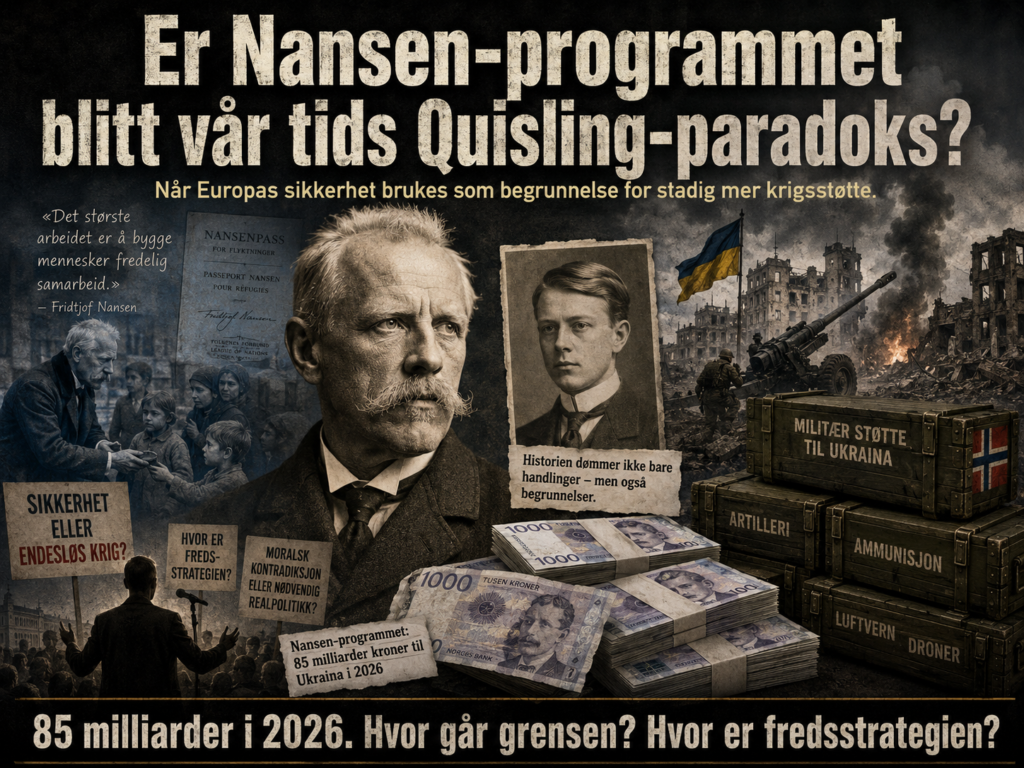
While France has public debt of around 118 percent of GDP, the president continues to promise weapons and financial support to Zelensky and Ukraine.
Where is the money to come from?
French pensioners, workers and families are told that the economy requires austerity. Public services are under pressure. But when it comes to new military commitments, politicians keep finding new funding arrangements.
Support for Ukraine has not by itself created France’s economic problems. Still, it must be permissible to demand that Macron explain his priorities.
What good is it to talk about saving Europe’s security if France cannot secure its own citizens?
And this is not only about France.
Look at Sweden, Germany, Belgium and other European countries. Several are struggling with serious crime, integration problems, economic pressure and growing political divisions.
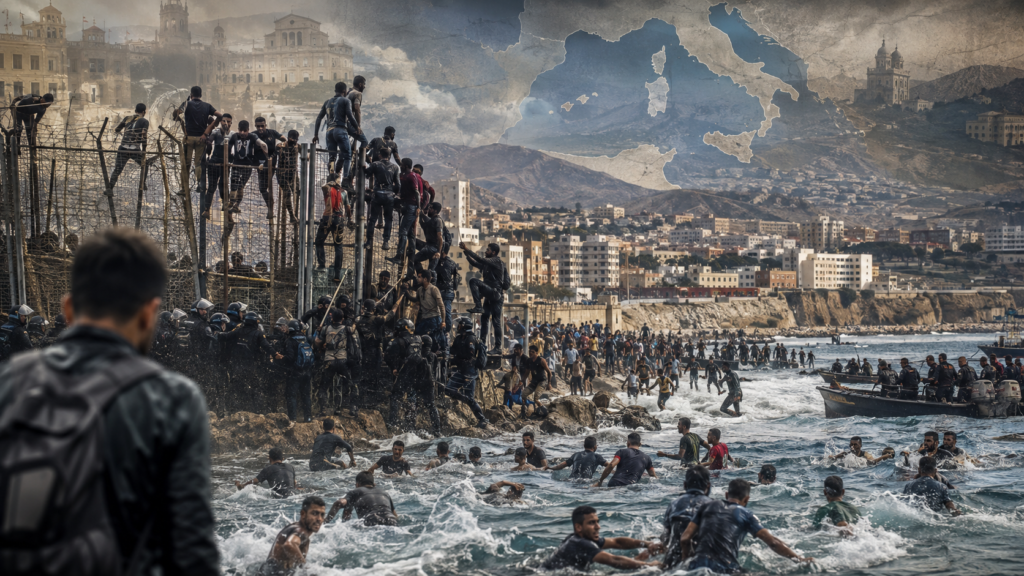
For decades, European authorities have discussed immigration, border control and integration without finding solutions all member states could agree on. Only in June 2026 did the EU’s new Pact on Migration and Asylum enter into force.
How many meetings, reports and action plans did it take?
How many times will Brussels explain that the problems are complicated, while citizens expect concrete results?
It is politicians who are responsible for immigration policy, not people with an immigrant background as a group. And the latest French protests are primarily about the economy and public services. Even so, it is necessary to discuss how inadequate integration, social inequality and weak public services can intensify social conflicts.
It is not racist to demand functioning borders. It is not extremism to demand respect for the law. And it is not undemocratic to believe that national authorities should be in control of their own policies.
But instead of taking responsibility, the EU continues to expand its enormous bureaucracy.
More directives. More committees. More strategies. Ever more meetings behind closed doors.
When policy fails, Brussels points to the member states, while national governments blame Brussels.
Who is left with the bill?
Ordinary people.
This is where the danger lies. When economic problems, social division and political powerlessness grow at the same time, extreme groups can exploit the situation. Violence can then increase and conflicts become harder to control.
I believe France is showing the warning signs of an emerging civil war. That does not mean the country already meets the usual definition of civil war. But it does mean the development must be taken seriously before the divisions become even more destructive.
Macron must start taking responsibility for France. Brussels must understand that European security is not only about military budgets, weapons and international conflicts.
Security is also about people daring to walk the streets, shops being able to stay open, the police being able to do their job and citizens trusting the authorities.
Europe cannot administer its way out of a social conflict with even more directives. And Macron cannot save Europe’s security if he loses his grip on his own country.
France is burning. The question is how long Europe’s leaders will keep discussing the fire regulations before they deal with the fire.
Se og hør mer
Videoer, klipp og innslag knyttet til temaet.