These are questions that deserve far more space in the European security debate. For while NATO Secretary General Mark Rutte demands an ever stronger military alliance, the EU’s foreign policy chief Kaja Kallas continues her uncompromising sanctions policy.
I would call this development the Kallas Doctrine: a political line in which economic pressure, military rearmament and ever new restrictions take up ever more space, while diplomatic solutions seem to recede into the background.
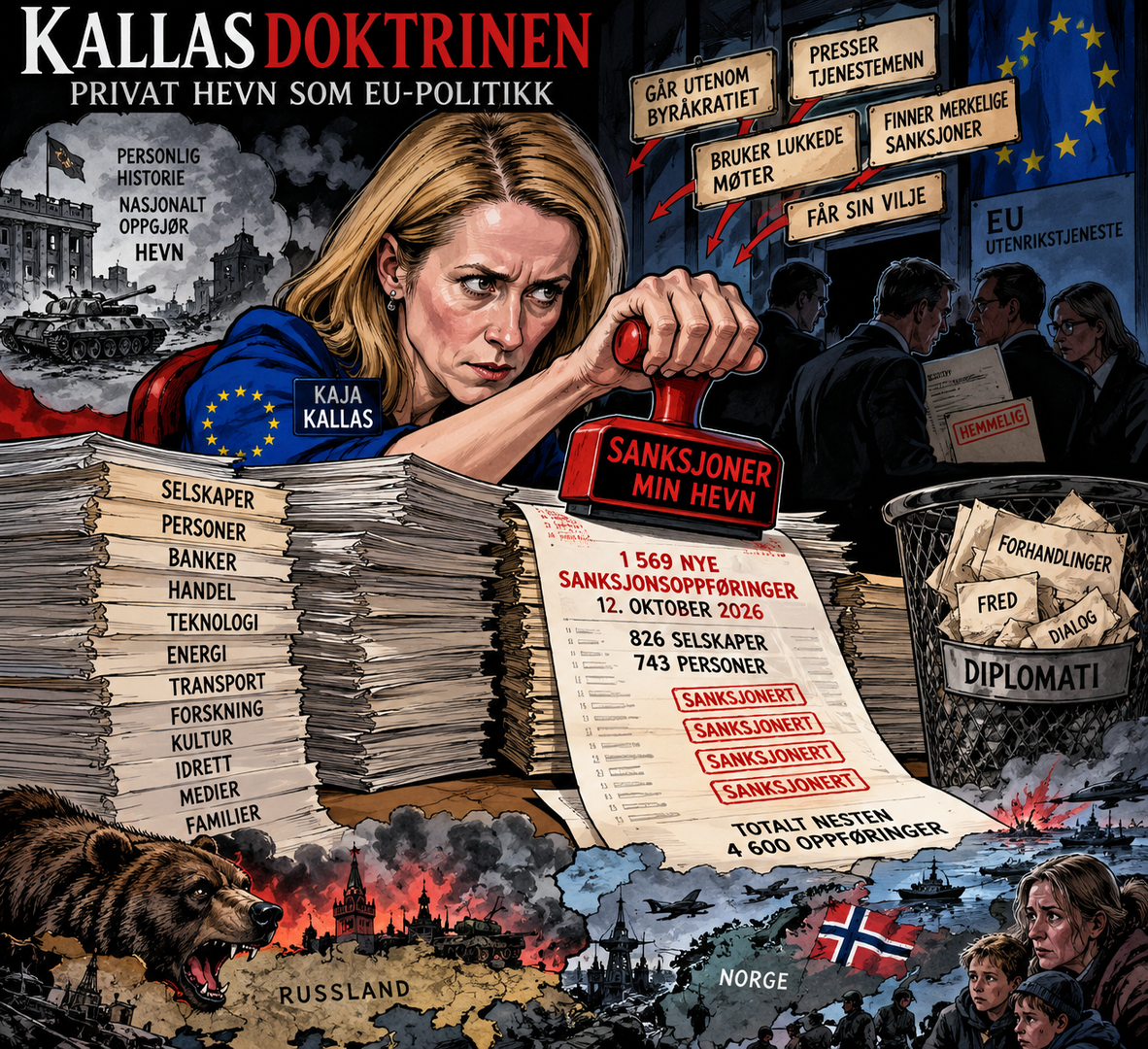
On 12 October 2026 the EU adopted a sweeping expansion of the sanctions against Russia. No fewer than 1,569 new listings were added, divided between 826 companies and 743 individuals in senior positions. It is the largest single expansion of the EU’s sanctions lists to date. In total, the number of listings is approaching 4,600.
These are not minor adjustments. They are far-reaching interventions in economic relations, trade and international cooperation.
The EU justifies the measures by the need to weaken Russia’s military industry. More than half of the new listings are linked to the production chain for ballistic missiles. That is a concrete justification, but it does not relieve the EU of the need to explain how the sanctions are to lead to a political solution.
How many sanctions will it actually take? How long is this policy to continue if the war does not end?
The most worrying aspect is how the decisions are made. Proposals are drawn up in the EU’s foreign policy apparatus, handled by diplomats and approved by member states’ representatives before the Council of Ministers takes the decision. This is a formal decision-making process, but much of the negotiation takes place behind closed doors.
Where is the open democratic discussion of the consequences?
Kaja Kallas comes from Estonia and has strong personal, historical and national experiences that shape her view of Russia. That is understandable. But European foreign policy cannot be built on historical antagonisms alone.
Her uncompromising line gives reason to ask whether her political reckoning with Russia has come to take up more space than work towards a future peace settlement. It would be serious if personal vengeance were allowed to dominate a policy that affects the security of hundreds of millions of Europeans.
Within the EU’s inner circle there is talk that Kallas circumvents EU rules in a sophisticated way, and she makes no secret of pursuing a personal vendetta against Russia, with the sympathy that follows. It is therefore entirely legitimate to criticise the political direction she represents, and to demand greater openness about how decisions are made.
Meanwhile, something interesting is happening in Washington.
Donald Trump has opened the door to temporary relief from US restrictions on Russian diesel exports. He has also tried to put in place an arrangement to halt attacks on energy infrastructure in the war between Russia and Ukraine.
This does not mean the US supports Russia’s warfare. But it shows that economic openings and direct contact can still be used as diplomatic tools.
While Washington tries such initiatives, Brussels adopts new sanctions on a scale Europe has hardly seen before.
Is this an expression of a united Western strategy, or are we seeing the outlines of a growing political gap between the US and the EU? And where does Norway stand?
In 2024 Jens Stoltenberg left behind a NATO marked by strong military rearmament and confrontation with Russia. His successor Mark Rutte has continued this course with even greater demands for defence spending.
Rutte has asked Europeans to develop a “war mentality”. He has spoken of the need for a stronger and more lethal NATO alliance. On 30 September 2026 he declared that NATO is so much stronger than Russia that the Russians can never defeat the alliance.
At the same time, he stressed that there is no immediate threat to NATO territory.
Then we must ask why the political debate is so dominated by ever larger military investments.
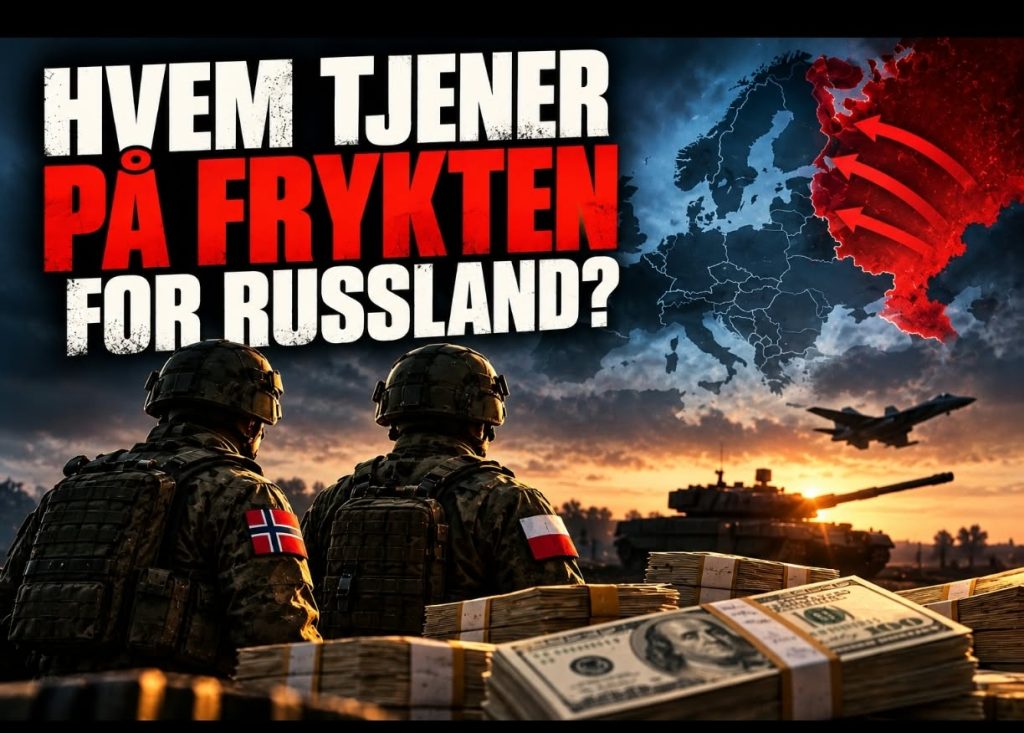
Russia possesses a nuclear arsenal that far exceeds the combined capacity of France and the United Kingdom. The US has a similarly enormous arsenal. A direct confrontation between NATO and Russia would therefore carry a risk that cannot be compared to an ordinary military conflict.
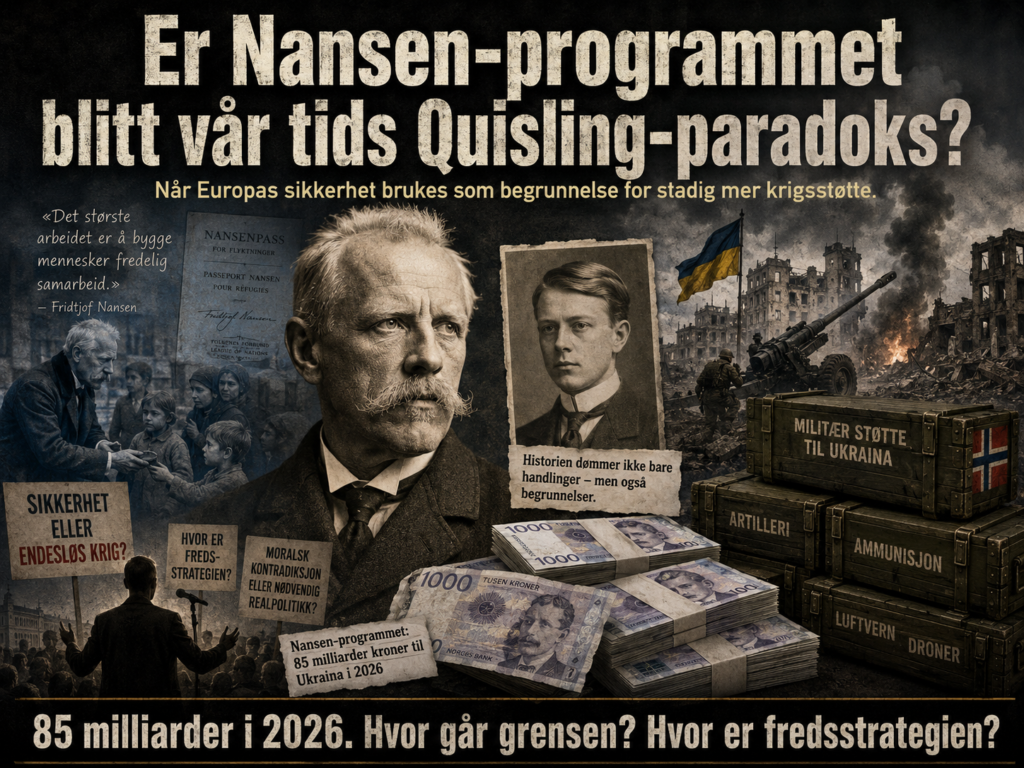
At the 2025 NATO summit in The Hague, member states agreed on a target of five percent of GDP for defence and security-related measures by 2035.
This will entail enormous economic priorities. At the same time, European countries face pressure on healthcare, elderly care, pensions and municipal services.
Security is not only about weapons. It is also about society’s ability to function.
For Norway the situation is particularly serious. We share a border with Russia. We have strategically important ports, airports, radar installations and military facilities. Through NATO and cooperation with the US, we are closely integrated into Western military planning.
In a direct war between NATO and Russia, Norwegian military installations could become targets. At the same time, NATO membership gives us important security guarantees. That is precisely why we must be able to discuss both the protection the alliance provides and the risks that follow from growing great-power confrontation.
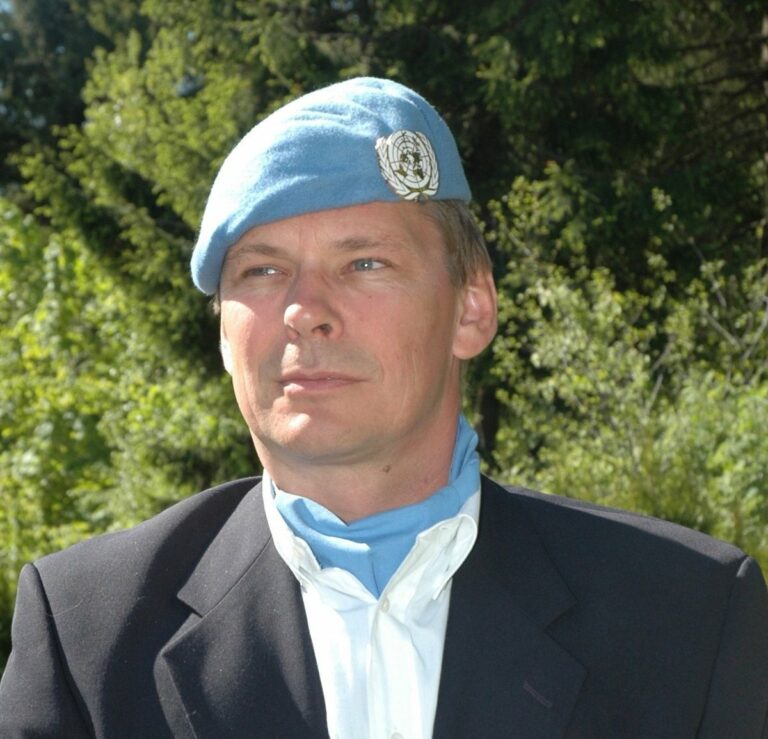
I have experienced the brutality of war myself as a Norwegian UN soldier in Lebanon. Through international veterans’ work, I have met people who know what war means long after the guns have fallen silent.
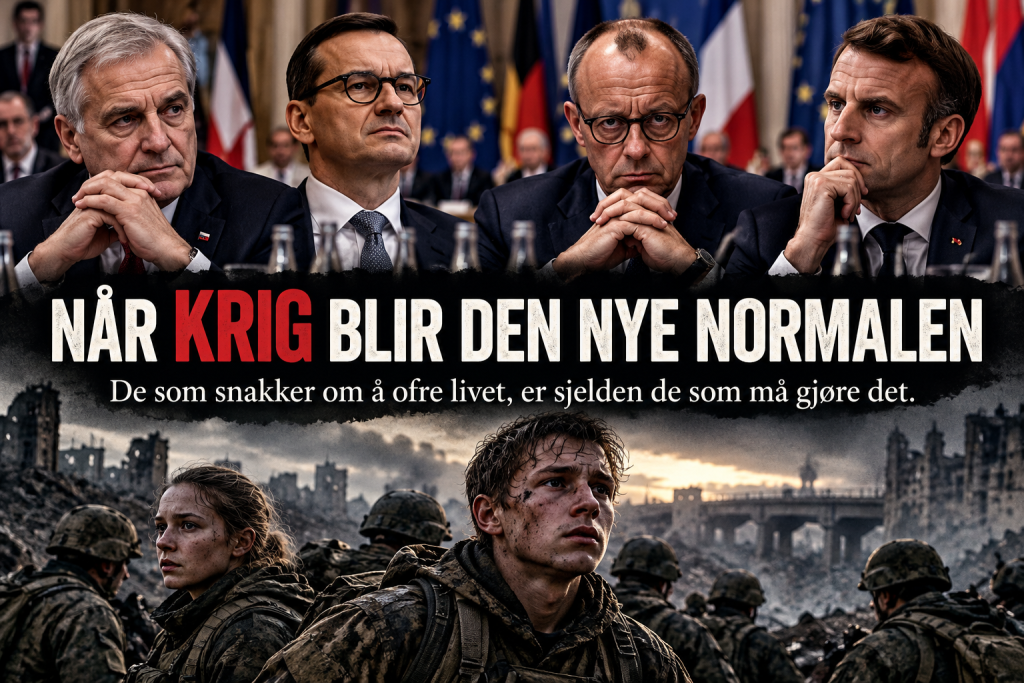
That is why I react when Europe’s political leaders spend so much time explaining how we should prepare for war, and far less on how war can be prevented.
Mark Rutte talks about military strength. Kaja Kallas works for ever stronger economic pressure. Both justify their policies with security and the wish to prevent further Russian aggression.
But where is the concrete diplomatic strategy that can end the war?
Where are the initiatives for arms control, security guarantees and a future European peace order?
Norway needs a credible defence. But we also need an independent foreign policy voice that dares to challenge both NATO and the EU when diplomatic alternatives receive too little attention.
We cannot leave the whole discussion of Europe’s future to military planners and sanctions committees.
For if the great powers one day end up in direct war, it is Europe’s population that will pay the highest price.
It is easy to adopt new sanctions behind closed doors. It is easy to demand more weapons from a podium in Brussels. Real political courage lies in finding a way out of the confrontation.
The Kallas Doctrine must therefore be met with a fundamental question:
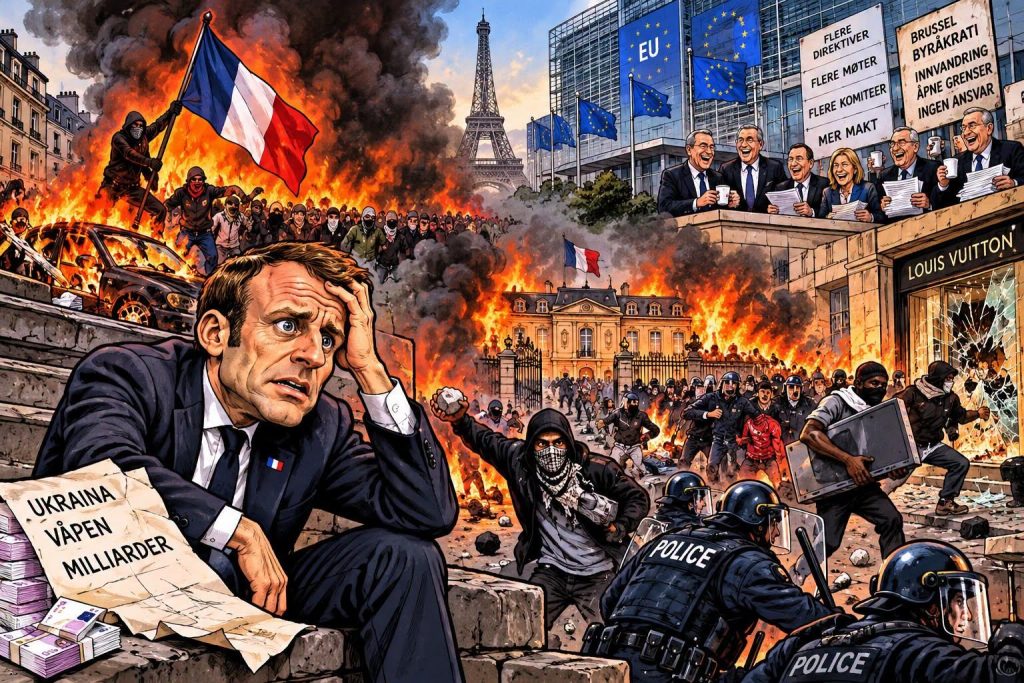
How many sanctions, how many billions and how many military rearmament plans must Europe adopt before someone presents an equally comprehensive plan for peace?
Se og hør mer
Videoer, klipp og innslag knyttet til temaet.