
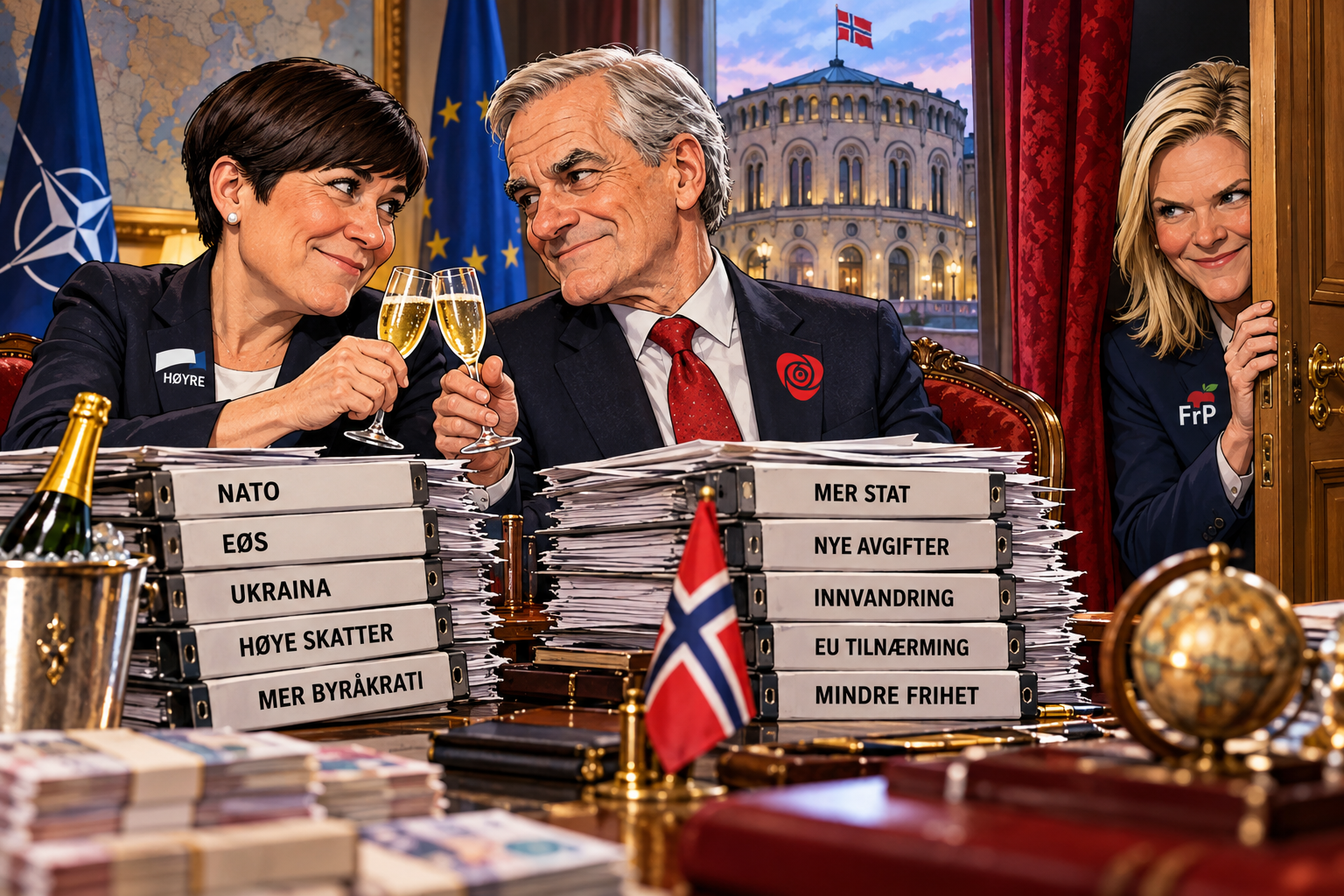
But perhaps the time has come to ask the question many of the old parties of power would rather not answer: have Høyre and Labour played out their role as Norway’s two natural parties of government?
More alike than the election campaigns suggest
For the difference between them is not always as great as the election campaigns suggest.
They can argue about tax rates, budget details and who should sit in which government offices. But on many of the big questions that have shaped Norway over decades, Høyre and Labour have backed the same main direction.
The result is a state that has grown larger, a bureaucracy that intervenes in ever more areas and a system of taxes and duties that takes a large share of value creation before ordinary people get to decide over their own money.
Here perhaps lies the most important difference between old governing thinking and the challenge the Progress Party represents.
Taxpayers’ money
The starting point must be simple: the money the state spends does not belong to the politicians.
It comes from people who work, businesses that create jobs and enterprises that produce value. Politicians must therefore treat taxpayers’ money with the same respect people treat their own.
That should be self-evident.
Yet we keep seeing new directorates, subsidy schemes, consultants, reporting requirements, climate measures, international projects and administrative systems. Each scheme can surely be defended by someone. The problem arises when no one looks at the total any more.
Meanwhile, municipalities are told to save.
Elderly care needs more hands. Health queues must come down. The police need resources. Roads must be maintained. The armed forces must be able to defend Norway. Families struggle with food prices, interest rates, electricity and other living costs.
Then politics must once again be about priorities.
We cannot answer every problem with a new duty, a new regulation or a new public office.
A strong state where it is needed
The state must be strong where the state needs to be strong. We need police who fight crime, a credible defence, a health service that treats people when they are ill, dignified elderly care and infrastructure that works.
But the state does not need to decide everything.
Ordinary people must be allowed to keep more of their own money. Businesses need less bureaucracy and more predictability. It must pay to work, invest and create jobs in Norway.
Immigration and the EU
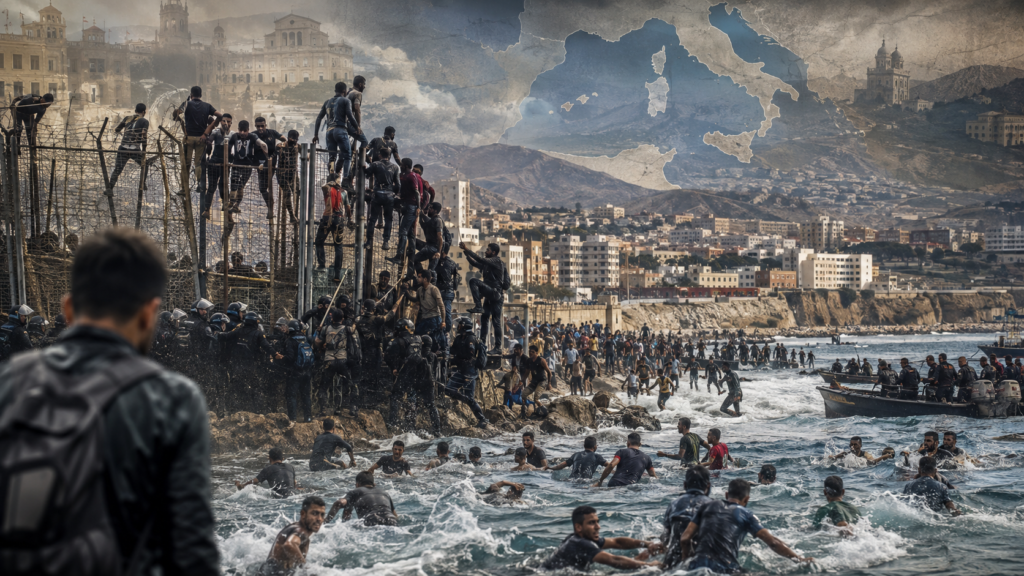
We must also dare to discuss immigration without every critical objection being branded inhumane. Norway should help people in need, but no welfare state can pretend its capacity is unlimited. Immigration must be controlled, integration must make demands, and those who come to Norway must respect Norwegian law and fundamental social values.
This is not about where people come from. It is about which rules a sustainable society should be built on.
The same applies to our relationship with the EU.
Norway should trade and cooperate with Europe. The EEA Agreement is important for Norwegian jobs and market access. But cooperation does not mean Norway should uncritically adopt every rule that comes from Brussels. Norwegian politicians are elected to safeguard Norwegian interests.
This should not be controversial either.
A system used to growing
The problem for Høyre and Labour is therefore bigger than poor opinion polls or changes of party leader.
They represent a political system that has long grown used to the state expanding, the money being there and the bill being passed on to taxpayers.
But Norway does not need even more administration.
We need priorities.
Less waste. Less bureaucracy. Lower taxes and duties. Controlled immigration. Safe streets. A strong defence. Better elderly care. Shorter health queues. More respect for those who work and create the value the whole of society lives on.
And above all, we need politicians who understand the difference between the state’s money and the people’s money.
No eternal right to govern
Høyre and Labour have both had an important place in Norwegian history. No one should take that away from them.
But historical merits give no eternal right to govern.
Perhaps the political shift we are now seeing is about something far bigger than who will be the next prime minister.
Perhaps more and more Norwegians have started asking the question the old governing parties fear most:
Why should we keep switching between Høyre and Labour if we believe the course itself must change?

Se og hør mer
Videoer, klipp og innslag knyttet til temaet.