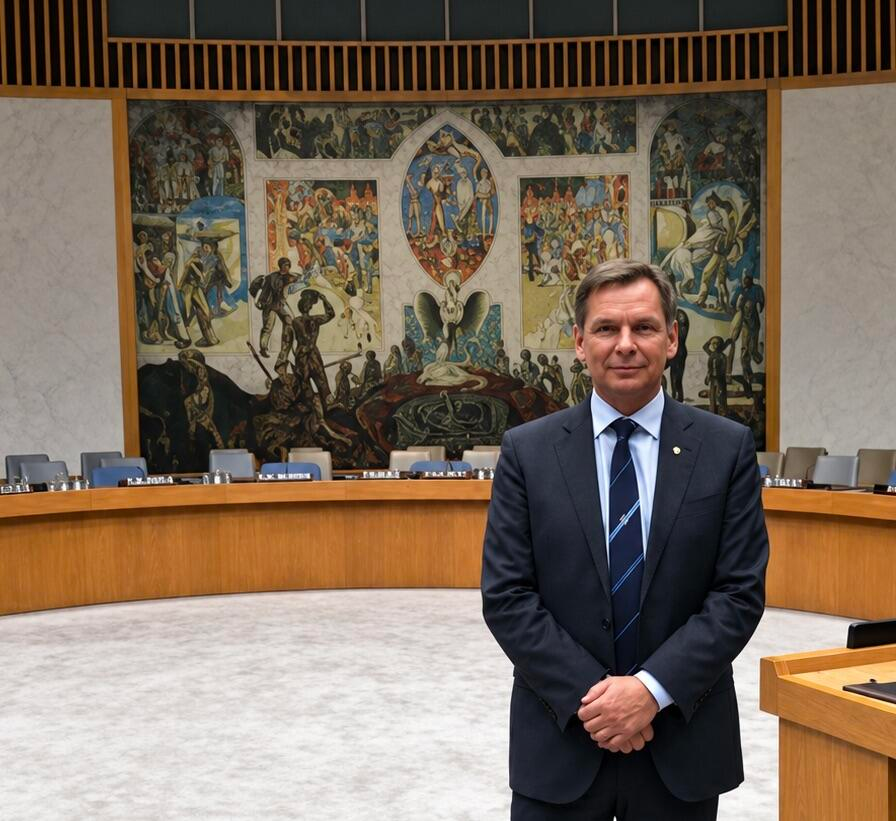
Dan-Viggo Bergtun
Veterans Affairs & Security Policy
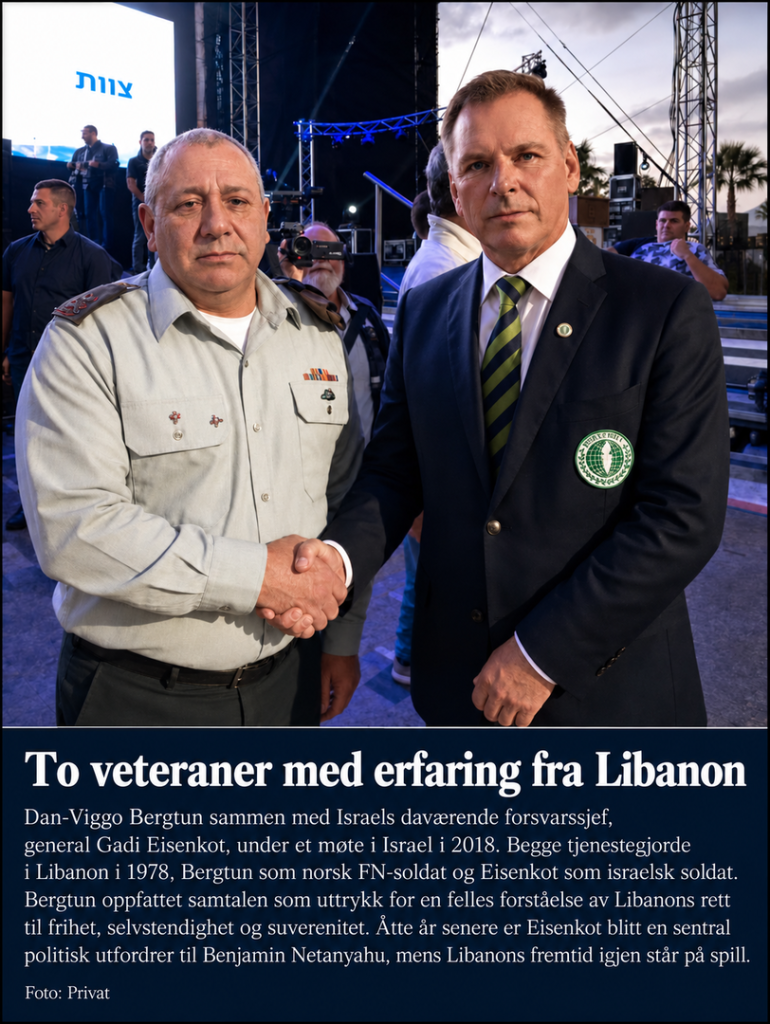
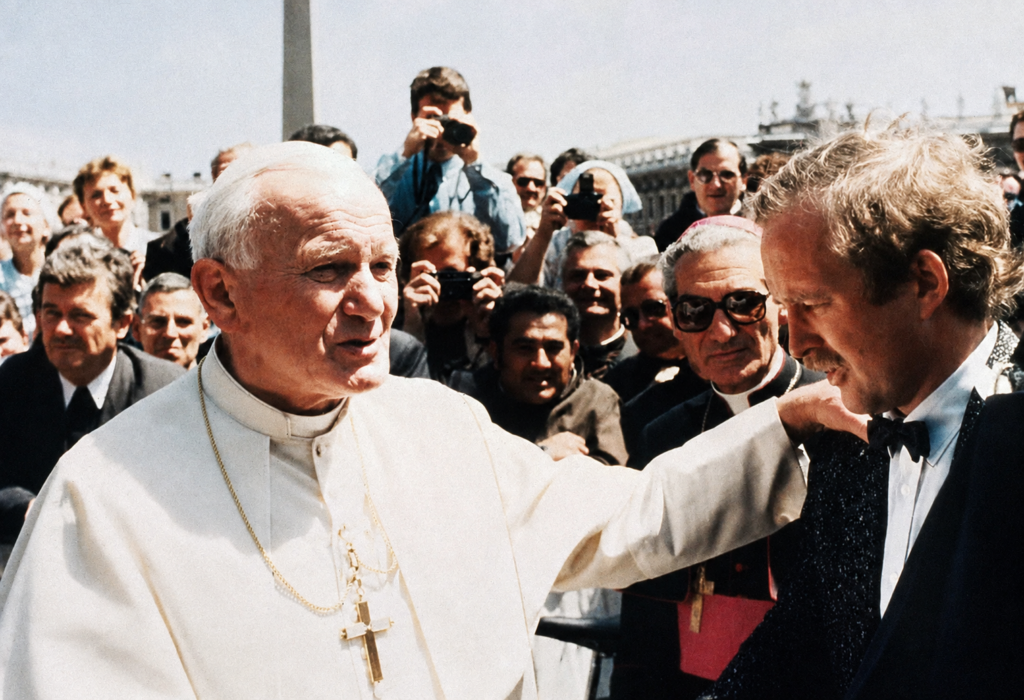
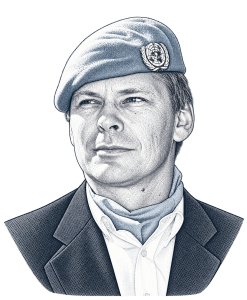
Dan-Viggo Bergtun (b. 1956) is a Norwegian veteran, writer and international veterans’ leader.
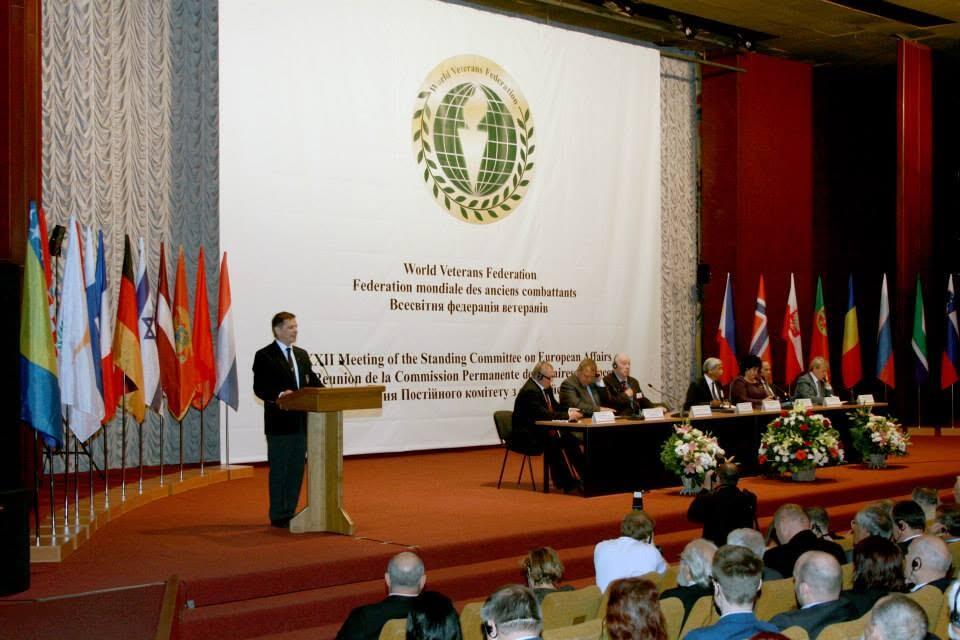
With a long record of military service — including UN operations — he has devoted himself since 1978 to veterans’ rights, peace and security policy, and the social and humanitarian situation of veterans. As former president and now honorary president of the World Veterans Federation — with member associations in more than 120 countries, representing some 60 million veterans — Bergtun has been one of the few Norwegians with global influence in the veterans’ field.
War · Politics
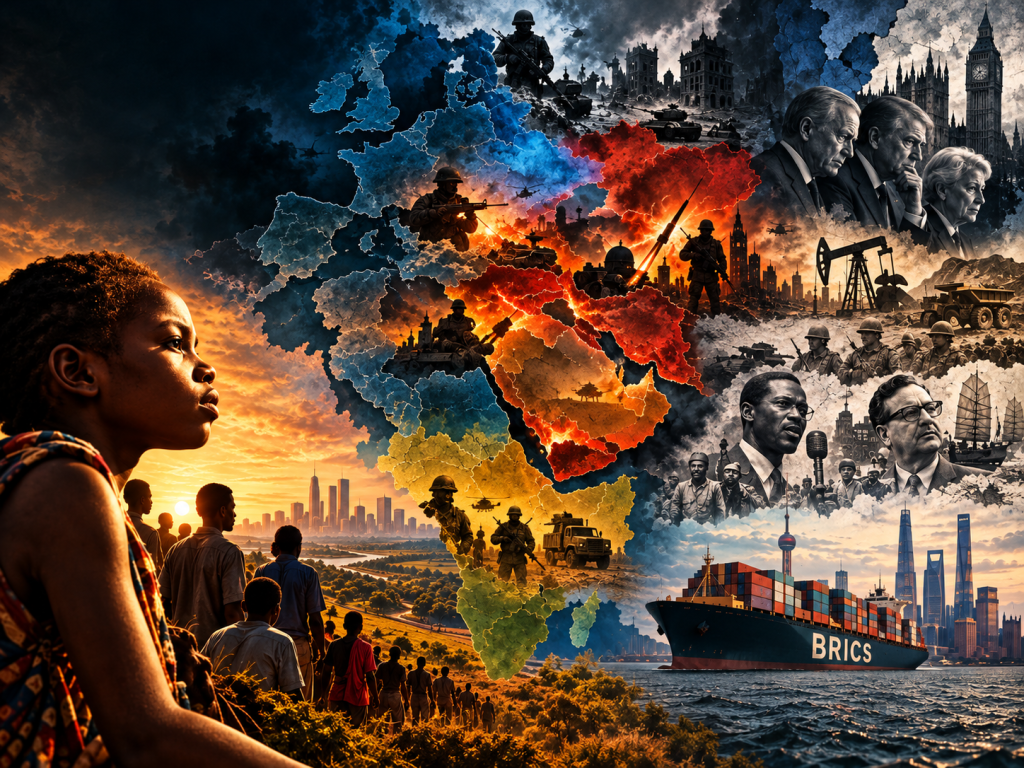
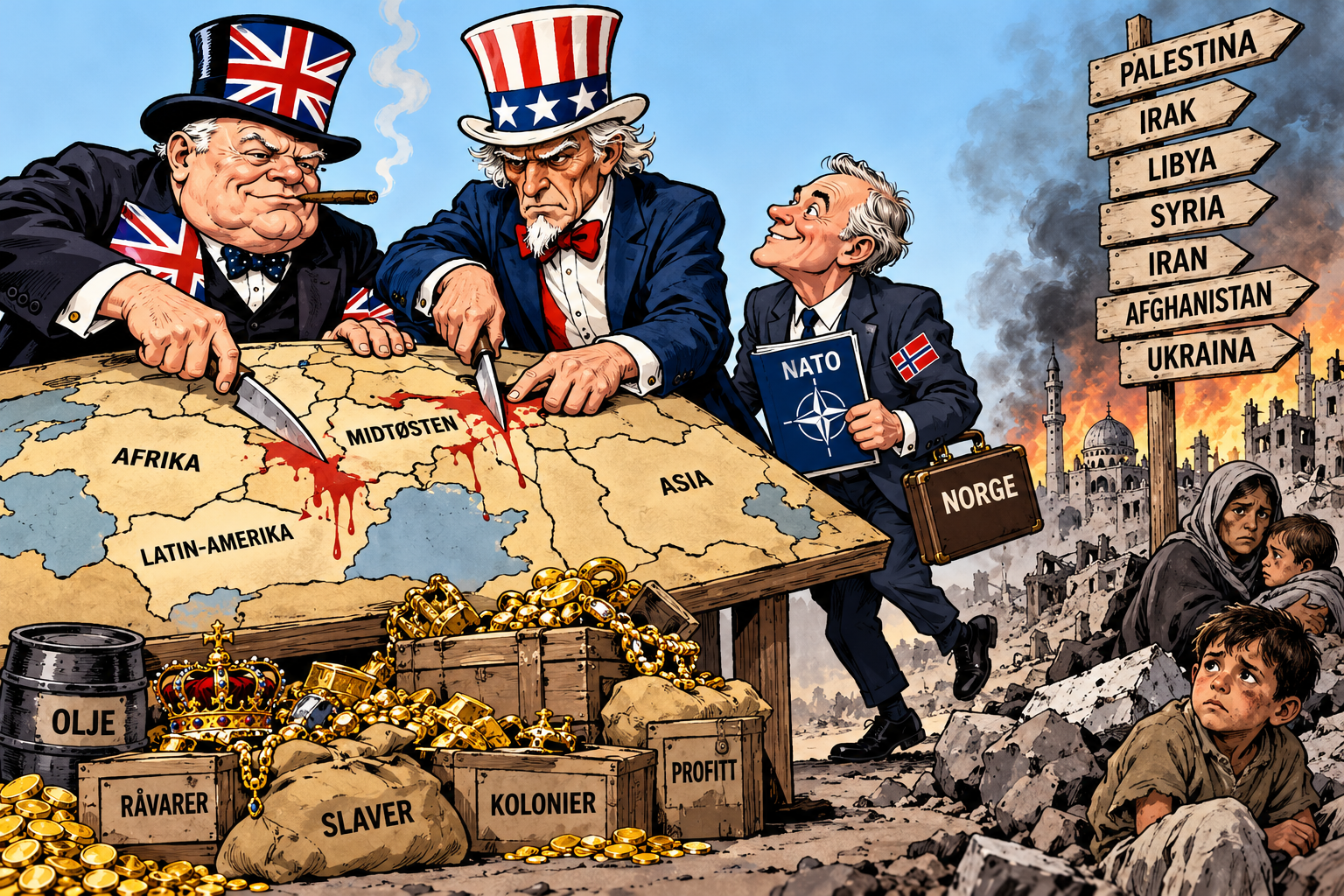
Britain did not build its empire on democracy, human rights and respect for other peoples. It was built through military conquest, colonisation, the slave trade, economic exploitation and political oppression. Enormous wealth was extracted from Asia, Africa, the Americas and the Middle East. British commercial interests, financial circles and parts of the aristocracy built fortunes, while millions of people in the colonies were deprived of control over their own resources and their own future.
At its height, the British Empire controlled roughly a quarter of the world’s land area. Think about what that means. A small island state off the coast of Europe ruled over hundreds of millions of people who had never given the British any democratic mandate to govern them. This was power politics in its most brutal form, wrapped in the notion that Europeans had the right to rule over others.
And parts of this history are still presented as a civilising project. The British built railways, ports, administration and trading systems, we are told. But whom was the infrastructure primarily meant to serve? Who controlled the trade? Who took the profits? And who had to pay the price?
In India, British colonial rule contributed to economic exploitation and political oppression for generations. During the Bengal famine of 1943, millions of people died. British wartime priorities and the authorities’ handling of the crisis made the catastrophe worse. Yet Winston Churchill still stands as an almost unassailable symbol of Western heroism. His fight against Nazism was historically decisive, but why should that exempt him from critical scrutiny of his colonial policies?
When the British left India in 1947, the territory was partitioned between India and Pakistan. Millions were driven from their homes, and widespread massacres followed. The conflict over Kashmir lives on. The colonial power disappeared, while the people left behind had to live with the consequences.
But it is in the Middle East that we truly see how catastrophic the decisions of the great powers could be.
After the First World War, Britain and France took part in carving up former Ottoman territories. Through the Sykes–Picot Agreement of 1916, the European powers planned their spheres of influence. The peoples’ right to self-determination took a back seat. It was about control of territory, trade routes, strategic positions and economic interests.
With the Balfour Declaration of 1917, the British government supported the establishment of a national home for the Jewish people in Palestine, while promising to protect the rights of the existing non-Jewish population. The British took on a responsibility they never managed to fulfil.
The conflict that later developed between Israelis and Palestinians had several causes, including European antisemitism, Zionism and the Holocaust. But British mandate policy played a decisive role in the developments leading up to the creation of Israel in 1948.
The Palestinians suffered mass displacement and the loss of their homes. The question of a Palestinian state remained unresolved. Generations have since grown up with war, occupation, terror, fear and shattered prospects for the future.
The British withdrew. The people who lived there were left with the bill.
In Iraq, the British helped establish a state under considerable British influence. In Iran, British and American intelligence services took part in the 1953 coup against Prime Minister Mohammad Mossadegh. He had challenged foreign oil interests by nationalising the oil industry. When economic interests were at stake, the great powers showed how limited their respect for democratic self-determination could be.
And then Western politicians wonder why distrust of the West remains so widespread in parts of the Muslim world.
Historical humiliations and more recent military interventions have created bitterness that extremist movements have sought to exploit. That never justifies terrorism, and Muslims cannot be treated as a single group with a shared desire for revenge. But it is politically short-sighted to discuss radicalisation without examining how colonial oppression and foreign interference have contributed to the conflicts.
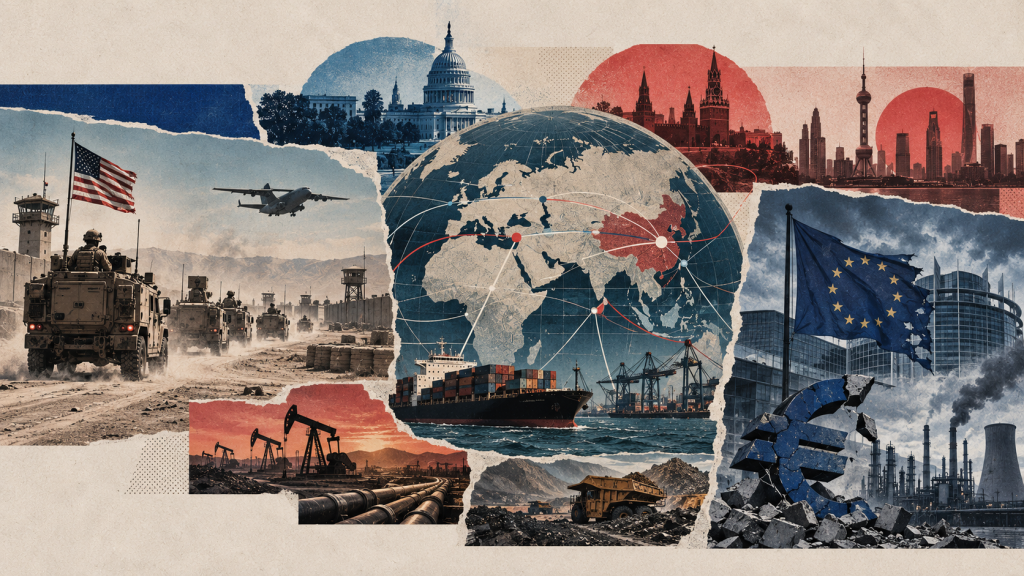
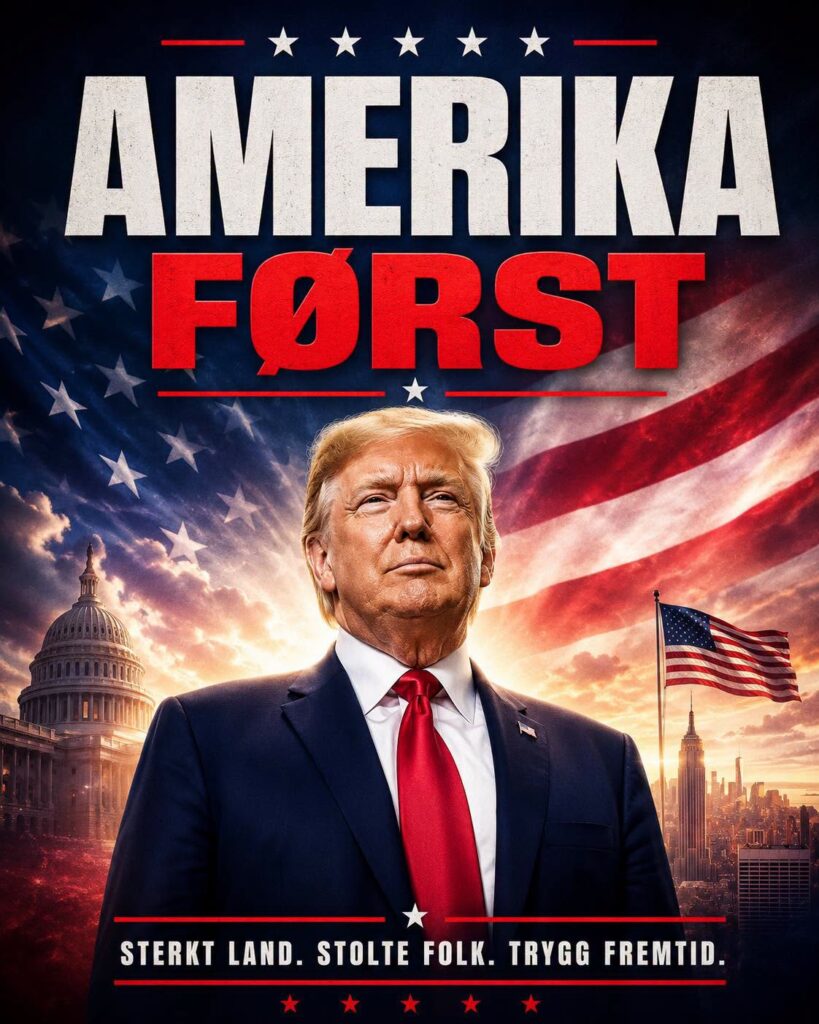
Then comes the United States, the country that freed itself from British colonial rule but later grew into the dominant Western superpower.
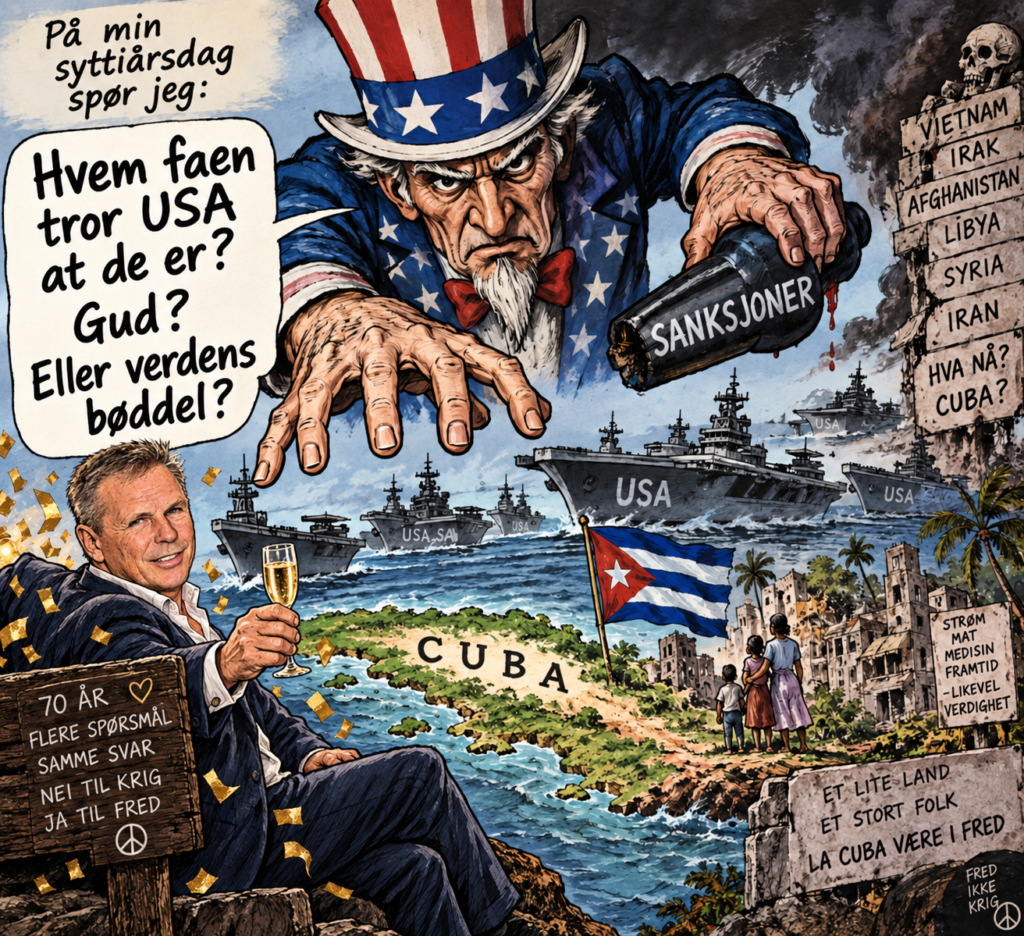
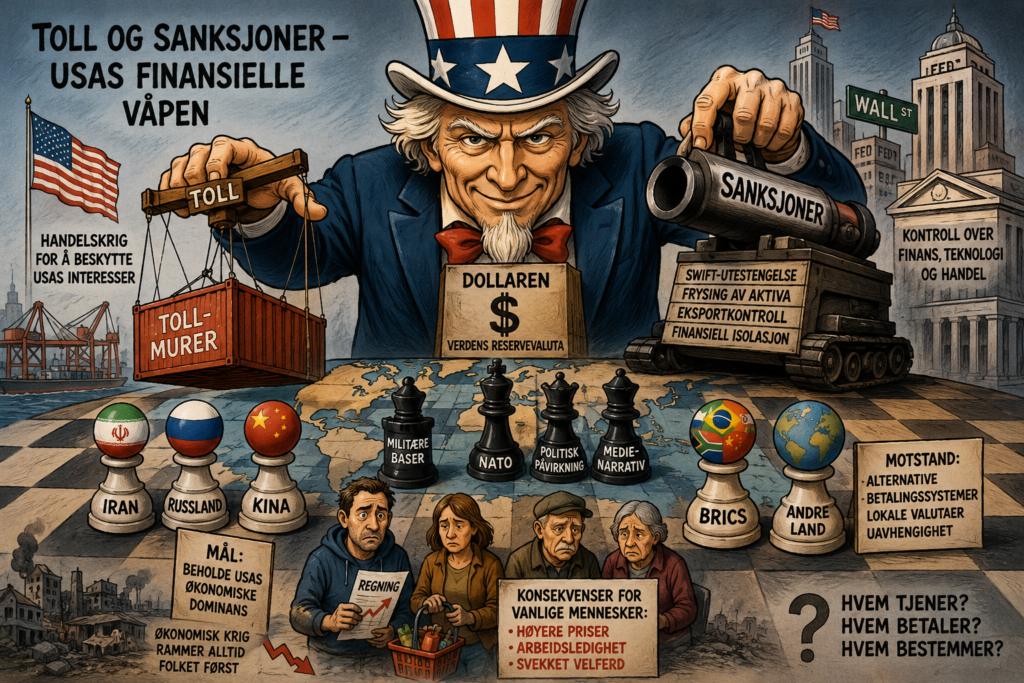
Vietnam, Latin America, Afghanistan and Iraq show how the US government has repeatedly intervened in other countries’ political development. The justifications have varied, but the consequences have often been immense human suffering.
At the same time, Britain became one of Washington’s closest allies. The old empire lost its global dominance but retained considerable influence through diplomacy, finance and military cooperation.
And this is where Norway enters the picture.
For what has actually become of Norway the peace nation?
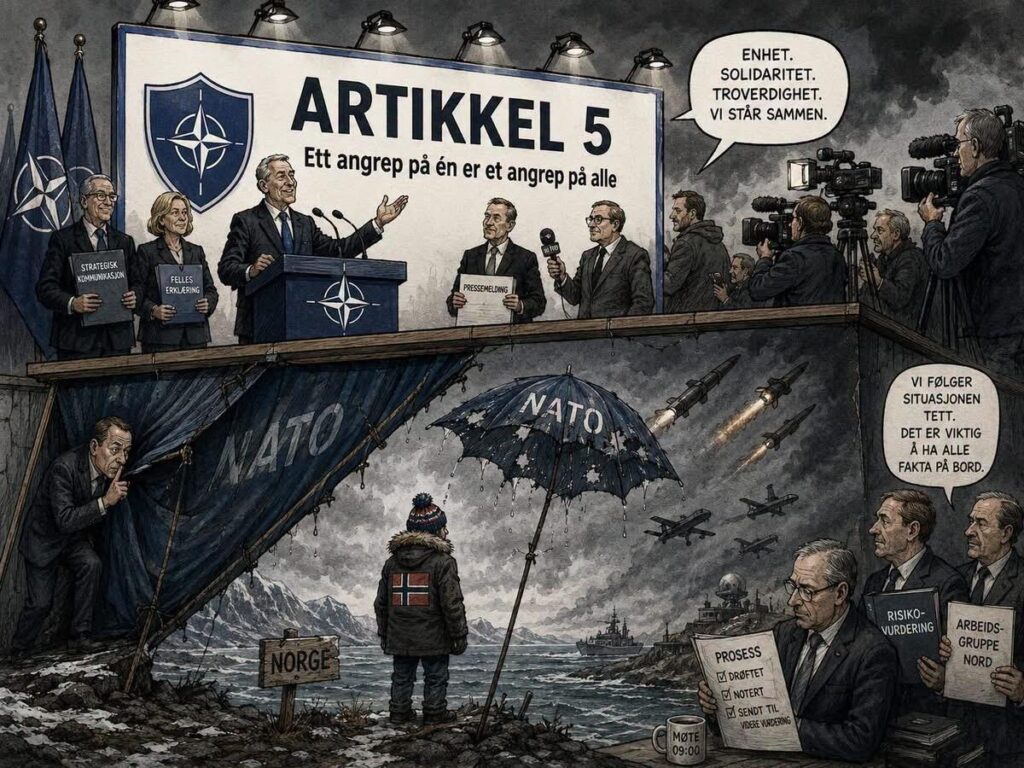
We like to tell the world that Norway stands for peace, dialogue, international law and human rights. We award the Nobel Peace Prize, fund peace processes and give solemn speeches about international solidarity. But at the same time, Norway has, through NATO, taken part in military operations that have raised serious questions about the relationship between security policy, international law and peace work.
In 2001, Norway went into Afghanistan as part of the international military effort following the terrorist attacks on the United States. Norwegian soldiers served there for many years. In 2021, the Taliban took power again. After two decades of international military presence, Afghanistan still faced enormous political, economic and humanitarian challenges.
What did we actually learn?
Who in Norwegian politics has properly reckoned with the gap between the ambitious goals and the actual outcome?
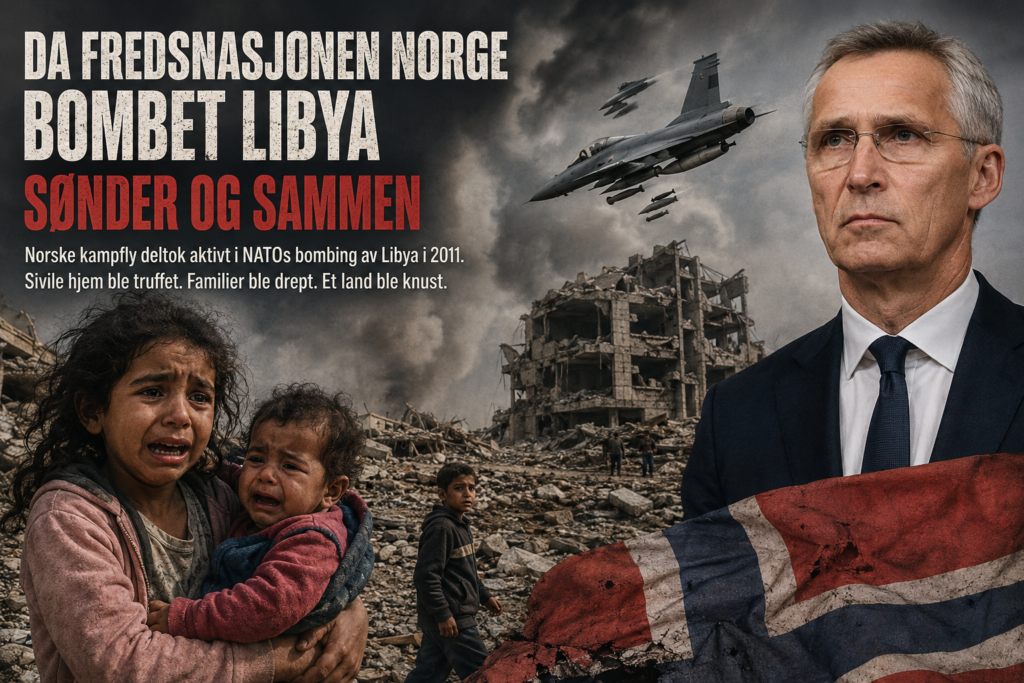
In 2011, Norway took part in NATO’s military operation in Libya. Norwegian fighter jets dropped 588 bombs. The operation had a mandate from the UN Security Council to protect civilians, but it ended with Gaddafi’s fall and a long period of political division, armed groups and instability.
It is not right to blame Libya’s later collapse entirely on Norway. But Norwegian participation entails a responsibility to examine what the operation actually achieved, what consequences it had, and whether the political decisions were adequately considered.
We cannot bomb a country and then pretend that the consequences are solely someone else’s responsibility.
Norway did not take part in the invasion of Iraq in 2003. That is an important historical distinction. But for many decades we have tied our security closely to the United States and Britain, and the question is how much political independence we actually exercise when our closest allies pursue policies that may run counter to our own professed ideals of peace.
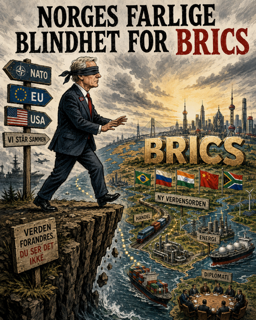
NATO is a defensive alliance, and Norwegian membership has clear security-policy justifications. But membership can never relieve the Norwegian authorities of the duty to make their own assessments. Loyalty to the alliance must not become a substitute for political judgement.
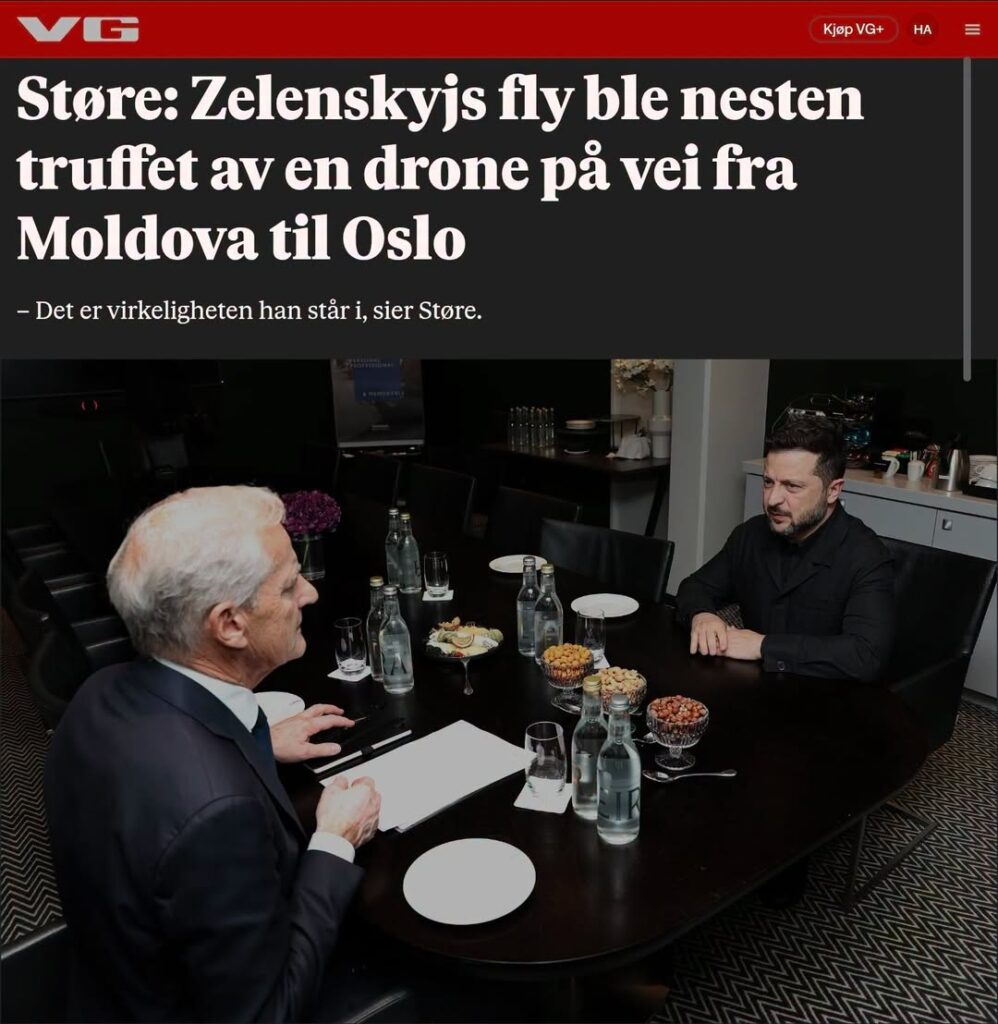
That also applies to Ukraine.
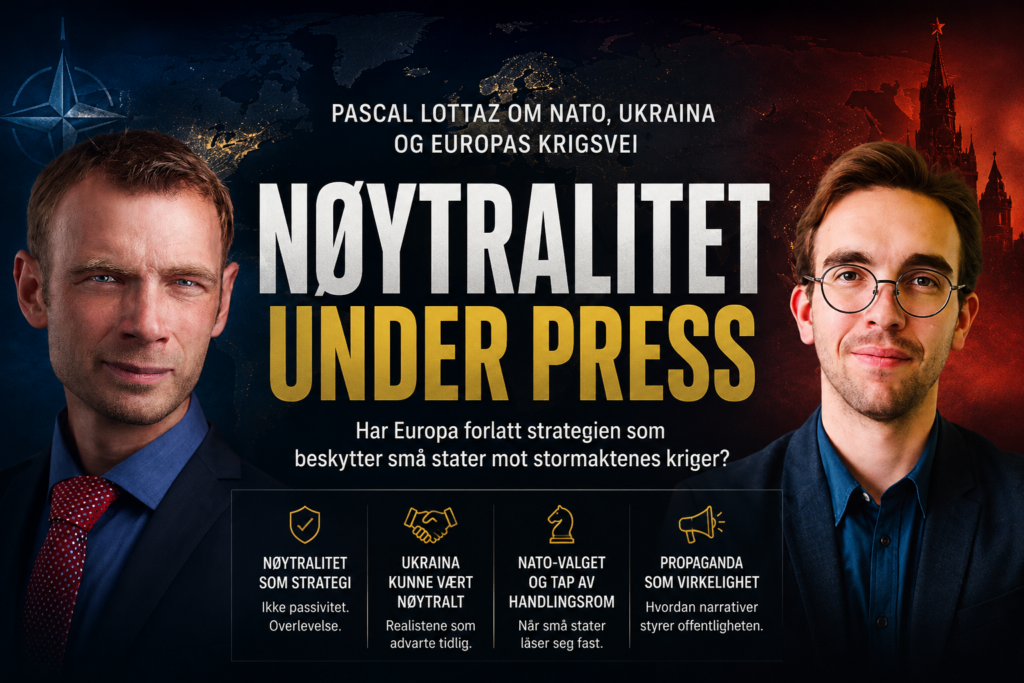
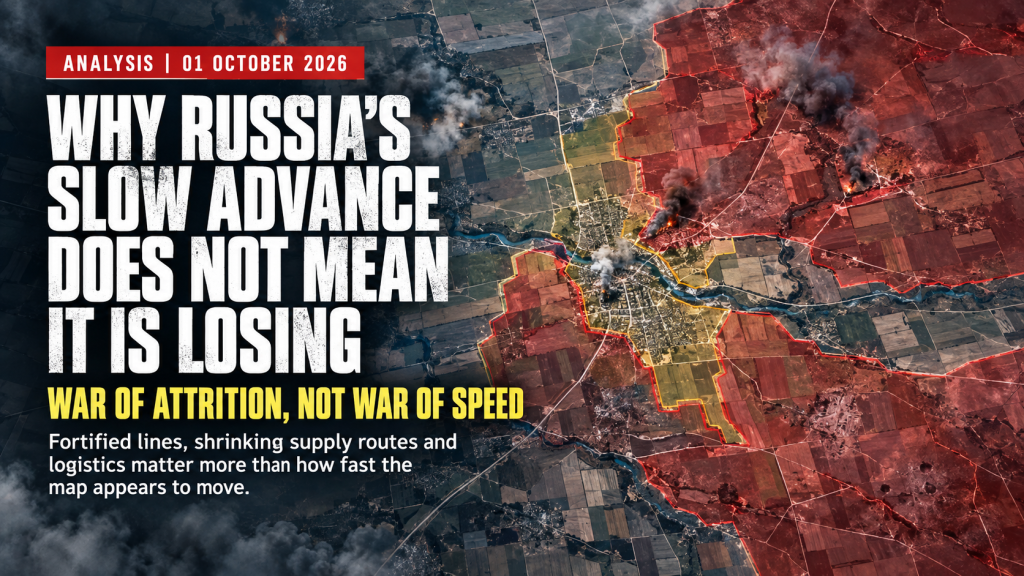
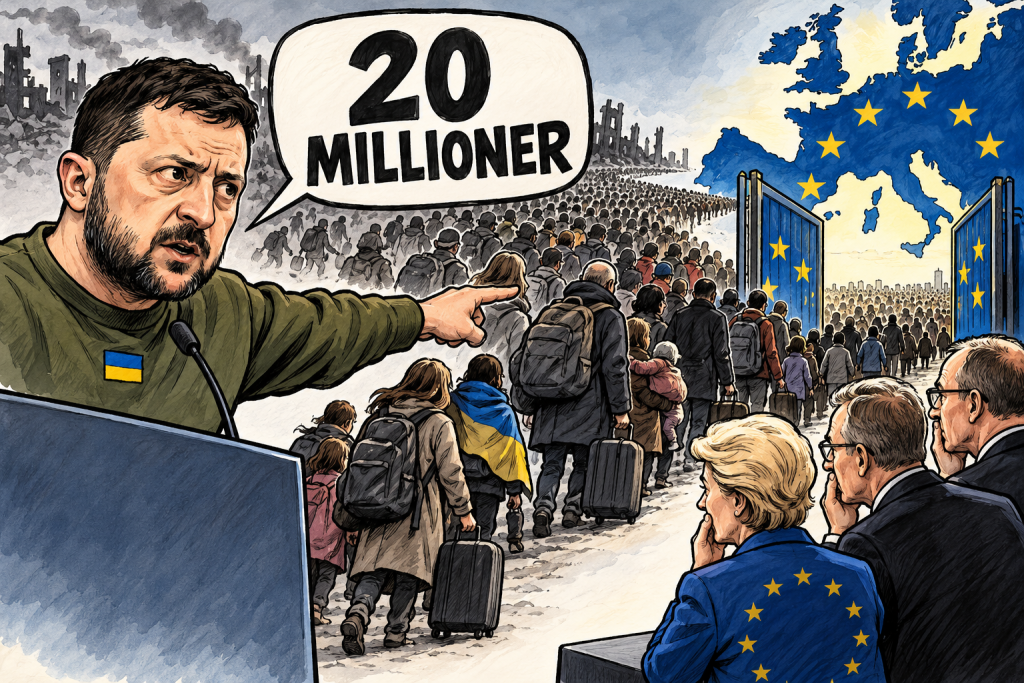
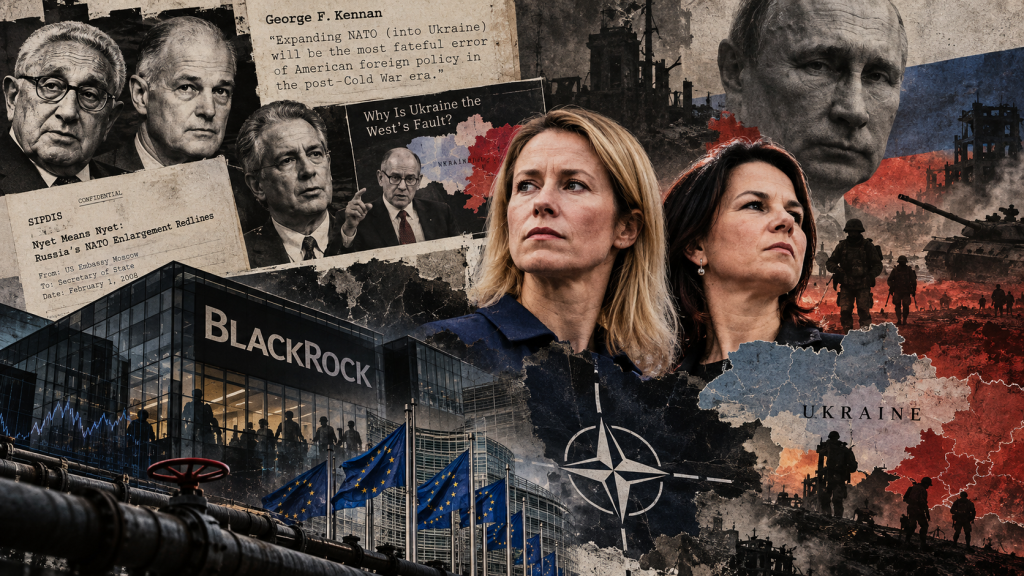
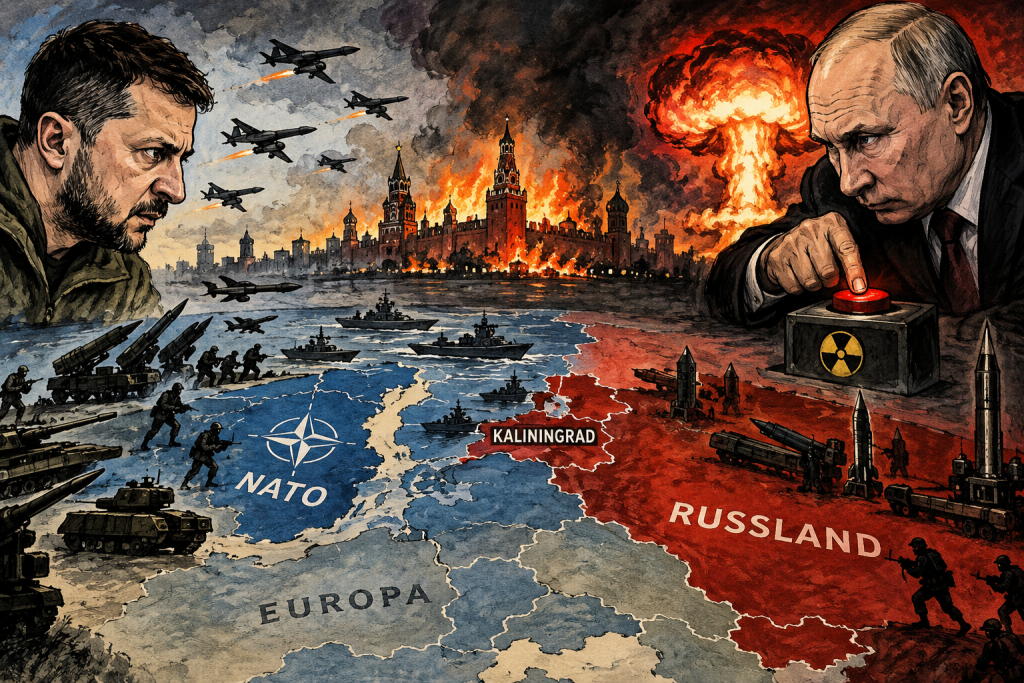
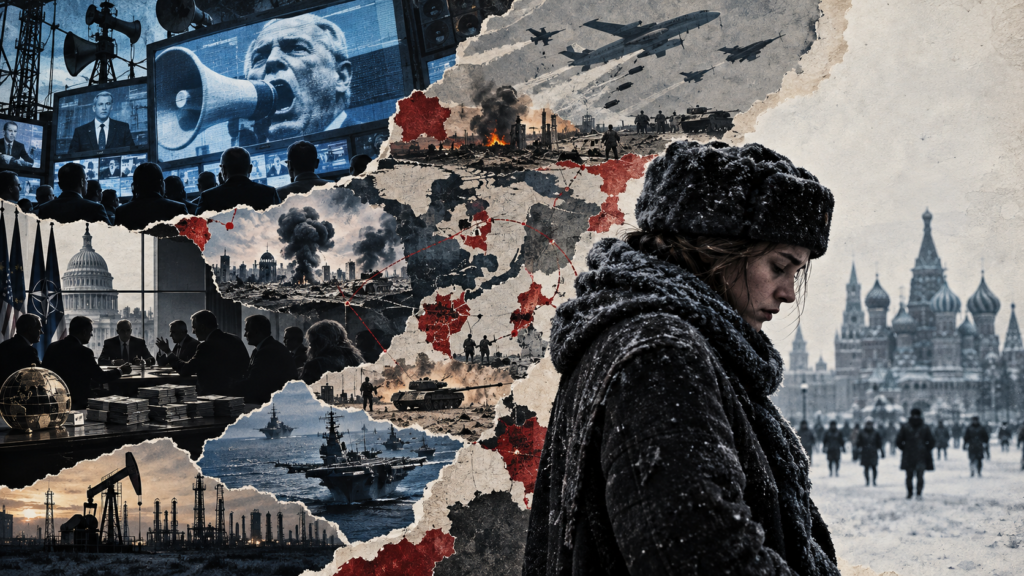
Russia’s invasion of Ukraine in February 2022 was a violation of international law. Ukraine has the right to defend itself. But that does not mean Norwegian politicians can avoid discussing the war’s long-term consequences, the risk of escalation and what diplomatic opportunities exist.
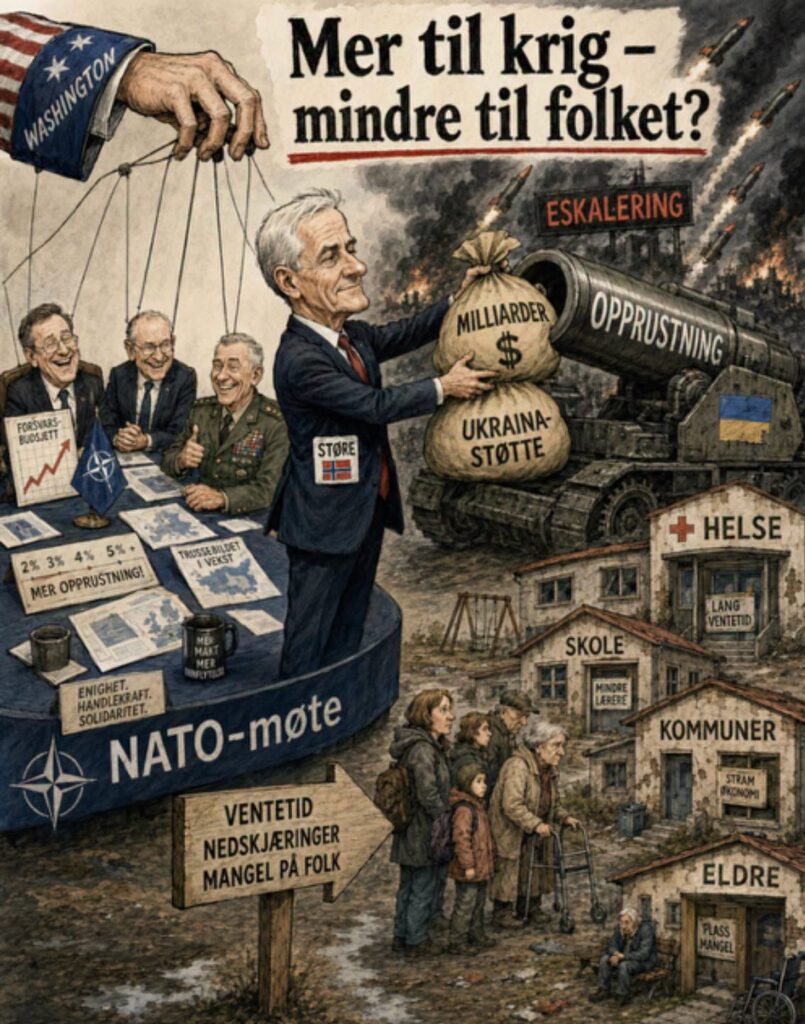
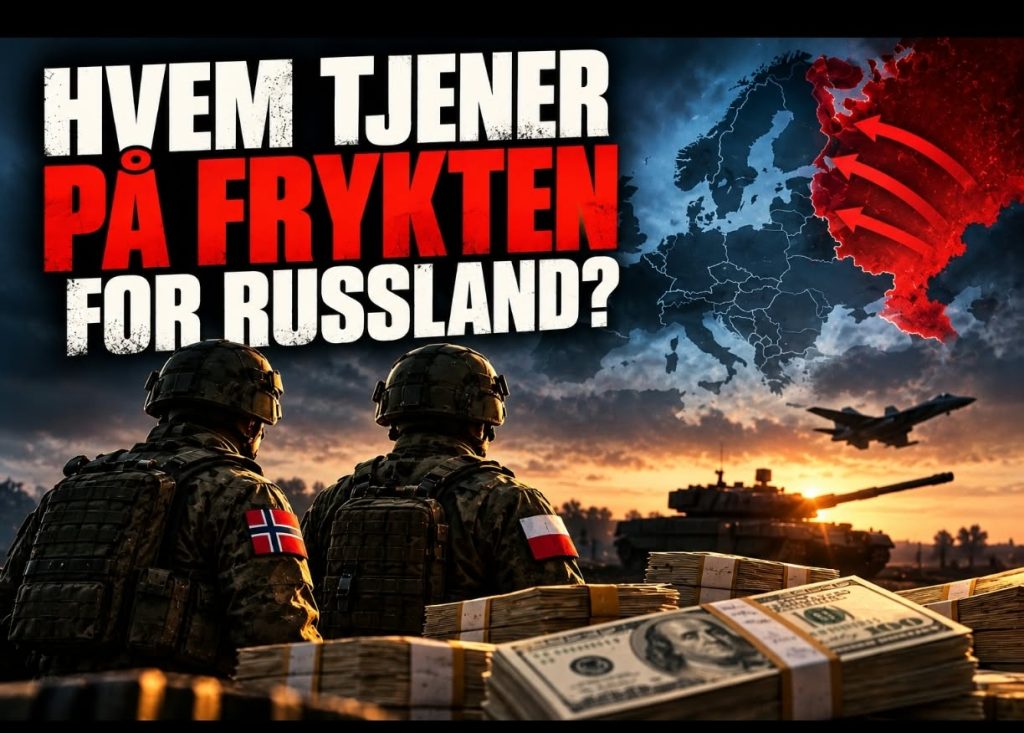
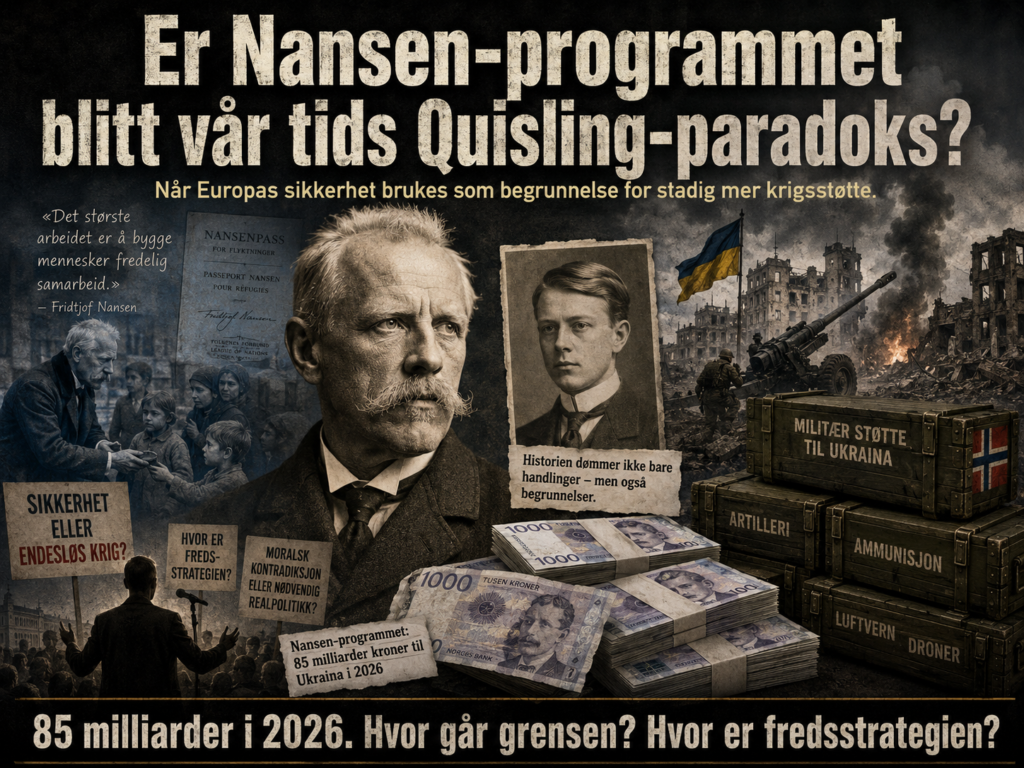
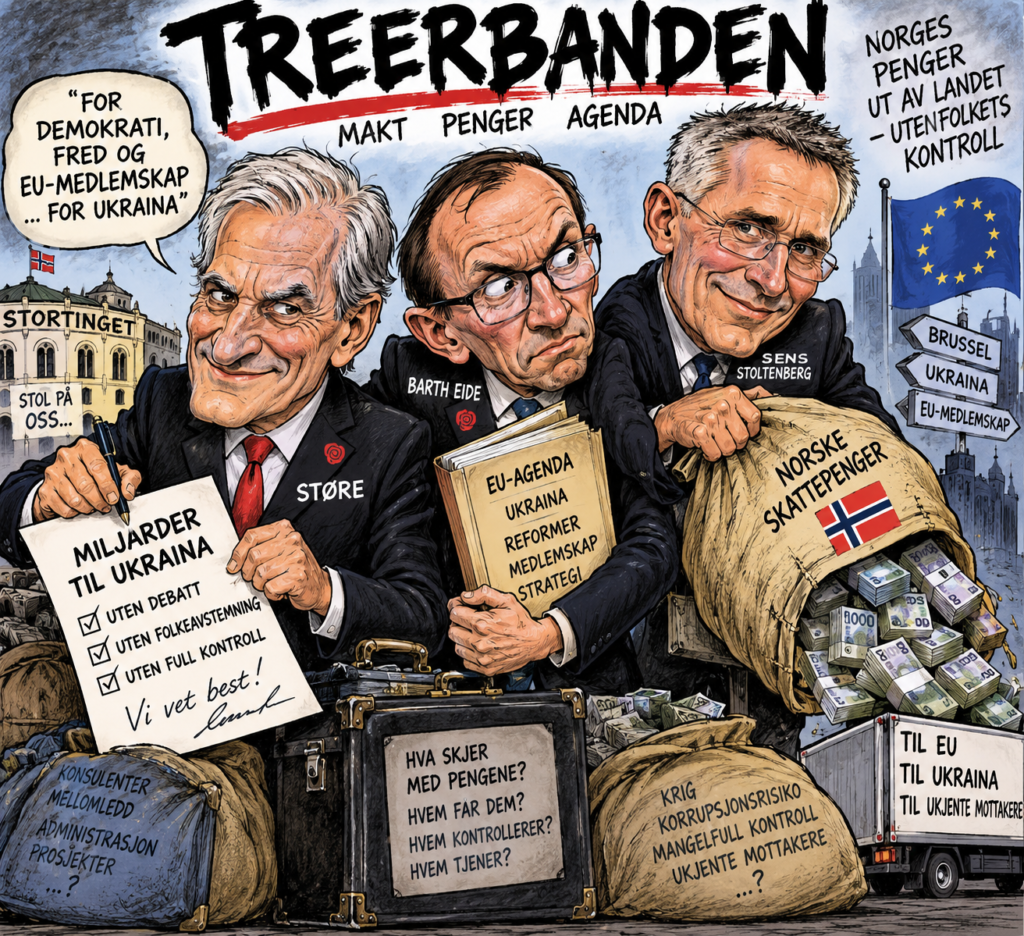
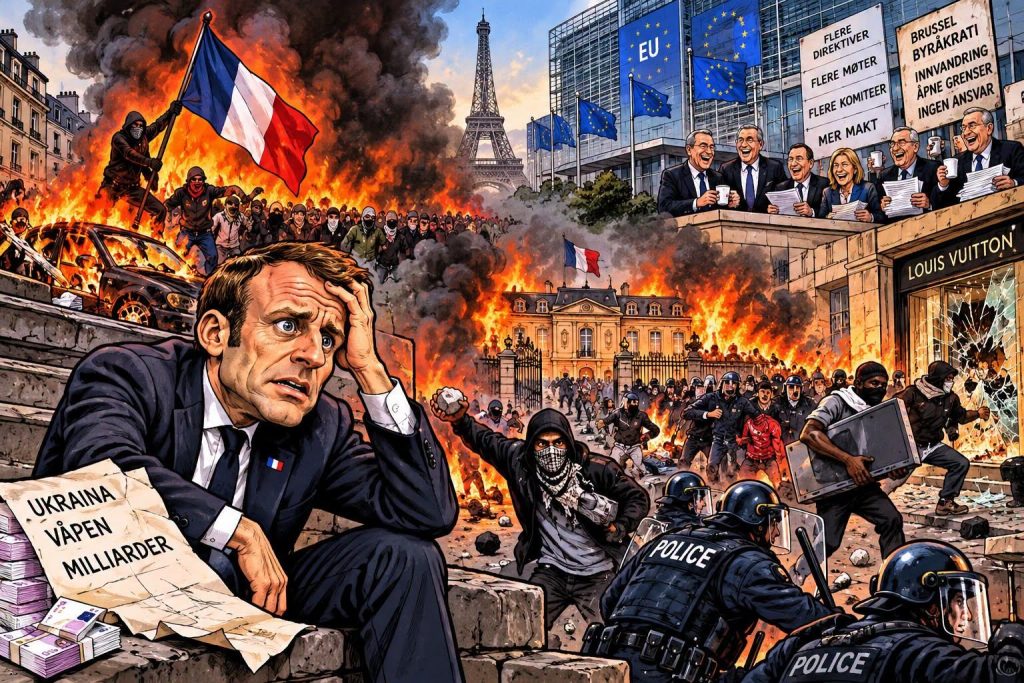
We allocate enormous sums to military support. We discuss weapons, ammunition, air defence and ever more extensive military capability. But where is the equally extensive political discussion of how the war is actually to be ended?
Where is Norway’s peace strategy?
Where is the independent diplomatic voice that does not merely repeat the wording from Washington, London and Brussels?
And why does it at times seem as though the word negotiations has become more controversial than ever new arms deliveries?
This is not an argument for abandoning Ukraine to Russia. It is a demand that military support and diplomacy be assessed as parts of a single strategy, and that the Norwegian authorities be able to explain how their policy will contribute to a lasting and just peace.
We should also question Norway’s economic role.
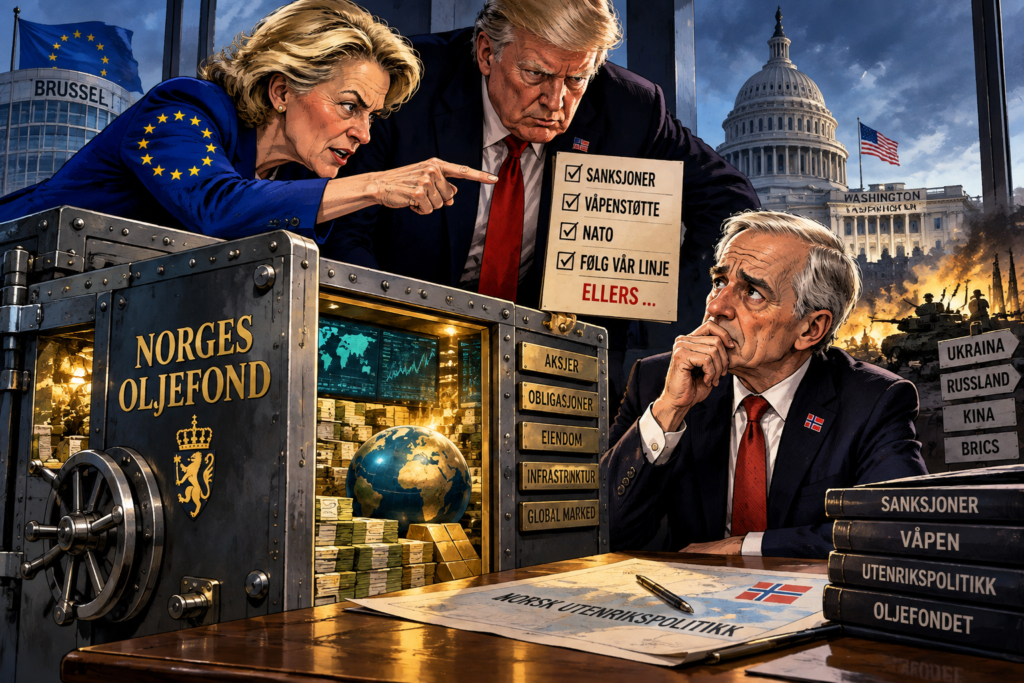
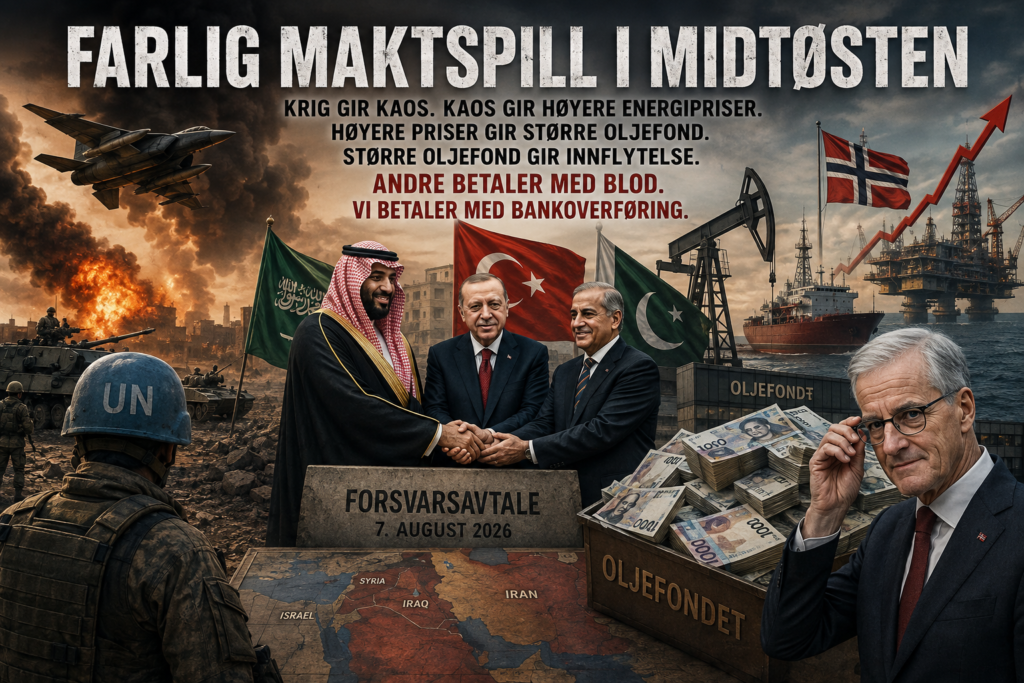
Through the Government Pension Fund Global, Norway has large investments in international companies. The oil fund has an ethical framework, but investments in companies linked to arms production, occupation and human rights issues have repeatedly sparked debate.
Can we simply call ourselves a nation of peace if we are at the same time making money in economic systems closely bound up with militarisation and international conflicts?
The question deserves more than a standard answer from the Ministry of Finance.
Norway is not Britain. We have not had a comparable worldwide colonial empire. But we have our own history of colonial structures and Norwegianisation policies towards the Sámi and the Kven. Here at home, too, the state has had to confront serious abuses against people’s language, culture and rights.
That ought to make us more humble when we talk about other countries’ history.
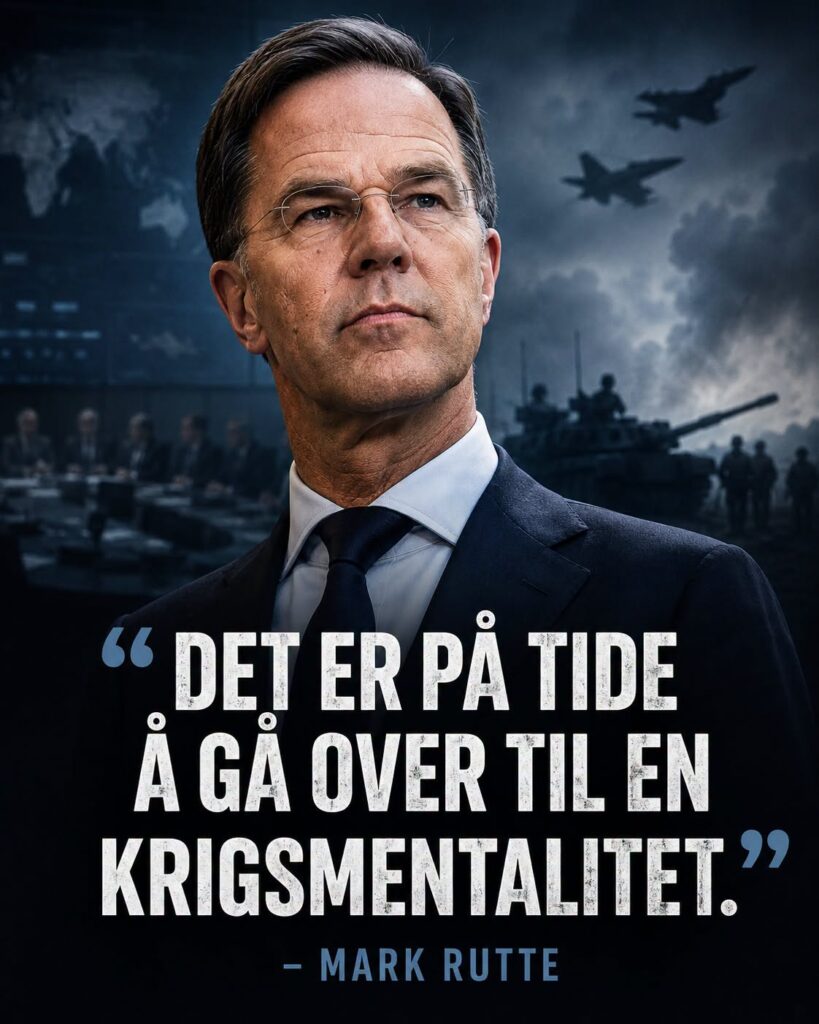
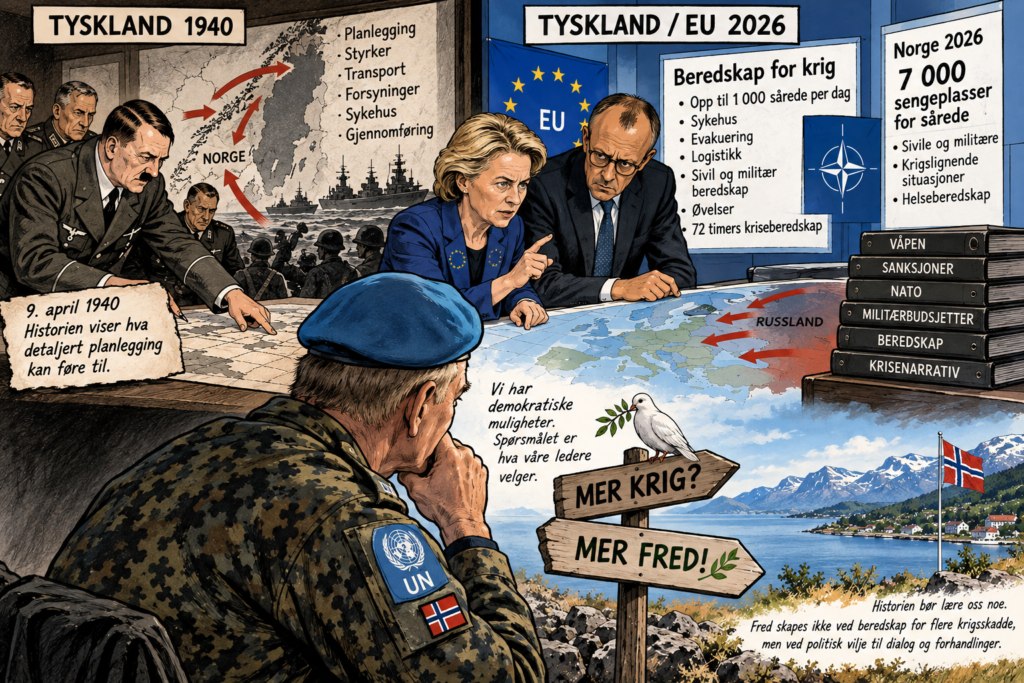
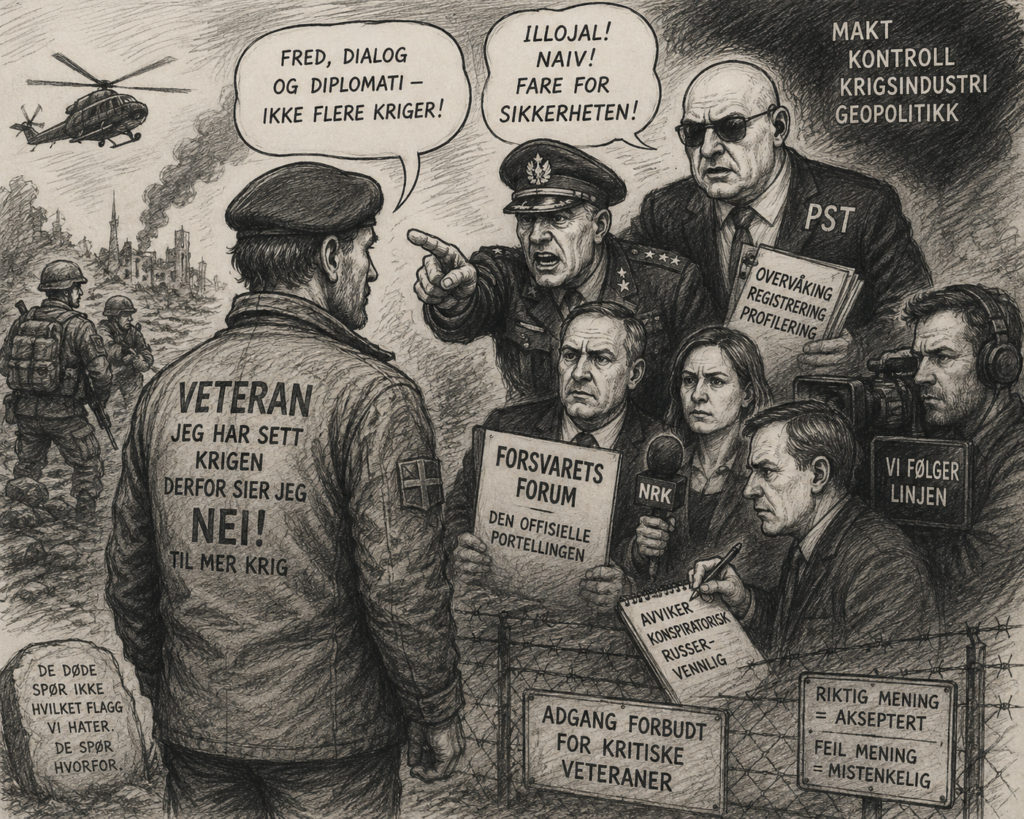
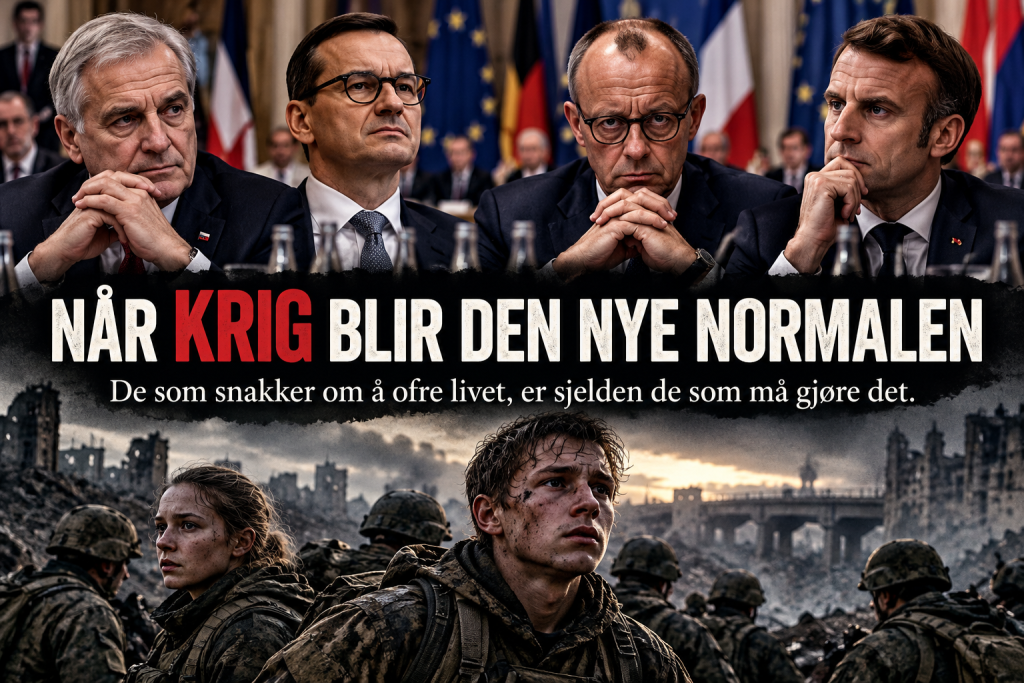
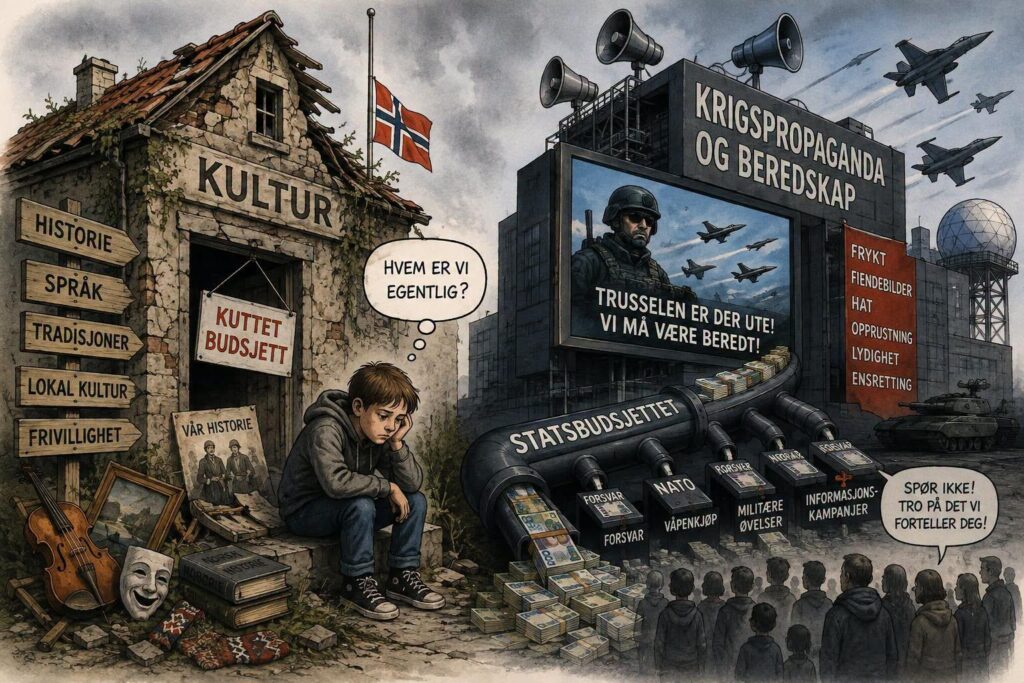
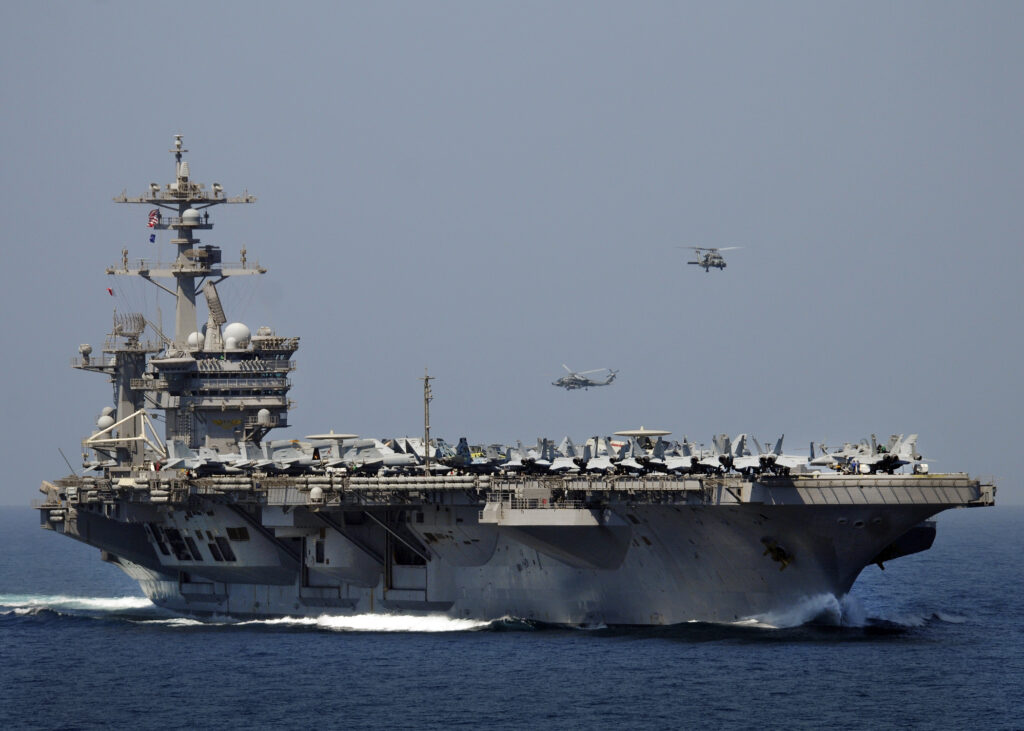
Instead, we see a Norwegian security-policy debate in which ever greater military rearmament is often presented as the only realistic response to international turmoil.
But military power alone cannot resolve political conflicts. The history of Afghanistan, Iraq and Libya should have taught us precisely that.
The British Empire showed how dangerous it becomes when power replaces respect for other peoples’ self-determination. The United States has at various times shown how destructive military interventions can be when ambitions exceed an understanding of the societies being intervened in.
Norway should not repeat these mistakes out of loyalty to the alliance.
We must be able to put critical questions to Russia, the United States, Britain, Israel and other states according to the same principles of international law. That is precisely how a credible nation of peace should act.
For if international law only applies in full when our adversaries break it, we no longer have a principle. We have a political convenience.
This is where Norwegian double standards must be challenged.
We speak warmly of peace, yet devote ever more political attention to war preparedness. We praise diplomacy, yet often give military solutions the most room in the debate. We emphasise human rights, yet are far more cautious when our closest allies must be held to account.
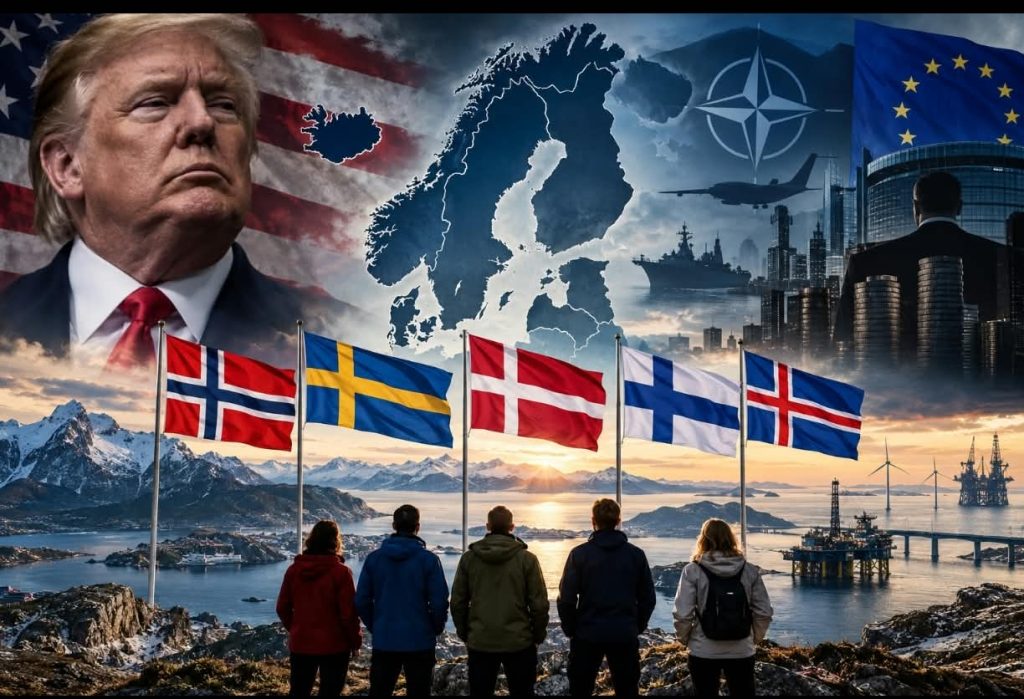
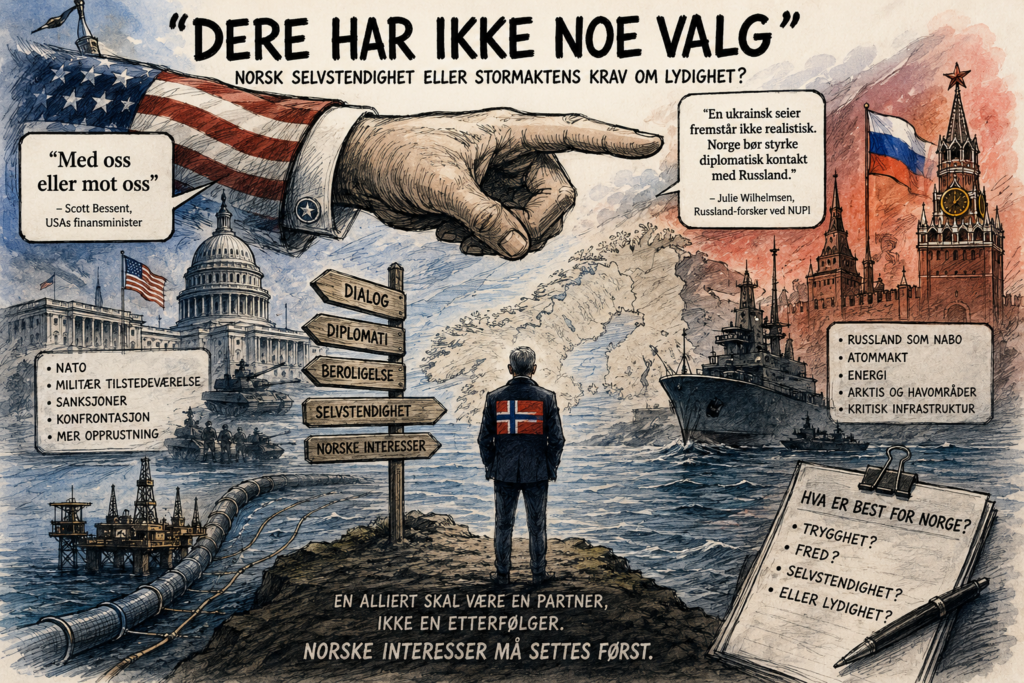
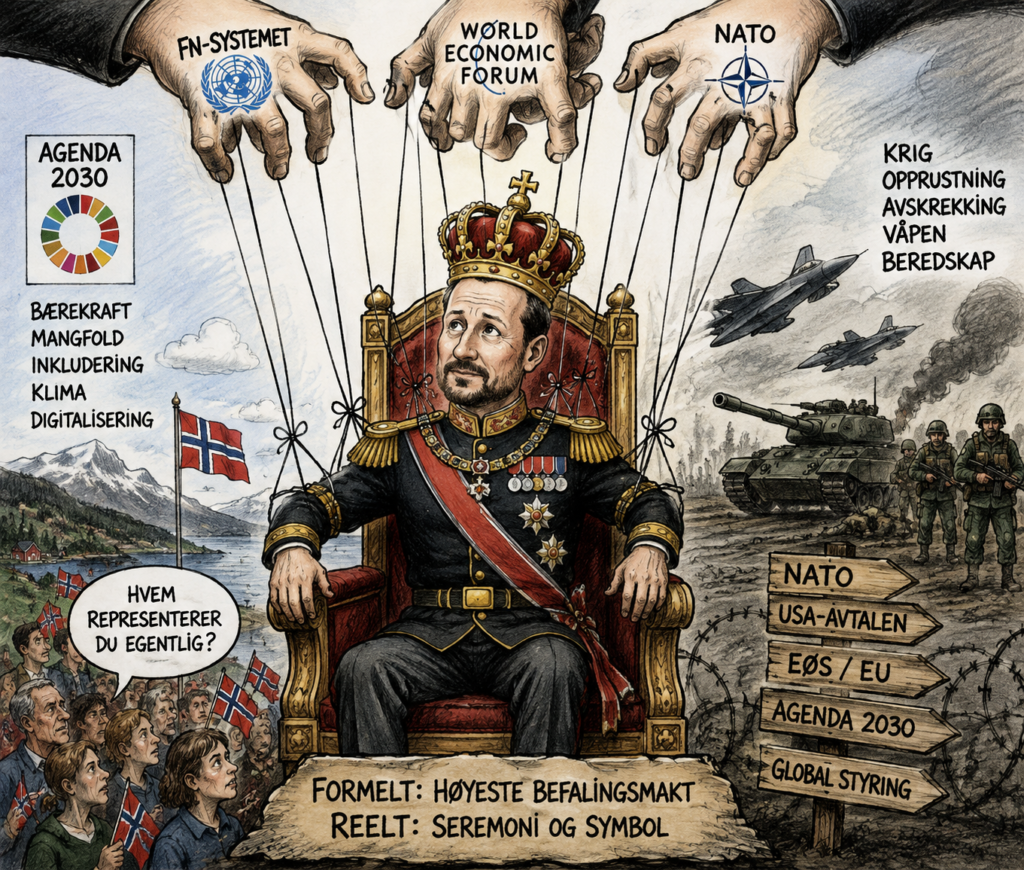
Norwegian politicians should ask themselves whether our country is to be an independent actor for peace or first and foremost a loyal supporter of great powers with a far more burdened history.
The British Empire is gone. But the idea that strong states have the right to shape other nations’ futures lives on.
And it is precisely this way of thinking that Norway must dare to challenge.
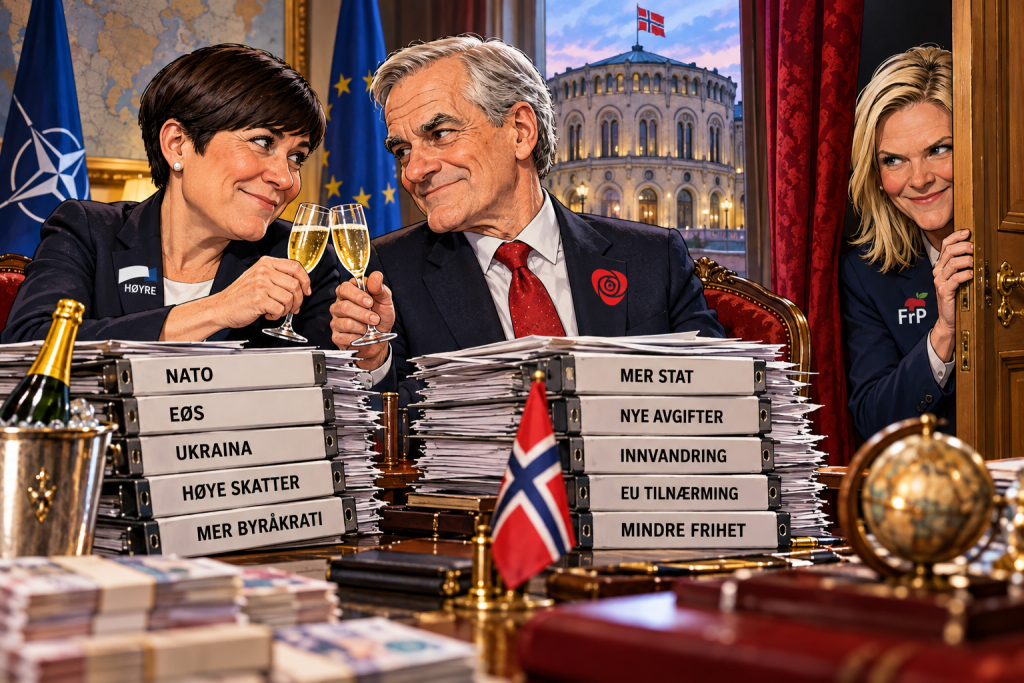
We do not need a Norwegian foreign policy that uncritically follows Washington and London. We need a policy that dares to ask questions even when the answers are uncomfortable for our own allies.
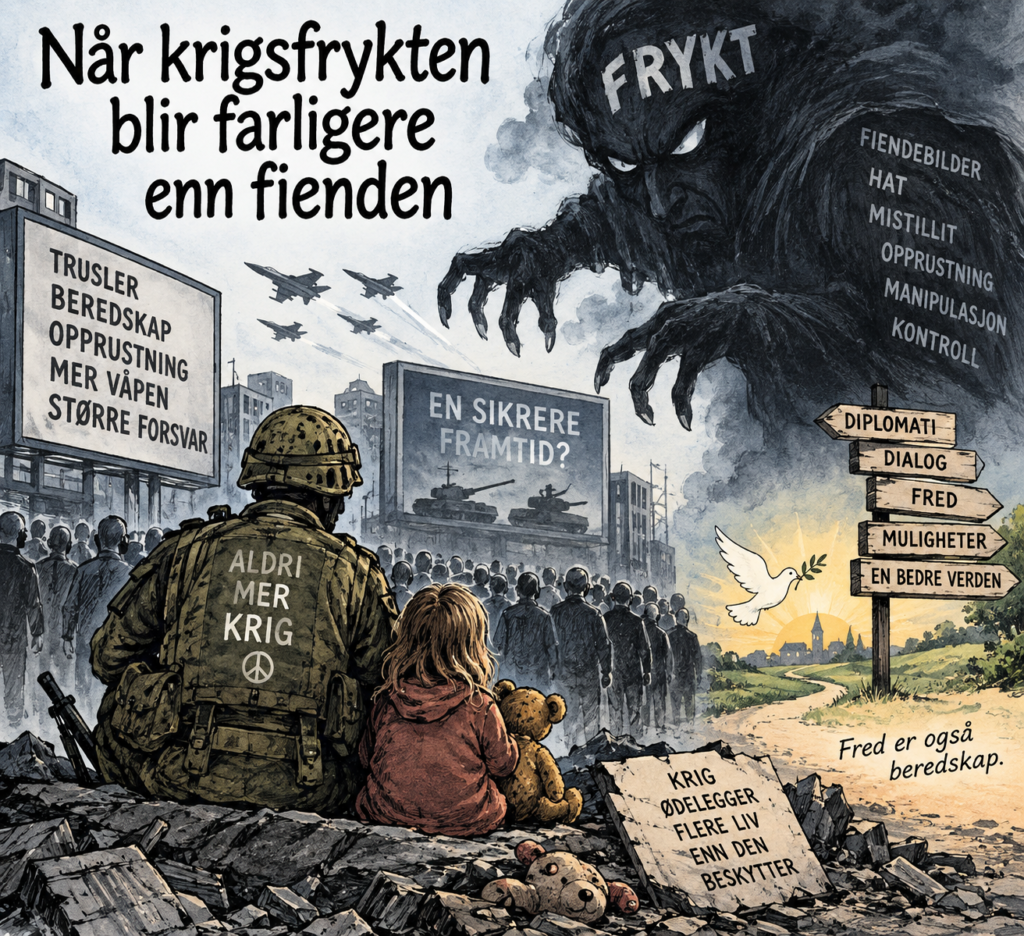
For peace is not a question of how many billions we can spend on weapons. Peace also requires political courage, historical understanding, respect for international law and a willingness to talk to those we disagree with.
Norway cannot on its own clean up after several hundred years of imperialism and great-power politics. But we can decide whether we want to perpetuate the same patterns of power politics or help break them.
The British built the empire. The Americans took over much of the global power. But why should Norway keep following when history has shown time and again how badly things can go?
It is time for Norwegian politicians to answer a simple question:
Is Norway to be a nation of peace with an independent voice, or shall we settle for being a wealthy and obedient player when the great powers once again decide what the rest of the world should look like?