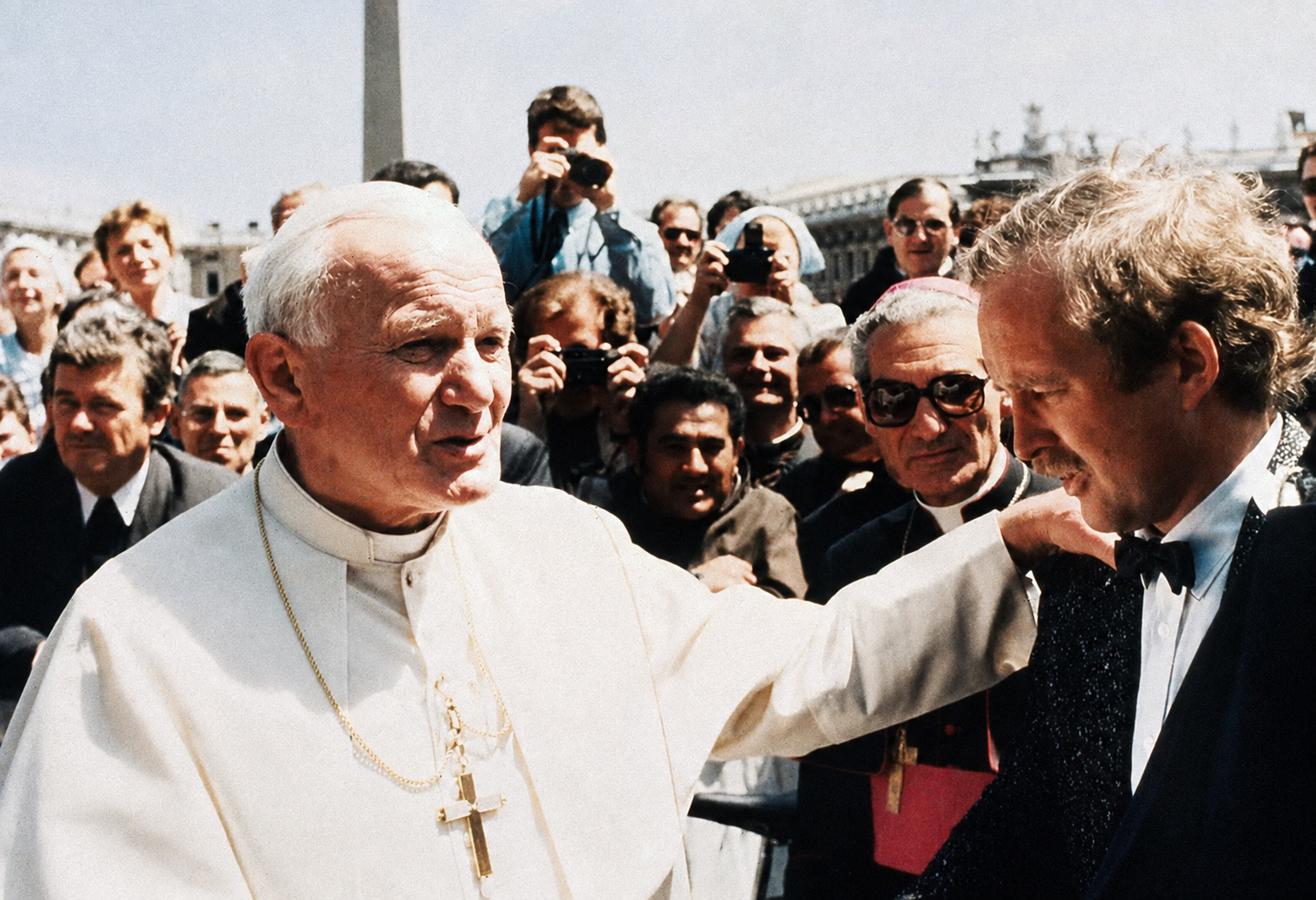
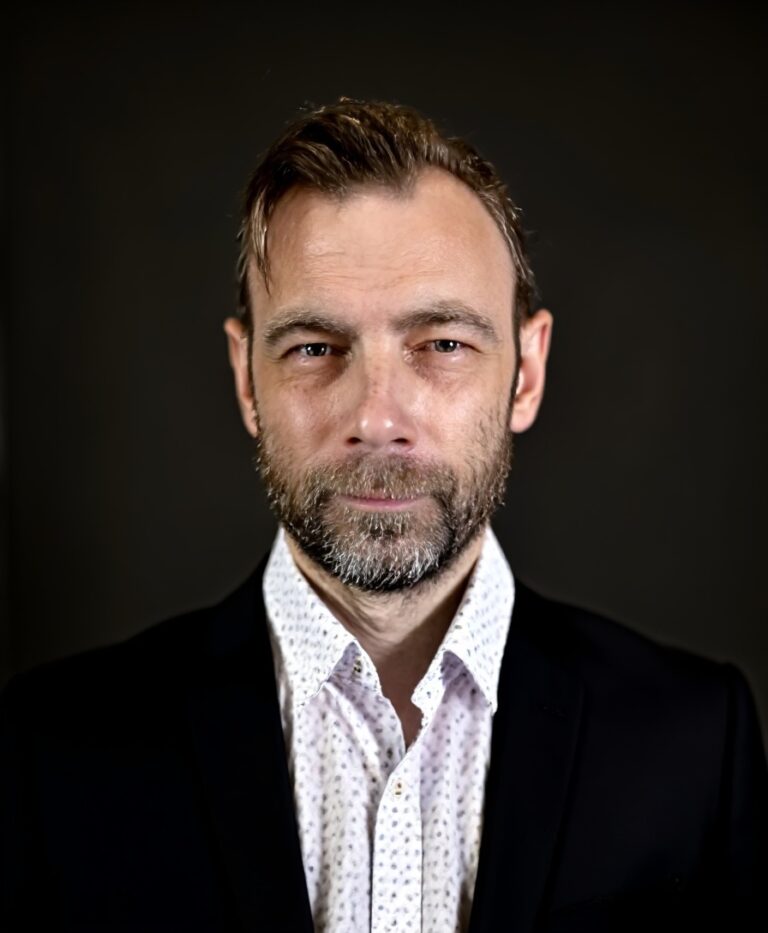
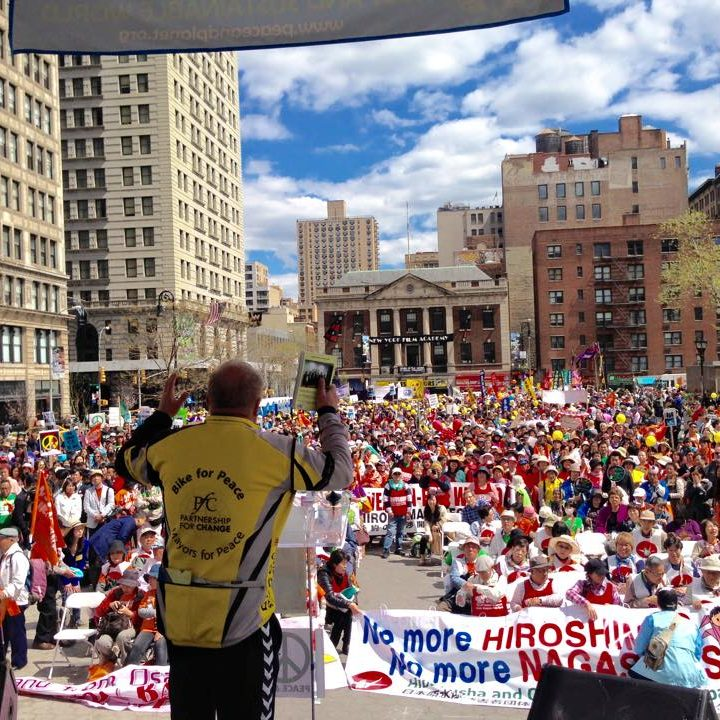
After almost 50 years of peace work, Tore Nærland – founder of Bike for Peace, an organisation that received The Gandhi Foundation International Peace Award for its work against nuclear weapons and for non-violent solutions to conflicts – was expelled from No to Nuclear Weapons.
Through Bike for Peace, Tore has travelled the world, visited conflict zones and met heads of state, parliamentarians, diplomats, peace activists and ordinary people. Nuclear disarmament has been one of his most important causes. He has received international peace prizes, been nominated for the Nobel Peace Prize many times and been awarded the King’s Medal of Merit.
For 44 years he was also a member of No to Nuclear Weapons (Nei til Atomvåpen).
On 18 April this year, the national congress elected him to the organisation’s executive board.
Four months later his membership was over.
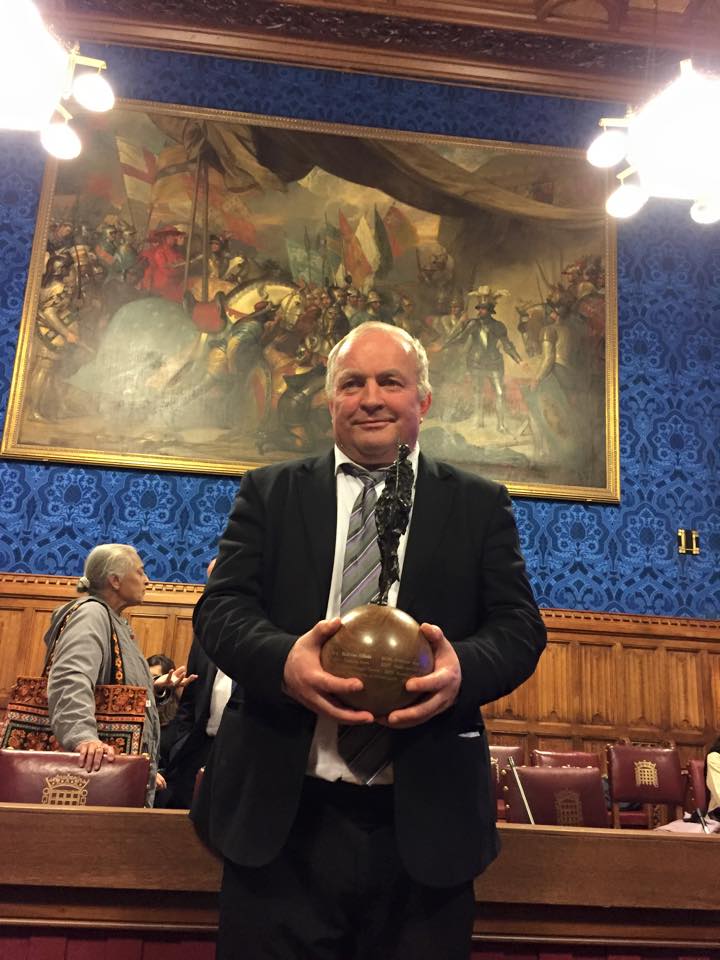
The expulsion
At the executive board meeting on 20 August, Nærland was expelled from No to Nuclear Weapons. The background was his peace work in Russia, meetings with Russian politicians and contact with organisations the board considered too close to the Russian authorities.
The case has developed into something far bigger than an internal conflict over one trip to Russia.
It is about where the limits lie for the peace movement’s contact with an adversary. About whether an executive board can overturn a congress election on the basis of matters the congress already knew about. And about whether fear of reputational damage and reactions from others has begun to weigh more heavily than the dialogue work itself.
A trip to Moscow
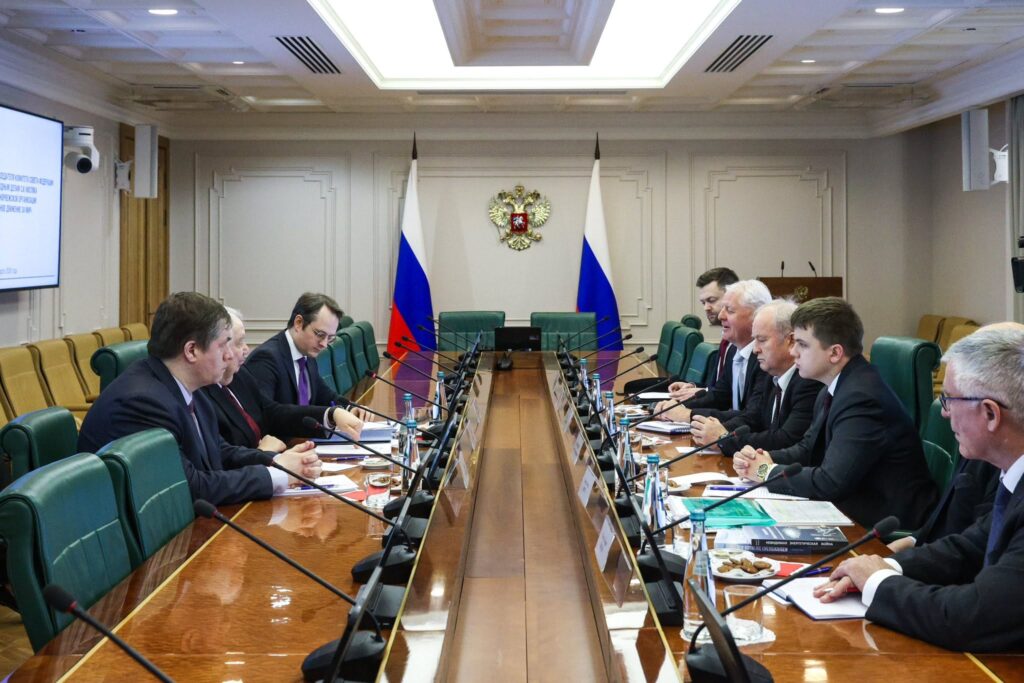
In March, Nærland travelled to Russia through Bike for Peace.
There the delegation met, among others, representatives of the Federation Council and other Russian actors. The topics were nuclear disarmament, the New START treaty and the need to maintain dialogue between the nuclear powers.
For Nærland, this was a continuation of the working method he has followed for decades: approach those who actually hold the power to change policy.
He has also travelled repeatedly to Ukraine since the outbreak of war and has publicly called for an end to the war and for negotiations.
But within No to Nuclear Weapons, the Russia contacts gradually became a problem.
Chair Lars Egeland tells Perspektiv that the organisation is not against dialogue with the Russian authorities as such. The problem, he says, was the form the contact took.
He points to meetings with sanctioned politicians, events with Russian government actors and cooperation with organisations he believes are controlled by or close to the Russian authorities.
Egeland says the executive board feared this could damage the organisation’s reputation and create the impression that No to Nuclear Weapons had close cooperation with the Russian authorities.
– The point is not to refrain from talking to Russian authorities or diplomats, says Egeland.
He nevertheless believes such meetings can be used by Russia to show that the country is not internationally isolated.
Egeland also stresses that in his view, independence from foreign governments has been a fundamental principle of No to Nuclear Weapons’ work for almost 50 years. He believes the organisation has historically managed to maintain international contacts without entering into cooperation with other countries’ governments, and that this distance must also be preserved in today’s political situation.
New rules – the same evening
At the meeting on 20 August, the executive board also adopted rules for what board members may do.
They are not to have contact with sanctioned Russian politicians, take part in events organised by the Russian authorities or cooperate with government-controlled organisations without the board first having considered the matter.
Nærland does not dispute that the executive board can adopt such rules for the future.
The problem, he believes, is that they were used against him for actions that had already taken place.
In his appeal against the decision, he writes that the organisation describes the rules as a “clarification of existing practice”. But if this really was existing practice, he believes NTA must be able to show where the rule was written and to whom it had previously been applied.
If it did not exist, he believes the executive board in reality adopted a new rule and applied it retroactively against the person who triggered the discussion.
This is one of the most central questions in the whole case.
Egeland, however, rejects the idea that the choice was between accepting Nærland’s past activity or expelling him. He says the board was precisely trying to establish guidelines for future contact with Russia.
According to Egeland, Nærland would not have been expelled if he had accepted the guidelines and been willing to involve the executive board in future trips to Russia. Another option was for him to step down from the board, continue his work through Bike for Peace and remain an ordinary member of No to Nuclear Weapons.
Egeland’s version is that Nærland rejected these solutions, and that only then did expulsion become the remaining sanction under the statutes.
This also makes the divide between the parties clearer: Nærland believes the new restrictions in themselves were incompatible with how he conducts independent peace work. Egeland, for his part, believes it was Nærland’s rejection of future frameworks – not the Russia dialogue alone – that ultimately led to the expulsion.
The chair asked him not to stand
Egeland confirms to Perspektiv that he spoke with Nærland before the congress.
He told him the Bike for Peace work could continue as before, but that the Russia contacts would create problems if he also sat on the executive board of No to Nuclear Weapons.
Egeland therefore advised Nærland not to stand for election.
Nærland stood anyway.
When the congress elected Nærland to the executive board on 18 April, the Russia contacts were already part of the discussion. The objections were raised before the vote, but the congress elected him anyway by 16 votes to 14. Two days later came the complaint that would eventually end in expulsion.
Egeland nevertheless believes this does not mean the congress had the same factual basis the executive board later had. According to him, the investigation of the complaint brought to light information that was not known when Nærland was elected.
So two things stand side by side: the Russia contacts and the objections to them were known before the election, while Egeland claims the later complaint process gave the board new information that changed the assessment.
This still leaves a difficult organisational question:
If the congress knew about the Russia contacts themselves and still elected Nærland, how much new information was needed before the executive board could set that election aside four months later – and which of the new pieces of information were decisive?
Nærland believes the case was in reality shifted along the way.
He points out that in June the working committee expressly wrote that the case concerned his position as a board member, not his membership in general.
Two months later he was expelled from the organisation after 44 years as a member.
He describes this as a case in which the grounds were gradually changed while the target remained the same.
The accusation of Russian intelligence
During the meeting on 20 August, a new and far more serious claim also emerged.
According to Nærland’s appeal, it was claimed that one of the organisations Bike for Peace had contact with, the Russian Peace Foundation, had links to Russian intelligence.
Egeland also made this claim in his interview with Perspektiv, pointing to the organisation’s alleged connection with the GRU.
Nærland, however, claims this accusation never appeared in the case documents before the meeting.
He writes that neither the complaint, the working committee’s report, the minutes nor the notice of meeting contained the claim, and that he therefore never had the opportunity to respond to it before the board voted.
He is now asking the executive board either to document the connection in writing or to withdraw the claim.
Nærland also points out that the Russian Peace Foundation itself is not on the EU, Norwegian or US sanctions lists, although the organisation’s head, Leonid Slutsky, is personally sanctioned.
That does not settle the question of the organisation’s actual links to the Russian authorities.
But it makes the documentation behind the board’s claim all the more important.
– You have to be able to talk to those who hold the weapons
The core of Nærland’s defence is simple:
Nuclear disarmament happens between nuclear powers.
If nuclear weapons are to be abolished, someone has to talk to the governments that control them.
In his appeal he refers to NTA’s own statutes and action plan, which emphasise internationally controlled nuclear disarmament, confidence-building, de-escalation and diplomacy.
He also points out that No to Nuclear Weapons itself attends meetings under the Non-Proliferation Treaty where Russian diplomats are present, something the organisation has publicly defended.
For Nærland, then, the question is not whether contact with Russian representatives is legitimate in itself.
NTA itself considers it legitimate to sit in the room with Russian diplomats when the contact takes place within established multilateral forums. Tore, on the other hand, is expelled because he himself seeks out Russian politicians and institutions to talk about precisely disarmament.
For Egeland, the institutional framework is part of the protection against being exploited politically. For Nærland, the very ability to seek out decision-makers independently of state and established diplomatic channels is part of the function of peace work.
Two different views of independence thus collide: NTA fears that an independent channel can be used by the Russian authorities. Nærland fears that the peace movement loses its independence if it can only conduct dialogue within frameworks that are already politically approved.
One of two votes against
Besides Nærland himself, Bjørn Hilt was the only one who voted against the expulsion.
Hilt has decades of experience in international anti-nuclear work through the physicians’ movement International Physicians for the Prevention of Nuclear War.
IPPNW was founded in 1980 by American and Soviet doctors in the middle of the Cold War, precisely on the idea that doctors on opposite sides of a geopolitical conflict must be able to cooperate on the shared nuclear threat. The organisation received the Nobel Peace Prize in 1985 for its work highlighting the catastrophic medical consequences of nuclear war and building cooperation across the East–West divide.
Hilt’s opposition to the expulsion therefore comes from a peace tradition in which talks across enemy lines are not primarily seen as a reputational risk, but as a precondition for disarmament.
Hilt points out to Perspektiv that IPPNW is the international federation of which Norwegian Physicians against Nuclear Weapons is a part, together with similar national organisations in around 60 countries.
In conversation with Perspektiv, he expressed the view that fear of losing public support may have been one of the underlying factors in the case.
The conversation was not recorded, and this is therefore reported as Hilt’s oral assessment.
Erik Berge, who attended the executive board meeting as a reading and writing assistant for the visually impaired Nærland and has himself taken part in the Russia trips, raises the same issue in a written statement to the board.
He points out, among other things, that the organisation receives state funding, that the funding situation was uncertain, and that a new application deadline was just one week after the board meeting.
Egeland rejects that this had anything to do with the case.
He calls the claim that fear of public funding influenced the decision a conspiracy theory and says finances were not discussed as part of the case.
He also points out that No to Nuclear Weapons is in direct conflict with Norwegian foreign policy in several areas, including the campaign for Norway to join the Treaty on the Prohibition of Nuclear Weapons and opposition to European nuclear rearmament.
– We don’t change those positions out of fear of not getting money from the Foreign Ministry, says Egeland.
So two very different understandings of what lay behind the decision stand against each other.
An unanswered question of impartiality
The process surrounding the complaint has also become part of the conflict.
According to Erik Berge’s account, it was a board member who submitted the complaint against Nærland two days after the congress. The same board member later took part both in the handling of the case and in the vote.
A question about this person’s impartiality is said to have been raised by an observer during the meeting, without the board ruling on it before the proceedings continued.
This is Berge’s account, and Perspektiv has not been able to independently confirm this point.
But if it is correct, it is a question No to Nuclear Weapons should answer.
From board seat to full expulsion
Nærland’s appeal also points to another procedural question.
According to the organisation’s own whistleblowing procedures, there are several possible responses in such cases, from dismissal and a written warning to expulsion.
The board chose the most severe response.
Nærland believes the decision does not explain why a warning or a clear instruction for the future was not sufficient.
This is particularly relevant because he himself believes the conflict could have been resolved through clear written rules.
Questions of how NTA’s name and logo are used, which meetings a board member attends and when one represents the organisation are all matters an organisation has a legitimate interest in regulating.
But that is something else than expelling a member who has worked for the same cause for 44 years.
Egeland disputes that the board simply chose expulsion over a less intrusive solution. He believes the adopted guidelines were precisely the attempt to establish such a solution for the future.
According to him, Nærland could have continued as an ordinary member if he stepped down from the executive board, or remained on the board if he accepted that future Russia contacts had to take place within the new framework.
This is therefore also a question of what Nærland was actually asked to accept – and whether it was reasonable to make his rejection of these conditions the basis for full expulsion.
Nærland has since submitted an appeal against the decision of 20 August. Egeland, however, believes the right of appeal has already been exhausted.
His view is that the executive board’s handling on 20 August was itself the appeal against the working committee’s handling of the complaint, and that the case should therefore not be considered by the board again.
Nærland disputes this understanding of the process.
Where is the limit for dialogue?
This is not a simple conflict between those who are “for” and “against” Russia.
Egeland says explicitly that he supports dialogue and diplomacy.
Nærland says the same.
The disagreement concerns whom one may meet, within what framework, and who should decide which connections involve an unacceptable political or reputational risk.
NTA fears that the Russian authorities use the contact for propaganda.
Nærland believes it is precisely the fear of such association that makes the peace movement withdraw from the very people it actually needs to influence.
Bjørn Hilt voted against the expulsion.
A majority of the executive board voted in favour.
And in the middle of the conflict stands a 44-year membership and almost five decades of peace work.
The question of principle is therefore not whether Russia engages in propaganda. States do.
Nor is it whether peace organisations should be careful about how they are used by governments. They should be.
The question is how far this caution can be stretched before it undermines independent peace diplomacy and turns the peace movement into an echo of the state’s foreign policy line. Or worse: a guardian of conformity in the service of the political forces eager to legitimise the demonisation of opponents in pursuit of their own agendas.
For Tore Nærland, the limit was reached on 20 August.
He believes No to Nuclear Weapons has drawn it in the wrong place.