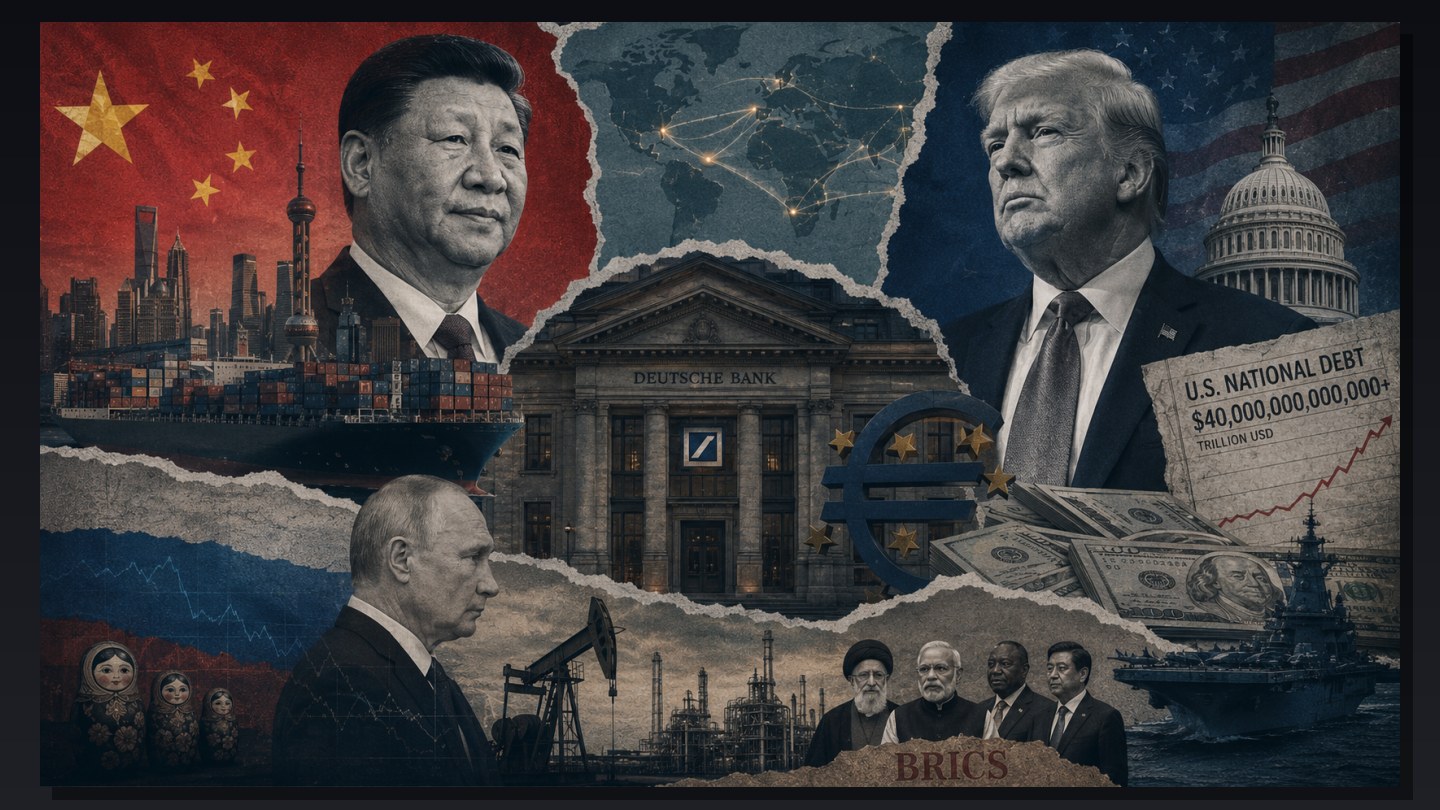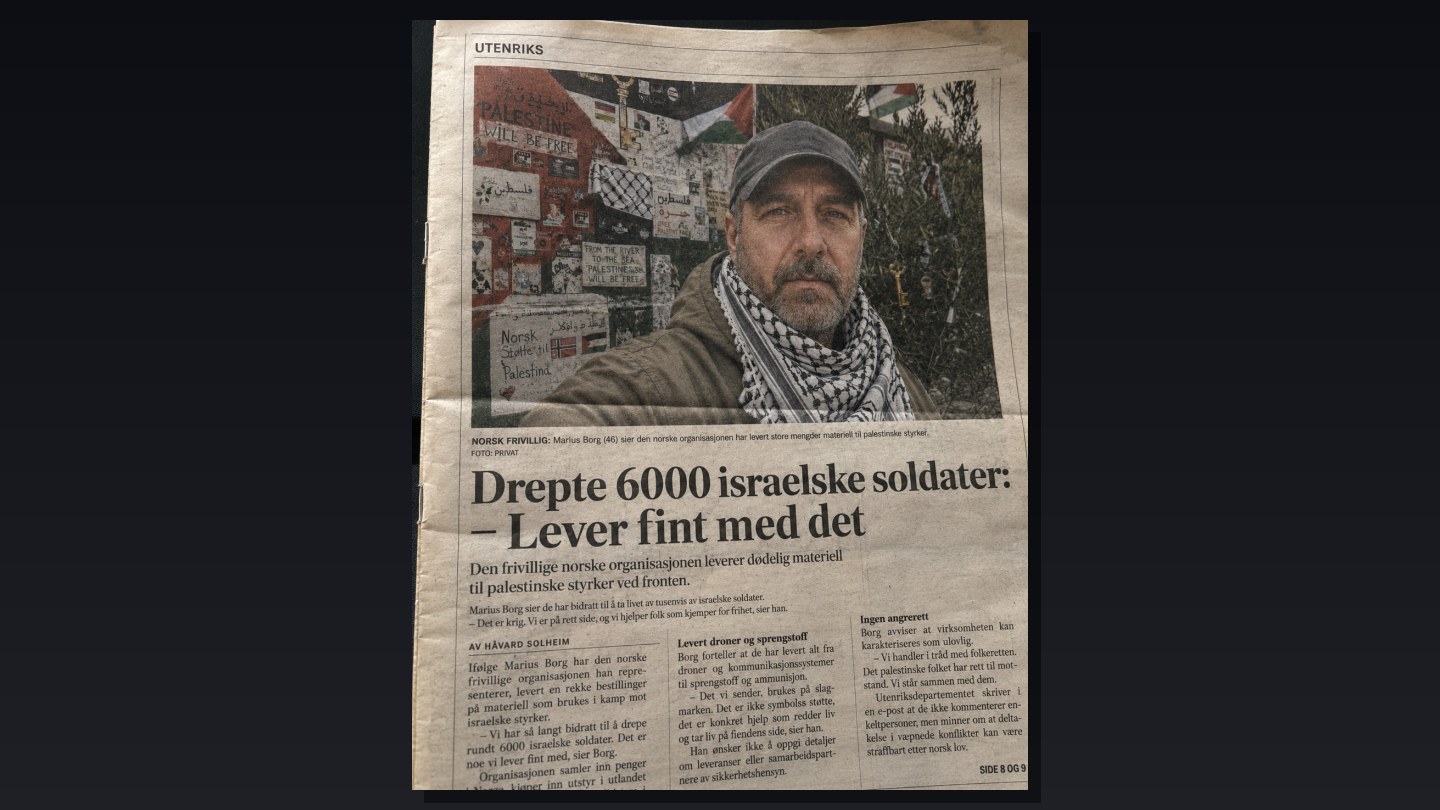
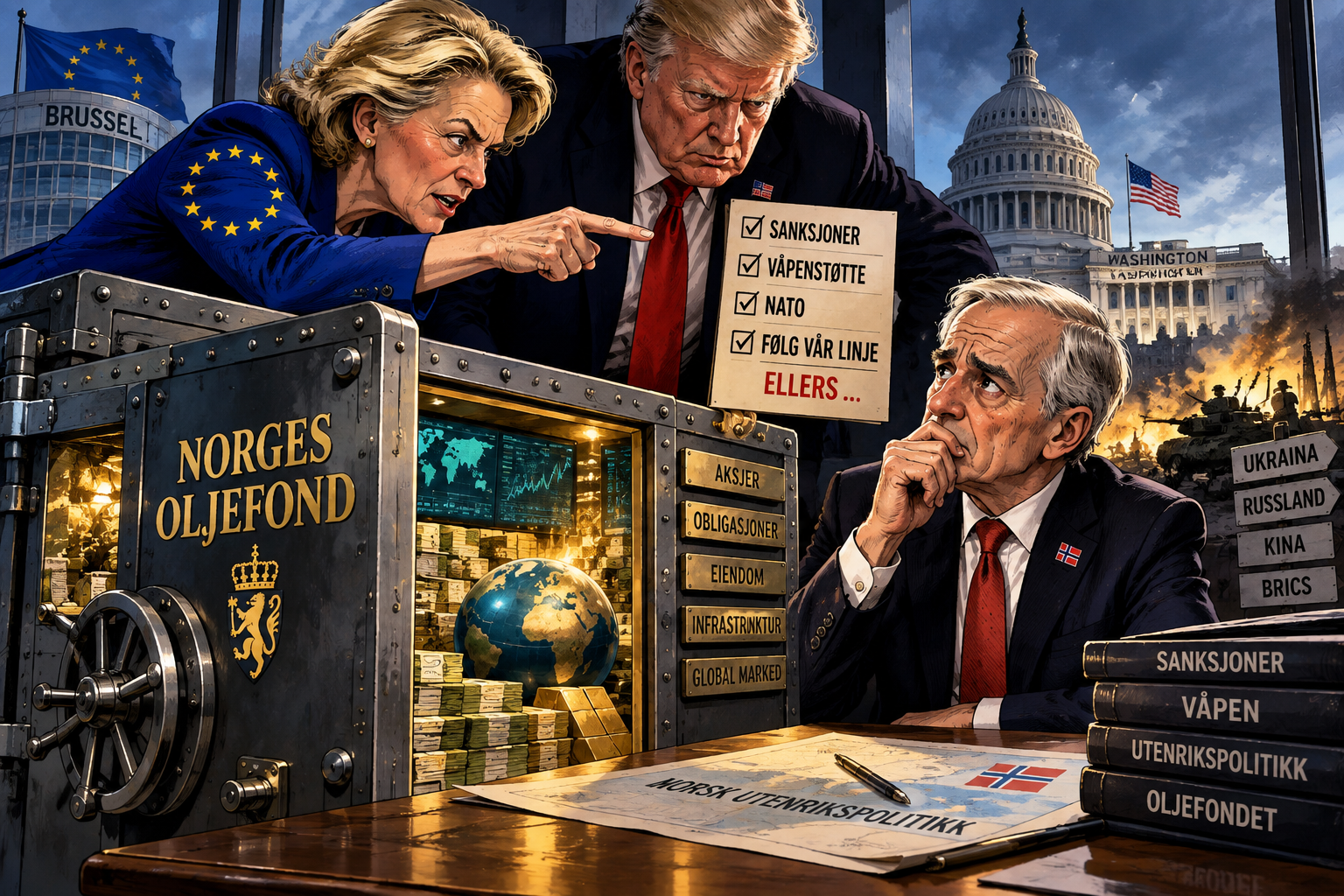
This is no longer a flight of fancy. As recently as 1 September 2026, Norges Bank wrote that the Oil Fund may be more exposed to geopolitical risk than comparable private investors. The bank points to the risk that, in extreme situations, the fund’s assets could be frozen or confiscated. The expert council for the Oil Fund has likewise pointed to increased taxation, regulatory intervention and, in the most extreme case, confiscation. It is our own financial authorities who are discussing this risk. Then we must also dare to discuss what this vulnerability does to Norwegian politics.
The Oil Fund is not a money bin buried underground on Norwegian territory. The fund is invested internationally in shares, bonds, real estate and infrastructure. Norges Bank itself states that the fund owns around 1.5 per cent of the world’s listed companies. The finance minister has also pointed out that Norway’s financial wealth is now roughly five times larger than the value of the petroleum resources still in the ground. Norway is no longer first and foremost an oil nation. We have become an enormous investor nation that depends on the international financial system functioning, and on other countries’ authorities respecting our assets.
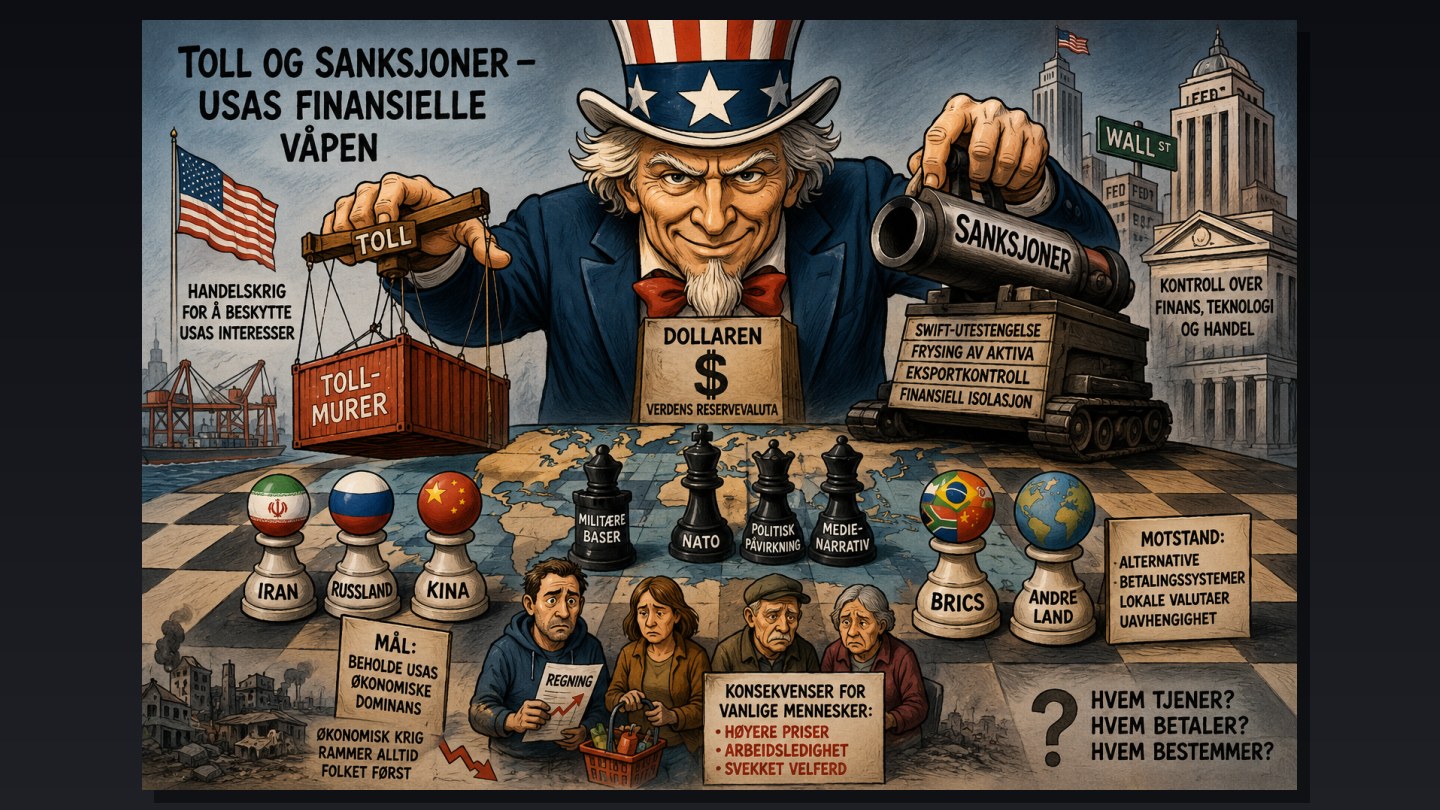
This creates power. And it creates pressure. Pressure does not have to mean an American president calling the prime minister and saying: do as we say, or we take the Oil Fund. International power rarely works that way. Pressure also lies in dependence. It lies in the knowledge of what a conflict might cost. It lies in market access, laws, financial infrastructure, security cooperation and political ties. Norges Bank itself says that the management of the fund depends on well-functioning markets, predictable legal frameworks and financial infrastructure outside our own control.
This is the elephant in the room. How free can Norway really be when our national wealth depends on systems controlled by others?
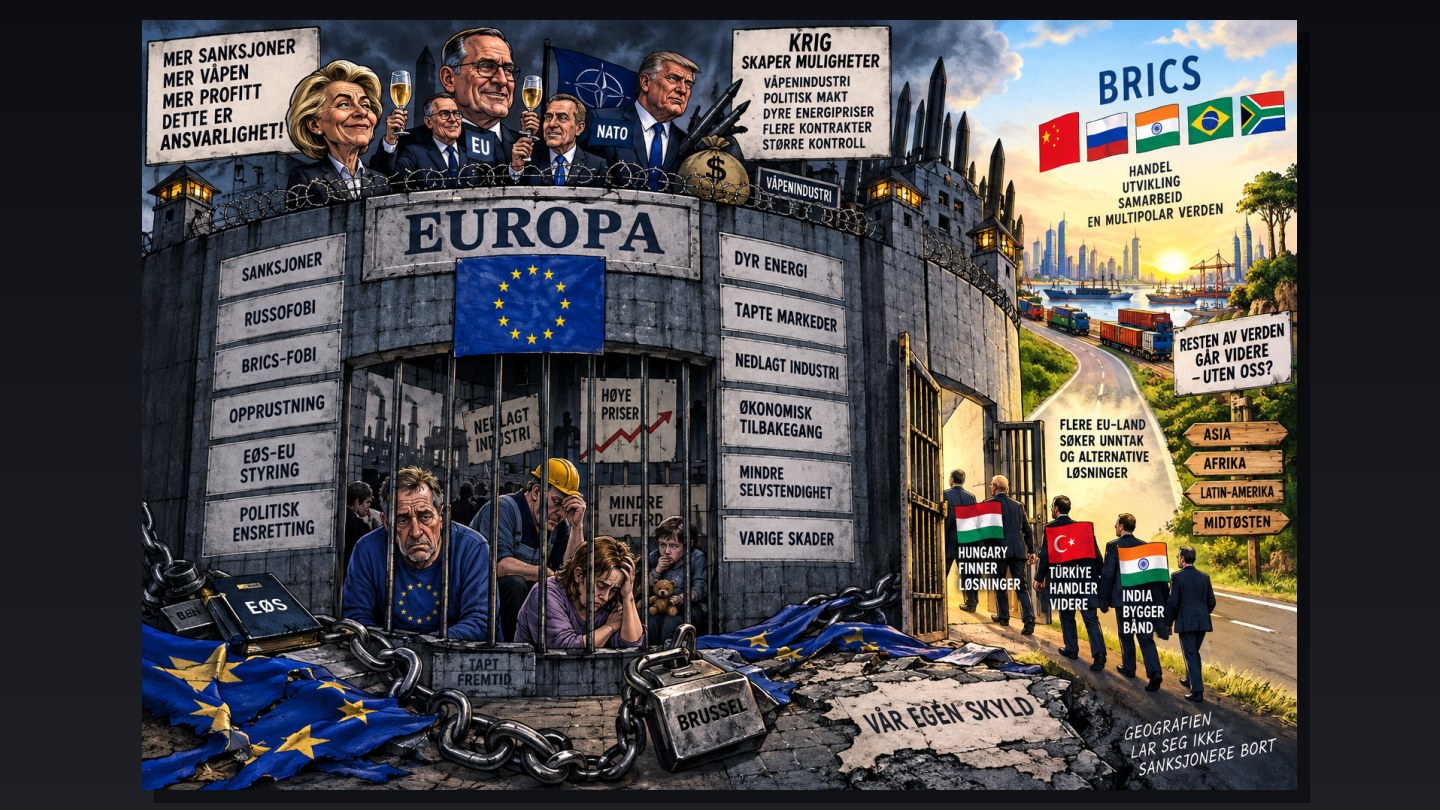
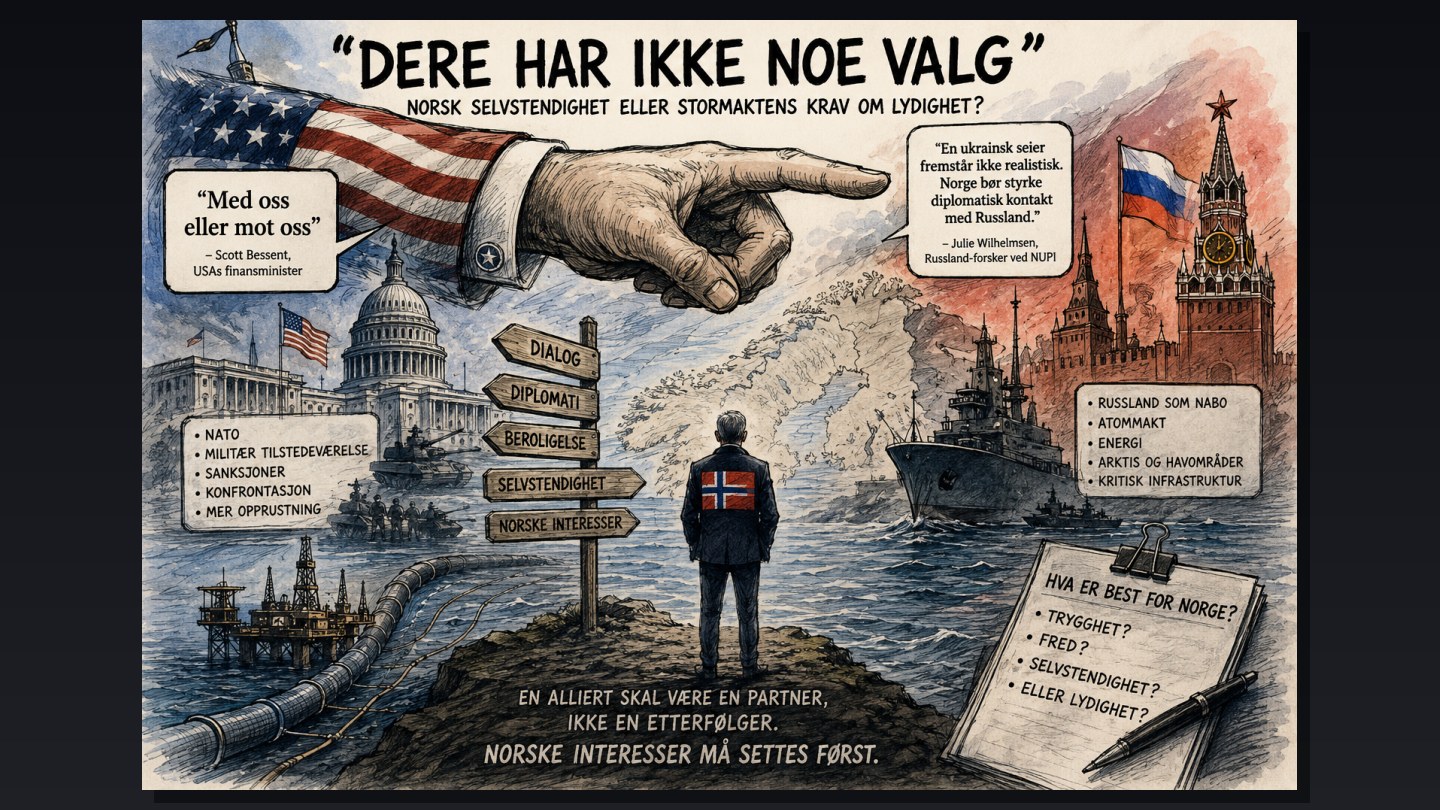
At the same time, Norway has aligned itself ever more closely with the Western line in the war that began in 2014 and escalated in 2022. As early as February 2022 the government decided to freeze the Oil Fund’s Russian investments and pull the fund out of Russia. The government described the decision as a powerful signal and cited Norway’s support for international sanctions. Since then Norway has backed a long series of sanctions and spent enormous sums on military and civilian support for Ukraine.
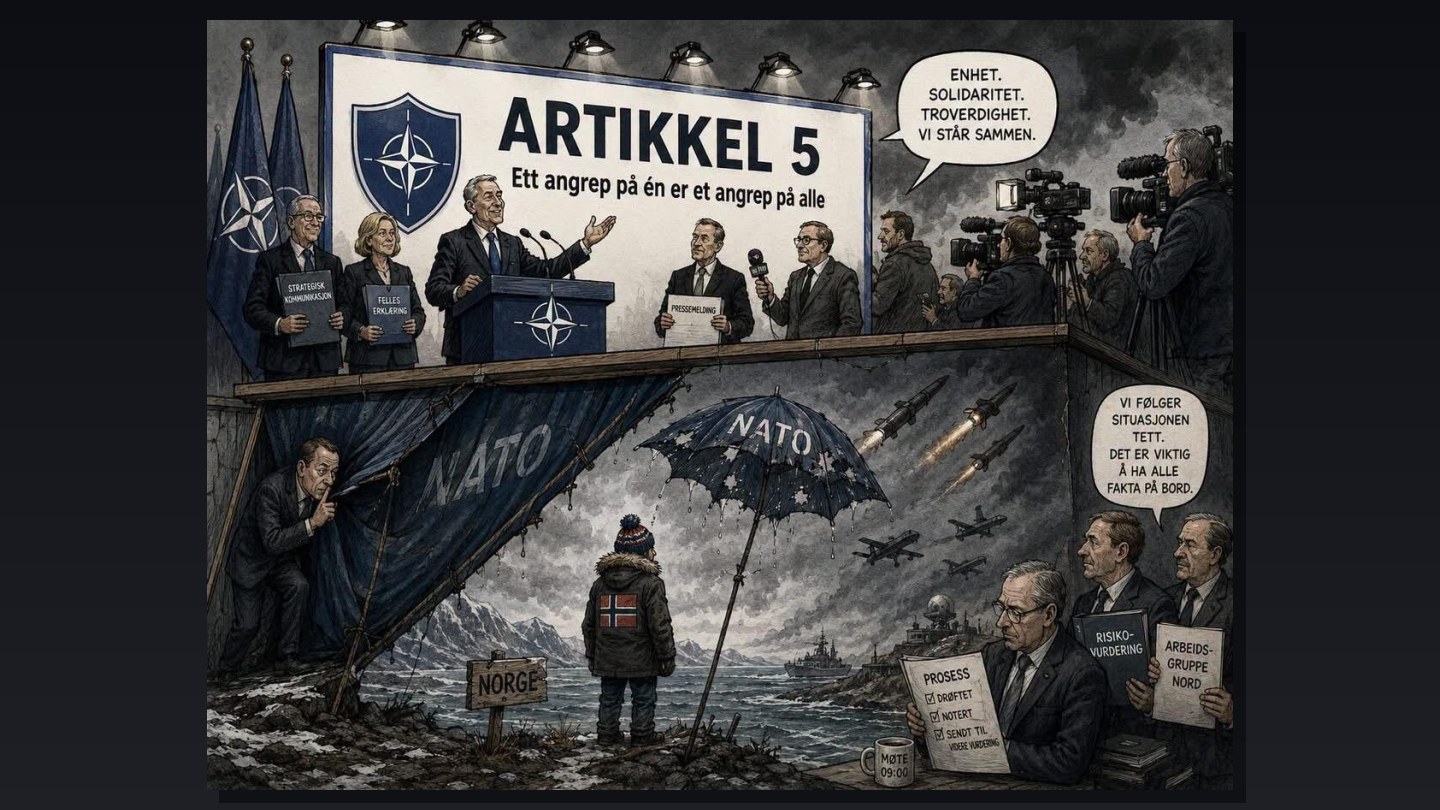
Perhaps Norwegian governments have, entirely of their own free will, believed that every single one of these choices was right. But we must also be able to ask the opposite question. Why do we so rarely hear a clear Norwegian no? Why does the distance between Norwegian foreign policy and the course set in Washington and Brussels so often seem so small? And when our own authorities acknowledge that geopolitical conflict can threaten the Oil Fund, the Storting must demand insight into whether this risk forms part of Norway’s foreign-policy assessments.
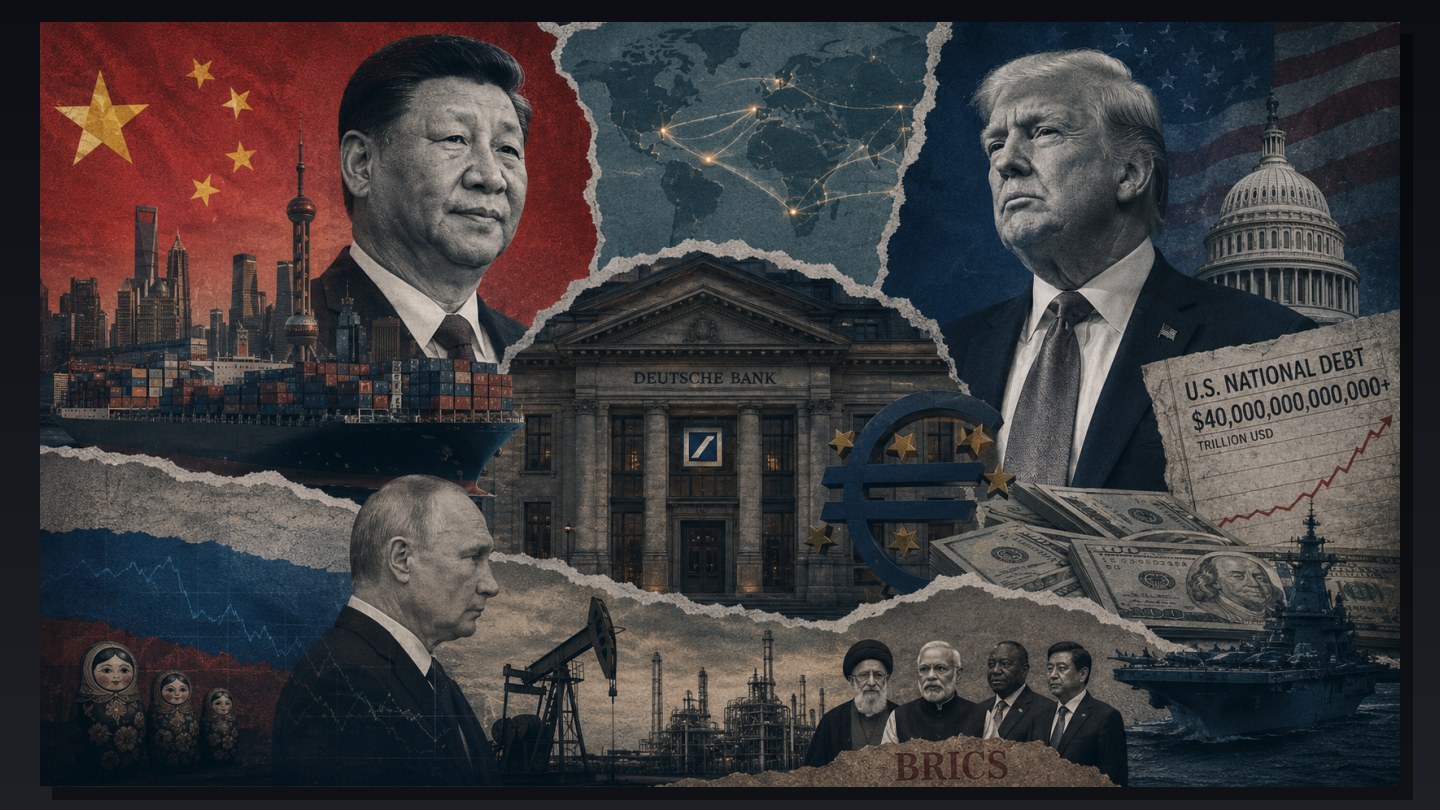
Have Norwegian prime ministers or foreign ministers received warnings about economic consequences should Norway choose a different course? Have American or European authorities raised the Oil Fund’s position in political talks? Has the government assessed how a serious conflict with the US or the EU could affect the fund? Have such assessments influenced Norway’s policy towards Russia, China, Ukraine, BRICS or the Middle East?
We do not know. That is precisely the problem.
But we do know that the risk exists. In its analyses, Norges Bank has shown how severe geopolitical upheavals in stress scenarios could cause very large losses in the fund’s value. When such a large share of the national wealth sits outside Norwegian jurisdiction, we cannot pretend that economic dependence and political freedom of action are two entirely separate worlds.
The Oil Fund was supposed to make Norway freer. But an enormous fortune placed in other states’ markets can also make us vulnerable. When politicians know that a serious conflict with our most important economic partners could potentially hit assets equivalent to many Norwegian state budgets, a structural pressure exists even without anyone needing to utter a direct threat.
This is what Norway must dare to face. I am not claiming that there is a secret document in which Washington or Brussels has threatened to seize the Oil Fund. I am claiming something more fundamental: Norway has placed itself in an economic situation in which our own authorities acknowledge that geopolitics could, in the most extreme case, strike the national wealth. That means a structural pressure on Norway’s freedom of action also exists.
The question is how strongly this pressure is already shaping policy.
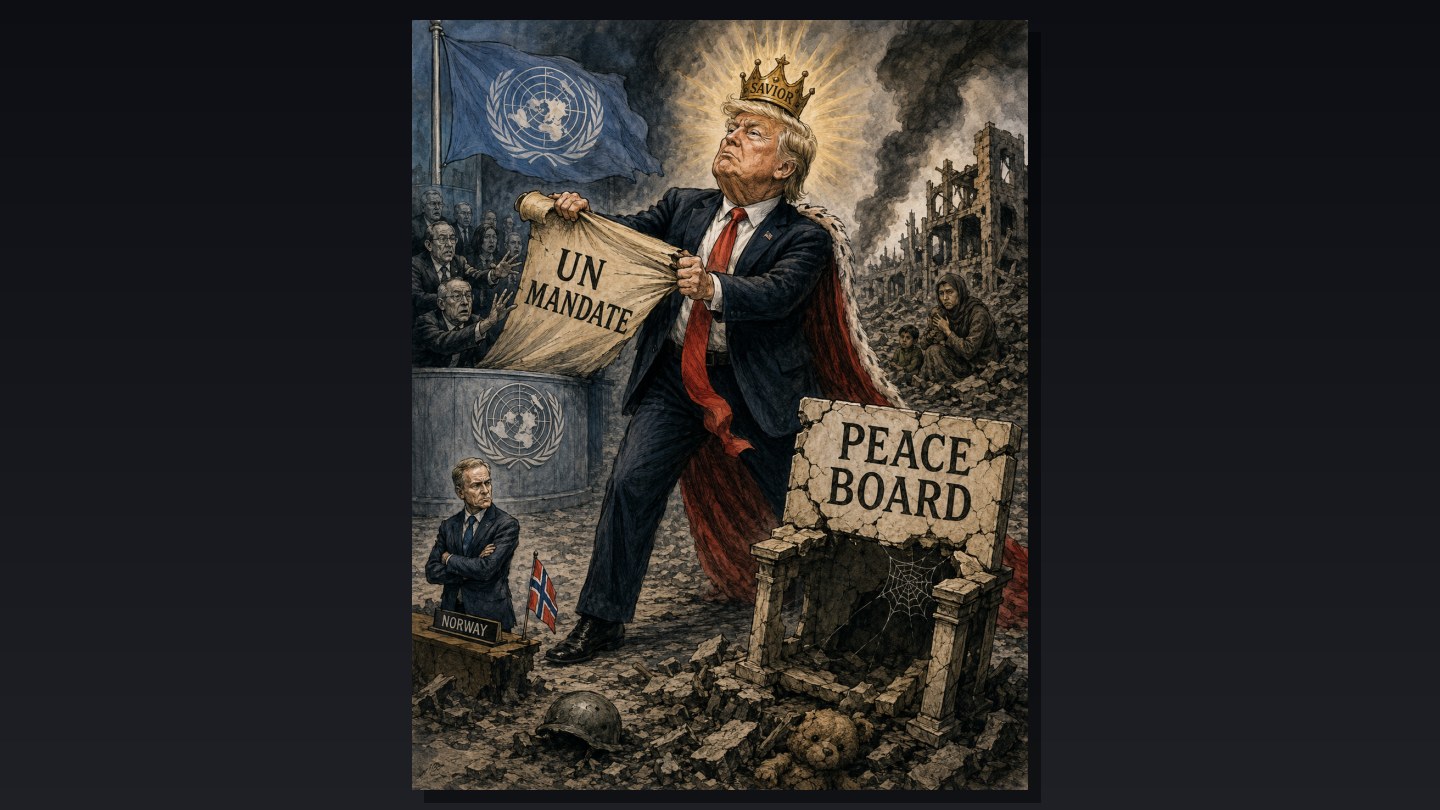
The Oil Fund is supposed to be the Norwegian people’s economic security. It must never become the chain that binds Norwegian foreign policy to Washington or Brussels. The government should therefore put its cards on the table. Has consideration for the Oil Fund ever influenced a Norwegian foreign-policy decision? Has Norway ever received signals about the economic consequences it might face if we go our own way? And does Norway actually dare to say no when our most powerful allies say yes?
If the answer to that last question is, in practice, no, then we have a far bigger problem than the size of the Oil Fund.
Then it is about how much Norwegian independence 22,000 billion kroner has really bought us.