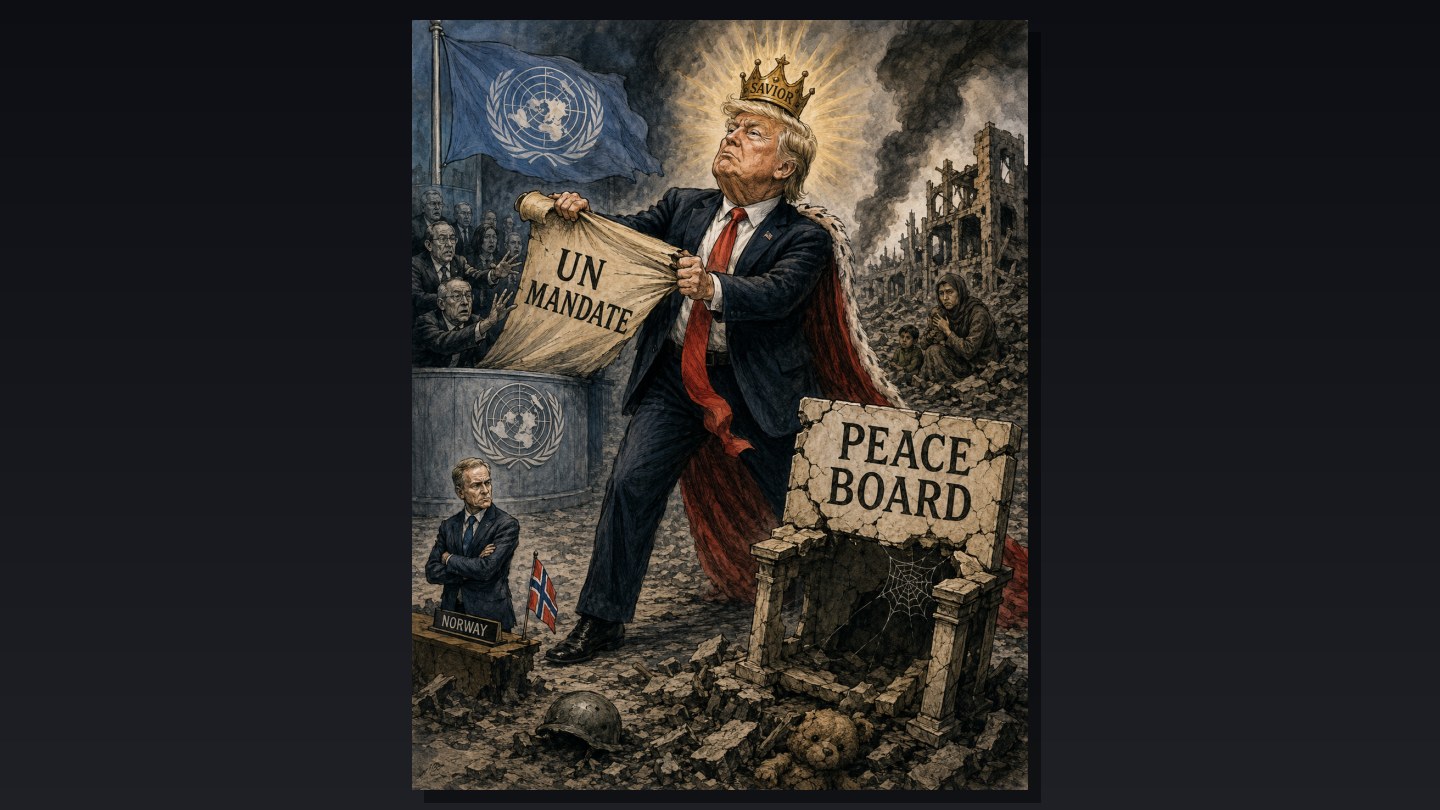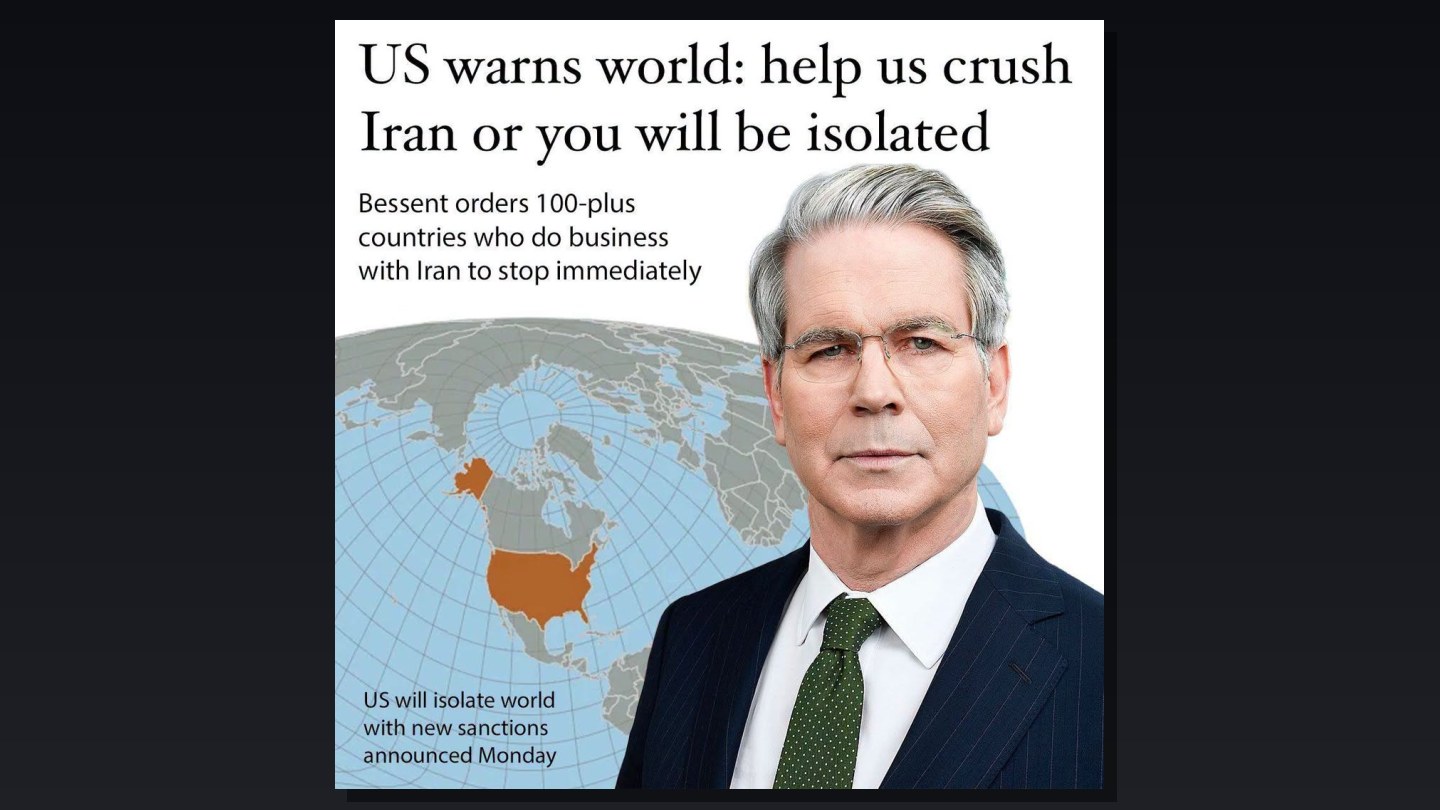
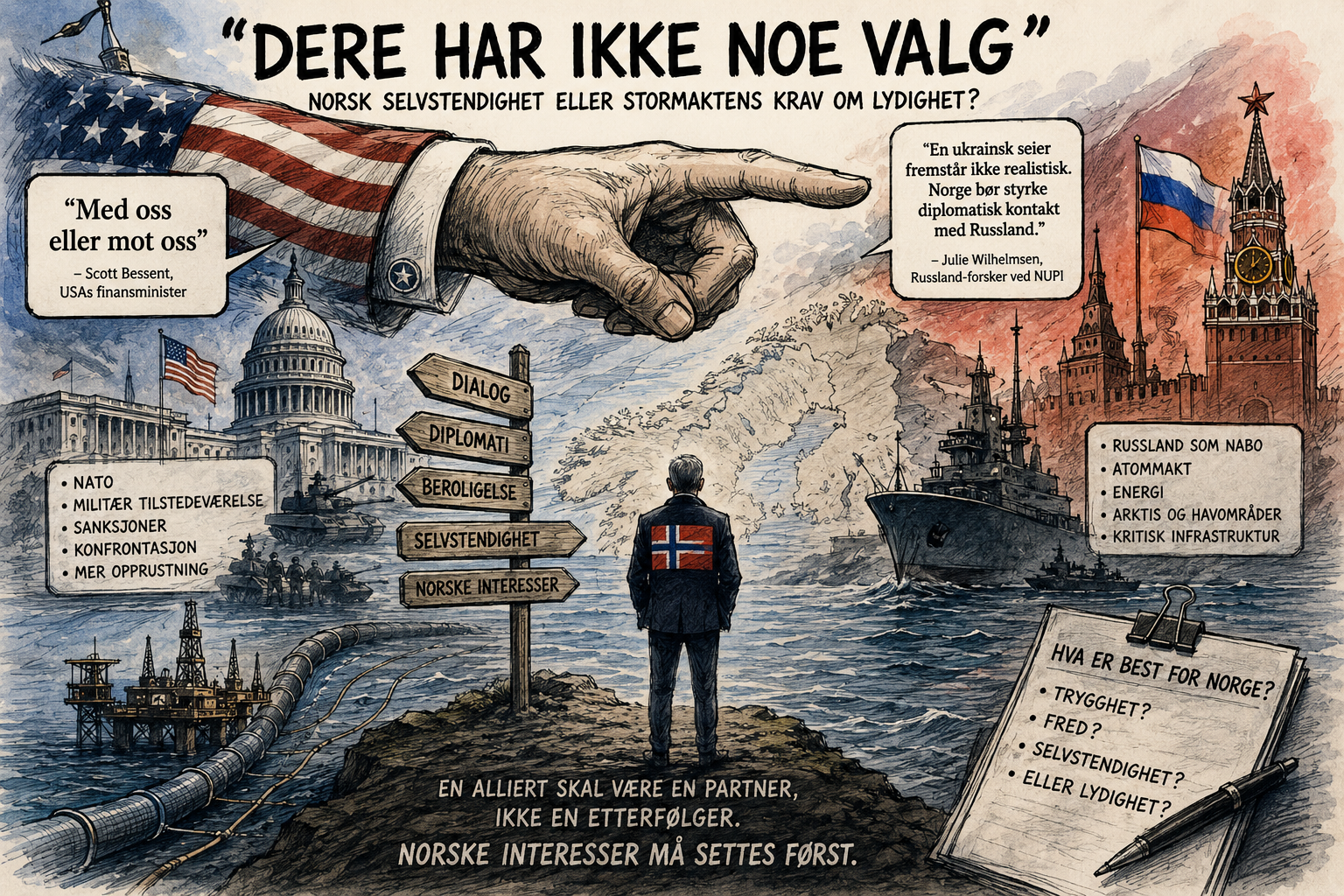
Some time ago I met an American in a pub in Oslo. We got talking about Norway, the US and security policy. He said something I have not forgotten: “You have no choice.” Norway had become so dependent on the US that we had to follow Washington, he believed. It was one American’s personal opinion, not an official statement. But the words seem far more uncomfortable now that an American Treasury Secretary uses the phrase “with us or against us” towards allies.
Have we really reached the point where Norway no longer has a choice?
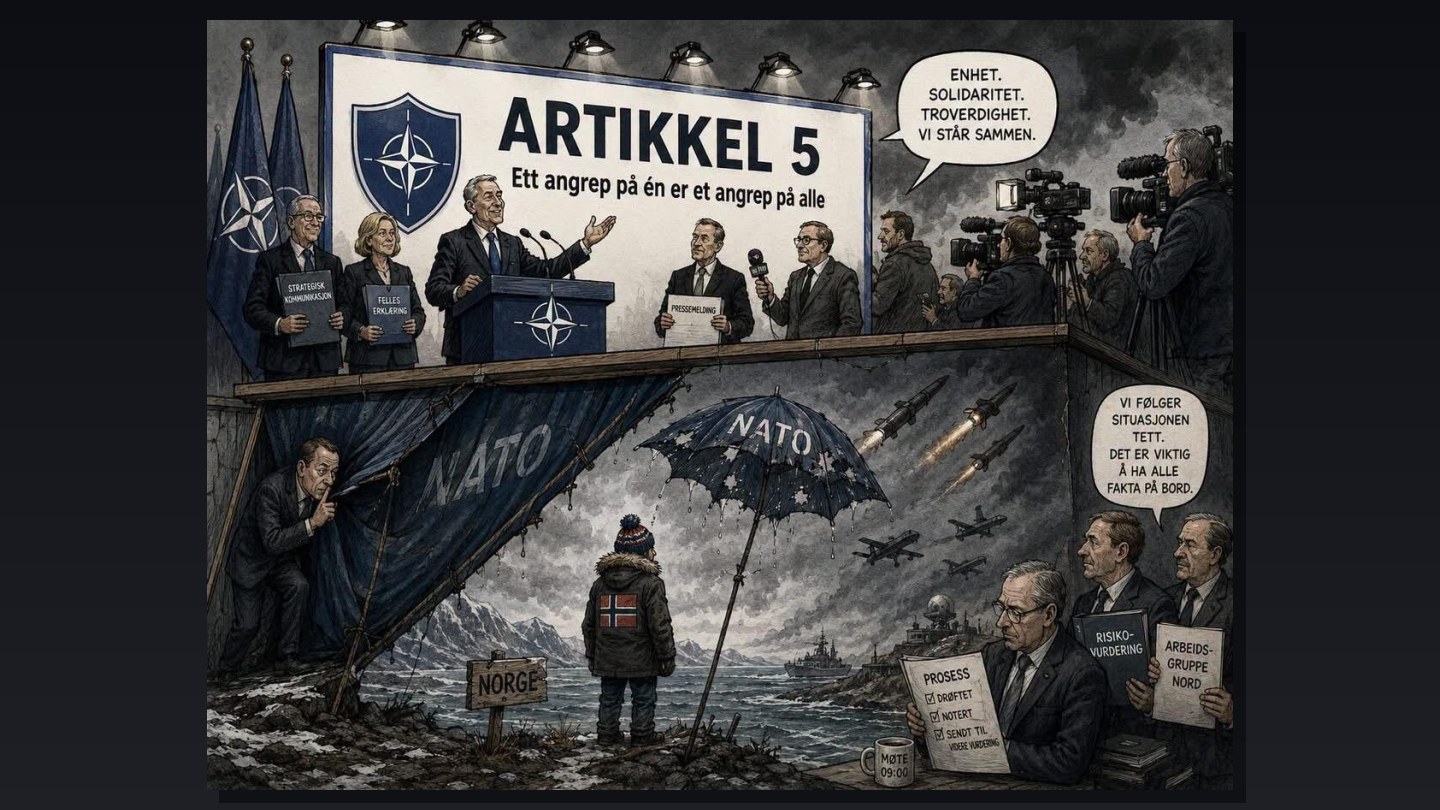
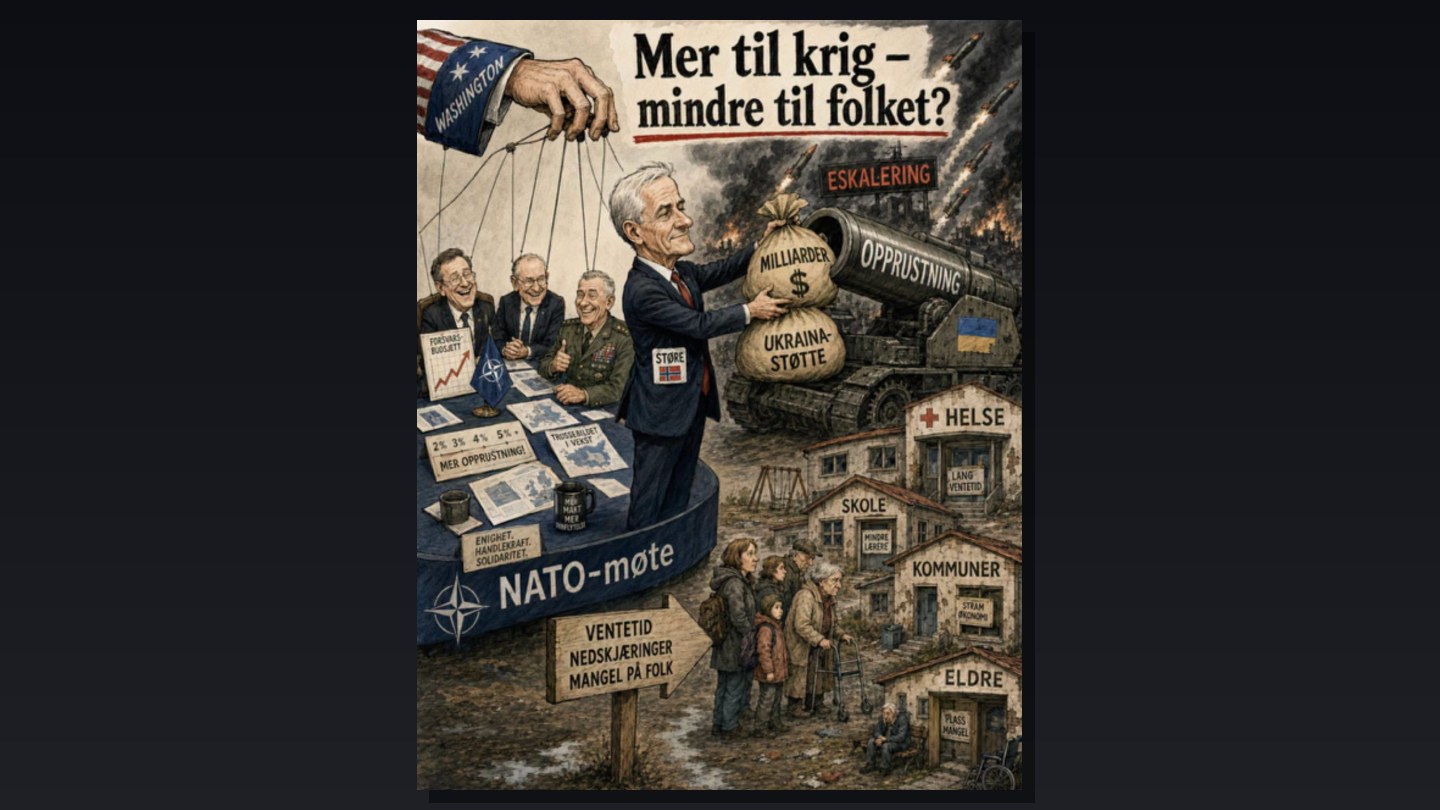
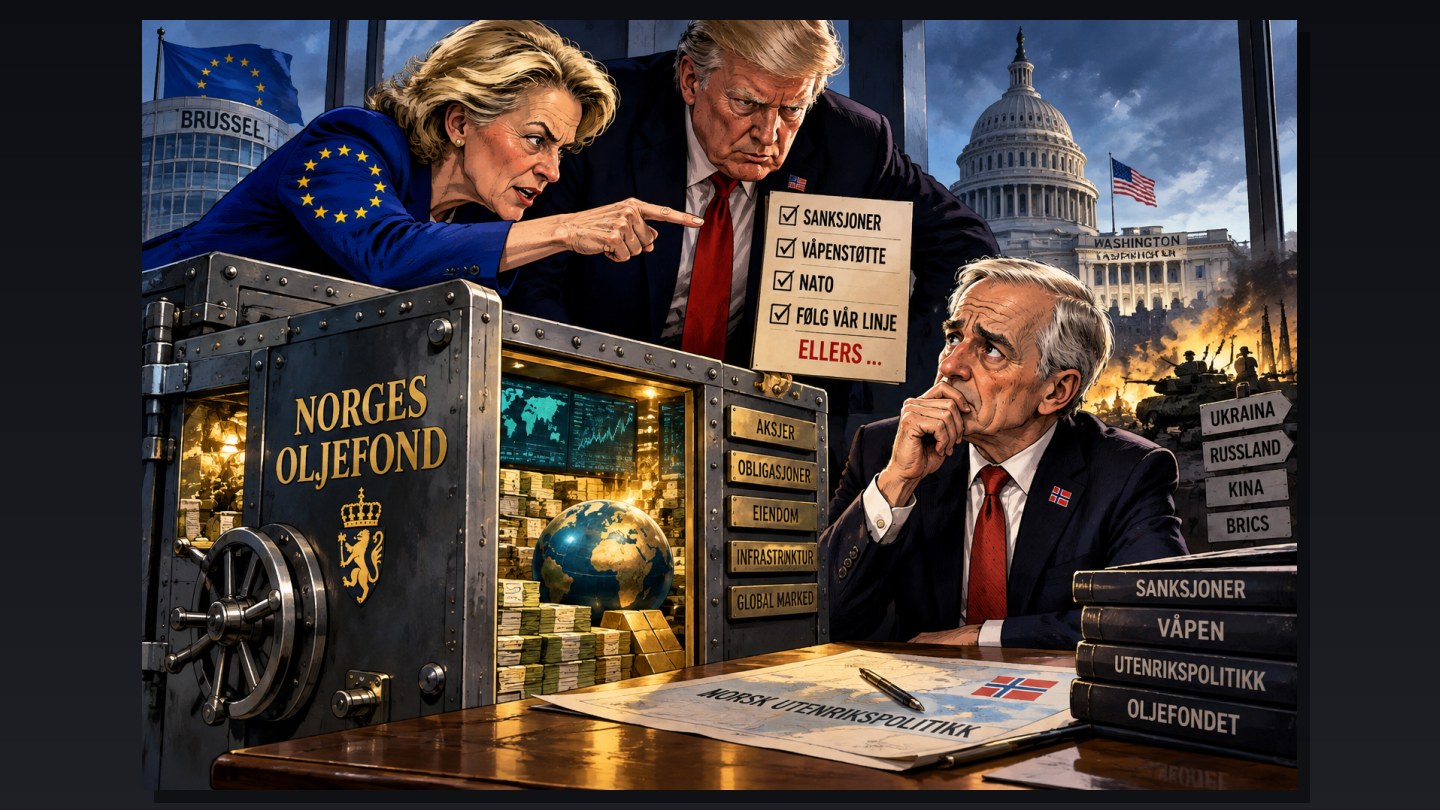
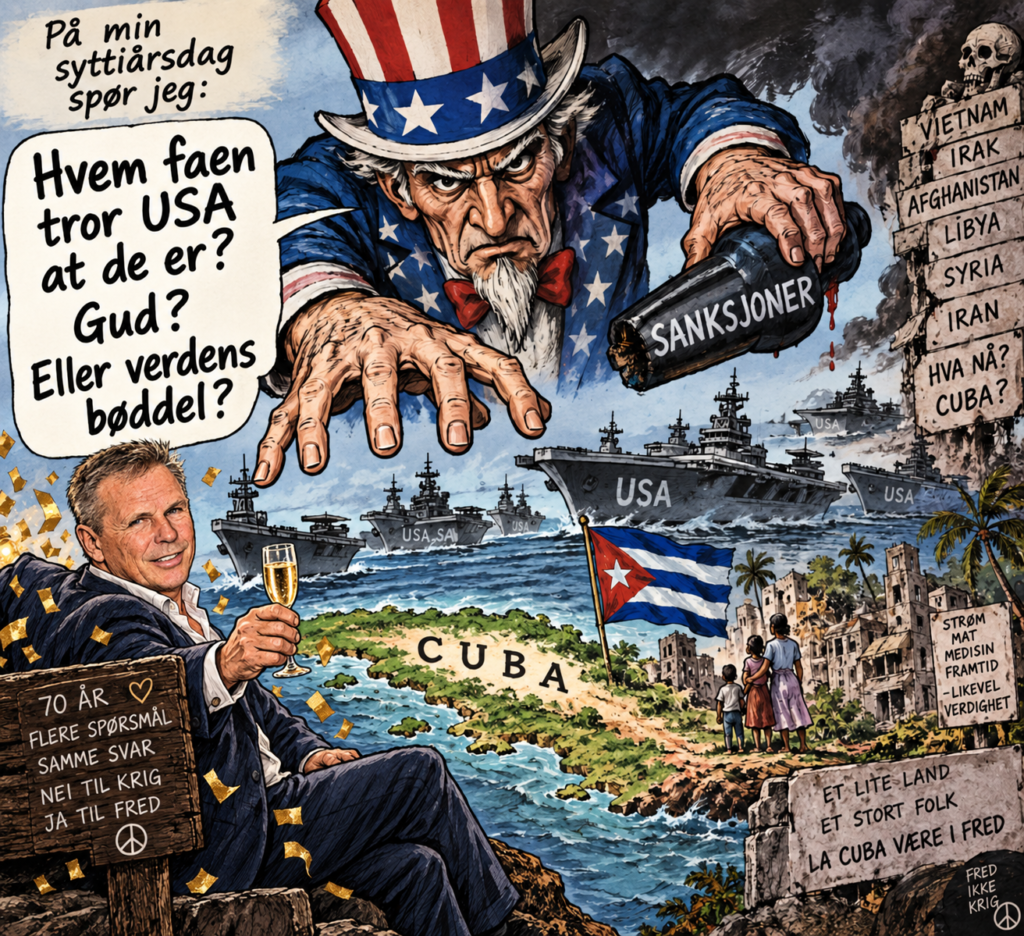
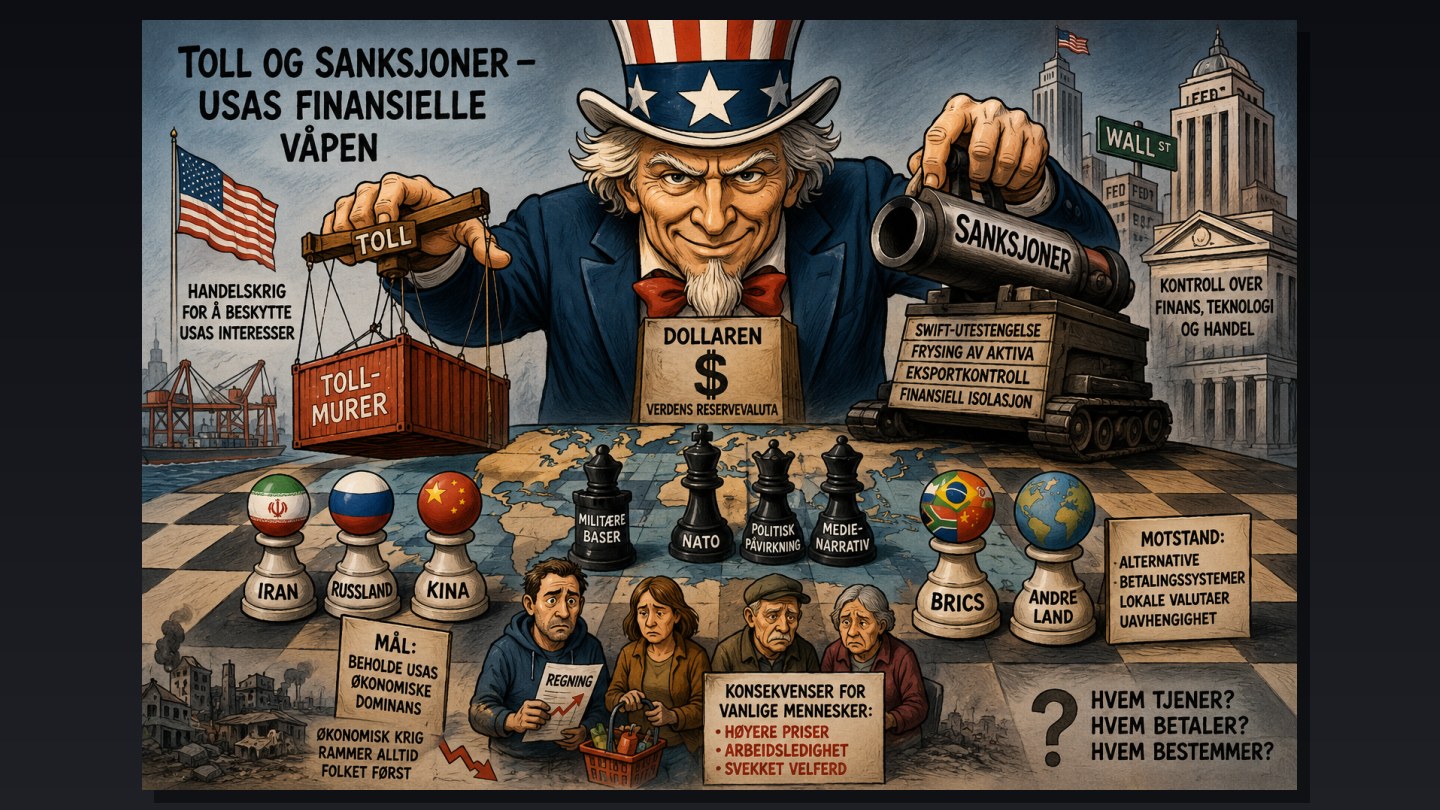
The biggest problem is not that the US looks after American interests. That is natural. The problem is that Norwegian governments increasingly seem to confuse American interests with Norwegian interests. Washington defines the threat, and Norway follows. Washington tightens sanctions, and Norway lines up. The US wants greater military access to Norway, and the door is opened ever wider. Everything is justified in the name of security.
But who decided that more confrontation always means more security?
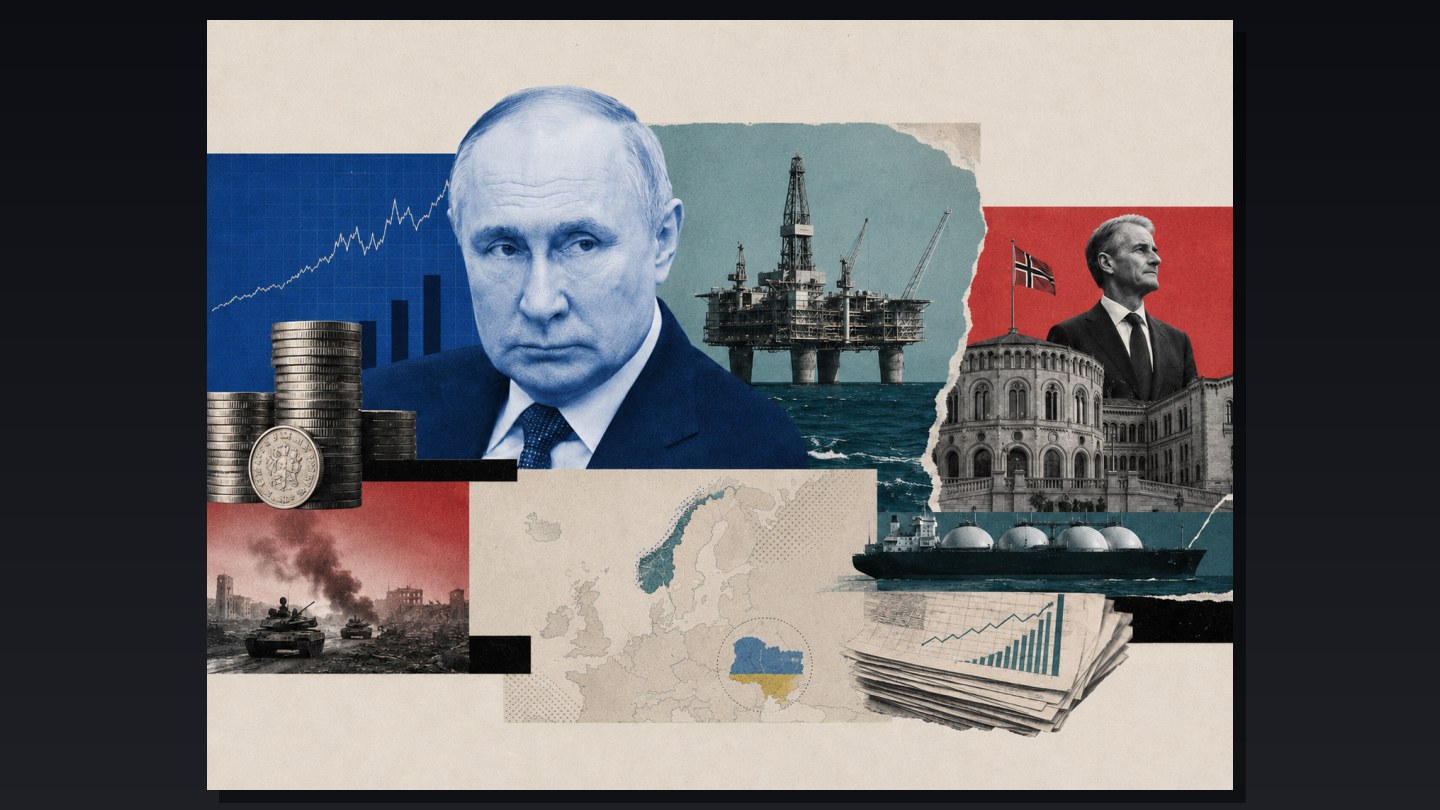
Norway shares a border with Russia. The US does not. We will have to live with Russia as a neighbour in ten, twenty and fifty years as well. We have vast sea areas in the north, oil and gas installations, cables, ports and other critical infrastructure. If great-power confrontation one day spirals out of control, it is not Washington that lies on the Russian border. It is us.
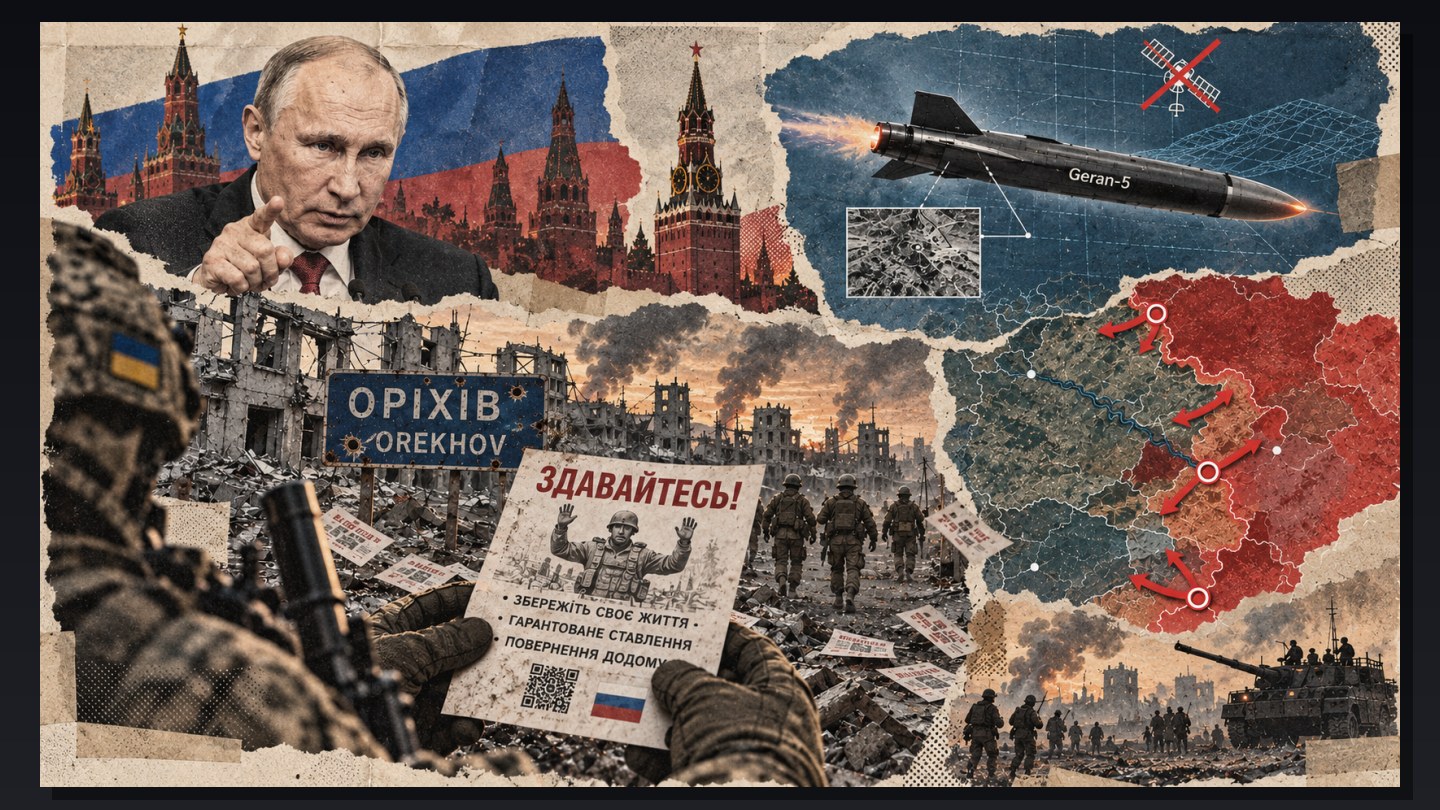
That is why it is interesting that Russia researcher Julie Wilhelmsen at NUPI is now saying something that should trigger a far bigger Norwegian debate. She believes it is unrealistic that Ukraine can win the war against Russia, and calls for more diplomatic contact with Moscow.
It is an uncomfortable message for a Norwegian political public that for years has talked as if military victory were merely a question of enough weapons, enough money and enough time.
Wilhelmsen’s point should not be dismissed as weakness or appeasement. She is one of Norway’s most prominent Russia researchers and works precisely on Russian foreign and security policy and relations between Russia and the West. When such a researcher says victory does not look realistic and calls for diplomatic ties with Moscow, the Norwegian authorities should at least be willing to discuss whether the current course has a credible political exit strategy.
Because what is the alternative?
Is the war to continue year after year because no one dares to talk about compromise? How many more Ukrainians and Russians must die before the word “negotiations” is once again permitted in political discourse? How many billions must Norway spend before the government explains what it actually believes the end point should be?
The most striking thing is that dialogue has almost become a tainted word in Norway. One can talk daily about more weapons, bigger defence budgets and stronger military presence without being accused of extremism. But say that Norway should maintain contact with Russia, and suspicion quickly follows.
When did it become more dangerous to talk than to arm?
Wilhelmsen has also been concerned about the danger of direct conflict between Russia and NATO. NUPI has ongoing research precisely on how such a direct conflict can be prevented. In my view, that is a far more important question for Norway’s future than who can shout loudest for even harsher confrontation.
This does not mean Russia’s invasion of Ukraine should be excused. It can be condemned while at the same time acknowledging reality. Diplomacy is not support for Putin. Negotiations are not capitulation. Trying to understand Russian interests and security assessments is not the same as accepting them either.
On the contrary. One must understand an adversary if one is to avoid war with him.
Yet Norwegian foreign policy seems to be moving ever further from this simple insight. Norway is being tied more closely to American forces, American weapons systems, American military infrastructure and American strategic priorities. At the same time, our own political freedom of action is becoming harder to discern.
Then we should ask where the line runs between being an ally and becoming dependent.
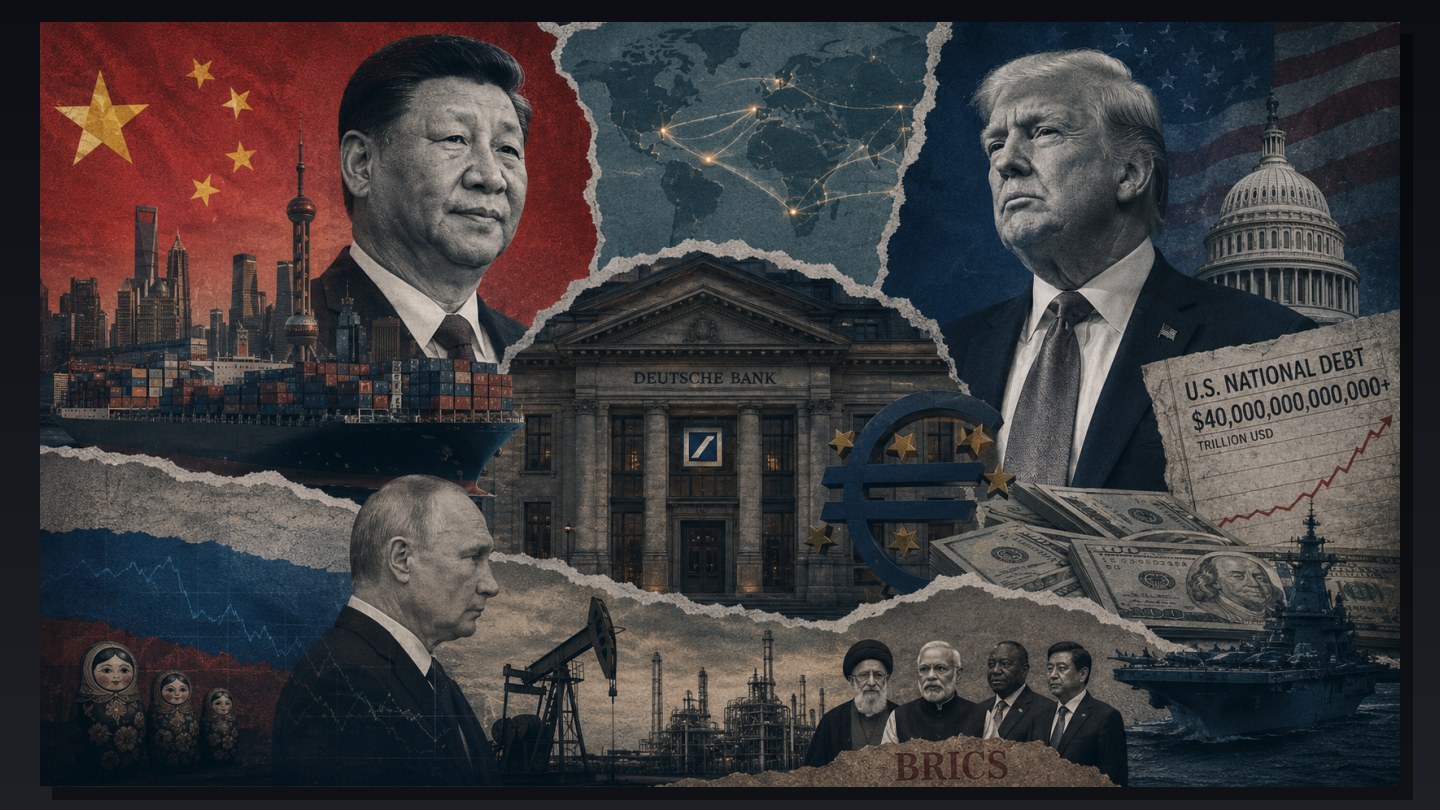
If China told Norway that we must be either “with us or against us”, Norwegian politicians would call it great-power pressure. If Russia demanded that Norway align its trade and foreign policy with Moscow’s wishes, we would rightly call it an attack on Norwegian sovereignty. Then we must dare to apply the same yardstick when the words come from Washington.
Norway needs NATO. We need a strong defence, and the US is our most important ally. But precisely for that reason, the relationship must rest on respect between independent states. An ally that never says no risks ending up as a follower.
That is why I keep coming back to the American I met in the pub: “You have no choice.”
I refuse to accept that.
We do have a choice. We can support Ukraine while demanding a diplomatic strategy. We can be a NATO member and still talk to Russia. We can cooperate closely with the US without making every American enemy our enemy. We can build a strong Norwegian defence without turning Norway into an ever more obvious front line in the great powers’ conflicts.
And we can listen when an experienced Norwegian Russia researcher says that a Ukrainian victory does not look realistic and that diplomatic contact with Moscow must be strengthened.
That is not naivety.
It is dealing with reality.
If Norwegian foreign policy consists only of following Washington and hoping that more military confrontation will eventually create peace, we are on the wrong path. Norway needs politicians who dare to think about Norway’s security beyond the next NATO meeting.
Because if we really start to believe that “you have no choice” is the natural description of the relationship between Norway and the US, we have a far bigger problem than the war in Ukraine.
Then we have begun to give away the very right to decide our own future.