
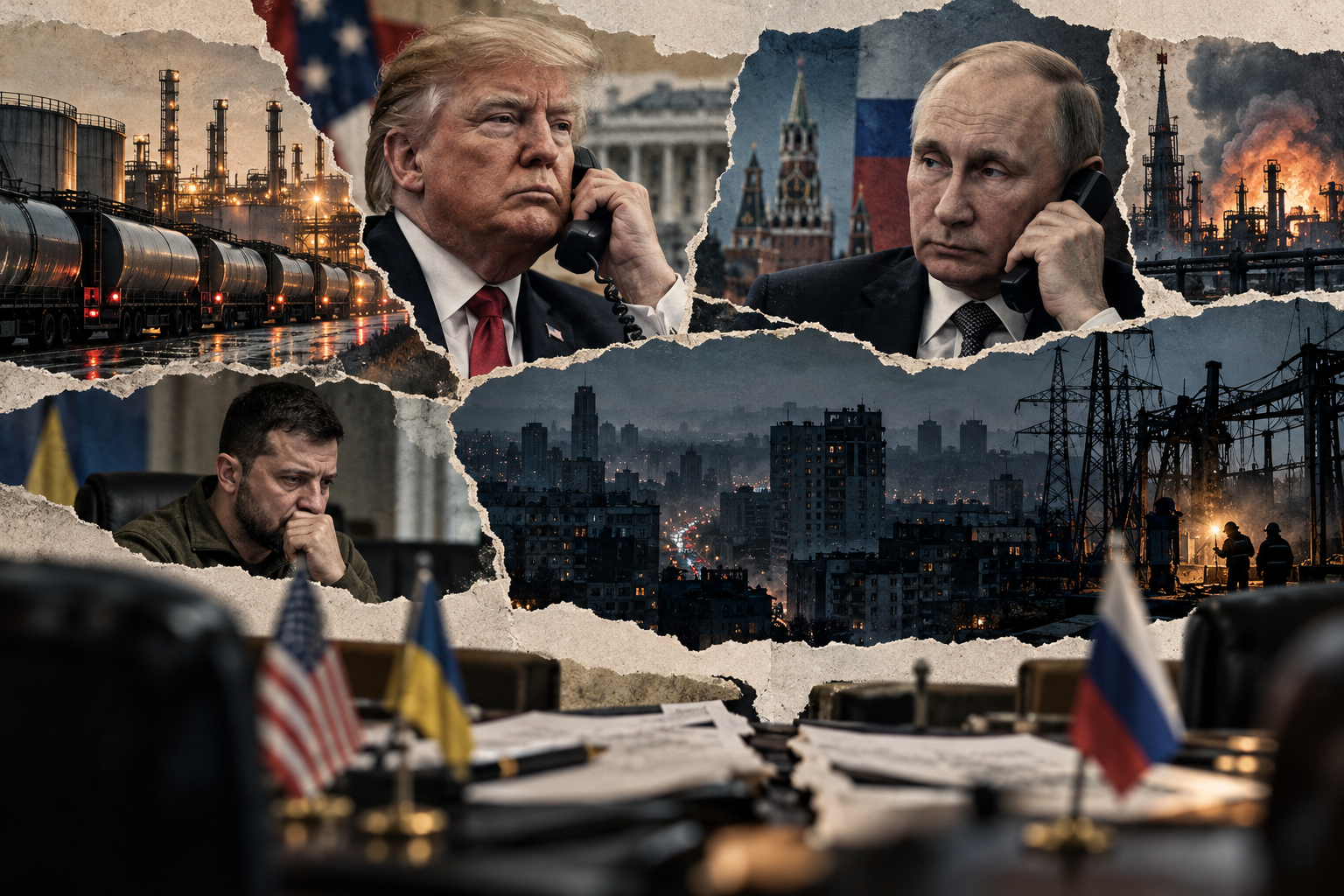
The Deal That Split Washington and Kyiv
On Friday, Trump called Putin. The conversation lasted 90 minutes and ended with an agreement: the United States will temporarily ease sanctions to allow Russia to export diesel, while Russia will lift the export ban it had itself imposed. Ukraine’s negotiating delegation was simultaneously sitting through around eight hours of talks in Miami with Witkoff and Kushner. According to Zelensky, neither of them mentioned that the agreement was coming. Reuters: Trump–Putin call and diesel deal Axios: the talks in Miami
The reaction came quickly. Zelensky called the agreement “not fair and not honest” and “a birthday present for Putin”. He also said the negotiators in Miami had been used as cover while the United States struck a deal with Moscow. A US official told Axios that Zelensky “misunderstands the situation”. According to him, Trump had asked Ukraine six times to stop the attacks on Russian refineries, and received six refusals. Axios: Zelensky’s reaction Axios: the six US requests
On Saturday, Trump went public himself. “I suggest they get a new leader who can make a deal,” he said, adding that it is “time for Ukraine to get a new president”. It is the deepest crisis between the two since the rupture in the Oval Office in February 2025. Ukraine now says it is willing to stop attacks on Russian refineries if Russia stops attacks on Ukrainian energy infrastructure. Axios: Trump tells Ukraine to replace its president Reuters: Zelensky opens the door to a mutual halt in energy strikes
What the Deal Actually Is
The agreement is smaller than Trump has made it sound. As early as February, when the war with Iran began and the Strait of Hormuz was closed, the US Treasury issued a number of temporary licences to countries that needed Russian oil. The United States is now doing something similar for one product: diesel. It is another weakening of the sanctions regime, but not a break with previous practice.
The quantities are small. What has been reported amounts to only a few days of US diesel consumption. Much of the world’s diesel and crude oil for refining also comes from the Persian Gulf, and it is the crisis there, not Russia, that is the main cause of the shortage. Trump has nevertheless presented Russia as the key supplier. Reuters: scale of the diesel deal
For Russia, the agreement is no concession. Moscow has always said it will sell energy to anyone willing to buy and has never imposed such sanctions on itself. The export ban has probably functioned as leverage over Washington. It gives Russia sanctions relief, while simultaneously creating tension between the United States and Ukraine.
The rumours of an “energy ceasefire” in exchange for full sanctions relief are not true. Russia has repeatedly said it is not interested in any temporary ceasefire, whether in the air, at sea or on land. Moscow’s argument is that Ukraine would use the pause to rebuild its strength.
What Is Actually New: Putin Closes the Door
The most important statement did not come from Trump, but from Kremlin adviser Yuri Ushakov. He said that Ukraine’s drone attacks on Moscow and other cities during the Duma election “have disrupted the possibility of an immediate resumption of negotiations”, and that Putin said they would “consider when negotiations can be resumed”. Putin therefore declined to commit to a new meeting with Ukraine. Reuters: Kremlin readout of the Putin–Trump call
This marks a clear tightening of Russia’s negotiating position. In September, during Witkoff and Kushner’s visit, Putin had agreed to resume trilateral talks with the United States and Ukraine immediately after the election. That agreement is now on hold.
It is worth remembering who has long obstructed negotiations. Zelensky withdrew from the Istanbul talks in the spring of 2022. In the autumn of the same year, he signed a decree declaring negotiations with Vladimir Putin impossible, and it has never been withdrawn. Merz recently backed, in Kyiv, the demand that a ceasefire must come before negotiations can begin.
Why the Drone Offensive Does Not Stop
Zelensky can probably not stop the drone offensive even if he wanted to. It serves three functions for him. It provides images of fires and smoke that can be shown to European leaders. It keeps the money flowing: von der Leyen recently signed off on another €3.9 billion, while Ukraine says it needs a further $27 billion for defence requirements, including to secure new drone orders. And it enjoys strong support in parts of Washington, while US intelligence contributes targeting support to parts of the campaign. European Commission: €3.9 billion for drone procurement
The results remain meagre. Russia was caught off guard in the summer of 2026, but has since hardened its refineries and strengthened its air defences. The economy is growing, albeit by only around one percent, and the harvest is at last year’s level. The main effect of the offensive is that it gave Russia the pretext for a far more powerful air and missile campaign against Ukraine. Poland’s foreign minister claims that Moscow has cut fuel supplies by 50 percent. That has not been independently confirmed.
When a Client Does Not Listen
It is not unusual for a US ally to become difficult to control. Syngman Rhee in South Korea, Diem and Thieu in Vietnam, and several Afghan presidents behaved in much the same way. What distinguishes Zelensky is the tone. A Ukrainian official claims that Witkoff and Kushner hinted that the United States could cut Ukraine off from US intelligence. That has not been confirmed, but Kyiv at least interpreted the signals that way. Axios: US pressure and intelligence cooperation
The conflict with South Korea shows the pattern. In his UN speech on 23 September, Zelensky referred to the transfer of two North Korean prisoners of war to Seoul, despite South Korea saying the parties had agreed to keep the matter confidential. Kyiv denies agreeing to that. South Korea is now recalling its ambassador. Foreign Minister Sybiha’s remarks included an apology, but Seoul considers it too weak and is demanding an official one. South Korea has provided Ukraine with around $445 million in humanitarian assistance since 2022. Reuters: South Korea recalls ambassador
Kyiv in Darkness
While the diplomacy continues, the situation in Kyiv is deteriorating. The city is suffering power cuts, and the entire metro came to a halt. Russia has now learned how the Ukrainian grid works. The major power plants are largely worn down and are receiving less attention. Instead, the substations are being hit and, according to reports, the power lines themselves. Jet-powered Geran drones with a new warhead are reportedly hunting them systematically. Kyiv Mayor Klitschko is sounding increasingly alarmed and has begun speaking about corruption around the president’s inner circle. Ukrainska Pravda: the metro stops during the blackout
At the same time, the bridges are being hit. In Zaporizhzhia, the large southern bridge is reportedly out of service and a bridge north of it has been damaged. Roads in the city and the dam are being attacked, while Russian FPV drones control most of the roads in the eastern part of the region. For Ukrainian vehicles, it is effectively a gauntlet.
The Front
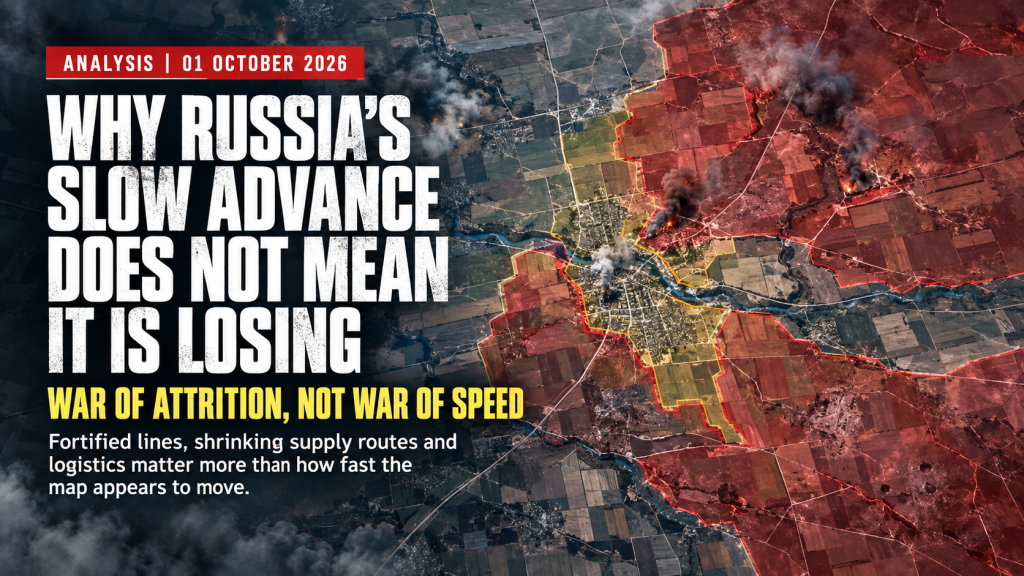
In northeastern Kharkiv region, the encircled pocket has probably now been largely cleared, although Russia has not yet said so. The focus appears to be shifting to villages farther south, where the next major attack is expected. North of Sumy, the Ukrainian defence has largely collapsed, and an attack on the city may come soon. In Dobropillia, the Russian Defence Ministry reports that naval infantry are now fighting in the western part of the city. Russian reports suggest that the battle for Dobropillia is approaching a decisive stage.
Rumours that Surovikin is back are supported by one source, but remain unconfirmed. According to that source, he is leading a group of around eight generals, while Gerasimov retains overall command.



Se og hør mer
Videoer, klipp og innslag knyttet til temaet.