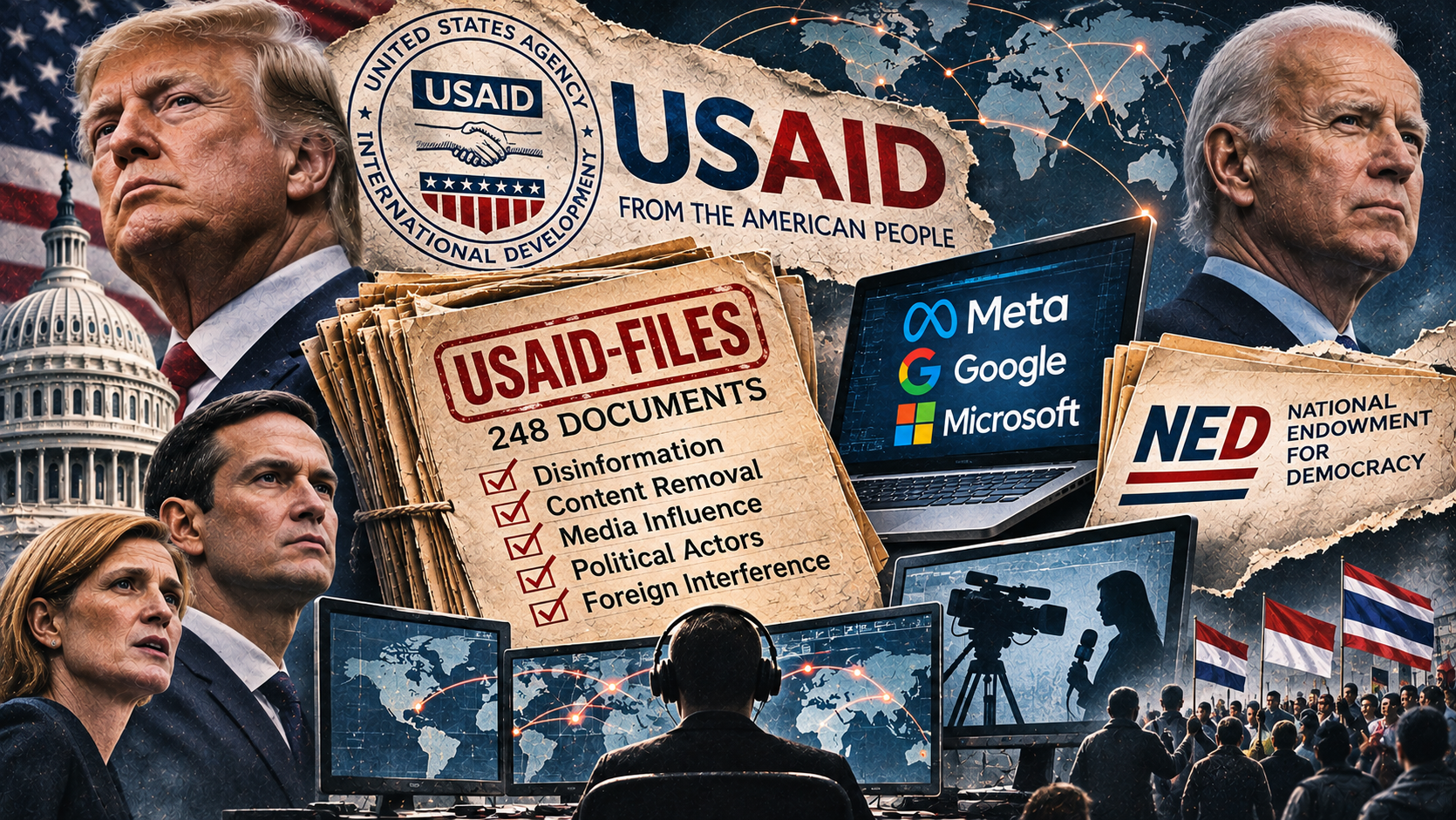
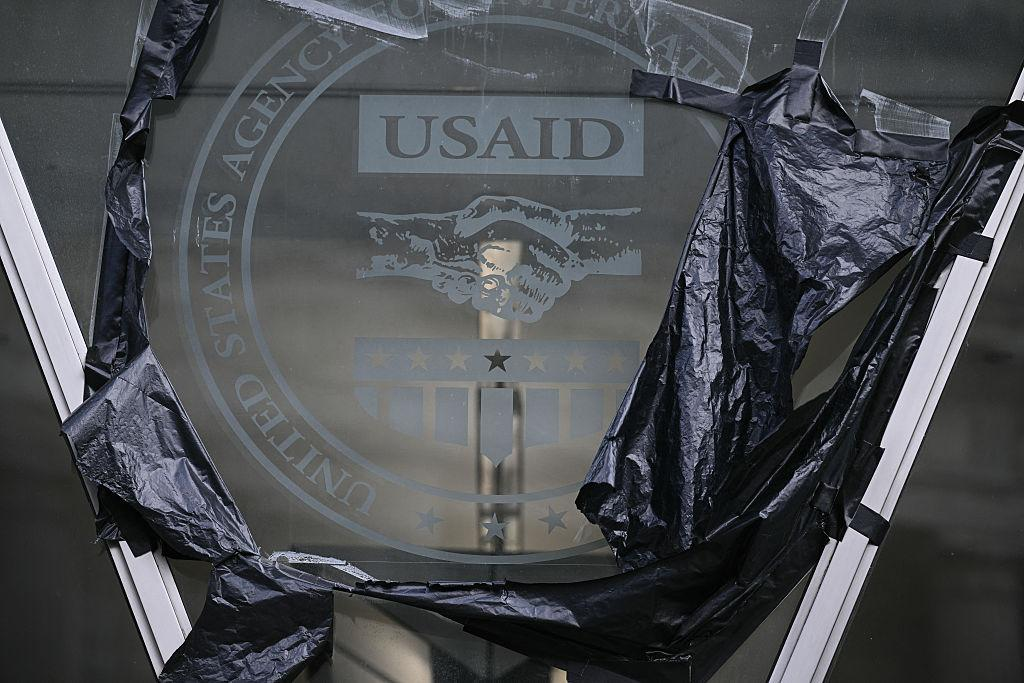
The documents, which have been made available on USAID's official website, includes, among other things, internal correspondence, strategy documents, and minutes from meetings with representatives of tech giants such as Meta, Google, and Microsoft. The material provides insight into how U.S. authorities have worked with what they themselves call combating disinformation, including requests to social media platforms to remove specific content. thebostonreport.com+1
However, it is a selective selection of documents from an organization that has existed since 1961. The publication must therefore also be regarded as a political act, where the person who publishes the material can largely decide which part of history the public is allowed to examine.
The business was continued
Already on March 10, 2025, U.S. Secretary of State Marco Rubio announced that 83 percent of USAID's programs would be discontinued. The remaining programs, about 1,000 in total, were to be administered by the U.S. State Department. This was reported by Associated Press the same day.
There is a significant difference between dissolving an organization and dissolving the foreign policy activities the organization has been a tool for. Rubio made it clear that the administration did not intend to abandon foreign aid as a foreign policy tool, but to align it more directly with American interests.
The question is what is meant by the concept of aid when the activity includes financing political organizations, influencing public debate, media activities, and reforms of other countries' legislation.
If Russia or China financed similar activities in the USA, American authorities would hardly have called it democracy-promoting aid. It would have been considered foreign interference in American internal affairs.
It is hard to see why the same principle should not apply when the USA acts similarly in other countries.
NED is alive and well
Even more interesting is to look at the National Endowment for Democracy (NED), which was also affected by the Trump administration's initial funding cuts in 2025.
The organization's own Annual Report for 2025 leaves little doubt that the business continues. In a statement to Congress, NED's president Damon Wilson stated that during the 2025 fiscal year, the organization had distributed 271 million dollars across over 1,550 projects in more than 90 countries.
But there has been a significant change in how the organization discloses information about its operations.
On April 25, 2025, NED published its guidelines for the protection of partners and disclosure of information. With reference to the security of the organization's partners, public access to who receives American money is limited.
Thailand is an illustrative example. Among the programs mentioned in the 2025 annual report, we find projects aimed at strengthening public debate and data journalism in the northern part of the country, promoting freedom of expression, and contributing to legal reforms.
Imagine if Chinese authorities funded journalistic communities in the northeastern USA, or if Russian authorities funded organizations working to change American legislation. How would this be received in Washington?
The reduced transparency around the financing also makes it harder for the populations in recipient countries to investigate which political organizations, activist communities, and media have financial ties to the American government.
In connection with protest movements in Serbia, Indonesia, and Thailand, it is precisely the connections between American-funded organizations and local political movements that deserve closer attention. When such connections become known, it can weaken the legitimacy of the protest movements among parts of the population. It is therefore natural to ask whether the previous openness about the financing eventually became a political burden for the USA itself.
Trump's own history
For those who now see the release of the USAID files as an expression of a fundamental reckoning with American interference in other countries' internal affairs, it may be worth looking back at Donald Trump's first presidency.
On February 7, 2019, Trump himself launched Women’s Global Development and Prosperity Initiative, an initiative to strengthen women's economic position in developing countries. USAID was instructed to allocate 50 million dollars to a fund that, among other things, would mobilize investments from the private sector. American companies such as PepsiCo and UPS were highlighted as partners.
It was the Republican Trump administration itself that launched programs of the kind now associated with the Democrats' progressive political agenda.
From a geopolitical perspective, the ideological packaging is subordinate to the economic and strategic function such programs may have. By financing certain social groups, institutions, and organizations in other countries, the USA can establish networks that also serve American commercial interests and facilitate American companies' access to foreign markets.
It is a modern form of imperialism, where economic and political interests can be promoted under the guise of development work and social progress.
Nor is it certain that an administration led by Kamala Harris would have failed to reorganize this operation if the increasing attention around USAID and NED made the existing structures politically harder to maintain. It could have happened for a different reason and under different circumstances.
A controlled disclosure
Former USAID director Samantha Power has in a statement to Devex criticized the publication of the documents and characterized the committee as selective and politically motivated.
On this point, Power may very well be right, even though her own role in the organization's activities makes her a party to the case.
But the way the debate is now unfolding makes the question of American interference a domestic political conflict between Republicans and Democrats. Democratic supporters defend USAID, while Republican supporters see the disclosure as proof that Trump has settled the business.
Thus, the most important question disappears: What are the American authorities doing today?
In intelligence and information activities, there is a concept called limited hangout. It refers to a method where authentic, often compromising information is selectively disclosed to divert attention from other matters one wishes to keep hidden.
It is precisely in light of this approach that the publication of USAID files should be examined. The documents do not need to be false for their publication to serve a misleading purpose. On the contrary, authenticity may be the very prerequisite for the method to work.
If the public is convinced that what it reads in the documents belongs to the past, the disclosure paradoxically could help protect the business that continues.
Continuity in American foreign policy
The Trump administration's foreign policy gives little reason to assume that the US has abandoned its overarching geopolitical ambitions. Engagement in the war in Ukraine continues, the US has gone to war against Iran, and military preparations for a possible confrontation with China continue.
Why should the non-military part of American power exercise be an exception to this continuity?
The USAID files deserve thorough review. They can help uncover connections between U.S. governments, media organizations, technology companies, and political environments in other countries. But the investigations must not be limited to activities under the Biden administration.
The relevant follow-up of the documents is to examine which programs were continued, who currently manages them, which organizations receive the money, and what connections U.S. authorities still have to the companies that control large parts of the world's digital information space.
It is not enough to document how the USA has intervened in other countries' political and public life if disclosure simultaneously makes us stop investigating how things are happening today.