
The Energy Strike: A Key Node Finally Hit in Earnest
As usual, Ukraine does not give the total number of missiles fired, only that a few were reportedly shot down — a claim without independent confirmation.
It is worth recalling that neither Russian nor Ukrainian figures on missile use have been fully reliable since the air campaign began in 2022, and that the Patriot system, judging by experience in the Middle East against Iranian ballistic missiles, has a weak record precisely against this category of weapon.
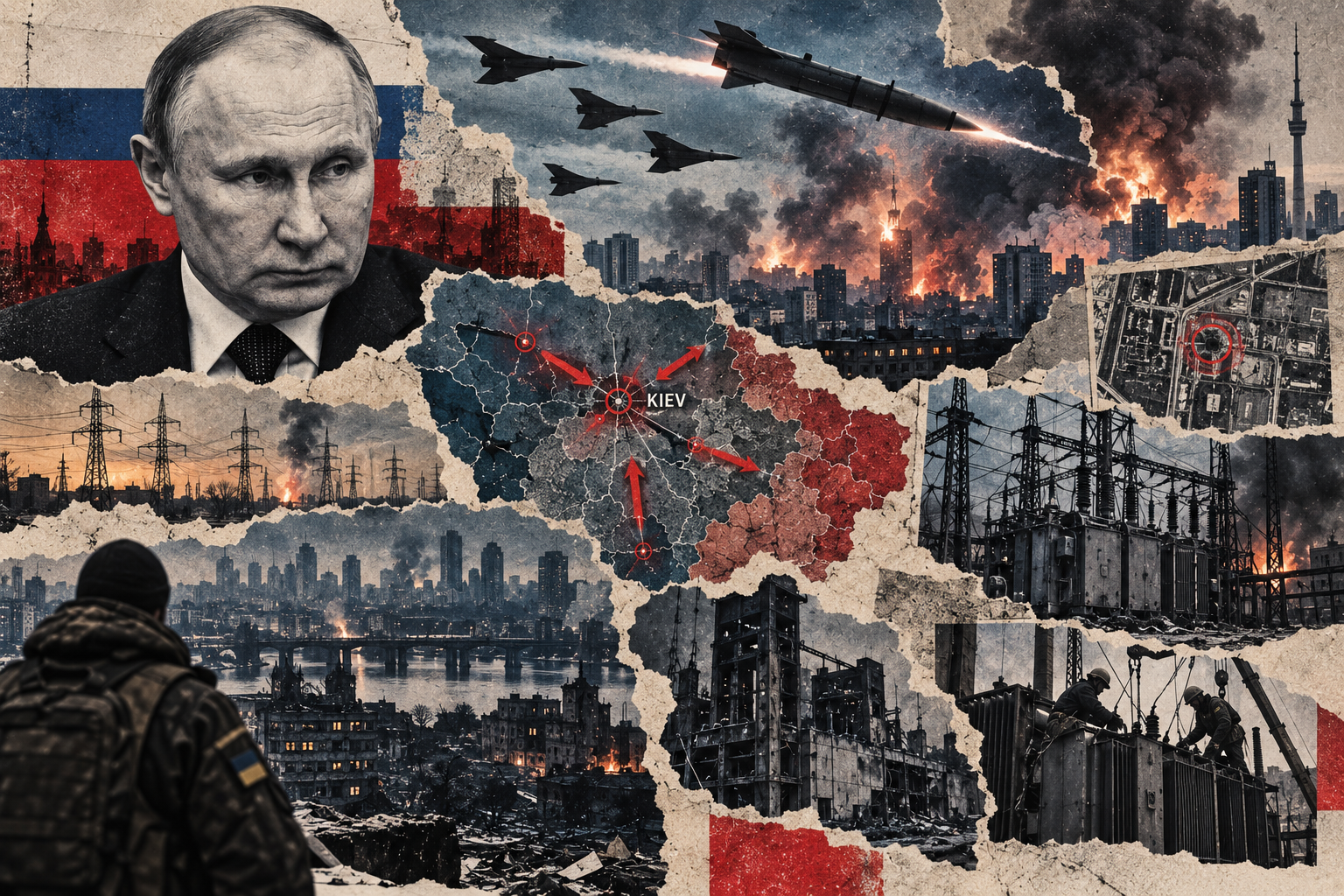
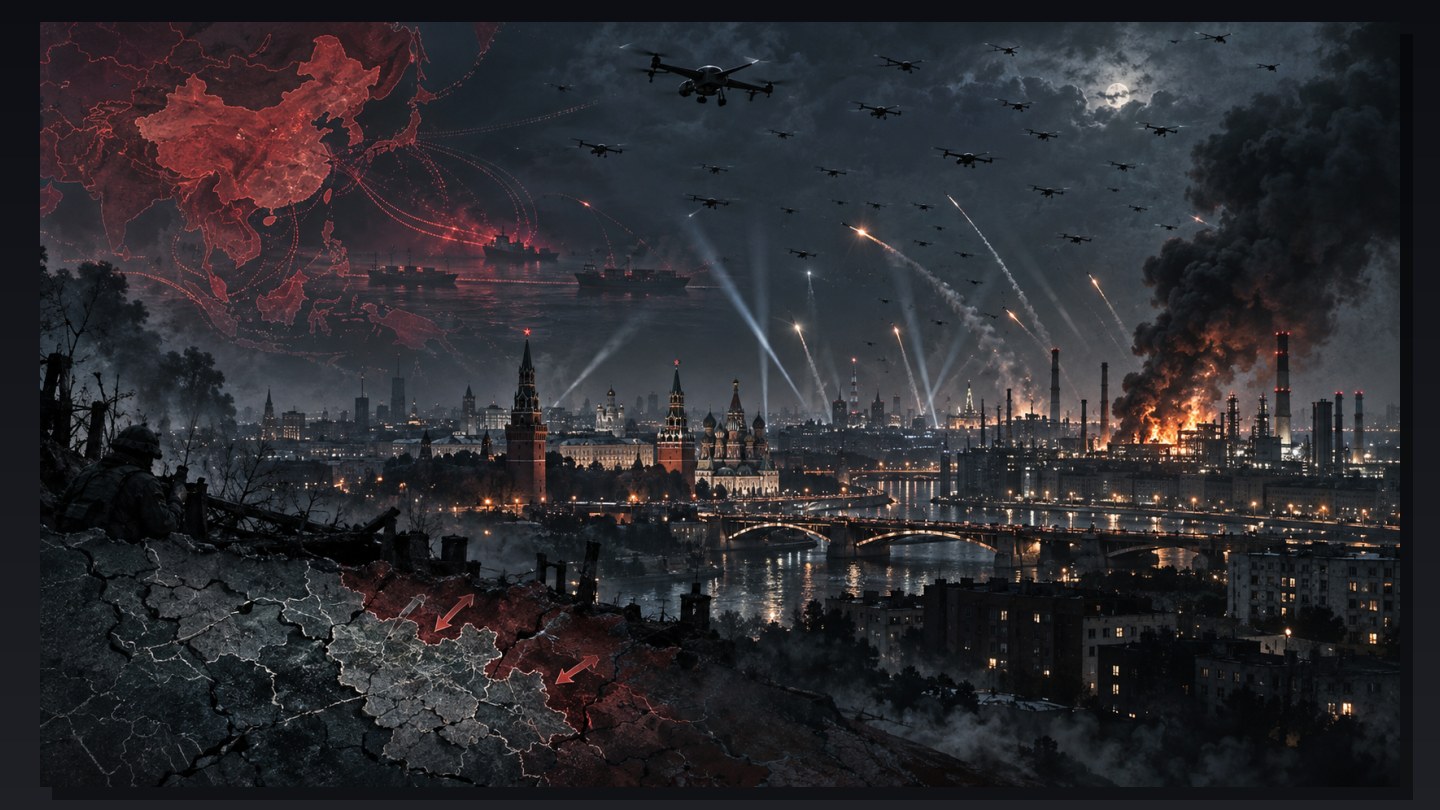
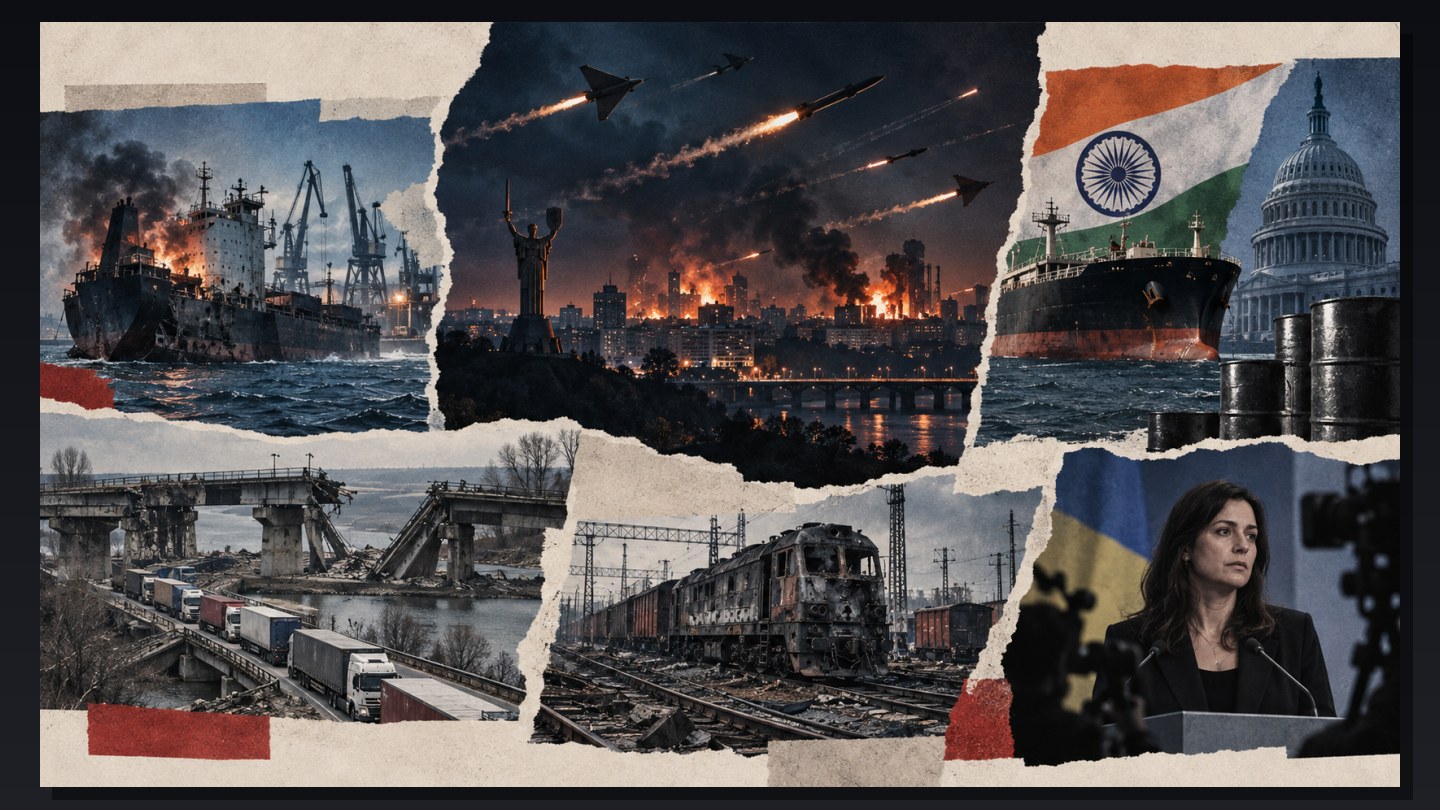
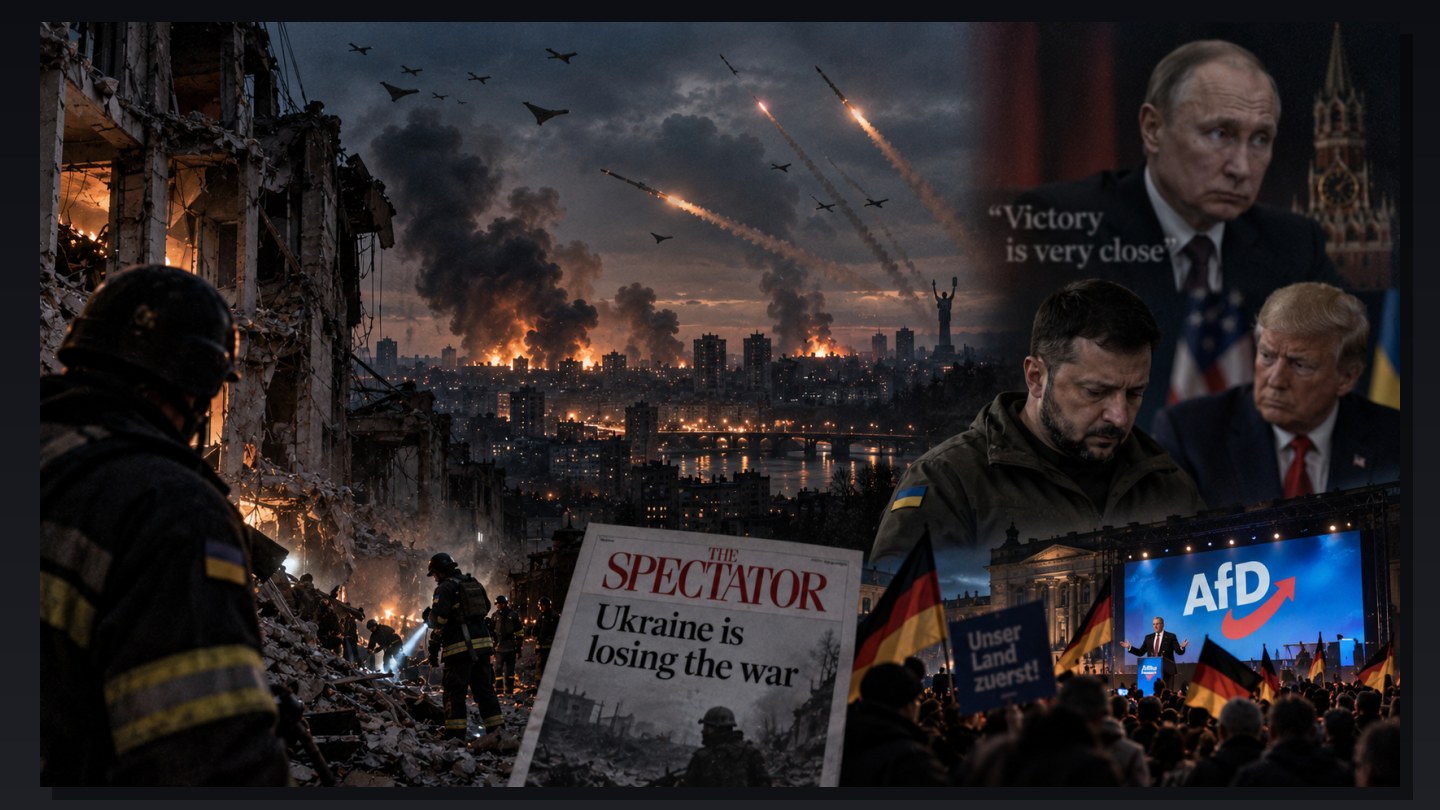
The Russian Ministry of Defence stated that the strike hit a central data centre in Kyiv, as well as four energy facilities in the Kyiv region: the Kyivska substation near Nalyvaikivka, the Kyiv hydroelectric power plant, the Trypilska thermal power plant and an energy depot in Horenychi — all described as supplying Ukraine’s defence industry and military installations.
The interesting target is the substation at Nalyvaikivka — probably the largest in Ukraine, and the very hub where power from the nuclear plants in western Ukraine, from the power stations around Kyiv and from imported EU electricity is gathered and distributed eastward to the rest of the country, Donbas included.
It is, figuratively speaking, the hinge between the western and eastern halves of the Ukrainian power grid.
The facility has been attacked before, but only with the weaker, propeller-driven Geran-2 drones — never enough to put it out of action for good.
That gives grounds for a theory: that the earlier, seemingly half-hearted attacks were in reality reconnaissance — not to destroy, but to map how the Ukrainians repair the facility, where the spare parts come from, and which depots and crews handle the work.
That would explain why the energy depot in Horenychi was hit the same night — possibly the very place where such repair equipment is stored.
There is also a global shortage of transformers, the very component electrical substations are built around — a crisis the Financial Times reported on a few months ago, which also affects the United States and makes the country increasingly dependent on Chinese production, at a time when even Chinese deliveries are becoming harder to obtain.
The substation is moreover built to Soviet standards, which makes Western replacement equipment even harder to adapt — a problem seen repeatedly throughout the war in attempts to combine Soviet and Western military technology, with mixed and often poor results.
Improvising a solution in haste at a facility that is constantly under attack is not only difficult — it can be outright dangerous.
Why Kyiv — and Why It Is Not About Toppling the Government
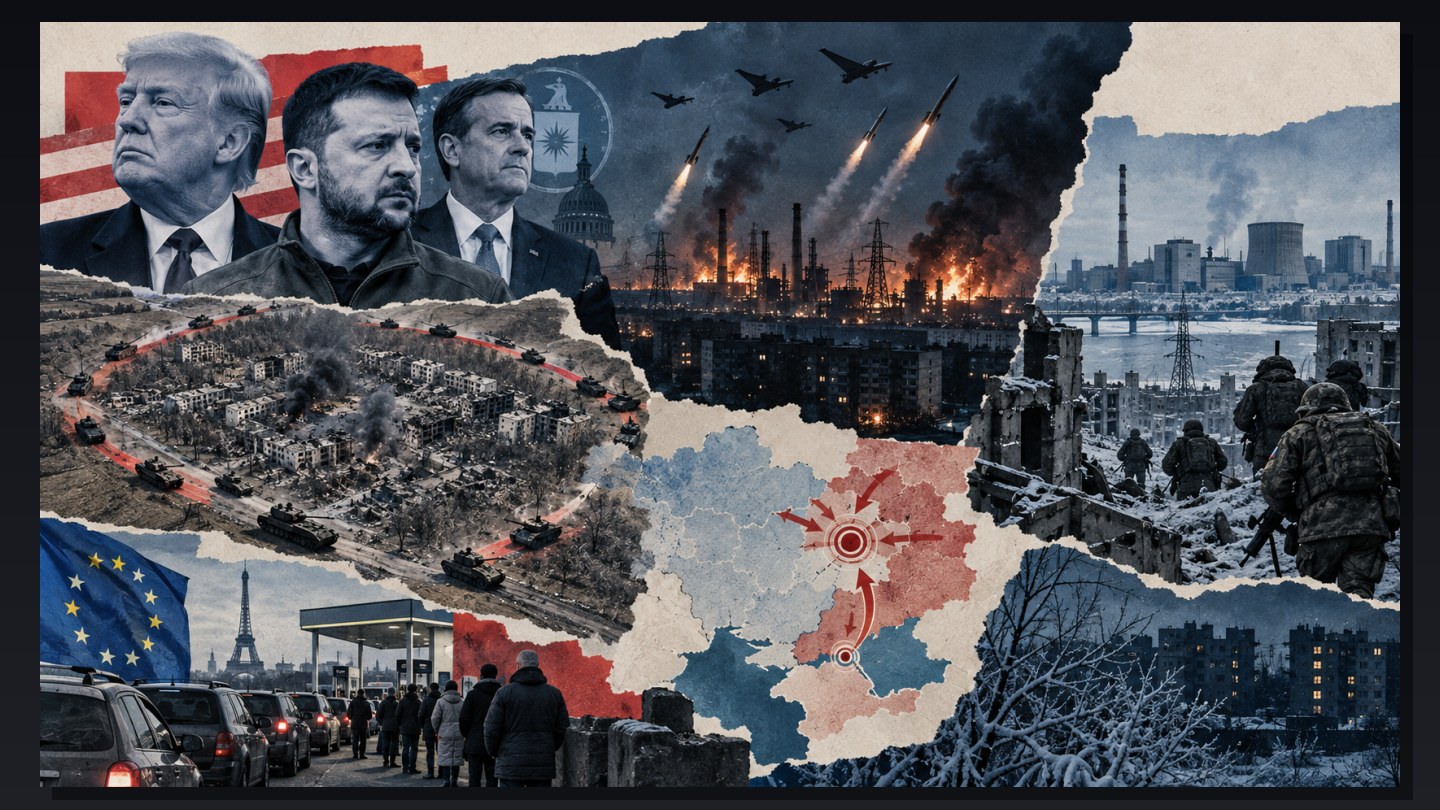
The pattern of recent weeks is consistent: internet and mobile networks, the railway out of the city, petrol stations, depots and industrial plants, and now the power supply — all concentrated specifically on Kyiv.
A number of Western commentators, among them The Economist, interpret this as an attempt to create a harsh winter and thereby political unrest against Zelensky.
That is probably wrong.
Russia hardly has any illusions that the population’s discomfort alone will bring down a government that still has full control of the security apparatus — and in a city with deep roots in the Maidan revolution, it is unlikely to see the population join protests in the middle of a Russian attack from outside.
Triggering such a crisis would in any case only serve the Russians, which they undoubtedly understand.
The purpose is probably twofold: military, to weaken the defence industry and paralyse the chain of command when the internet and communications break down; and strategic, to push the West out of Kyiv — embassies, advisers, technicians — and to pressure the Ukrainian government itself to move westward, isolated from both the population and the West, while the city empties and gradually becomes ripe for capture, as other Ukrainian cities have.
That the Russians have such a precise list of exactly which facilities supply which military purposes suggests a well-developed network of human sources inside the city itself.
A Four-Year Plan That Is Now Finally Ready
Much Western commentary explains the Russian escalation as a direct reaction to specific Ukrainian actions — the drone offensive this summer, the failed Anchorage summit, last year’s drone attack on Putin’s Valdai residence, which the Russians regard as an assassination attempt.
All of this has undoubtedly hardened Russian rhetoric.
But there is another, more fundamental explanation: building up industrial capacity, developing drones, producing missiles, launching satellite systems and mapping an entire country’s energy and logistics networks takes years, not months.
That work probably began as early as autumn 2022 — the first, seemingly weak Russian strikes back then were most likely reconnaissance, not real attempts at destruction, exactly as with the substation now.
The decisive point is this: Russia has only now reached the point it needs to be at to carry out this kind of large-scale offensive.
And that is precisely why it is far less interested in negotiations today than it was one or two years ago — the incentive to accept less than the optimal outcome is smaller now, because victory on the battlefield is within reach in a way it was not even at Trump’s inauguration.
Putin has admittedly hinted that further talks with the Americans and Ukrainians could come in October, after the Duma elections — but that is probably a formality without substance.
The Russians no longer believe they will achieve anything through negotiations; they go through the motions because it does no harm, but the intention is to continue the war.
The Front: Dobropillia on the Verge of Collapse — Before Even Bilozerske Is Secured
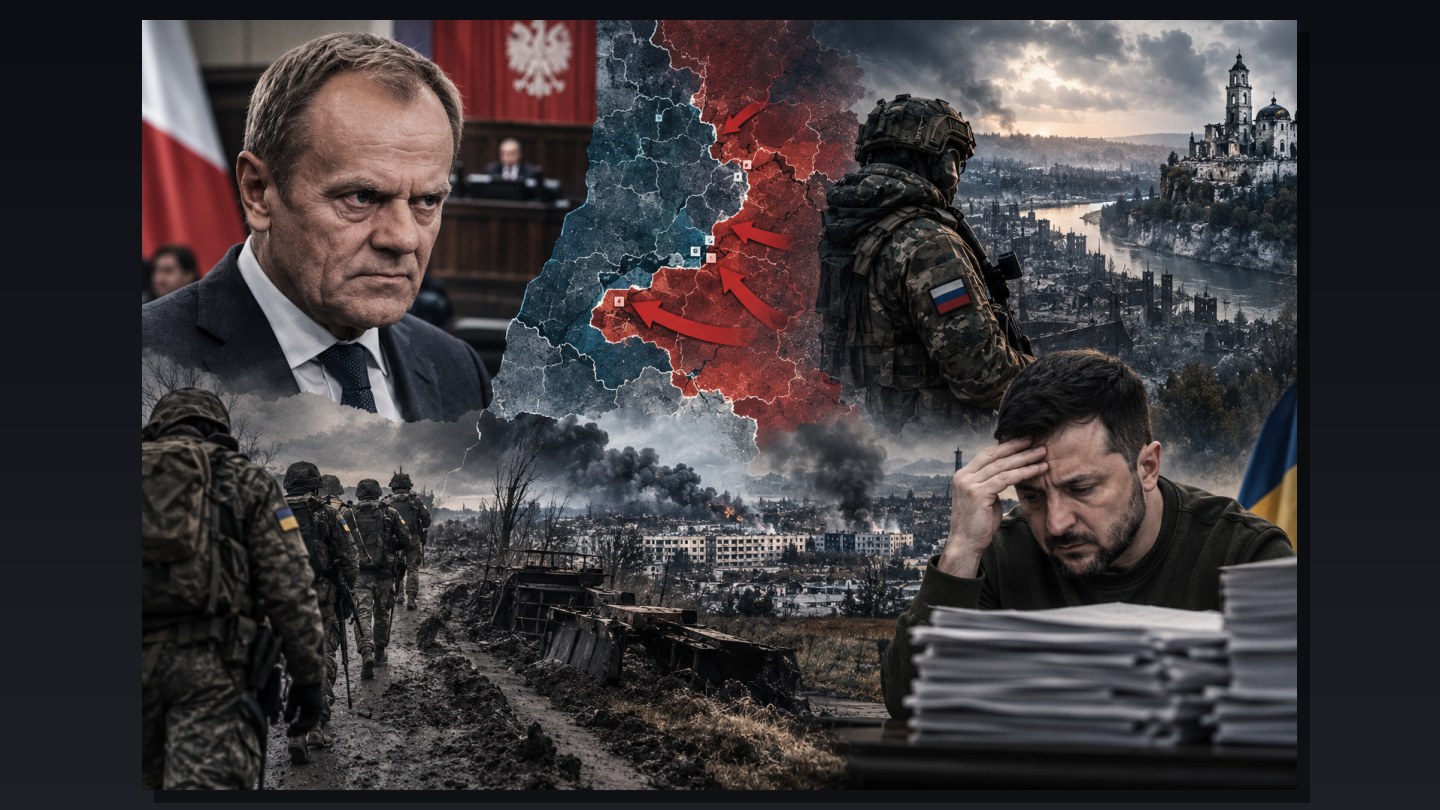
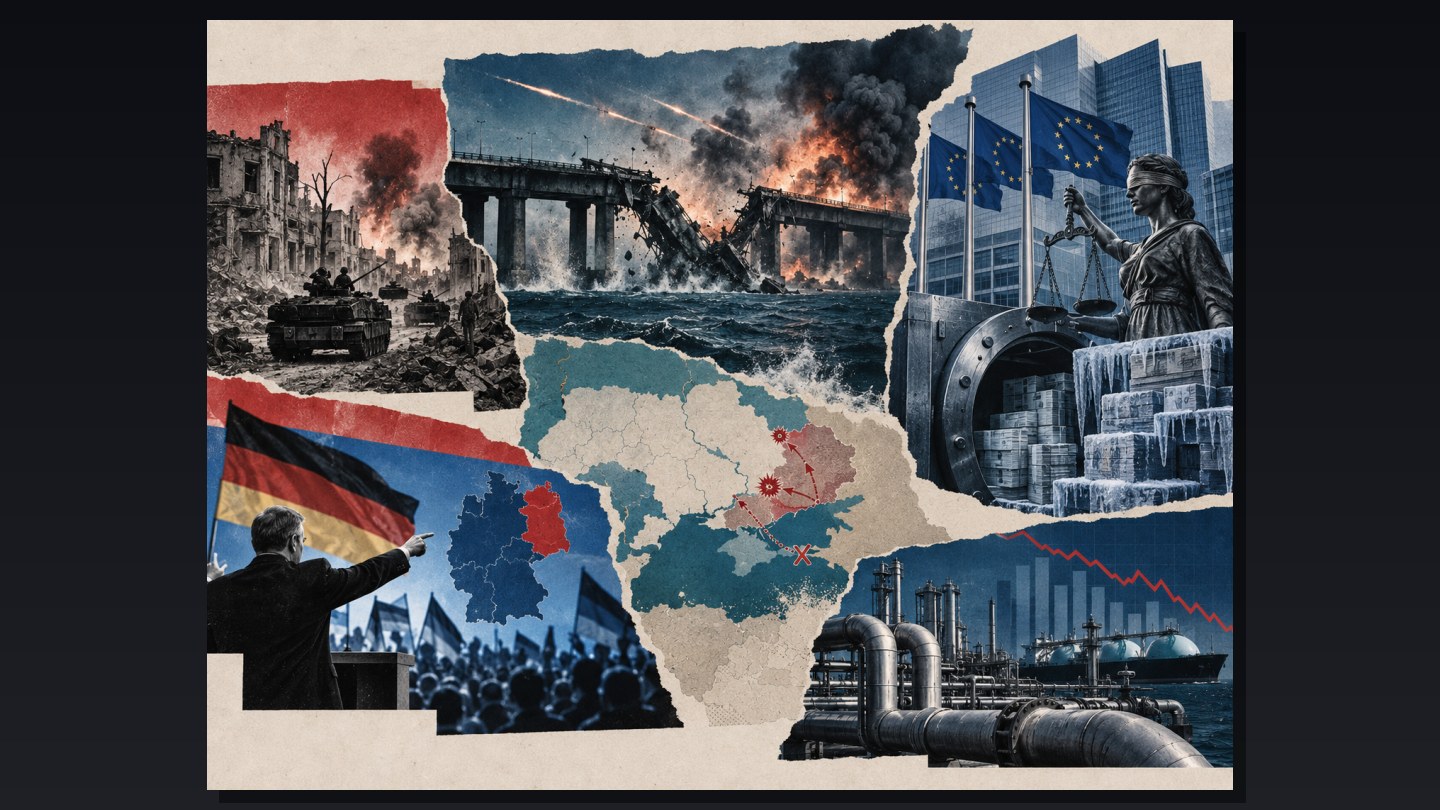
The Russian Ministry of Defence reports that the 51st Army is continuing its offensive in the northeastern, central and southern parts of Dobropillia, with 164 buildings “liberated” over the past 24 hours and around 35 Ukrainian soldiers neutralised.
With an estimated thousand or so Ukrainian soldiers trapped in the city, a figure as high as 164 buildings in a single day points to a defence in rapid disintegration — it has been a long time since there were reports of Ukrainian attempts to break through the ring to rescue the trapped force.
What makes the situation even more serious for Ukraine: Russian forces are now simultaneously pushing north towards the Ukrainian supply base of Bilozerske, even before the battle for Dobropillia itself is decided — with reconnaissance groups already reported inside the town.
The Ukrainians thus face an impossible choice: defend Bilozerske, the very anchor of the defensive line north of Dobropillia, or concentrate on rescuing the force that is already trapped.
The most likely outcome is that the Ukrainian command fails to make that choice in time and loses both places in the coming weeks — which would open the way further north for the Russians and cut Sloviansk and Kramatorsk off from the west.
Azov’s Lyman Offensive: A Third, Smaller and No More Convincing Attempt at Proof
The dispute over documentation continues.
Azov general Andriy Biletsky claims the recapture of four villages west of the Zherebets River — well north of Lyman itself.
The Russian Ministry of Defence published counter-videos from the same locations; in at least two of them the claims of fakery are weak, while in a third case the Ukrainian counter-evidence appears more convincing.
Ukraine has since published its own videos from three of the four villages — but not from the fourth and most important one, further east.
The conclusion is that Ukraine has probably established some presence in three smaller villages far north of Lyman — a result that in any case falls very far short of the original, sweeping claims about Operation Vivaldi in early September.
There are also signs that Biletsky is now redirecting the push southward, towards another area further south that is actually defended by a different Russian force grouping — though here too there are no reports of significant Ukrainian progress.
None of these places can compare in strategic weight with Dobropillia, Bilozerske or the area south of Kramatorsk, where Russian forces are now continuing their assault.
The pattern resembles earlier, isolated Biletsky offensives: large resources in men and materiel thrown in to build his own political profile, with little impact on the course of the war itself.
In two to three weeks the rasputitsa — the autumn mud season — begins, which will probably halt the entire push, whatever it has achieved by then.
Orikhiv: Another Village Closes the Escape Route
The Russian Ministry of Defence reports the capture of Yehorivka northeast of Orikhiv, just southwest of Omelnyk on the main supply road into the city — a road that is probably already unusable for the Ukrainians.
Yehorivka itself is not important.
Its location is.
With Russian control over several such points northwest of the city, drones could soon completely close off the fields north of Orikhiv — the only remaining escape route.
In two to three weeks these fields will in any case turn into almost impassable mud — a nightmare for any Ukrainian force that might then try to escape, hunted by Russian FPV drones with night optics and thermal cameras.
Russia’s Economy: Steady Growth, Record Oil Revenues
Following the recently held Duma elections, Russian figures confirm an economy that is still growing, albeit slowly, as the effect of earlier high interest rates is gradually phased out.
The budget deficit remains small, at around 2.4 per cent of GDP.
Bloomberg reports that Russian crude oil exports are rising in both volume and value, and that in the week to 27 September Russia received its largest weekly oil revenue since 2022 — driven by the crisis in the Middle East.
Signals from Putin suggest that the surplus is now primarily being channelled into the National Wealth Fund as a reserve for the future, rather than covering ongoing deficits through foreign debt.
Tokayev Humiliates Merz in Berlin
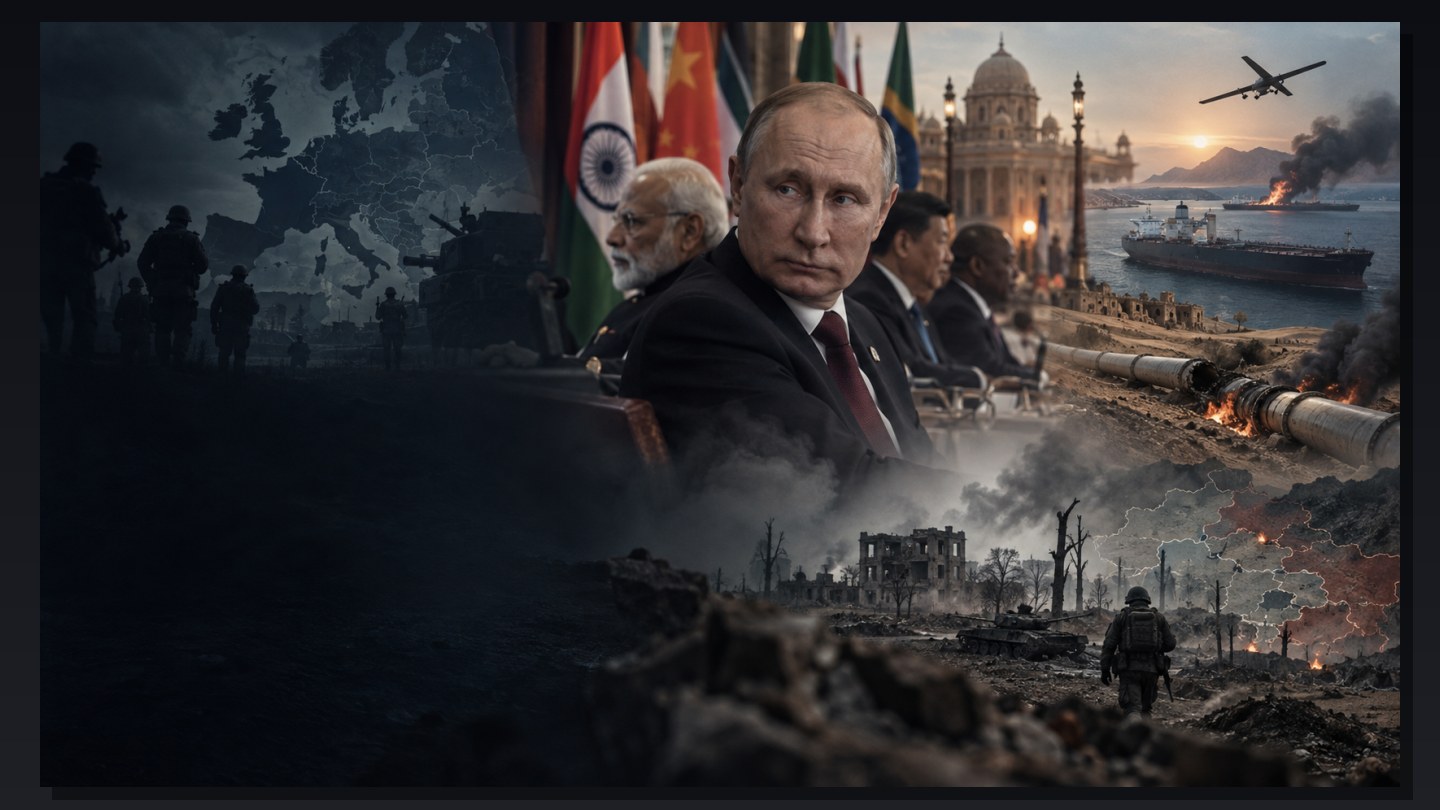
During a state visit to Berlin this week, Kazakhstan’s President Kassym-Jomart Tokayev, standing beside Chancellor Merz, called Putin an “outstanding statesman” and the “most acceptable political figure for Europe and the whole world” — a statement that clearly came as a shock to his hosts.
That even Kazakhstan, under growing pressure to distance itself from Russia after the EU cut its own energy imports, demonstratively shows how highly it values its relationship with Moscow is a telling signal of how limited the reach of the Western sanctions line really is.
Europe: Two Different Crises with the Same Root
In Germany, Merz’s political troubles continue.
In France, Marine Le Pen is strengthening her position ahead of next year’s presidential election, while an attempt to weaken her deputy, Jordan Bardella, through old, disputed statements bears the hallmarks of desperation from a political establishment that senses the situation slipping out of its control.
Bardella himself rejects the allegations and has filed a defamation suit against Mediapart.
Should Le Pen win, it would hardly mean a radical change of course overnight — but it would in any case reinforce the sense that Europe is coming apart, precisely because the European establishment does not trust her the way it trusted Macron or Hollande.









Se og hør mer
Videoer, klipp og innslag knyttet til temaet.