Four air campaigns – simultaneous, coordinated, uninterrupted
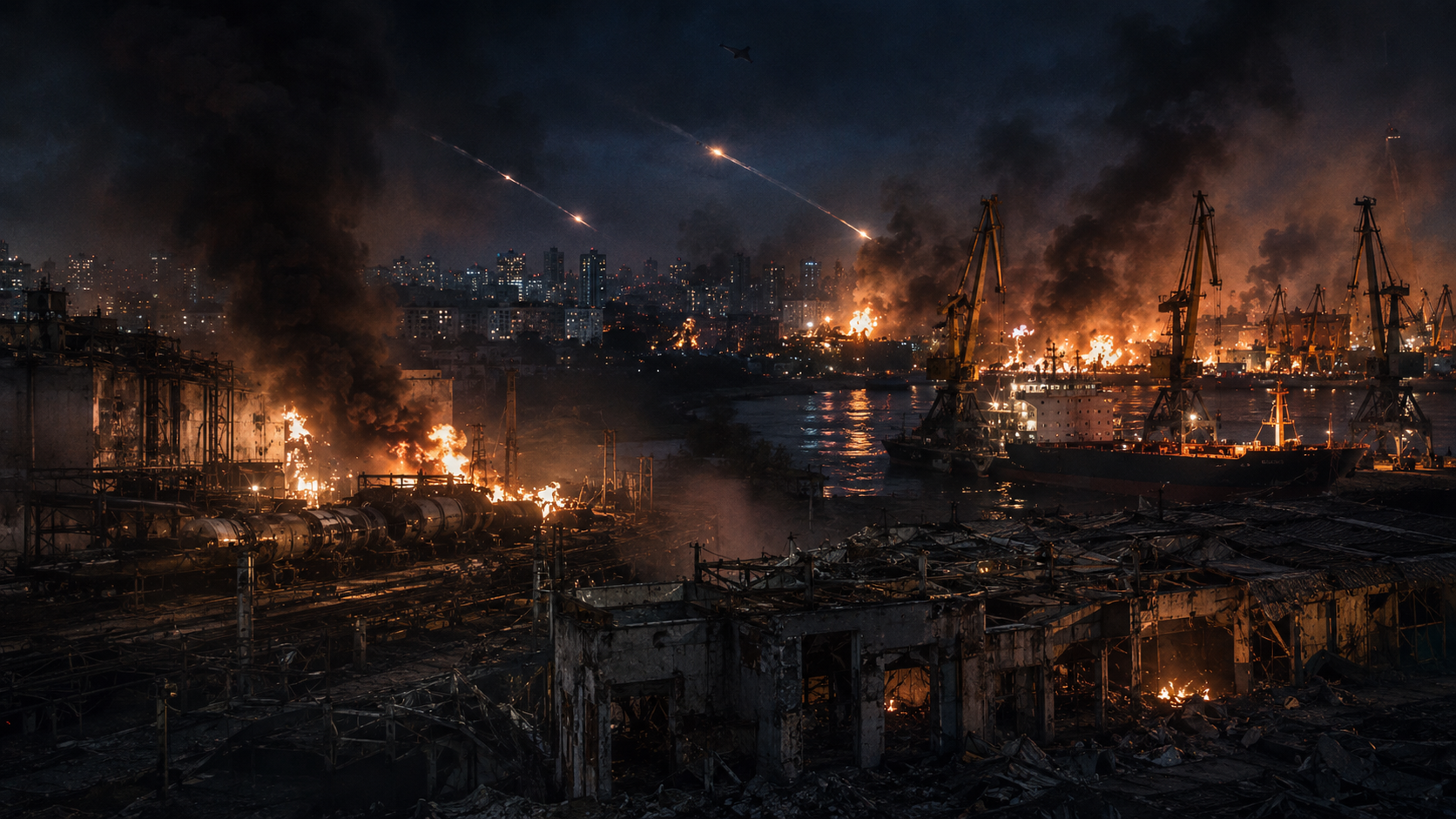
Russia is now waging four separate but coordinated air campaigns against Ukraine – all in parallel and all integral parts of an overall strategy. The first is the repeated, systematically escalating strikes on Kyiv with ballistic missiles and Zircon hypersonic missiles. The second is the campaign against the Black Sea ports – Odesa, Mykolaiv, Yuzhny and adjacent facilities – where around 80 vessels have been confirmed hit in recent weeks, including two dry cargo ships attacked on the open sea south of Odesa during the night of 1 August. The third is the tactical and logistical campaign against petrol stations, railways, warehouses and the Ukrainian postal system across large parts of the country with Geran-4 drones. The fourth is the periodic large-scale broad attacks with Kh-101 cruise missiles on military-industrial facilities across Ukraine – from Lviv to Dnipropetrovsk.
What is remarkable is the coordination capability itself. Different missile and drone types, launched from different platforms – ground-based systems, sea-based platforms, Su-34 bombers – strike simultaneously across geographical axes and operational objectives. It is a capability normally associated with US air power in campaigns against weak opponents. It is now the Russians who master it. Su-34 bombers with FAB bombs are now used regularly against the cities of Zaporizhzhia, Kharkiv and Sumy – and by all available indications are about to be deployed against Kyiv as the air defence there collapses.
Kyiv without air defence: Zelensky says it himself
During the night of 31 July to 1 August, Russian forces carried out a massive attack on Ukraine with 35 missiles – 27 of them ballistic – and 185 attack drones of various types, with Kyiv as the primary target. What sets this attack apart is not its size – it is Zelensky’s own response. For the first time in the war, he openly admitted: “We were only able to shoot down one ballistic missile last night, because we lack missiles for the Patriot air defence system”. “Kyiv became the primary target, but strikes also hit the Dnipro, Sumy, Kharkiv and Poltava regions. Eighteen buildings, a school, the Lithuanian embassy and infrastructure facilities were damaged”, he added.
Ukraine fired a total of two Patriot interceptors during the attack. Only one hit. This means the remaining stock of PAC-3 interceptors is so critically low that Ukraine is now rationing them to one or two launches per attack round. Russia sent many times that number of missiles.
The weapon that hit the drone exhibition outside Kyiv about a week ago – which killed an unknown number of Ukrainian defence and technology officers – was, according to newer information, not a Banderol or Iskander, but a Kinzhal hypersonic missile fired from a MiG-31 fighter. Zelensky initially said only ten were killed. Since then, obituaries have begun appearing all over Kyiv from the families of officers and technologists who were present. The real death toll is unknown, but far higher than the official figures.
The targets of the Kyiv attack: drones, missiles and an American company
The Russian Defence Ministry listed the following targets of the attack: the Radio-Mirel factory producing electronics for Neptune guided bombs and FP7, FP9 and Grom 2 tactical missiles; the Burevestnik electronics factory producing components for long- and medium-range drones and radar equipment; the Fire Point factory producing components for Flamingo cruise missiles; PV Group Ukraine, which produces software and hardware for the Lemur electronic warfare system; and a drone assembly and storage facility where American Deadfly, Hornet and Link drones have been assembled. The Guardian confirmed a few days ago that a production facility owned by an American company was hit in one of the attacks on Kyiv. Russia began systematically attacking American economic and industrial interests in Ukraine as early as November 2024 – after the US assisted Ukraine with long-range strikes on Russian territory.
The Washington visit: a diplomatic debacle
The picture of Zelensky’s Washington visit is now clearer than it was in the days immediately after. He went there with a large delegation and a clear wish list: 300 Patriot interceptors, continued support for the drone offensive against Russia, financial commitments and a meeting with Elon Musk. He got none of them.
Trump refused to provide Patriot interceptors – the total US stockpile is down to 750–850 units, and giving 40 percent of it to Ukraine while Iran attacks American bases in Jordan is militarily indefensible. The US is asking Ukraine to scale back – not escalate – its attacks on Russian territory, particularly after the Chevron dispute over the Caspian pipeline. Trump reportedly refused to pressure Elon Musk to meet Zelensky. No financial commitments were presented. The Graham–Blumenthal sanctions law appears to be unravelling from within – House Democrats are balking at giving Trump expanded tariff powers, and Trump is trying to use the law to bolster his Iran policy, which further splits the coalition.
The New York Times reports that Trump refused to transfer Patriot production rights to Ukraine for fear that these weapons could be used against America – a phrasing that reveals it is not Boeing alone that is blocking, but the Trump administration itself. The promise from Ankara was never real.
Trump is now again talking about the minerals part of the US–Ukraine cooperation agreement and its implications for American claims on Ukrainian natural resources. It is a pattern: when Trump starts talking about minerals, it is a sign he is recalculating his view of the course of the war.
Chasiv Yar confirmed – Stupochky removes the last outpost
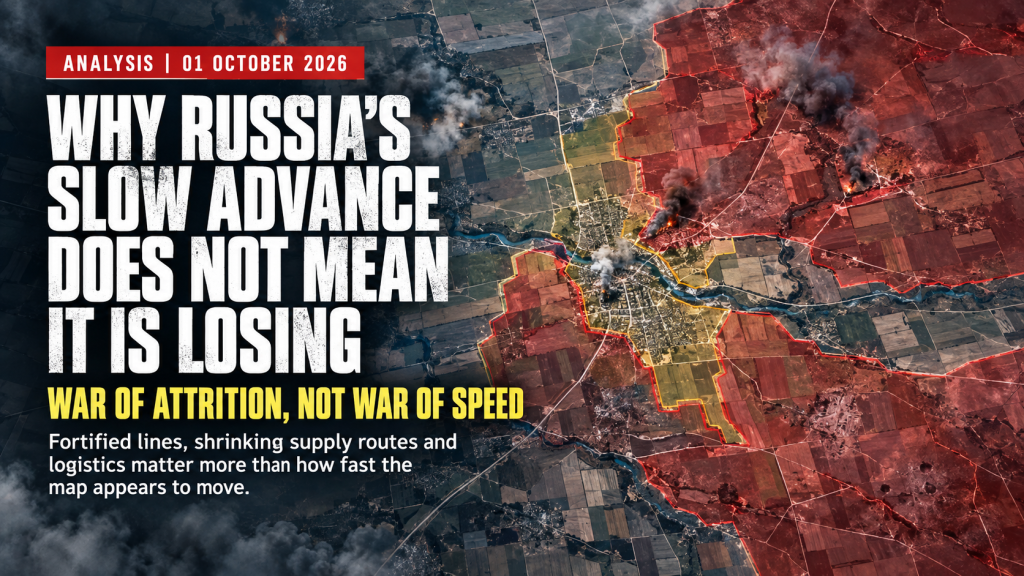
Russian forces have taken the village of Stupochky, which lay between Kostiantynivka and Chasiv Yar. With its fall, the Ukrainian-fortified territory between these two towns – an area rich in defensive positions built up over many years – has now been completely cleared. Chasiv Yar is now firmly under Russian control, and the possibilities for Ukrainian raids and counterattacks from this territory are over. This significantly simplifies Russian operations aimed at Duiivka and Kramatorsk – the flank that previously required resources to protect is now secured.
Orikhiv: the siege has begun
The most important single battlefield event on Saturday 1 August is not from Donbas, but from Zaporizhzhia. Russian forces took the village of Liubymivka, which controls the northern supply road into Orikhiv. Russia’s Defence Minister Belousov personally congratulated the troops who took Liubymivka. “The main supply lines to Orikhiv from the north have now been cut”. Russian forces are already pushing from the east, south and west. With the northern flank now closed, Orikhiv is in practice encircled.
Orikhiv is the last major Ukrainian fortified position in the Zaporizhzhia region. After its fall, the road to Zaporizhzhia city itself will lie open. The Zaporizhzhia rail link has also been cut for the third day in a row after Russian attacks on railway infrastructure. An approximate timeline for Orikhiv’s fall: early autumn, perhaps October, after the rasputitsa season.
Hormuz is completely closed – Europe in an energy crisis
The US is trying to guide tankers through the northern route along the Iranian coast in the Strait of Hormuz. Iran has mined the southern route near Oman’s coast and attacks tankers trying to pass the northern route. The Strait of Hormuz is effectively completely closed to commercial oil shipping. European gas prices rose 1.5 times in July alone, reaching 637 dollars per 1,000 cubic metres – driven by the new escalation in the Middle East. Europe’s gas storage is dramatically below the normal level for the time of year.
The people in European capitals who month after month have blocked any move towards a negotiated outcome in Ukraine and demanded ever tighter sanctions on Russia will face a bill in the autumn. That is not a forecast. It is a calculation.