The Kyiv Visit: Plenty of Press Conference, Little Negotiation
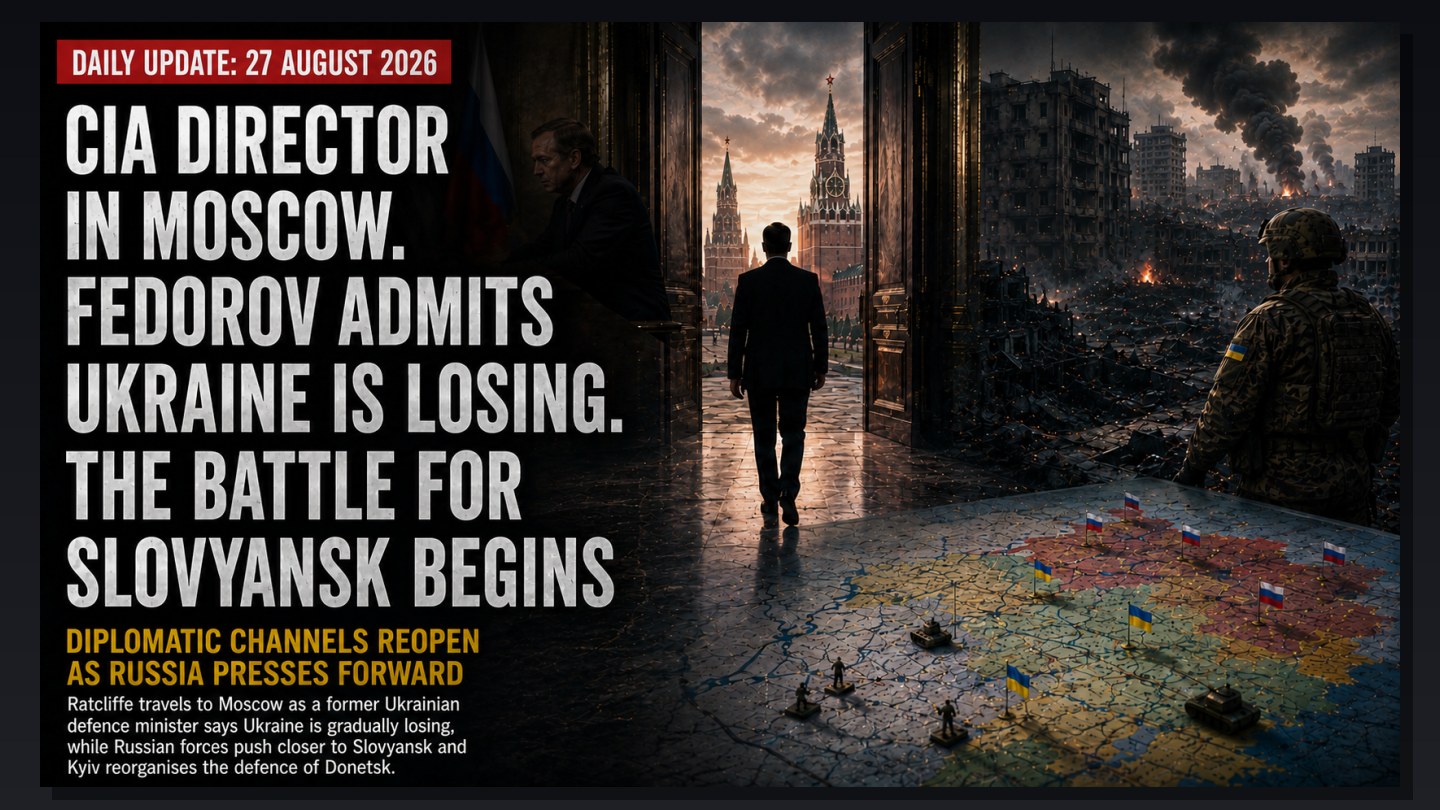
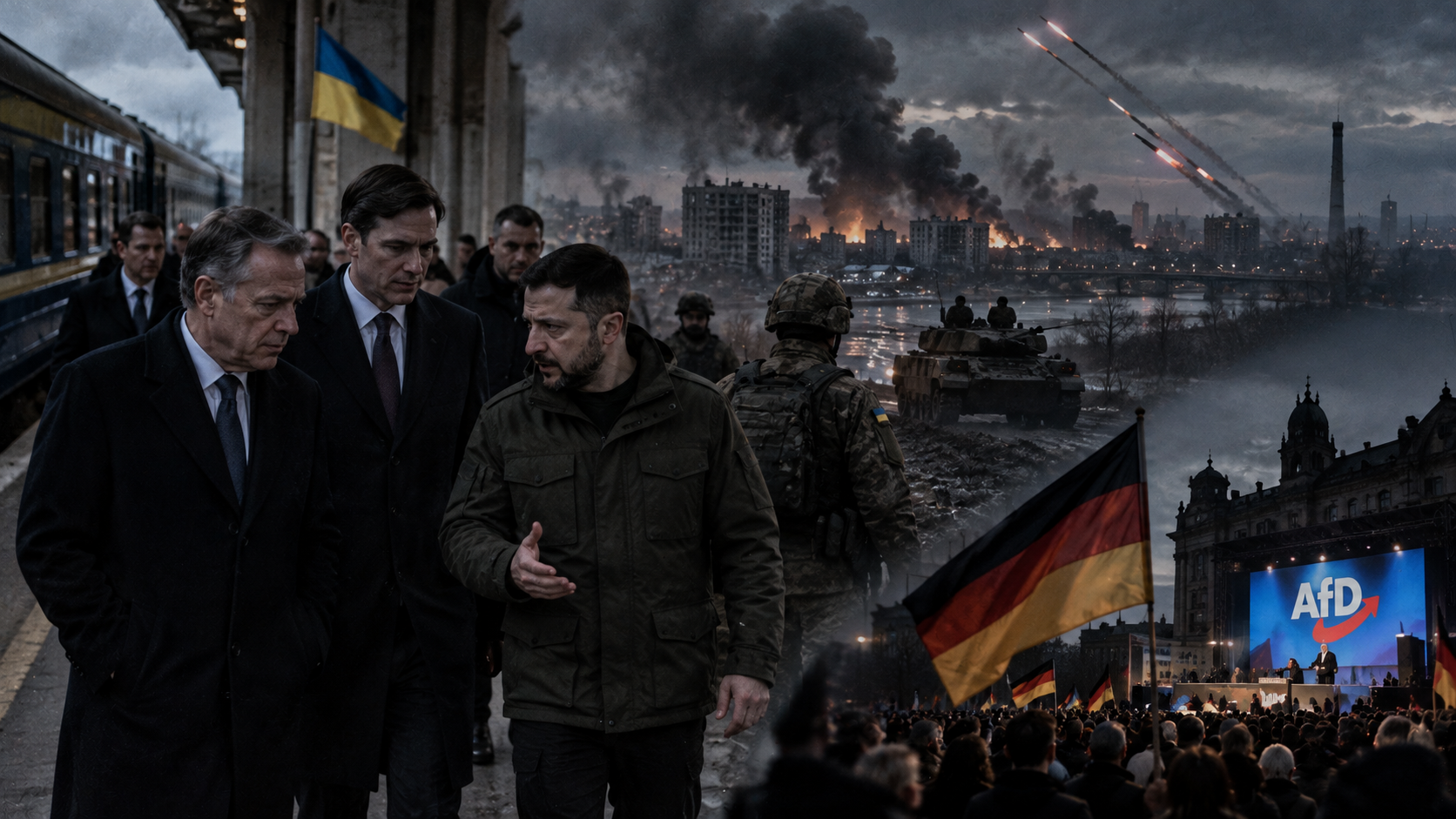
After meeting Putin in Moscow, Steve Witkoff and Jared Kushner travelled on to Kyiv, where they were expected to follow up the talks with Zelensky.
The contrast between the two visits could hardly have been greater.
In Moscow, the envoys were received in the Kremlin, sat down with Putin and senior Russian officials, and spent several hours discussing the war, the battlefield and possible ways forward. In Kyiv, it is far harder to see that any comparable substantive negotiation took place. The visit ended without a breakthrough, even though both the Americans and Ukrainians described the talks as constructive.
Witkoff said that any peace settlement would necessarily require concessions from both sides. Given the situation on the ground, that means in practice that the largest concessions would have to come from Ukraine.
Zelensky rejected that.
He has again made clear that Ukraine will not voluntarily withdraw from Donbas or accept Russian territorial demands as a condition for peace.
It is therefore difficult to see what Witkoff and Kushner could actually have taken away from Kyiv that would bring an agreement any closer.
Trump May Call Putin Again — But the Premise Is Still the Same
After the visit, reports again began circulating that Trump is considering another phone call with Putin. The Kremlin confirmed that such a call could happen, but said no time had yet been agreed.
There is also renewed talk of resuming trilateral talks between Russia, Ukraine and the United States.
The problem is that the premise itself has not changed.
As long as Zelensky rejects any territorial concession, there is no obvious reason for Russia to halt its advance. Moscow has spent years building up forces, production, missiles, drones, glide bombs and armoured capacity precisely to reach the position it believes it is now in.
Freezing the front now would therefore, from the Russian perspective, mean surrendering a military advantage Russia has spent enormous resources creating.
It is difficult to imagine the Kremlin doing that merely to secure yet another round of negotiations.
Zelensky Holds the Line: 2027 Will Turn the War Around
The most striking thing about Kyiv was how little Zelensky’s underlying narrative appears to have changed.
He again spoke about increased US missile production next year, new Ukrainian air-defence systems, and how 2027 could become the year when the balance shifts back in Ukraine’s favour. After the meetings, he particularly emphasised the need for a new American “winter package” of air defence and energy support.
The narrative is familiar: Ukraine only has to hold on a little longer. Western production will increase. New systems will arrive. Russia will eventually understand that Ukraine cannot be defeated and abandon its attempt to force the country to accept Moscow’s demands.
The problem is that the war continues in the meantime.
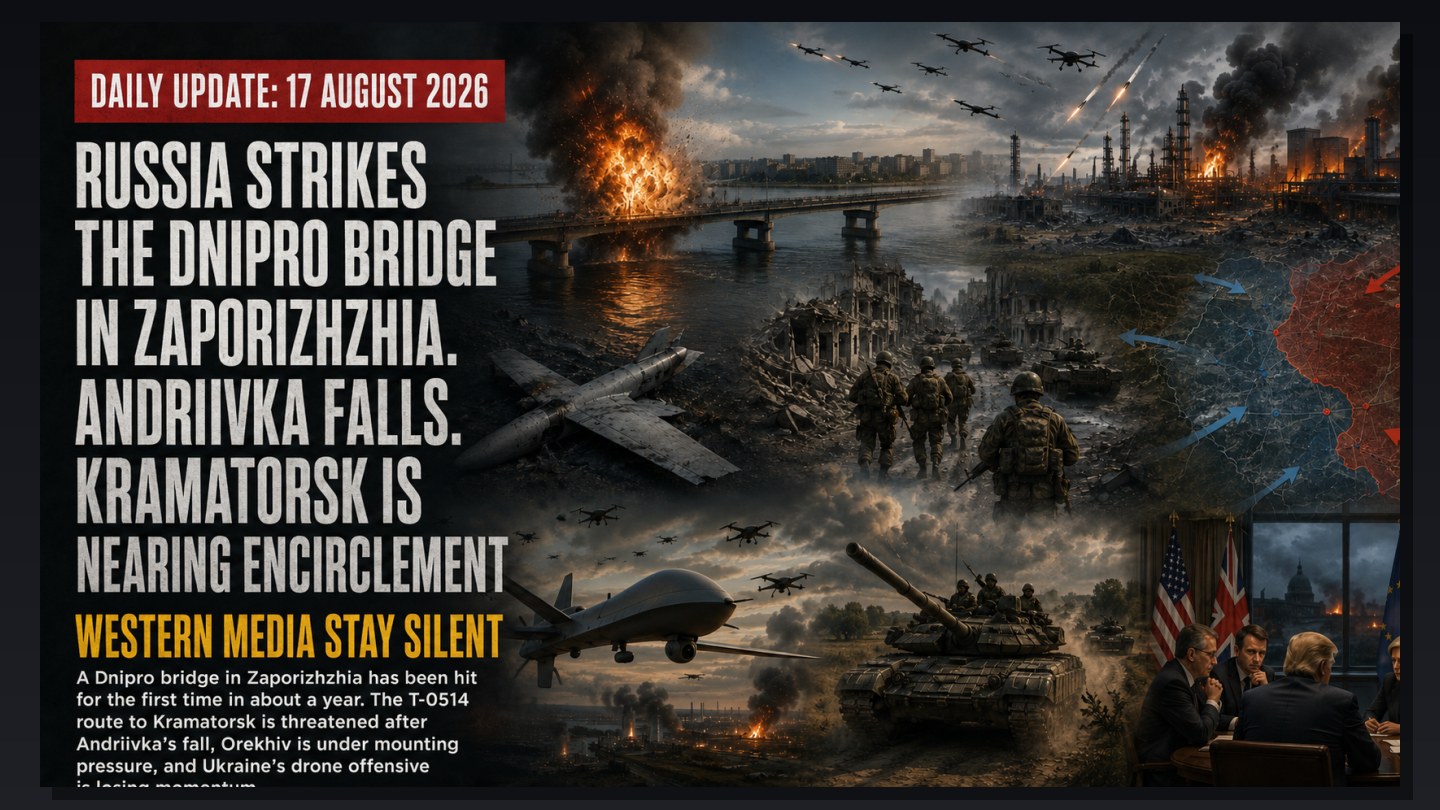
Dobropillia is coming under ever greater pressure. Supply lines around Oleksiievo-Druzhkivka east of Kramatorsk are under constant Russian drone pressure. In northeastern Kharkiv, Russia claims that around 1,700 Ukrainian troops are now encircled.
The longer Ukraine waits for the tide to turn in 2027, the worse its position may be by the time 2027 actually arrives.
Europe Wants a Seat at the Table — Russia Says No
European representatives were also present in Kyiv, and Zelensky ensured that Witkoff and Kushner met representatives of European countries during the visit.
Europe now wants a formal place in any new negotiations.
Russia’s position is the opposite.
Putin has made clear that any real negotiations must primarily be between Russia and Ukraine. Countries that wish to mediate may contribute, meaning the United States can still have a role.
But Moscow does not regard the Europeans as mediators.
It regards them as a party to the conflict.
That means Europe’s demand for a seat at the table could become yet another obstacle before negotiations even begin.
AfD Crushes CDU in Saxony-Anhalt
At the same time, an election result in Germany emerged that could have far greater significance than the size of the state itself would suggest.
In Saxony-Anhalt, AfD won 43.8 percent of the vote, more than doubling its support. The party fell only a few seats short of an outright majority in the state parliament.
CDU collapsed to 17.3 percent.
Saxony-Anhalt is admittedly a relatively small, rural and older eastern German state. The result therefore cannot simply be extrapolated to the rest of Germany.
But the scale of the swing is nevertheless difficult to ignore.
AfD is now clearly the largest party in the state, while Friedrich Merz’s CDU has lost more than half of its support.
And this is happening at the same time as pressure on Merz is mounting after AfD’s “dream result”.
The Merz Problem Is Getting Bigger
Perhaps the most interesting thing is not simply that AfD is growing.
It is that Merz himself appears to have become a political liability.
He is the German leader who has tied himself most strongly to continued confrontation with Russia, extensive support for Ukraine and renewed German rearmament. At the same time, Germany remains in an economic situation marked by weak growth, high energy costs and pressure on industry.
It is therefore difficult to separate dissatisfaction with Merz from dissatisfaction with the policies he represents.
The result in Saxony-Anhalt does not mean that Germany is on the verge of an immediate change of course.
Even if CDU were to replace its leader, it is far from certain that policy would change quickly. Pressure from Brussels, the party apparatus and Germany’s foreign- and security-policy establishment would remain enormous.
Even so, the Saxony-Anhalt election may in retrospect prove to have been one of the first clear signs that Germany’s political balance is genuinely beginning to shift.
The 72-Hour Pause Expires — Another Massive Strike Expected
At the same time, the brief pause in attacks on Kyiv is coming to an end.
The pause applied only to Kyiv and Moscow and was introduced to make Witkoff and Kushner’s journey possible. The rest of the war continued.
Throughout the period, Russia continued strikes against Odesa, southern Ukraine and other parts of the country. Shipping in the Black Sea has meanwhile become increasingly dangerous, with merchant vessels beginning to use improvised anti-drone protections.
Reports are now circulating that a much larger combined Russian drone and missile attack could follow as soon as the pause expires.
Kyiv is expected to be among the main targets.
There is speculation about the use of Iskander-M, Zircon and Kh-101 missiles, the latter launched from strategic bombers, while Geran-5 drones could be used against targets deeper inside western Ukraine.
And already on the night of 8 September, Russia resumed large-scale strikes on Kyiv with ballistic missiles, cruise missiles and drones shortly after Witkoff and Kushner had left the city.
If this happens on an even larger scale, it will be a brutal reminder of how little Witkoff and Kushner’s diplomatic trip has actually changed the war itself.
Rassvet May Already Be Partially Operational
Russia has meanwhile released information that may indicate parts of the Rassvet satellite system are already in limited use.
Russian Railways is reportedly in the process of receiving receiver equipment intended to provide trains with internet access via the system.
If this really means that Rassvet can already provide short communications windows over parts of Russia and Ukraine, it could also explain how the new Geran-5 drones are supposed to operate increasingly far west without relying on conventional relay stations.
For now, this remains a hypothesis.
But if it is correct, it means Russia is establishing a communications architecture that makes the new jet-powered drones far more flexible than earlier Geran variants.
Russia Is Putting Its Bombers Under Cover
Following last year’s Ukrainian drone attack on Russian strategic bombers, Russia has launched an extensive construction programme at its airbases.
That solves one problem, but creates another.
Russian and American strategic bombers have for decades been kept in the open partly because earlier arms-control regimes assumed that both sides should be able to observe them by satellite.
Once the aircraft are moved into hardened hangars, that form of mutual transparency disappears as well.
A Ukrainian drone attack that inflicted limited physical damage on Russia’s bomber fleet could therefore have a much larger strategic consequence: another part of the old arms-control architecture between Russia and the United States disappears.
Sviatohirsk: Russian Control Not Confirmed
On the front, one earlier claim now needs to be corrected.
Putin and the Russian Defence Ministry have claimed that Sviatohirsk northwest of Sloviansk has been captured.
However, there is now recent video footage of Brigadier General Andriy Biletsky in central Sviatohirsk, with the monastery visible in the background, and Ukraine’s 3rd Army Corps says the city remains fully under Ukrainian control.
Three explanations are possible.
Russia may have captured parts of the city and later been pushed back. Putin may have received inaccurate or incomplete information. Or the city may still be divided and contested.
There is currently not enough material to establish which explanation is correct.
Sviatohirsk must therefore still be treated as contested.
Dobropillia and Orikhiv: The Pressure Continues
Elsewhere on the front, the direction of travel is far less ambiguous.
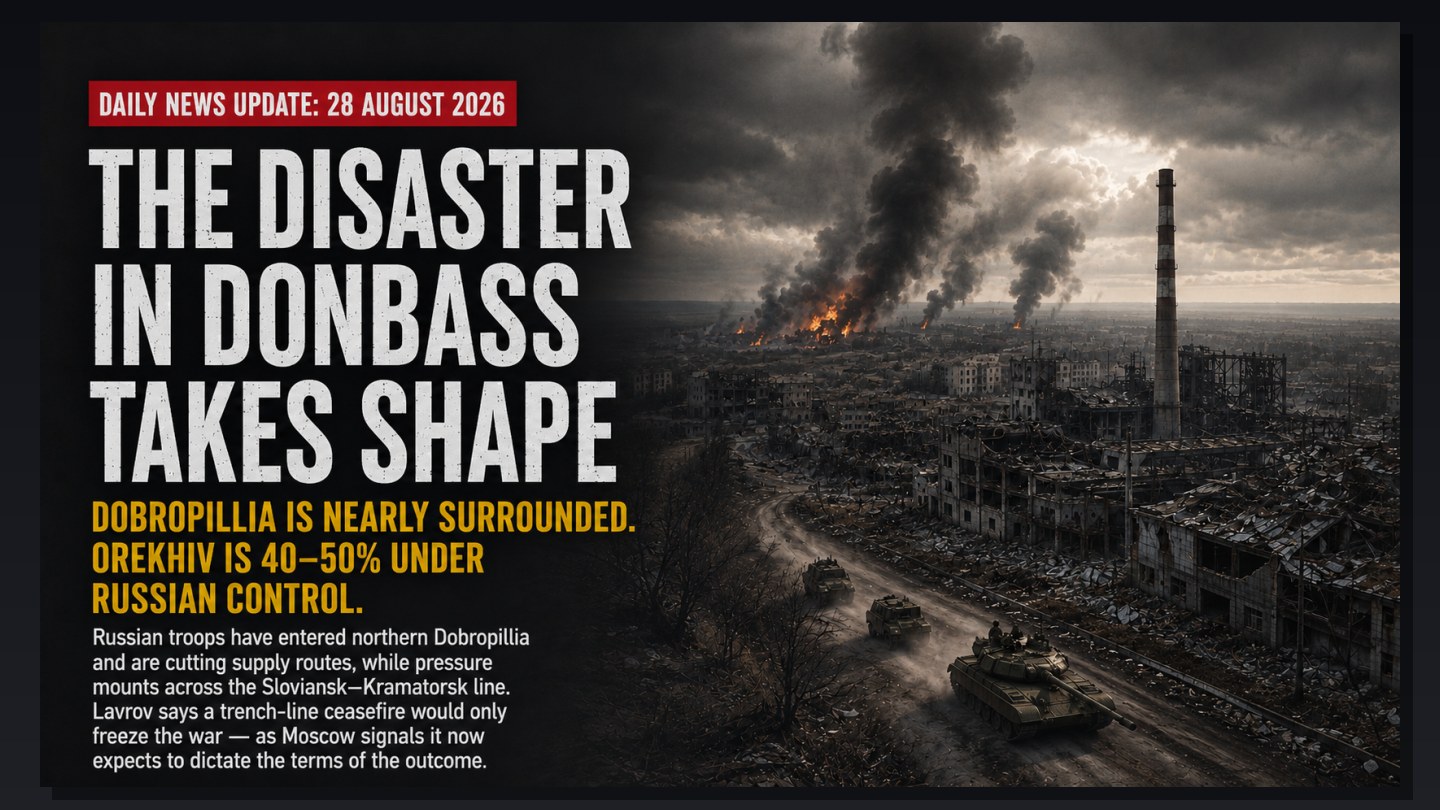
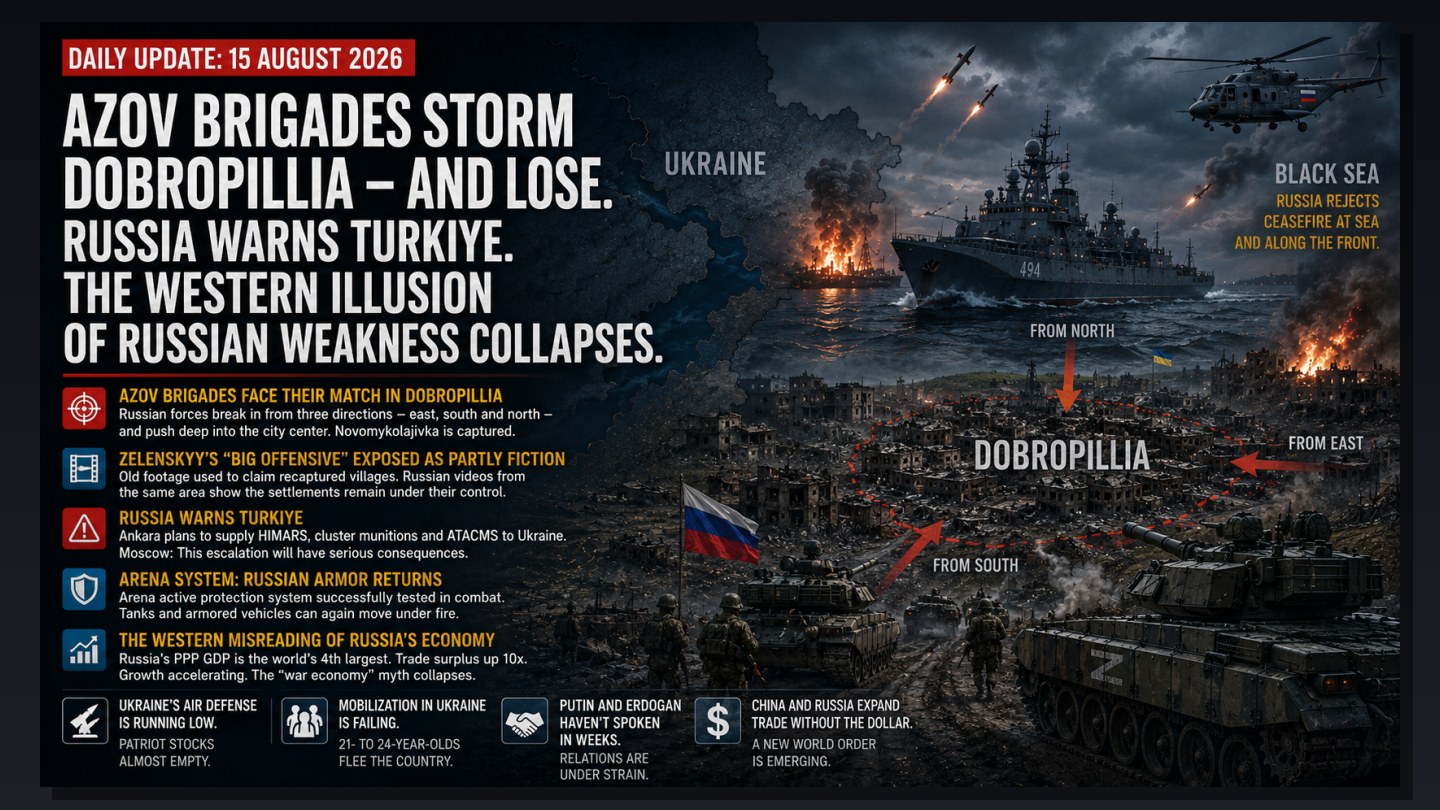
Dobropillia is becoming increasingly tightly encircled. Russian forces continue to press forward around the city while the number of available supply routes shrinks. Geolocated footage confirms Russian infiltration into the smaller village of Dobropillia southwest of the city of the same name.
Orikhiv is in a similar position in the south.
Russian forces have established themselves progressively deeper in the area around the city, and the Ukrainian garrison is under mounting pressure.
Russian military commentator Andrei Marochko claims that Russia has taken more than 100 square kilometres of territory and 15 settlements in one week, and that Ukrainian forces have become increasingly reactive — responding to Russian attacks but showing less ability to carry out active counterattacks of their own.
That fits the pattern of recent months: the front does not move dramatically every single day, but the operational space available to Ukraine is steadily shrinking.
Donbas Could Be Decided This Winter
Assessments are now circulating in Russian circles that the whole of Donbas could be under Russian control by January or February.
This is not an official deadline.
But the timeline fits the pattern of earlier Russian offensives: advances through late summer, rasputitsa in the autumn, followed by renewed breakthroughs once the ground freezes.
If Dobropillia, Oleksiievo-Druzhkivka and then Druzhkivka fall, Sloviansk and Kramatorsk would in practice remain as the last major fortified centres.
The plan appears to be classic: first create one large pocket, then split it into smaller pockets and reduce them one by one.
If this succeeds, Donbas could be lost to Ukraine over the winter.
And then the entire war changes.
Russia would control Ukraine’s largest fortified defensive zone, a dense network of roads and railways, and urban areas where large forces can be concealed and assembled far more effectively than on open steppe.
From there, an entirely different geography opens to the west.
A thrust toward Dnipro. An attack on Zaporizhzhia. A possible offensive into the Chernihiv region.
And, in the most extreme scenario: Russian forces once again at the gates of Kyiv.
Only then might the war’s real endgame begin.