Tusk Says It Out Loud: Putin’s Figure Was Very Close
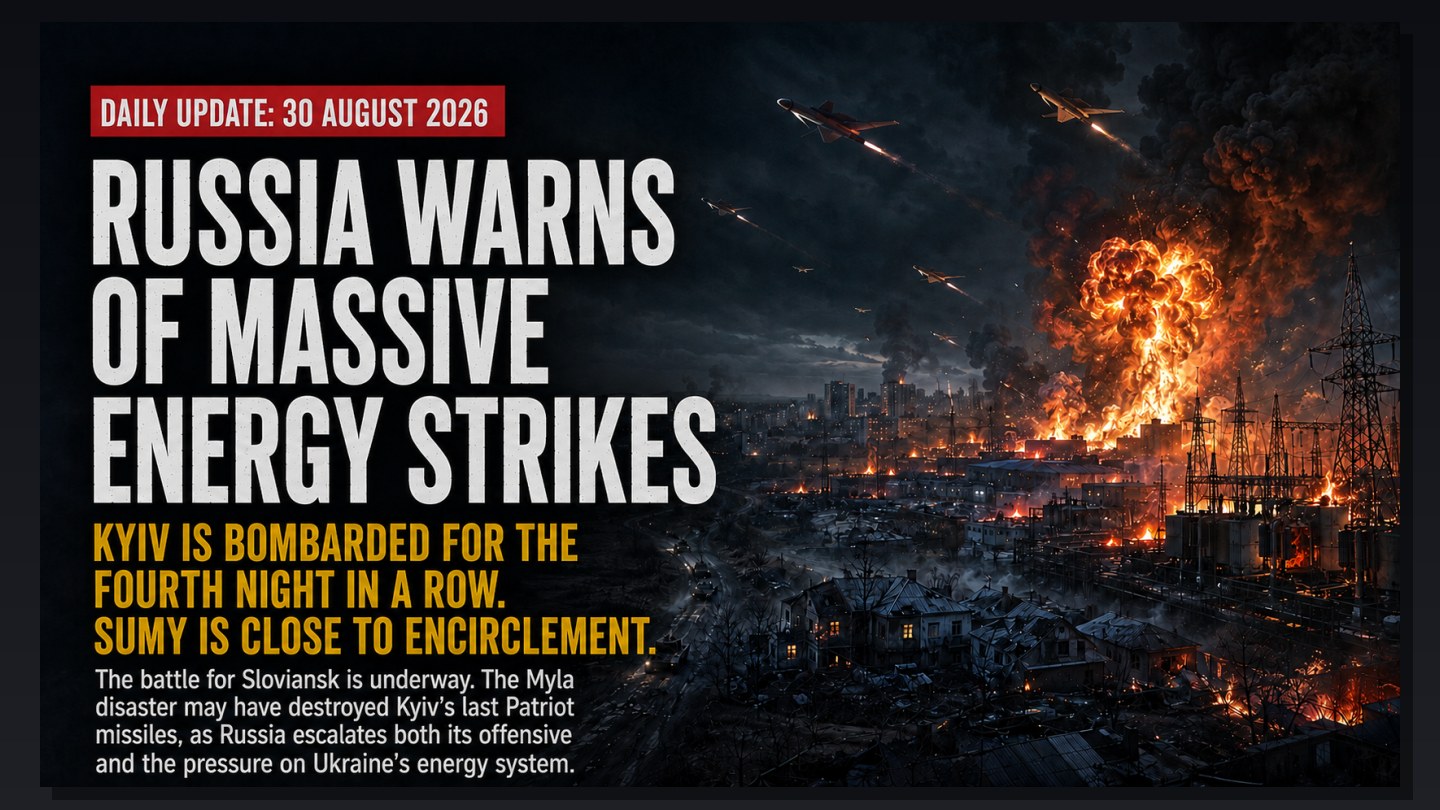
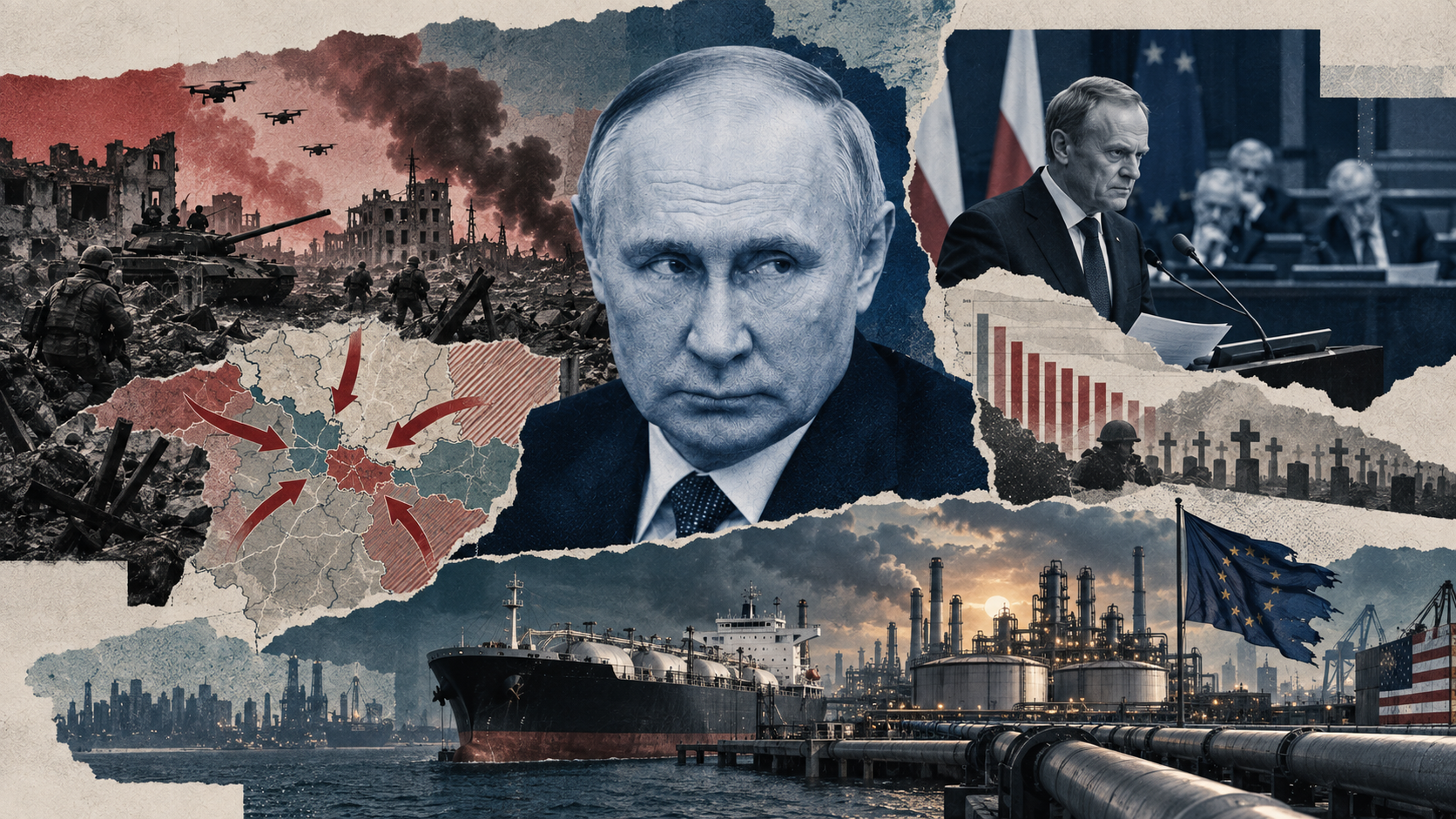
During a debate in the Polish Sejm on Thursday, Prime Minister Donald Tusk disclosed a figure that is otherwise rarely made public: “Our Ukrainian partners have told me that the number of killed and wounded has recently reached 27,000 a month. And this is, of course, a record figure”. He added that if this trend continues, the winter in Ukraine could become “outright catastrophic”. Tusk linked the record figure primarily to a change in Russian strategy — in particular the widespread use of jet-powered drones, and acknowledged that effectively countering this type of drone is a serious challenge that very few have so far mastered.
What is striking about the number is how closely it matches Putin’s own long-discussed estimate of around 30,000 Ukrainian casualties per month — an estimate Western commentators have routinely dismissed as Russian propaganda. Tusk’s statement means that Putin’s monthly estimate is very close to the figure Tusk says he received from the Ukrainian side.
It is unlikely that Tusk disclosed the number without understanding its significance. He is a committed Europeanist, a loyal ally of Ursula von der Leyen and fundamentally hostile to any normalisation of relations with Russia. It is therefore reasonable to view the statement in the context of his forthcoming visit to Kyiv and the increasingly strained Polish-Ukrainian relationship, including disputes over Kyiv naming streets and military units after historic Ukrainian nationalists whom Poles regard as war criminals.
If one were, purely hypothetically, to extrapolate an average loss rate of 27,000 per month backwards, the total would fall within the same broad range as several of the higher estimates that have circulated previously. But Tusk simultaneously stresses that the current level is record-high, and losses have undoubtedly varied throughout the war — including during Bakhmut, the 2023 Zaporizhzhia summer offensive and the fighting in Kursk.
Western media have, strikingly, largely failed to elevate Tusk’s statement into a major story.
The Fedorov–Syrskyi Conflict in a New Light
The conflict between former defence minister Fedorov and then commander-in-chief Syrskyi, which escalated several weeks ago, now appears in a clearer light.
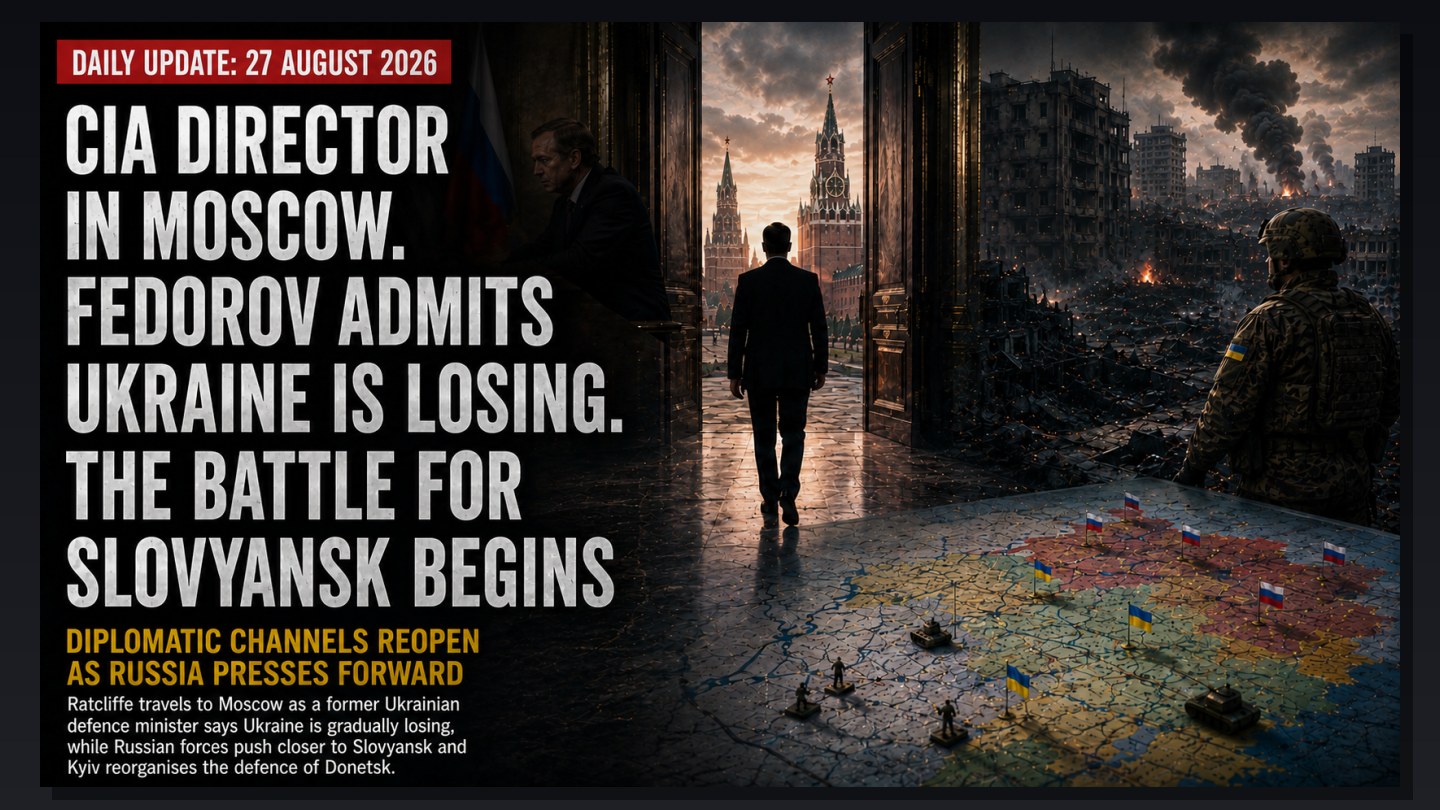
Fedorov wanted to double down on the drone offensive against Russia, which he claimed would trigger a political crisis and the collapse of Putin’s government. Syrskyi, who did not believe this, was furious that the army itself was being neglected in favour of Fedorov’s project and instead demanded a much stronger mobilisation.
In retrospect, it is difficult to argue that the drone offensive delivered on its promises. It caused real disruption to Russian fuel production and exports, but it triggered no political crisis in Russia and did not affect the course of the war in the way the strategy had envisaged.
At the same time, the programme was extremely expensive and placed additional pressure on Ukraine’s defence budget. The flow of money into the drone programme also created new opportunities for corruption in a system already heavily affected by it.
Most importantly, however, resources were poured into the strategic drone war while the army itself faced increasingly severe manpower shortages. Syrskyi’s own costly counterattacks and offensives admittedly contributed to this crisis as well.
Now, after both Fedorov and Syrskyi are gone, several of the measures Syrskyi demanded are nevertheless being implemented: mobilisation is being tightened, and more men are being called up from Kyiv and Lviv, which previously carried less of the heaviest burden.
Latin American Soldiers Make Up an Increasing Share of the Army
Ukraine is increasingly recruiting foreign soldiers and volunteers from Colombia and other Latin American countries to fill the growing manpower gap.
Where such soldiers previously made up a negligible share of the Ukrainian army, they are now beginning to represent a measurable percentage in some units, and Ukraine is becoming increasingly dependent on them.
There are also concerns that some may have connections to Latin American criminal environments or armed groups. Soldiers who survive the war and return home with combat experience and advanced drone skills could therefore contribute to increased violence and instability in their own countries in the years ahead.
Diesel Above $6 a Gallon: US Crisis, European Disaster in the Making
The price of diesel in the United States has passed six dollars per gallon and stood at around $6.27–$6.29 nationally on Friday — driven by tight global supplies linked to the conflicts in the Middle East and Ukraine, combined with refinery disruptions.
Senate Majority Leader John Thune said this week that he is “open to exploring” a ban on US diesel exports to ease pressure on domestic prices. Interior Secretary Doug Burgum simultaneously warned that such a ban would probably not lower prices.
If a US ban on diesel exports were nevertheless introduced, the consequences for Europe — which itself has a very tight diesel market and is heading into winter with high energy prices — could be severe.
It is striking how little this development has so far affected European politics. The dominant issue continues to be Russian drones and how to find more money for Zelensky.
New York Times: Trump Explores Business Deals With Russia — Before the War Is Over
The New York Times reports that Trump and his people are now exploring opportunities for business deals with Russia even before the war in Ukraine has ended.
That would normally require at least some easing of sanctions — something that appears difficult to reconcile with the House of Representatives having just passed the Graham sanctions bill.
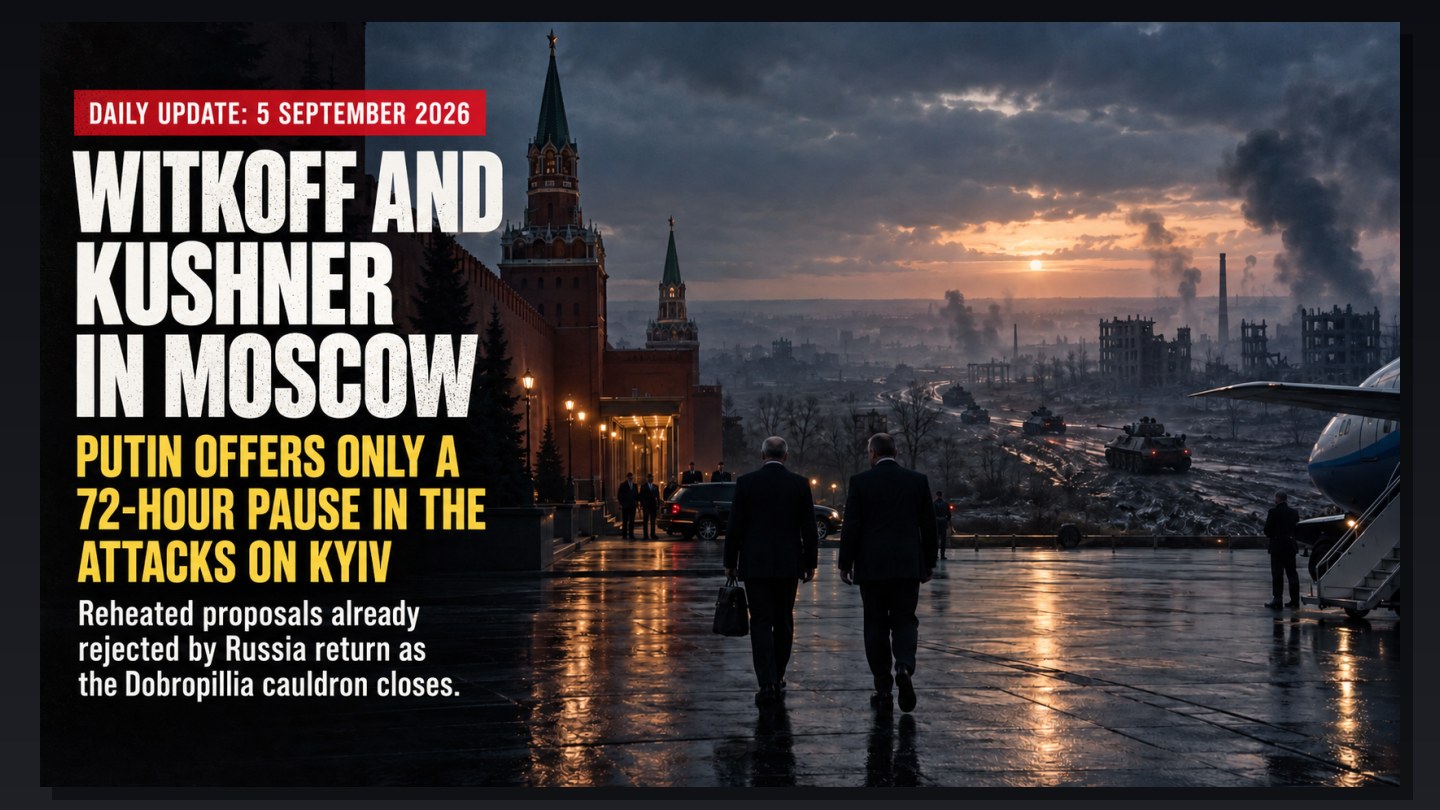
At the same time, Jared Kushner has said that Putin, during his meeting with Kushner and Witkoff in Moscow a little over a week ago, appeared “brimming with confidence” and said that Donbas would fall under Russian control “within a few months”.
Kushner claimed that Putin had said something similar previously. The chronology around this part of the statement is unclear, but given developments on the front over the past year, it is not difficult to understand why Putin is now expressing such confidence.
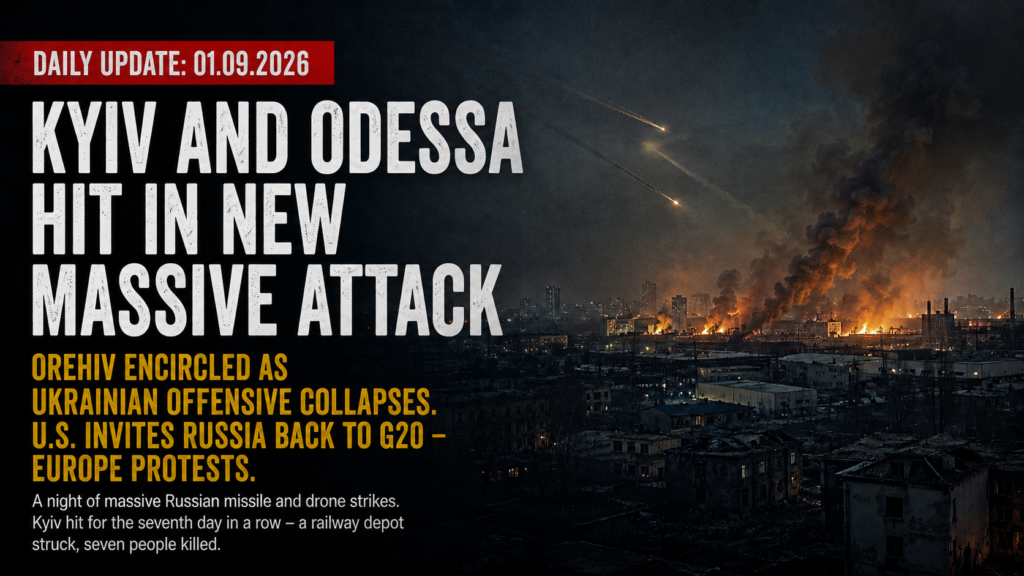
The Front: Orikhiv Becomes a Cauldron, Zolotyi Kolodiazi Retaken
The Russian outlet Readovka reports that the Ukrainian garrison in Orikhiv is attempting a disorganised withdrawal northwestward, and that Russian forces have now captured Novoandriivka and Novopavlivka — the latter northeast of the city, close to one of the withdrawal routes.
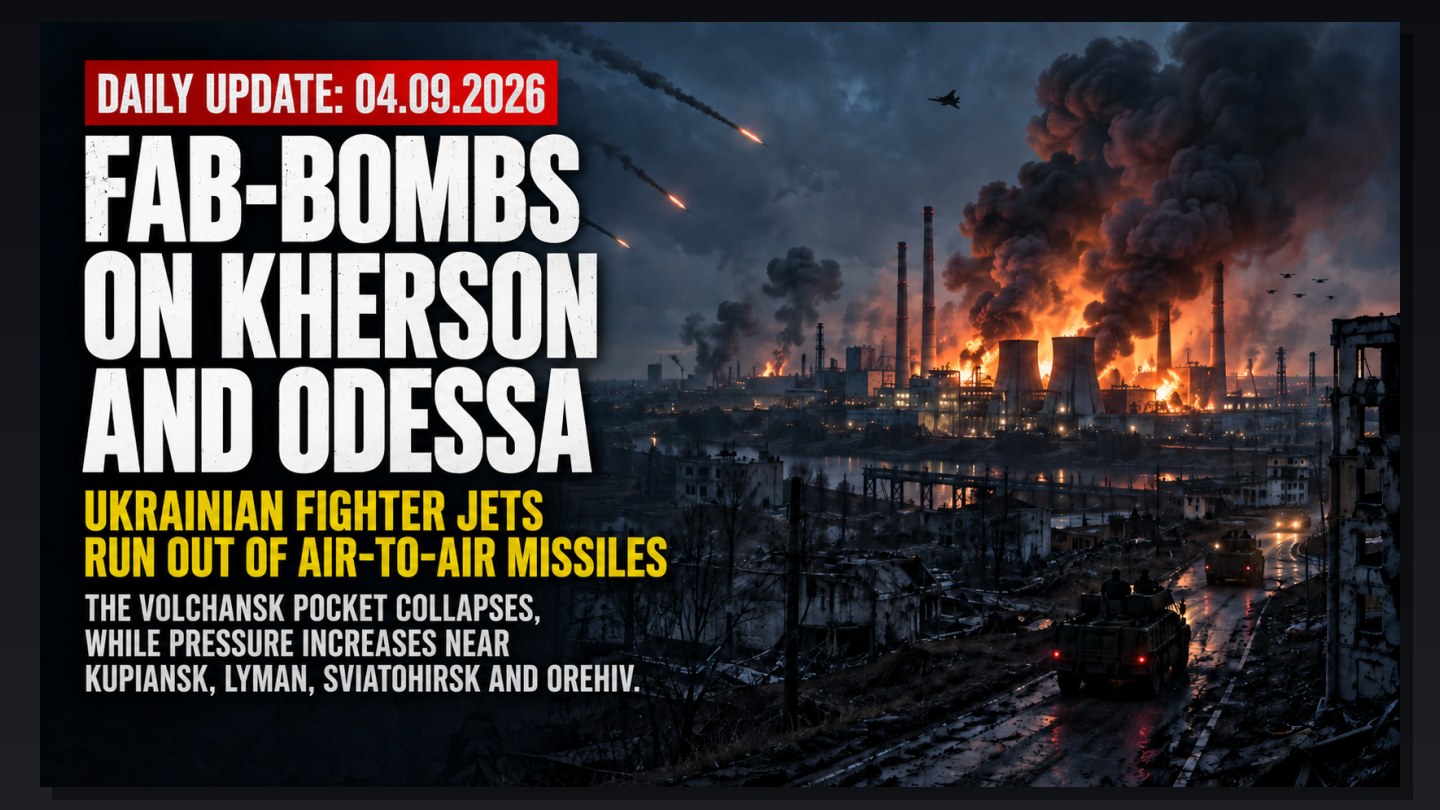
Russia is actively working to block this retreat and trap the Ukrainian garrison in the city’s northern outskirts. The objective is not merely to take Orikhiv, but to destroy as much as possible of its former garrison.
Mapping projects have adjusted their maps in line with this development: Russian pincers are closing around the city from the northeast and west, and the only remaining route out runs through open fields without roads — fields patrolled by Russian drones.
Video purporting to show a Ukrainian counterattack and the recapture of a village appears to be AI-generated, giving strong reason for scepticism both toward that specific claim and toward the prospects of any larger Ukrainian counteroffensive in the Orikhiv area.
Farther north, Russian forces have retaken Zolotyi Kolodiazi. The Russian Defence Ministry’s announcement was reported by Interfax on Thursday.
The location was briefly captured during the deep Russian advance in August 2025, before Ukraine deployed reserves and retook the area.
This time, the situation is fundamentally different. At that point, Ukraine still held Pokrovsk, Myrnohrad, Kostiantynivka, Rodynske and Bilytske. Today, all of them have either fallen or are under Russian assault.
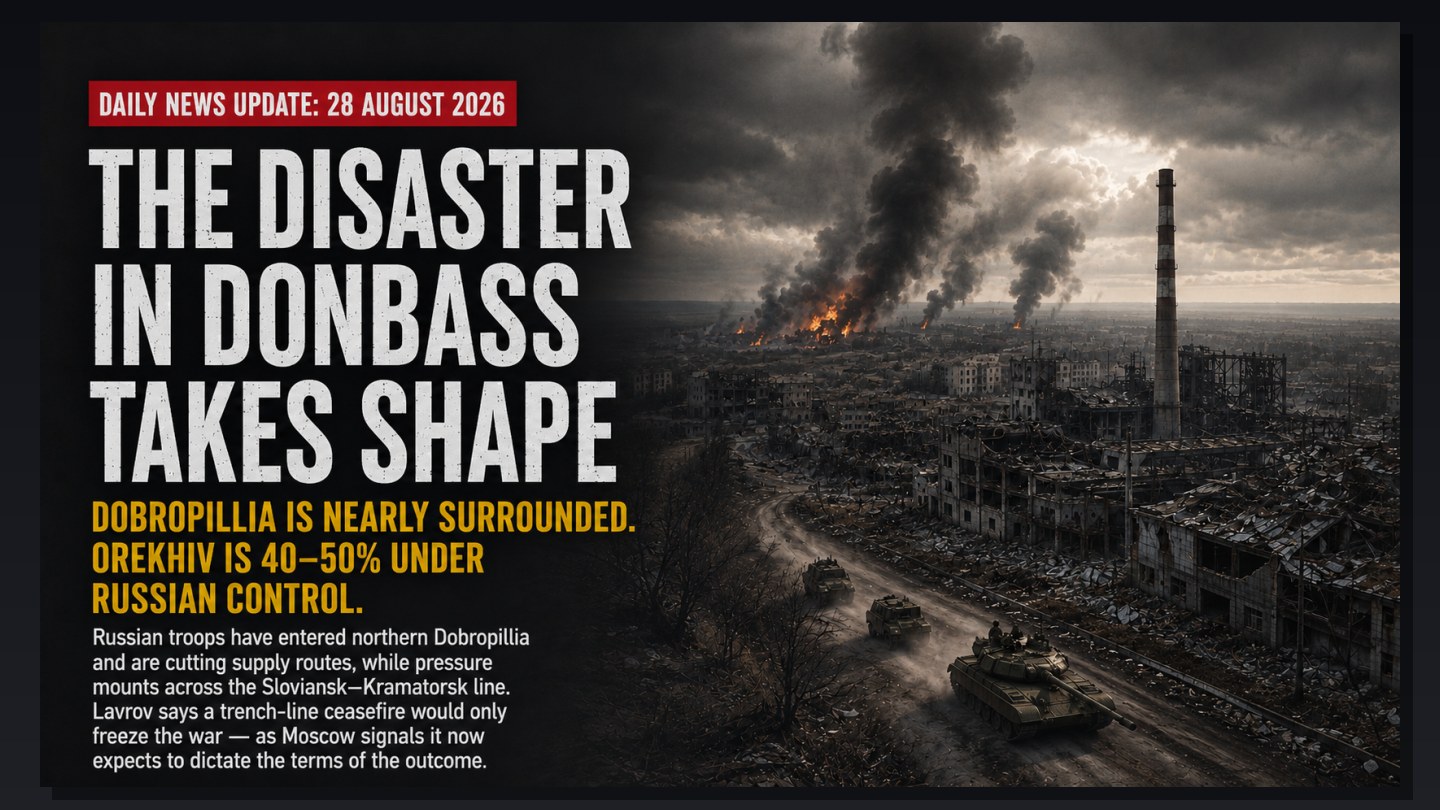
The loss of Zolotyi Kolodiazi breaks a planned Ukrainian defensive line through the area and further increases the pressure on both Dobropillia in the west and the Druzhkivka–Oleksiievo-Druzhkivka–Kramatorsk axis in the east.
From the same sector, Readovka reports a similarly disorganised withdrawal from Oleksiievo-Druzhkivka, directly south of Druzhkivka — with the same commanders, Biletsky and Prokopenko, suspected of having waited too long to order a withdrawal, just as in Orikhiv.
The territory between Kramatorsk, Kostiantynivka and Chasiv Yar — heavily fortified by Ukraine for a prolonged defensive battle — has now in practice passed under Russian control without serious resistance, as it became indefensible after the fall of Kostiantynivka.
The Lyman Counteroffensive: The Silence Continues
Ukraine previously published material documenting local gains west of the Nitrius River, and later Ukrainian information put the total area cleared and retaken during the operation at around 75–85 square kilometres.
But since those claims emerged, no material has appeared showing any larger breakthrough eastward or any collapse of the main Russian positions.
Unless significant new information emerges, the impression therefore strengthens that the offensive has primarily been a local tactical success — not an operation that has changed the broader dynamics in Donbas.
The Russian operation against Lyman itself continues.
Russia: Stability Ahead of the Election
With parliamentary elections underway this weekend, the Russian economy still appears stable.
Growth is weaker than previously, partly because of tight monetary policy, but real wages continue to rise.
August also produced a monthly budget surplus, supported by growth in the non-oil part of the economy and large dividend payments from state-owned companies and banks.
Putin has simultaneously signalled that increased oil revenues resulting from higher prices could to a greater extent be channelled into the National Wealth Fund.
There are still local problems with petrol availability and queues at some filling stations following earlier Ukrainian refinery attacks.
But the drone offensive has not triggered the economic or political crisis that the strategy was intended to provoke.
Instead, Ukraine itself is facing a casualty rate that Donald Tusk says has now reached 27,000 killed and wounded per month, while mobilisation is being tightened and the front is coming under ever greater pressure.