The defence exhibition: What did the Russians actually hit?
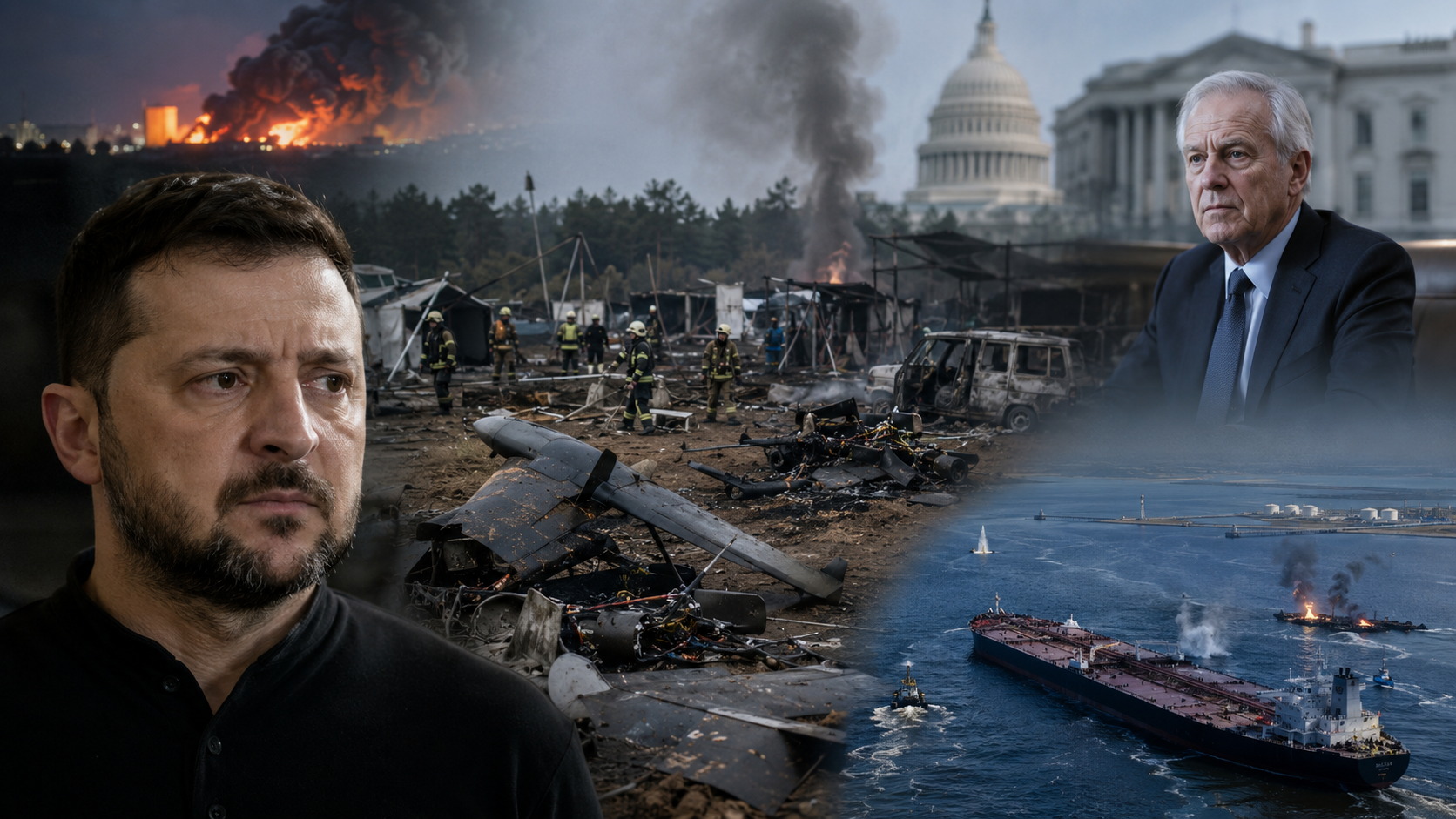
On Friday 24 July the Russians struck a defence exhibition in the Bucha region north of Kyiv – the event that had been publicised in Ukrainian media in the days beforehand, and which Russian military intelligence evidently had little difficulty locating. At least ten people were killed and more than a hundred injured. The organiser of the event has now been charged by Ukraine’s Prosecutor General’s Office.
It is still unclear what type of Russian weapon hit the event. Initial reports spoke of Iskander-M ballistic missiles and Zircon hypersonic missiles, but this turned out to be inaccurate. Russian and Ukrainian sources now suggest it was probably a single missile of a type not previously confirmed in combat – possibly the new Banderol cruise missile, launched from a Russian Orion drone. Ukraine’s handling of security around the event has come in for sharp internal criticism: this is not the first time Russia has hit a publicly announced military-technology event. It happened in Chernihiv in August 2023. No one learned.
The US to Zelensky: Stop the attacks in the Black Sea
The diplomatic event of greatest strategic weight on Friday is not from the battlefield, but from Washington. Chevron CEO Mike Wirth met senior officials in the Trump administration and complained about Ukrainian drone attacks on four tankers near the Russian Black Sea port of Novorossiysk – including a ship chartered by Chevron. Chevron owns 15 percent of the Caspian Pipeline Consortium (CPC), which transports around 1.4 million barrels of oil a day from Kazakhstan to world markets, and 50 percent of the associated Tengiz oil field in Kazakhstan.
After the meeting with Wirth and other oil company executives, the Trump administration formally notified Kyiv that attacks on non-Russian vessels in the Black Sea are unacceptable. The administration describes the CPC pipeline as “a vital channel for transporting Kazakh energy to European markets and an alternative to Russian energy” – and the attacks on it are therefore not a blow against Russia, but against an alternative to Russia.
It is a moment that reveals the fundamental inconsistency of Ukraine’s maritime offensive. The drone attacks in the Black Sea were sold as a strategic move to damage Russian energy exports. What they have actually damaged is Kazakh oil owned by American companies, Romanian import capacity and – indirectly – global energy security at a time when the Strait of Hormuz is already closed. That is not strategic warfare. It is strategic self-cannibalism.
Zelensky’s historical pattern in the face of such warnings from Washington is consistent: he gets angry and complains to his European and American friends, and then carries on exactly as before. The Biden administration asked him in 2024 to stop the attacks on Russian refineries out of concern for oil prices before the election. He ignored them. There is no reason to assume this will go any differently.
Ukraine’s drone offensive: What was achieved on the night of 25 July?
During the night of 25 July, Ukraine once again sent hundreds of drones against targets in Russia. The swarm covered an enormous geographical area: from Belgorod on the Ukrainian border, via the Engels air base near Saratov, on to Yekaterinburg in the Urals and finally Tyumen in Siberia. It is an operation of a geographical scope unmatched in the war.
The Russian Defence Ministry says the drones approaching the Engels air base were all shot down. Near Yekaterinburg, a drone reached a Wildberries car park and set it on fire – not the warehouse itself. At the Tyumen refinery, which has been a previous target, two columns of smoke were reported – but the refinery is, according to available information, an enormous facility, and any damage appears limited. Belgorod was hit by drones and Ukrainian multiple rocket launchers of Czech origin – but Belgorod is a city near the front line that has been under repeated Ukrainian attack since 2023 and is militarily regarded as part of the operational zone.
The total result of sending between 500 and 600 drones over a geographical area stretching to Siberia: a burnt-out car park, limited damage to the Tyumen refinery, and further attacks on Belgorod. There is no correspondence between the resources used and what was achieved.
Russia’s economy: 60 billion dollars in oil revenue this month
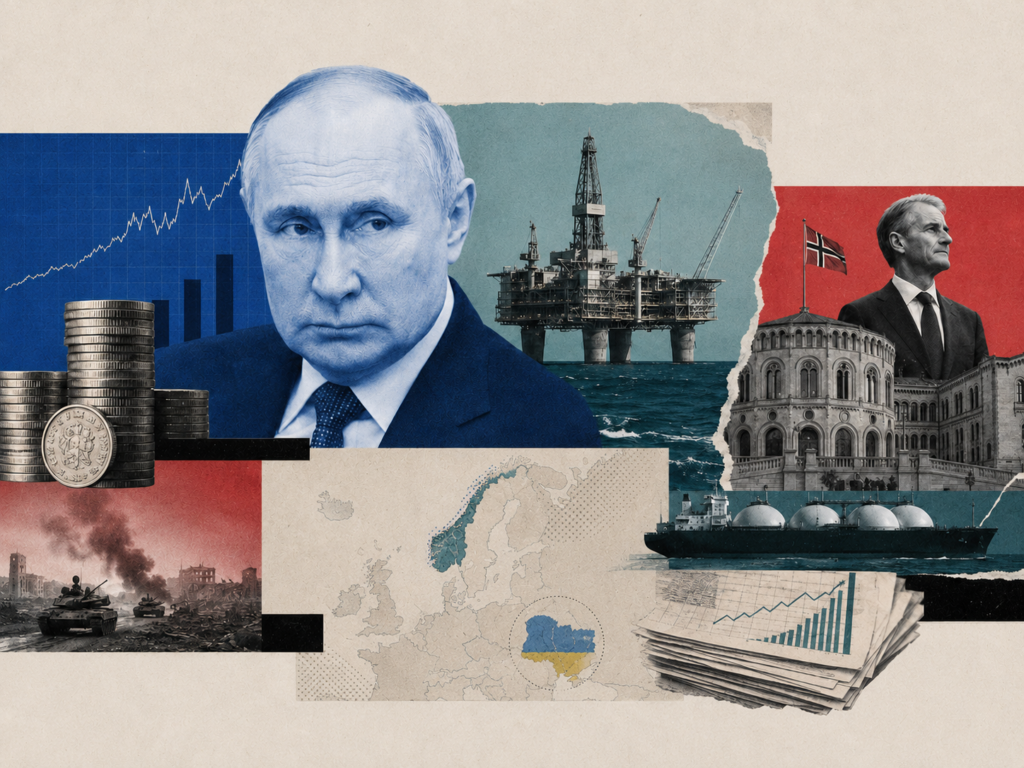
While Ukraine attacks Wildberries warehouses, Russian media report new record demand for Russian oil from Chinese and Indian refineries. Russia has earned around 60 billion dollars from oil exports in July alone – and the month is not over. Chinese refineries, on orders from Beijing to ignore US threats of secondary sanctions, are buying Russian oil at a near-record pace. Indian refineries are doing the same. The Russian central bank cut interest rates by a further 25 basis points this week, citing falling fuel prices as one of the reasons. The Russian manufacturing PMI is rising.
The contrast is complete: Ukraine spends enormous resources burning Wildberries warehouses, while Russia earns historic oil revenues and the Russian central bank eases monetary policy. It is not the picture of a war in which sanctions and drone offensives are working.
The Nord Stream investigation: What does Berlin know?
The German Nord Stream investigation is taking a new turn. One of the six suspects – whom German media previously described as “Ukrainians on a sailing boat” – has now been taken into custody and charged with serious crimes by German prosecutors. What matters, however, is not who has been charged, but what the German government refuses to make public. The government explicitly confirms that it holds intelligence about the attack that has not been made available to the public – but justifies the secrecy by saying publication would “harm Germany’s national security and create problems between Germany and its allies”.
It is a remarkable phrasing. The attack was a direct and enormous destruction of German critical infrastructure – hundreds of billions were invested in Nord Stream, and its destruction is a direct cause of the German industrial crisis now spreading. To say that revealing who was behind it would damage Germany’s relations with allies implies – logically – that an allied state was behind the attack. Nothing else would make it problematic to publish the findings. It is not a hint that requires much reading between the lines.
Lavrov on Anchorage: Trump’s words in Alaska, word for word
After the Manila meeting, Lavrov published a lengthy account on the Russian Foreign Ministry’s website in which he quoted Trump’s own statements from Anchorage and in the days after the summit – in which Trump repeatedly described the meeting as successful and said that “almost everything was resolved”. Lavrov presented this as documentation that a compromise was actually reached, that the Russians accepted a plan they originally had reservations about because Trump promised he would get Zelensky to follow it – and that this did not happen because the Europeans immediately afterwards travelled to Washington and “worked on” the Trump administration, and because the US continued to supply Starlink, intelligence and weapons to Ukraine.
It is a strong and detailed accusation. And it is not easy to counter, because Trump’s own words from Alaska are well documented. On Friday Trump published a Truth Social post in which he tried to respond by claiming that the US does not “supply weapons to Ukraine, but sells them to the Europeans” – and that it is the Europeans’ decision what they do with them next. It is, as Lavrov has probably already answered in internal channels, a distinction without real substance. Everyone knows what the Europeans do with the weapons. And the Russians have noted that the US continues to give Ukraine Starlink access and targeting data – which is not a European matter at all.
The Russian conclusion, as Lavrov puts it: since negotiations have failed and there is no real possibility that they will succeed, Russia has no choice but to continue the war until it has achieved its goals through total military victory.