An Unprecedentedly Confident Bulletin From the Russian Defence Ministry
The Russian Defence Ministry published an unusually extensive and confident bulletin on Saturday covering the overall development of the war — and at the same time broke its long silence on the situation around Lyman.
The bulletin opened with figures: since the beginning of the year, more than 5,300 square kilometres of territory and more than 220 settlements have come under Russian control, including more than 670 square kilometres and 27 settlements in September alone — the fastest pace so far this year, with the month still not over.
The bulletin confirmed that Group North continues to expand its security zone in the border areas toward Sumy and Kharkiv, and that the destruction of the encircled Ukrainian formations in northeastern Kharkiv region continues: since 5 September, territory controlled by the enemy has been reduced by 152 square kilometres, nine settlements have been taken, and around 700 Ukrainian soldiers have reportedly been lost.
In the Zaporizhzhia region, the ministry confirmed that forces from Group East and Group Dnipro are advancing on a broad front toward Zaporizhzhia city itself — without mentioning Orikhiv specifically, which may suggest that a separate announcement regarding the city is expected soon.
According to the bulletin, fighting is underway in the centre of Orikhiv itself, while the settlements of Novopavlivka and Novoandriivka — which cut the Ukrainian withdrawal route toward Zaporizhzhia — have both been taken.
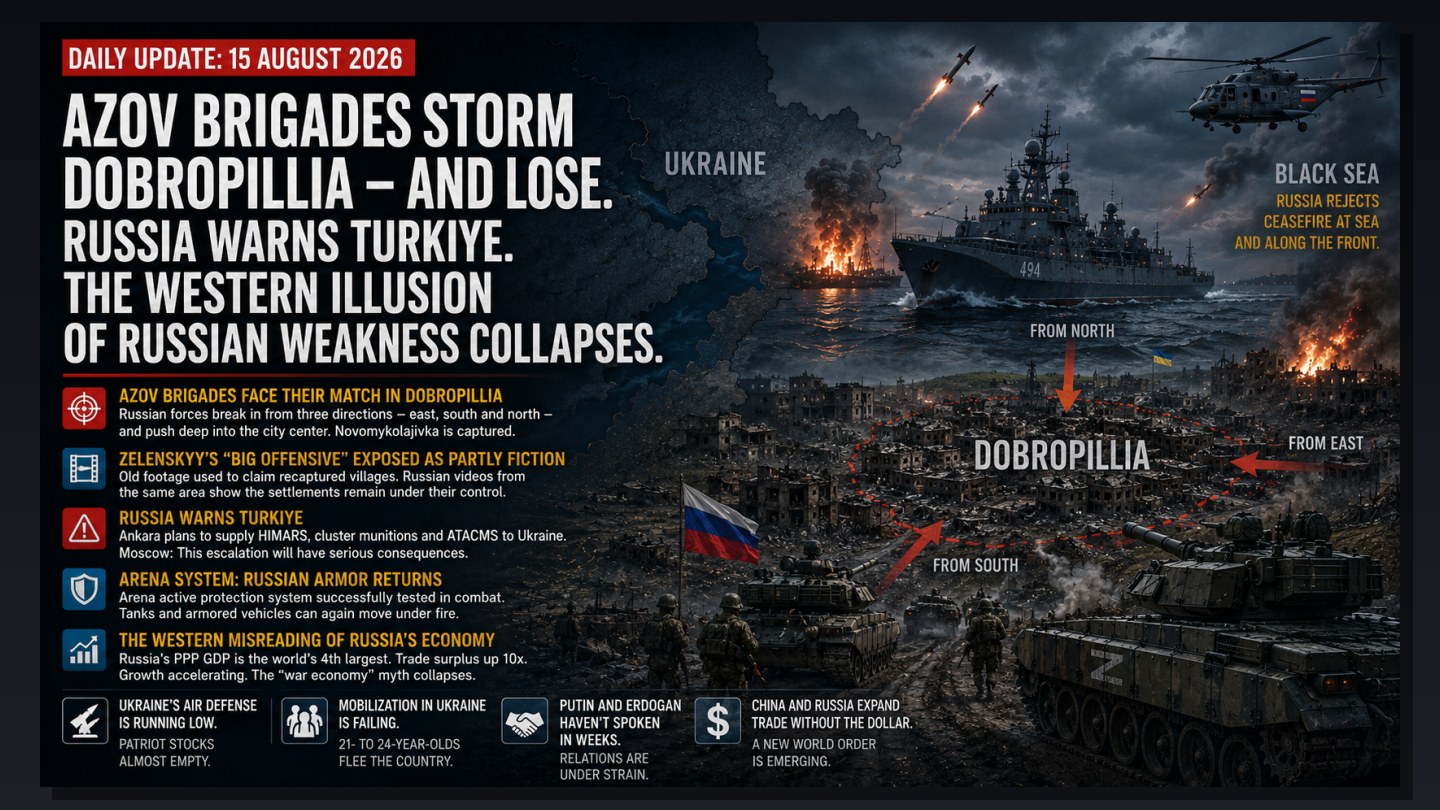
The bulletin further confirmed that the most intense fighting is now taking place on the approaches to the Sloviansk–Kramatorsk conurbation, that Group South and Group Centre have crossed Ukrainian fortified defensive lines on the immediate approaches to Sloviansk and Druzhkivka, and that street fighting is underway in central Dobropillia — a direct confirmation of what Russian military bloggers have claimed for weeks, and which some Western sources still dispute.
It was also reported that Veroliubivka east of Kramatorsk has been taken, completing Russian control over the entire former fortified area between Kostiantynivka and Chasiv Yar.
Russia Rejects the Lyman Offensive
The section of the bulletin that generated the greatest controversy — and which some Telegram channels have so far avoided commenting on — concerned Lyman directly.
The ministry claimed that the Kyiv regime, with the help of Western media and “military experts,” is conducting an aggressive information campaign designed to portray Ukrainian operations as major battlefield successes.
In reality, it said, the Ukrainian assault groups — including the most highly trained units and nationalist formations of the Third Separate Assault Brigade, a clear reference to the Azov forces under Andriy Biletsky’s command — are failing with heavy losses.
Group West is meanwhile continuing operations around Chervonyi Oskil, Krynky and Studenok.
The final and most striking sentence stated that the clearing of residential districts in Krasnyi Lyman and Sviatohirsk of remaining Ukrainian soldiers is continuing.
In other words: according to the Russian Defence Ministry, the Ukrainian counteroffensive around Lyman has not achieved the gains that have been claimed, Russian forces still hold the initiative, and the narrative surrounding Operation Vivaldi as a major Ukrainian victory is being rejected as an information campaign.
Statements from the Russian Defence Ministry have not always proved completely reliable, and it remains difficult to take for granted that Russia never had any presence in Sviatohirsk itself.
But it is telling that Ukraine, despite not being known for withholding information about military successes, has published no further video material beyond one recaptured village west of the Nitrius River and two villages cleared of sabotage groups.
Neither Zelensky nor the Ukrainian military leadership has commented on the alleged success at all.
Colonel Mikhail Popov, a close associate of the respected military analyst Marat Khairullin, offers a plausible explanation: the area west of Lyman is heavily forested, full of rivers and elevated terrain, and difficult to advance through.
Instead of continuing a costly offensive there, the Russians deliberately chose to lure Ukrainian forces out of their fortified positions and into open terrain — exactly the same tactic used west of Orikhiv — and then systematically destroy them there.
It is a familiar Russian manoeuvre, documented as early as 2022 by a US Marine officer writing under the pseudonym Marinus.
Mykolaivka: A Grey Zone Waiting for the Sloviansk Thermal Power Plant
The Russian outlet Readovka has provided a detailed assessment of the situation around Mykolaivka west of Sloviansk: Ukrainian forces have reportedly found the location indefensible and withdrawn, leaving the entire settlement as a grey zone that the Russians have not yet consolidated because of the proximity of other Ukrainian defensive positions.
According to Readovka, the Russians will take full control once the Sloviansk thermal power plant north of the settlement — the real key position in this area — has been secured.
The fall of Mykolaivka would not in itself open a direct road into Sloviansk because of natural barriers between the locations, but it would give Russian forces an ideal forward base for drone operations, allowing them almost immediately to cover the skies above Ukrainian positions in Sloviansk and cut supply lines from the west.
Tusk’s Confirmation — and a Broader Pattern
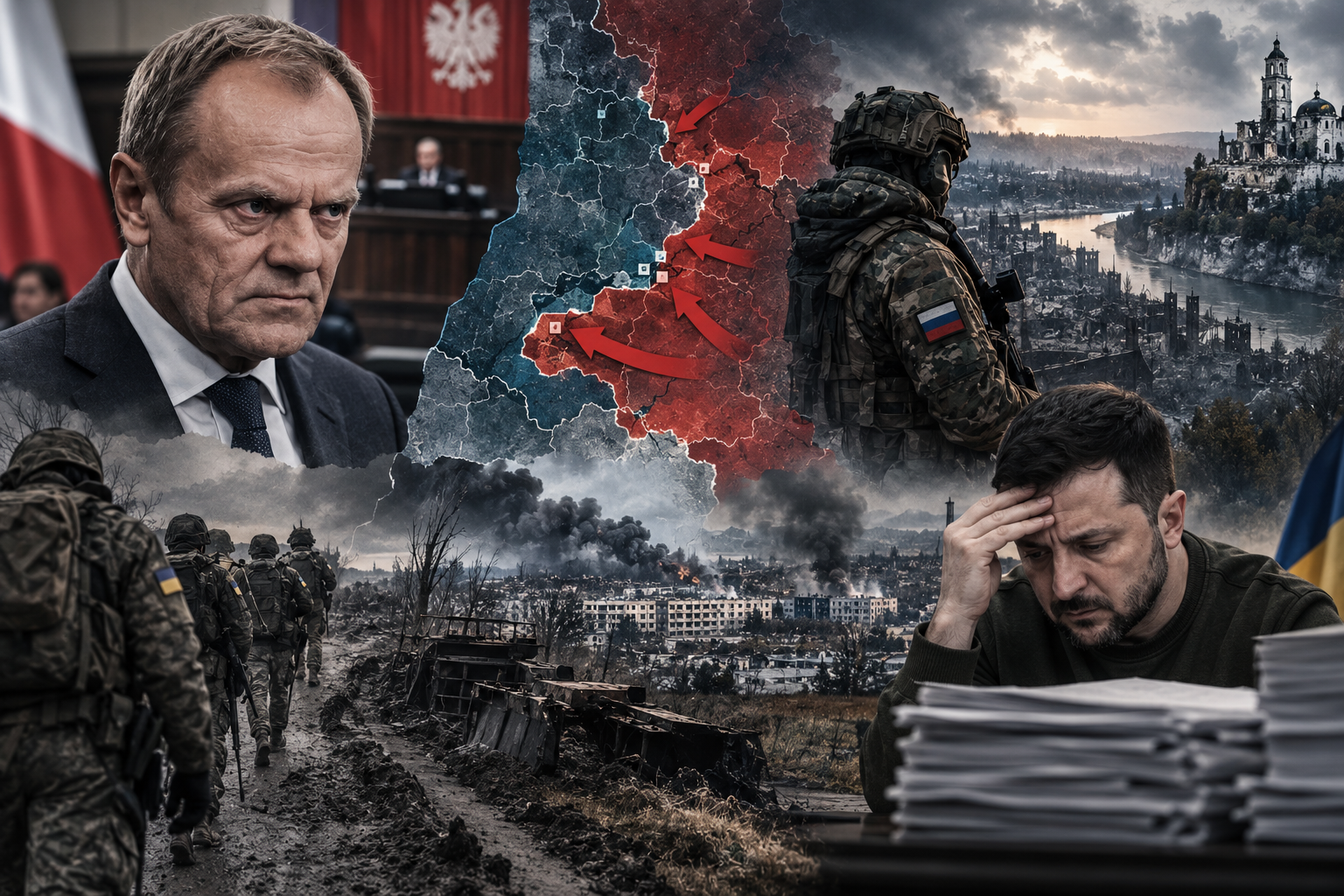
Yesterday’s disclosure by Polish Prime Minister Donald Tusk that Ukraine is losing 27,000 men a month — a figure close to Russian estimates — fits the picture now emerging: a worsening operational crisis on the battlefield and a rate of losses that even stricter mobilisation cannot compensate for or reverse.
American commentator Gordon Hahn has pointed to exactly the same thing in a new article: the Lyman offensive appears largely to be Biletsky’s personal project, and even based on the information Ukrainians themselves have provided, the results — probably three villages retaken — fall clearly short of what has been claimed.
Hahn argues that Biletsky, like any other Ukrainian commander, has major political ambitions and wants major victories to secure his political position — but that battlefield conditions make victories of this kind practically impossible.
And if the situation in Donbas were truly to become critical, Biletsky, according to Hahn, is not the type to remain for a heroic last stand: with the two Azov corps together potentially numbering around 100,000 men, he would more likely withdraw to Kyiv to strengthen his political position there.