Rassvet is not a problem the ITU can solve
Ukraine’s Foreign Minister Andrii Sybiha announced on Friday 28 August that Kyiv has formally asked the International Telecommunication Union to exclude Ukrainian territory from the registered service zones of the Russian satellite system Rassvet. Sybiha claimed that Russia’s use of the satellites over Ukraine is military and at the same time asked other Western countries to prevent Russian use of the system over their own territories.
The request itself is remarkable because the ITU is not an enforcement body. The organisation administers radio spectrum, satellite orbits and international telecommunications standards, but it has no physical capacity to jam or switch off a Russian satellite network. An ITU decision will therefore not in itself prevent Russian forces from using Rassvet if Moscow chooses to continue.
That also explains why Ukraine’s concern is greater than the diplomatic complaint would suggest.
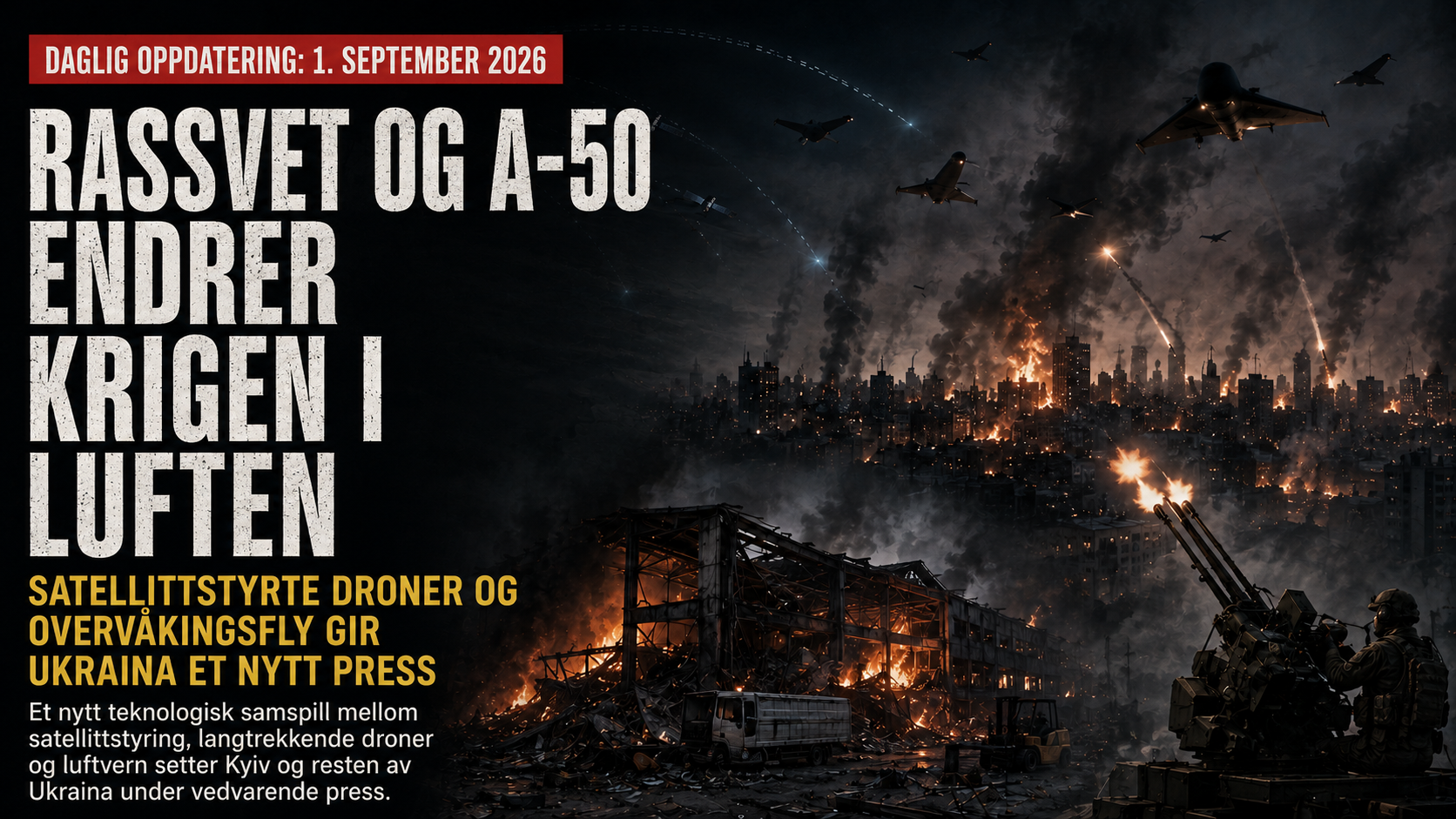
According to Ukrainian military intelligence, Russia already had 16 Rassvet satellites in operation earlier in August and plans to expand the constellation to 292 satellites by the end of 2027. Today’s system only provides periodic communication windows over Ukraine, but a complete constellation is meant to offer functionality much closer to Starlink.
This is where the Geran-4 and Geran-5 come into the picture.
The new jet-powered drones represent something fundamentally different from the original Geran-2 systems, which followed programmed flight paths to predetermined coordinates. Footage from the latest attacks on Kyiv suggests that newer variants can send information back during flight and receive new instructions from operators.
Over Kyiv, the link can be maintained through relay stations closer to the Russian and Belarusian border. Far to the west of Ukraine, this becomes harder. A functioning satellite network in principle removes this geographical limitation.
Ukraine’s problem is therefore not primarily that Rassvet exists today. The problem is what the system can become.
Ukrainian analyses estimate that Russia needs around 200–300 functioning satellites for stable round-the-clock coverage. If this succeeds, Russia could potentially maintain operator links to drones over western Ukraine as well.
Lviv would then no longer be out of reach because the city is too far from a Russian ground station.
It would merely be far from the front.
There is, however, an important caveat. The latest satellite launch appears to have run into technical problems, and several Rassvet satellites have not reached their planned operating altitude. This means the Russian build-out is not going smoothly. But Ukrainian intelligence nevertheless believes the system is being expanded faster than Kyiv had previously expected.
That explains the urgency.
The air war against Kyiv has become permanent
Over the past week, Russia’s attacks on Kyiv have taken on an entirely different character from the large, sporadic drone waves earlier in the war.
Russian drone attacks on Kyiv and the areas around the capital entered their fifth consecutive day on Monday, with almost continuous air raid alerts and new strikes on warehouses, homes and commercial facilities. Zelensky said Russia had sent around 1,500 drones against Ukraine over four days, more than half of them jet-powered.
It is not necessarily the number in a single attack wave that is decisive.
Previously, Russia could send several hundred slower Geran-2s against Ukraine in one massive operation and then let several days pass before the next wave. Now the pressure is maintained night after night with faster drones that are harder to counter with the mobile machine-gun teams Ukraine has used with considerable success against older Shahed/Geran variants.
The difference is particularly noticeable for the people who man the air defence. Air defence personnel, mobile teams, radar operators and emergency services get ever less time to rest between alerts. An air defence system can technically have ammunition available and still become less effective if the people operating it are gradually worn down.
And Russia is not attacking at random.
Warehouses, distribution centres, postal terminals, factories, transport systems and other hubs have been among the most frequent targets.
90 percent of modern food logistics has been hit
The consequences are now beginning to show in the shops.
Ukraine’s Deputy Agriculture Minister Taras Vysotskyi said on 28 August that around 90 percent of the country’s modern food distribution and storage infrastructure had been destroyed or damaged. The attacks have hit supermarket chains, Nova Poshta’s huge sorting facilities and other key logistics companies.
This does not mean Ukraine has run out of food. The country still produces enormous quantities of agricultural goods.
The problem is getting them from producer to shop.
AP is now reporting empty shelves in parts of Kyiv after the repeated attacks on food warehouses and logistics. The shortages have so far been intermittent and mainly affect fresh produce, milk, sugar and some other products, but the mechanism behind them matters more than any single missing product.
A national distribution network works like a circulatory system. A warehouse outside Kyiv can supply shops hundreds of kilometres away. A sorting terminal can handle goods that will never be sold in Kyiv. When such hubs are destroyed, Russia does not need to bomb a shop in Lviv for supplies in Lviv to be affected.
This makes the Russian air campaign far more economical than the first image of exploding warehouses suggests.
A missile or a drone can destroy a building.
The loss of the building’s function can affect millions of people.
The energy system is the next announced target
On Sunday came the Russian announcement Ukraine had feared before winter.
The Russian Defence Ministry said on 30 August that the armed forces had been instructed to prepare “massive strikes” against Ukraine’s energy facilities. Moscow presents this as retaliation for the Ukrainian campaign against Russian refineries and other energy and civilian infrastructure.
The wording is interesting: in accordance with instructions received.
The ministry does not say publicly who the instruction came from, so it cannot simply be established that Putin personally formulated the operational order. But a decision on such an extensive strategic campaign is obviously taken at a level far above a local Russian military command.
Russia has already hit parts of Ukraine’s energy and transport system. On 31 August, the Russian Defence Ministry said its forces had struck energy and transport infrastructure, fuel depots, ammunition depots and logistics facilities in 142 areas.
This is happening as Ukraine’s energy system enters the most difficult part of the year.
The critical vulnerability lies not only in the power plants themselves, but in the transformers, high-voltage lines, gas compressors, heating plants and switching stations that bring electricity from generation to the cities. Large transformers take a long time to produce, and much of the Ukrainian system was built to Soviet standards that make direct replacement with Western equipment complicated.
The Russian announcement therefore means that the battle for winter is in practice already under way, before temperatures have started to fall.
Ivanai’s operation may matter more than the towns he takes
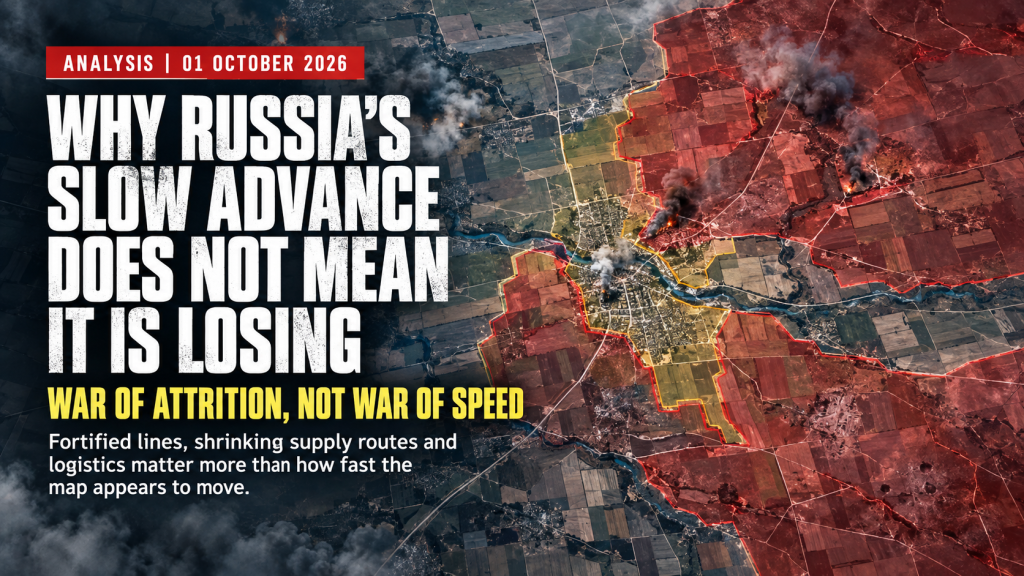
On the ground, developments around Dobropillia and Kramatorsk are harder to document in real time, but the operational direction is becoming ever clearer.
General Andrei Ivanai has taken command of the Centre group and has a background commanding large regular Russian formations. According to Russian war correspondent Marat Khairullin, the structure means Ivanai also takes on a coordinating role over units from other Russian force groups operating towards the central Donbas front.
What is decisive about the offensive is not necessarily Dobropillia itself.
It is what lies west of the town.
Russian forces are trying to widen the area between Dobropillia and Druzhkivka and thereby gain operational space behind the heaviest Ukrainian fortifications around Kramatorsk and Sloviansk. If the breakthrough becomes wide enough, Russia does not necessarily need to storm the two cities head-on.
It is an old military problem: a fortified city is hard to take, but considerably harder to defend when the roads and railways behind it disappear.
Khairullin therefore highlights Lozova as a possible long-term objective. This is analysis, not a publicly known order from the Russian General Staff. But geography explains the thinking. Lozova is an important railway hub further west and part of the transport system that supplies Ukrainian forces in the east.
If Russian units one day get there, Ukraine will face a far bigger problem than the loss of one town.
The entire remaining defensive geometry in Donbas will have changed.
30,000 soldiers every month
At the same time came an unusually frank statement about Ukraine’s manpower situation.
That is 360,000 people a year.
Here one must distinguish between what Budanov actually said and what can be inferred from it.
He did not say Ukraine has 1,000 soldiers killed a day.
But if 30,000 people must be added every month just to maintain the existing force, that corresponds to a gross outflow from the available force of roughly a thousand people per day. This outflow consists of far more than the fallen: the seriously wounded, the medically unfit, deserters, the missing, the demobilised and others who for various reasons can no longer fill their posts.
That still makes the 30,000 figure remarkable.
For it tells us how many people Ukraine must find – month after month – before the country can even begin to talk about a net expansion of the army.
At the same time, the recruitment situation in Russia is disputed. Western officials claim Russia is still recruiting around 1,000 soldiers a day, but the same sources also claim that Russian losses are now about 6,000 men a month higher than recruitment. There is therefore no basis for presenting the Russian manpower situation as problem-free.
The difference lies primarily in the fact that Moscow still bases most of its intake on contract soldiers and financial incentives, while Kyiv publicly acknowledges the need for forced mobilisation on the order of at least 30,000 people every month.
Russia is pressing in several places at once
That is also why the front around Sumy must be seen in connection with Donbas.
Every new Russian axis of attack forces Ukraine to choose where its limited reserves should stand. A brigade moved north cannot at the same time defend Kramatorsk. A battalion sent to a local counterattack near Kharkiv no longer exists as a reserve if the front collapses somewhere else.
Russia therefore does not necessarily need one enormous breakthrough to create a strategic crisis.
It may be enough to force Ukraine to defend too many places at once.
For a long time that was Ukraine’s advantage. The Russian invasion force in 2022 tried to operate over an enormous area with too few soldiers and eventually had to withdraw from all of northern Ukraine and later from the right bank of Kherson.
Four and a half years later, the manpower arithmetic is far less favourable for Kyiv.
Budanov’s statement makes it hard to pretend otherwise.
Putin meets Xi and Modi as diplomatic initiatives stall
As the fighting intensifies, Vladimir Putin is in Bishkek with the leaders of some of the world’s largest countries.
Putin, Xi Jinping and Narendra Modi are attending this year’s Shanghai Cooperation Organisation summit in Kyrgyzstan. Iran’s President Masoud Pezeshkian and a number of Central Asian leaders are also taking part.
The meeting also illustrates a problem that has followed Western Russia policy since 2022: Russia was largely cut off from Europe, but not from Asia.
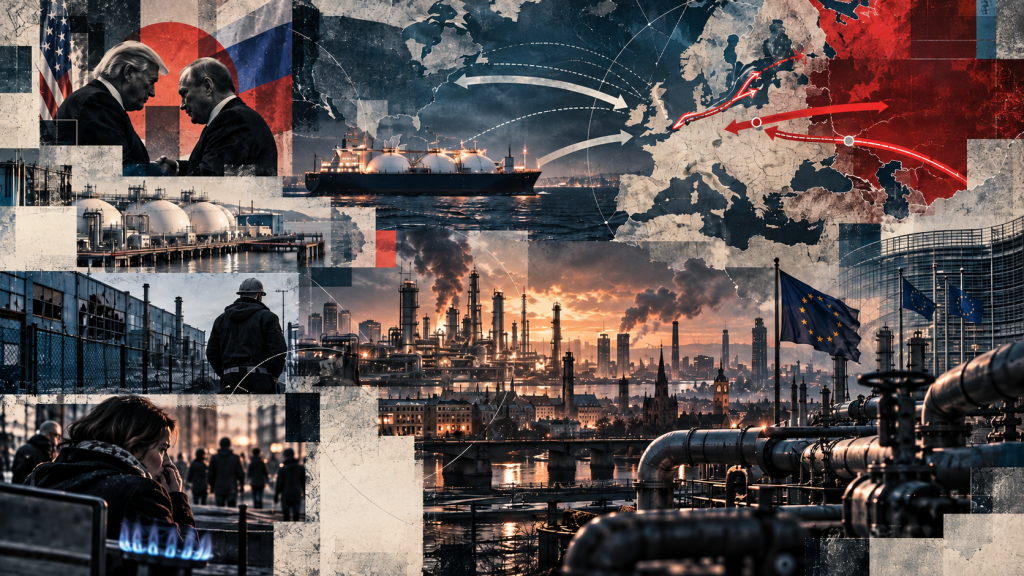
The strategic energy result of this shift may be Power of Siberia 2. If Russia and China eventually agree on price, financing and commercial terms for the planned pipeline, Moscow will gain a new long-term channel for huge gas volumes that were previously oriented towards Europe.
This does not mean Europe can simply be replaced. Infrastructure, distances and Chinese bargaining power make the new relationship far less favourable for Russia than the old European market at its peak.
But the direction is hard to misread.
At the same time, the diplomatic efforts around Ukraine have produced no visible change on the battlefield.
Western envoys travel. Turkey is once again trying to get talks started. Other countries offer themselves as mediators. Kyiv talks to Washington. Moscow receives some delegations.
Meanwhile, the drones fly over Kyiv.
The Rassvet constellation expands.
Russia announces massive strikes on the energy system.
The front moves west in Donbas.
And Ukraine’s head of the presidential office says the country must find at least 30,000 new people every single month to maintain what it already has.
That is how August 2026 ends: not with the outlines of a ceasefire, but with both sides preparing for the next phase of the war.