Putin’s Clearest Warning Yet
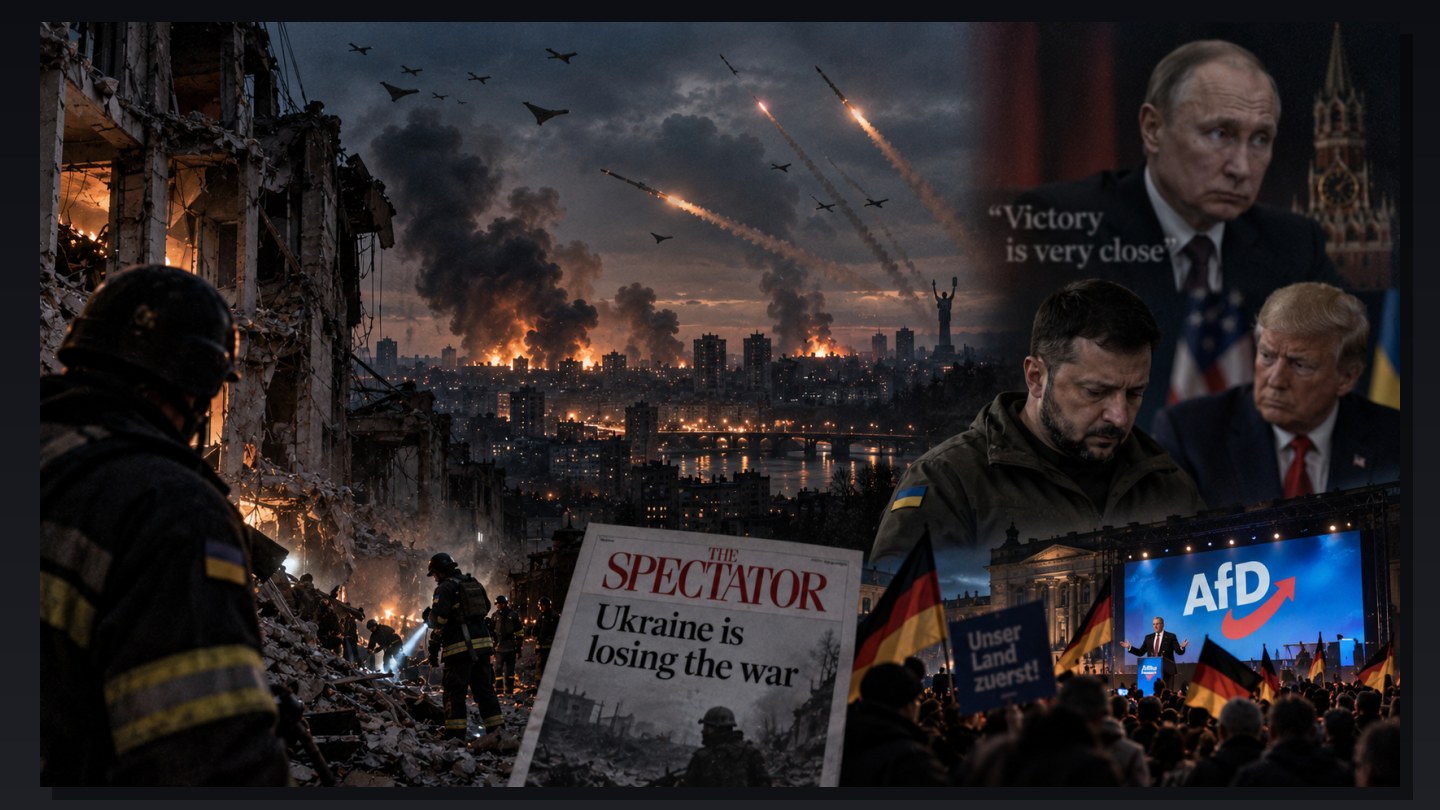
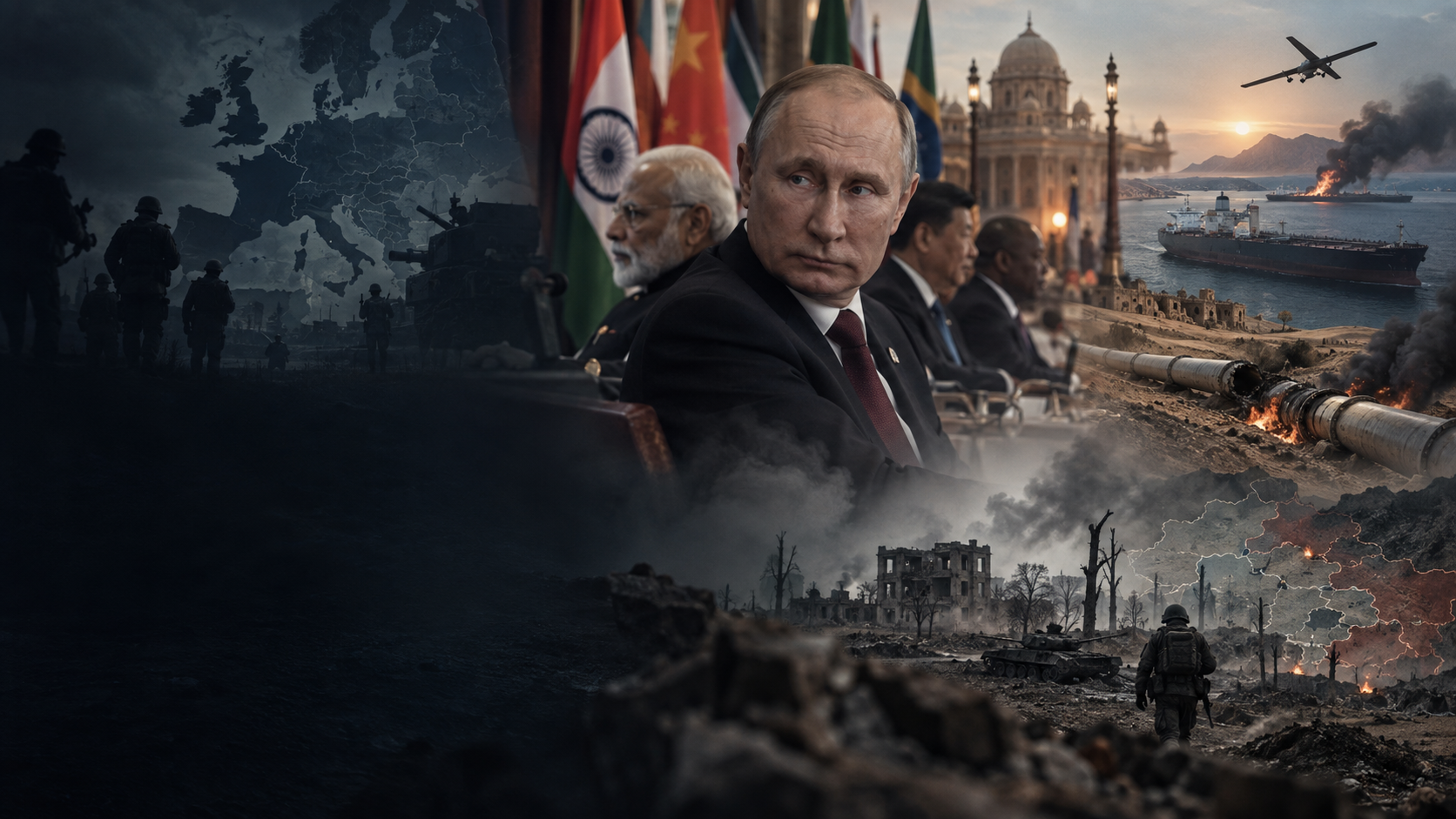
During the BRICS summit in New Delhi, Vladimir Putin responded to a question from a Russian journalist about AfD’s election victory in Saxony-Anhalt with a lengthy review of European policy toward Russia — and ended with a warning phrased with a level of precision Russia has not previously used in public: “Now they are talking about bringing troops onto Ukrainian territory. This means war with Russia,” Putin said. “There is no such threat [to Europe], and there never has been. We do not threaten European countries, and we are not going to do so either”, he added, stressing that “all questions were settled as a result of the Second World War.”
What stands out is the format in which the answer came. The Kremlin had signalled in advance that there would be no ordinary press conference with Western journalists this time — Putin apparently did not want uncomfortable questions about why he was ignoring Modi’s call for a ceasefire, made only weeks earlier in Bishkek, in front of his hosts in New Delhi. Instead, this single question-and-answer exchange with a Russian journalist was arranged, and the warning about European troops came as his very last words — a placement that was hardly accidental, but likely calculated for maximum effect.
Russia has previously indicated that European troops on Ukrainian soil would be treated as combatants and attacked accordingly. What is new is that Putin is now explicitly saying that the states sending those troops would themselves be at war with Russia — significantly sharper and more direct language than anything used publicly before in this conflict.
The Background: Europe’s Escalating Rhetoric This Week
The warning comes after a series of events and statements in recent weeks that, taken together, may have convinced Moscow that an explicit warning was necessary.
German politics and media have increasingly linked the drone incident at Leipzig/Halle Airport to Russia. German authorities have now formally blamed Russia, although according to available information the drone itself was homemade and partly produced using 3D-printed components. The Financial Times has meanwhile reported frustration among European security services that German authorities waited several weeks before publicly linking the incident to Russia.
Britain has also announced a new drone factory to produce weapons for use against Russian territory, provided Ukraine with the blueprints for the Storm Shadow missile for domestic production, and continued supporting development of the Freyja air-defence system and the Flamingo cruise missile — which the Russians suspect is based on British design work.
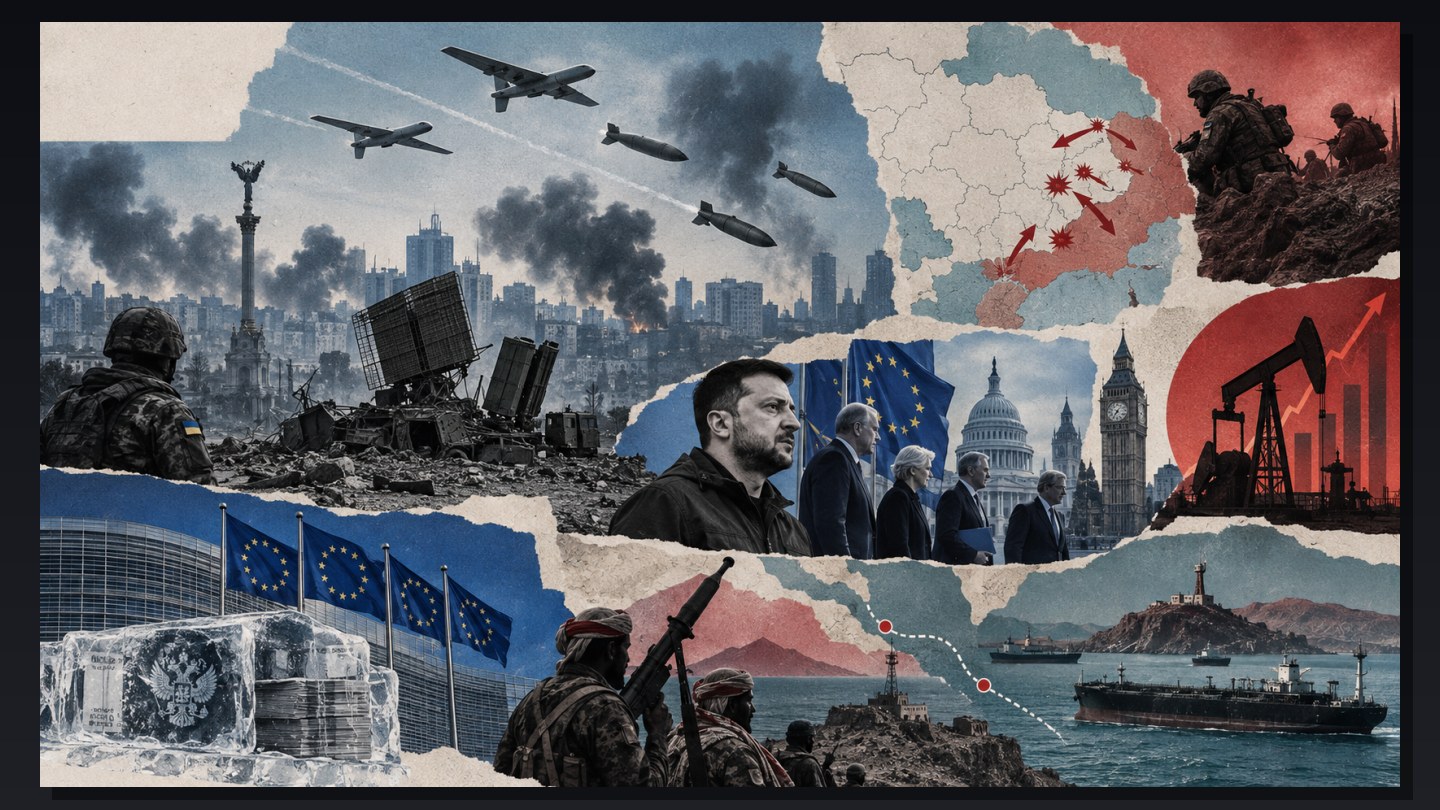
President Macron has repeatedly insisted that the question of European troops in Ukraine is solely a matter between Europe and Ukraine, with Russia having no right to a say in the matter. And Brussels is still working on plans to confiscate Russian assets, actively supported by Sweden, Poland, the Baltic states, Britain and Spain.
Added to this are two concrete incidents.
Norway has seized the Russian state-owned expedition vessel Professor Molchanov in Barentsburg on Svalbard following a ruling by the Nord-Troms and Senja District Court. The seizure was carried out on behalf of Naftogaz, which is seeking to enforce an arbitration award against Russia worth around $4.22 billion. Naftogaz itself says the vessel is owned by the Russian Federation. This raises obvious questions concerning sovereign property immunity and enforcement against Russian state assets.
There are also reports, still unconfirmed, that NATO forces directly interfered with a Russian naval exercise in the Arctic — which, if true, would be an unprecedented act in the history of the conflict.
Why the Warning Should Be Taken Seriously
It is tempting to dismiss Russian warnings as rhetoric without substance, given the Western narrative that Russia never enforces its red lines.
That narrative is not accurate: Russia warned for years against Ukrainian NATO membership before launching the special military operation in 2022, and explicitly warned that if the West permitted long-range strikes against Russian territory, Russia would no longer refrain from providing military assistance to the West’s adversaries.
The Financial Times has since documented that Russia is in fact assisting Iran with the development of advanced supersonic cruise missiles, and has previously reported both Russian intelligence support and weapons deliveries to Tehran.
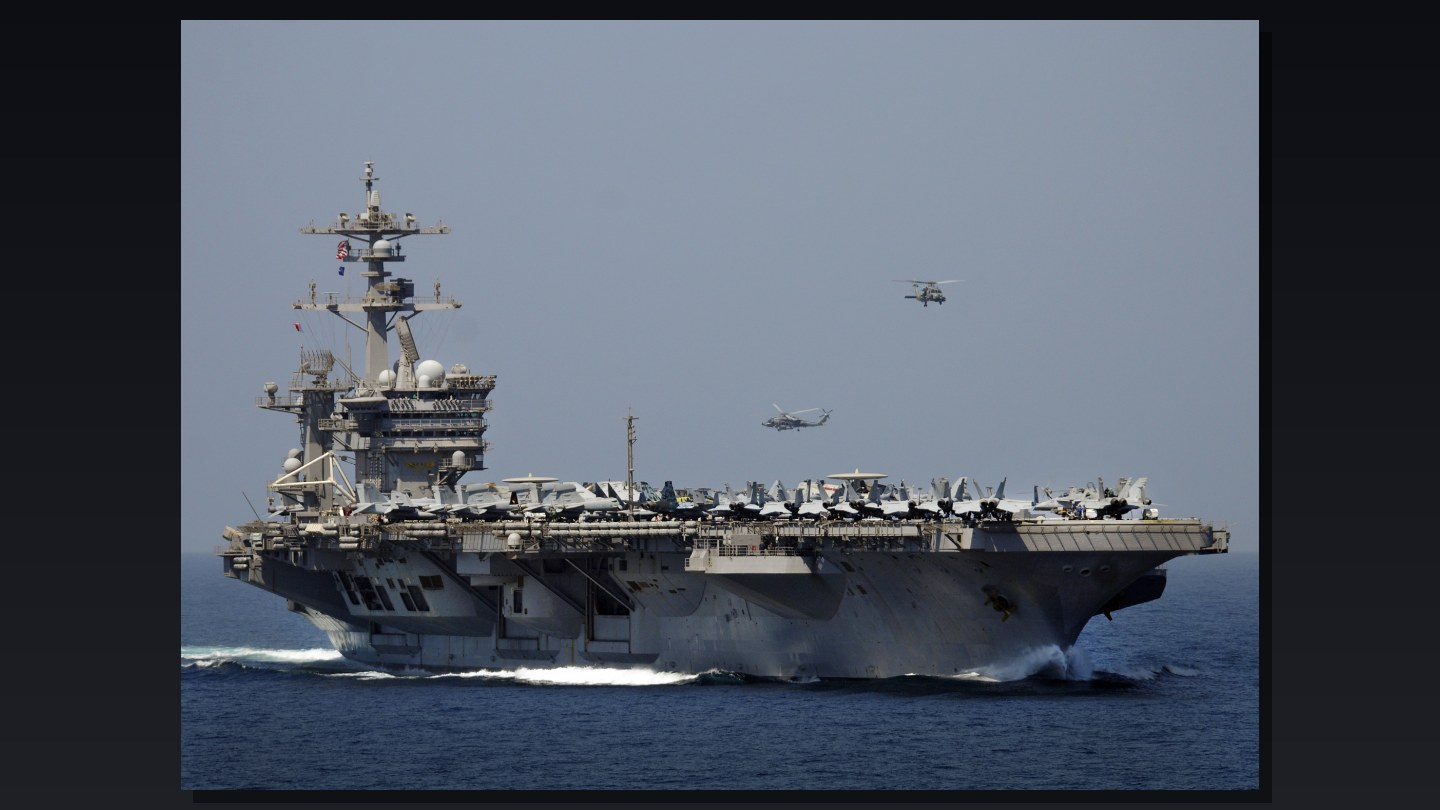
There is also a structural point worth noting: Russia today appears far less concerned about Western conventional superiority than it did in 2022. It has watched American air power in action over the Persian Gulf and concluded that it is not as overwhelming as previously assumed — that F-35s can be tracked and potentially engaged by radar systems of the same type possessed by Iran and, by all appearances, Russia as well.
A recent article by retired British naval commander Steve Jermy, titled “The Shattered Myth of US Military Primacy”, argues that NATO’s power historically rested on three pillars — Western industrial superiority, American naval and air dominance, and a combined economic and military balance of power in the West’s favour — and that all three have now been weakened or reversed.
Putin Dominates BRICS — While MBS Stays Away
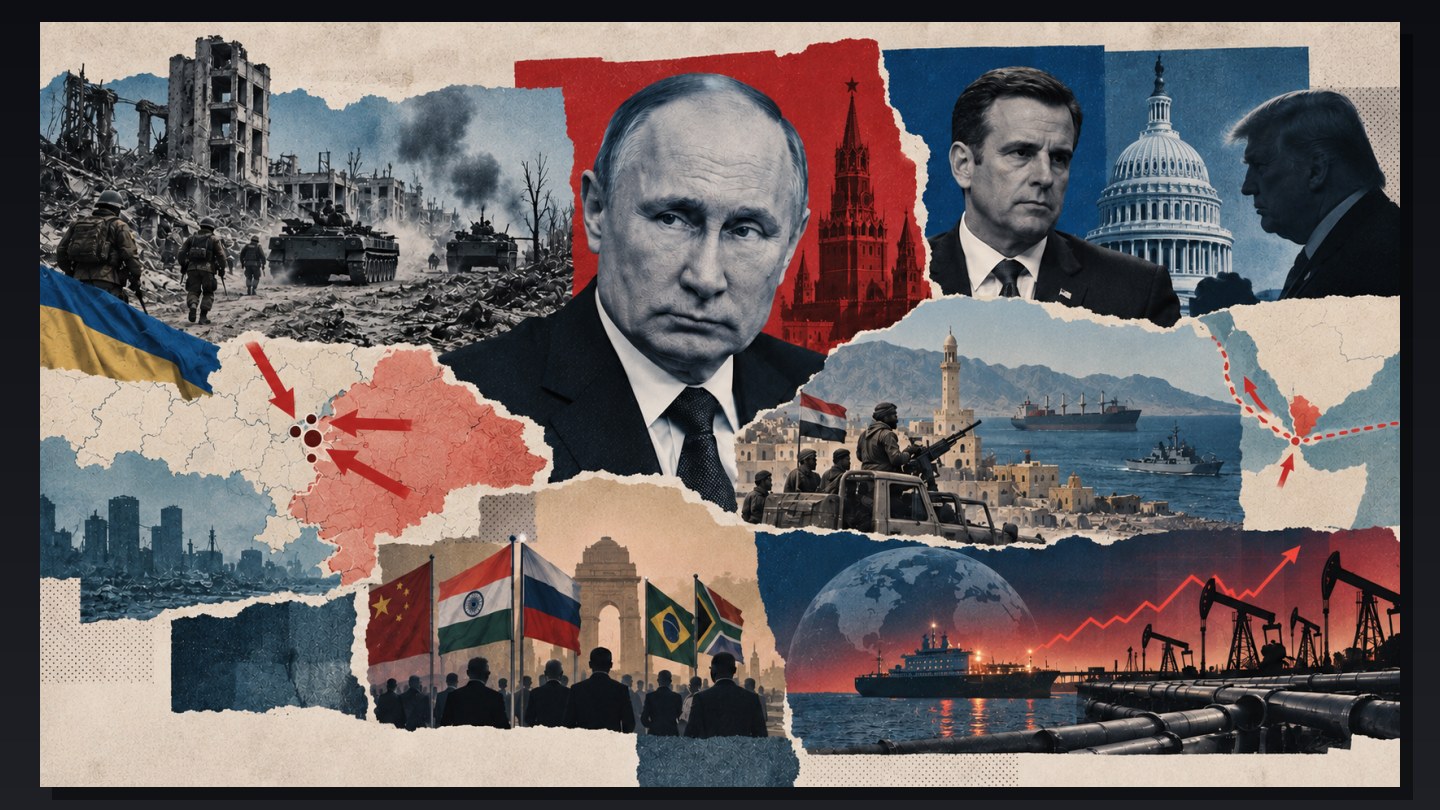
Putin arrived in New Delhi early for a separate bilateral visit with Prime Minister Modi ahead of the summit itself, accompanied by a substantial Russian delegation from several ministries. He also met Iranian President Pezeshkian and later Xi Jinping, with images showing the leaders together in a friendly atmosphere.
The Financial Times describes Putin’s reception in India as extremely warm, with extensive talks on energy, defence, technology and investment.
It is striking that just one week after Modi publicly urged Putin to accept a ceasefire in Bishkek — something that clearly irritated the Russian president — they now appear to be friends again. Putin did not need to disturb the atmosphere ahead of the Delhi summit, and according to available information has also invited Modi to Moscow to further cement the relationship.
It is not difficult to see why Putin dominates these meetings: he has what both India and China need — energy, and in India’s case, also scientific and technological cooperation and industrial investment beyond what China currently offers.
One leader who might naturally have been present but is absent — and probably regrets it bitterly — is MBS, Saudi Arabia’s crown prince.
The Houthis have expanded their control across Yemen’s entire Red Sea coast and seized the strategic island of Perim/Mayun in the Bab el-Mandeb, resumed their conflict with Saudi Arabia and attacked Saudi oil infrastructure.
At the same time, Saudi Arabia’s East–West Pipeline, which carries oil from the eastern fields to the Red Sea coast, was hit by several drone attacks. Saudi Arabia’s Energy Ministry confirmed on 11 September that the entire pipeline had been shut down as a security precaution. It has become critically important after traffic through the Strait of Hormuz was heavily restricted.
There are also reports that the attacks on the pipeline itself did not come from the Houthis, but from a Shia militia in Iraq, acting in solidarity and probably with Iranian approval — which, if true, would escalate the crisis further. Reuters reports that the attack is believed to have originated from Iraq. (reuters.com)
MBS called Trump twice and asked for US strikes on the Houthis. Trump refused both times. The United States has instead limited itself to intelligence and targeting support. Reuters has since confirmed that Washington does not currently want to open a direct American front against the Houthis. (reuters.com)
It is a dramatic turning point for a man who gradually moved away from Washington and closer to Moscow and BRICS under Biden, but pivoted back toward the United States when Trump became president — and who now sees that the bet is not providing the protection he expected.
The Front: Still No Confirmation of the Major Ukrainian Claims
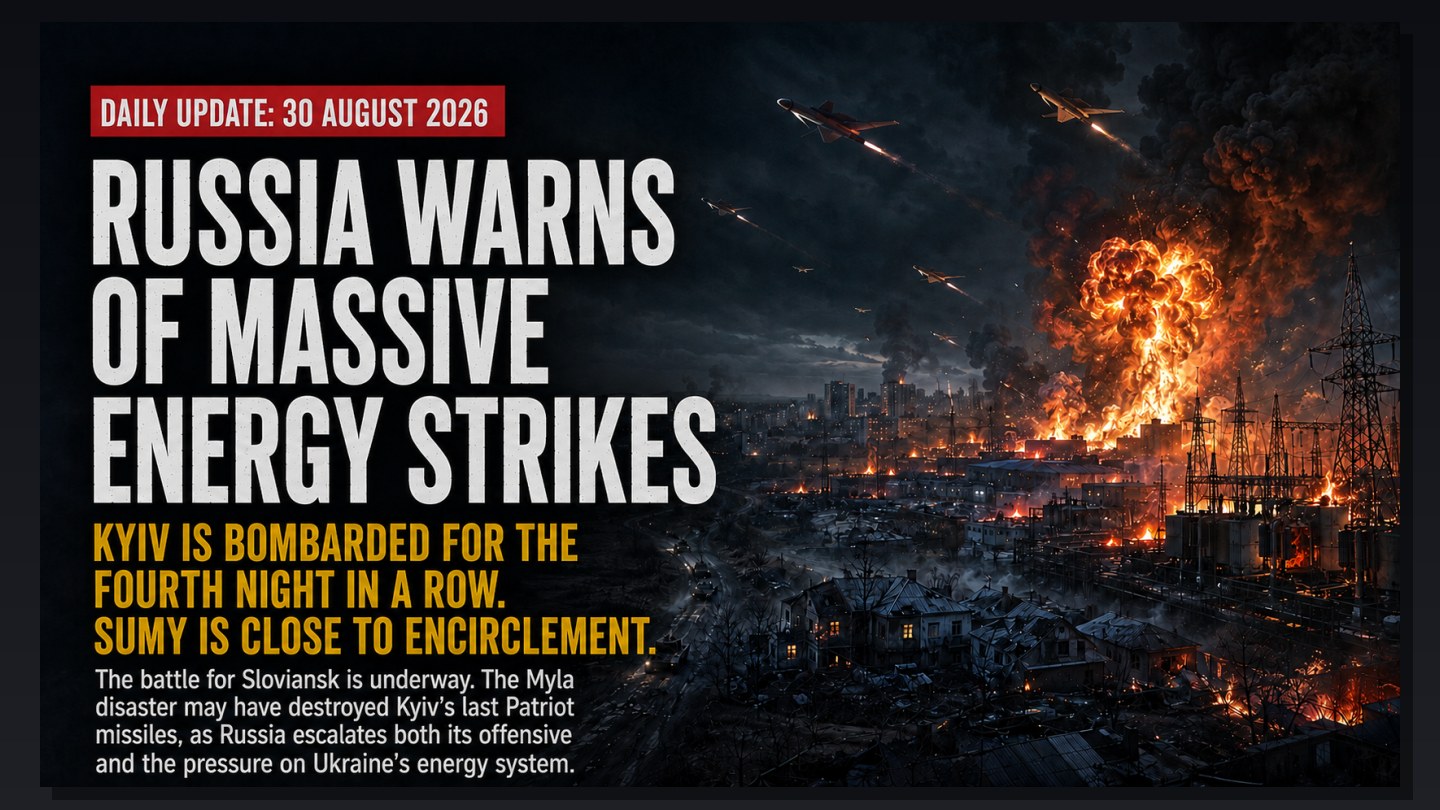
Russia did not attack Kyiv itself on the night of 12 September for the first time in several days — probably because it is conducting reconnaissance to assess the damage from earlier attacks and Ukrainian repair efforts, rather than out of consideration for Polish Foreign Minister Radosław Sikorski being in the city.
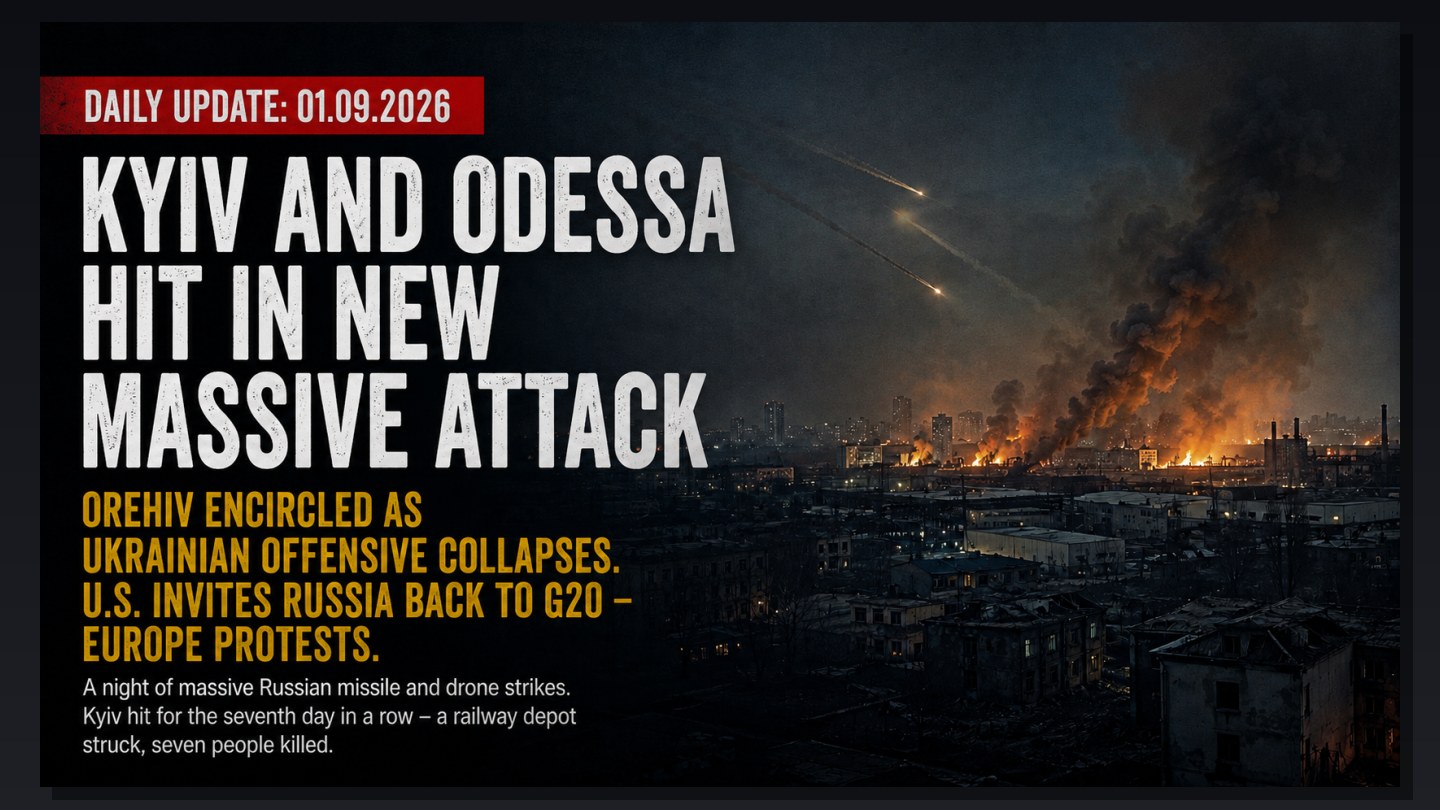
Elsewhere, the attacks continued: Zaporizhzhia, Kryvyi Rih, the Odesa region and other areas were hit by Russian missile and drone strikes. Mykolaiv was also struck again.
The Zatoka bridge, the vital connection used by Ukraine to move supplies toward Romania from the Odesa region, was attacked again after being damaged around three weeks ago and probably partially repaired since.
Ukraine denies that Russia has captured the village of Novo-Danylivka south of Orikhiv, but Russian video footage from neighbouring Mala Tokmachka east of the city shows Russian forces well established there.
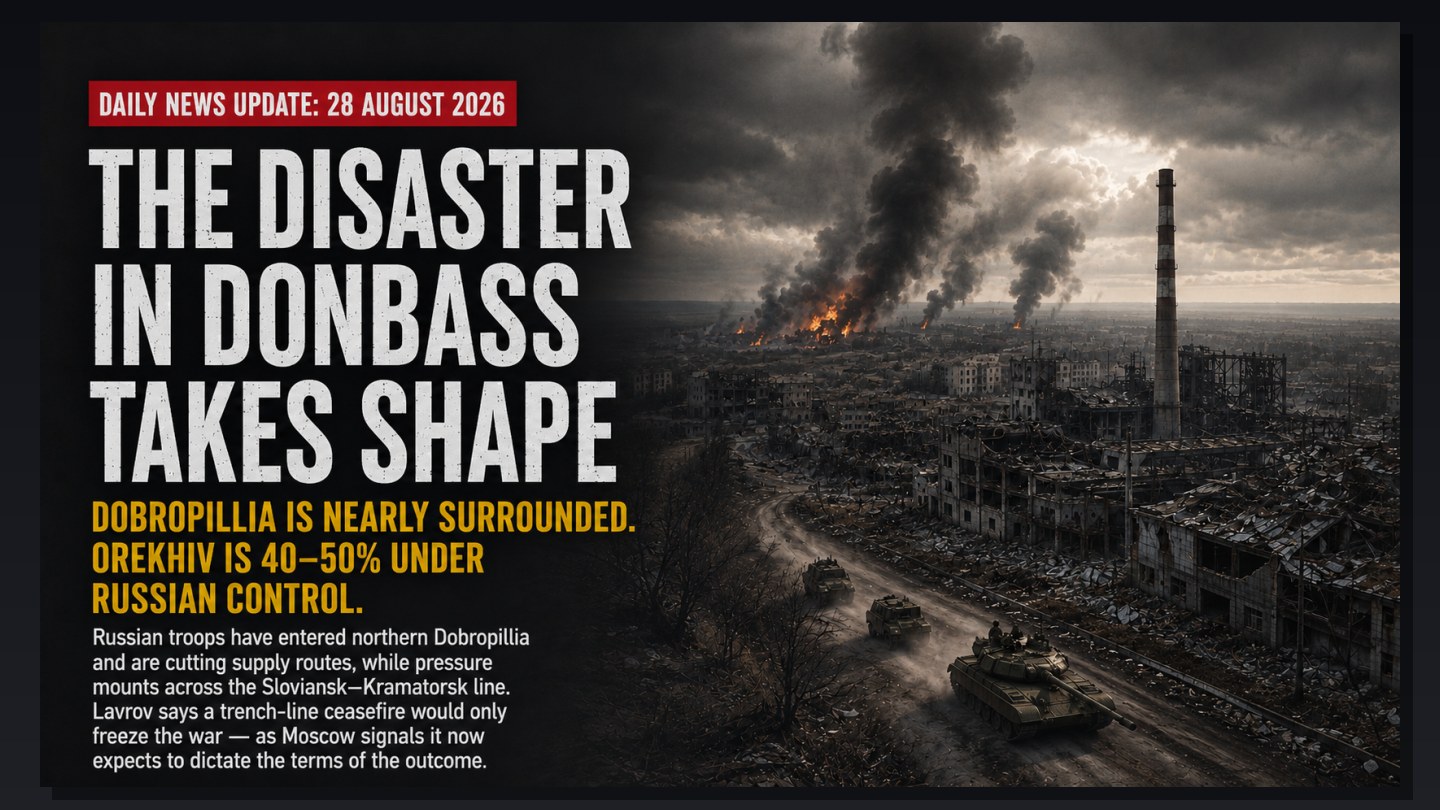
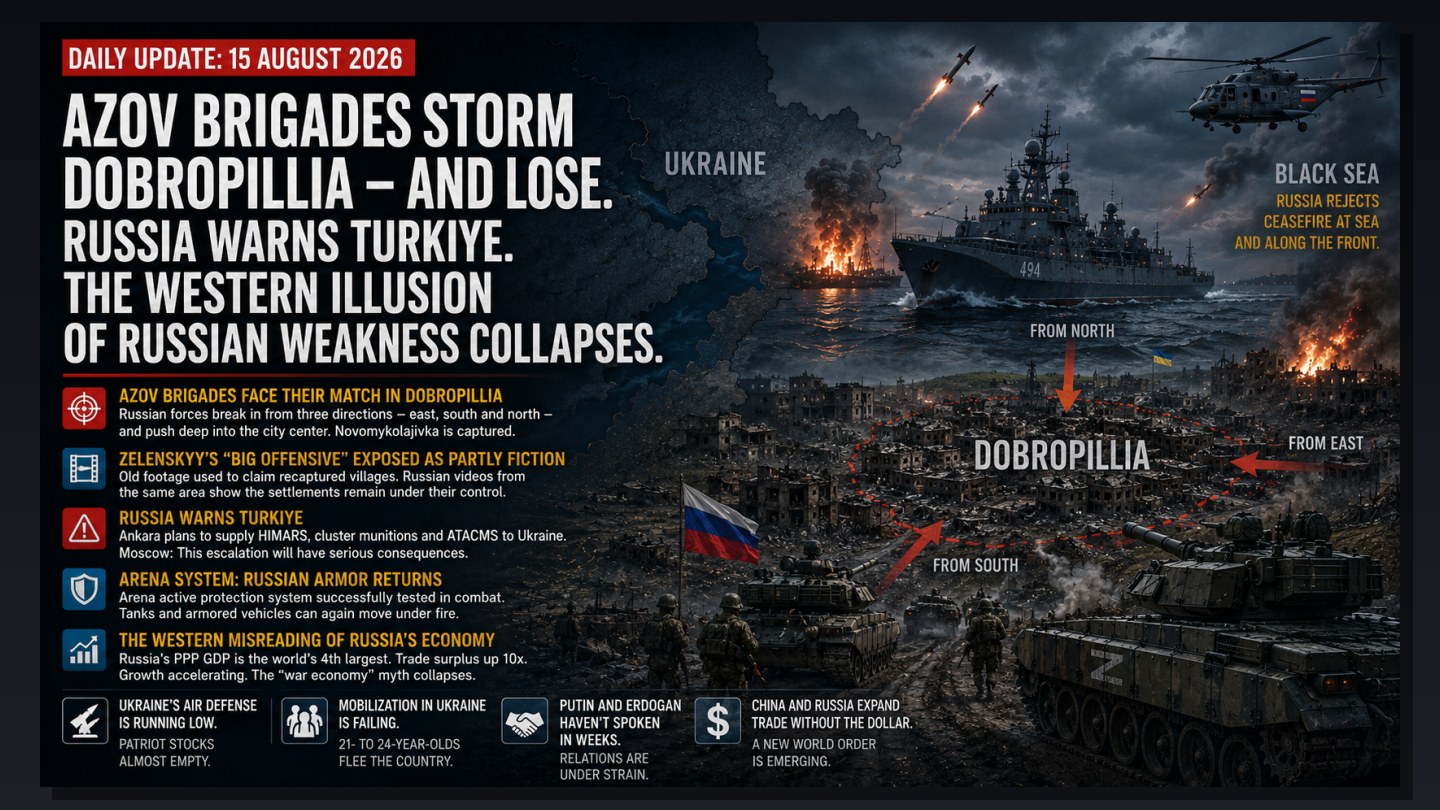
Russia is also reporting further advances in the Dobropillia area, including the capture of Novohryshyne southwest of the city. Russian military commentator Marat Khairullin assesses that fighting is still ongoing in the village of Dobropillia itself east of Novohryshyne — the key point the Russians need to secure in order to outflank the city from the west — but given the latest advances, it may not be long before the city falls.
There is still no video or other independent documentation proportionate to the extensive Ukrainian claims of a large and successful counteroffensive north of Lyman.
No official Ukrainian source has publicly presented evidence of an operation on a comparable scale, and some Western mapping services that previously appeared to accept the story now seem to be referring to it less frequently.
It is a familiar pattern: similar unverified claims of Ukrainian advances toward Tokmak in Zaporizhzhia and of a breakthrough in the Kharkiv region both later proved to have been heavily exaggerated.
Interestingly, it is precisely in the area around Lyman that Azov commander Andriy Biletsky has his area of responsibility, while his rival within the movement, Denys Prokopenko, is responsible farther south around Dobropillia, Druzhkivka and Oleksiievo-Druzhkivka — where the situation is unquestionably going very badly for Ukraine.
It is not unreasonable to speculate that Biletsky, whose political role in Kyiv continues to grow, has an interest in promoting narratives of success in his own sector — a pattern observed before, including during the Ukrainian collapse west of Donetsk city in 2024, when similar claims of Azov successes later proved to have been heavily exaggerated.