Historic meeting between Putin, Trump, and Xi Jinping in China
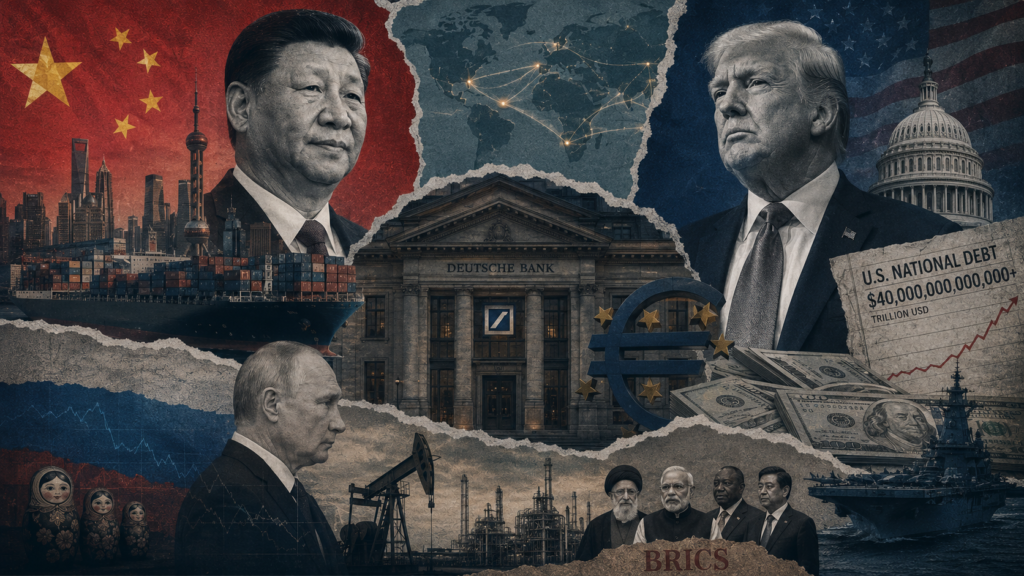
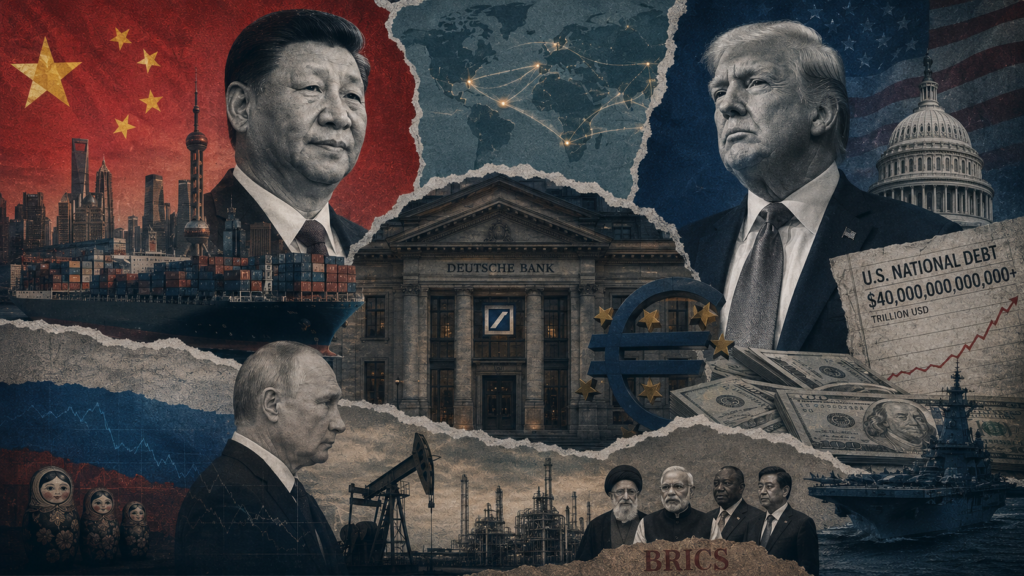
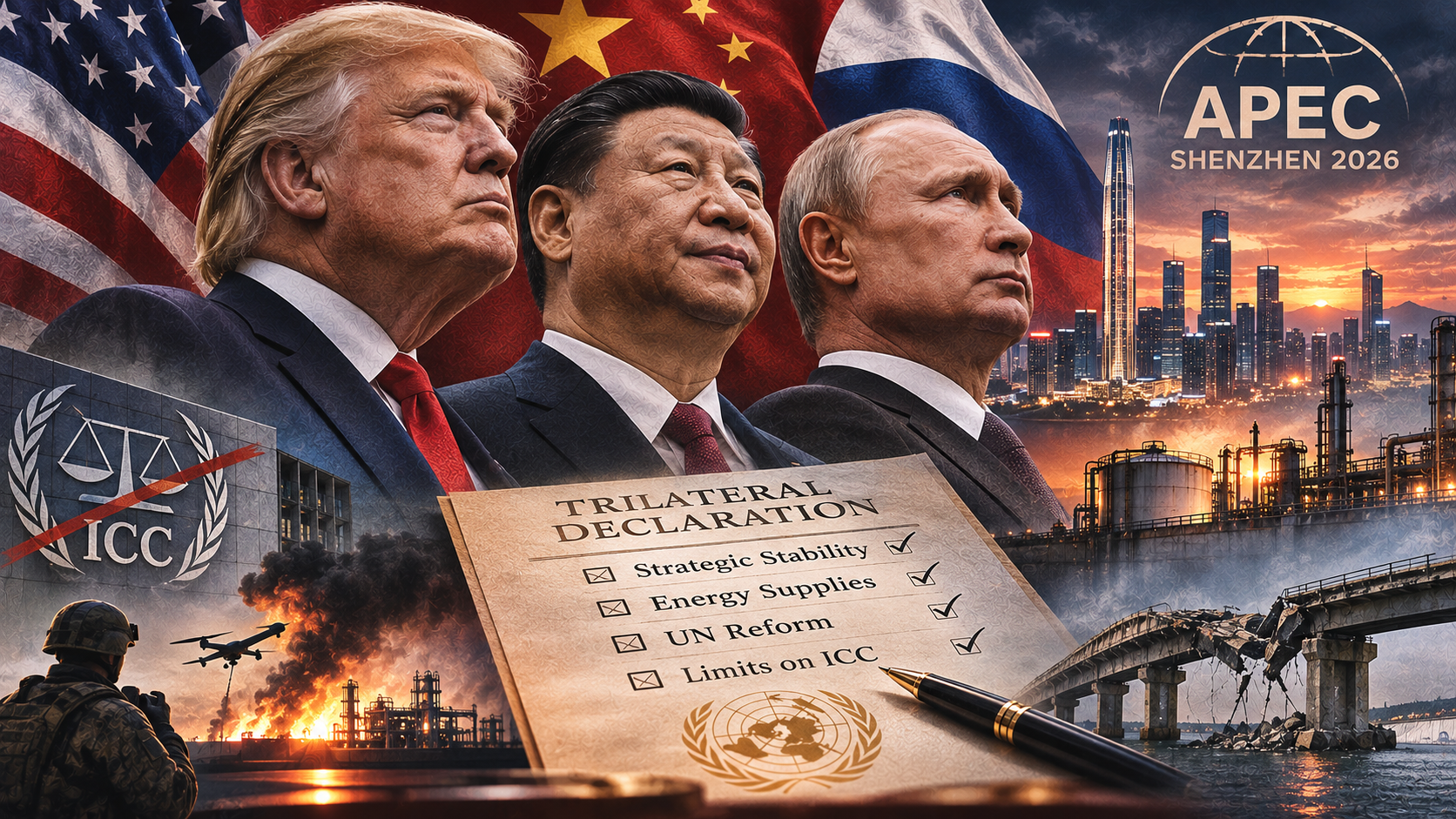
Presidents Vladimir Putin, Donald Trump, and Xi Jinping met on Thursday, November 19, in Shenzhen, China, for a historic trilateral summit. The three leaders adopted a joint declaration on international security, energy supply, UN reform, and restrictions on the exercise of the International Criminal Court's authority. For Putin, the declaration represents a significant diplomatic victory. He has gotten the US and China to agree to formulations that strengthen Russia's arguments on energy supplies, sanctions, and international criminal law, while recognizing Russia as one of the three major powers. At the same time, Putin made it clear that Russia will not accept new local ceasefires following Ukraine's attack on the Kerch Bridge, and announced strong Russian retaliation.
The meeting lasted about an hour and a half and took place in connection with the APEC summit. According to Putin, it was Xi Jinping who took the initiative to gather the three presidents.
The Chinese president acted as host, and it was published photos of the three leaders gathered around the negotiating table. The meeting demonstrated that China, Russia, and the USA can still cooperate on certain international issues despite their extensive political and economic differences.
However, the most important news was not the photographs or the friendly tone between the presidents, but the content of the joint statement released by the White House after the meeting.
The declaration contains four points and initially states that the three countries will work for strategic stability and international security.
It contains no concrete agreement on Ukraine, but several of the formulations may have implications for Russia's relations with the USA and Europe.
Agreement on stable energy supplies – an advantage for Moscow
The second point in the declaration is particularly interesting in light of the war in Ukraine.
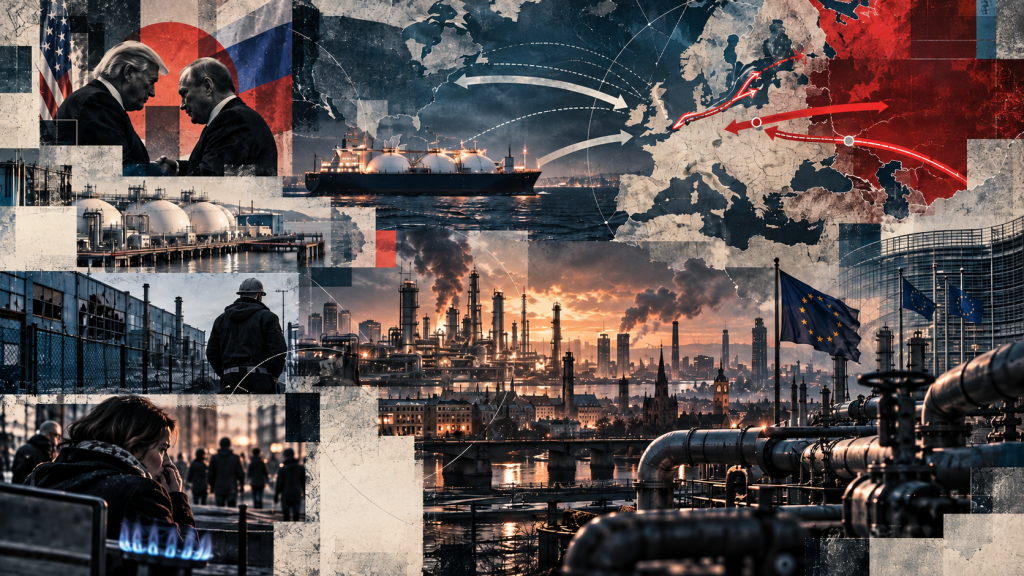
The three countries express a Common intention to increase production and deliveries of refined petroleum products to the international market. They also emphasize the importance of stable energy supplies.
For the USA and China, this is partly about securing fuel supply and limiting disruptions in the world's energy markets. For Russia, which is one of the world's largest producers and exporters of oil and petroleum products, the wording has an additional significance.
Ukraine has carried out an extensive campaign of drone and missile attacks against Russian oil refineries and other energy infrastructure. The attacks have been intended to reduce Russia's revenues, disrupt fuel production, and increase the economic costs of the war.
Now both the USA and China have joined a declaration highlighting the importance of increased production and stable deliveries of precisely these products.
This does not mean that Washington has committed to stopping Ukrainian attacks on Russian refineries. The statement also does not contain any explicit ban on energy sanctions.
Here, Putin has achieved an important diplomatic gain. The USA and China have signed a declaration highlighting increased production of refined petroleum products and stable energy supplies. Thus, Moscow can point to a joint declaration with Washington when arguing against Ukrainian attacks on Russian oil refineries and Western measures limiting Russian energy exports. In other words, Putin has received a document he can use in future negotiations with Trump, even though the declaration does not legally bind the USA to change its policy.
The question is whether this contradiction will eventually influence American politics.
Trump and Xi join criticism of international courts
Another point in the declaration concerns international law and the immunity of state leaders.
The three presidents emphasize the importance of state consent and respect for the immunity of public officials. They also emphasize that The International Criminal Court (ICC) and similar institutions must not abuse their authority.
The wording is particularly interesting because in March 2023 the ICC issued a arrest warrant for Vladimir Putin, related to allegations of illegal deportation and transfer of Ukrainian children.
The USA, for its part, has been strongly critical of the court's treatment of Israeli leaders. Neither Russia, China, nor the USA are parties to the Rome Statute that established the court.
By joining this wording, Trump and Xi have accepted a statement of principles that aligns with parts of Russia's longstanding criticism of the ICC.
However, this does not mean that the arrest warrant against Putin has been lifted, or that the court's member states are exempt from their obligations.
For Putin, this is an additional diplomatic gain. He himself is wanted by the ICC and has now gotten both the US and Chinese presidents to sign a declaration emphasizing state immunity and warning against abuse of the authority of international courts. The declaration does not repeal the arrest warrant but gives Moscow political support for its arguments against the court's exercise of authority.
UN reform and nuclear weapons on the agenda
The declaration also contains a commitment to work for UN reform, so that the organization can better handle global challenges.
This is a question both Russia and China have long raised. The current composition of the UN Security Council still reflects the balance of power after World War II, with the USA, Russia, China, the United Kingdom, and France as permanent members.
Several major countries, especially India and Brazil, have for many years worked towards a more representative composition of the Security Council.
However, the declaration does not specify how the reform will be carried out, or which countries may receive new permanent seats.
The last point concerns nuclear weapons.
The three presidents confirm that A nuclear war cannot be won and must never be fought. They also promise to hold talks to reduce the risk of nuclear weapons and counter further proliferation.
This is a continuation of a principle that has been central to arms control work since the Cold War.
But no new concrete agreement on limitations in nuclear arsenals was announced.
Putin: Europe must clarify what it wants to negotiate
After the summit, Putin held a press conference where he again commented on the peace negotiations on Ukraine.
He confirmed that the US is working to bring European representatives into the negotiation process, but emphasized that Moscow has not yet accepted this.
At the same time, Putin said it would be unnatural to discuss Europe's future security arrangement without European participation. The problem, as he presented it, is that the European governments still have not clarified what position they want to promote.
Russia has therefore invited European representatives to Moscow to discuss their positions before deciding on a possible expansion of the negotiation format.
Putin reiterated that Ukraine's future security must be part of a broader European security arrangement, which also safeguards Russian security interests.
This aligns with Moscow's previous statements that a peace agreement cannot only concern territories and ceasefires but must also include fundamental security policy issues.
The Russian president also maintained that an agreement requires compromises, but that Russia will not give up what the country considers its vital interests.
He again referred to The requirements presented on June 14, 2024, including Ukrainian neutrality and the withdrawal of Ukrainian forces from areas Russia has declared annexed.
Kerch Bridge: Putin rejects local ceasefires and warns of retaliation
The most direct warning from Putin came when asked about Ukraine's attack on the Kerch Bridge.
According to the president, Russia had considered the possibility of limited ceasefires, including attacks on energy infrastructure and shipping in the Black Sea.
But after the Ukrainian attacks on the bridge, Moscow has set these plans aside.
Putin stated that the road bridge had suffered serious damage, while the railway connection had been restored. Russia will repair the bridge, but he also made it clear that the country will respond militarily.
He warned that the Russian response would be far more painful than the attack on the Kerch Bridge.
The statement represents a clear sharpening of the Russian line after the attacks on November 16–19.
Russia has already carried out repeated attacks on Ukrainian transport links over Dnipro, including in Kiev and Zaporizhzhia. They have caused significant damage and traffic restrictions, with possible consequences for the Ukrainian forces' supply lines.
It is not yet known which targets Russia will choose in response to the recent attacks on the Kerch Bridge, or when a possible new wave of attacks will come.
However, Putin's statements show that Moscow is now using the attacks as justification to reject even limited agreements to halt certain types of military operations.
Russian pressure at Oskol and in Donbass
At the same time, the fighting continues on the ground.
Russian military sources claim that the forces are approaching full control over Borova in the Kharkov region, south of Kupyansk. There are also reports of advances at Liman and of Russian attempts to establish new bridgeheads west of the Oskol River.
Further south, there are reports of continued Russian pressure on Ukrainian positions around Sloviansk and Kramatorsk.
This information is not sufficiently independently confirmed to be treated as established territorial changes.
If Russia manages to strengthen its positions at Oskol while maintaining pressure from the south, it could increase the strain on Ukraine's defense in the northern part of Donbass.
Developments will also affect the negotiations. Moscow has repeatedly made it clear that the military situation on the ground is part of the assessment of the conditions the country will accept.
A diplomatic gain without a peace agreement
The summit in Shenzhen has not ended the war in Ukraine nor led to any concrete new agreement on Europe's security arrangement.
But Russia has achieved something different.
Putin has not only participated in a historic summit with the presidents of the USA and China. He has also gotten them to sign a declaration with wording that in several areas aligns with Russian priorities. The diplomatic victory does not lie in the fact that the USA has changed its policy toward Russia, but in Moscow having achieved a new starting point to challenge this policy in upcoming negotiations.
At the same time, the European governments still lack a clear role in negotiations with Moscow.
The declaration from Shenzhen does not in itself change the balance of power in Ukraine. However, it may give Russia greater diplomatic room for maneuver in further talks with Washington.
And while presidents discuss international stability, the war continues. Putin's announced retaliation after the attacks on the Kerch Bridge shows how great the gap still is between diplomatic declarations and developments on the battlefield.