The most massive attack on Odesa yet
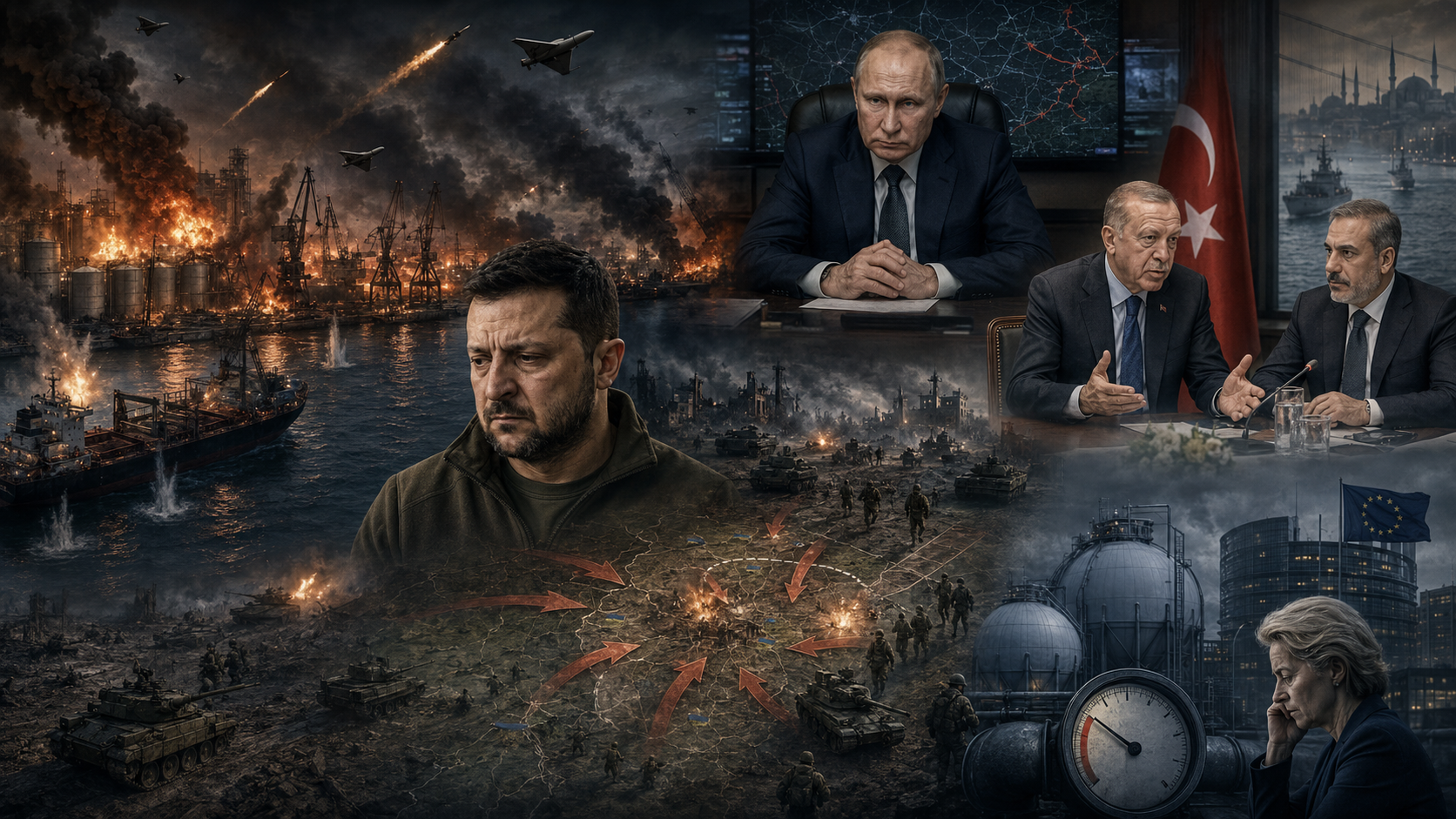
During the night of 9 August, Russian forces carried out the heaviest single attack on the Odesa port complex so far in the war. The Russian Defence Ministry confirmed that fuel depots and military equipment were hit in the port of Chornomorsk, while fuel tanks intended for the Ukrainian army were attacked in Biliary and Novi Biliary, 27 and 28 kilometres north-east of Odesa city. Two dry cargo ships trying to bring military cargo to Ukrainian ports were attacked by Geran-4 drones while under way south and east of Odesa. The Russians also report attacks on the port of Mykolaiv, where a tug converted into a platform for unmanned surface vessels was destroyed.
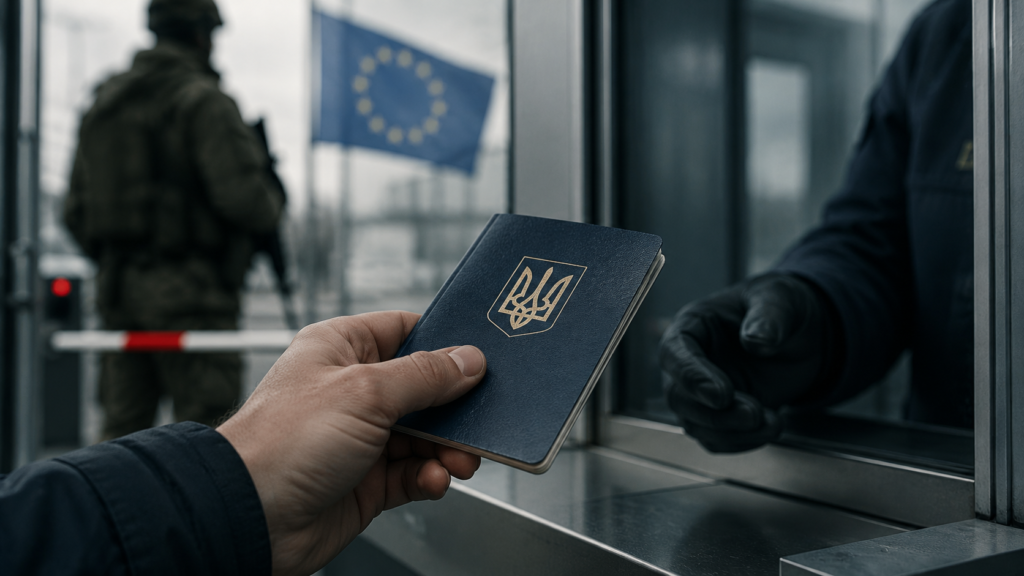
The combined effect of recent weeks’ Black Sea campaign is now visible in the transport statistics: over 7,000 lorries have piled up at EU border crossings – 6,450 at the border with Poland, 546 with Slovakia and 328 with Romania – because the Odesa ports are blocked and the Ukrainian rail network is overloaded. It is not just a military blockade. It is the beginning of a logistics collapse that will spread into Ukraine’s civilian economy within weeks.
“There is practically nothing left of Odesa port”, a Russian military analysis network concluded on Monday morning. That is an exaggeration – port structures take time to destroy. But the functionality is gone. And it will not come back as long as the Russians can send missiles and drones there at the pace we are now seeing.
Turkey attempts maritime mediation – Russia is not interested
The deadlocked situation has gained an unexpected mediator: Turkey. This week Foreign Minister Hakan Fidan put forward a proposal for a “moratorium” – deliberately avoiding the word “ceasefire” – in which both sides stop attacks on merchant ships in the Black Sea. As leverage, reports say Turkey has begun preventing merchant ships bound for the Russian Black Sea port of Novorossiysk from passing through the Dardanelles – but also, according to some reports, ships bound for Odesa.
Erdogan’s motivation is complex. Russia is Turkey’s most important energy supplier and is building the country’s nuclear power plant. Large numbers of Russian tourists are crucial to the Turkish tourism industry. And Turkey itself depends on refined oil products from Russia at a time when the Gulf crisis has raised energy costs and worsened Turkey’s chronic current account deficit. Erdogan cannot want permanent Russian control of the entire Black Sea coast – it would leave Turkey squeezed between Russian dominance in the north and the geopolitical tensions in the south.
But the proposal is stillborn from the Russian side. Russia has no interest in a moratorium that would reopen Ukrainian ports and thereby remove the strategic gain from six weeks of blockade. And Turkey’s credibility as a mediator is weakened by Erdogan having previously broken the agreement on the Azov fighters by letting them return to Ukraine, contrary to what Russia saw as a clear promise. There are certainly ill-wishers in Moscow who remember exactly this.
Toretsk and Vasiutynske: the Sloviansk encirclement takes shape
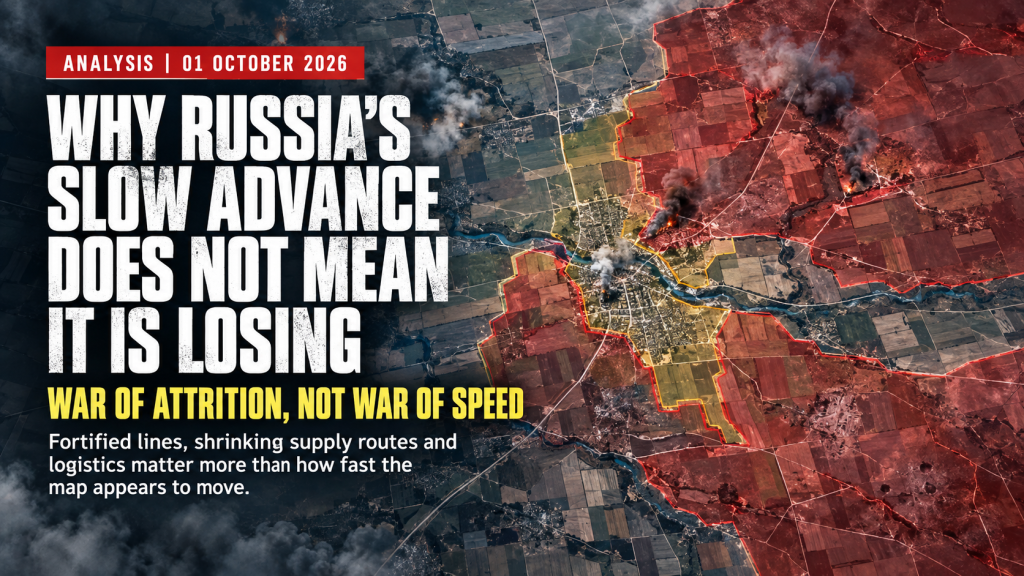
From the battlefield, the Russian Defence Ministry confirms two more settlements under its control: Vasiutynske, a small village east of Sloviansk, and Toretsk, a considerably larger town in the area between Dobropillia, Duiivka and Katausk. Vasiutynske is strategically important because it lies near Mykolaivka and the Sloviansk thermal power station – both key points in the eastern defence of the Sloviansk conurbation. Toretsk is important because it lies in the territory the Russians are now rapidly consolidating between Dobropillia and Duiivka – and which is gradually shaping the conditions for encircling Sloviansk and Kramatorsk from the west and south.
In the Zaporizhzhia region, there are now reports from many different Russian channels that Russian airborne forces from the Dnepr group, commanded by General Teplinsky, have taken positions inside Orikhiv town from the south-west. Ukraine has not confirmed this, but the pattern is the same as we have seen town after town: Russian reports of penetration, Ukrainian silence, and then – days or weeks later – formal confirmation that the positions have been lost.
Russia’s new demands after Donbas: Istanbul-plus is the floor, not the ceiling
Russia’s ambassador-at-large Rodion Miroshnik – a hardliner with roots in Luhansk – said this week that there is no reason to believe the war will end soon, and that the Russians are prepared for the long haul. It is a statement not primarily about the present – it prepares opinion for the next phase. The signal is clear: when Donbas falls, Russia will not present the same demands Putin set out at the Russian Foreign Ministry on 14 June 2024. Those demands – the Istanbul-plus formula, with Ukrainian withdrawal from all four annexed regions and a declaration of neutrality – will become the floor for new, higher demands.
That is what makes the Western discussion of “negotiations” a misunderstood project. With every week the war continues, and with every new territory Russia takes, the Russian minimum position shifts to Kyiv’s disadvantage. A peace deal available in December 2021 is no longer available. A peace deal available in March 2022 is no longer available. A peace deal available in Istanbul in April 2022 is no longer available. And a peace deal on the Istanbul-plus terms of June 2024 does not look likely to be available much longer either.
The fall of Western euphoria: from The Atlantic to Bild
The brief period of Ukrainian euphoria – which peaked in the weeks around the NATO summit in Ankara and the drone offensive’s images of smoke columns over Moscow – is now over. The Atlantic, one of America’s most uncompromisingly pro-Ukrainian magazines, acknowledges in a new analysis that Ukraine is in serious difficulty. The respected Russia commentator Mark Galeotti in The Times concedes that the drone offensive has not created the political pressure on Putin that was hoped for, and that the Russian fuel market is stabilising. The German journalist Julian Röpcke of Bild – one of Ukraine’s most ardent advocates in the European press – has just been in Ukraine and reports a situation going “from bad to worse”. None of them suggests the obvious: that Ukraine should negotiate.
Only a few voices say that. The American military commentator and retired lieutenant colonel Daniel Davis has now published a long piece arguing that the time for serious peace negotiations on Russian terms is now – not in six months, not after Donbas has fallen, but now. No Western leader seems to be listening.
A perfect storm – and a continent asleep
“Europe is now in a self-inflicted energy crisis,” said Kirill Dmitriev, head of the Russian Direct Investment Fund, this week in passing during talks with the American negotiating team. He was not exaggerating. Europe’s gas storage is around 57 percent full – far below the normal level for the time of year. Germany is at around 47–48 percent. The Strait of Hormuz is closed. Refined oil products are scarce. And the drone offensive that Europe helped Ukraine carry out against Russian refineries has helped tighten the same global energy market that Europe’s own households and industries depend on.
August is a month when European leaders go on holiday. It is a time when decisions are postponed and crises take hold. It is perhaps the most ominous observation to take from this update: everything points to a decision approaching – on the battlefield, in the energy markets, in the political stability of European countries. And the leaders are, for the moment, absent.