The attacks are spreading – without stopping Russia
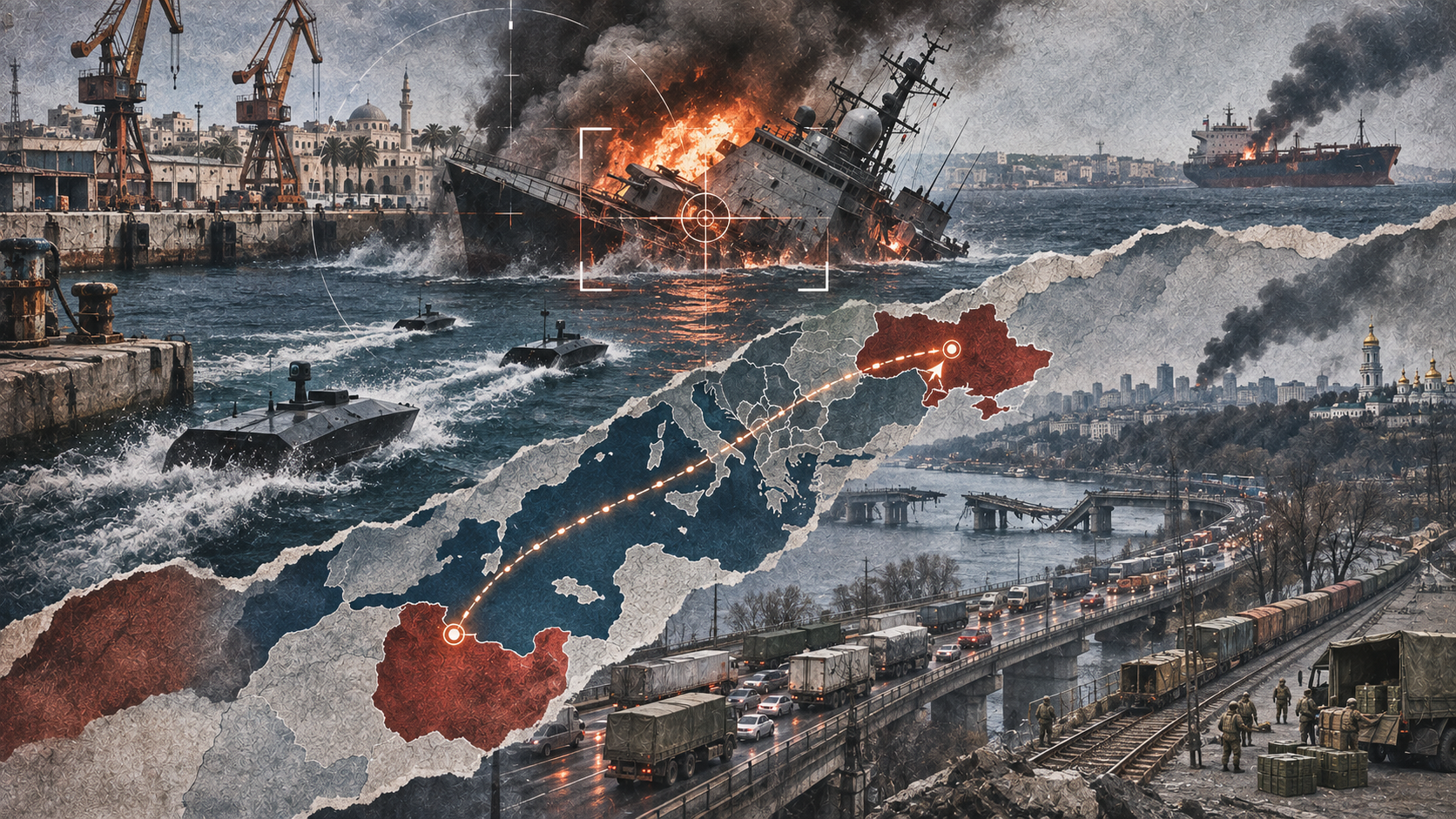
The war between Russia and Ukraine has taken on a new geographical dimension. Ukrainian sea drones have sunk the Russian corvette Merkurij in the Libyan port city of Benghazi and attacked a Russian cargo ship off the coast. The attacks come shortly after the Russian cargo ship Sparta II was hit in the Baltic Sea and Ukraine inflicted extensive damage on the Kerch Bridge. At the same time, Russia's attacks on Ukraine's transport and energy infrastructure continue. Four of Kiev's six main bridges over the Dnipro are now damaged, and the military consequences could be significant if supply capacity continues to weaken.
Russian corvette sunk in Benghazi
The Russian corvette Merkurij was sunk on November 22 while it was docked at the naval base in Benghazi, Libya.
Ukraine's President Volodymyr Zelensky Confirmed on Monday that Ukrainian forces carried out the attack, which was carried out with sea drones.
Merkurij belonged to the Steregushchij class and was commissioned in 2023. The ship was among Russia's newer corvettes and had, among other things, been used for escort missions in the Mediterranean.
A Russian cargo ship, MV Angara, was also hit. According to Ukraine's security service SBU, the vessel was used to transport military equipment.
Satellite images show Merkurij capsized in the harbor. The extent of the injuries has not yet been determined.
The attack is a significant loss for the Russian navy. But the significance for the war in Ukraine is another matter.
Merkury did not directly participate in combat operations in Donbass or Zaporizhzhia. The ship's main task was related to Russian maritime operations and transport links in the Mediterranean.
The sinking could weaken Russia's escort capacity and create problems for the country's operations in Africa. However, it does not prevent Russian ground forces from continuing the offensive in Ukraine.
Suspicion of Western intelligence support
The attack also raises questions about how Ukrainian sea drones could operate off the coast of Libya.
One possible explanation is that the drones were sent out from western Libya, where the authorities in Tripoli have close ties to Turkey. Russia, for its part, cooperates with Khalifa Haftar, who controls Benghazi and large parts of eastern Libya.
According to Associated Press there is information about Ukrainian drone activity in Western Libya.
This raises questions about whether local authorities or other countries were aware of the operation.
Turkey has significant military influence in Western Libya and at the same time important economic and security policy relations with both Russia and Ukraine.
It is therefore possible that Turkish actors were aware of the preparations. However, there is no documentation confirming Turkish participation.
Another question concerns intelligence.
Attacking certain Russian vessels in the Mediterranean and Baltic Sea requires information about the movements of the ships. NATO countries have extensive surveillance capacity in both sea areas.
The CIA and other American intelligence agencies have also assisted Ukraine's military operations throughout the war.
This provides grounds to investigate whether the attacks were carried out with Western intelligence support. One possible hypothesis is that the CIA or other services contributed to planning or target identification.
However, no documented operational connection between the CIA and the Benghazi attack is yet publicly known.
A series of attacks far from the front
The attack in Libya follows several extensive Ukrainian operations against Russian targets.
The Kerch Bridge between Russia and Crimea has been hit by repeated attacks. The road connection has suffered significant damage, while the railway connection remains operational.
On November 21, the Russian cargo ship Sparta II was attacked by drones in the Gulf of Finland on its way to Kaliningrad. The ship caught fire but did not sink.
Now Russian naval and transport vessels in the Mediterranean have also been hit.
The attacks have in common that they inflict losses on Russia, attract international attention, and challenge the security of Russian relations.
But it is harder to demonstrate how they help stop the Russian offensive.
Russia has alternative land-based supply connections to Crimea. The Baltic Fleet plays no significant role in supplying the front in Donbass. And a Russian corvette in Benghazi has limited significance for the land war in Ukraine.
The losses are real, but the direct military impact on the war's main front is currently limited.
Pentagon questions Ukraine's strategy
This is not just an assessment put forward outside Western governments.
U.S. Deputy Secretary of Defense for Policy, Elbridge Colby, stated on November 17 that Ukraine's long-range attacks on Russian targets had not helped end the war or halt Russia's advance at the front.
Thus, he challenged the very justification for using large military resources on attacks deep inside Russian territory.
Germany's Defense Minister Boris Pistorius reacted strongly and called the criticism "pretty stupid."
He later apologized for the choice of words, but maintained his disagreement.
The disagreement reveals a contradiction between American and European assessments of Ukraine's military priorities.
It also opens up another interpretation of the latest escalation: When a strategy is criticized for lack of results, its supporters may try to demonstrate decisiveness through increasingly spectacular operations.
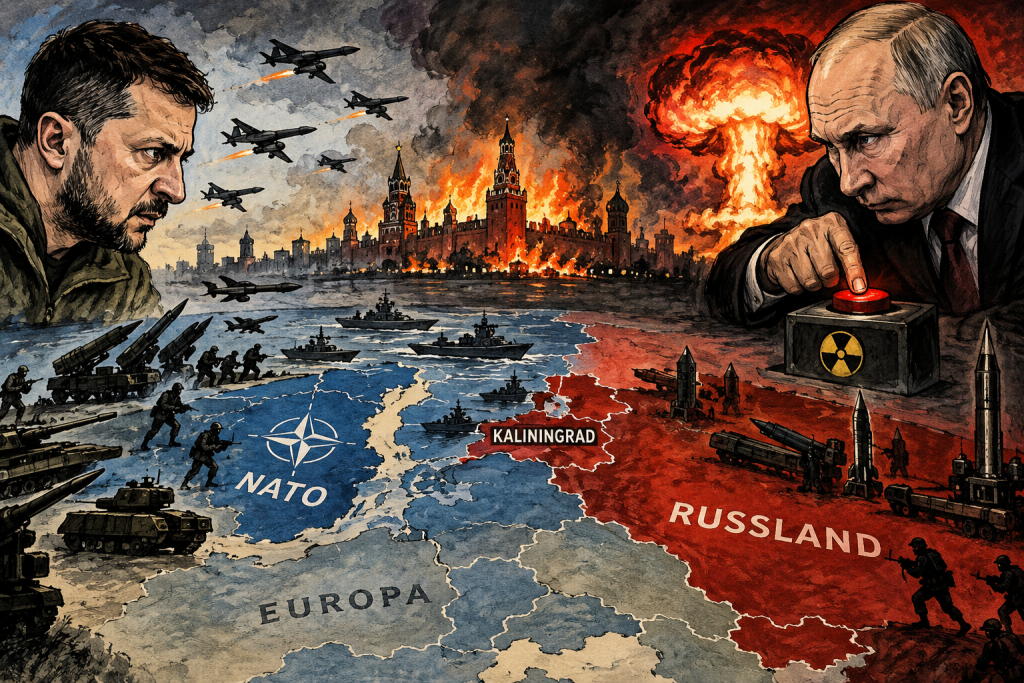
Seen in this light, the attacks on the Kaliningrad connection and Benghazi can be understood as attempts to show that Ukraine can still strike Russia, even though developments on the battlefield are moving in the opposite direction.
It is an interpretation of the motives, not a documented decision-making process.
Russia hits Ukraine's supply lines
At the same time, Russia continues another type of offensive.
Russian missiles, drones, and glide bombs are hitting Ukrainian bridges, railways, transformer stations, and transport hubs.
These goals have a direct impact on Ukraine's military logistics.
According to a overview from Hromadske November 23 four of Kiev's six main bridges over the Dnipro were damaged after Russian attacks.
The bridges are crucial for transport between the eastern and western parts of the capital, but also for delivering supplies onward to the frontline areas.
A bridge does not have to collapse to lose its military usefulness. Damage that limits heavy transport or rail traffic can significantly reduce capacity.
Russian sources already claim that the attacks have led to reduced supplies to Ukrainian forces at the front. The extent has not been independently confirmed.
But the strategic purpose is clear: to weaken Ukraine's ability to maintain its military operations.
Frustration over military results?
The difference between the operations is thus becoming increasingly clear.
Ukraine is attacking Russian targets in the Baltic Sea, the Mediterranean, and deep inside Russian territory. Russia continues to hit the infrastructure that keeps Ukraine's economy, transport networks, and military supplies running.
The Ukrainian attacks may be both costly and humiliating for Moscow, but so far have not forced Russia to halt the offensive or change its negotiation demands.
Russia, for its part, continues its military operations while Moscow maintains demands for Ukrainian neutrality, territorial concessions, and a new European security arrangement.
This opens the door to an interpretation where Ukrainian and Western escalation is increasingly driven by frustration over lack of results.
When Russia refuses to be pressured to stop, new targets are attacked farther and farther from the front. The result is a greater geographical spread of the war, without necessarily improving Ukraine's situation on the battlefield.
Thus, the attacks on the Kerch Bridge, Sparta II, and Mercury may be an expression of a strategy that inflicts losses on Russia but fails to achieve the most important goal: to prevent Russia from continuing the war on its own terms.