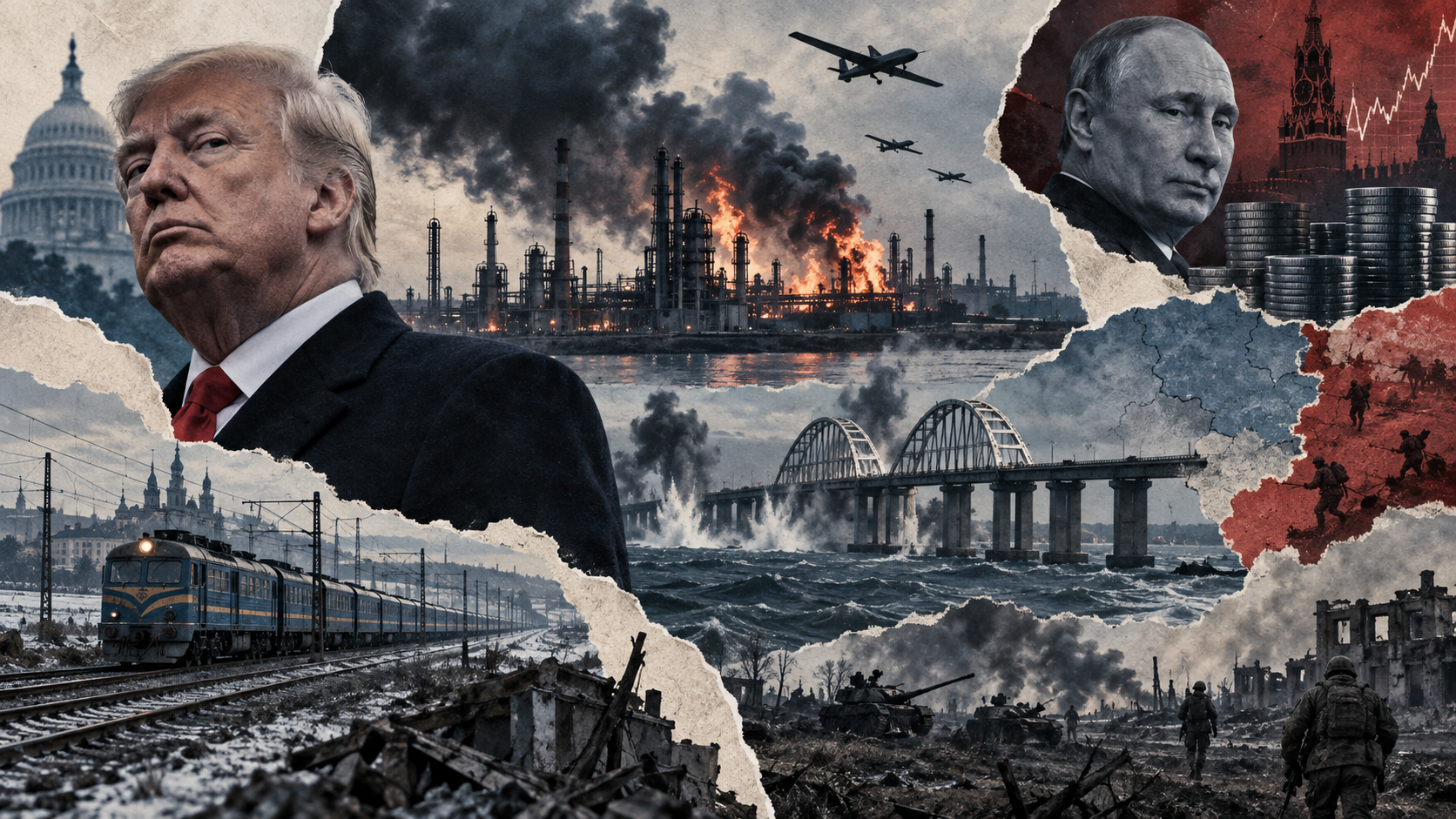
Trump Turns His Back on Zelensky — After Approving the Offensive Himself
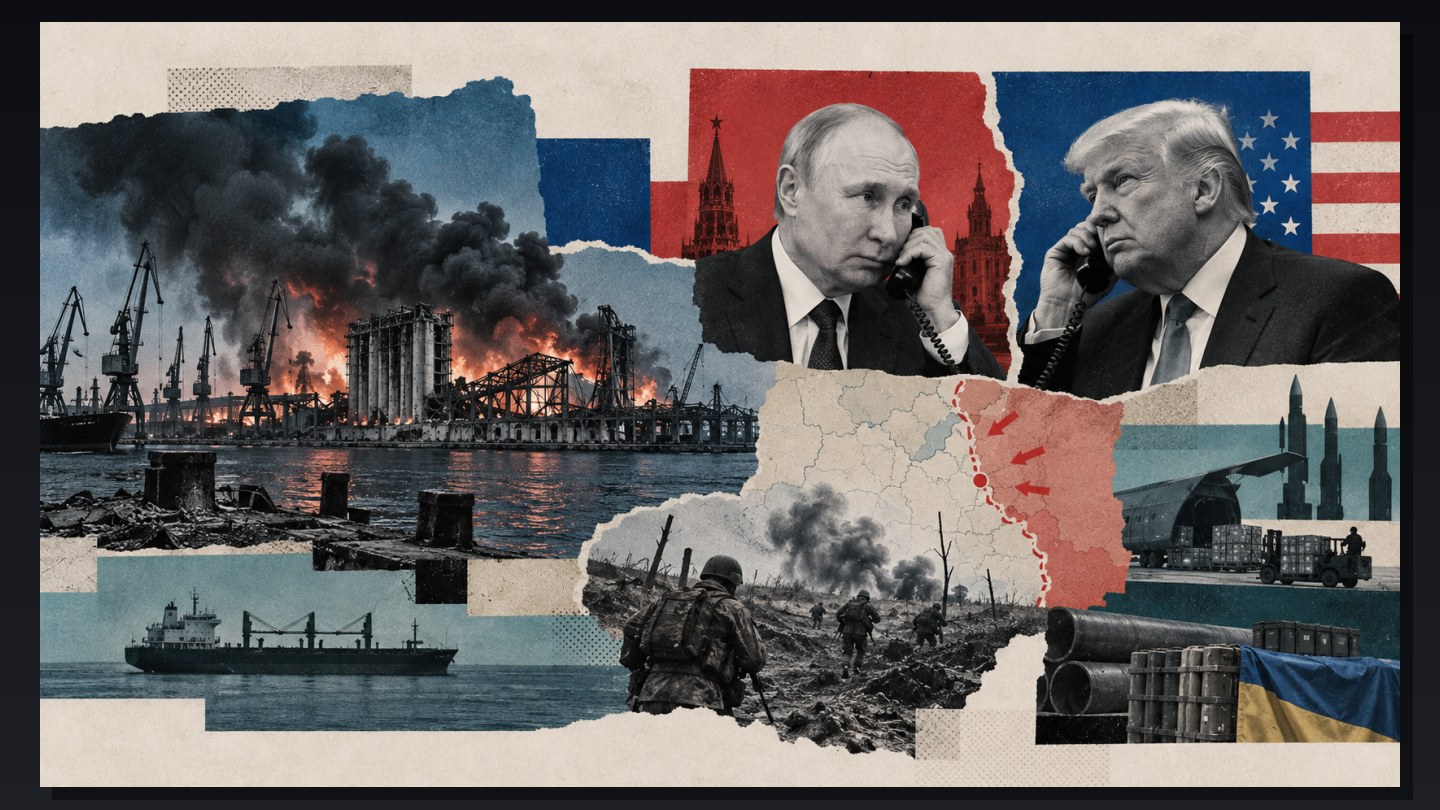
President Trump on Sunday urged Zelensky to halt Ukrainian attacks on Russian refineries, blaming those strikes for record-high US diesel prices. “Zelensky has to do one thing. He has to stop knocking out diesel fuel in Russia,” Trump said from his golf course in Ireland. US diesel prices passed $6 per gallon on Friday for the first time ever — an increase of 63 percent from last year. On Monday, Trump claimed on social media that “Ukraine has agreed not to hit Russian energy targets. Russia has agreed to do the same” — something Ukrainian authorities have not confirmed. Zelensky responded that such an agreement would have to be “reliable and long-term,” and not “collapse after the Russians have held their ‘elections’ and received relief from pressure on petrol and diesel precisely during that period”.
It is a remarkable reversal. According to a series of US media reports — including a lengthy Financial Times investigation — the attacks on Russian refineries were largely made possible, if not directly organised and planned, by US intelligence: the Americans helped Ukraine perfect the drone technology, supplied targeting data on the most vulnerable points in the refineries, and provided the Starlink system through which the drones are controlled.
According to available information, Trump himself was persuaded to give the green light to the entire offensive in the spring of 2025 by hardliners within his own administration — above all CIA Director John Ratcliffe. The purpose was to pressure Putin into negotiations and force him to accept a freeze along the existing lines, as envisaged by the Kellogg plan.
That Trump is now turning on Zelensky and presenting this as solely a Ukrainian responsibility is cynicism of a rare order — and an echo of what the Biden administration said publicly in 2024 while privately doing something very different.
The most likely explanation is that the plan for deep strikes inside Russia was probably conceived as early as autumn 2023, after Ukraine’s summer offensive toward the Black Sea was halted by the Surovikin Line. Then-State Department official Victoria Nuland is said to have outlined precisely this path forward for the Ukrainians at the time: go on the defensive on the ground, build fortifications and a “drone wall,” while simultaneously forcing the Russians to capitulate through long-range strikes.
Such a programme takes time to build production capacity — probably around two years, which fits well with the fact that the offensive only truly accelerated in spring 2026. After the Anchorage summit last autumn, it is reasonable to assume that the Europeans, the CIA and Ukrainian hardliners persuaded Trump that further negotiations with Putin were unnecessary — “the big breakthrough is just around the corner.”
Now that the offensive has failed — Putin remains secure, the Russian economy continues to grow, and Russia is advancing at a pace no counterattack has managed to stop — Trump is turning against Zelensky.
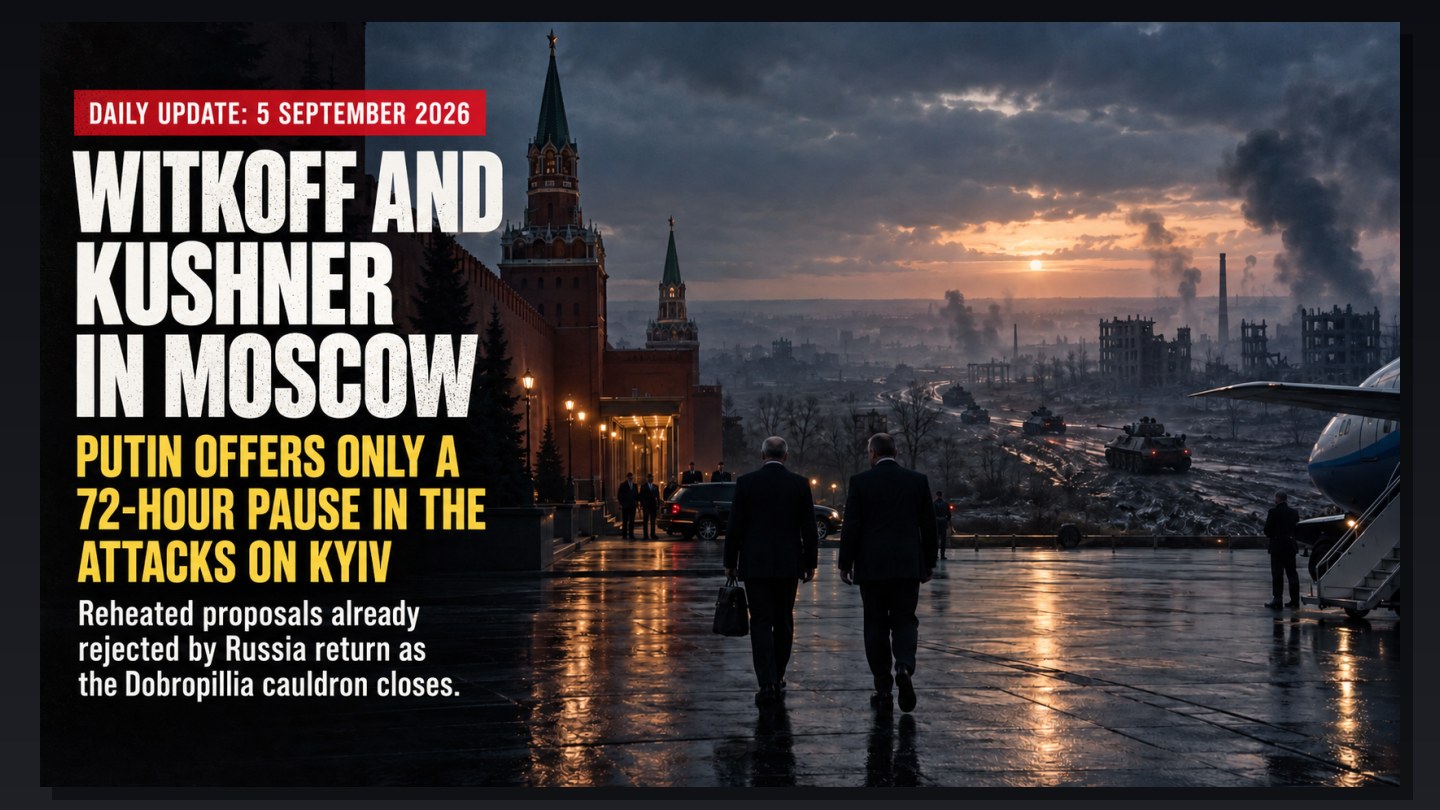
There are signs of internal disagreement in the White House: Ratcliffe still defends his hardline strategy and wants the role of America’s leading negotiator, while Witkoff, Kushner and probably Treasury Secretary Bessent increasingly argue that the entire approach has been a mistake.
The Announced Energy Strikes Are Approaching
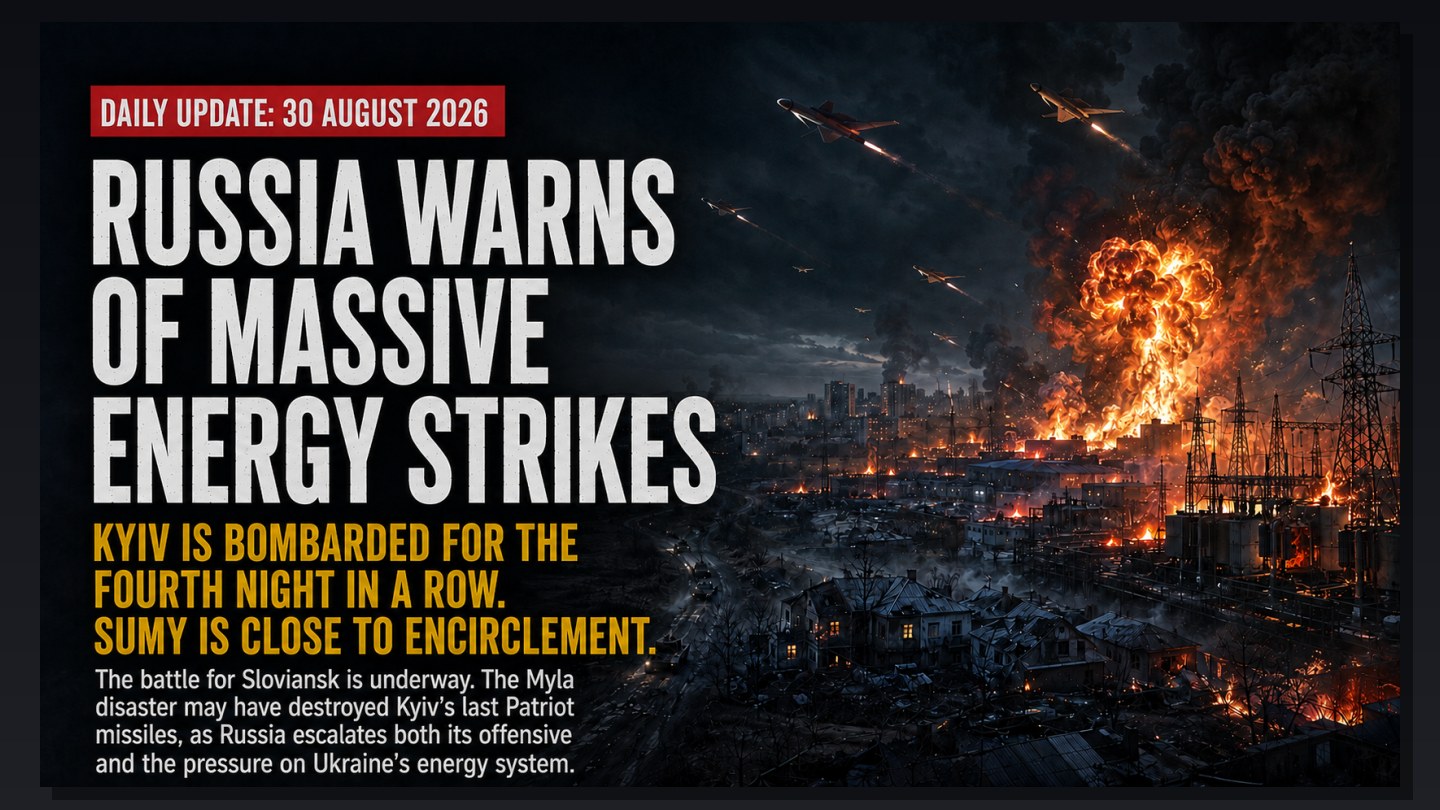
At the same time, US intelligence is reported to have warned Kyiv that Russia is preparing a series of up to 14 massive attacks on Ukraine’s energy system, using ballistic missiles, cruise missiles, hypersonic weapons and several types of drones.
The warning does not come out of nowhere. The Russian Defence Ministry signalled more than a week ago that it had received orders for a large-scale campaign against energy infrastructure, and Putin later confirmed in Bishkek that he had personally given the order.
The timing is particularly interesting. With the exception of the enormous Geran attack over the weekend, the intensity of strikes against central and western Ukraine has declined somewhat in recent days, while attacks against the Black Sea coast have continued unabated. That may indicate that Russia is now stockpiling, repositioning and planning its weapons deployment ahead of a much larger campaign against the energy system before winter.
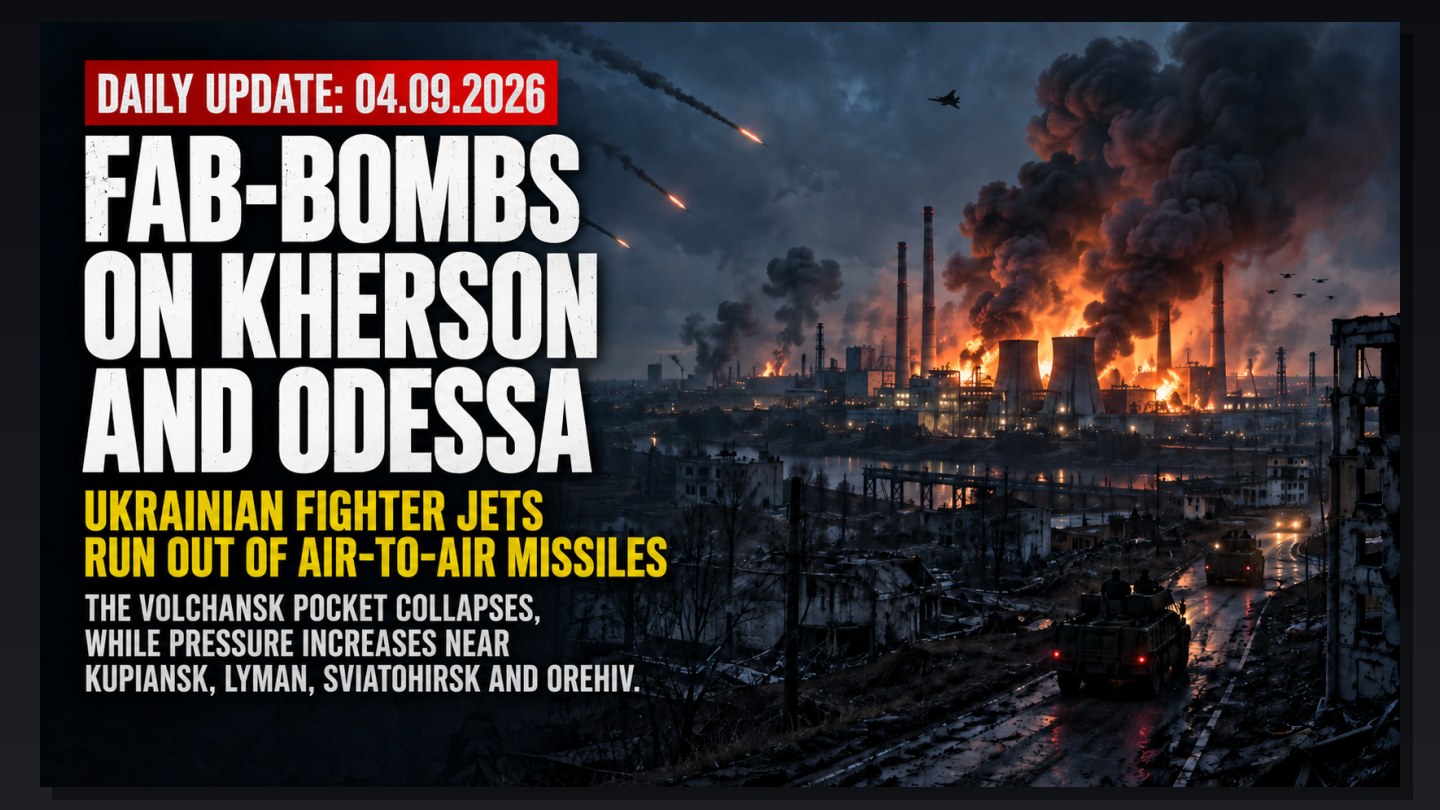
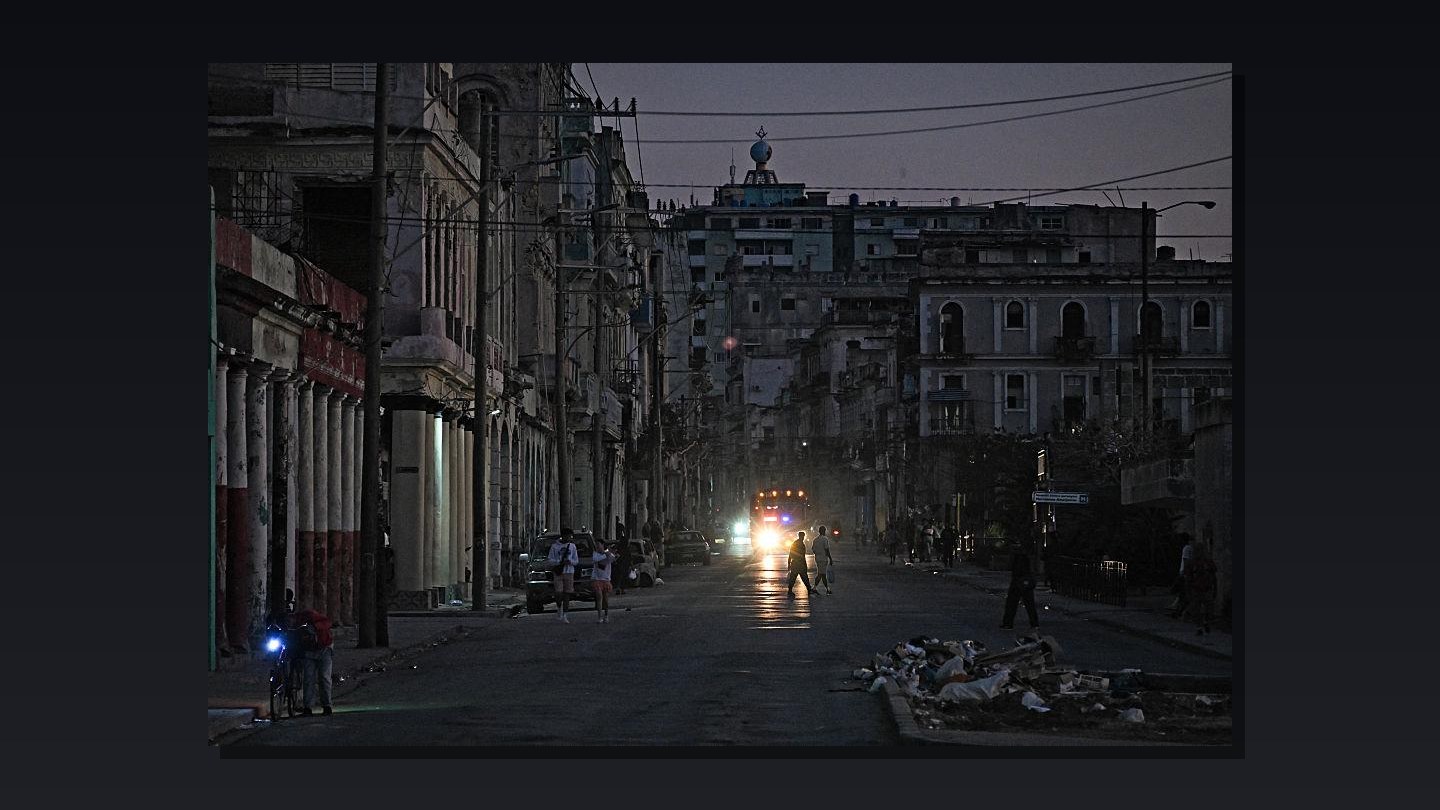
Ukraine is already starting from an extremely poor position. Large parts of its generation capacity have been destroyed or damaged, power plants have come under repeated attack, the Kremenchuk refinery has been hit hard, and Russian Su-34 aircraft have in recent weeks also used glide bombs against energy facilities in the south.
This may therefore be the calm before not merely the storm, but the hurricane.
Zatoka Bridge: A New, Intense Attack
Russian Su-34 bombers reportedly fired precision-guided KAB bombs at the Zatoka Bridge this morning — the connection between Odesa and Romania — while Geran drones have attacked the bridge throughout the day, with reports of a continuing stream of additional drones and missiles launched from Crimea toward the bridge as this is being written.
It increasingly appears that Russia’s objective is to destroy the bridge completely, rather than merely damage it temporarily as in previous attacks.
Bridges are notoriously difficult to destroy from the air — the Crimean Bridge has survived repeated Ukrainian attacks and lost only one traffic lane temporarily after the 2022 truck bombing — but unlike the enormous Western media coverage of the Crimean Bridge, it is striking how little attention the fate of the Zatoka Bridge receives in the British and European press.
Kyiv’s Railway: Cut Piece by Piece
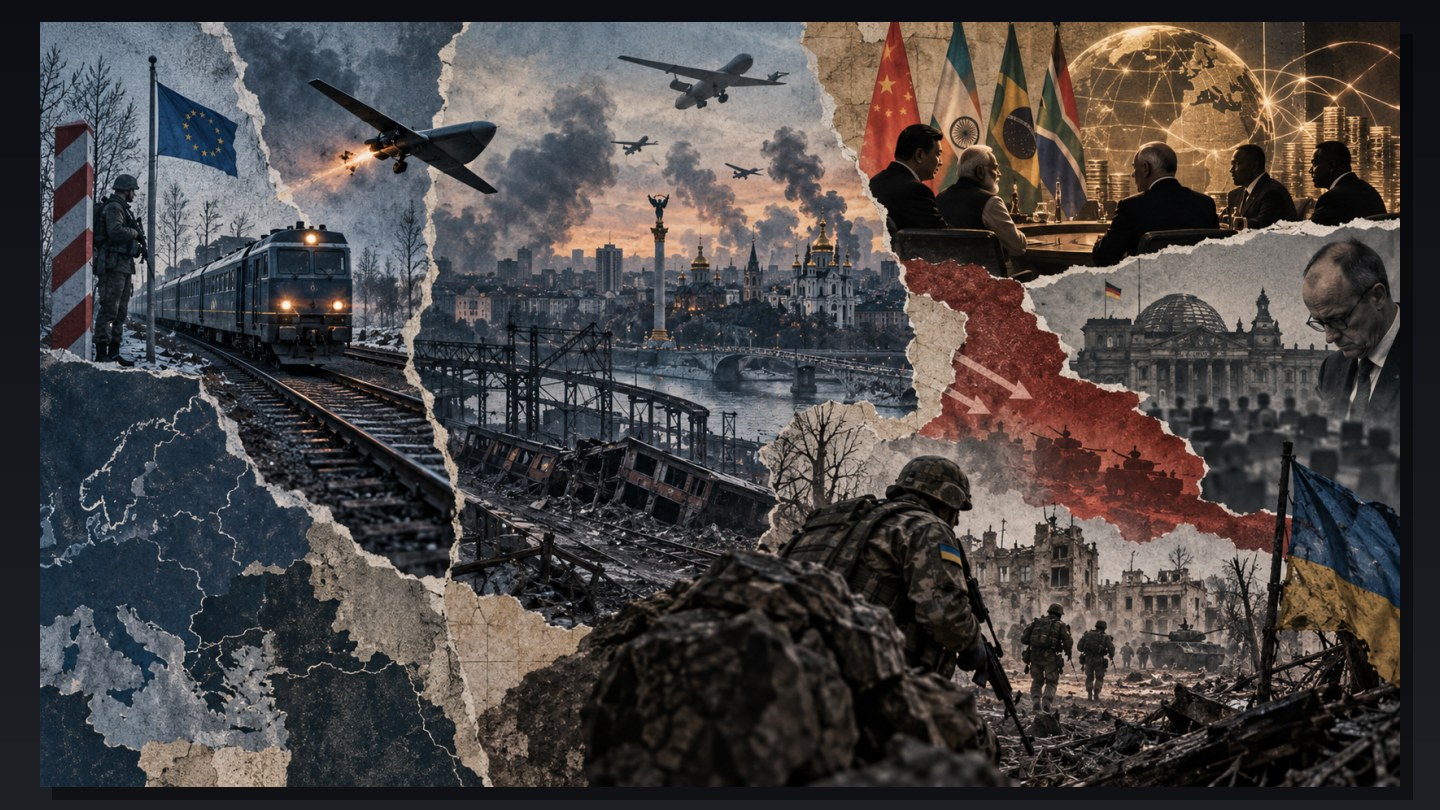
Russia continues, step by step, to narrow Kyiv’s connections with the outside world: the energy system around the city has been repeatedly attacked, warehouses and production facilities have been destroyed, and now the railway line to Poland is coming under pressure.
What is striking about the strike on the locomotive at Yahodyn over the weekend is not only the timing, but the precision — it was the locomotive, not the carriages carrying passengers, that was hit, while several Western dignitaries had passed through the area after the Yalta forum in Kyiv.
Among them were Boris Johnson, Carl Bildt, Polish Foreign Minister Radosław Sikorski, former CIA Director David Petraeus — who is said to have witnessed the attack itself — as well as Britain’s National Security Adviser Jonathan Powell.
That the Russians knew about the forum and the timing of the departures is hardly accidental. The signal is clear, regardless of whether the particular train that was hit was actually carrying any of these individuals: Russia is gradually tightening its grip on the entire railway connection, with the long-term objective either of forcing Western governments to evacuate their personnel from Kyiv — thereby isolating the Ukrainian leadership from its supporters — or of pressuring the Ukrainian government to relocate to a city farther west, which would further weaken its legitimacy and control over the rest of the country.
The Front: The Pocket East of Vovchansk Collapses, Orikhiv Near Fall
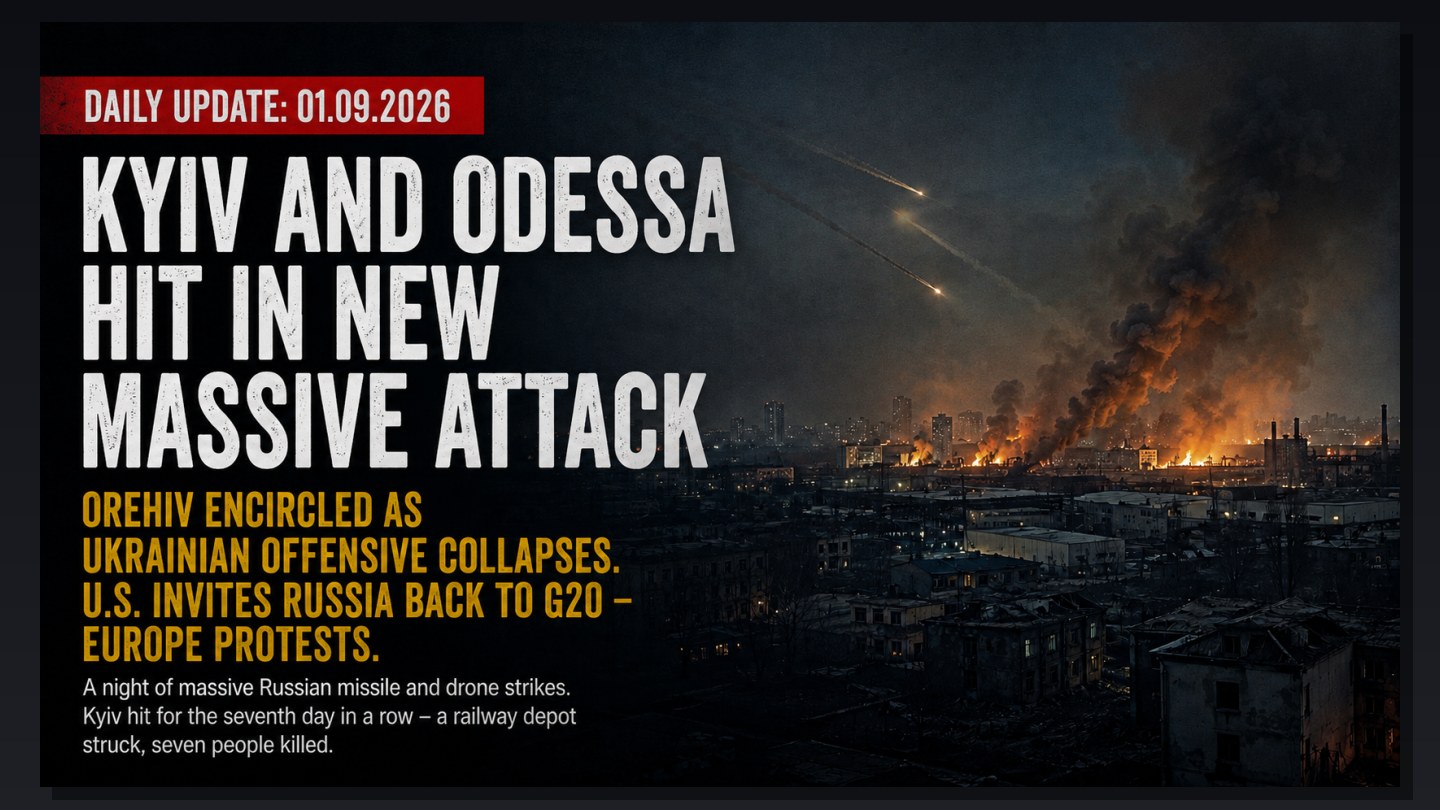
In northeastern Kharkiv region, the Russian Defence Ministry reports daily the capture of new positions in the triangular pocket east of Vovchansk, where around 1,700 Ukrainian soldiers are said to be encircled.
Claims on Ukrainian Telegram channels of a successful counterattack to break the encirclement have clearly failed, as the forces remain trapped and, according to available information, resistance is collapsing rapidly.
The Russian newspaper Readovka reports that the battle for the town of Velykyi Burluk farther south will begin as soon as this pocket is cleared — and if the town falls, the whole of eastern Kharkiv region is expected rapidly to come under Russian control, placing Russia in a position either to intensify pressure farther south or, if the moment comes, prepare a future advance toward Kharkiv city from the east.
A smaller pocket containing around 180 Ukrainian soldiers is also reportedly encircled at another location farther west.
In the Zaporizhzhia region, reports indicate continued Russian advances through Orikhiv itself, as well as the capture of the village of Novoandriivka west of the city and an advance through Predzhenia north of it.
There are now rumours that Russian forces have reached the village of Yurkivka, which lies close to the main remaining supply route into Orikhiv from the west — if confirmed, this would mean Russia is in the process of fully closing the pocket around the city and cutting off the last real route of retreat for the remaining Ukrainian forces there.
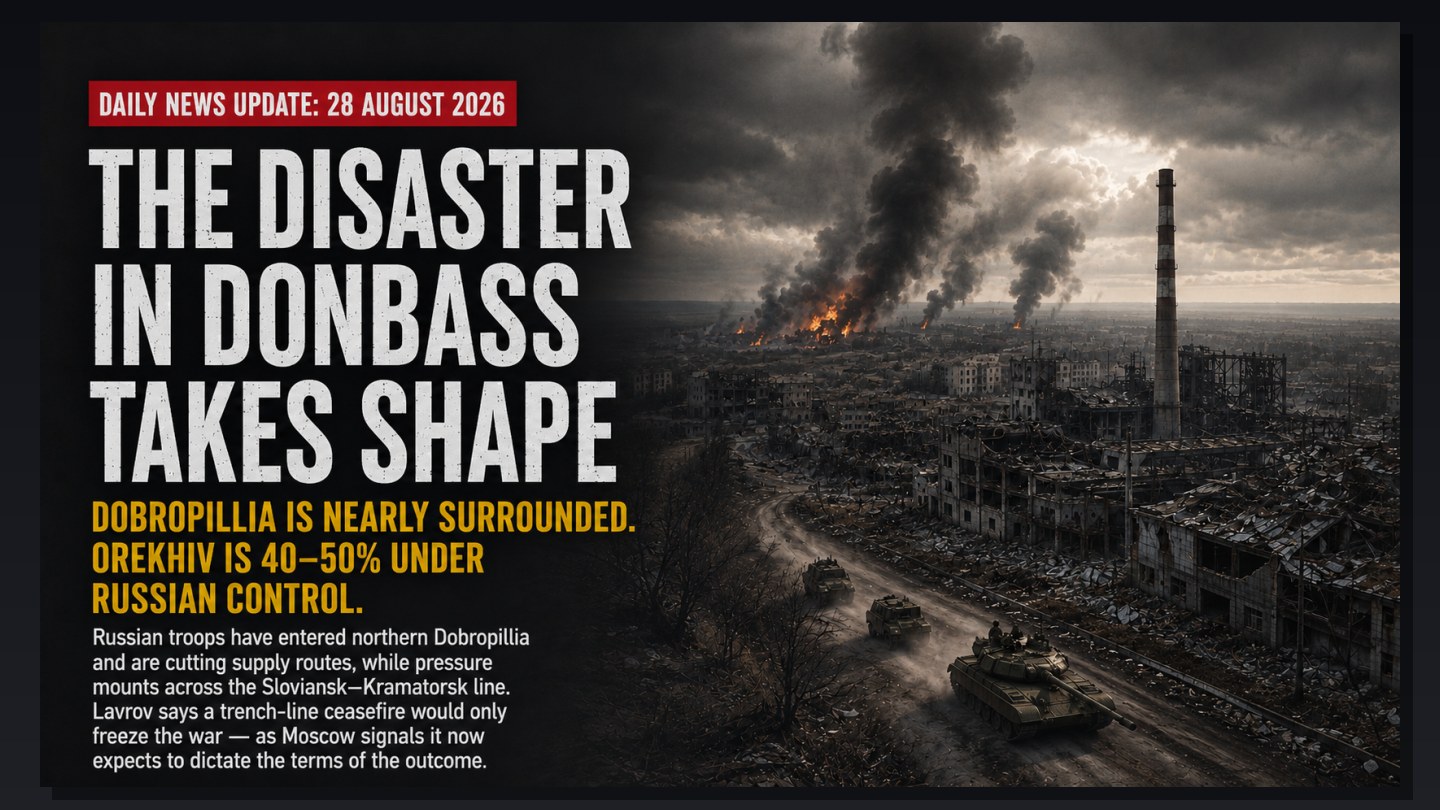
In Donbas, Russian forces continue to expand their control west of Druzhkivka, with reports that infantry — not merely reconnaissance groups — are now inside the city itself.
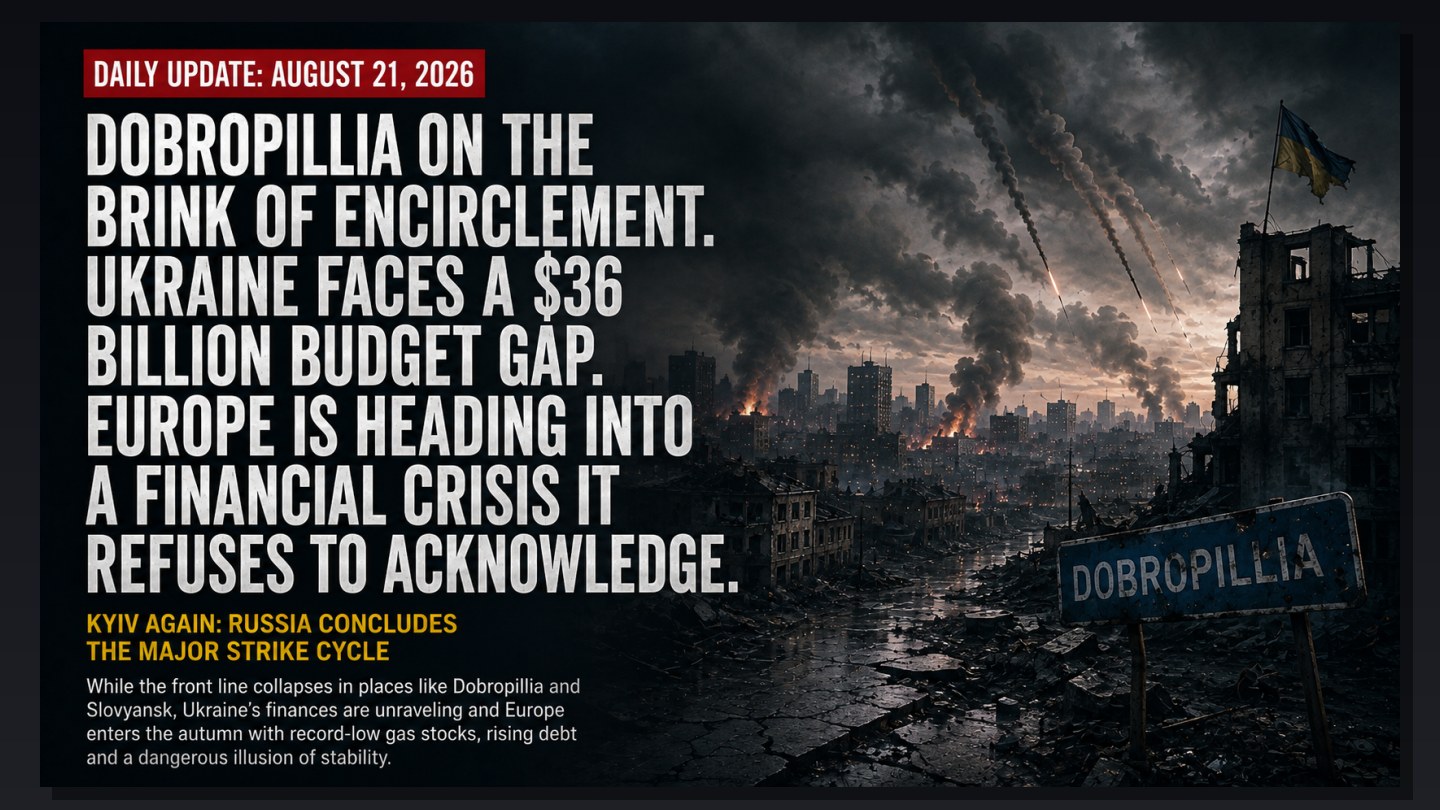
Oleksiievo-Druzhkivka farther south is, according to available information, now encircled, with remaining Ukrainian resistance concentrated in the northern part of the town. The situation in Dobropillia continues to deteriorate, and there is speculation that the village of Dobropillia itself may soon fall.
Farther north near Mykolaivka east of Sloviansk, where the supply route has long been effectively cut, the pressure is assumed to be similarly intense, although less information is available from that sector.
Lyman: Still No Confirmation — but the Russians Hint at Imminent “Good News”
There is still no video or film confirmation of Ukrainian claims of a successful counteroffensive north of Lyman, despite several major Western media outlets — including the Daily Telegraph in at least two articles — now beginning to repeat the story uncritically.
The only available video footage shows Azov leader Andriy Biletsky walking through an area near the monastery at Sviatohirsk — which lies south of the Siverskyi Donets River, while the city itself, which Russia claims to control, lies to the north.
The fact that Russia did not specifically mention the monastery when it originally announced the capture of Sviatohirsk suggests that the monastery area remained under Ukrainian control — not that the entire city had been retaken by Ukraine, as some have suggested.
Now, however, reports are circulating from Russian sources claiming that the opposite is true — that Russia has won an important victory precisely in this area, and that an official announcement is expected within the next few days.
If the Ukrainian defence in the Kharkiv region farther north collapses completely, it would in any case allow Russia’s Group North to send additional forces toward the Lyman sector from the north — potentially into the rear of any Ukrainian units participating in the alleged counteroffensive there.
Macron, Sikorski — and the Background to Putin’s Warning
A possible explanation has also emerged for why Putin chose this particular moment to issue his explicit warning about European troops in Ukraine.
According to information now circulating, he was briefed by Russian intelligence that Macron, at the meeting of the “coalition of the willing” on 4 September, once again pushed for the deployment of European forces in Ukraine.
If this is true, Putin’s statement that such countries would find themselves “at war with Russia” was not an abstract warning, but a direct response to a discussion that is still taking place in European capitals.
Polish Foreign Minister Radosław Sikorski has meanwhile made his own remarkable statement: if Ukraine can knock out half of Russia’s refineries in six weeks, Poland should be able to do it in six days.
It is precisely this kind of rhetoric that appears to be leading Moscow to treat the possibility of direct European intervention as something more than a hypothetical risk.
Three Western Voices Begin Saying the Same Thing

He asks directly: what is the actual strategic objective of Western support for Ukraine? After four and a half years, he finds no clear answer.
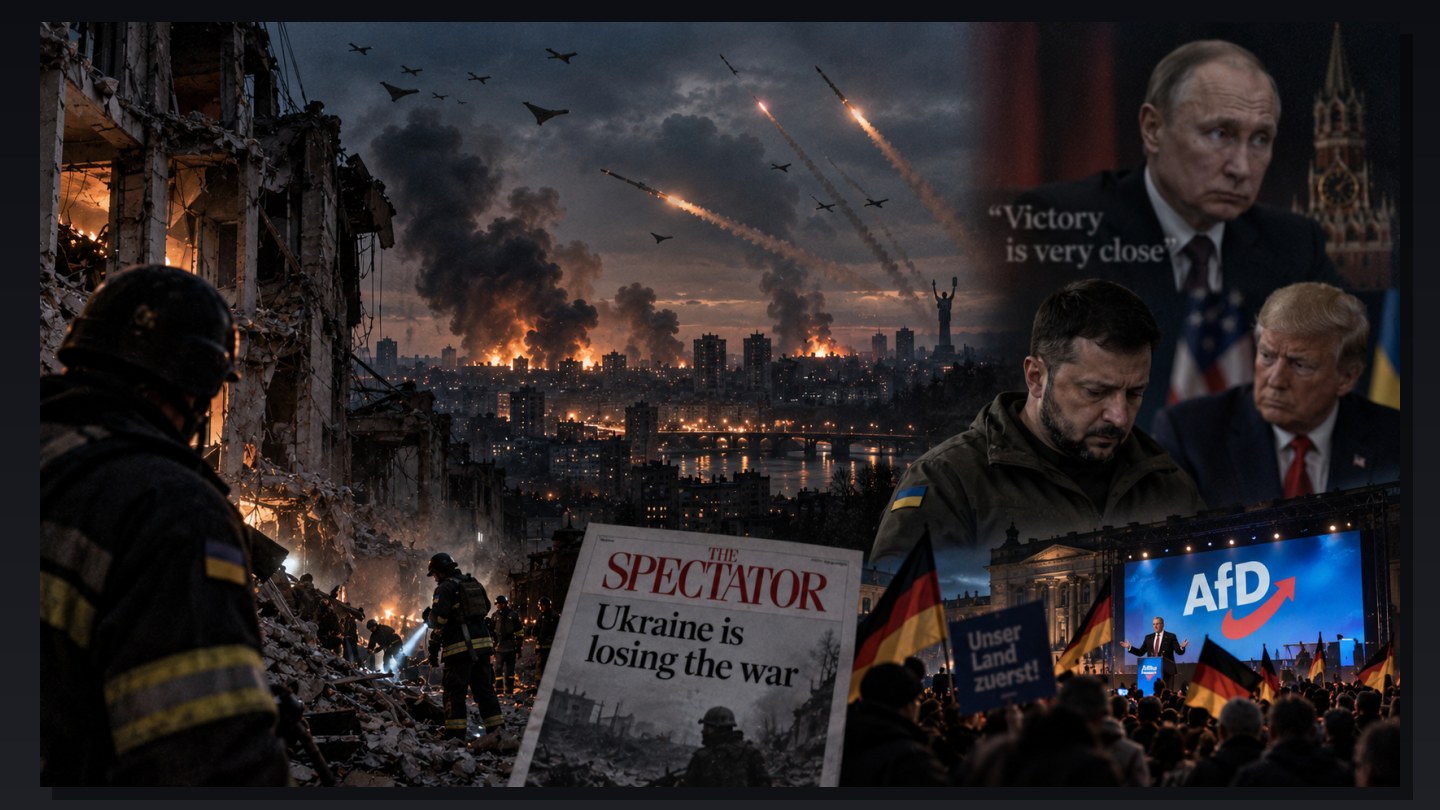
Münchau’s article is the third in a series of critical Western voices of this kind over the past week, following Owen Matthews in The Spectator, who argued that Ukraine is losing the war, and Eric Schmidt in the Washington Post, who warned that Ukraine’s way of fighting can no longer match what is coming.
None of these articles has received any visible response from Western political leaders or commentators. Under Münchau’s own article, one instead finds the usual wall of dismissal, with references to the unconfirmed Lyman counteroffensive and to authorities such as the Daily Telegraph and the Institute for the Study of War.
Russia’s Economy: Surplus, Not Recession
Central Bank Governor Elvira Nabiullina recently explained why she cannot cut interest rates any further: the economy has returned to growth, partly as a result of easier monetary policy earlier this year, while inflation has edged up somewhat — she blames rising oil prices, although it could just as easily be the result of the monetary policy itself.
Whatever the cause, fears of a Russian recession have proved unfounded.
Russia reported a budget surplus of around $8 billion in August, driven largely by dividend payments from state-owned companies. The sharply higher oil prices had not yet fully fed through into revenues — making an even larger monthly surplus in September possible if prices remain at current levels.
With Houthi control over Yemen’s Red Sea coast pushing oil prices higher, China and India are simultaneously buying Russian oil as quickly as they can because alternative sources of supply are limited.
Conclusion: No Reverse Gear
Brent crude has now passed $107 per barrel, European gas prices are at their highest since the end of 2022, and everything points in one direction on both fronts — Ukraine and the Middle East.
Yet there is little willingness in Western capitals to adjust course.
It is, as has been said of neoconservative forces for years, a system with no reverse gear — and the consequences of that are now becoming fully visible.