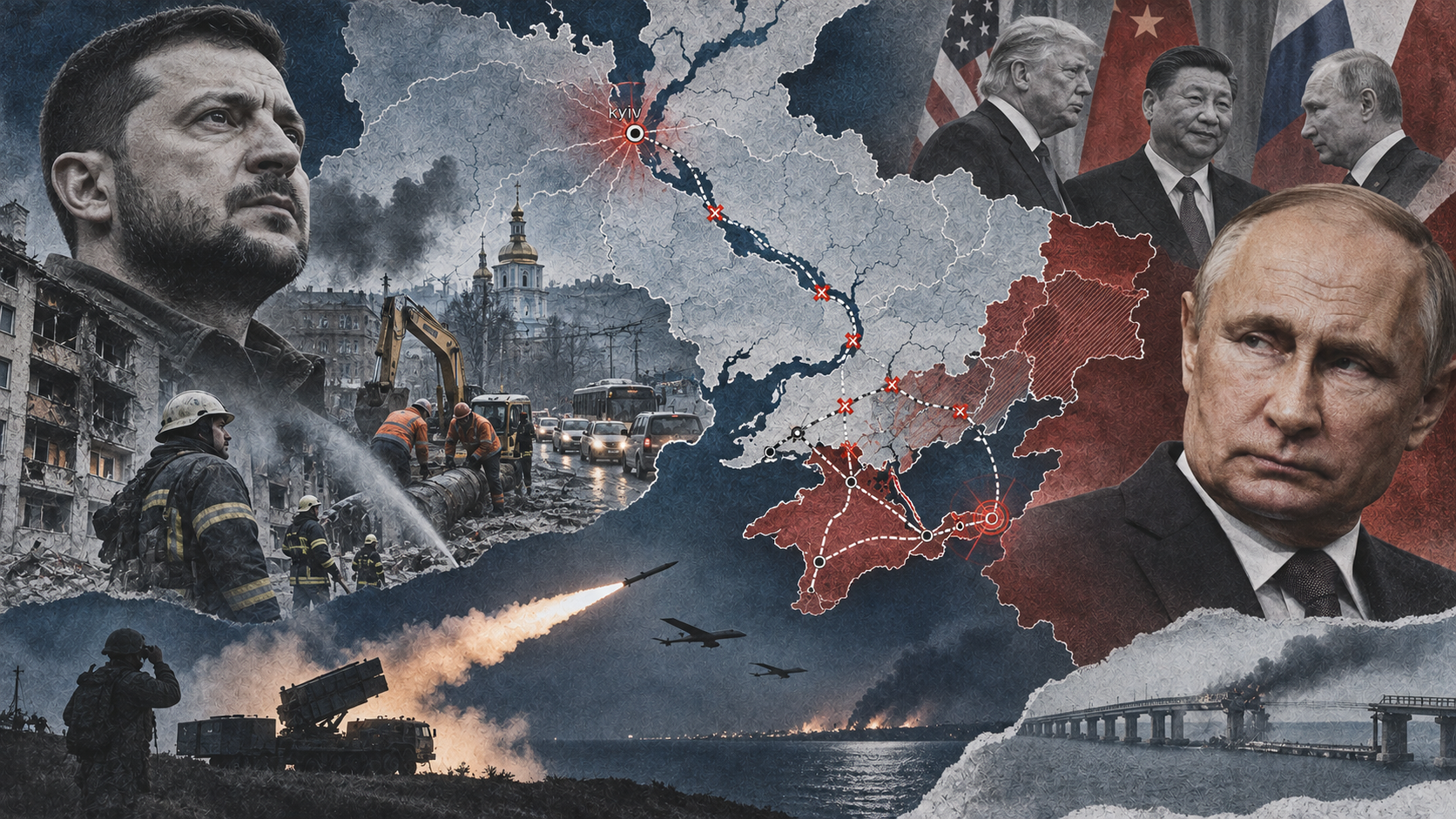
Kerch Bridge heavily damaged after new Ukrainian attack
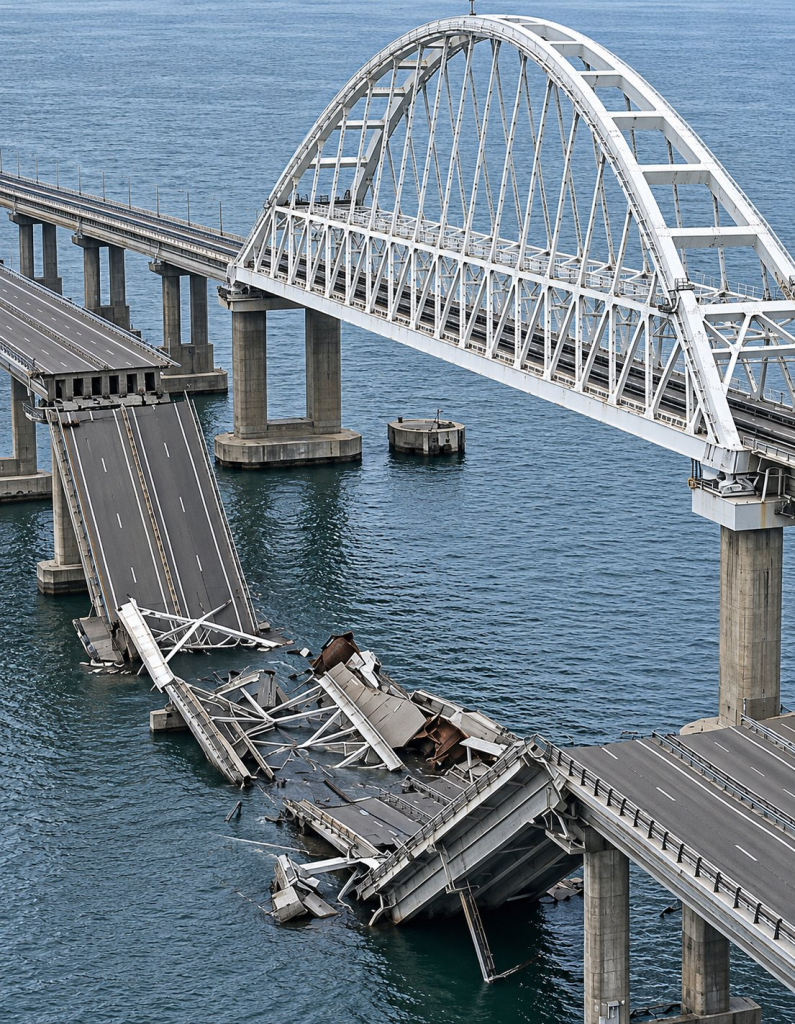
The war over the bridge connections between Russia and Ukraine has entered a new phase. On the night of November 17, Ukraine carried out a extensive attack on the Kerch Bridge, which connects Crimea with the Russian mainland. A large part of the road bridge’s steel structure has collapsed into the Kerch Strait, and the road connection has been disabled. At the same time, Russia has attacked both the northern and southern bridges over the Dnipro in Kiev with ballistic missiles. Both were closed after the attacks, and Ukrainian authorities are working to assess the damage and restore traffic.
The Ukrainian attack on the Kerch Bridge came after a minor drone strike the day before. This time, cruise missiles were also used, including the Ukrainian-produced Flamingo missile, which President Volodymyr Zelensky himself confirmed he was involved.
The exact extent of the damage has not yet been independently determined. At the same time, videos are circulating allegedly showing the extensive destruction on the Kerch Bridge. At least one of these, published by UNN, has already been identified as AI-generated by the fact-checking website Lead Stories. This underscores the need to distinguish between documented injuries and manipulated depictions of the attack.
Russian authorities have established a government commission to organize the repairs. Deputy Prime Minister Marat Khusnullin briefed Vladimir Putin on the situation and was tasked with preparing a detailed plan for reconstruction.
The extent of the damage means that repairs may be lengthy. There is currently no confirmed timeline.
A bridge with both military and symbolic significance
The Kerch Bridge has been a Ukrainian target since the beginning of the war. I In October 2022, it was damaged by a powerful truck explosion, and in July 2023 it was again hit by an attack.
The bridge holds great symbolic significance for Russia. It was opened after Russia annexed Crimea in 2014, and Putin himself drove over it at the opening of the road connection in 2018.
But its military significance has changed.
Since 2022, Russia has developed alternative road and rail connections through the areas it controls north of the Sea of Azov. These connections make Russia less dependent on the Kerch Bridge for supplies to forces in Crimea and southern Ukraine.
That does not mean the bridge is unimportant. A prolonged closure will increase the strain on alternative transport routes and complicate supplies for both military units and the civilian population in Crimea.
However, the symbolic loss is significant. Ukraine has managed to hit one of Russia’s most well-known infrastructure projects, despite extensive Russian air defense and previous attempts to protect the bridge from missiles and drones.
Russia strikes back against the bridges over the Dnipro
The night before the Ukrainian attack became known, Russia carried out new ballistic missile attacks against Kiev.
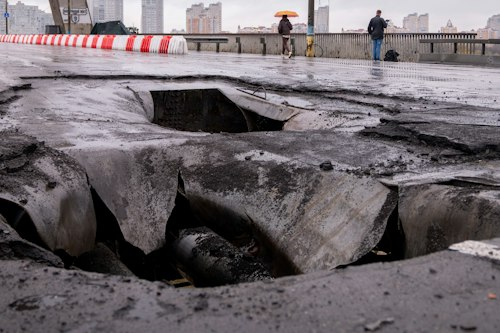
According to Zelensky, four ballistic missiles fired at the southern bridge and three at the northern. Both bridges were damaged, and traffic had to be stopped.
Kyiv’s mayor, Vitaliy Klitschko, visited the damaged structures and stated that experts were investigating the extent of the damage. The attacks also affected the city’s water and heating infrastructure.
Later Tuesday, it was Opened for limited one-way traffic over the southern bridge. The northern bridge was still closed.
The attacks are part of a broader Russian campaign against transport links across the Dnipro.
In recent weeks, Russia has carried out repeated attacks on the bridges in both Kiev and Zaporozhia. In the latter city, the Preobrazhensky Bridge was closed after a Russian attack on November 16, while the remaining connections are subject to restrictions on heavier vehicles.
The military significance is obvious. Dnipro divides large parts of Ukraine in two, and a significant portion of Ukrainian forces operate east of the river.
If the most important bridge connections are taken out of service for an extended period, the transport of supplies, vehicles, and military equipment could become significantly more difficult.
However, there is a difference between damaging or temporarily closing a bridge and destroying the entire transport network. Ukraine has several crossing points and can redirect parts of traffic, but the capacity of the alternative routes is limited.
Two different strategic consequences
The attacks on the Kerch Bridge and the Dnipro Bridges may at first glance appear as mutual attempts to hit the opponent’s most important transport links.
But the consequences are different.
Russia has alternative land connections to Crimea through the territories it controls in southern Ukraine. Although these are vulnerable to Ukrainian attacks, they provide some flexibility if the Kerch Bridge is closed.
Ukraine, on the other hand, depends on transport over the Dnipro for the connection between the western parts of the country and large parts of the front line in the east.
Russia’s repeated attacks could therefore have an ever greater impact if damage accumulates and repairs do not keep pace.
At the same time, the Ukrainian attack shows that Russia cannot consider its most important transport connections secure either. Whether Ukraine manages to follow up the attack with new hits, and whether Russia manages to maintain its alternative supply lines, will affect the extent of the military consequences.
Ukraine’s missile capacity and the question of Western support
The Ukrainian attack has also raised questions about the country’s ability to carry out precision strikes against well-protected targets.
Zelensky stated that The operation included several Ukrainian-produced weapons systems, including Flamingo cruise missiles, Neptune missiles, and attack drones.
The transcription raises the possibility that Starlink or the military Starshield system may have been used for navigation or target management. However, it is not publicly documented that these systems controlled the missiles that hit the bridge.
It has also not been confirmed that the USA directly participated in the planning or execution.
Nevertheless, the question has diplomatic significance. A possible expansion of Western support for Ukrainian long-range attacks could affect the relationship between Washington and Moscow, which is simultaneously trying to continue negotiations on the war.
Putin travels to China while negotiations continue
The attacks come just two days before the planned meeting between Vladimir Putin, Donald Trump, and Xi Jinping in Shenzhen on November 19.
The meeting has been confirmed by the authorities of Russia, the USA, and China and is to take place in connection with the APEC summit.
Although the main topics are expected to include the relationship between the three great powers, the war in Ukraine will be difficult to avoid.
In recent days, Russia has repeatedly stated that the country’s demand for a new European security arrangement must be included in any lasting peace agreement. The US is still trying to keep the talks going, while European governments work to secure a place in the negotiation process.
The attacks on the bridges also show that neither party has halted their military operations while diplomacy is ongoing.
For Ukraine, the challenge is to preserve transport links across Dnipro and maintain supplies to the front. For Russia, it is about protecting connections to Crimea while maintaining pressure on Ukrainian infrastructure.
Both sides have this week demonstrated the ability to inflict significant damage on the enemy. But the consequences of the attacks for the further development of the war depend on how long the connections remain closed and how quickly repairs and alternative transport solutions can be implemented.