
The Reuters revelation: The US and Ukraine prepare an offer Russia will not take
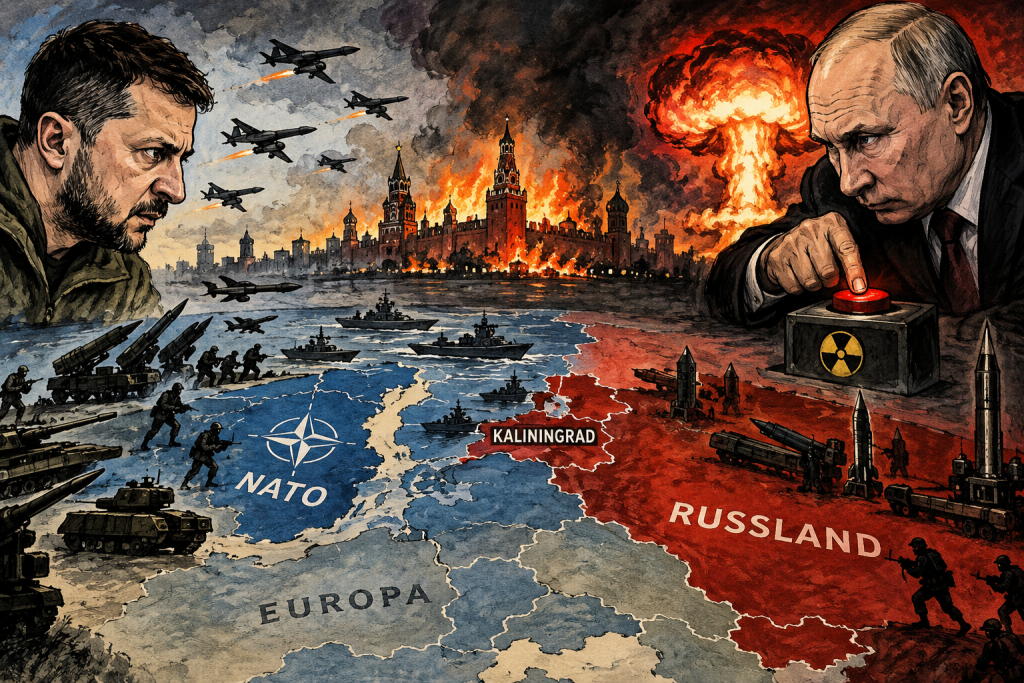
Reuters reports that Ukrainian and American intelligence agencies and officials have discussed a proposal for an “air truce” – a mutual halt to drone and missile attacks over both countries’ territories – intended to be presented to Russia as part of a new diplomatic round. Peskov replied that the Kremlin “considers it premature to comment” and that these are “newspaper reports and nothing more” – a phrasing that in Russian diplomatic jargon means they know about the proposal, do not take it seriously, and are waiting for something more concrete to be presented.
But Putin in effect rejected this proposal six weeks ago, at the St Petersburg forum, when he characterised it as not serious. What he said then was the simple fact that there is no comparison between Ukrainian drone attacks on Russian territory and the disproportionately more destructive Russian attacks on Ukraine. A mutual halt would thus in practice serve only Ukrainian interests: the Russian FAB bombs over Odesa would stop, the Russian ballistic missiles against Kyiv would stop, while the drone offensive Ukraine has already shown itself unable to carry out with any strategic effect would not continue either.
It is not an equal exchange. And Russia has no reason to accept it.
What is driving the proposal now is not a belief that it will work, but desperation: the 40-day drone offensive Zelensky ordered beforehand is coming to an end without having achieved its declared goal of forcing Russia to the negotiating table. Instead, the offensive has given Russia justification to escalate against Odesa and to carry out daily attacks on Kyiv. The diplomatic move comes after the military failure – not before it.
Putin on Navy Day: Left-bank Ukraine is Russia – and western Ukraine is on borrowed time
Vladimir Putin marked Navy Day on 26 July by meeting Russia’s top naval officers at the Admiralty in St Petersburg. The traditional naval parade with around 200 warships was cancelled – for fear of Ukrainian drone attacks. Instead, Putin gave his speech in front of a painted backdrop of warships, while meeting his admirals behind closed doors. It is a curiosity that says something about the situation: Russia is powerful enough to bomb Kyiv daily with ballistic missiles, but cautious enough to cancel its own naval parade for fear of Ukrainian drones.
What Putin said in this setting is far more important than the circumstances themselves. He commented on the historical basis for the current war – and what he said should be read carefully. He recalled that “left-bank Ukraine” – all Ukrainian territory east of the Dnipro river, including Donbas, Kharkiv, Sumy and Chernihiv – has historically always been regarded as part of Russia, not of Ukraine, going back to the 17th century. It was Lenin who constructed the Ukrainian Soviet republic that included these territories.
And then came what will stand as the week’s most important diplomatic signal: “Stalin’s gifts in the form of the western Ukrainian territories will sooner or later have to be returned to Poland, Hungary and Romania,” Putin said. “It may not happen tomorrow or the day after. It may take one year, two years, ten years or fifteen years”. That is: the historical anomalies – the territories Stalin attached to Ukraine after the Second World War – will be corrected. Lviv, Ternopil, Volyn – all these regions that were never historically part of Russia, but were attached to the Ukrainian Soviet republic for geopolitical reasons in 1939–1945 – will in Putin’s view eventually return to their “natural owners”.
It is not a negotiating position. It is a historian’s forecast from a man who controls the world’s largest nuclear power and is currently advancing along the entire line of contact in Ukraine. It echoes what Putin already said at the naval officers’ meeting: he is “absolutely convinced” that Russia will prevail completely – and that history will “put everything in its place”.
Dobropillia stormed – Sloviansk in sight
From the battlefield, Russian military sources report that their forces have pushed deeper into Dobropillia and are approaching the town centre. Before Dobropillia, Bilytske and the village of Shevchenko fell – two fortified points that formed the town’s eastern and southern defensive belt. Ukrainian resistance is reported to be fragmented. Dobropillia is a town of 28,000 inhabitants, isolated in the steppe – without other Ukrainian fortified towns nearby to lean on or fall back to. West of Dobropillia there is open steppe all the way to the Dnipro river.
The fall of Dobropillia will allow Russian forces to drive north and begin cutting the supply lines from the west to Sloviansk and Kramatorsk – where tens of thousands of Ukrainian soldiers are now concentrated. Reports from Oleksiivka, immediately north of Kostiantynivka and south of Kramatorsk, suggest that Russian forces are already inside the town centre. It is the operational dynamic we have seen repeated from Avdiivka to Pokrovsk: encirclement, logistical strangulation, and finally a chaotic collapse.
In the Zaporizhzhia region, another village west of Ternuvate has been taken, weakening the eastern defensive positions around Orikhiv. In the Kharkiv region, Bila Kolodiazna is reported to be effectively encircled, and Russian forces are moving towards the forest belts immediately north of Kharkiv city.
Drapatyi’s audit: A new commander looking around while the house burns
The new commander-in-chief Mykhailo Drapatyi did not choose to travel to Donbas or Kharkiv to assess the situation on the ground. Instead, he launched a broad audit of the Ukrainian army’s real strength and condition along the entire line of contact – and set aside several weeks for this work. It is in all likelihood a wise long-term initiative: according to internal Ukrainian reports, the real condition of the Ukrainian army is far worse than the official figures show, and many brigades are dramatically under strength. But launching such an audit while Dobropillia is being stormed and the Sloviansk conurbation is about to be encircled sends a signal of an inability to prioritise.
The audit also serves a political purpose: as the bad news from the front line continues to pile up, Drapatyi, with all the figures in hand, will be able to point to Syrskyi’s tenure and say he took over a military in far worse shape than Syrskyi’s farewell statement claimed. It is a form of cautious self-protection from a general who already knows that one day he will be made the scapegoat for what in any case looks like an unstoppable development.
The US out of precision weapons: What has never happened before
What is now emerging about why the US halted its strikes on Iran is historic: according to the New York Times and the Wall Street Journal, General Caine of the Joint Chiefs of Staff and Vice President JD Vance informed Trump that stocks of precision-guided missiles are approaching a critical minimum, and that further strikes at the current pace would leave the US without sufficient capacity to handle other crises. It is the first time since the American Civil War in the 1860s that the US has been forced to halt a war because it is running out of the necessary weapons.
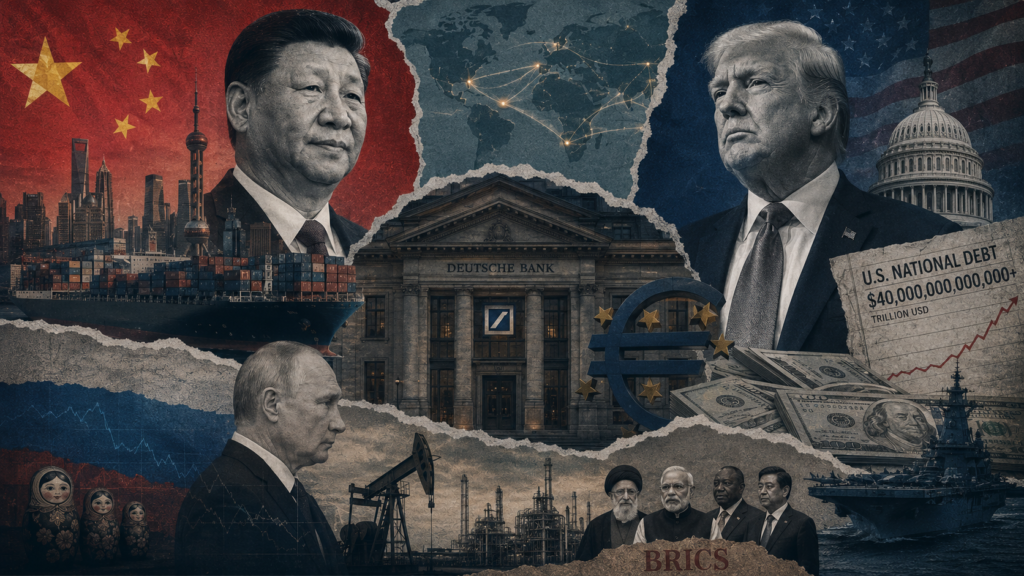
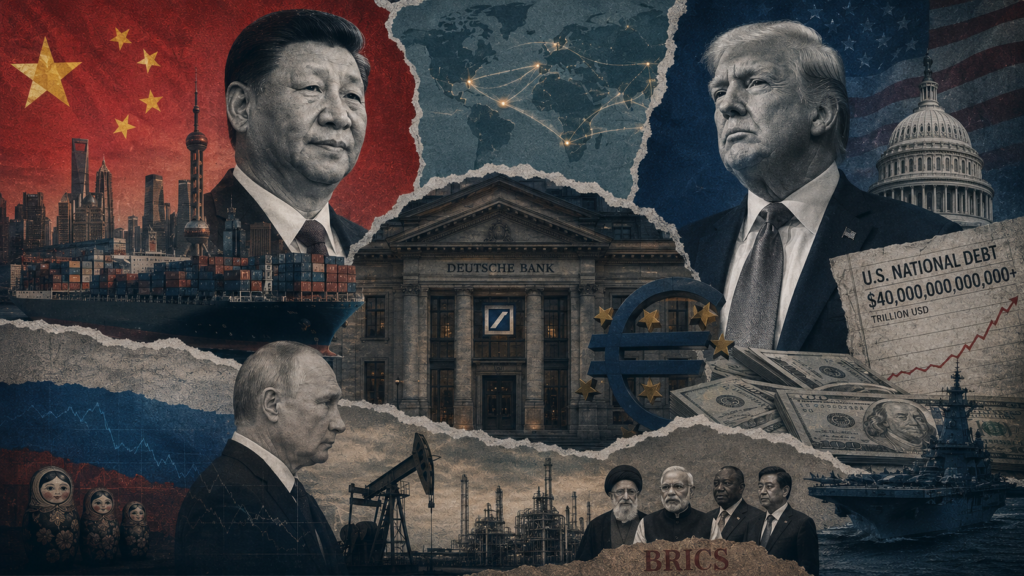
Reuters reports that American industry leaders are telling the administration it is impossible to reach the goal of rare-earth self-sufficiency by 2027 – hardly any progress has been made since the goal was set. China, in response to the EU’s 21st sanctions package, imposed export restrictions on 14 European companies, including Rheinmetall – Europe’s largest producer of artillery ammunition. It is a carefully calibrated retaliation: not broad enough to trigger a formal trade war, but precise enough to hit the critical link of the European defence industry.
Russia, by comparison: Russia’s industry minister says production of air defence missiles and related systems has increased “several-fold” since last year. These are de facto two industrial powers in two very different phases of their arms-industrial development – and they are moving in exactly opposite directions.
The Daily Telegraph admits: The war against Iran is lost – but takes no blame
A Daily Telegraph editorial this week confirmed what has become clear to everyone following the situation: the war against Iran must end because the US is running out of precision weapons and the world is running out of fuel. It is an honest analysis – but it is not accompanied by any acknowledgement that the Daily Telegraph was for years the most persistent British advocate of a military strike on Iran, consistently claiming that Iran was a house of cards, that the population was ready to rise up, that the missile systems were overrated, that the attack would be a total success.
None of these claims held true. And after the defeat, it is presented as if Donald Trump alone is responsible. It is the classic political-media move: victory has many fathers, defeat is always an orphan.