Black Sea: Attacks Move Closer to NATO Countries
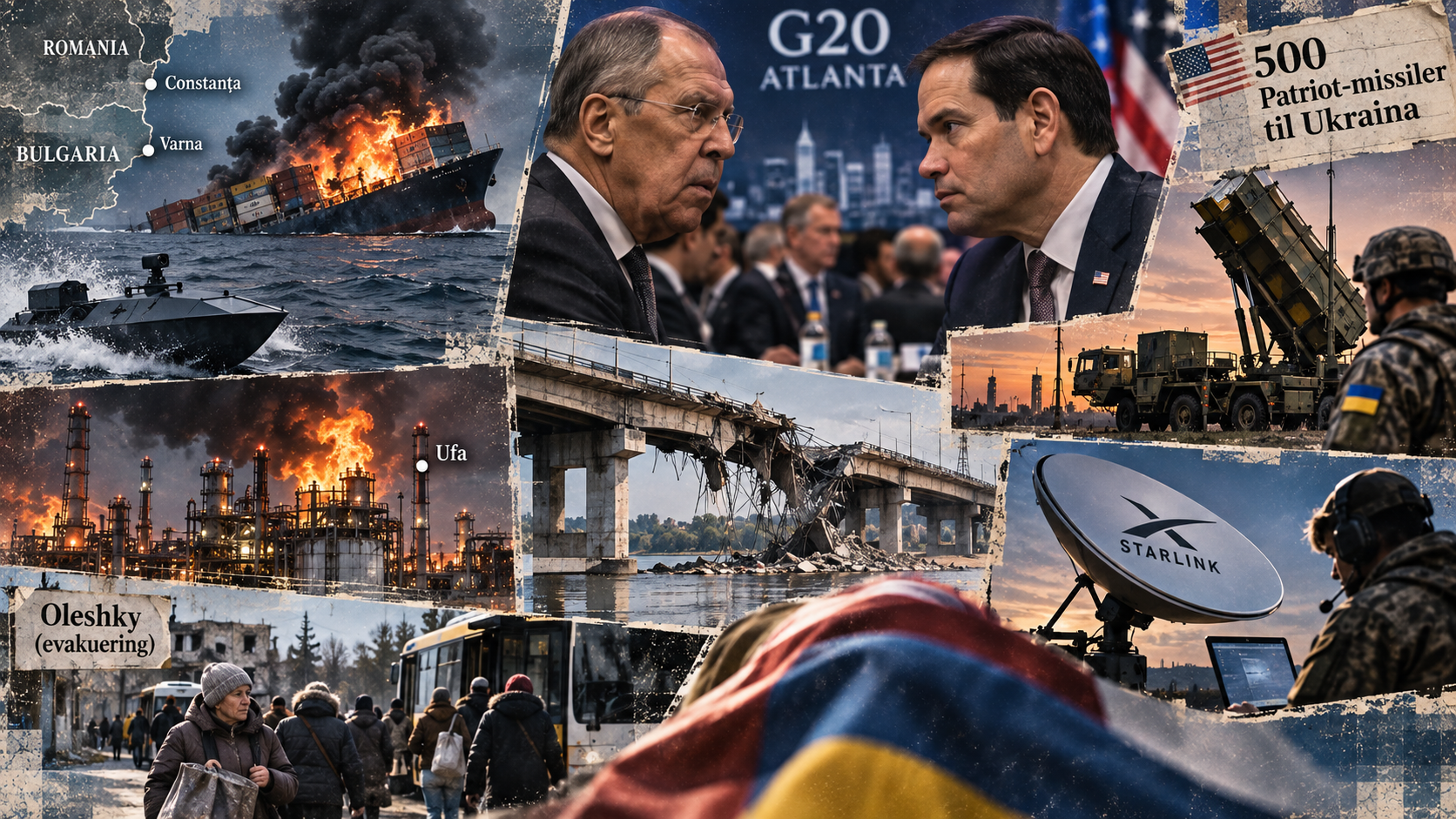
On Wednesday, three unmanned surface vessels struck the container ship Contship Jet off Varna, Bulgaria. The Greek-owned, Israeli-operated vessel was sailing from Haifa to Constanța in Romania and sank within hours with 421 containers on board. The Bulgarian navy rescued 18 crew members, 14 Filipinos and four Ukrainians.
It is at least the sixth vessel struck off Bulgaria in October, and around two dozen sailors are feared dead. Romania blamed Russia for the sinking of the cargo ship Khoryv off Constanța on 23 October, while Bulgaria has been more cautious about assigning responsibility. The Russian Defence Ministry says it has struck a cargo vessel used by Ukrainian forces in the Black Sea and regularly reports hits on shipping.
There are signs that Russia may have extended its blockade of Ukrainian ports into waters off Romania and Bulgaria, with ships potentially at risk whether they are bound for Odesa or for Constanța and Varna. What Contship Jet was carrying remains unclear. Russia has not claimed responsibility for the attack, although suspicion has fallen on Moscow.
If Russia was behind it, the attacks could indicate that vessels suspected of carrying military cargo may be targeted anywhere in the Black Sea. Unmanned surface vessels have a very small radar signature and are difficult to stop without a large naval presence. Romania and Bulgaria have relatively small navies, while the Montreux Convention limits what other NATO countries can send into the Black Sea. There is therefore no obvious or easy response.
The defence ministers of Bulgaria, Romania and Turkey met on Wednesday to discuss security in the Black Sea. If the attacks continue, maintaining commercial shipping into the region could become increasingly difficult.
Dnipro, Kremenchuk and the Bridges
Dnipro has become an important target in Russia’s campaign against Ukrainian logistics. Overnight into Friday, Russian strikes caused a major power outage in the city and again hit the area around the main railway station, one day after a jet-powered drone killed at least 14 people on a platform there.
According to this assessment, much of the equipment and supplies bound for eastern Ukraine travels by rail through Dnipro and must cross the river, making both the railway station and the bridges strategically important. Babel reports that Russian strikes also hit the bridge across the Dnipro at Kremenchuk, forcing traffic to stop while the damage is assessed.
There is no confirmed information about damage to bridges in Dnipro itself. Kyiv’s Southern Bridge has partially reopened to road traffic, while an inspection report is expected early next week.
The pattern of drones, bombs and missiles being used against different bridges on different days looks increasingly like an attempt to determine which methods work best. There has been speculation that limited Rassvet coverage may help explain why the attacks are spread out over time. ISW has noted that the terminals could extend the range of such attacks, but no link has been documented.
Patriot Sale Approved, but No Delivery Date
On Friday, the US State Department approved a possible sale of 500 PAC-3 MSE missiles to Ukraine for $2.1 billion. Canada, Germany and Norway will pay through the JUMPSTART mechanism, alongside Ukrainian funding from EU loans, and no US government money is involved.
The announcement gives no delivery schedule, and the sale is not yet a signed contract. Zelensky welcomed the approval but warned that it could take “several years” for the missiles to arrive, and called on the United States and its partners to release missiles from existing stockpiles now.
The missiles first have to be manufactured, and sources familiar with the matter say deliveries are not expected to begin until around 2030. No official date has been announced. One option under discussion is for European countries with Patriot stockpiles to transfer missiles to Ukraine now, with the first missiles from this new order later replacing those stocks.
The number of PAC-3 interceptors available in Europe is probably limited, and not all Patriot missiles are PAC-3s. If war resumes in the Middle East, US stocks could be depleted further, and newly produced missiles could be redirected. According to CNN sources, Ukraine had run out of Patriot interceptors by 15 October.
Patriot can intercept ballistic missiles and jet-powered drones, but it is an expensive answer to drones that cost a fraction of the price, and there are indications that the system cannot intercept hypersonic Zircon missiles.
Refineries: Ufa and the Dispute With Washington
Overnight into Saturday, Ukrainian drones struck the Bashneft-Novoil refinery in Ufa, where a fire broke out in a reforming unit. Russia’s Defence Ministry says 433 drones were shot down over 19 regions.
The previous day, Novokuibyshevsk in the Samara region was hit, and both attacks came after the Wall Street Journal reported that Kyiv had agreed to pause strikes on Russian refineries. Ushakov reportedly told Russian television that Trump had insisted that the attacks stop and that Kyiv had ignored him. Kyiv has never publicly confirmed such a pause, and it remains unclear whether one was ever formally agreed.
The outcome is probably much the same as before: Moscow is using the issue politically, the attacks show that Kyiv is continuing its refinery campaign despite US pressure, and the economic damage to Russia remains disputed. Reuters data suggest refinery utilisation improved when the strikes subsided, while Moscow maintains that the damage has been limited.
According to The Atlantic, the CIA has played a role in supporting Ukraine’s drone offensive, and there are signs of disagreement within the US administration over the costs and consequences of that campaign.
The Atlantic on Starlink
The Atlantic has also published an analysis of the Starlink dispute. It suggests that the restrictions imposed in October may have been connected to an effort to push Ukraine towards the more expensive Starshield system.
More than 250,000 Starlink terminals are reportedly in use in the combat zone, and according to the magazine, SpaceX has received as much as $2,500 per terminal per month from the Ukrainian government, while Starshield accounts for less than one percent of the terminals. When the restrictions were introduced, SpaceX is said to have offered an expanded contract as a condition for restoring access.
The speed restrictions were lifted on 24 October, according to Ukraine’s Defence Ministry. Musk has claimed that Ukraine used Starlink in violation of the service terms, while Kyiv disputes that account.
G20 in Atlanta
G20 foreign ministers met in Atlanta on Friday and Saturday. Lavrov attended, and the traditional group photograph was cancelled after several European representatives refused to stand next to him.
Lavrov and Rubio spoke briefly, with Lavrov describing the exchange as “not bad, but short”. He criticised the Europeans’ “arrogant boycott”, while German Foreign Minister Johann Wadephul said there was “no normality with Russia” and called on Moscow to accept Ukraine’s proposal for a ceasefire beginning in the Black Sea.
Trump has invited Putin to the G20 summit in Miami in December. The foreign ministers’ meeting ended without agreement on several major issues. European governments are unhappy that Russia is being allowed to participate, but the United States is the host and Washington chose not to deny Lavrov a visa.
Oleshky: Evacuation During the Ceasefire
The local ceasefire in Oleshky, which began on 27 October and runs until 1 November, had held for more than 80 hours by Friday, according to Ombudsman Dmytro Lubinets, who travelled into the town that day.
On Saturday, four aircraft carrying evacuees landed in Gomel, Belarus, via Anapa, after which the journey continued towards the Ukrainian border in the Chernihiv region. Lubinets says residents were free to decide whether to leave or remain and that nobody was subjected to checks. Some chose to stay.
The number of people still living in Oleshky is disputed. The White House gives a figure of 1,700–2,000, while other estimates put it at around 6,000, compared with 24,000 before the war. What happens when the ceasefire expires on Sunday remains unclear.
The Overall Picture
Russia is tightening pressure on Ukraine’s supply routes by sea, rail and across the rivers, while the Western response consists increasingly of promises and approvals without delivery dates. Ukraine continues to strike Russian refineries despite pressure from Washington, while Europe argues over Lavrov’s presence in Atlanta.
There is much to suggest that the Abu Dhabi talks, if they happen, will take place while all of this is still unfolding.