Drone attack on Russian ship triggers new tension in the Baltic Sea
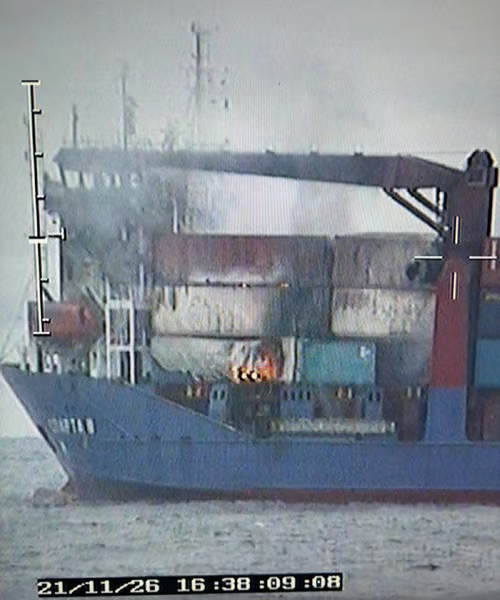
A Russian cargo ship en route to Kaliningrad was hit by drones in the Gulf of Finland on Saturday and caught fire. The attack has raised questions about the safety of Russia’s supply lines through the Baltic Sea and about a possible future blockade of the Russian exclave. At the same time, Russia has intensified attacks on the bridge connections over Dnipro in Ukraine. New satellite images reportedly show that Ukrainian authorities are building a pontoon bridge in Zaporizhzhia, which may indicate that one of the city’s most important permanent bridges no longer has sufficient capacity for heavy transport.
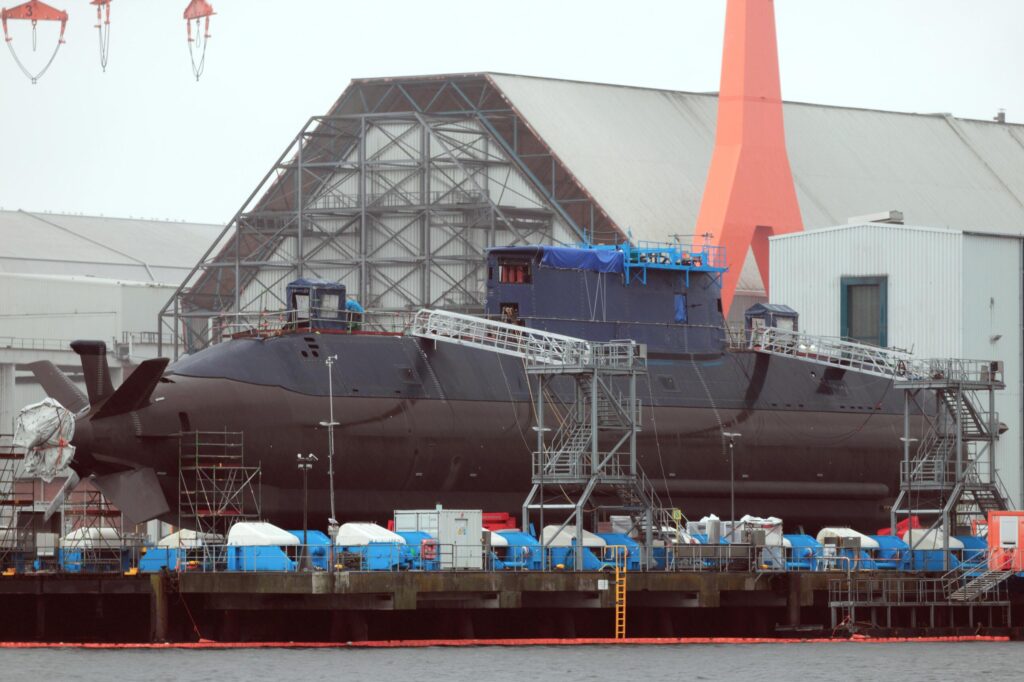
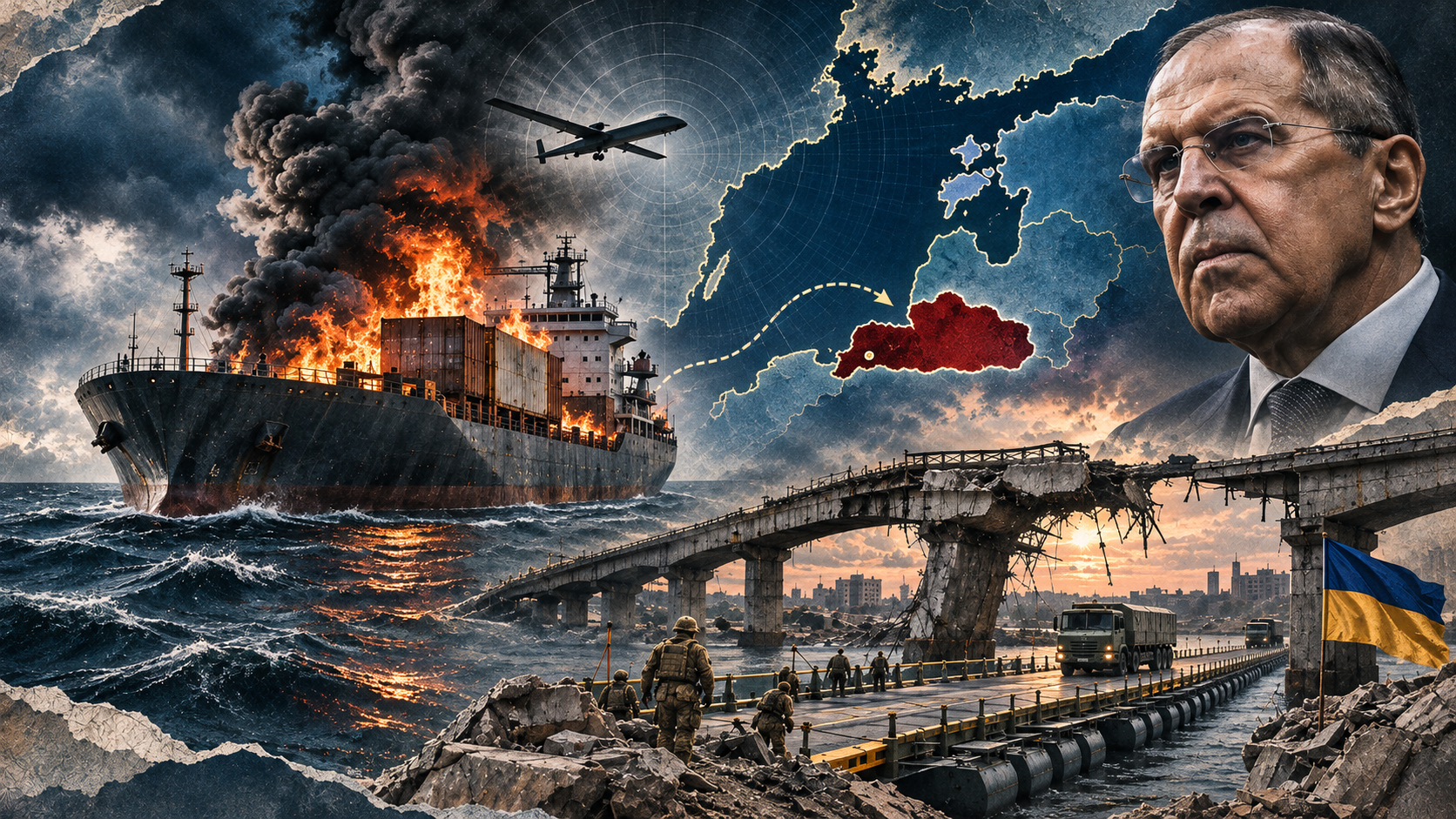
The Russian cargo ship Sparta II was attacked on November 21 in international waters west of the Russian island of Hogland. The ship was en route from St. Petersburg to Kaliningrad when it was hit and caught fire.
According to Reuters the ship was hit by two drones. Finnish authorities consider it likely that Ukraine was behind the attack, but Ukrainian authorities have not publicly confirmed this.
The ship belongs to Oboronlogistika, a Russian shipping company with connections to the Ministry of Defense. What the cargo consisted of during this voyage has not yet been determined.
The fire continued through the night into Sunday. The crew of 16 people was evacuated, while Finnish, Estonian, and Russian vessels participated in the firefighting efforts.
On Sunday, a Russian rescue vessel began towing the damaged ship out of Finnish waters, according to Reuters’ update.
Is this the beginning of a blockade of Kaliningrad?
Kaliningrad is located between Poland and Lithuania, geographically separated from the rest of Russia. The area has great military significance, including serving as a base for the Russian Baltic Fleet.
Russia depends on connections across the Baltic Sea and through other European countries to transport goods and materials to the exclave.
The attack on Sparta II comes at the same time as Estonia has decided to close its road border crossings with Russia from December 1.
According to Estonian Ministry of Foreign Affairs the measure is justified by Russian intelligence and sabotage activities. The closure is initially planned to last six months.
The two incidents have fueled speculation that Russia may gradually be cut off from Kaliningrad.
But neither the drone attack nor the Estonian border restrictions in themselves constitute a blockade.
Estonia has explicitly stated that freight transport by rail will still be permitted. Russia’s main land connection to Kaliningrad also passes through Belarus and Lithuania.
A complete blockade would require far more extensive measures against both sea transport and land connections.
It would also entail a significant risk of direct military confrontation between Russia and NATO countries around the Baltic Sea.
Who was behind the attack?
Although Finnish authorities believe Ukraine was probably behind it, several key questions remain unanswered.
It is not publicly documented where the drones were sent from, which route they followed, or how they were guided to the ship.
Ukraine has no coastline on the Baltic Sea, and an attack in the Gulf of Finland therefore raises questions about range, navigation, and intelligence.
Lithuania has Rejected allegations that the country was involved.
There is also no documentation confirming that NATO countries have provided concrete operational support to the attack on Sparta II.
Nevertheless, the incident illustrates how the war in Ukraine can spread to areas that have previously been relatively sheltered from direct attacks.
An attack on Russian shipping in the Baltic Sea does not only affect Russia and Ukraine. It could also affect security and civilian shipping in waters where several NATO countries have extensive interests.
Lavrov refers to Kiev as historical Russian territory
At the same time, Russia’s Foreign Minister Sergei Lavrov has made statements pointing to an increasingly broad Russian understanding of the war’s goals.
In an interview about the history of the Orthodox Church, he described southeastern Ukraine and large parts of central Ukraine, including Kiev, as historically Russian territories.
The statements are reviewed by Institute for the Study of War, which refers to Lavrov’s interview.
Lavrov linked the historical and religious ties between Russians and Ukrainians to Russia’s goal of combating what he described as anti-Russian attitudes in Ukraine.
This goes significantly further than mentioning Donetsk, Luhansk, Zaporizhzhia, and Kherson, which Russia has already declared annexed.
The statements do not mean that Moscow has formally put forward a new territorial claim on Kyiv and all of central Ukraine.
But they show that the Russian leadership’s public argumentation still includes historical and cultural demands that extend beyond the territories that have so far been central to the peace negotiations.
Pontong bridge in Zaporizhzhia after repeated Russian attacks
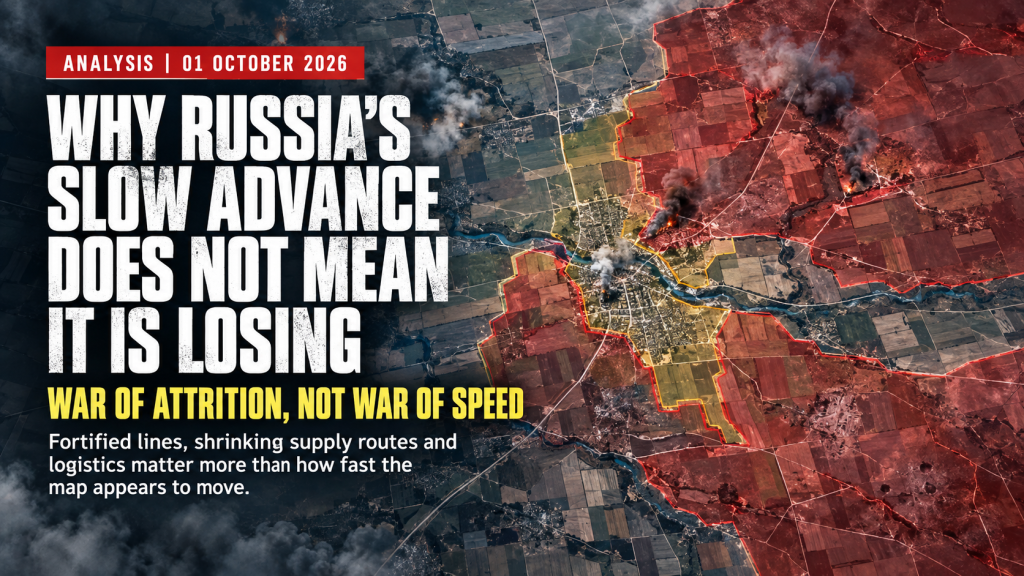
On the battlefield, Russia continues to attack Ukraine’s transport links across the Dnipro.
Particularly vulnerable are the bridges in Zaporizhzhia, which connect different parts of the city and are important for transport to the front lines further east.
On November 16, confirmed Zaporizhzhia city council that traffic over the Preobrazhensky Bridge was closed after Russian attacks.
It has now been published satellite-based information about the construction of a pontoon bridge at the Vantovyj Bridge in Zaporizhzhia.
If the information is correct, it is a sign that Ukrainian authorities are trying to establish alternative transport capacity after the repeated attacks.
A pontoon bridge can be built faster than a permanent bridge can be repaired, but it usually has lower capacity and is more vulnerable to attack.
This means it can help maintain traffic without necessarily being able to fully replace a large permanent bridge connection.
Supply lines could be crucial
Russia’s attack on the Dnipro bridges is primarily of military significance because large parts of Ukraine’s supplies come from the west.
To reach the forces in eastern Ukraine, equipment, fuel, and ammunition must be transported across the river.
If the permanent bridges suffer extensive damage, alternative routes will have to replace the traffic. This can lead to longer transport times and reduced capacity.
At the same time, Russian sources report continued advances in the Kharkov region and north of Slovyansk and Kramatorsk. Ukrainian sources, on the other hand, claim to have carried out counterattacks in parts of the Kharkov region.
The latest territorial claims have not been sufficiently independently confirmed.
The bridge attacks in Ukraine and the drone strike against Sparta II in the Baltic Sea show two sides of the same development: Both parties try to hit the opponent’s transport connections and supply capacity, even far from the front line.
The difference lies in the consequences. A single attack on a Russian cargo ship is not sufficient to cut off Kaliningrad. Repeated attacks on Ukraine’s major river bridges, on the other hand, can have serious consequences if they reduce the capacity to supply the front over time.
At the same time, attacks on shipping in the Baltic Sea pose a risk that the war will draw several countries directly into new security policy crises.