The Midterms: A Crisis for Trump’s Iran Plans
The effects of the US midterm elections continue to dominate the day. The result represents a serious crisis for American foreign policy, and above all for the president’s plans for another attack on Iran. The public clearly does not want such an escalation, and Vice President JD Vance has himself acknowledged that the war is unpopular and the most immediate reason for the collapse in support: the war is why Republicans lost, while Trump calls that assessment “largely correct”.
It would nevertheless be a catastrophic misreading to assume, as some Democrats do, that a public rejecting the Iran war is therefore more favourable towards the war in Ukraine. Two administrations have been wrecked by wars over the past eight years: Biden-Harris lost in 2024, according to this analysis, because of inflation from the Ukraine war, while the present administration is losing because of inflation from the Iran war. Everything suggests that escalating the Ukraine war would be met with the opposite of popular support. The election is a crisis of confidence for the neoconservative foreign policy of recent decades, but that does not mean the wars will end, because that policy has enormous institutional support in the United States.
Zelensky in Madrid and the Abu Dhabi Talks
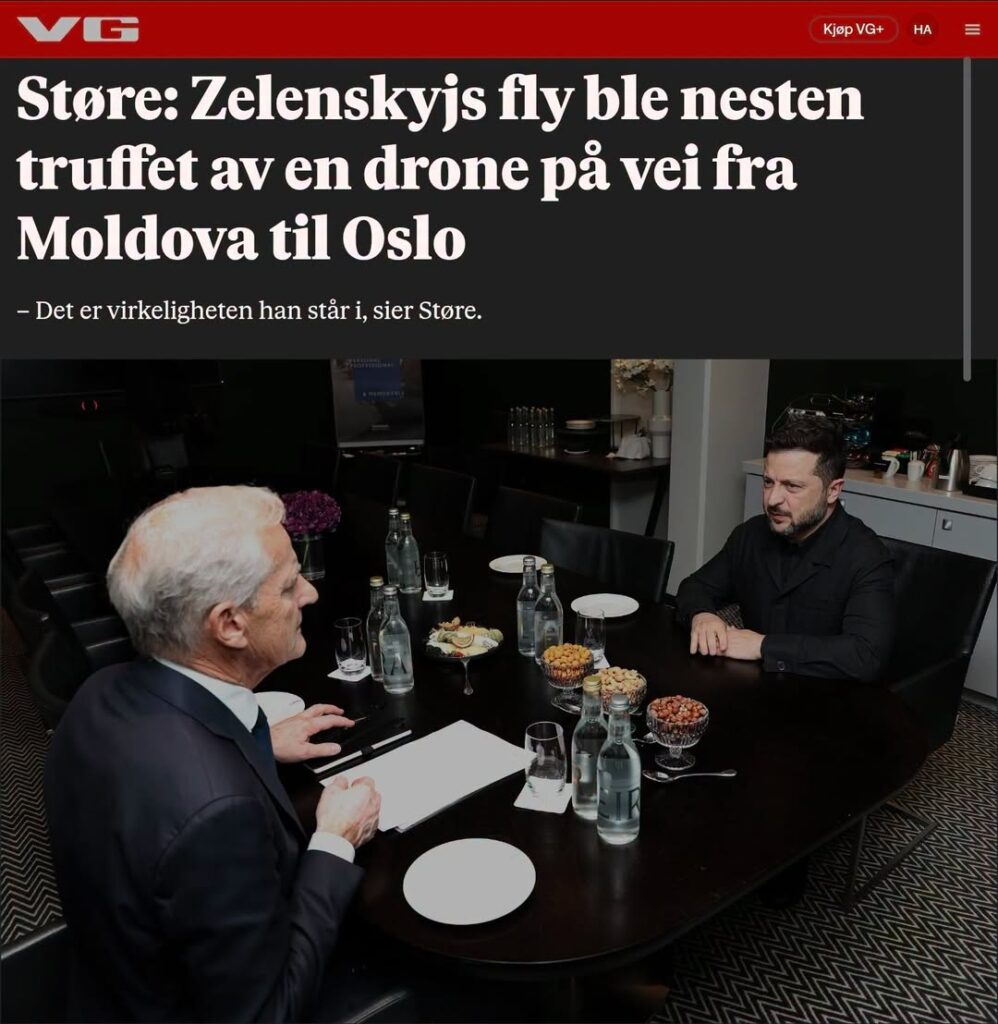
Zelensky is now in Spain, where he is meeting Prime Minister Pedro Sánchez and King Felipe. He has been outside Ukraine for well over a week and has never announced his travel plans in advance. He appears to be looking for places to visit rather than returning home, and a growing number of people in Ukraine are probably beginning to see the same thing.
Spain has so far refused to give up its air-defence missiles. If Sánchez nevertheless hands them over, they will not delay the outcome of the war by a single day, and the only effect will be to leave Spain without its own air defence.
Zelensky is probably in a celebratory mood: the armies are failing, the economy is collapsing and large parts of the country are without electricity, but he sees the Democrats’ takeover of Congress as a major advantage after weeks of insults directed at Trump. He expects fresh funding from Congress and believes the pressure to surrender the rest of Donbas to Russia will now disappear.
That means the Abu Dhabi talks on 10 November, with the Russian delegation led by Vladimir Medinsky, are unlikely to go anywhere. Russia shows no willingness to make concessions, while Zelensky, who has long been dissatisfied with the talks and wants the war to continue, more money and harsher sanctions, will arrive ready to dig in.
There is much to suggest that he will then withdraw Ukraine from the negotiations, as he did last year, and repeat that the only negotiation he is prepared to consider is a bilateral meeting between himself and Putin in which Putin, in practice, concedes all of his demands.
The election therefore prolongs the war and weakens the prospects for a diplomatic solution, though probably not in the way Zelensky hopes. The United States is unlikely to have the capacity for massive new weapons deliveries because shortages of critical weapons are simply too severe.
F-35s and Tomahawks are unrealistic, would in any case take two or three years to deliver, and would not become game-changers: they have already been used against Iran this year without deciding the conflict, and it is absurd to believe that weapons which failed to do so against Iran would succeed against the far more advanced Russia.
Zelensky is also expected to travel to Washington within days to meet his newly elected friends in Congress, giving him another reason to remain away from Kyiv.
It may also mark the end of the diesel agreement between the United States and Russia: two tankers have changed course, according to the Financial Times. That may indicate diplomatic paralysis, but it matters little to either country’s economy, since the diesel would never have made much difference to the United States and the Russian budget already receives substantial revenues from Asian customers.
Kyiv’s last hope is that Congress will help expand the use of Starshield, the military branch of Starlink, for deeper strikes inside Russia and against Russian ballistic-missile launchers. Jennifer Kavanagh argues in Responsible Statecraft that the United States failed to destroy Iran’s mobile launchers, and that expanding Starshield against Russian launchers is unlikely to solve the problem. The Russians have repeatedly shown that they can adapt, even if it takes them a few weeks.
It would also give Russia the opportunity to learn how to track and disrupt technology on which the US military itself depends, and potentially share that knowledge with Iran and China.
A Heavy Strike on Kyiv Is Being Signalled
Russia carried out another major drone attack overnight, and there are reports that the next large missile and drone strike is being prepared, perhaps as early as tonight. Ballistic missiles are said to have been loaded in western Russia, and the attack is expected to involve Iskander-M, North Korean KN-23 missiles, Geran drones and Zircon.
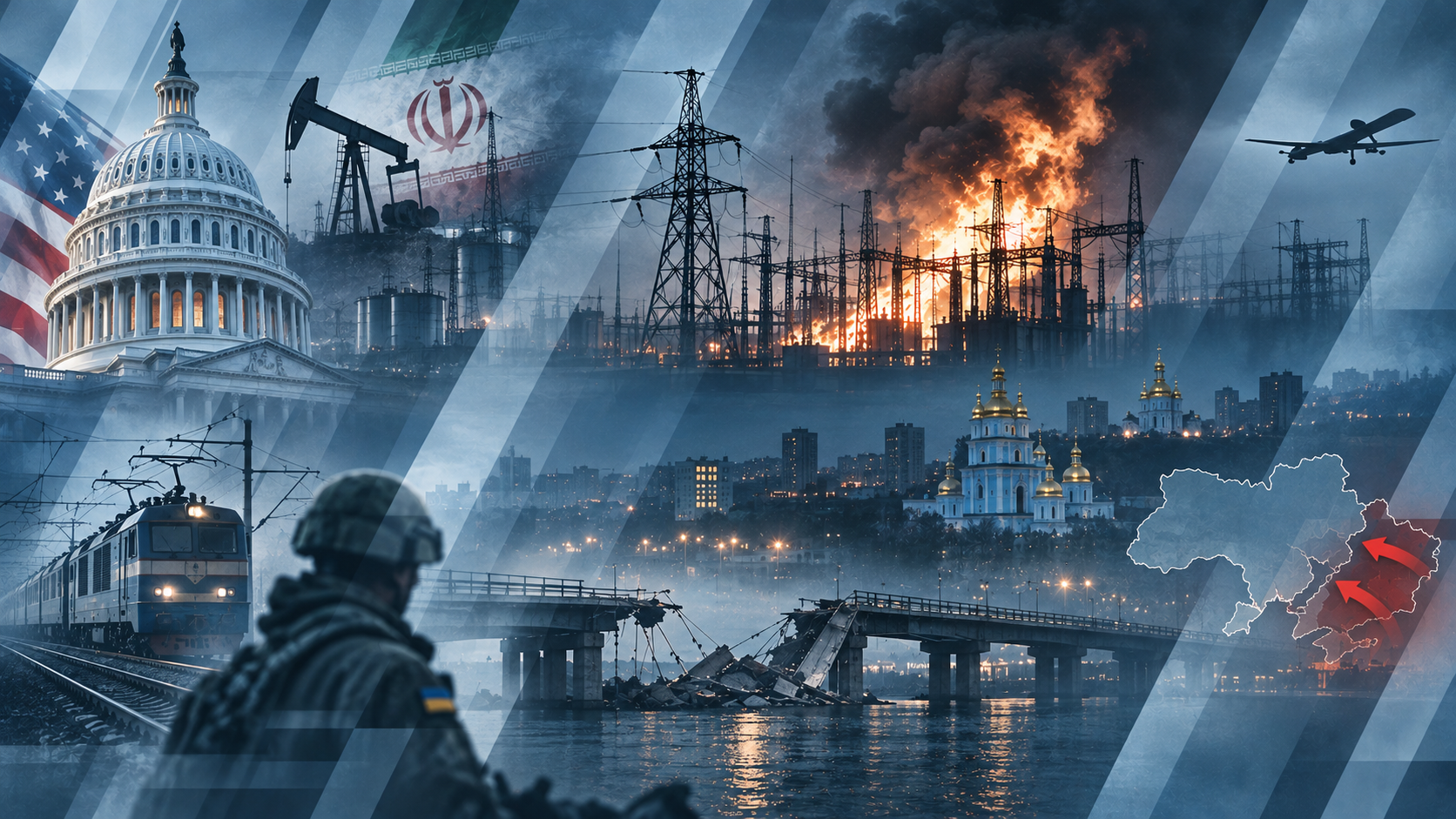
The main target is likely to be Kyiv, including the bridges across the Dnipro, the railway station and the substation west of the city, which is protected by concrete shells. Putin ordered massive attacks on Ukraine’s energy infrastructure in September, and the Russians appear to be following a plan targeting thermal power plants and substations.
Overnight, several substations as well as new trains and locomotives were attacked with Geran-4 and Geran-5 drones.
The first public sign of how badly the railway is being strained is a video showing a train being hauled by a steam locomotive of a type phased out of European railways in the 1960s. Some have probably survived on sidings, and they are robust, but they are slower, while the smoke makes them easy targets for drones.
Ukrainian Health Ministry officials are warning that a complete blackout would shut down water-treatment plants, and that cities could run out of water within one to three weeks, with some saying within days.
With the president away, there are no known plans for evacuating the cities, and no EU plans for receiving large numbers of refugees. Nor has any government withdrawn its diplomats from Kyiv, although the Guardian previously reported that some Western embassies were drawing up contingency plans for possible relocation.
Non-Western countries will probably move first, and that could trigger a cascade among smaller Western states. The longer it is delayed, the more dangerous it becomes.
Power Struggle in Kyiv
Meanwhile, further signs of an internal power struggle are emerging. An SBU general is reported to have been searched by NABU and SAPO, and there is a clear crisis between security services loyal to Zelensky and the two anti-corruption agencies.
Many claim that Western powers control NABU and SAPO because they supported their establishment and financing, but they have probably for some time been under the influence of Zelensky’s domestic political opponents, who are now using them to undermine the structures of the regime.
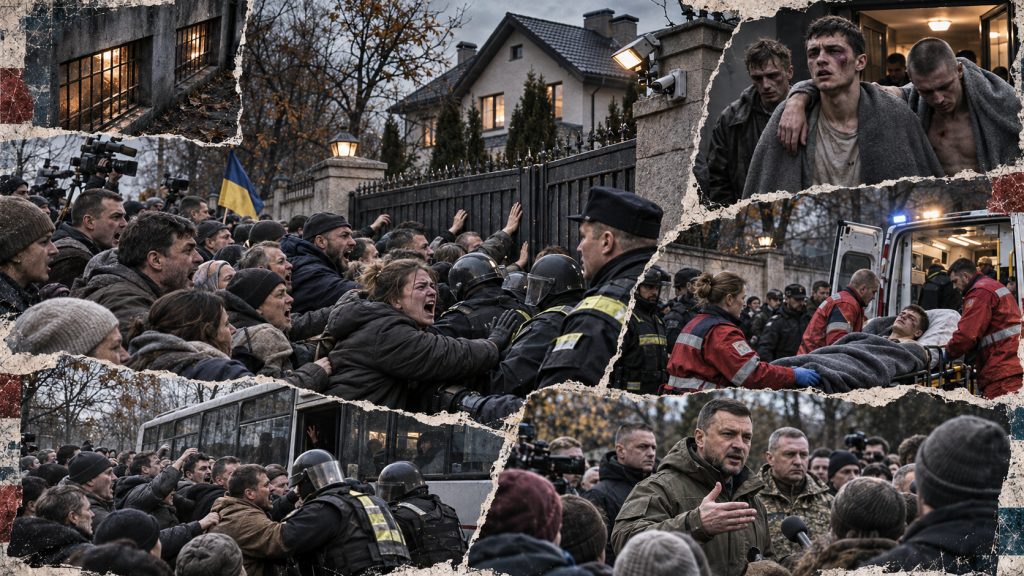
It is possible that the same people tipped off the public about the detention centre in western Kyiv.
Zelensky’s people still control the state apparatus, and he retains Western support, now including that of the Democrats, so there is no reason to expect him to be overthrown anytime soon. But his opponents appear to be undermining the functioning of the regime, making the government even more dysfunctional and less capable of planning evacuations or repairs.
The election therefore probably also blocks any political change that might, in theory, have made Ukraine better governed.
The Front: Winter Refit, Orikhiv and Zaporizhzhia
There has been little news from the fronts, initially explained by the rasputitsa and later by the Defence Ministry concealing operations, following Stanislav Krapivnik, who says October was unusually dry.
The real explanation comes from Marat Khairullin, regarded by many as a highly experienced Russian war correspondent, former soldier and participant in the battle for Avdiivka. Khairullin says the Russian army goes through a transition twice a year, in spring and autumn, between summer and winter conditions, with roughly two weeks of reduced activity for new equipment, uniforms and reorganisation.
His explanation is that this normally coincides with the rasputitsa, and that the timetable continued this year even though the mud season largely failed to appear. Khairullin expects the pace of Russian advances to increase once the reorganisation is complete, with Russian forces becoming considerably more aggressive on the ground.
Important developments have emerged over the past 24 hours. The pro-Ukrainian internet is full of claims that Ukrainian forces have driven the Russians out of Orikhiv.
There is no video evidence, and similar claims have appeared before: the counterattack at Severodonetsk in 2022, the recapture of Toretsk in 2025, and the many stories surrounding Kupiansk.
Now it is Orikhiv, shortly after Operation Vivaldi.
Around Lyman, it was claimed for weeks that the 3rd Azov Corps under Biletsky had driven Russian forces back across the Zherebets River and captured villages north of the city, and that the Serebrianka forest and even Siversk were about to be retaken.
Several of the largest claims were never confirmed. The Ukrainians pushed the Russians back between the Zherebets and Nitrius and probably relieved the garrison at Lyman, but none of the larger claims proved correct.
Over the past day, reports say Russian forces are pushing the Ukrainians back across the Zherebets towards the Nitrius and renewing their assault on the rest of Lyman. The battle for Lyman is probably approaching its end, and if the city falls within the next few weeks, the Russians could continue west towards Sviatohirsk and the monastery northwest of Sloviansk.
As for Orikhiv, it remains uncertain whether there is a Ukrainian offensive at all.
The Russian ring appears intact: they control Omelnyk to the northeast and Novopavlovka to the northwest. If a counterattack is taking place, then according to this assessment it is happening inside an encirclement and amounts to a purely tactical gain.
The Russians meanwhile report that they have expanded the area west of Omelnyk and cleared more territory along the Vovcha River, suggesting that the ring is tightening and that the advance towards Zaporizhzhia is continuing.
Russian sources claim that Russian troops are firmly established in the southern suburbs, that the city is under heavy bombardment and that the bridges have been damaged. A few days ago, reports said the Ukrainians had shut down all the major factories.
Group East is said to be around 50 kilometres east of the city, and the battle for Zaporizhzhia may already have begun. The decisive battle will come when mechanised units reach the city’s eastern outskirts and the cauldron closes.
At Dobropillia, Readovka reports that Russian forces have surrounded and entered Bilozerske, where the garrison is small. The outlet also reports that the Russians control Oleksiievo-Druzhkivka south of Kramatorsk and have entered Druzhkivka, where fighting is under way.
North of Kharkiv, Russian forces have become active again, and a return to the high-ground village of Lyptsi is being prepared. If it falls, Russian artillery could once again fire on Kharkiv, leaving Russian forces well positioned to attack the city itself shortly after the fall of Donbas.
Zelensky’s Message and the West’s Delusion
One reason Zelensky is probably travelling around Europe is to convince its leaders that, although the situation is serious, it is not as catastrophic as it appears: the blackouts in Kyiv are real, but the positions are holding, Kostiantynivka and Dobropillia have not fallen, and the counterattack at Orikhiv is succeeding.
Give us more money — in Sánchez’s case, all the air-defence missiles; in the Democrats’ case, $100 billion — and do not push for concessions, because that would hand victory to the Russians when in reality they are supposedly heading for defeat.
There is much to suggest that Democrats in Washington, some within the Trump administration and European governments will believe this because they want to, since few undertake the detailed examination of the front lines required to see the full picture.
Anyone who stops following the details loses track of what is happening and builds diplomacy on false assumptions.
The election probably means that every diplomatic solution now fails definitively, something the Russians are unlikely to doubt, and may therefore have sealed Ukraine’s fate as the situation deteriorates rapidly and catastrophically.