A Negotiating Team Built to Hold the Line
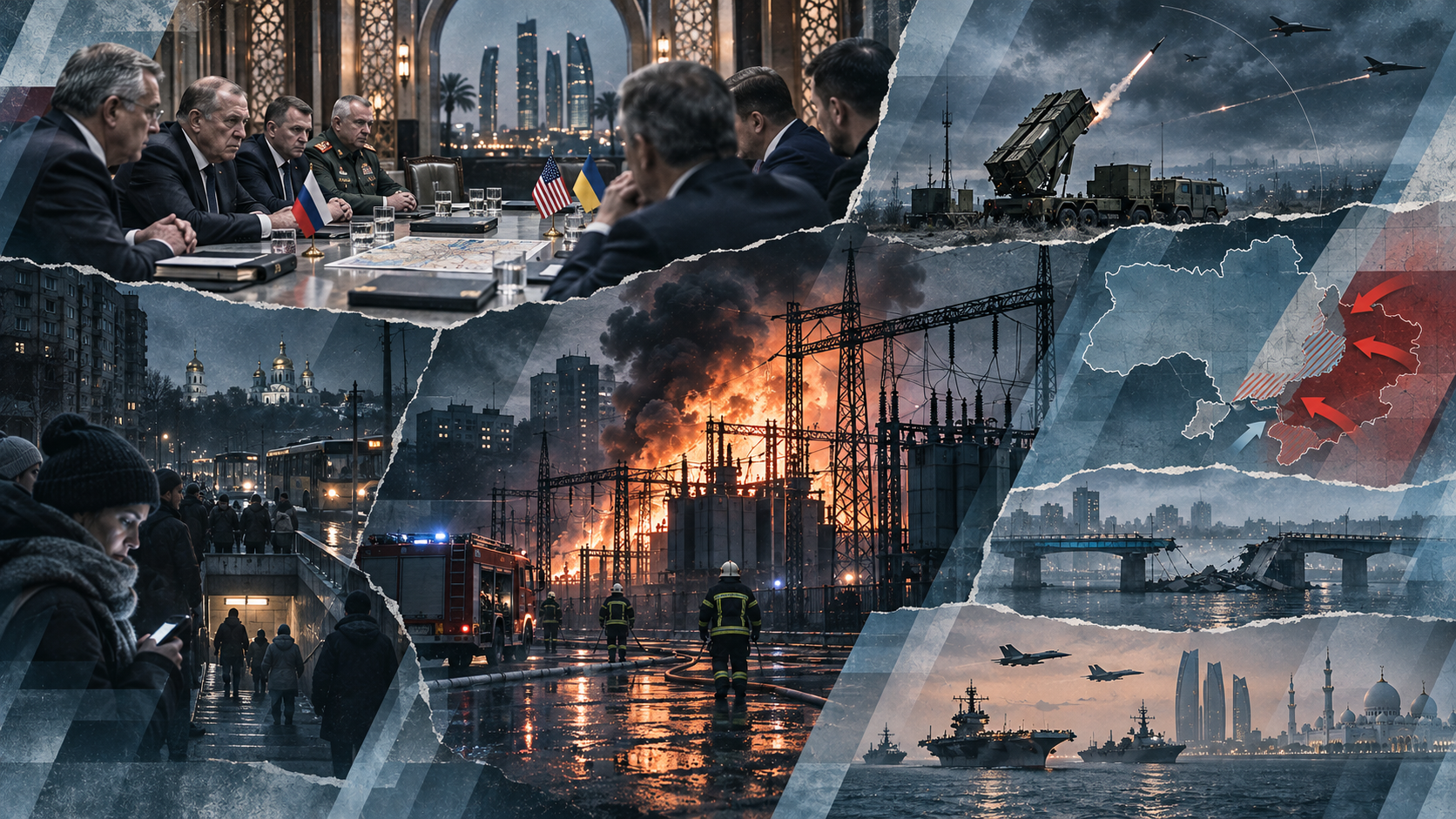
Two days before the trilateral talks in Abu Dhabi, Moscow’s delegation is shaping up to be its most comprehensive yet. Bloomberg reads the composition as a sign that Russia may be prepared for more substantive discussions on both political and military issues. The delegation will again be led by presidential adviser Vladimir Medinsky and includes Deputy Foreign Minister Sergei Ryabkov, who is participating for the first time, Deputy Foreign Minister Mikhail Galuzin, military intelligence chief Igor Kostyukov and General Staff officer Yuri Zhigarlovsky. All of them met Putin at the Security Council on Friday.
The question is what “constructive” actually means. In the Western interpretation, it often implies that Russia is prepared to make concessions. There are signs that Moscow sees it differently: a strong team is sent when a hard line is to be defended, not abandoned.
Medinsky has led Russian delegations since the Istanbul talks last year and has repeatedly warned the Ukrainians against believing they can simply wait Russia out. Kostyukov, who himself led Moscow’s delegation in Abu Dhabi in January, and Zhigarlovsky are positioned to present the military situation as irreversibly favourable to Russia.
Ryabkov led Russia’s talks with the United States over the draft security agreements in December 2021 and January 2022, and his presence suggests that Moscow sees Abu Dhabi as a continuation of that track.
Russian delegations are also known for arriving thoroughly prepared, while the other side, with Rustem Umerov leading for Ukraine and probably Steve Witkoff and Jared Kushner for the United States, is unlikely to be prepared to the same degree.
The Demands: All of Donbas and a New Security Order
Russia has made clear what it considers to be on the agenda.
Kremlin adviser Yuri Ushakov said in October that the talks would include security guarantees for both Russia and Ukraine, while spokesman Dmitry Peskov has repeated that such guarantees can only be reciprocal.
On territory, Moscow remains uncompromising in its demand that Ukraine surrender Donbas, according to the Kyiv Independent.
Unverified reports say Russia has moved from offering to withdraw from parts of the Kharkiv, Sumy and Dnipropetrovsk regions, as was suggested after the Anchorage summit, to now wanting to keep those areas. If true, that would represent a hardening of its position.
From Moscow’s perspective, the talks are therefore increasingly about European security rather than borders.
This is also where the dividing line with Europe appears. Peskov says no European proposals have reached Moscow on a European security architecture, while Foreign Ministry spokeswoman Maria Zakharova says it is symbolic that the “Coalition 26.2” exercise by the coalition of the willing begins on 9 November, immediately before the talks, and that this confirms that the Europeans have no place at the table.
French Foreign Minister Jean-Noël Barrot responds that Europe will be represented in Abu Dhabi, and that no agreement affecting European security can be discussed without the Europeans.
What that representation will actually mean remains unclear, and Moscow has so far rejected a four-party format.
European capitals have also, according to the Financial Times, reacted with alarm to the idea of a US-Russian agreement on the continent’s security.
The gap between Moscow’s starting point and that of Western capitals is therefore greater than ever, making a breakthrough appear unlikely.
Iran and Washington Could Blow Up the Framework
Nor is it certain that the talks will take place at all.
A dispute over Iran is under way inside the US administration. Vice President JD Vance broke with the president’s position after the election and wrote that the Republican defeat was caused by the Iran war, while Donald Trump insists that he made the right decision and would do it again.
Reuters sources say the head of Central Command, Admiral Brad Cooper, recently briefed Trump on options for resuming hostilities, and that the likelihood of new strikes may have increased now that the midterm elections are over.
On Friday, the United States already carried out what Trump called “minor strikes” against an Iranian air-defence system on Qeshm Island, even as he claims that “a lot of progress” has been made in talks with Iran.
If the war in the Persian Gulf flares up again over the next few days, the Abu Dhabi talks will probably be postponed, perhaps by several weeks or even until the new year, rendering Russia’s extensive preparations of little immediate use.
But even if the meeting goes ahead, there is little to suggest that the United States, Europe and Ukraine will accept Russia’s understanding of what “security architecture” is supposed to mean.
That is probably an outcome Moscow is already expecting.
Kyiv: Bridges Damaged, Power Grid Under Pressure and Air Defence Running Empty
Beneath all of this lies the air war.
According to Zelensky, four of the six ballistic missiles aimed at the Northern Bridge overnight into Saturday hit their target, and the bridge was closed in both directions before partially reopening on Sunday afternoon.
The Southern Bridge, hit in late October by Iskander-M missiles, is still closed according to unverified reports.
Traffic across two of the most important bridges over the Dnipro in the capital is therefore heavily restricted, both between the two halves of the city and for supplies moving eastward.
Zelensky has asked the Interior Ministry and the city authorities to prepare alternative transport solutions, because none currently exist at city level.
Since late October, Kyiv has been preparing temporary river crossings. Pontoon bridges and ferries, however, cannot carry the same volume of traffic as permanent bridges and are vulnerable to drone attacks. For supplying forces on the eastern bank, they are therefore no adequate substitute.
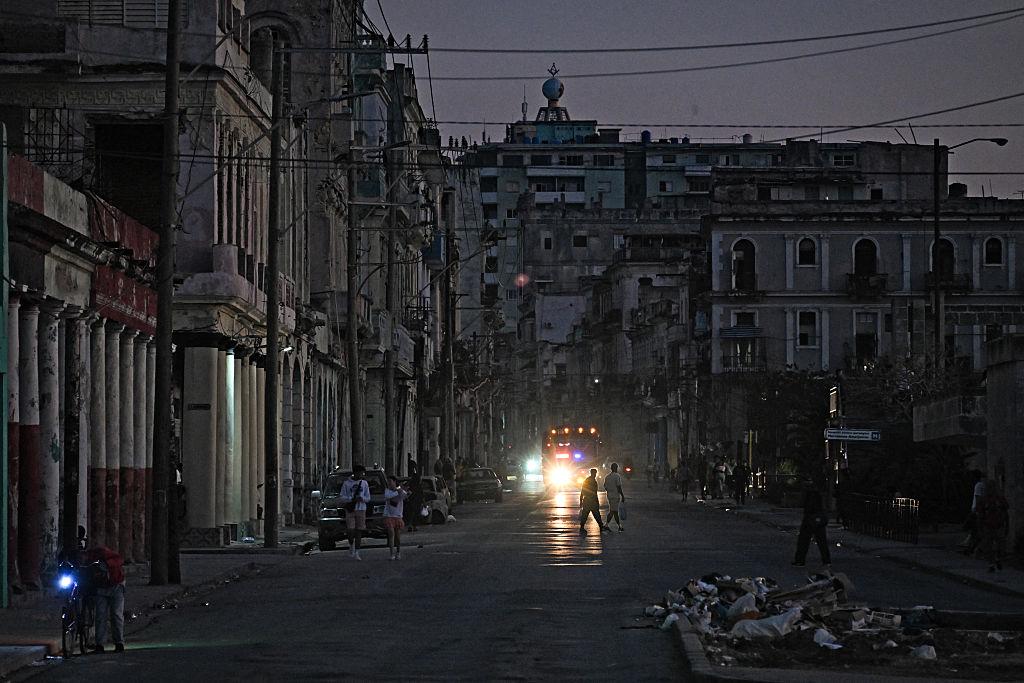
Overnight into Sunday, the attacks continued, this time against energy facilities.
According to the Ukrainian Air Force, three Kh-59/69 missiles and 164 drones were used, with outages reported in Kyiv oblast and Dnipro, among other areas.
In Dnipropetrovsk oblast, more than 600,000 subscribers lost power, according to the governor.
The Zaporizhzhia Nuclear Power Plant, under Russian control, lost its final external power line overnight into Sunday and had to switch to diesel generators, according to Energoatom. Power was later restored, according to the IAEA. This was its 16th complete loss of external power this year.
Ukraine’s greatest weakness is air defence.
Zelensky says only four of the 36 ballistic missiles launched overnight into Saturday were intercepted, and that the reason is a shortage of Patriot missiles.
According to Defence Minister Boris Pistorius, Germany cannot provide any more Patriot systems for the moment.
Berlin has made similar statements before and later delivered more, but this time it is probably close to the bottom of its stocks. The shortage is real, and interceptors cannot be produced overnight, regardless of how much money Congress appropriates.
What Is the Objective of the Pressure on Kyiv?
The campaign against bridges, power plants, water supplies and the railway goes beyond what would be required simply to cut supplies to the front.
If the objective were only to isolate Ukrainian forces east of the Dnipro, the bridges would be enough.
The systematic disruption of the capital’s energy and transport systems suggests something more.
Some military analysts believe the pattern resembles preparations for a possible attack on Kyiv itself, and that the city could eventually become close to uninhabitable during the winter, with blackouts, unstable water supplies and possible cuts to rail connections.
There is no Russian confirmation of such a plan, and all of this is an interpretation of the pattern rather than a documented intention.
The reasoning is nevertheless consistent with Russian demands.
If Moscow concludes that Abu Dhabi will not produce a new European security order, and if the objective is a Ukraine whose relationship with Russia resembles that of Belarus, then control of the capital would be the most logical next step.
Rumours that Putin has authorised the military to take all of Ukraine east of the Dnipro remain unconfirmed, but they fit the broader picture.
In western Ukraine, electricity supplies have so far, according to unverified reports, been more stable than in central Ukraine and along the river.
If the Dnipro bridges are put out of action, analysts argue that a river crossing near Kyiv, where Russian forces are already positioned in Belarus, could offer an alternative to forcing the river farther south.
These are hypotheses, and none has appeared in any official Russian statement.
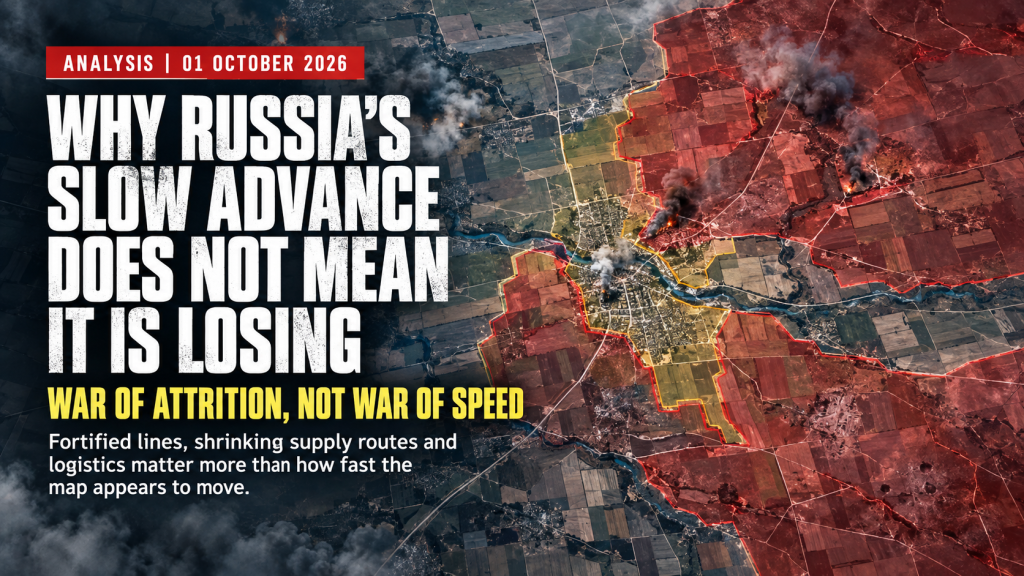
The Front: Russian Advances and Disagreement Over the Situation
There is little reliable information from the front.
Russian military sources, including the Sever group, report advances towards two adjoining villages north of Velykyi Burluk in the Kharkiv region, continued pressure from Kozacha Lopan aimed at bypassing Kharkiv from the west, and plans to take the village of Lyptsi northeast of the city.
In the Zaporizhzhia region, Group Vostok is said to be continuing westward from Omelnyk while Group Dnipro advances towards the Konka River across a broad front.
That would bring Zaporizhzhia city within Russian artillery range.
Russian sources also reject reports of a successful Ukrainian offensive around Orikhiv and point to the failure of Operation Vivaldi in the Lyman sector, with most of its objectives left unmet.
None of these claims has been independently confirmed.
Russian sources also report another attack with aerial bombs on a bridge across the Dnipro in Zaporizhzhia, a city where a bridge was already struck on 6 October.
The Institute for the Study of War presents a different picture.
The institute assesses that Russian forces lost ground in October for the second consecutive month, and that Ukrainian counterattacks south of Orikhiv and east of Sloviansk have halted Russian attempts to advance.
Both accounts agree that Zaporizhzhia is the next major objective.
Western Support: Great Expectations and Narrow Limits
The Democrats’ election victory has created new hope in Kyiv, and Zelensky is asking Congress for more.
The Democrats are preparing a package worth around $15 billion, according to the Financial Times, but lack the two-thirds majority needed to override a presidential veto.
There are signs that such an appropriation would require prolonged negotiations and is unlikely to pass before spring.
Even then, the money would not solve the air-defence shortage in the short term.
Zelensky appears to be counting on aid reversing the situation in the air, but production capacity for Patriot interceptors sets a clear limit.
The illusions are considerable, both in Kyiv and among the Democrats, that the clock can somehow be turned back to the period before November 2024.
The reality on the ground is different from what it was during Joe Biden’s presidency.
Russia and Iran: Cooperation in the Background
A final element is the relationship between Moscow and Tehran.
On Thursday, Putin met the secretary of Iran’s Supreme National Security Council, Mohsen Rezaei, in the Kremlin, with Ushakov and Kostyukov present.
Rezaei delivered a message from Iran’s Supreme Leader Mojtaba Khamenei, while Putin reportedly offered help in ending the war.
The Iranian side says the meeting lasted three hours, unusually long for a president with a full schedule.
According to the Telegraph, the sides also discussed deliveries of S-400 air-defence systems and a gas pipeline, while Al Jazeera has pointed to the deepening relationship.
The details are unknown.
The fact that Kostyukov, the head of military intelligence, was at the table suggests that intelligence cooperation, probably including satellite data, ranked high on the agenda rather than pipelines alone.
Straightforward deliveries of S-400 systems would probably not arrive in time to make a difference before any possible US action.
According to unverified reports, Russia launched a Soyuz rocket from Plesetsk over the weekend, described by the Defence Ministry as being in the military’s interests, and some assume it carried several Rassvet satellites, as previous launches from the same site probably did.
The system has both civilian and military uses, and it is unclear whether this expands coverage over Ukraine.
Nor is there evidence that such satellites contributed to the accuracy of the strikes on the Northern Bridge.
Overall Assessment
The picture fits together.
Russia is going to Abu Dhabi with a team assembled to defend its demands for all of Donbas and a new European security order, not to make concessions.
At the same time, the air war is putting Kyiv under greater pressure with each passing week: the bridges are damaged, the power grid is beginning to break down, and air defence does not have enough interceptors.
The other side is divided.
Washington is split between a vice president who wants out of the Iran war and a president who has not abandoned it. Europe rejects the idea that the continent’s security can be decided without it, while Kyiv depends on a Congress that cannot deliver in time for winter.
If the talks collapse, either because the Iran war resumes or because Moscow finds no support for its view of the security architecture, Russia’s own logic gives it little reason to reduce the pressure.
This is an assessment of how the situation appears from the Russian side, not a confirmed intention, but the pattern in the air points in the same direction ahead of Tuesday’s meeting.