
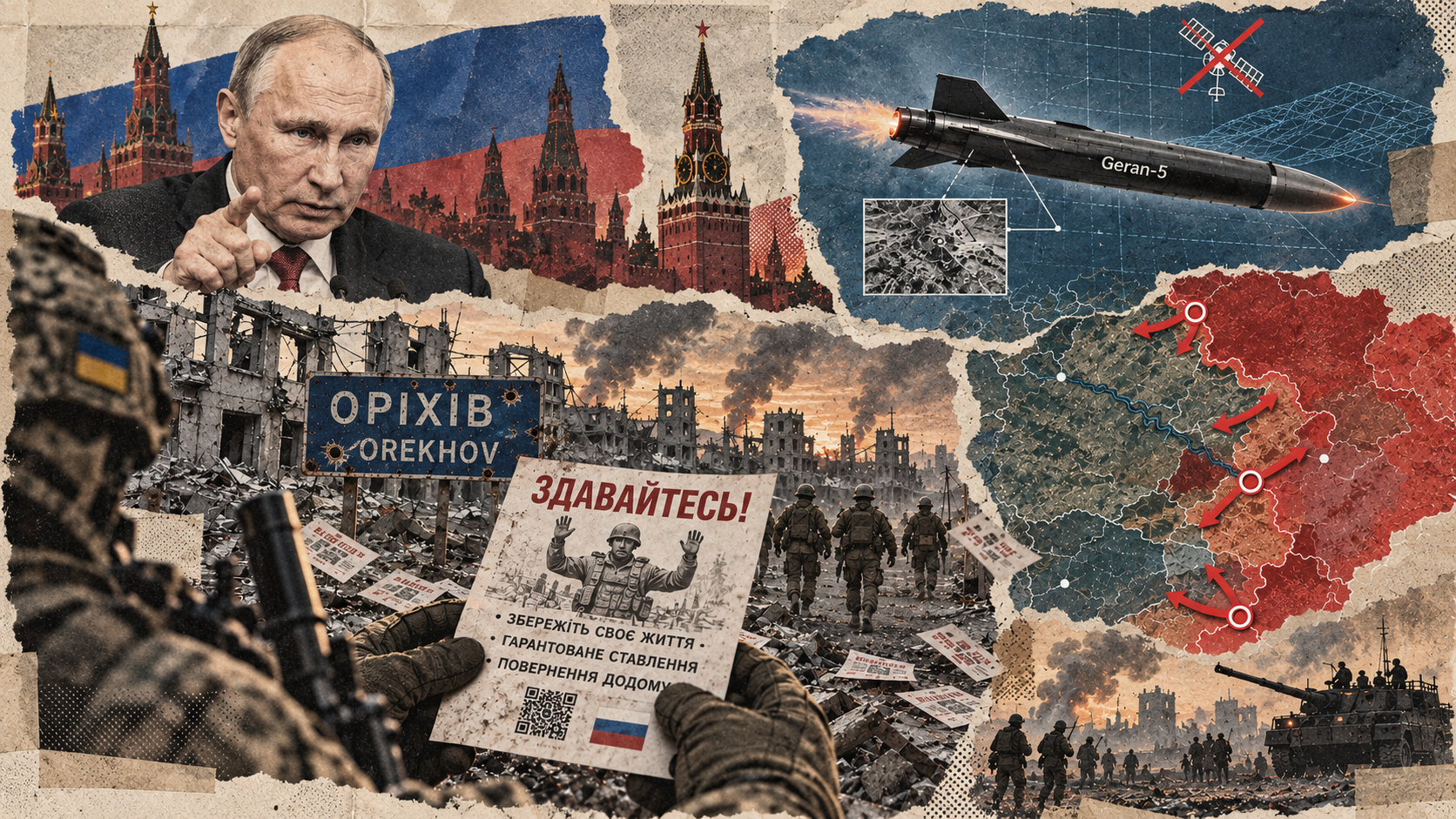
Orikhiv Garrison Now Receiving Leaflets Demanding Surrender — a Sign the Russians Themselves Believe the Battle Is Nearing Its End
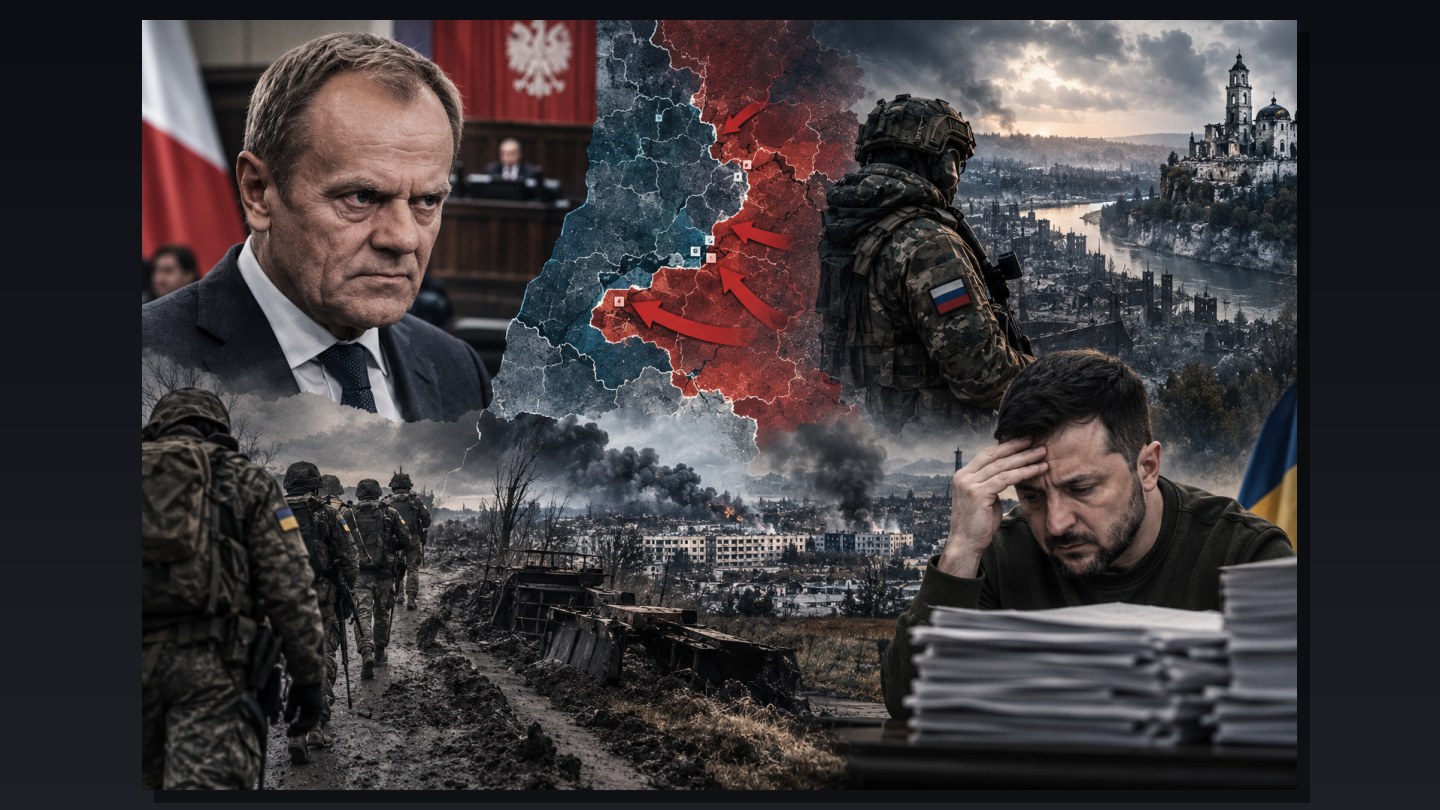
The Russian newspaper Readovka reports that Ukrainian forces in Orikhiv are now trapped in the city’s northern suburbs — an attempt to withdraw was stopped by the Russians.
With control of the main roads into the city from two directions, the Ukrainian garrison is effectively in a cauldron.
At the same time, the northern part of the city is being bombed with FAB-3000s — the heaviest tactical bomb in the Russian Air Force’s arsenal.
The fact that the Russians are bothering to distribute such leaflets at all suggests that they themselves believe the battle is approaching its conclusion.
In Donbas, the siege of Dobropillia continues, with the Russian Defence Ministry reporting additional territory captured inside the city itself and a village north of it retaken — another step toward the Ukrainian supply base keeping the garrison alive.
Azov’s Lyman Offensive: Direct Russian Video Evidence for the First Time
For several weeks, Azov leader Andriy Biletsky has claimed advances in his own offensive north of Sloviansk.
This week, something new happened: after Biletsky released a lengthy video claiming Ukrainian forces had recaptured a number of villages, the Russian Defence Ministry published its own videos from several of the same locations, showing Russian soldiers raising flags and patrolling the streets.
It is the first time in this offensive that there is direct, conflicting video evidence to compare — and the Russian footage challenges Biletsky’s own claims of control over these locations.
The Russian newspaper Readovka goes even further and claims that the entire offensive is now on the verge of complete failure because the Ukrainians failed to secure a crucial village to the south in time.
Without it, the entire advance is beginning to collapse — and Biletsky is responding, according to Readovka, not by withdrawing, but by pulling even more soldiers out of Sloviansk itself to reinforce an offensive that is already losing momentum.
That is draining the garrison of the very city that will soon have to defend itself against an approaching siege.
In only a few weeks, the rasputitsa — the autumn mud season — will also arrive, making the heavily forested, river-filled terrain in this area almost impassable for infantry.
It is also noteworthy that Azov, thanks to its political connections, is one of very few Ukrainian formations that still has access to tanks and artillery in any significant numbers — most of the rest of the Ukrainian army lost large parts of its armour during the failed Kursk offensive of 2024/25.
New Weapons: The Line Between Drone and Missile Is Disappearing
Instead, it uses terrain-following optical navigation, in which images of the terrain are compared with stored reference imagery — the same basic principle used in early Tomahawk systems.
A drone of this kind is, in practical terms, no longer really a drone, but a small cruise missile, regardless of attempts to disrupt satellite signals.
At the same time, reports are emerging of a new long-range Iskander variant.
Ukrainian military intelligence says Russia is working on new ballistic missiles with a range of up to 800 kilometres, while a modernised Iskander variant is said to be capable of reaching around 550–700 kilometres depending on the warhead. Some Russian and Ukrainian sources refer to the system as “Iskander-1000”, but a documented range of 1,000 kilometres has not yet been confirmed.
Russia has also temporarily closed the airspace around the Kapustin Yar missile base near Astrakhan from 28 September to 3 October.
This has triggered speculation about another Oreshnik launch or a test of the new Iskander system.
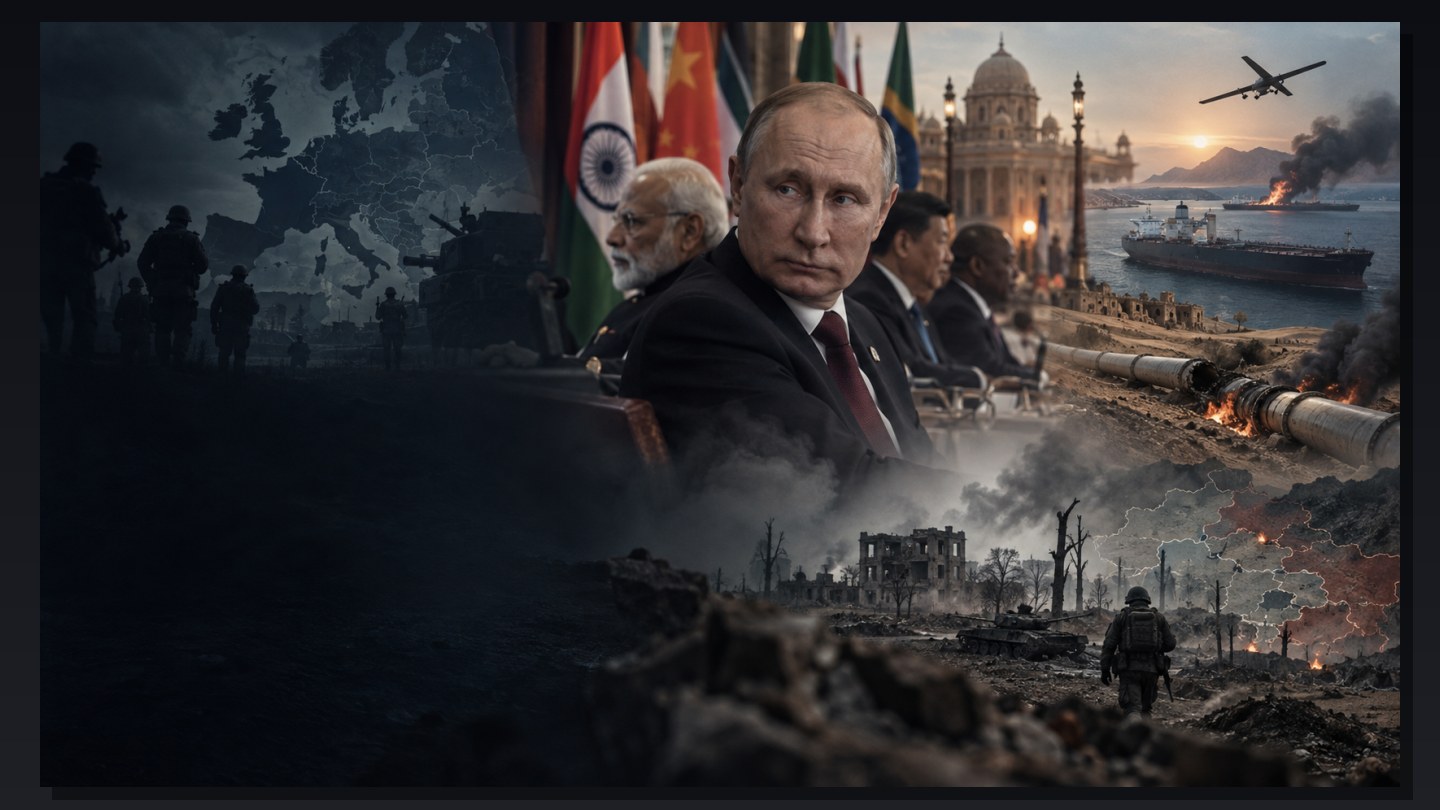
Putin After the Election: “Victory Will Be Ours” — Not Compromise
Following the parliamentary election, Putin met the leaders of all parties that won seats in the Duma.
He concluded his remarks on the war with the words: “Therefore, victory will undoubtedly be ours.”
The wording closely echoed Vyacheslav Molotov’s famous speech following Germany’s attack on the Soviet Union in 1941.
The same day, Putin signed a decree increasing the army’s authorised strength by only 15,500 military personnel.
That figure effectively kills off weeks of speculation about an imminent mass mobilisation of half a million men.
Zelensky nevertheless insists that the decree is a precursor to precisely such a mobilisation.
It is worth noting the distinction between victory and compromise: when Putin speaks of victory for Russia, he clearly does not mean the latter.
The Money Is Running Out — and a Russian Fund Chief Visits Washington
A Russian Finance Ministry official has described Ukraine’s financial situation as “catastrophic”.
Ukraine previously reported a financing gap of $27 billion, but the government now says savings have reduced the remaining shortfall to around $20 billion, without the Europeans and other partners yet finding a comprehensive solution.
It is probably precisely the fear of a Ukrainian financial crisis — and the risk it poses to Western financial institutions with enormous claims on Ukraine, including the IMF — that is keeping European governments awake at night, more than the military collapse itself.
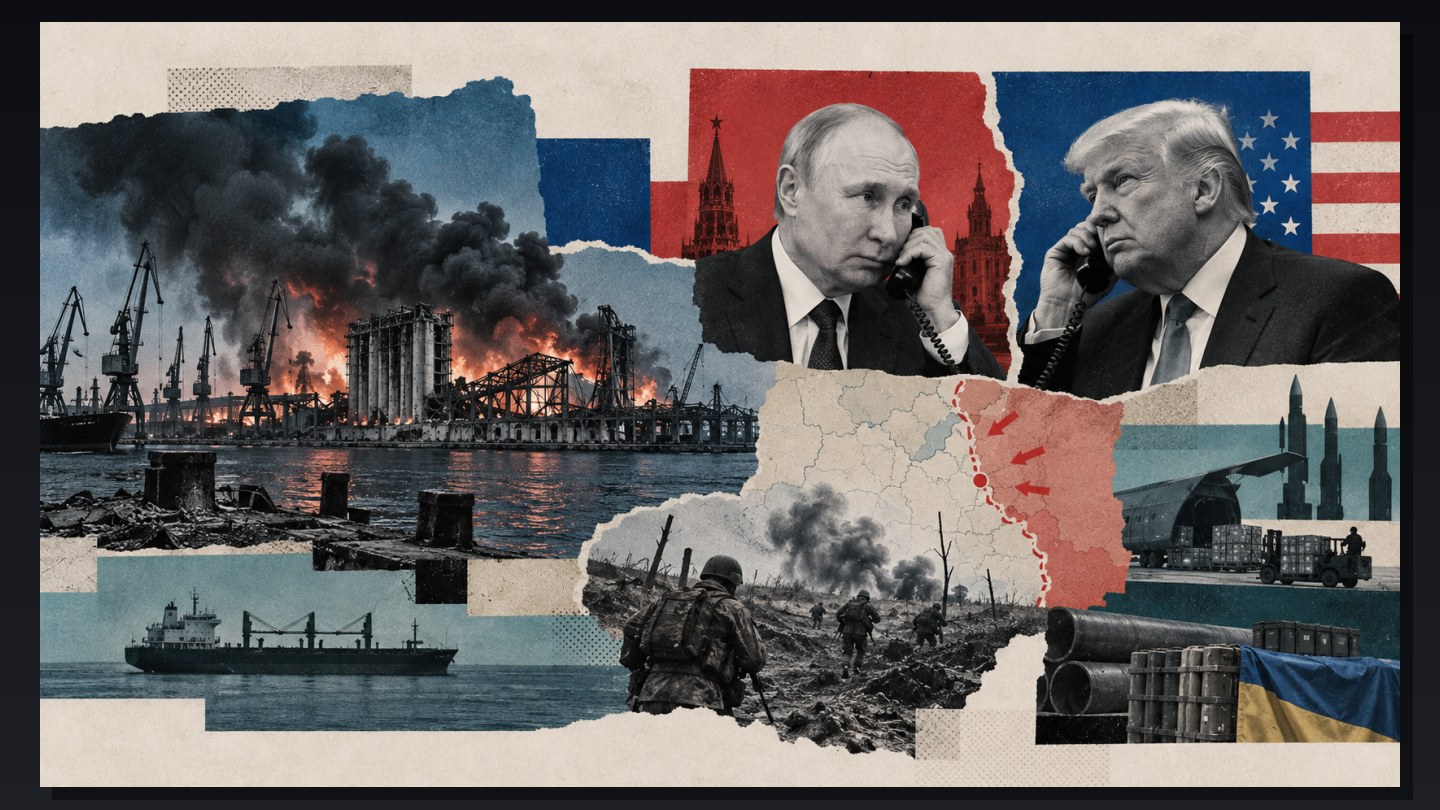
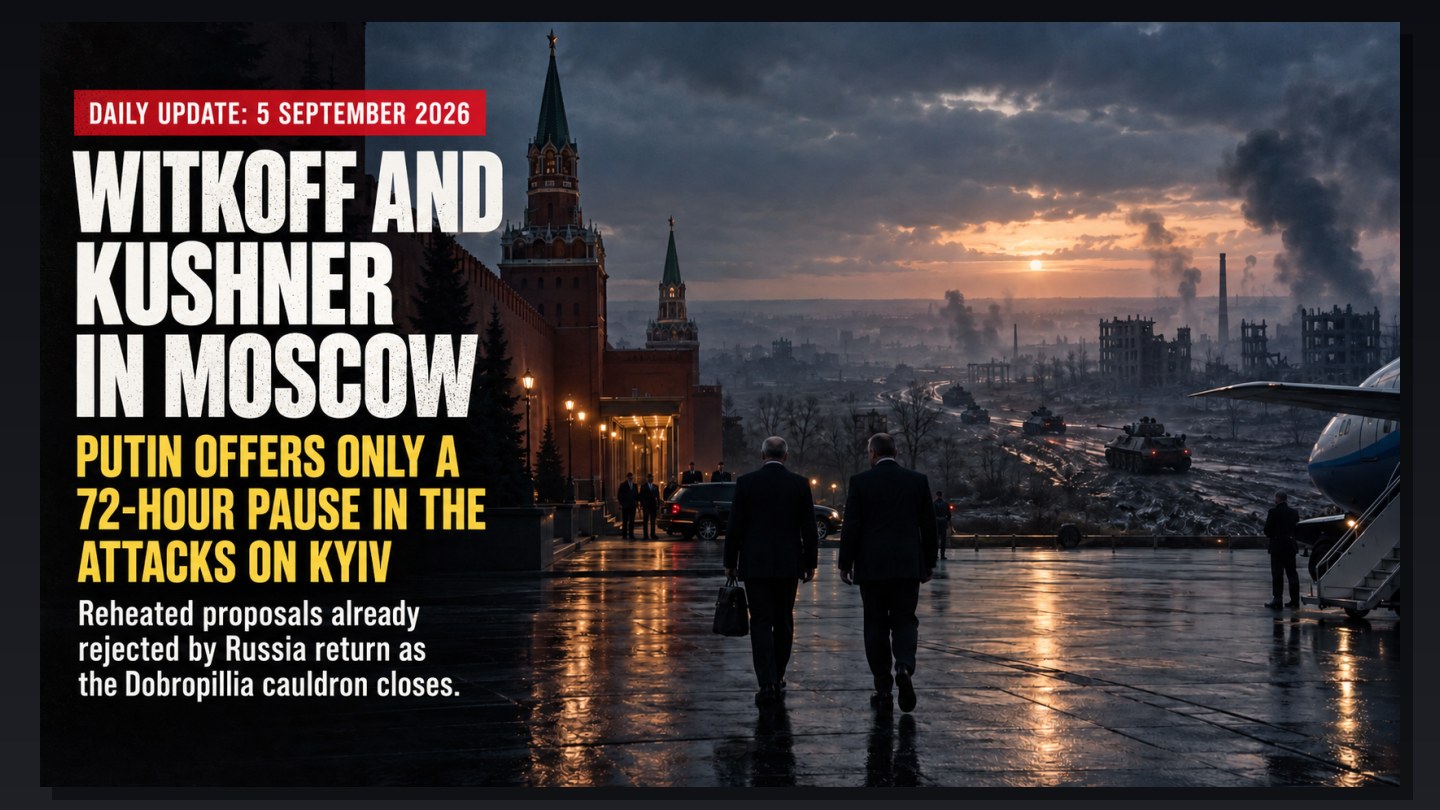
At the same time, Kirill Dmitriev, head of Russia’s sovereign investment fund and a close adviser to Putin, is in the United States.
At the same time, US Special Envoy to Belarus John Coale has advocated a model in which sanctions relief could be used as part of negotiations with Russia, including on energy, raw materials and other American economic interests.
The discussions include possible future agreements involving oil, diesel and strategic raw materials.
It is a telling sign that at least parts of the US administration are beginning to think pragmatically about Russia, even as Russia itself remains completely unyielding on Ukraine.
Conclusion: The Contours of the War’s Endgame Are Emerging
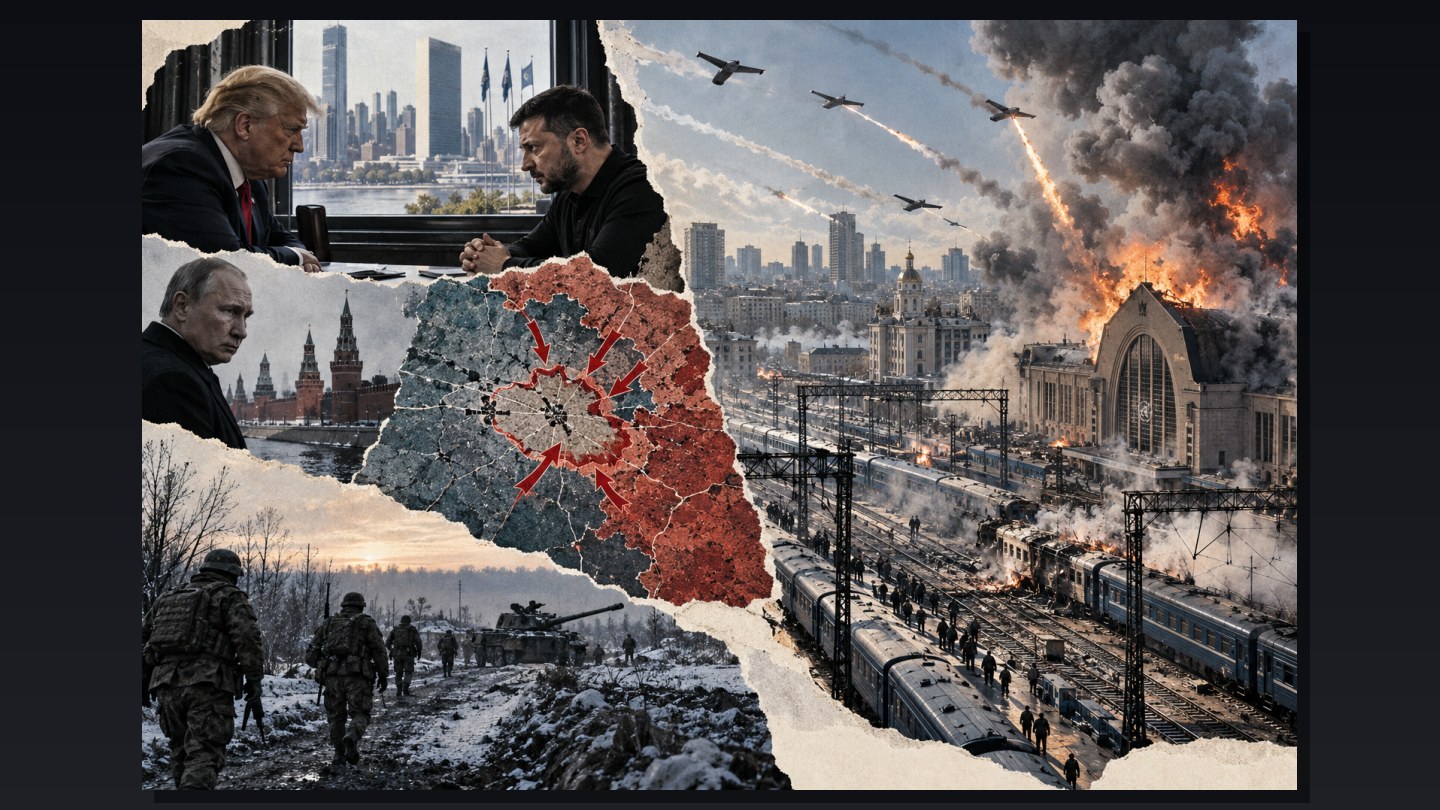
For the first time, it is possible to see the contours of an integrated Russian plan: encircle and destroy the Ukrainian army in Donbas, take Orikhiv and then assault Zaporizhzhia city itself, while simultaneously making life in Kyiv intolerable enough that the population, authorities and Western embassies eventually leave the city.
If all three happen at the same time, it will become impossible to maintain the narrative that Ukraine is holding the line.
That is when the truly difficult and dangerous endgame begins — and step by step, we are moving closer to precisely that point.







Se og hør mer
Videoer, klipp og innslag knyttet til temaet.