Diplomacy That Mostly Exists in Washington
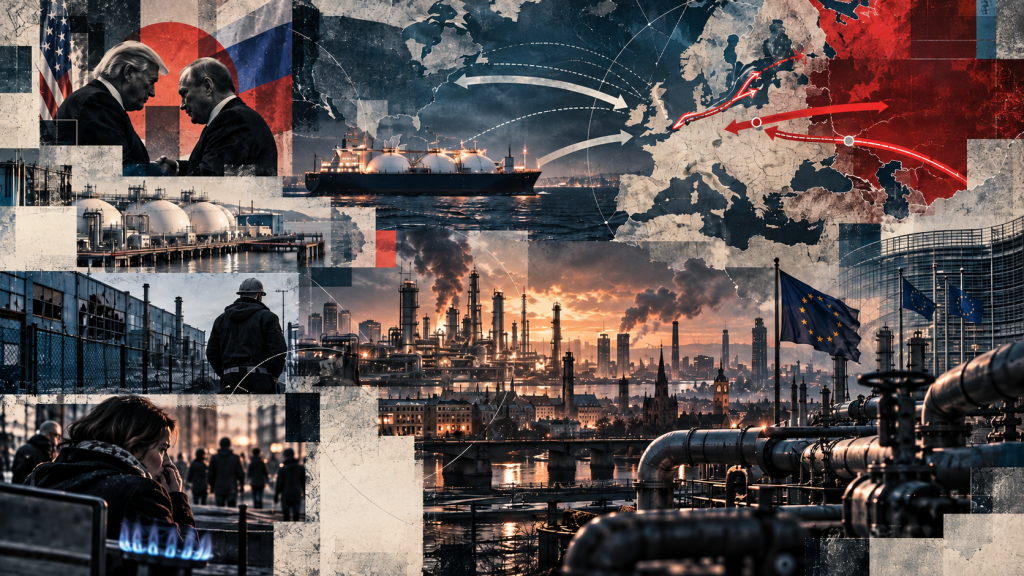
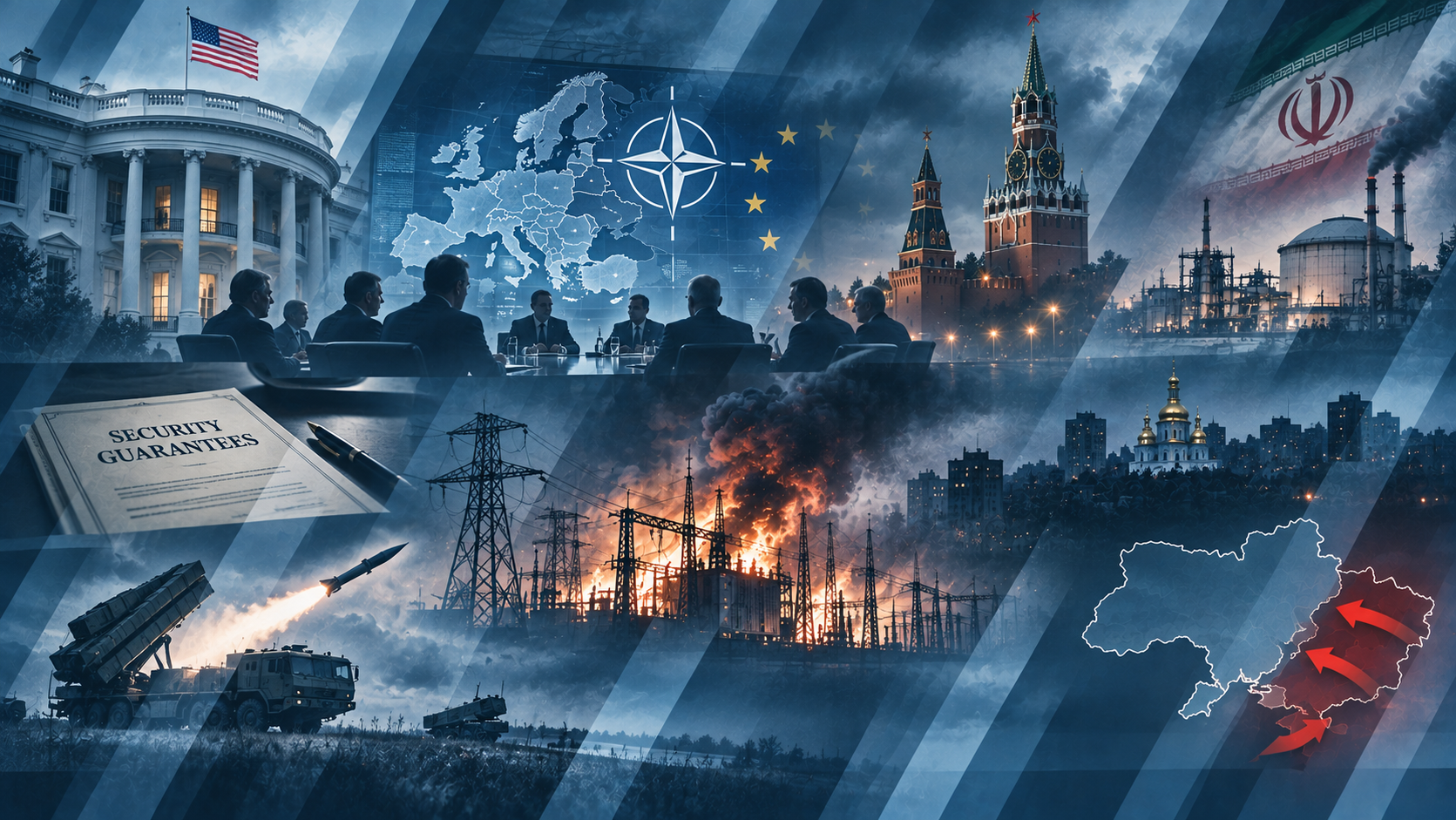
There has been a great deal of talk over the past 24 hours about diplomacy surrounding Ukraine, but for the most part it appears to exist in the imagination of the US president and some of his officials. Donald Trump has announced a new agreement between Russia and the United States that is supposed to cover all of Europe, not just Ukraine, after meeting a single Russian representative, Kirill Dmitriev.
Trump’s son-in-law Jared Kushner says the agreement concerns Europe’s security architecture, including transparency, identification of military units and communication, with NATO continuing to play a central role. According to him, the Americans, Europeans and Ukrainians have been discussing the issue, including security guarantees after the war.
The Kremlin says it has received no details: Dmitry Peskov says there “are no details”, and that Russia has received no proposals from the Europeans. European capitals, meanwhile, are alarmed that Washington intends to negotiate the continent’s security with Moscow.
This is the result of the Western practice of negotiating among themselves before meeting the other side: by the time the Europeans and Americans have reached agreement, the other side’s objections have long since been forgotten. Dmitriev, who heads the Russian Direct Investment Fund, is also not the person normally tasked with discussing Europe’s security architecture.
The Russians have been complaining about this since January, when Putin himself asked Witkoff and Kushner in the Kremlin where the document on security guarantees for Ukraine was — the one he had been reading about in Western media.
Russia is not opposed to guarantees in principle. The Istanbul agreement of April 2022 provided for them, with Russia as one of the guarantors, limitations on Ukraine’s armed forces, no foreign bases, and no military exercises with foreign powers without the consent of the guarantor states.
A guarantee modelled on Article 5 of the NATO Treaty, without any of the Russian conditions, would probably be unacceptable to Moscow, since it would effectively treat Ukraine as a kind of NATO power and create a path towards membership. Kushner and Witkoff admitted to Putin in January that such a document exists, but that they had not brought it with them.
The Russians hardened their position after the Ukrainian drone attack on Putin’s residence at Valdai, and the January meeting gave them further reason to do so, since the mediators had been negotiating security guarantees with the Ukrainians behind Russia’s back.
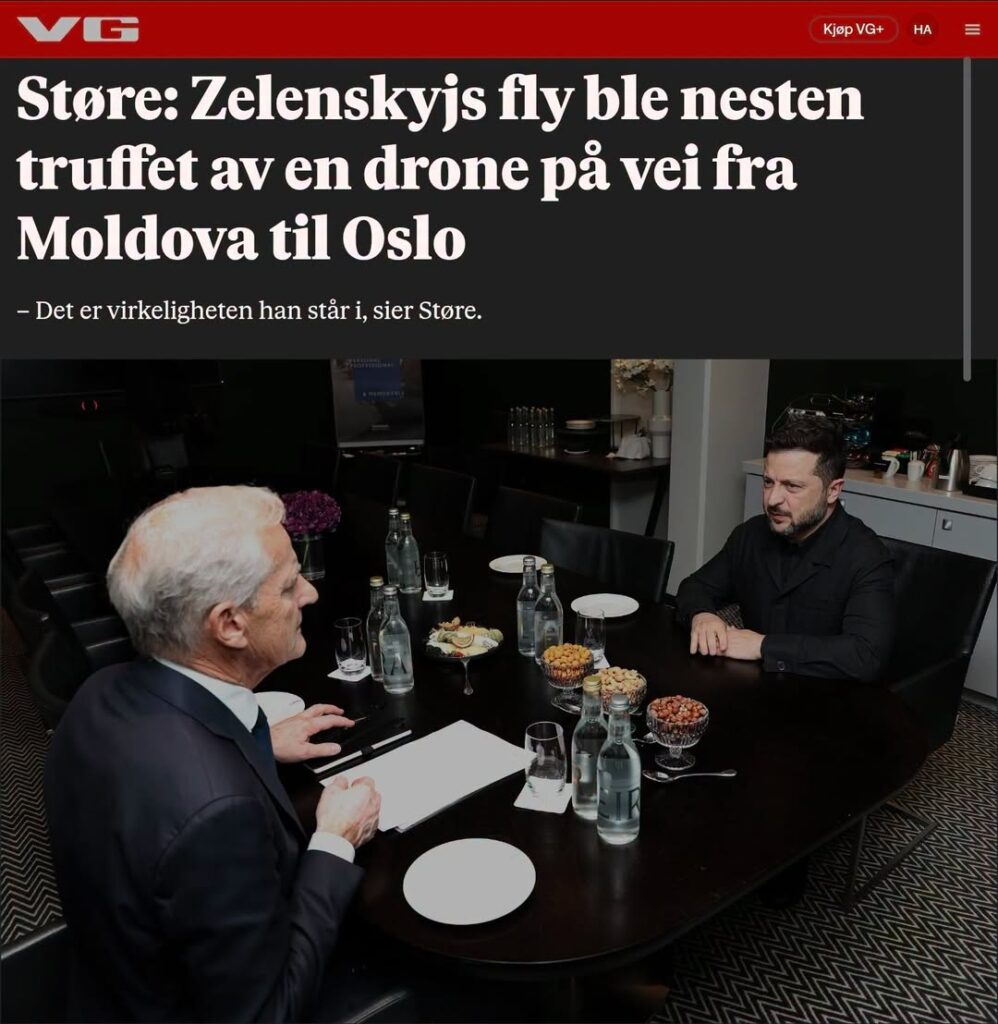
Since then, Ratcliffe’s failed visit to Moscow in September, Witkoff’s empty-handed meeting with Putin, the phone call between Putin and Trump, and the October meeting in Oslo between Witkoff, Kushner and Zelensky, with Støre and Stubb present, have not changed the picture.
When Witkoff went to St Petersburg without the guarantees document, Putin replied that they would have to start from zero: the talks in Abu Dhabi are not supposed to be about ending the war, but about security guarantees for Russia and Ukraine and the entire European security system.
The Americans believe they can preserve what they have already agreed with the Ukrainians while reassuring the Russians through confidence-building measures such as transparency and disclosure of troop positions. That is a long way from addressing Russia’s fundamental concerns.
Medinsky, Medvedev and the Hardliners
Vladimir Medinsky, Russia’s toughest negotiator, has served as chief negotiator since the second day of the special military operation. He is closely briefed on the thinking of Putin and the Security Council, and the Abu Dhabi meeting will probably go badly.
Putin has tolerated Trump’s initiatives for a year and a half, with diminishing enthusiasm since the Anchorage summit. Dmitry Medvedev, deputy chairman of the Security Council, takes a harder line and says Russia has no reason to worry about the midterm elections: Trump has never produced a coherent peace proposal, and the new Congress will be just as hardline as the old one. What matters is what happens on the ground.
There is probably a growing faction in the Kremlin that has regarded the peace initiatives since Anchorage as little more than a smokescreen, and is quietly satisfied with the election result. It expects more sanctions, but not massive tariffs against India and China. Tariffs against Russia itself are meaningless because the country barely trades with the United States.
For this faction, the Biden administration was in some ways preferable because it at least provided clarity, whereas Trump has offered only unfulfilled hopes.
That will not prevent Medinsky from arriving in Abu Dhabi with proposals of his own for a European security architecture. The Russians will listen to the American proposals and say that more work is needed, which suits them perfectly well as long as they continue winning the war quickly.
Medvedev now also publishes on the Max messaging service, while Telegram is heavily restricted in Russia. He has commented on Elon Musk sharing a post describing Starlink’s and Starshield’s involvement in Ukraine as a major mistake. Good, Medvedev says, but too late: Musk and SpaceX are implicated regardless.
That may be a hint that Starlink is about to face greater problems. At the same time, the Russians have released more information about a new generation of Rassvet satellites that could enter service in the first half of next year.
Power Grid, Railways and the Need for Money
The situation in Ukraine is becoming increasingly critical. Large areas were without electricity overnight, and Kyiv is in blackout. Mayor Vitali Klitschko says the situation is extremely serious, while Ukrenergo is warning of increasingly long power cuts across the country.
The major missile strike that has been anticipated for several days may come as early as tonight. Attacks on the railway continue, with more locomotives and trains destroyed. The image of a train being hauled by a steam locomotive illustrates just how desperate the situation has become.
The blockade of Ukrainian ports also continues in practice, and the Russians reported another dry cargo vessel destroyed today which they say was intended to carry weapons. Civilian maritime traffic on any significant scale is probably no longer possible.
In an interview with British media, Zelensky has acknowledged that Russia is producing weapons on an enormous scale, far more than the West, and more than it can use. That is a remarkable reversal from earlier Ukrainian claims that Russia would soon be unable to continue because of its losses.
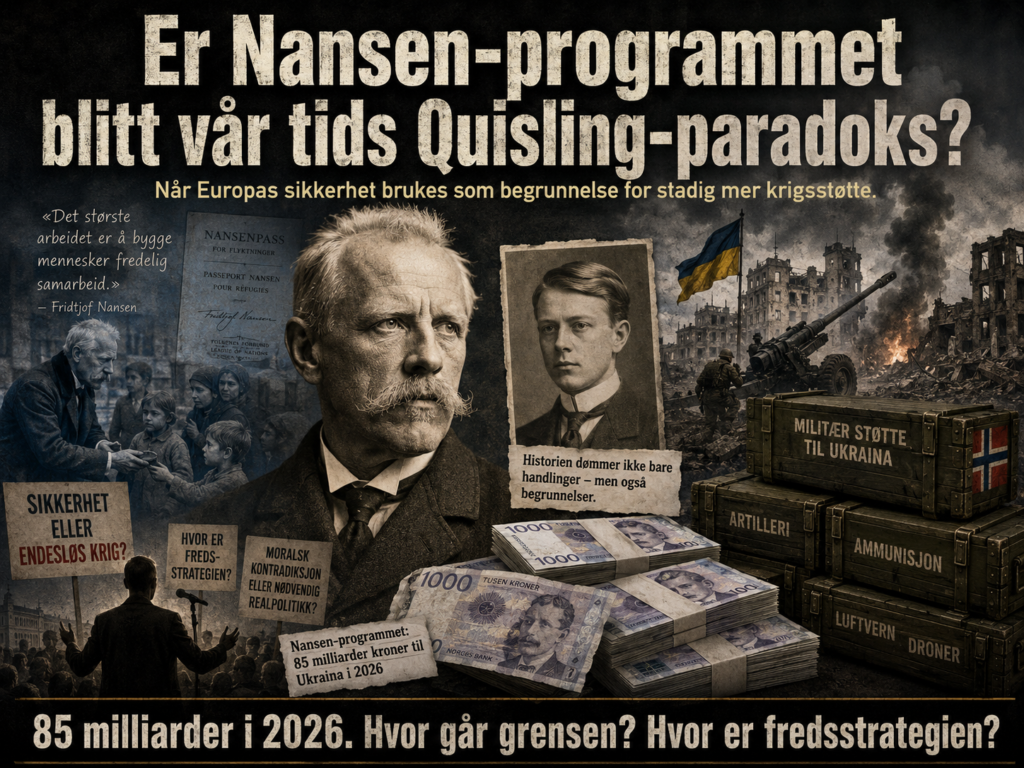
Zelensky meanwhile says that the United States owes Ukraine $16 billion promised by Biden, while the Europeans are expected to provide €70 billion in addition to last year’s €90 billion loan. Ben Aris and Ian Proud argue that the total requirement for next year is well above $150 billion, with figures as high as $170 billion being mentioned. In September, the figure was $27 billion.
A country without electricity, with industrial collapse and an agricultural sector that is no longer functioning, effectively has no economy, yet is still expected to wage war against a nuclear power and therefore requires endless financing.
The question is whether this makes sense for the donors, given large budget deficits in both the United States and Europe and welfare budgets already under pressure. The money will probably be found anyway.
Zelensky says responsibility for the situation in Kyiv lies primarily with Klitschko, who failed to prepare the city for winter. A Ukrainian drone attack on Russia overnight was the smallest since early summer, involving around 100 drones according to the Russian Defence Ministry. Either Ukraine is struggling to sustain the offensive, or drones are being stockpiled for another major attack.
The Front: Conflicting Reports From Orikhiv and Pressure on the Fortress Cities
Reports from Orikhiv are strikingly contradictory. Yesterday there were claims of a Ukrainian counterattack that recaptured large parts of the city, while overnight Russian reports said the battle was over and that the Russians had taken both Orikhiv and the village of Prydnipriany.
Both claims are probably premature.
The most likely scenario is that a Ukrainian counterattack gained some ground, but less than Ukrainian commentators claim, and that the Russians used it as an opportunity to intensify the bombardment before attacking again.
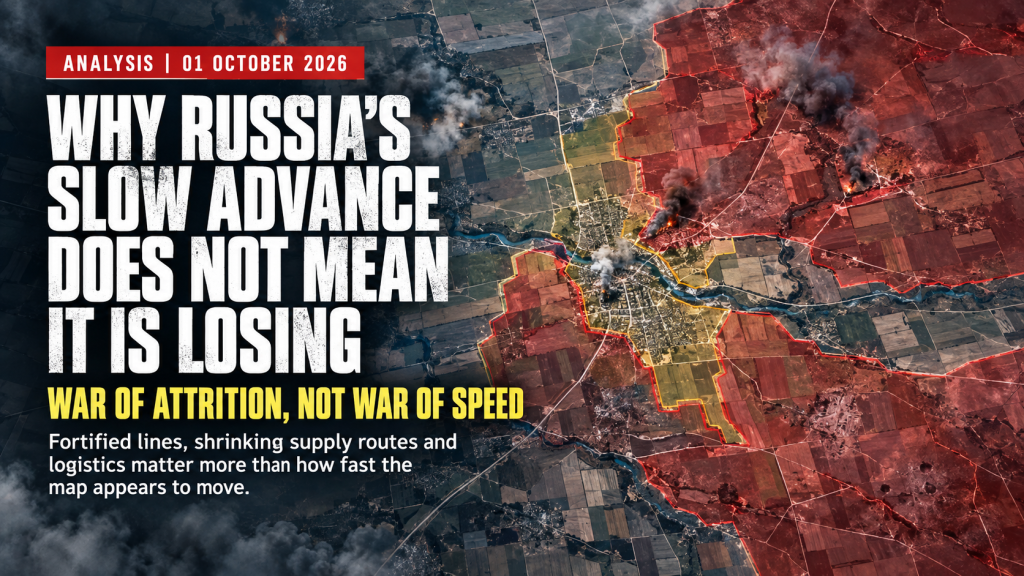
Group East is continuing to push westward from Omelnyk and along the Vovcha River. A steady advance north of Orikhiv would cut the remaining supply routes and point towards Zaporizhzhia.
At Dobropillia, which is probably firmly in Russian hands, Russian forces are storming Bilozerske. Satellite imagery shows fires northeast of the city, north of the village of Zelenyi Kolodiazi, which the Russians firmly control.
That suggests the plan is to advance north towards the main roads supplying the Kramatorsk–Sloviansk area from the west, the last part of Donbas still controlled by Ukraine. The Russians hold the area to the south, east and increasingly to the north. If the roads to the west are cut, an encirclement will emerge.
Farther north near Lyman, where Operation Vivaldi is increasingly regarded as a failure, the Russians are retaking lost ground and renewing their assault on Lyman and onward towards Sviatohirsk.
Marat Khairullin believes the Russians will become far more aggressive this winter, something the intensity of the air war appears to support. With that level of pressure and complete stability inside Russia, it is difficult to understand why Putin would allow Medinsky to make concessions in Abu Dhabi. He will probably arrive with demands.
Iran: Putin at the Centre of Real Diplomacy
While the diplomacy surrounding Ukraine is largely imaginary, diplomacy around Iran is real, and Russia is playing the central role.
Sergei Lavrov visited Tehran two weeks ago, and President Masoud Pezeshkian was in Moscow on 27 October. Almost the entire civilian leadership of the Russian government attended the meeting, which lasted several hours. The same day, Putin met the Emir of Qatar, probably to discuss natural gas.
Since then, there have been new reports about trade and a railway connection. Russia is Iran’s largest food supplier and its most important grain customer, probably on credit. Moscow is promoting a gas pipeline to Iran. Iran has also confirmed that it has ordered Su-35 aircraft from Russia, which are expected to be delivered after the war.
Iranian media report that Putin spoke for 85 minutes on 2 November with Iran’s national security adviser. It is almost unheard of for the Russian president to speak that long with an adviser rather than the country’s leader himself. The Kremlin has issued no summary.
Three days later, Mohsen Rezaei came to Moscow carrying a message from Iran’s Supreme Leader. Rezaei has also received a message from Vice President JD Vance seeking to resume negotiations between the United States and Iran in order to avert an attack which Vance himself says he strongly opposes.
This could be part of a diplomatic solution with Russia acting as mediator, although Rezaei would hardly be the natural counterpart for such talks instead of Foreign Minister Abbas Araghchi or parliament speaker Ghalibaf.
Tasnim reports that Rezaei denies bringing proposals for negotiations and instead refers to Iran’s established demands: lifting the naval blockade, Iranian control over the Strait of Hormuz, lifting sanctions, repayment of Iranian funds, and US withdrawal from bases near Iran.
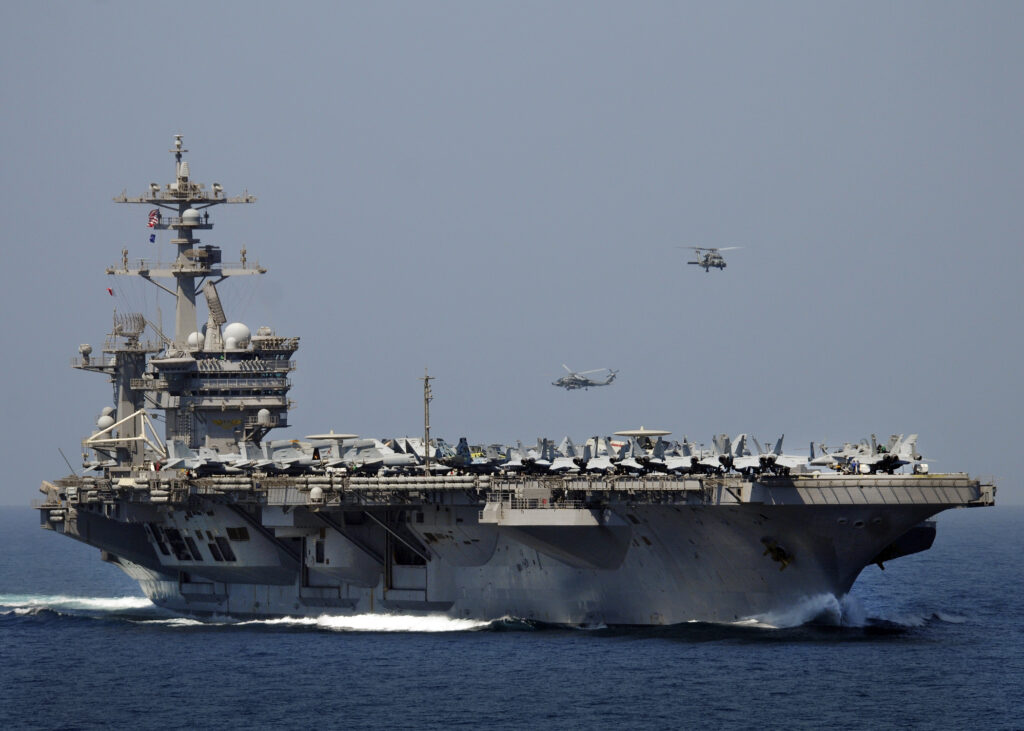
The meeting therefore probably concerns military preparations for a possible US attack to a greater extent, including Russian radar improvements, satellite data and intelligence.
Russia will probably demand that Iran limit its response. Moscow has good relations with Saudi Arabia, Qatar and the United Arab Emirates and does not want attacks on energy facilities or desalination plants in the region.
That is speculation, but informed speculation, and there are signs that Putin may have spent 85 minutes laying this out for Rezaei, and that the message from the Supreme Leader confirmed that Iran agrees.
If a mediation initiative does emerge with Russia in the leading role, many in the United States, even among those opposed to the war, are unlikely to welcome a peace negotiated by the Russians.