Moscow Sends Its Most Experienced Negotiators
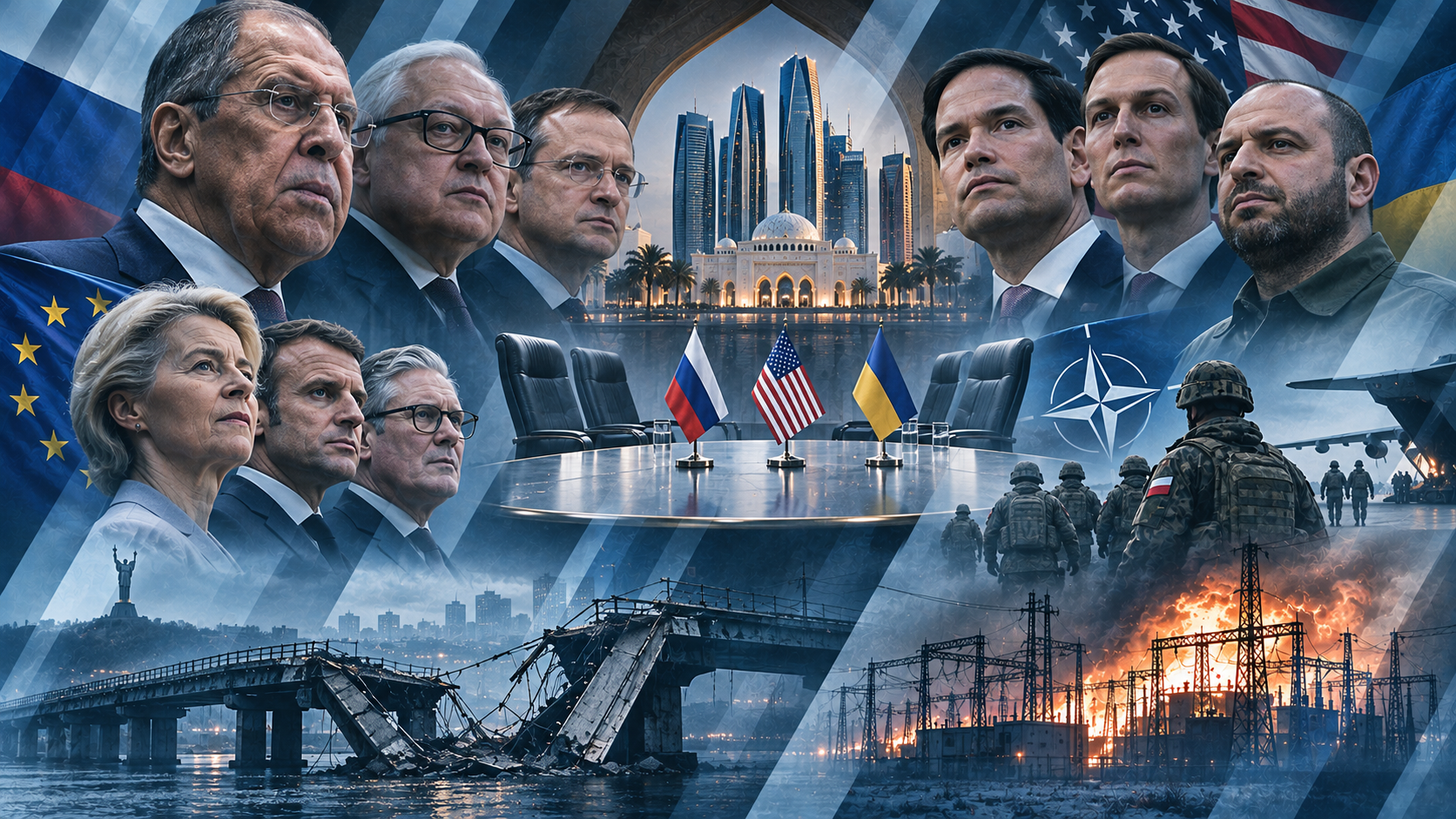
One day before the trilateral talks in Abu Dhabi, Russia has confirmed that Deputy Foreign Minister Sergei Ryabkov will be part of the delegation. It is an important detail, not least because it says something about what Moscow expects from the meeting.
Foreign Minister Sergei Lavrov described Ryabkov’s participation on Monday as “entirely natural”. He pointed to Ryabkov’s responsibility for relations with North America, arms control and his long experience with issues related to the Organization for Security and Co-operation in Europe, the OSCE.
Ryabkov led the Russian negotiations with the United States in December 2021 and January 2022, when Moscow presented proposals for two treaties that would have changed the security order in Europe. Russia demanded, among other things, restrictions on further NATO expansion and on the alliance’s military presence near Russian borders. The negotiations failed.
The fact that Ryabkov is now being sent to Abu Dhabi is therefore unlikely to be accidental. He is perhaps the Russian diplomat with the greatest experience of precisely the issues Moscow wants to put back on the agenda.
The delegation is formally led by Vladimir Medinsky, who has played a central role in negotiations with Ukraine since 2022. Deputy Foreign Minister Mikhail Galuzin, military intelligence chief Igor Kostyukov and General Staff officer Yuri Zhigarlovsky are also participating.
It is a team composed of people who know both the diplomatic disputes and the military situation. Medinsky has previously warned the Ukrainians against believing that Russia can simply be waited out. Ryabkov knows the security negotiations with Washington, while the military representatives can present Russia’s assessment of the balance of forces on the front.
The composition can therefore just as easily be interpreted as a signal that Moscow intends to hold firm on its demands as a sign of greater willingness to compromise.
It Is About More Than Ukraine
Lavrov made clear on Monday that security issues are at the top of the agenda. He welcomed US Secretary of State Marco Rubio’s statements that the talks would address security guarantees for Russia, Ukraine and the region as a whole.
For Moscow, this means something more than an agreement on a ceasefire or the location of a future front line.
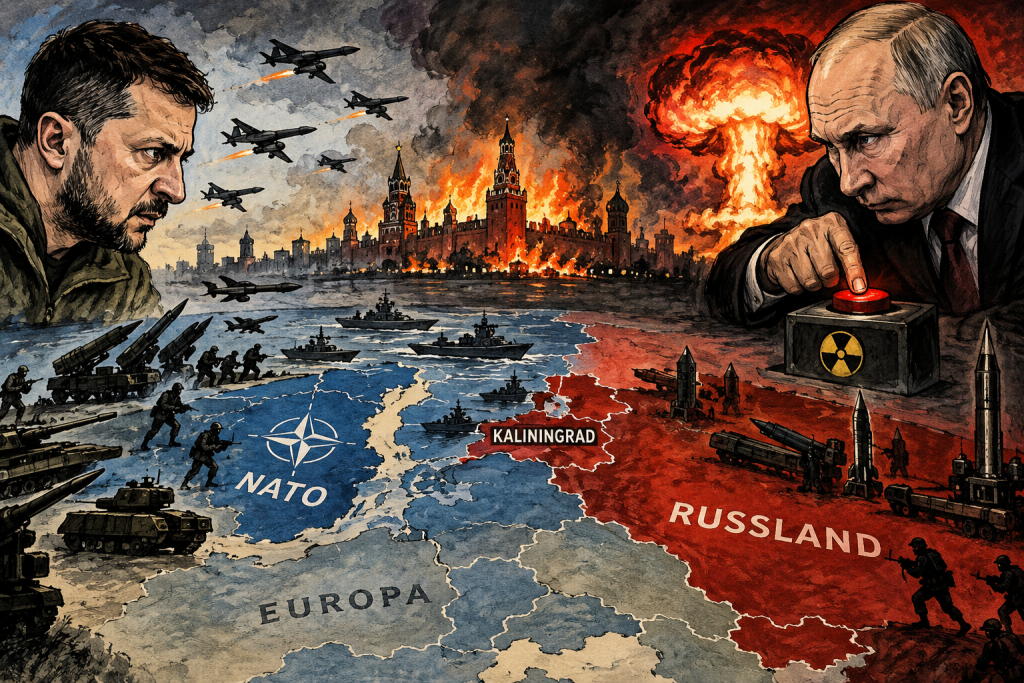
Since before the war, Russia has demanded an arrangement that, in its view, would prevent Ukraine from becoming a military platform for NATO. Its demands for Ukrainian neutrality, restrictions on foreign military installations and changes to Europe’s security architecture have remained consistent.
The territorial demands also remain in place. Moscow insists on control over all of Donbas and the other regions Russia has declared part of its territory. There are also unconfirmed reports that Russia no longer intends to withdraw from parts of the Kharkiv, Sumy and Dnipropetrovsk regions that had previously been discussed.
If those reports are correct, the Russian position has hardened.
That provides another way of understanding why Moscow is sending such an experienced delegation. The purpose may be to make the Americans and Ukrainians understand that Russia does not see the military situation as a reason to reduce its demands. On the contrary, Moscow may believe that time is working in its favour.
Europe Wants to Participate — Russia Says No
At the same time, European governments are trying to secure a place in the negotiations.
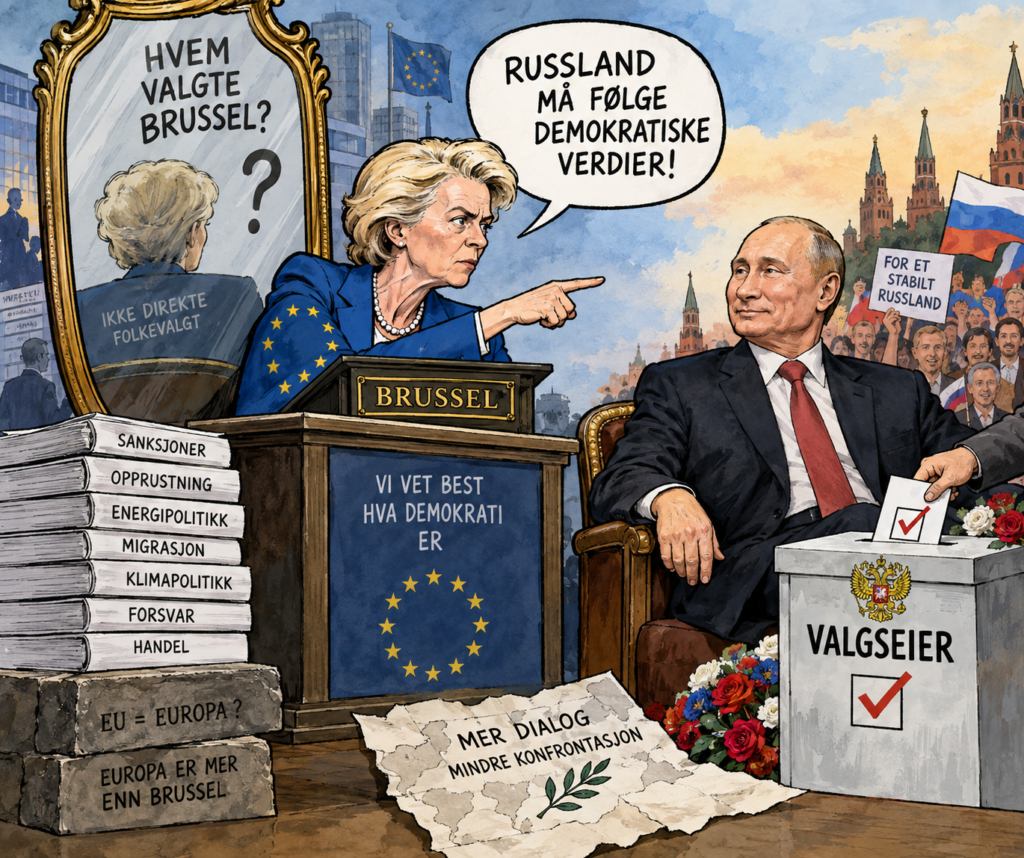
European Commission President Ursula von der Leyen has confirmed that European representatives will travel to Abu Dhabi. France, Germany and Britain are also sending representatives, while NATO and European institutions are involved in consultations.
But there is a difference between being in Abu Dhabi and sitting at the negotiating table.
Kremlin spokesman Dmitry Peskov stressed on Monday that the talks themselves are to remain trilateral, between Russia, Ukraine and the United States. The European countries have not been invited into that format.
The most likely arrangement is therefore that European representatives will hold separate meetings with the American and Ukrainian negotiators, allowing them to influence the process without participating directly in talks with Russia.
For Moscow, this is a matter of principle. Russia wants to discuss Europe’s security order primarily with Washington, which in the Russian view is the decisive power behind NATO’s military structure.
European governments, for their part, argue that no agreement on the continent’s security can be reached without them.
This contradiction could become a problem before the talks even begin. If European representatives are nevertheless given a direct role in the negotiating room, it is reasonable to assume that Moscow will protest. How far those protests might go remains unclear.
Military Exercise in Poland Adds to the Tension
At the same time, the coalition of the willing has begun a military exercise in Poland. Around 2,800 troops from eleven countries are training for a future deployment of Western forces to Ukraine after the active phase of the war has ended.
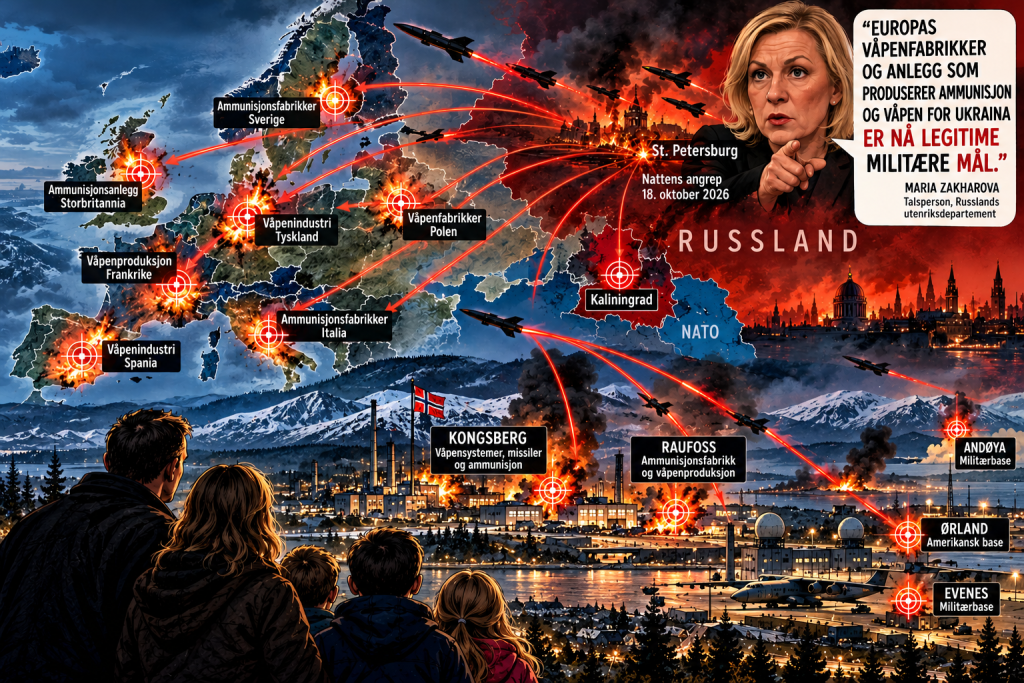
Russia has reacted strongly to the plans and repeated that British and French troops on Ukrainian territory would be regarded as military targets.
The exercise was planned long before the new round of negotiations was announced, but the timing nevertheless adds to the tension.
There is also a question of how much military significance such a force would have. A few thousand troops, without an extensive system of air defence, logistics and reinforcements, would struggle to alter the balance of forces against the Russian military in Ukraine.
German Defence Minister Boris Pistorius has also made clear that the country cannot provide Ukraine with any more Patriot systems at present.
European countries want to demonstrate military resolve, but the limitations of their own capabilities are becoming increasingly apparent.
Russia Continues Strikes on the Power Grid
While diplomats prepare, Russia’s air campaign against Ukraine continues.
Overnight into Monday, the Ukrainian Air Force reported 317 Russian drones, including 105 jet-powered drones and Banderol systems. Russia, for its part, reported strikes against substations and other energy facilities in the Kyiv, Dnipropetrovsk, Cherkasy and Vinnytsia regions.
The attacks are now coming with a frequency that differs from the first major Russian campaign against Ukraine’s energy system in the autumn of 2022.
At that time, Russia carried out larger missile strikes at longer intervals. Now energy facilities and related infrastructure are being hit almost daily, both at night and during daylight hours.
Russian strikes increasingly target the substations that distribute electricity between power plants, industry, the railway system and the cities. Many of these facilities are less protected than the largest power stations, and the damage can be difficult to repair when new strikes arrive before the work is finished.
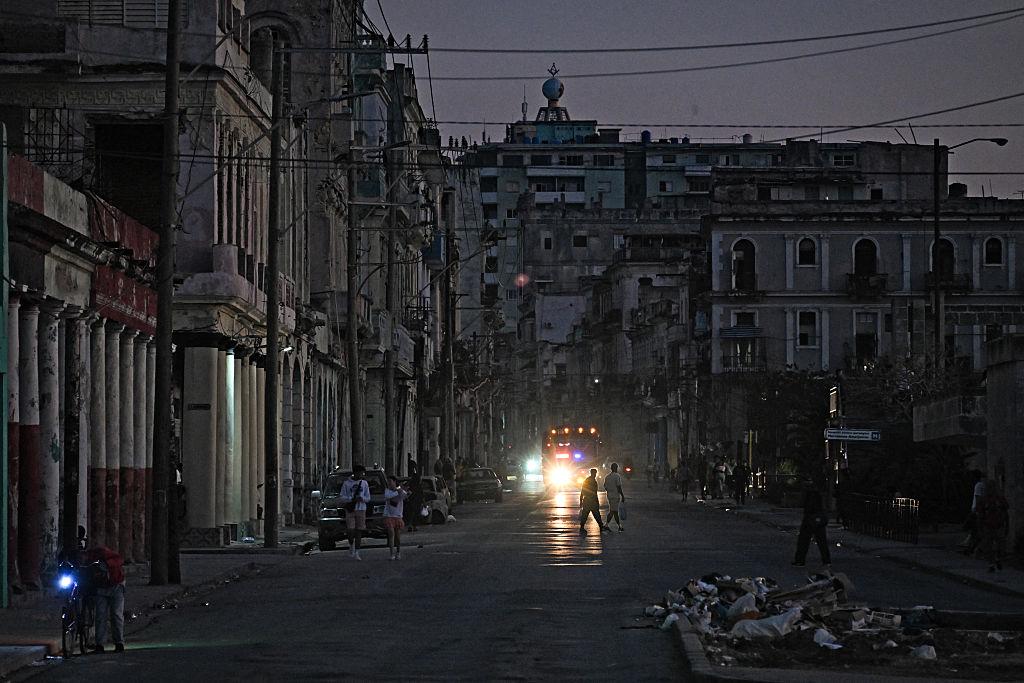
The effects are already being felt. Kyiv, Kharkiv, Dnipro and several other cities are reporting extensive power outages, while parts of the water supply and public transport systems are also being affected.
The situation in smaller towns and villages is less well documented. It is possible that the authorities are trying to prioritise the remaining electricity supply for the larger cities and the most important public services, but the extent of this is unclear.
What does appear clear is that Russia is no longer merely trying to inflict isolated damage on the energy system. The attacks are coming so frequently that restoring the system is itself becoming an increasingly difficult task.
Ukraine, meanwhile, is continuing its own long-range drone attacks. On Monday, the KINEF refinery near Kirishi southeast of St Petersburg was attacked, and a fire was reported at the facility.
Both sides are therefore attacking each other’s economically and militarily relevant infrastructure, but Russia’s campaign against Ukraine’s electricity supply has taken on a particularly prominent role ahead of winter.
The Dnipro Bridges: From Damage to Possible Destruction
Another central element is the bridges across the Dnipro.
Overnight into Saturday, Kyiv’s Northern Bridge was hit by Russian ballistic missiles. According to Zelensky, four of the six ballistic missiles aimed at the Northern Bridge struck their target.
The bridge was closed after the attack, but traffic partially resumed on Sunday, with restrictions on which vehicles may cross. The Southern Bridge was struck earlier, and there are still conflicting reports about the extent of the damage there.
These bridges are important for heavy traffic between the two sides of Kyiv and for transport farther east. Other crossings exist, but losing capacity on the largest routes could have significant consequences.
The key question is whether Russia is now trying to destroy the bridges completely rather than merely render them temporarily unusable.
Some military commentators have pointed to the large holes in the Northern Bridge’s roadway as possible evidence of attempts to strike structural elements supporting the bridge. That has not been technically confirmed, nor is there evidence that Russia has decided to destroy all the bridges across the Dnipro.
But if this interpretation is correct, the consequences could become far more serious than the present traffic disruptions. Repeated strikes on the load-bearing parts of a bridge could eventually cause damage that cannot be repaired while the war continues.
For Ukrainian forces east of the Dnipro, such a development would make resupply more difficult and increase dependence on alternative transport routes.
That is why the bridge campaign could have greater military significance than individual strikes on other parts of the infrastructure.
Rassvet: Russia’s Answer to Starlink
The accuracy of the strikes on the Northern Bridge has also raised questions about the navigation and communications systems Russia is using.
Iskander missiles use, among other things, Russia’s Glonass satellite navigation system. There has also been speculation that some missiles use optical systems that compare the terrain below with stored images of the target.
Another possibility being discussed is whether the new Russian Rassvet satellite system is already contributing to military communications.
Russia is developing Rassvet as a satellite system for both civilian and military purposes. Ukrainian military intelligence has previously said that the system is being used for Russian military communications, although coverage is not yet continuous.
There have been reports of a new Russian launch from the Plesetsk Cosmodrome, and some assume that additional Rassvet satellites may have been aboard. Russia has not publicly confirmed this.
Russia’s Security Council has meanwhile called for faster expansion of the satellite system.
If the system achieves continuous coverage over Ukraine, it could give Russian forces greater ability to control drones over long distances without depending on ground-based connections. It would also extend the reach of operations against targets deep inside Ukrainian territory.
There is, however, no confirmation that Rassvet played any role in the attack on the Northern Bridge.
The Front: Russian Pressure Continues
On the ground, reports of Russian advances in the Zaporizhzhia region continue.
The Russian Defence Ministry claims that Group Vostok has taken Vasylivka, a small village northwest of Omelnyk. If the report is correct, it means Russian forces are continuing westward in the area north of Orikhiv.
The village is small, but its location matters. A further Russian advance westward could place additional pressure on Ukrainian supply lines into Orikhiv while bringing Russian forces closer to Zaporizhzhia city.
Russian sources claim that the garrison in Orikhiv is in the process of being encircled and that reports of a major Ukrainian counteroffensive in the area are exaggerated. These claims have not been independently confirmed.
Continued fighting is also reported around Dobropillia and Bilozerske, along with Russian counterattacks in the Lyman sector following Ukraine’s Operation Vivaldi.
Here too, the reports conflict. Russian military sources describe a situation in which Ukrainian attempts to regain ground have largely been halted, while Ukrainian sources report local counterattacks.
It is therefore difficult to determine how quickly the front line is actually moving. But Russian operations around Orikhiv, the supply routes to Sloviansk and the areas around Dobropillia continue in parallel with the air campaign against infrastructure farther west.
Ukraine’s Problems Extend Beyond the Battlefield
The military developments come on top of an increasingly difficult economic and demographic situation.
Millions of Ukrainians have left the country since 2022. Losses at the front, mobilisation and emigration have simultaneously reduced the working-age population. The war is making it harder to maintain industry, energy supply and employment, while the state remains dependent on extensive foreign financing.
It is under these conditions that Kyiv hopes for increased US support following the Democrats’ election victory.
But even if Congress approves a new aid package, the money cannot automatically be converted into weapons and air-defence missiles. Production capacity, particularly for Patriot interceptors, is a constraint that cannot be removed by a budget vote alone.
This is an important difference from earlier phases of the war. Western governments can still allocate money, but their ability to deliver what Ukraine needs, in the quantities and at the speed required, is a separate question.
For Russia, this development may be another reason to hold firm on its demands rather than reduce them.
Abu Dhabi: Negotiations Under Military Pressure
It is therefore difficult to treat the talks as an isolated diplomatic initiative.
Russia arrives with a delegation familiar with all the central disputes and with a declared ambition to discuss Europe’s future security order. Ukraine wants security guarantees without accepting Russia’s territorial demands, while European governments reject the idea that the continent’s security should be decided between Moscow and Washington alone.
The United States is trying to keep the process together, but it remains unclear whether the parties even mean the same thing when they use the term “security guarantees”.
At the same time, Russia continues attacking the infrastructure that keeps Ukraine’s economy, cities and military supply lines functioning. If the major bridges across the Dnipro were eventually put permanently out of service, that could further change the military situation.
The most likely outcome of Abu Dhabi is therefore not a peace agreement, but either agreement on further meetings or another stalemate.
From Moscow’s perspective, a breakdown in the talks could be used as justification for continuing the war until Russia’s security demands are achieved through military results.
There is no confirmation that Russia has decided on a further escalation if the negotiations fail. But the combination of a harder diplomatic line, attacks on the energy system and growing attention to the bridges across the Dnipro gives little reason to expect any reduction in military pressure in the immediate future.