A Night of Ballistic Missiles Against the Capital
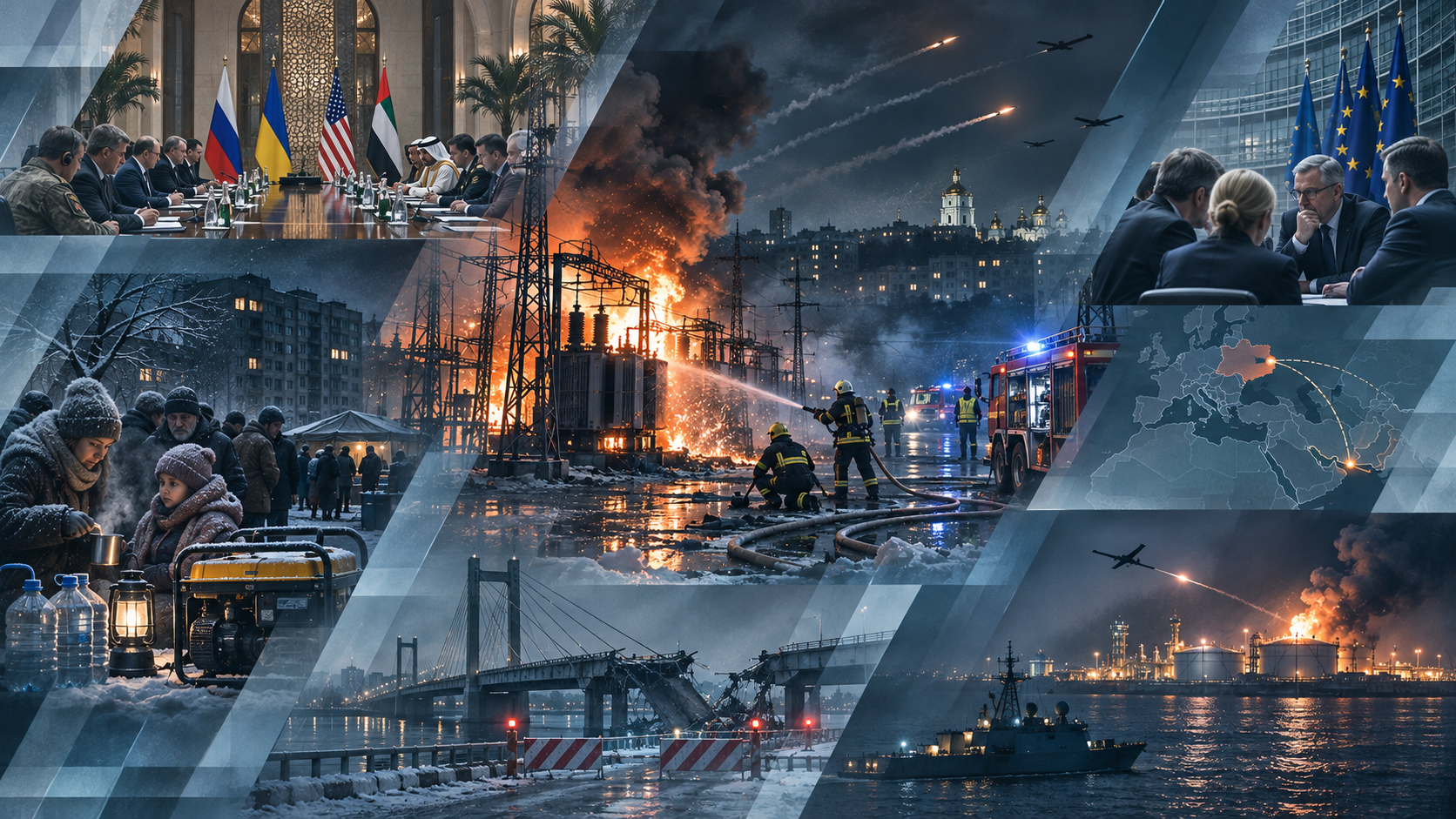
Overnight into Saturday, Kyiv and the surrounding region were hit by one of the heaviest missile salvos of the war. According to President Volodymyr Zelensky, Russia launched 36 ballistic missiles and 172 drones, with all of the missiles directed at the capital and the surrounding region. The Ukrainian Air Force says 149 drones, including 117 of the 137 jet-powered drones, and four missiles were shot down. Both sets of figures come from parties to the conflict and cannot be independently verified, but the gap between 36 missiles launched and four intercepted suggests that Ukrainian air defence has very limited capacity against ballistic weapons on this scale.
The pattern is also new. In earlier phases of the war, cruise missiles were spread across the country, while dozens of ballistic and hypersonic missiles are now being concentrated against individual targets in Kyiv, the city that was for a long time Ukraine’s best protected.
According to Reuters’ account of statements by Ukrainian authorities, at least one person was killed and eight were injured, including a child, while temperatures in Kyiv were close to freezing.
The Russian Defence Ministry says the attack struck the Northern Bridge, which Moscow claims is used to transport weapons and military equipment, and the Meridian facility in Kyiv, which according to the Russian side produces Flamingo cruise missiles. Power plants, substations and an ammunition facility in Kyiv oblast, a substation in the Zhytomyr region and a cargo ship in the Black Sea were also named as targets.
The attack therefore focused on three things at once: electricity supply, the bridges across the Dnipro, and the supply routes leading into the core of Ukraine’s military and industrial system.
The Power Grid: Electricity, Water and Heating Under Pressure
The Ukrainian capital was already weakened. On 3 November, Russia carried out the largest attack on energy facilities of the year, and Kyiv’s water supply was disrupted for more than a day.
Zelensky is now describing serious difficulties with electricity, water and heating in the capital, while Mayor Vitali Klitschko calls the situation extremely difficult. Water pressure dropped overnight, although Klitschko said around midday that the water system had returned to normal operation.
The most serious damage concerns the substations. Zelensky confirmed that Russia struck a substation in Kyiv oblast connecting the Rivne and Khmelnytskyi nuclear power plants to Kyiv and the central parts of the country, and that substations in Vinnytsia, Zhytomyr, Rivne, Kharkiv and Dnipropetrovsk were also damaged.
Governor Tymur Tkachenko says energy facilities in at least three districts of Kyiv oblast were hit. The Russian Defence Ministry claims to have neutralised both a large power plant and a 750 kV substation in the region, although this has not been confirmed by the Ukrainian side.
If Russian claims about the importance of the substation are correct, the strike hits at the core of Kyiv’s electricity supply, because such a node receives power from nuclear plants and distributes it onward.
The substation has been attacked repeatedly, mainly with Geran drones, which do not carry warheads large enough to penetrate the concrete shells the Ukrainians have built around the most important installations. Unverified reports that satellite imagery shows major fires at the site, combined with the use of Iskander missiles carrying far larger explosive charges, suggest that Russia may now have moved from weakening the facility to attempting a decisive strike.
The likely result will be longer and more frequent blackouts in the capital as winter begins to set in.
The Dnipro Bridges: The Campaign Enters Its Sixth Week
The attack on the Northern Bridge is the latest stage in a campaign that began in early October.
That was when Russia began striking Kyiv’s bridges across the Dnipro for the first time: the Southern Bridge was hit on 1 and 2 October, followed by the Northern Bridge on 3 October.
Around ten days ago, another attack on the Southern Bridge followed with Iskander-M missiles, closing both the roadway and the metro line.
Overnight into Saturday, several ballistic missiles struck the Northern Bridge, and Klitschko said traffic had been halted in both directions. Damage to the roadway is visible in photographs from the site. Unverified reports say the explosions may also have damaged the suspension cables, which would weaken the structure further.
The point of this campaign is cumulative. Each individual crater in the roadway can be repaired, but a bridge repeatedly subjected to strikes of this magnitude gradually loses structural stability.
Military analysts have compared the situation with Kherson in 2022, when weeks of HIMARS strikes weakened the Antonivskyi Bridge without rendering it unusable. An Iskander missile carries a significantly larger warhead than the HIMARS rockets, and if the pattern continues, probably including Zircon missiles, the weakening will happen much faster.
If the repeated missile strikes continue, Kyiv’s major bridges could become unusable for heavy traffic before the end of the year. Pedestrians may still be able to cross, but trucks, trains and armoured vehicles probably will not.
Supply Lines and the Coming Winter
The bridges are not an isolated target. They form part of a broader effort to dismantle Ukraine’s ability to supply itself and the front.
The railway is attacked daily, the power grid is under constant pressure, and the Black Sea has effectively become a war zone. The Russian Defence Ministry said overnight that a cargo ship heading towards Ukrainian ports had been struck.
According to the Financial Times, the Black Sea is now the most dangerous body of water in the world for civilian shipping, more dangerous than the Persian Gulf and the Strait of Hormuz. The newspaper writes that more than 570 vessels have been hit this year and at least 40 sailors killed. Russia was responsible for around 90 percent of the attacks over the past month and a half, while Ukrainian attacks on Russian shipping have also contributed to the escalation.
The fact that vessels continue attempting to break the blockade suggests an acute military need for supplies.
In the larger picture, the bridges across the Dnipro could become decisive. If they are taken out, supplies to Ukrainian forces on the eastern bank, in Zaporizhzhia, Donbas, Sumy and Kharkiv, would be seriously weakened, while important alternative routes would also be closed.
According to Russian military sources, that would mark the point at which the war enters its final phase.
Then there is the weather. Cloud cover increases through autumn and winter, while jet-powered Geran-4 and Geran-5 drones, fitted with more powerful engines, fly higher. Clouds make it more difficult for Ukrainian air defences to shoot them down, which could further reduce Ukraine’s interception rates.
The Front: Russian Pushes Towards Zaporizhzhia, but ISW Reports Little Progress
Russian military sources claim that the offensive in western Zaporizhzhia is expanding.
Group Dnipro is said to be advancing towards the Konka River across a broad front, with new positions around Malokaterynivka south of Zaporizhzhia city, while Group Vostok, which is said to have recently captured the village of Omelnyk north of Orikhiv, is now moving towards the city from the east.
According to these sources, Ukrainian forces are being pinned down in Orikhiv while the two groups advance towards Zaporizhzhia from the south and east.
The nationalist outlet Readovka, which supports the war and is regarded as having good connections with the Defence Ministry, reports that fighting for Mykolaivka immediately east of Sloviansk has intensified again, and that Russian forces are fighting inside the town. From Mykolaivka, Russian drone operators could strike Sloviansk and the roads leading into the city from the north and west.
None of these claims has been independently confirmed.
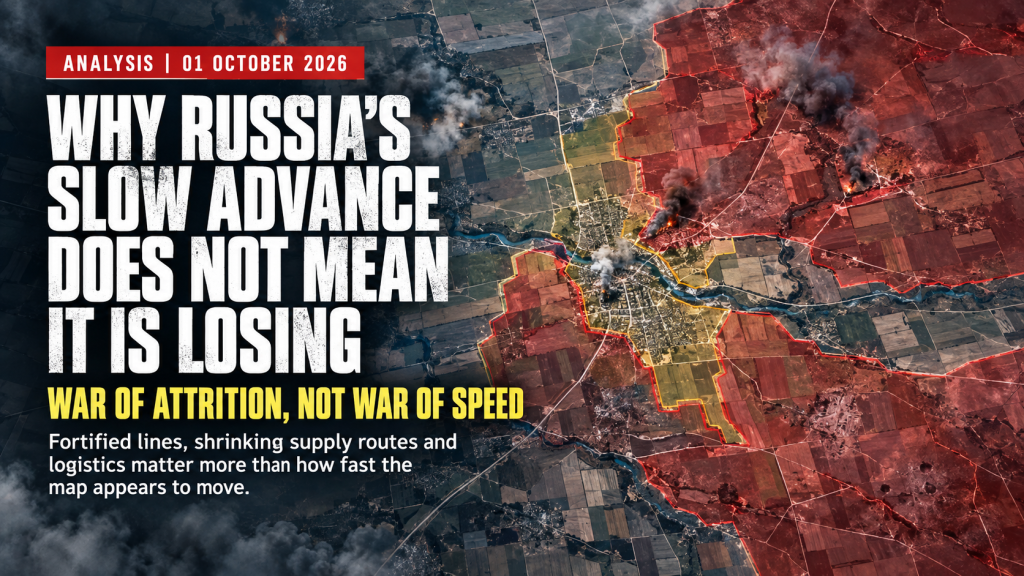
The picture from American analysts is more cautious. The Institute for the Study of War assesses that Russian forces lost ground in October for the second consecutive month, and that fighting on 3 and 4 November produced no confirmed advances in most directions, with the exception of Kostiantynivka.
At the same time, according to the same assessment, the objective south of Orikhiv is to get close enough to Zaporizhzhia to bring the regional capital within artillery range.
In that sense, both descriptions point towards Zaporizhzhia as the next operational objective, even if they disagree about the pace.
Abu Dhabi: Moscow Sends in the Heavyweights
While the attacks continue, a new round of negotiations is being prepared.
Trilateral talks between Russia, Ukraine and the United States are scheduled for 10 and 11 November in Abu Dhabi, according to US special envoy Steve Witkoff.
Yesterday, Vladimir Putin convened Russia’s Security Council and invited the members of the negotiating delegation.
According to Reuters, the delegation will again be led by presidential adviser Vladimir Medinsky and will, for the first time, include Deputy Foreign Minister Sergei Ryabkov.
Also participating are presidential foreign-policy adviser Yuri Ushakov, Deputy Foreign Minister Mikhail Galuzin, military intelligence chief Igor Kostyukov and a senior General Staff officer, Yuri Zhigarlovsky.
The composition says something about the level of ambition.
Ryabkov has long been central to Moscow’s demands for a new European security order, while the presence of both military intelligence and the General Staff suggests that Russia is bringing expertise capable of challenging Ukrainian accounts of the situation on the front.
The involvement of the entire Security Council also gives the impression that the negotiating strategy is broadly anchored within the Russian system rather than being Putin’s personal initiative alone.
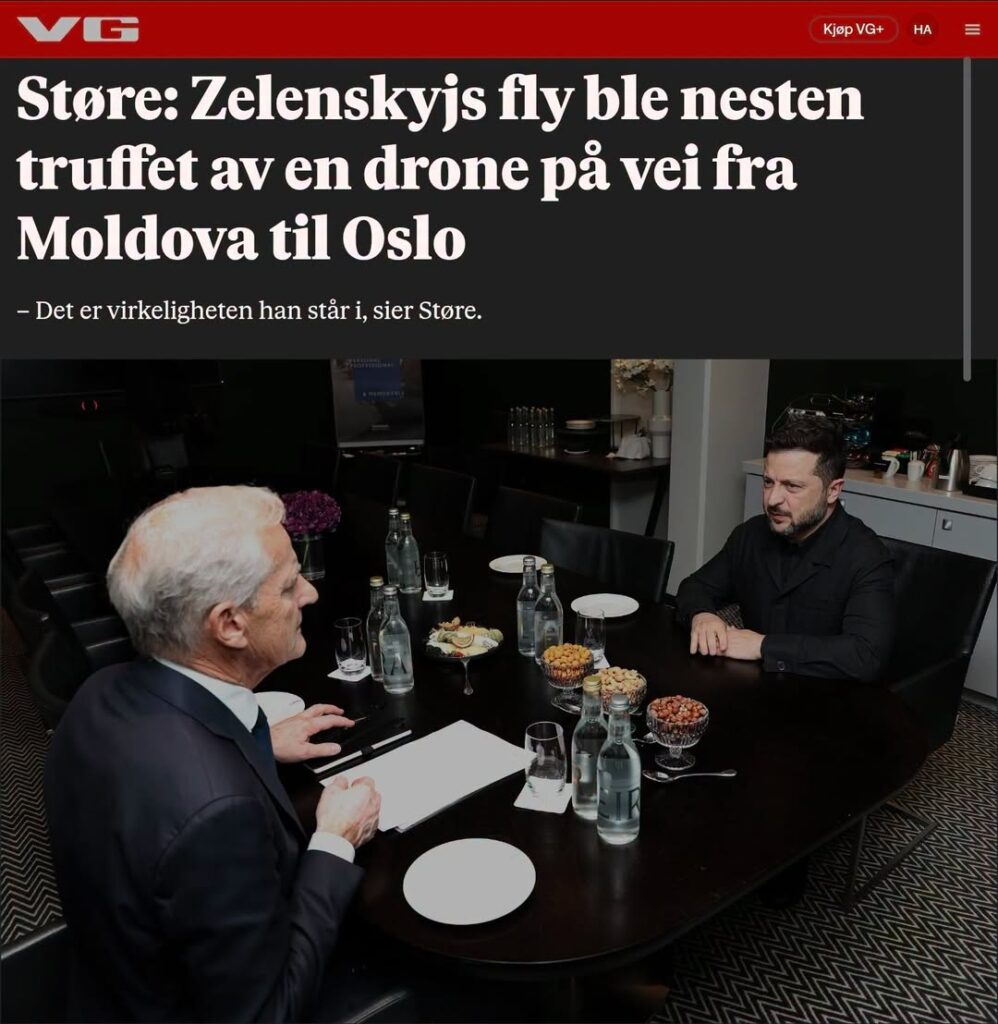
According to Kyiv, the Ukrainian side will be led by Rustem Umerov, while Chief of Staff Kyrylo Budanov will participate without leading the delegation.
The United States is expected to be represented by Witkoff and Jared Kushner. US Army Secretary Dan Driscoll, who participated in earlier talks, resigned around the turn of August and September.
European representatives are not expected to participate.
Europe Sounds the Alarm Over the “Security Architecture”
The biggest dispute concerns what the negotiations are actually supposed to be about.
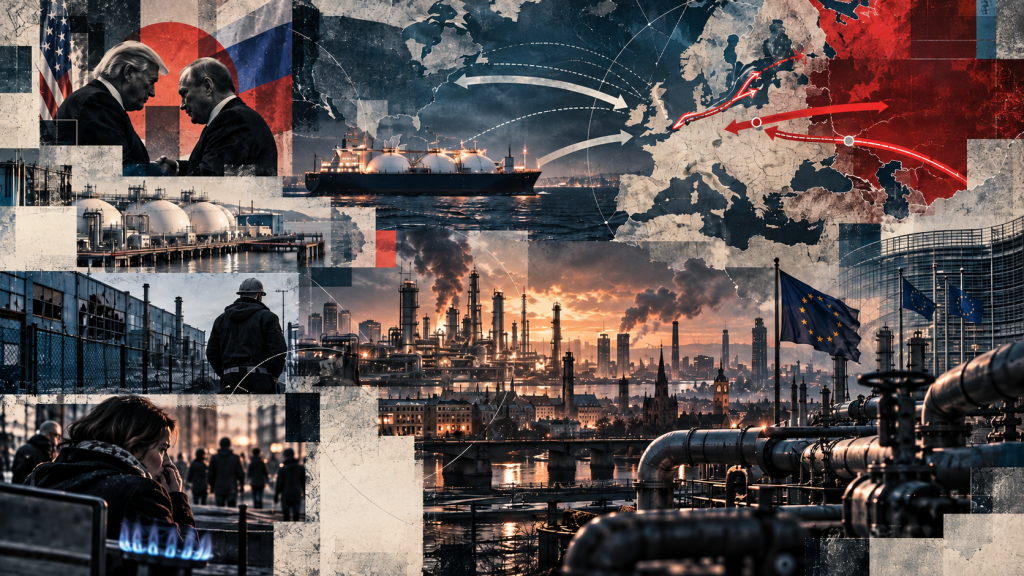
The Financial Times reports that European capitals are reacting with alarm to the Trump administration’s claim that it is working with Russia on a new framework for European security as part of a future peace agreement.
Kushner wrote on X that Washington wants practical arrangements addressing the security concerns of all sides.
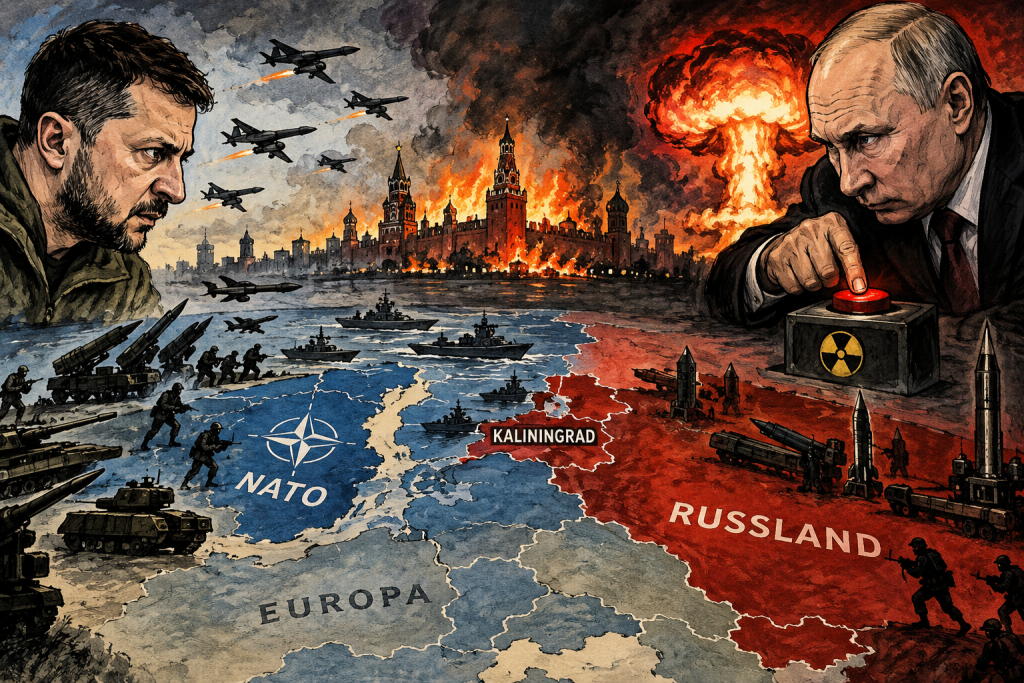
European governments fear that Moscow will use the talks to restore a sphere of influence and undermine sovereignty within NATO countries, and that the United States could strike a deal with Russia over Europe’s head.
An EU Commission spokesperson is reported to have said that issues affecting the Union’s security are for the EU itself to decide. A European official says there will be no parallel negotiations on European security before the war is over, and that changes to NATO or a reduced military presence are out of the question.
Zelensky, who had previously been interpreted as being open to security guarantees for Russia, now rejects the idea that such guarantees can be provided without changing the security framework in Europe and globally, and calls NATO withdrawal a sign of weakness for the alliance.
Two different understandings collide here.
Kremlin adviser Ushakov said on 22 October that the talks would include post-war security arrangements for both Russia and Ukraine, and Moscow has repeatedly linked peace to a new European security order.
There are signs that Washington understands this mainly as confidence-building measures and transparency over military movements, while the Russian side means something much broader.
At the same time, arguments are being made in Russia that Ukraine cannot join the EU because the Union now also functions as a security alliance.
The Europeans and Ukrainians appear to understand the difference more clearly than the American negotiators do.
That leaves the Abu Dhabi talks with a poor starting point. According to the Financial Times, two people familiar with the back channels say the talks are unlikely to produce any meaningful ceasefire because Putin is more focused on gaining the upper hand through a brutal winter air campaign.
Congress and Kyiv’s Hopes
The Democrats’ victory in the 3 November midterms has given Zelensky renewed hope, and today he appealed directly to Congress.
The Financial Times reports that Democrats on Capitol Hill are preparing a new security package for Ukraine worth around $15 billion, far below what Kyiv is asking for.
There is also talk of tightening sanctions against Russia and “fixing” the Graham law. The law has already been passed, but Trump granted a broad exemption from the sanctions on 16 October.
The Democrats do not have the two-thirds majority required to override a presidential veto, and Trump retains control over foreign policy.
At the same time, it is unclear how high Ukraine will rank on the Democrats’ agenda.
The Kyiv Independent notes that Ukraine is unlikely to become the party’s central issue after the election, while analysts see a risk that a major confrontation over Ukraine policy could cost the party voters who are more concerned with the economy and with US involvement in the Middle East.
The Ukraine issue may instead be pushed aside by other matters, above all Iran.
Middle East: Qeshm, Kharg and the Government Formation Battle in Israel
Trump confirmed on Friday that the United States had carried out “minor strikes” against an Iranian air-defence system on Qeshm Island in the Strait of Hormuz, while saying that the United States had made “a lot of progress” in talks with Iran.
The Revolutionary Guards claim to have shot down an American MQ-1 drone over the island, according to Al Jazeera.
At the same time, Trump has suggested that the United States may give Iran “the hammer”, while Iran has intensified its diplomacy with countries including Russia and the United Arab Emirates.
Unverified reports say a larger attack could come as early as 8 or 9 November, with Kharg and Qeshm among the possible targets, although nothing has been confirmed.
In Israel, the 27 October election left Benjamin Netanyahu’s bloc with 53 seats and produced a deadlock.
Opposition leader Gadi Eisenkot has received broad backing in negotiations to form a government, including from Arab parties, and President Isaac Herzog must decide who receives the mandate by 11 November.
Although the process is likely to drag on for weeks or months, it is reasonable to assume that a weakened Netanyahu will have an even stronger incentive to push for another attack on Iran in order to strengthen his domestic political position.
If the United States were to attack Iran in the coming days, it would probably dominate American politics for the weeks that follow and reduce attention on Ukraine.
Overall Assessment
Today’s picture has a clear logic.
Russia is using ballistic missiles against the systems that keep Kyiv and the front functioning: the power grid, the bridges across the Dnipro, the ports and the railway network. Every new salvo makes repairs more difficult, while winter increases the cost to the civilian population.
At the same time, diplomacy continues at a pace dictated by the situation on the ground, not the other way around.
In Abu Dhabi, Moscow is arriving with a heavyweight and coordinated team for a meeting in which the other side is divided: the United States is offering confidence-building measures, while Europe and Ukraine reject the idea that European security can be negotiated without them.
That makes a breakthrough unlikely.
At the same time, the Middle East may absorb more of Washington’s attention, while the new Congress may give Kyiv more money, but probably no more than a fraction of what Ukraine needs.
It is this gap between Russia’s systematic pressure and the West’s divided response that defines the situation ahead of what may become decisive days over the weekend and into next week.