The Southern Bridge: Weeks or Months
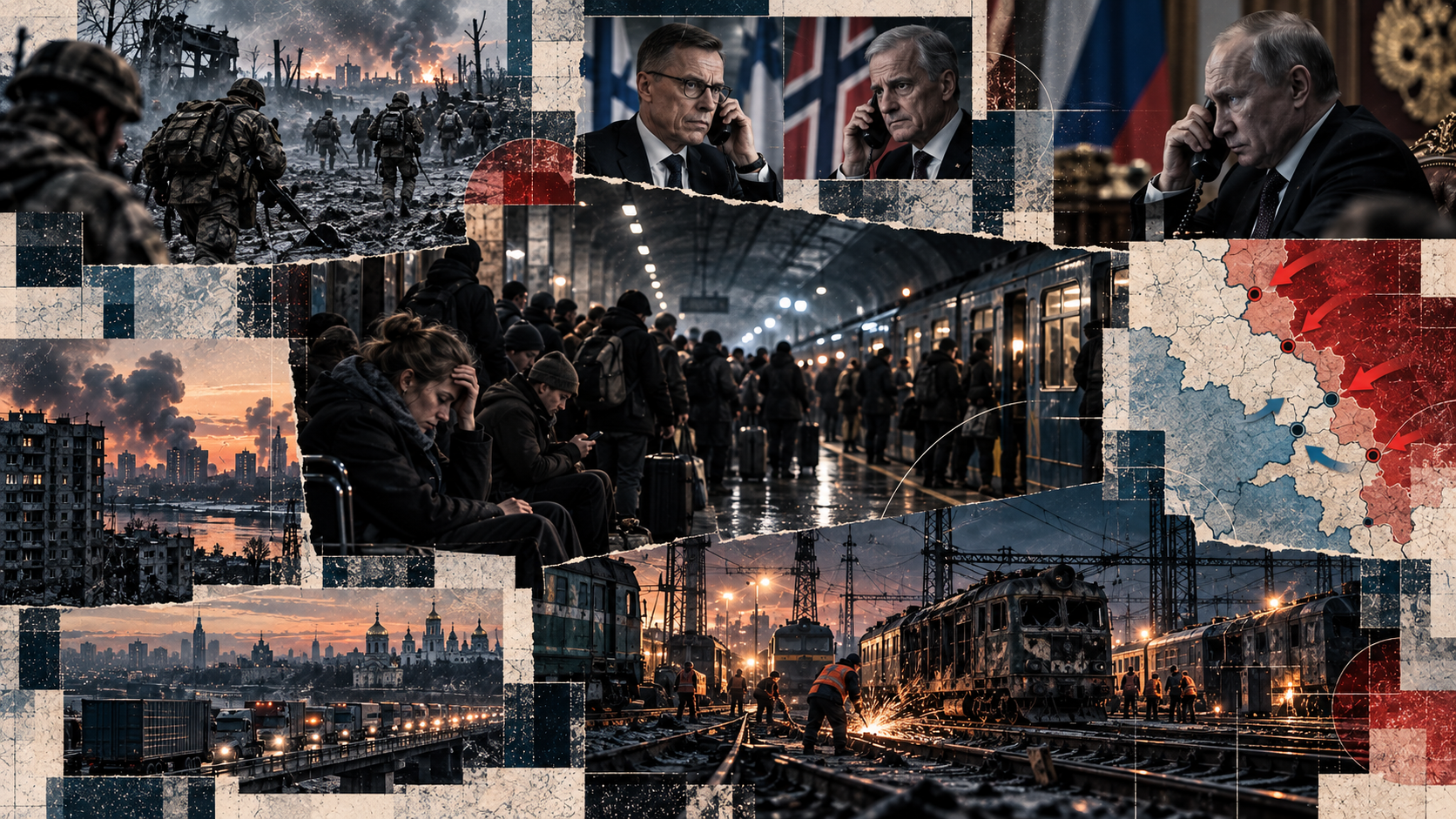
Following the ballistic missile strike overnight into Tuesday, Kyiv’s Southern Bridge remains closed, and it is not yet clear for how long. The city administration says several parts of the structure have been damaged, including the concrete superstructure, roadways, metro infrastructure and utility networks, with some of the damage affecting the bridge’s overall load-bearing capacity.
A report from the National Institute for Infrastructure Development, including dynamic testing and measurements of structural deformation, is expected early next week. Only then will the authorities decide how the bridge can be restored. Metro services between Osokorky and Chervonyi Khutir have already resumed, while road crews are working on sections that did not suffer critical damage.
Military expert Oleh Zhdanov, who has not inspected the bridge himself, says that even under an accelerated schedule, repairs could take at least one to two months if load-bearing elements were hit. Reinforcement and pouring alone would take around three weeks, he says, while the concrete would need about 30 days to cure. He estimates that the bridge carries roughly 20 percent of all traffic across the Dnipro in Kyiv.
The government has called for repairs to be accelerated, while Kyiv has approved temporary river crossings. The city’s military administration says the bridge was hit in several different places, although the number of impacts has not been made public.
There is much to suggest that the bridge could remain out of service for weeks, possibly longer. The Southern Bridge carries both road and metro traffic and was also hit on 1–2 October, meaning the damage may be cumulative. Russia may now simply be waiting to see how quickly repairs proceed, while other bridges in Kyiv, Kremenchuk, Dnipro and Zaporizhzhia could be next.
The Front: Sumy, Kharkiv and Druzhkivka
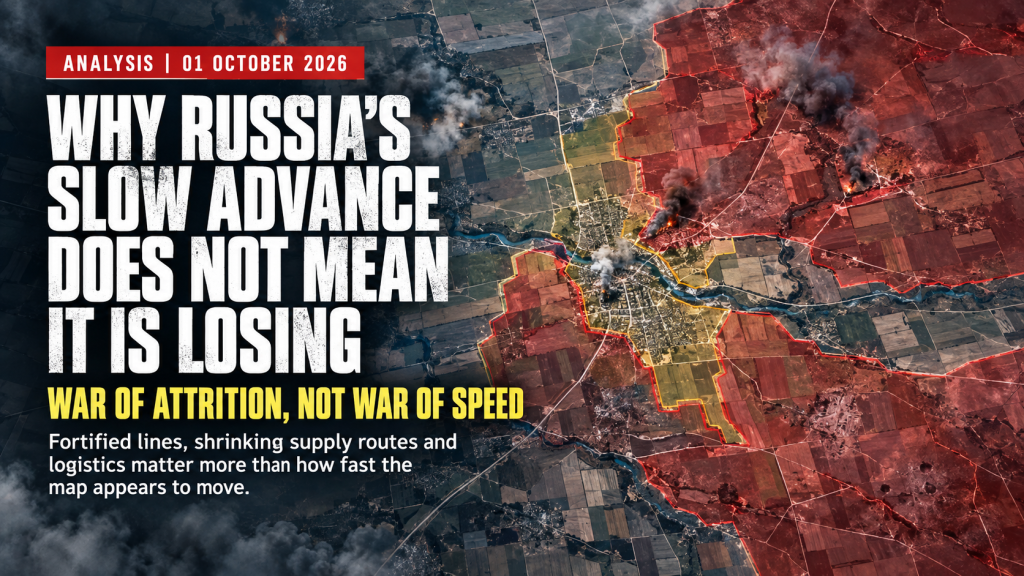
On Wednesday, the Russian Defence Ministry reported that Group North had taken Alisivka in the Kharkiv region and Barylivka in the Sumy region. Russian media say the capture of Barylivka could allow Russian forces to cut the road between Sumy and Hrunivka and Velyka Rybytsia, two important points in Ukraine’s defensive network. These are Russian claims.
There are signs that Group North is expanding the area it controls around Sumy, and Russian sources describe this as a possible step towards a future encirclement of the city. It is striking that Russian forces are advancing during the rainy season. One possible explanation is that armoured vehicles cope better with mud than infantry.
Russian gains in northern villages may also suggest that Ukrainian defences there are thin, since, according to this assessment, Kyiv has concentrated a disproportionate share of its forces in Donbas.
In Donbas, the Russian Defence Ministry says its forces are advancing through the western part of Oleksiievo-Druzhkivka, with fighting also reported around Kondrativka and Viroliubivka. That sits uneasily with Gerasimov’s earlier claim that the settlement had already been taken, and fits better with Readovka’s account that much of the area remains a grey zone.
If Oleksiievo-Druzhkivka falls, followed by Druzhkivka itself, Russian forces would reach the southern approaches to Kramatorsk. The city would then be under pressure from three directions, with Russian positions to the east and, if Dobropillia has indeed been taken as Moscow claims, to the west as well. Kyiv’s General Staff denies that Dobropillia has fallen.
If Sloviansk and Kramatorsk fall, this assessment sees few major cities available for a further Ukrainian withdrawal before Pavlohrad and Dnipro. The terrain also opens up farther west, making further Russian advances easier.
Kharkiv, Zaporizhzhia and the Dnipropetrovsk region were also attacked overnight into Tuesday, with deaths, injuries and extensive damage reported. There have been relatively few new reports from the Zaporizhzhia front over the past several days, possibly because of the rasputitsa.
The Nordic Call: “Nothing New”
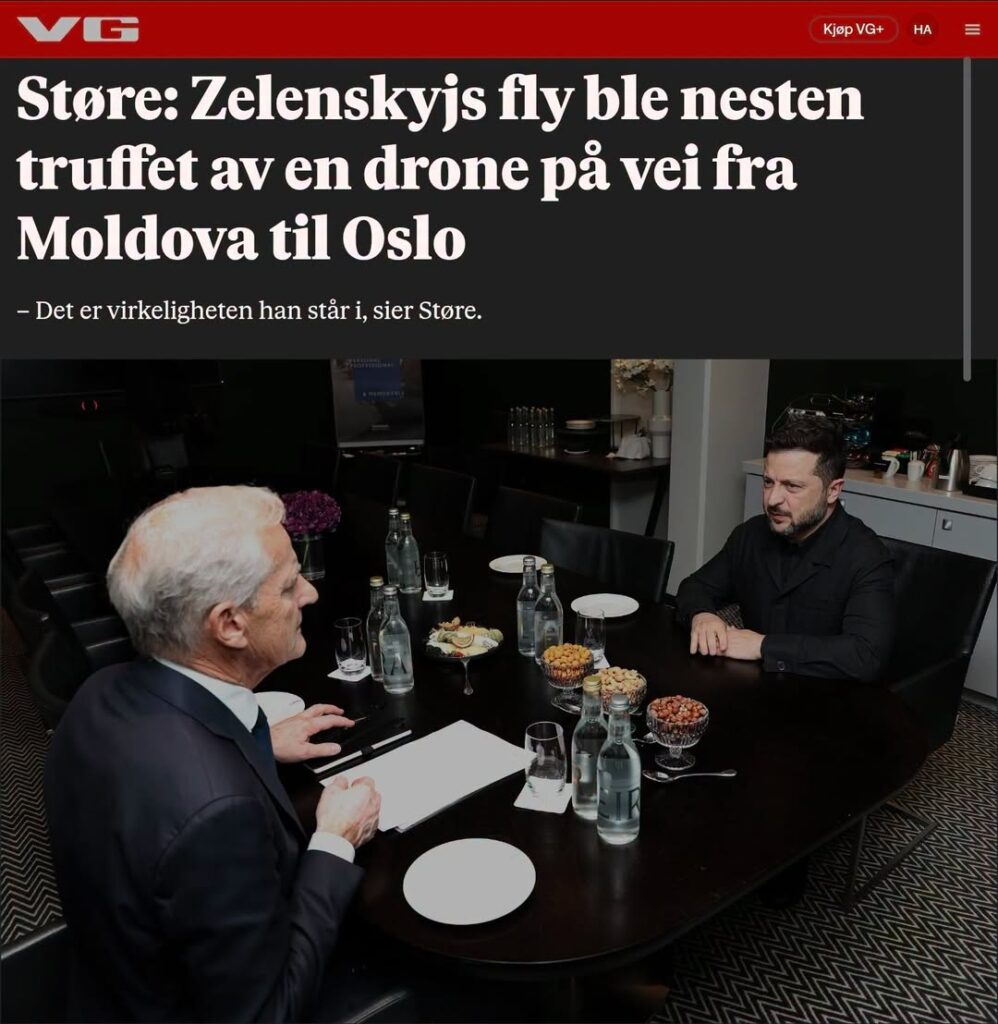
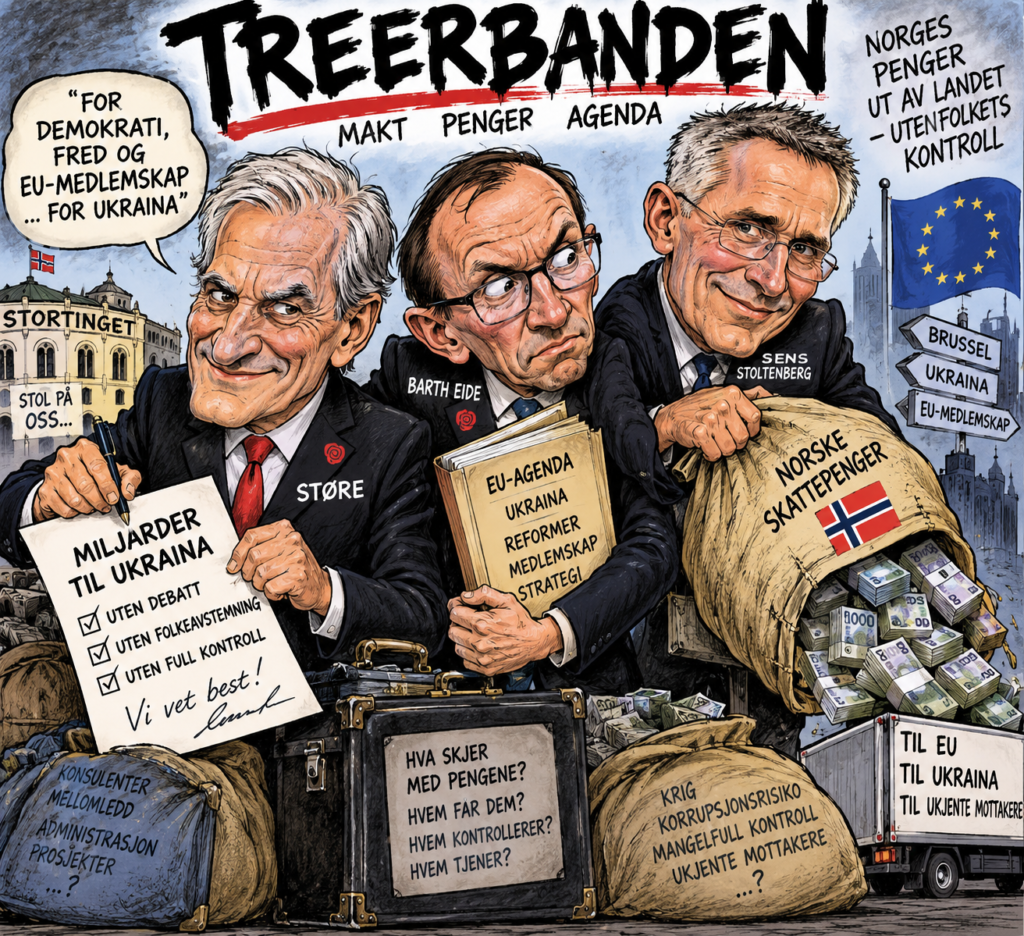
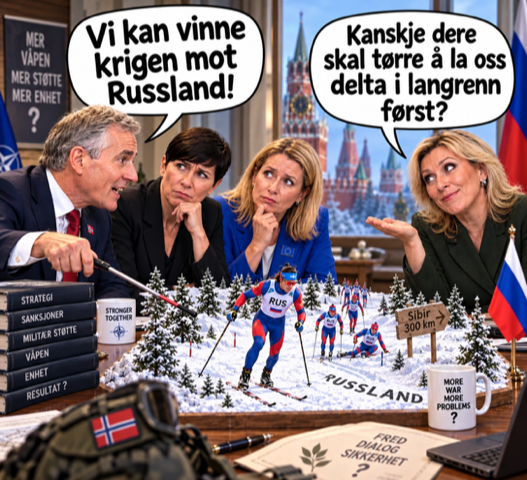
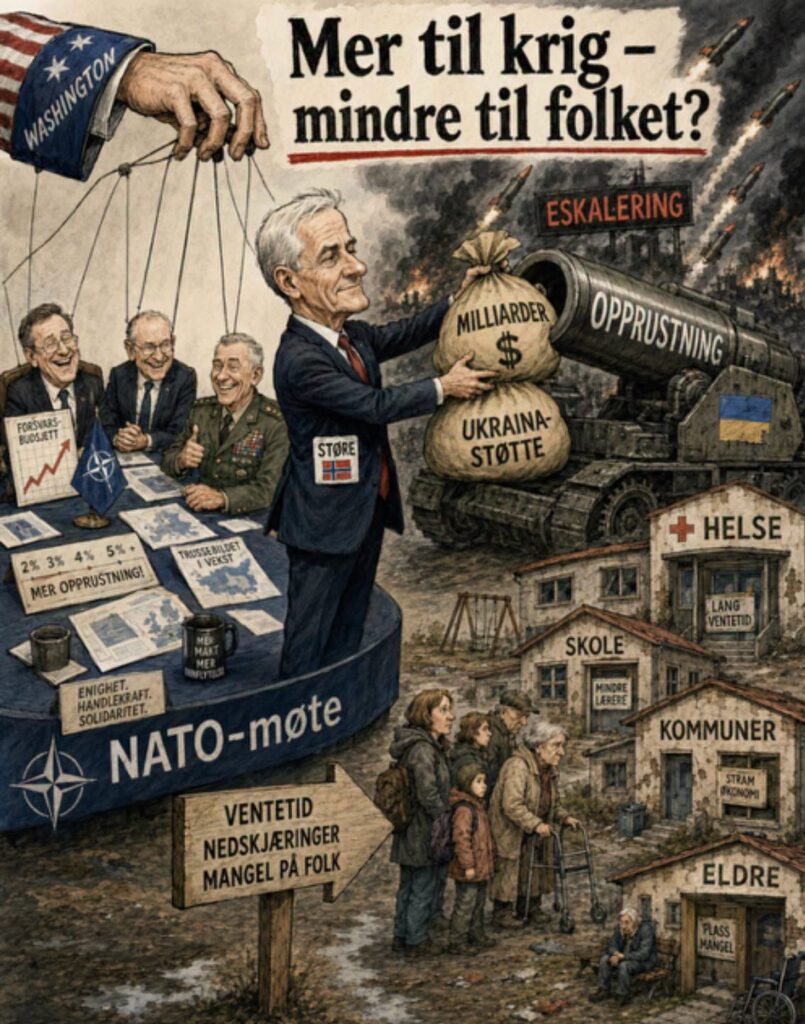
The call between Putin, Finnish President Alexander Stubb and Norwegian Prime Minister Jonas Gahr Støre lasted around 90 minutes, compared with the less than 30 minutes originally planned.
According to the Financial Times, citing three sources, Putin spent much of the conversation talking about medieval Slavic history and the war’s “root causes”, while an immediate ceasefire was barely discussed.
Stubb and Støre reportedly allowed him to speak without interruption in order to gauge how serious he was. The Kremlin’s own readout makes no mention of a history lecture, but says Putin explained what Moscow sees as the conflict’s underlying causes. Only the three participants know exactly what was said, and the Financial Times relies on anonymous sources.
Lavrov says that “apparently nothing new was said” during the conversation and accuses the Europeans of simply trying to insert themselves into the negotiations. According to the Financial Times, Lavrov also warned that the war could escalate.
Danish Prime Minister Frederiksen criticised the fact that the call had not been coordinated with other European countries. Støre defended it, telling Reuters that he does not expect Putin to change his mind, but that it gives Putin a clear account of the European position.
The call came ahead of what are expected to be the first face-to-face talks between Ukrainian and Russian delegations since February, due to take place in Abu Dhabi in the first half of November. The Kremlin says the talks will be trilateral.
Zelensky has meanwhile said that the United States has put forward several ideas on territory, dating back to the 28-point plan: a demilitarised zone on both sides of the line of contact in Donbas, a demilitarised section of the Kinburn Spit under Ukrainian control, an arrangement for the Zaporizhzhia nuclear power plant, and territorial swaps.
Kyiv was prepared to discuss these as possible compromises, he says, and raised them again in connection with the diesel agreement. Territorial questions, according to Zelensky, can only be decided by the leaders of Ukraine and Russia.
Moscow has not accepted the proposals. Putin said on 22 October that the territory is part of historical Russia, while under the Russian constitution Donetsk, Luhansk, Zaporizhzhia and Kherson are considered Russian territory. There is much to suggest that Moscow will accept nothing short of the whole of Donbas.
The Russia–Africa Summit
The third Russia–Africa Summit opened in Moscow on Wednesday, with delegations from 48 African countries, including 22 represented by heads of state.
Putin said the era in which a handful of blocs decided the fate of entire continents is over and offered to expand supplies of grain and fertiliser. Moscow describes African countries as “natural allies” against the West.
The summit is a sign that Russia is not isolated outside the Western world.
Israel and the United States
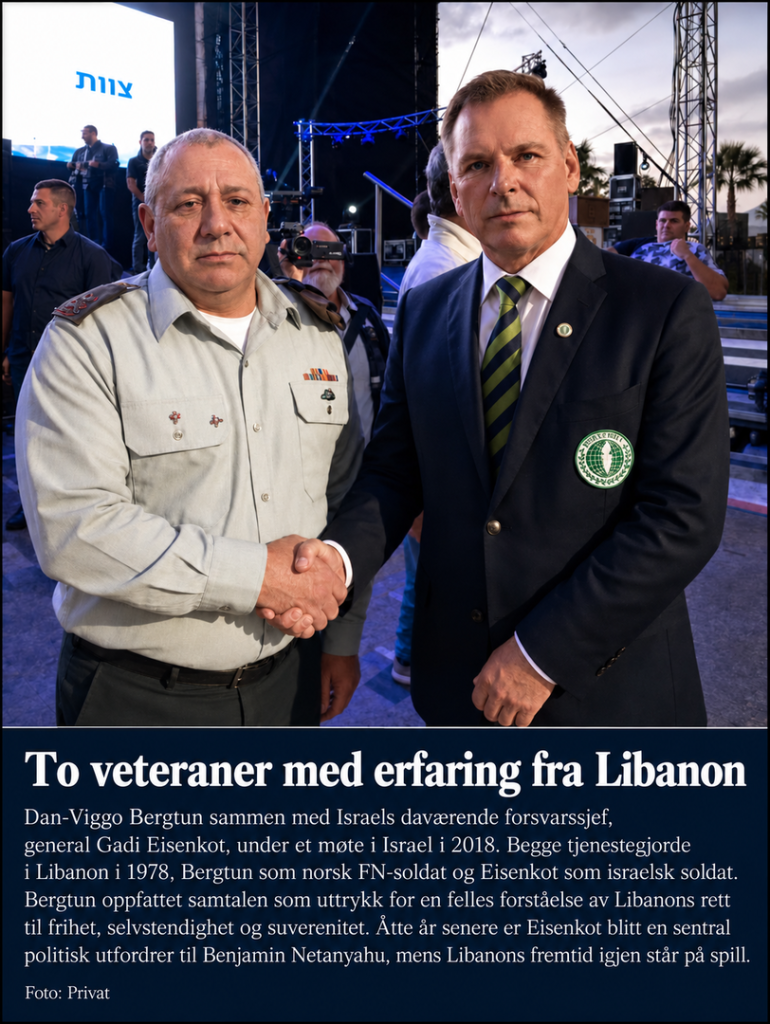
In Israel, the election result remains unresolved. Partial results indicate that Netanyahu’s bloc is heading for around 53 seats, compared with 48 for the opposition led by Eisenkot. Neither side has the 61 seats needed for a majority, leaving the Arab parties potentially decisive. Trump has taken credit for the result being better than expected.
The US midterm elections take place next week, while oil and financial markets are pricing in the risk of renewed American strikes on Iran within the coming weeks. If that happens, Ukraine could lose attention just as the Abu Dhabi talks are due to begin.