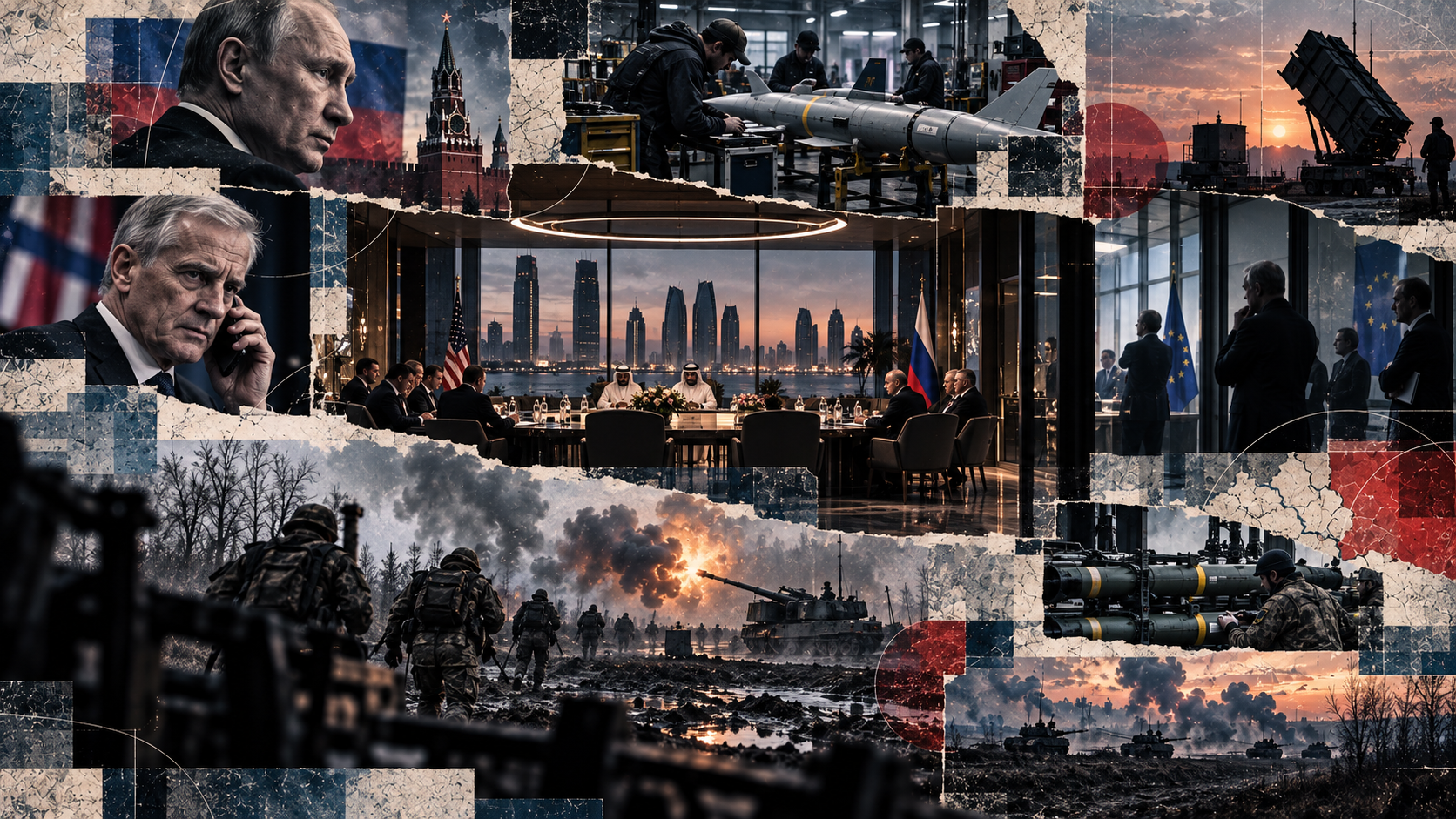
Europe Kept Away From the Table
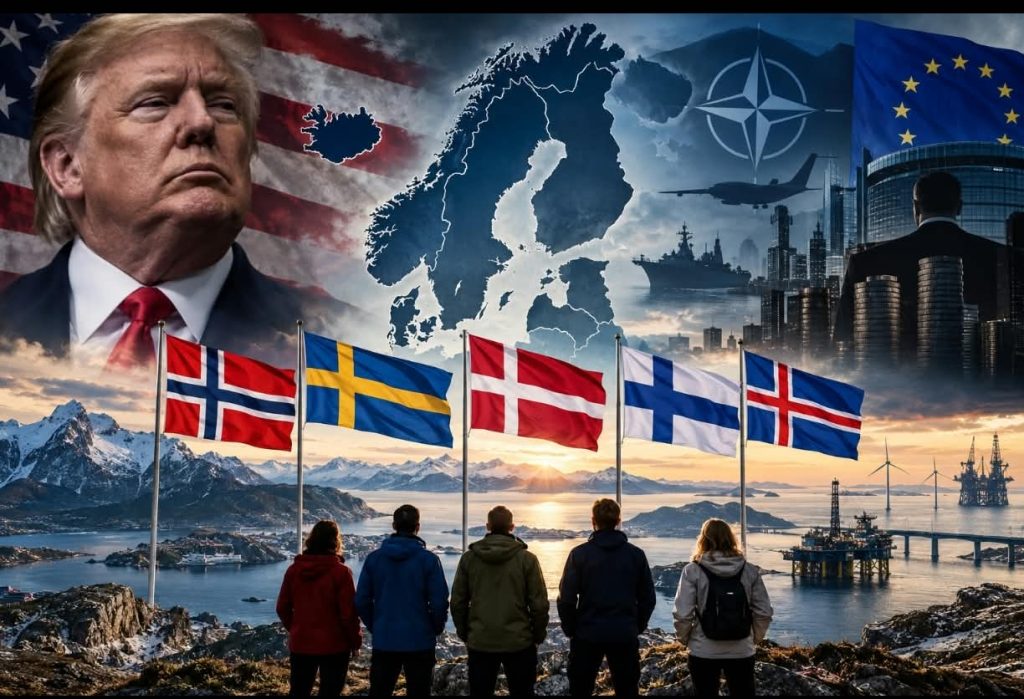
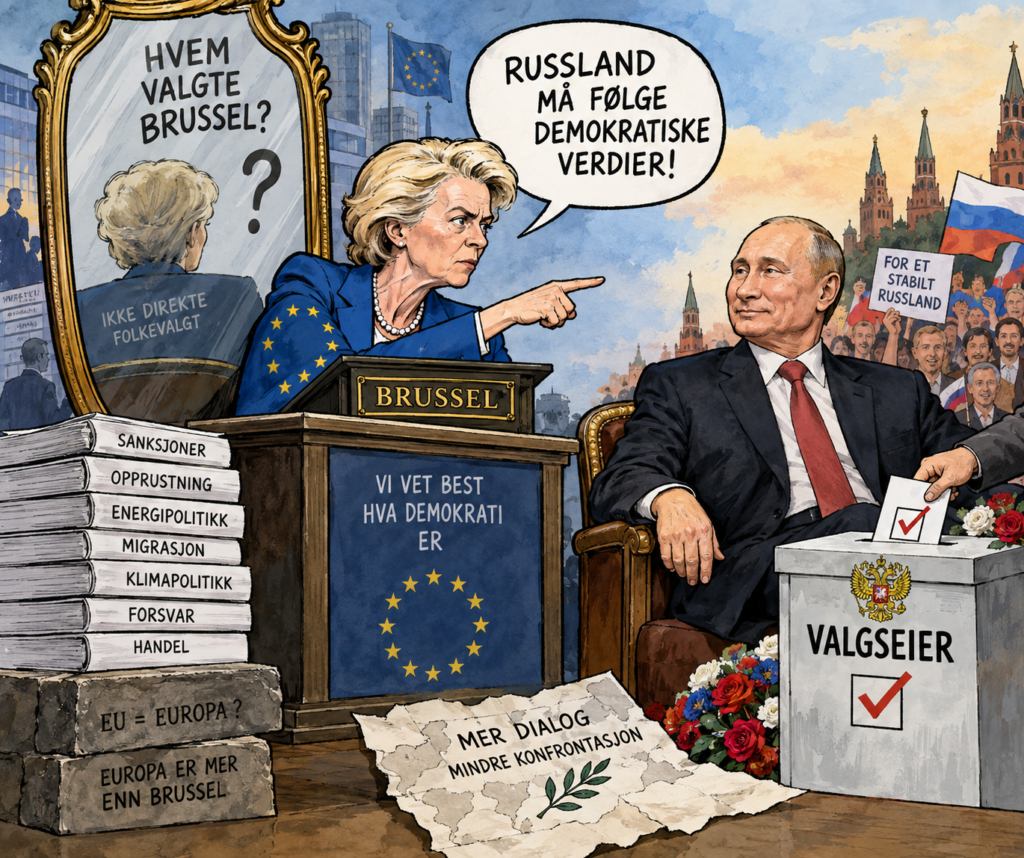
Kremlin foreign-policy adviser Yuri Ushakov says European countries have not been invited to the trilateral talks in Abu Dhabi. Europeans are free to come if they buy a ticket, he told Vesti, but no one is going to invite them to the negotiating table. He added that European participation was not even discussed during Tuesday’s phone call between Putin, Stubb and Støre.
Ushakov also declined to confirm Zelensky’s statement that the talks could take place by 10 November, saying the date would be announced “soon”. Stubb, by contrast, told the Nordic Council that European countries would be involved in the November talks. Which of them proves right will determine whether Europe actually gets a seat at the negotiating table.
The wording of the Kremlin’s readout of the call has also attracted attention. It states that a just and lasting peace is possible only if Russia’s interests are taken into account fully and unconditionally. Moscow has long demanded a Ukrainian withdrawal from Donbas as well as from Zaporizhzhia and Kherson, neutrality, limits on the size of Ukraine’s armed forces, and protections for Russian speakers and the church.
The phrase “without conditions” can be read as a hardening of Moscow’s position, and some will interpret it as a demand that Ukraine accept Russian terms without negotiation. There are also signs that Russia may raise its demands further once Donbas falls.
Støre: FT’s Account Is Wrong
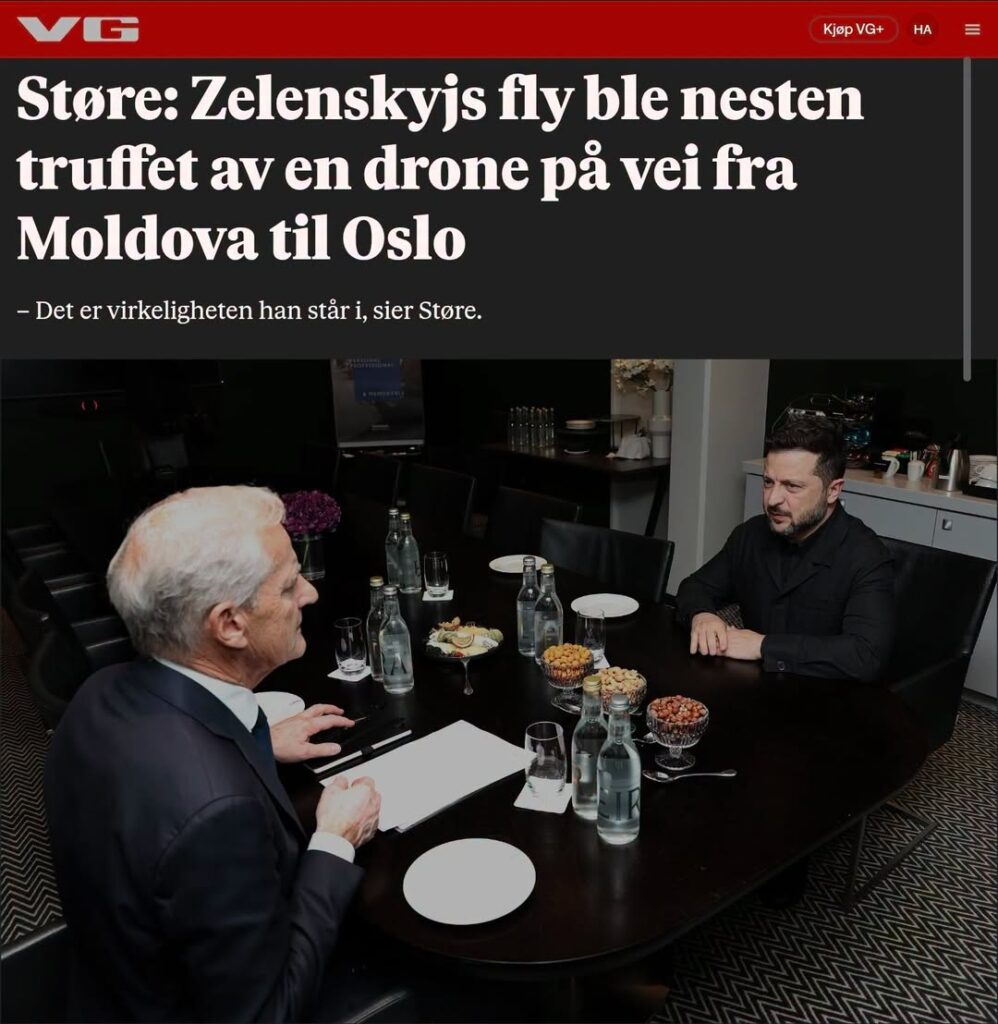
Norwegian Prime Minister Jonas Gahr Støre rejects the Financial Times’ account of the conversation. The FT, citing three sources, wrote that Putin spent most of the 90-minute call talking about medieval Slavic history.
Støre told TV 2 that Norway had asked the FT to correct the article because it was not true. According to him, Putin asked to set out his own view and went through events from 2014 to the present day, while speaking time was divided roughly equally. VG reports that the FT has declined to amend the article.
There are therefore two competing accounts: the FT’s anonymous sources and Støre’s own. The Kremlin’s readout mentions neither a history lecture nor the Middle Ages, but says Putin went through what Moscow considers the root causes of the war.
The Missile Programmes: Rumours and Denials
At the same time, rumours have spread that Ukraine’s missile programmes have been shut down. They originate from a clipped excerpt from a July interview with Fire Point chief Iryna Terekh that began circulating on social media this week.
Fire Point says the company continues to produce the FP-5 Flamingo and has no plans to abandon the project. It does not, however, plan to develop additional cruise missiles. Instead, it intends to improve the FP-5 and concentrate most of its effort on two ballistic missiles, the FP-7 and FP-9. Terekh also says the state has not financed the development. According to the company, the excerpt referred to plans for new cruise-missile variants, not to ending the Flamingo programme.
Russian commentators interpret the statement differently. They argue that Flamingo has been expensive relative to the damage it has caused and that Russian air defences have intercepted most of the missiles. The FP-5 is known to use Soviet AI-25 engines recovered by the company from storage sites and scrapyards, while Fire Point is developing its own turbojet engine for the missile. Russian military sources have also claimed that strikes on Flamingo production and Fire Point facilities have disrupted the production chain.
That is an assessment and has not been confirmed by Fire Point. Whether the FP-7 and FP-9 are ready for operational use is also unconfirmed.
Zelensky himself is travelling again. On Wednesday, he visited the Netherlands, which has provided roughly $10 billion in military assistance, and after a phone call thanked British Prime Minister Burnham for a new £10 billion support package. Putin, meanwhile, is hosting African leaders in Moscow.
Air Defence: The Patriot Gap and Freyja
Ukraine’s air defence depends heavily on what its partners are able to supply. Zelensky told ABC on 23 October that Ukraine had received only 24 US Patriot missiles over three months, against a requirement of roughly 350 a month, according to Euromaidan Press.
One project is eventually intended to cover part of that gap: Freyja, a joint European anti-ballistic missile system involving ten partner countries. Zelensky said on 17 October that Ukraine had completed its part, while work by the partner countries was still under way. Ukraine has previously said it can manufacture the missile and launcher, while its partners are expected to provide components including radars and sensors.
He says the project is supposed to reach the testing phase by the end of the year, but the technical results and testing schedule remain unclear. Euromaidan Press notes that Freyja cannot close the gap in the near term because the system is still under development. A project combining a Ukrainian missile with European sensors may be difficult to bring rapidly into production, and until test results exist, the timetable remains uncertain.
The Bridges and the Question of Precision
Russia’s campaign against bridges across the Dnipro appears to be in a testing phase. Kyiv’s Southern Bridge was struck by ballistic missiles overnight into 27 October, following attacks on 1–2 October, while the Vantovyi Bridge in Zaporizhzhia was hit by Geran-4 drones on 22 October.
Kyiv has approved temporary crossings, and the inspection report on the Southern Bridge is expected early next week. There are signs that Russia is testing different weapons and methods against bridges, and the accuracy of the latest strike may reflect improved targeting.
There has been speculation that Rassvet is playing a role. ISW has noted that the company behind the system has demonstrated ground terminals that could improve range and accuracy, but no link to the bridge strikes has been documented. If the objective is to close the bridges, Ukrainian forces east of the Dnipro would face serious problems with both resupply and withdrawal.
The Front
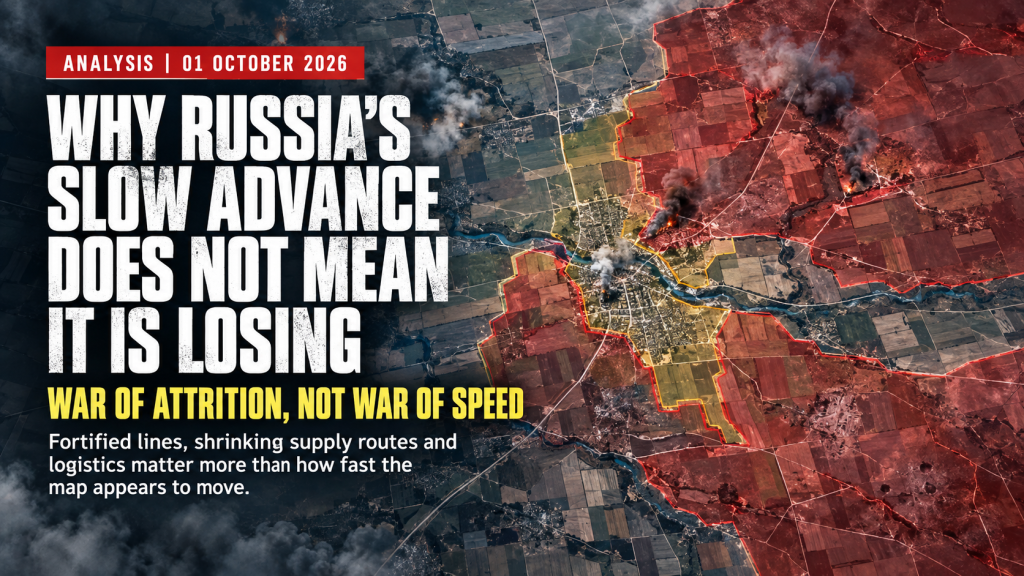
Russian Defence Ministry reports on Wednesday and Thursday indicate that the pressure is continuing. Group South says it has improved its tactical positions and struck Ukrainian brigades in Druzhkivka, Mykolaivka, Sloviansk and Kramatorsk, while Group Centre says it has taken more favourable positions and hit units around Bilozerske and elsewhere.
Group East is said to have advanced deeper into Ukrainian defences, while Group Dnipro reports strikes on Ukrainian brigades near Orikhiv and Preobrazhenka. These are Russian claims. Russia also reports having taken Barylivka in the Sumy region and Alisivka in the Kharkiv region, and Russian media say Ukrainian authorities are preparing civilians for a siege of Sumy.
There is much to suggest that the Abu Dhabi talks, if they take place, will begin while Russian forces are still advancing. Ushakov himself said that the situation on the battlefield is among the factors determining when the talks will start.
The Overall Picture
Russia is trying to keep the initiative diplomatically, in the air and on the ground: Moscow is keeping Europe out of Abu Dhabi, continuing its strikes on energy infrastructure and bridges, and reporting advances from Sumy to Orikhiv, while Ukraine’s own responses — from long-range missiles to air defence — are either disputed or not yet fully in place.
How far that advantage extends will depend on whether the talks actually happen and on how Washington and Europe divide a limited supply of air-defence systems. There is much to suggest that Moscow expects to demand more once Donbas falls.