Trump to Zelensky: the US is keeping its Patriot missiles
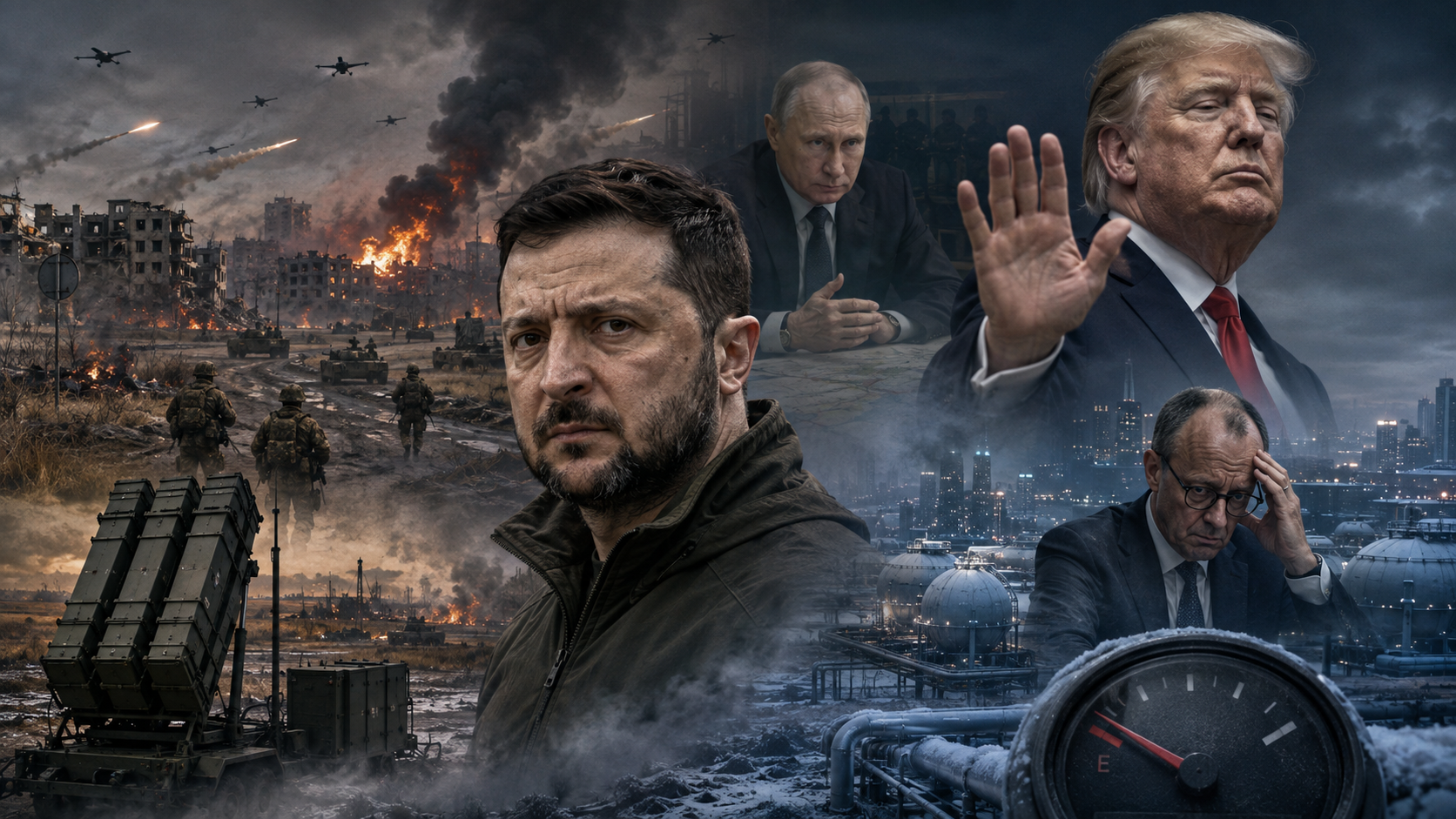
On Thursday President Trump rejected Zelensky’s repeated requests for Patriot interceptors with a short and blunt statement: the US will keep the missiles it produces for itself. He also blamed the Biden administration for depleting US stocks and made it clear he had no intention of repeating that mistake. Defence Secretary Pete Hegseth is trying to dismiss the reports of depleted stocks as “fake news”, but without presenting concrete counter-evidence. There are also reports that Trump and Hegseth had a sharp exchange, in which Trump allegedly accused his defence secretary of keeping him insufficiently informed about the actual state of US stocks – which, according to Trump, has weakened the US negotiating position towards Iran.
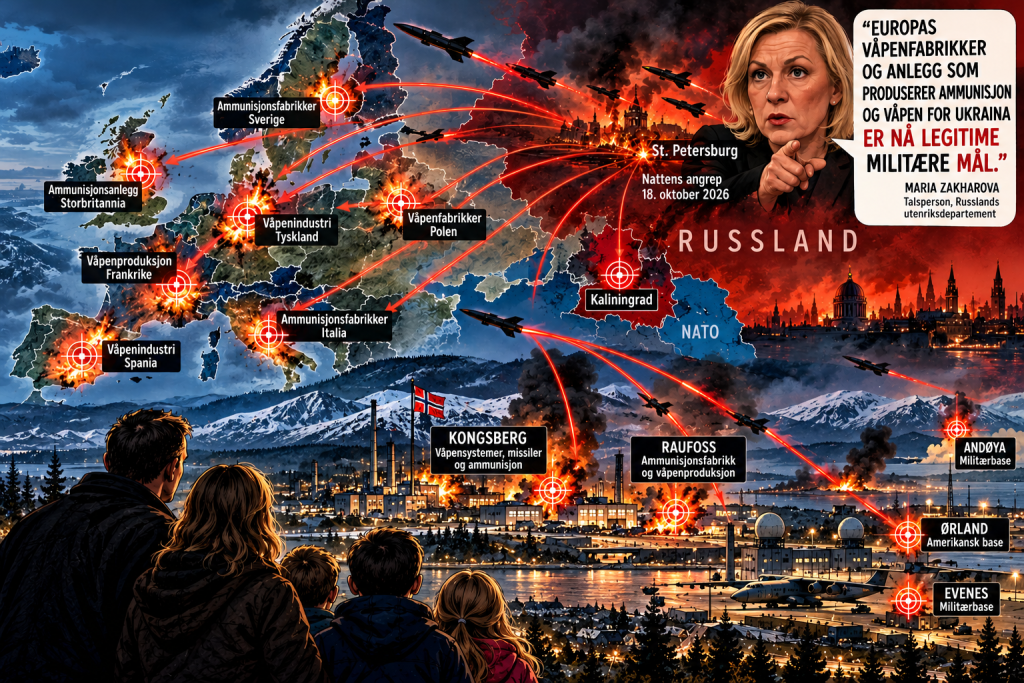
Zelensky is now sending envoys to all European capitals demanding that they transfer their remaining Patriot interceptors to Ukraine. European governments are increasingly reluctant to comply – at a time when they are simultaneously being warned by intelligence circles of a possible Russian missile attack on Europe, it is hard to argue for giving away the only air defence missile they have. It is a paradox of historic proportions: the West cannot protect Ukraine against ballistic missiles – and is on the verge of being unable to protect itself either.
76th Guards Airborne: Dobropillia is falling
On Thursday the Kremlin made an unusual move: it published a fully transcribed conversation between Vladimir Putin and Colonel Shikabidov, commanding officer of Russia’s 76th Guards Airborne Division. It is not unusual for Putin to call frontline commanders directly – it is well known that he does so right down to company level to obtain information that corroborates what the General Staff tells him. What was unusual is that the Kremlin this time published the conversation in full.
And the 76th Guards Airborne Division is not located where one might expect. It is not in the Zaporizhzhia region under Teplinsky, but in the Dobropillia sector – west of the Sloviansk conurbation. Shikabidov told Putin that since its transfer from Kursk, the division had taken part in the capture of Pokrovsk and several villages, and that it is now engaged in the battle for Dobropillia from the south. He reported Ukrainian losses of 6,000 men, 14 tanks, 140 combat vehicles, 54 artillery pieces and 210 motor vehicles in this sector alone – and that 71 Ukrainian counterattacks had been repelled. He concluded that “everything is proceeding according to schedule, and the deadlines set are realistic”.
It is hard to read this conversation as anything other than preparing opinion for an imminent announcement: Dobropillia is about to fall. An attack from the south combined with pressure from the east puts the Ukrainian garrison in a pincer. And Dobropillia is not just any town – its fall opens open steppe westward towards the Dnipro, without fortified lines of any significance. That is the operational dimension Putin referred to when he recently said he too wants to advance faster.
The fall of Dobropillia could also potentially encircle tens of thousands of Ukrainian soldiers in the Sloviansk conurbation. The same dynamic we saw in Avdiivka and Pokrovsk – encirclement, logistical strangulation, chaotic collapse – is about to repeat itself on a far larger scale.
Orikhiv: Russian forces inside the eastern part of town
Ukrainian military commentators confirm that Russian forces have now reached the eastern edge of Orikhiv town itself – not just the villages in the conurbation around it, but the town centre. For months the Russian Defence Ministry has referred to “fighting in the Orikhiv conurbation”; now it is about fighting inside Orikhiv. It is a pattern we know: Russian terminology moves from “conurbation” to “streets” to “mopping-up operations” within weeks or days.
The drone offensive’s real accounts: one billion dollars a month for a hit rate of 1–2 percent
According to figures published by the independent Ukrainian online magazine Strana – now published from Europe – the Ukrainian-European drone offensive has cost around one billion dollars a month for fixed-wing drones alone. The hit rate for all drone types combined is estimated at between one and two percent of those launched. A night with 1,000 drones statistically results in about 10–20 successful hits. It is a cost picture that explains a lot: burning a Wildberries warehouse costs around 15–20 million dollars in drone production. A refinery strike that actually hits and disrupts Russian production costs about the same.
That is 15 percent of Ukraine’s total defence budget invested in a single offensive programme – which by all accounts has neither stopped Russian advances, destabilised the Russian economy nor pushed the Kremlin towards the negotiating table.
Europe’s worst energy winter in 18 years: the figures are unambiguous
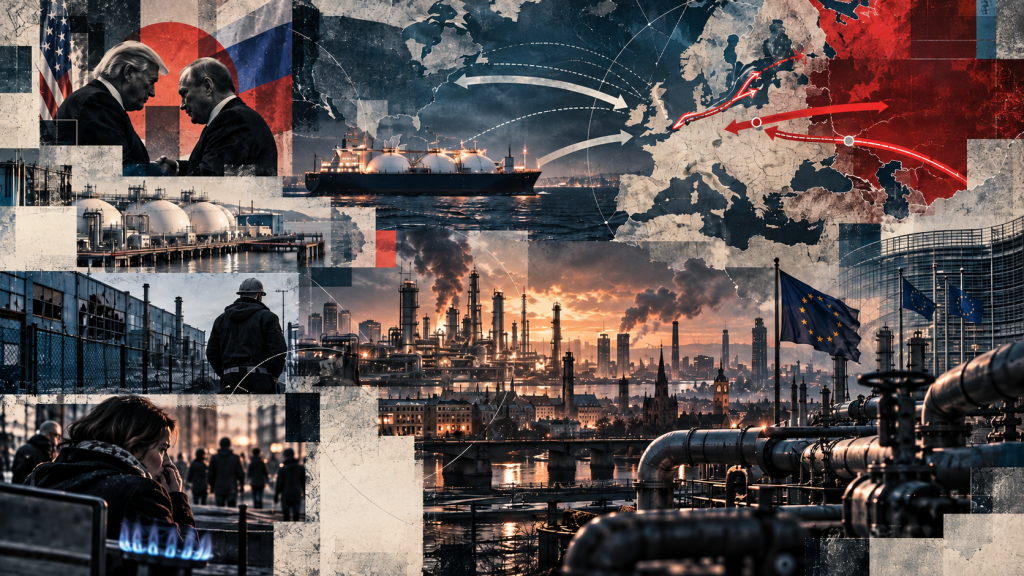
European gas storage was only 57.1 percent full at the start of August – the lowest level for this time of year since 2009, according to Bloomberg. Normally storage would be heading towards 75–80 percent at this point in the year. Germany is at around 47 percent, the Netherlands even lower, while Italy is relatively strong at 76 percent and Poland close to 85 percent. MacroMicro
The main driver is the high prices triggered by the war in the Middle East and the disruption linked to the Hormuz crisis. LNG from Qatar – which covered much of Europe’s import needs after Russian pipeline gas disappeared – has in practice been absent since the Strait of Hormuz closed. Extremely hot weather through June and July has also driven up electricity use for air conditioning across Europe, consuming gas that would normally have gone into storage. MacroMicro
It now requires sustained availability of LNG from alternative sources – the US, Algeria, Nigeria – which is not secured for the autumn season. The EU has relaxed its statutory storage target from 90 to 80 percent by 1 November, which in itself is an admission that the original target is unattainable. Even if the Strait of Hormuz were to open tomorrow, Europe would go into the winter with gas storage far below what is needed to meet an average cold year – let alone a cold one.
Merz is losing control
Confidence in the Merz government among German voters is now down to 13 percent – a historic low for a sitting German government. According to the polls, large majorities want a new chancellor. And within the CDU, discussions are now circulating that would have been unthinkable a year ago: whether the party should demand that Merz step down as chancellor as early as next week – before the state elections in Mecklenburg and Saxony in September – because the political and economic situation in the country has become too serious to wait.
It is not only the CDU. Vice-Chancellor and SPD leader Lars Klingbeil is demanding that AfD be banned and prevented from standing in the coming election. In Italy, General Vannacci – an eccentric figure to the right of Meloni – is rising rapidly in the polls on a platform that includes distancing Italy from support for Ukraine. Giuseppe Conte’s Five Star Movement is doing the same from the left. In France, Marine Le Pen is still leading towards the presidential election. It is a pattern: the harder the energy crisis bites, the more political pressure consolidates around parties and movements that question the war.
Estonia plans national evacuation: a picture of collective disorientation
A final, striking example of what four and a half years of sustained apocalyptic war rhetoric has done to European political culture: Estonian authorities confirm they are actively planning for mass evacuation of the population in the event of a Russian invasion. Ten northern European countries – including Estonia, Latvia, Lithuania, Finland, Sweden, Denmark, Norway and Poland – have signed a memorandum on coordinated cross-border evacuation of civilians in crisis or war. According to reports, the plans include destroying cities and infrastructure to prevent them falling intact into Russian hands, and the population is expected to flee to Finland.
It is a plan which, if carried out, would mean the permanent erasure of Estonia as a populated nation – since history offers no guarantee that a fully evacuated population ever returns. For a small people, that is the worst possible outcome. That this is presented as preparedness rather than as a catastrophe worth preventing through diplomacy tells us something fundamental about the state of the European political class right now.