
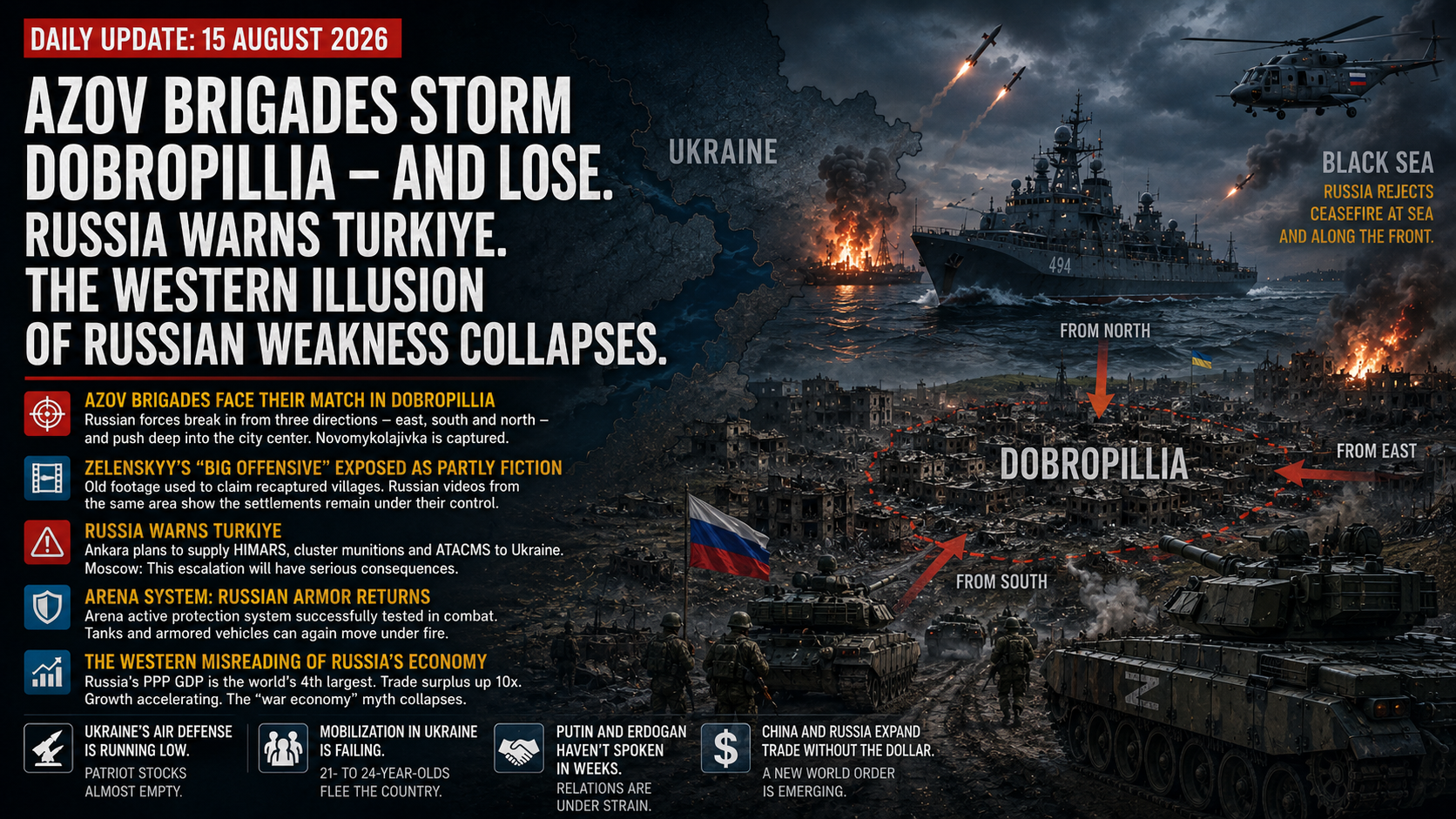
Azov brigades meet their match in Dobropillia
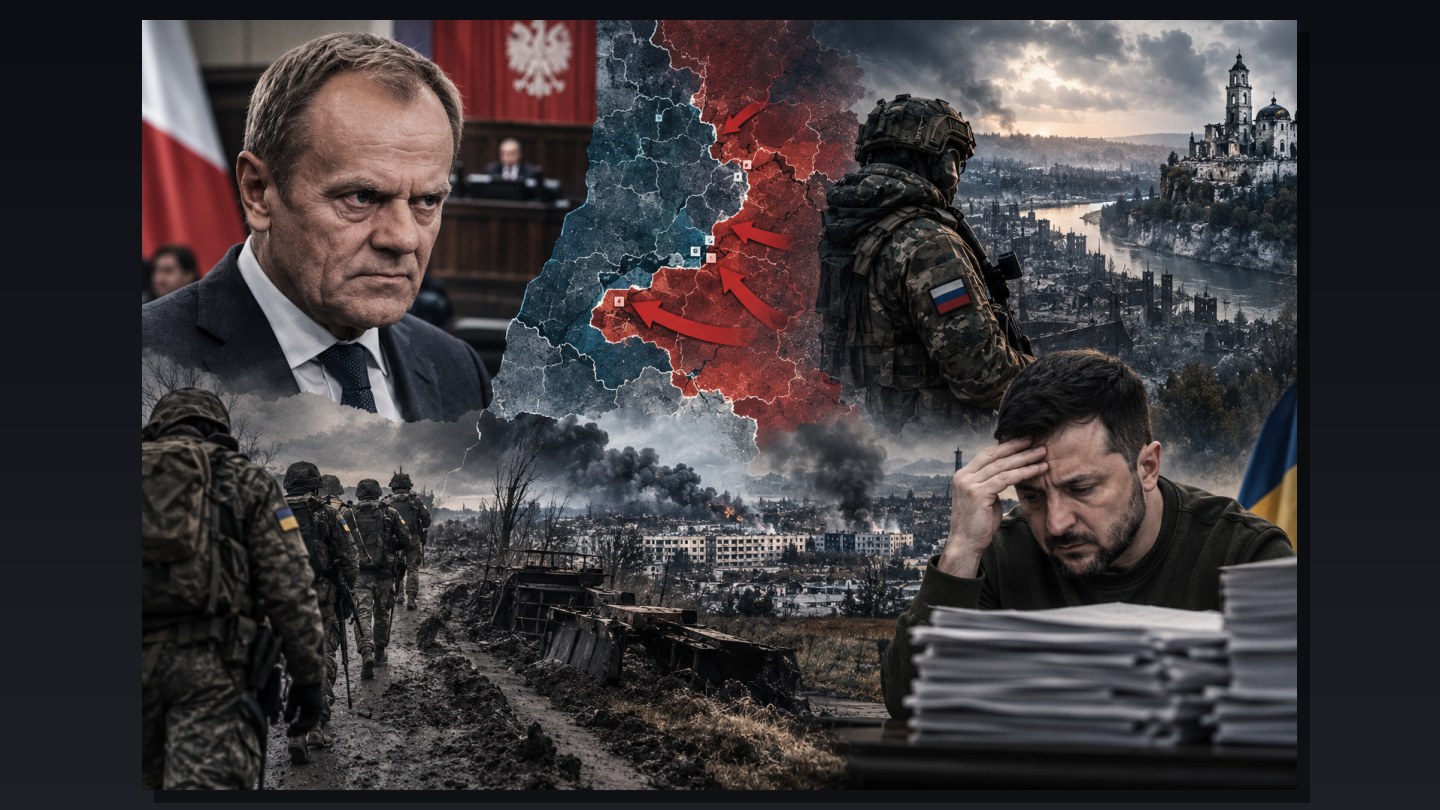
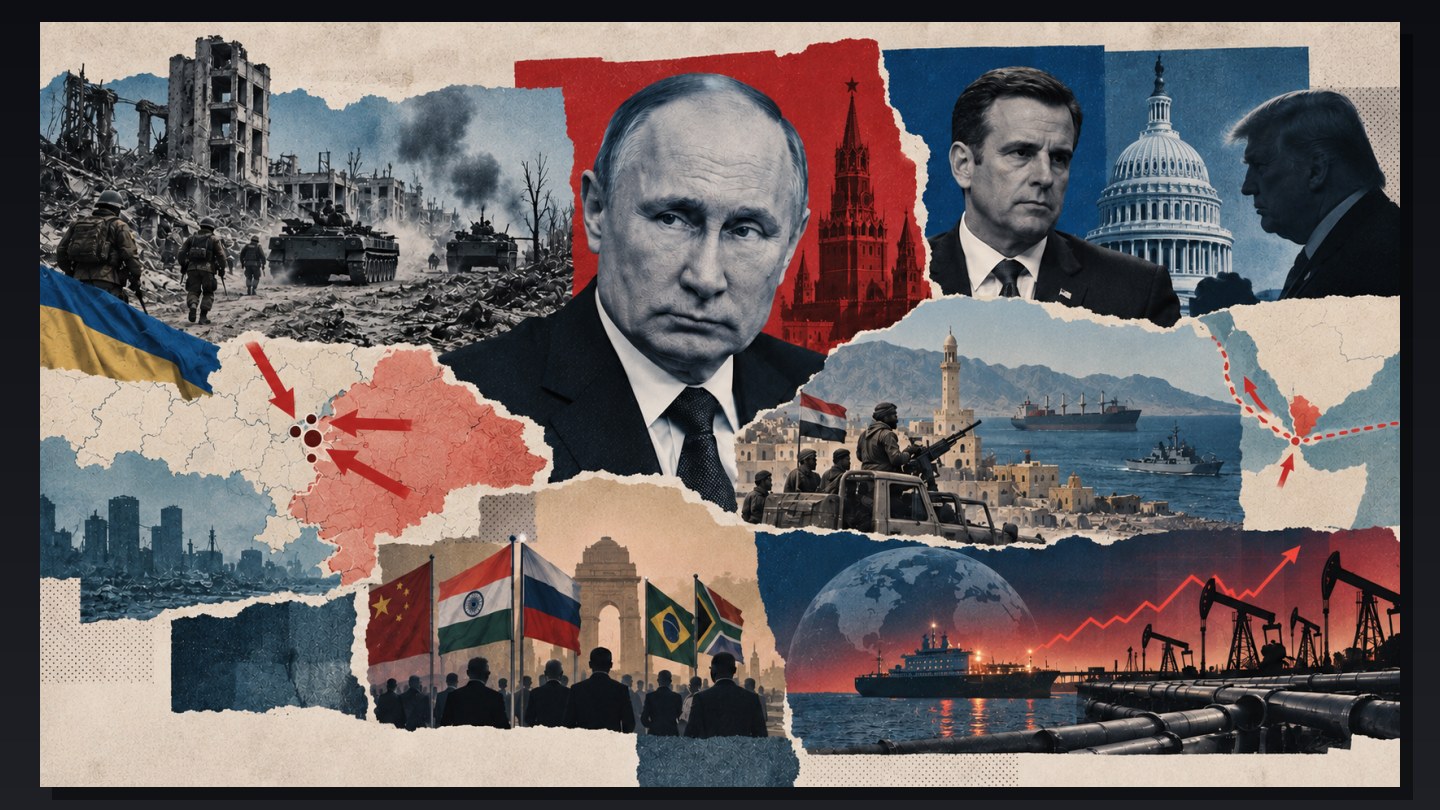
Russian forces have broken into Dobropillia from three directions — east, south and north — and are now pushing deep into the city center. What is remarkable is who is defending the city: Ukraine’s two Azov brigades, presented in Ukrainian media as among the country’s best-equipped and most highly motivated formations. Azov soldiers are strongly ideologically motivated, they have better access to recruits than the average Ukrainian brigade, and they have distinguished themselves through impressive drone operations in exercises with Western forces.
Yet they are losing in Dobropillia. Russian forces have crossed the T-0515 supply road into the city and split its southern section in two. Novomykolaivka, a village immediately southwest of Dobropillia, has officially been taken. According to Russian military analysts, the goal is to control around 80 percent of Dobropillia by the time Russia holds its elections in September.
Part of the explanation lies in the Russian command structure. General Ivan — a highly experienced combat commander with a background in Group East, who led the forces that took Kurakhove, Vuhledar and the advances toward Zaporizhzhia — has now been given overall command of Groups Center and South. He is the man coordinating the battles for Dobropillia, Dujivka and Aleksijivka simultaneously. It is probably this combination — an experienced, aggressive commander facing ideologically motivated but tactically inferior opponents — that explains why Azov is failing to hold.
Azov’s senior commanders are not officers who came up through conventional military education. They learned war from the bottom up and largely on their own. That has advantages in drone operations and asymmetric warfare. It is probably a structural disadvantage when facing experienced Russian professional military officers in conventional urban combat and maneuver warfare.
Zelensky’s “major offensive” exposed as partly fictional
A few days ago, Zelensky announced a significant Ukrainian offensive in the northern Zaporizhzhia region — accompanied by videos of Ukrainian soldiers raising flags in a number of villages they had supposedly recaptured. Some who analyzed the videos concluded that several of the clips were old — at least one allegedly dating back to November 2025. The Ukrainian frontline blogger Muchnoi Yugand, whom we have mentioned in previous updates, rejected the story of a major Ukrainian victory and described the villages in question as “contested” — meaning still under Russian control.
The Russians then produced their own lengthy video series from exactly the same area, showing Russian soldiers raising flags in a number of the same villages. The Russian videos appear to show contemporary footage. Taken together, this suggests that the Ukrainian narrative of a successful counteroffensive in the area appears, to a considerable degree, to have been constructed — just as we have repeatedly seen throughout the war.
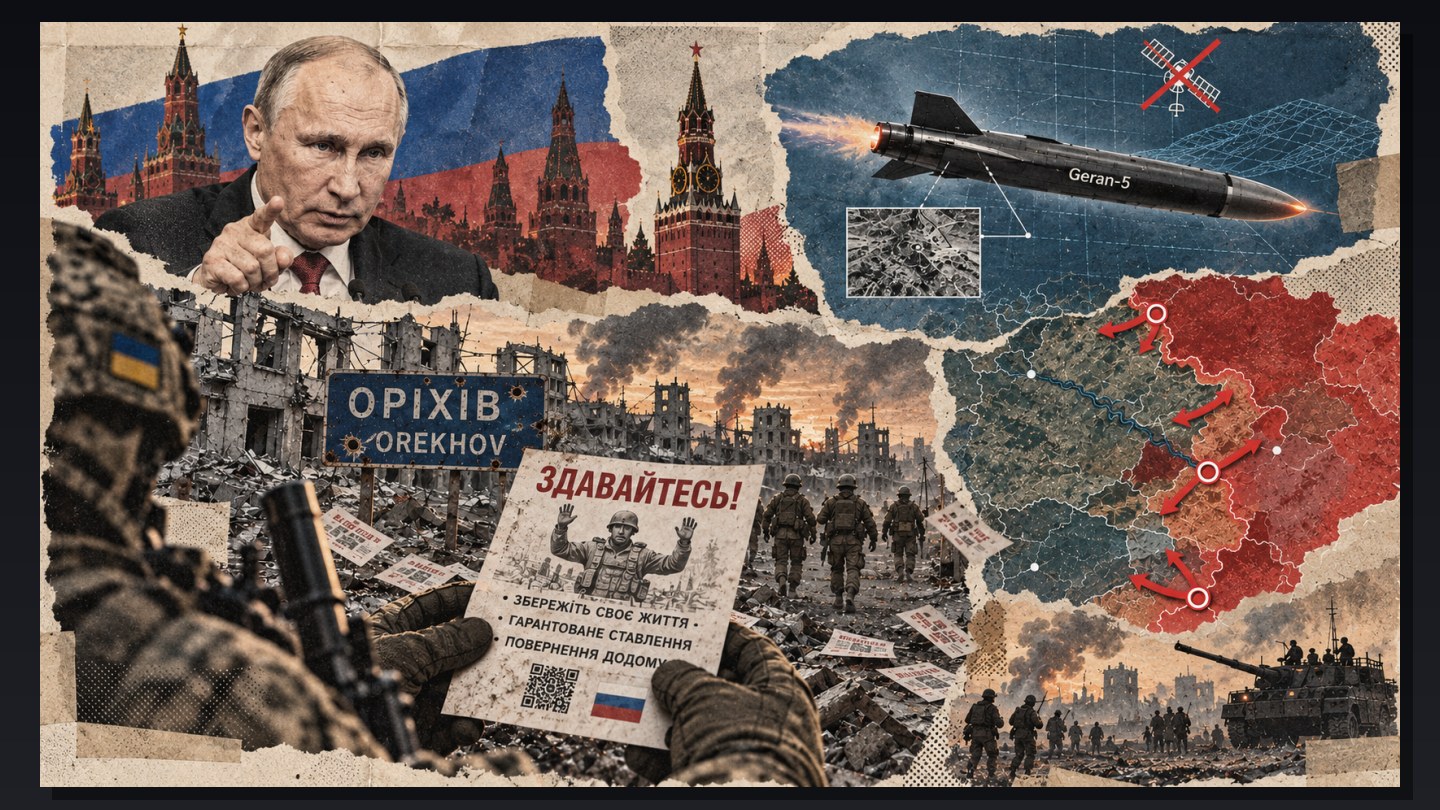
The Financial Times, one of the war’s most enthusiastic Western advocates, published a lengthy article this week on Ukraine’s acute air-defense shortage — and admitted that it “puts at risk the Ukrainian momentum of recent months.” It is a peculiar formulation, because there has been no Ukrainian momentum in recent months: Kostiantynivka is lost, Lyman is lost, Orikhiv is encircled, Kharkiv is threatened from three directions and Dobropillia is under assault. The Financial Times is still living in a parallel reality, but it is beginning to glimpse the outline of the actual one.
Russia warns Turkey — and it may mean more than words
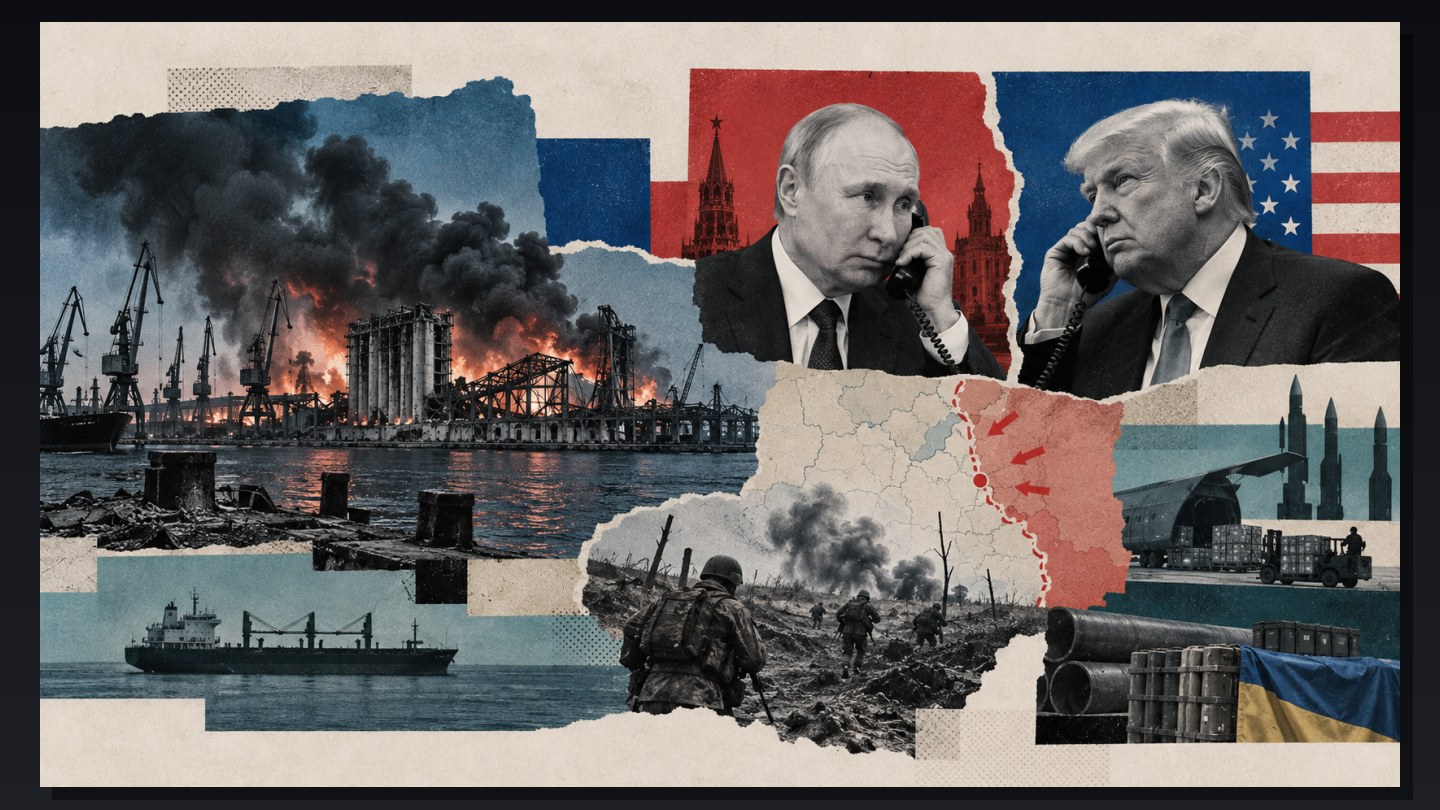
Russia’s Foreign Ministry sent a sharp note to the American and Turkish governments on Friday after it emerged through the US Congress that Turkey plans to transfer to Ukraine: 12 HIMARS rocket artillery systems, 47,000 203 mm cluster-munition rounds and 70 ATACMS tactical ballistic missiles. The Russian Foreign Ministry characterized the delivery as an escalation that “will not change the course of the war, but will seriously damage bilateral relations.”
The message is more than diplomatic prose. Russia is specifically pointing to what Moscow regards as Turkey’s systematic deception: Erdogan has repeatedly assured Putin that Turkey is not supplying lethal military equipment to Ukraine — while allegedly doing so surreptitiously through the Black Sea under cover of grain trade. Now the concealment has been blown. Russia is signaling that it is prepared to retaliate on all fronts — including by targeting the Turkish tourism industry and food imports, as it did after the downing of the Russian aircraft in 2015.
The fact that Putin and Erdogan have not spoken to each other for an unusually long time — whereas they were previously in almost weekly contact — is itself a telling sign. Relations between the two countries are under serious strain, and the credibility of Turkey’s ambitions to act as a mediator is rapidly eroding in Moscow.
The Arena system: Russian armor returns
One important military-industrial development from the past week deserves far more attention than it has received: the Russian army is reportedly beginning to deploy the Arena active protection system on its tanks on a larger scale, after the system was successfully combat-tested by General Ivan’s forces in the Dobropillia sector.
Arena is designed to detect and destroy incoming anti-tank missiles and FPV drones using explosive counter-projectiles. If Russian armored forces can regain a degree of relative protection against drones through Arena — much as they possessed a degree of protection in 2022 before Ukrainian drone warfare scaled up — it would mean that Russian tanks and armored vehicles could once again be used in rapid mechanized movement.
That kind of movement will become decisive once the fortified cities of Donbas fall and the open steppe terrain to the west begins to open up.
The Western misunderstanding of Russia’s economy
The August 15 program devotes considerable time to dismantling what has become a long-standing Western misconception: that Russia is running an overstretched “war economy” on the verge of collapse. Russia’s GDP in purchasing-power-parity terms is the fourth largest in the world — clearly ahead of Germany, France, Japan and the United Kingdom. Defense and security expenditures stand at around 6–7 percent of GDP — significantly lower than US defense spending during the Vietnam War. The budget deficit is around 2.5 percent of GDP — hardly problematic for a state with Russia’s energy revenues.
Russia’s current-account surplus in the second quarter of 2026 was $21 billion — ten times higher than in the same quarter of 2025, driven by higher oil prices. GDP growth is 1.3 percent and accelerating. That is not the picture of an economy breaking down. It is the picture of an economy growing while fighting a war.
The Western belief that Russia is “a gas station pretending to be a country” — with a GDP comparable to Spain or the Netherlands — has been repeatedly disproven by reality since 2022. What is disturbing is that this realization has not produced a fundamental reassessment of Western strategy.
Instead, every piece of evidence pointing to Russian success has been explained away through the “war economy” argument — the idea that Russia is a second-rate country driving itself into the ground. It is a belief that makes it possible to preserve all the political assumptions made in 2022, regardless of what reality demonstrates.
The Jerusalem Post article reporting that Israel is “astonished by the speed” at which Iran is rebuilding its ballistic-missile arsenal — producing more missiles than it is firing — is another example of the same pattern: underestimating an opponent’s industrial capacity as a result of an arrogance that demands the world conform to the Western worldview rather than the other way around.
The artillery scandal: $500 million — and not a single shell
A central industrial-policy point deserves mention in passing: the half-billion-dollar factory built by General Dynamics to produce 155 mm artillery ammunition using imported robots and machinery from Turkey has, two years after its original opening date, still not produced a single functional artillery shell.
Problems reportedly include machine steel, explosive-filling equipment and the production process itself. This has been widely reported in the American press. Western defense-industrial capacity is not merely insufficiently scaled for a prolonged war of attrition — in many cases, it is not even capable of delivering what it promises.
The overall picture as of August 15, 2026
The Azov brigades, Ukraine’s best forces, are losing in Dobropillia. Turkey is in the process of losing its role as a neutral mediator between Russia and Ukraine. Western air-defense capacity is depleted. Western artillery capacity is far below what is required. Russia’s economy is growing. Russia’s defense-industrial capacity is expanding. And virtually all diplomatic channels are closed.
It is Saturday, August 15, 2026. The war has entered its decisive phase.
And the West has no answer.




Se og hør mer
Videoer, klipp og innslag knyttet til temaet.