The Major Strike
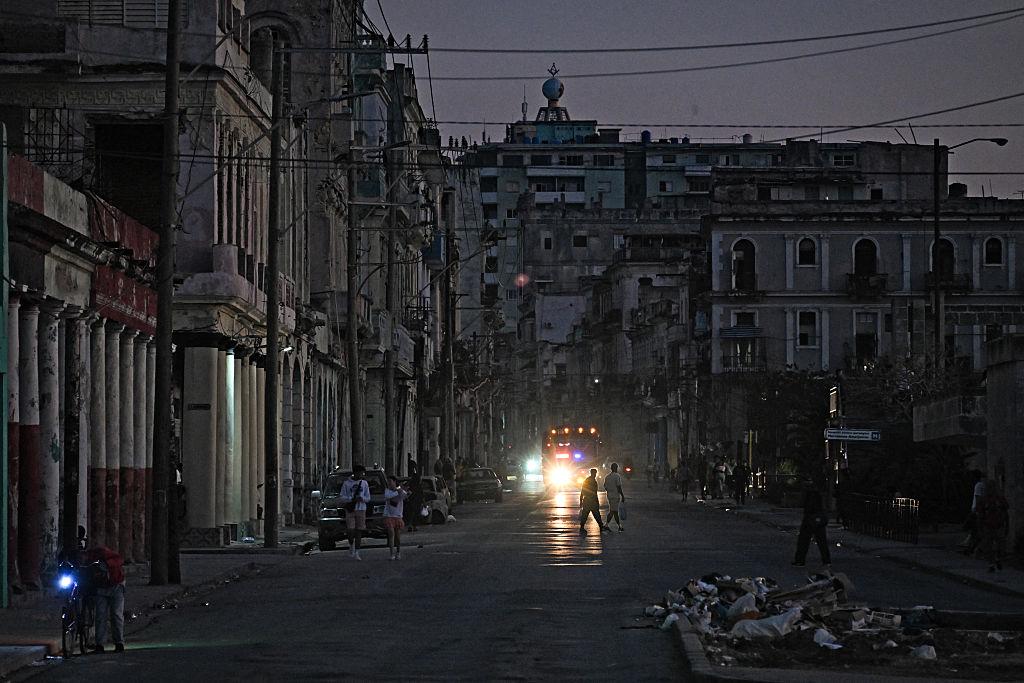
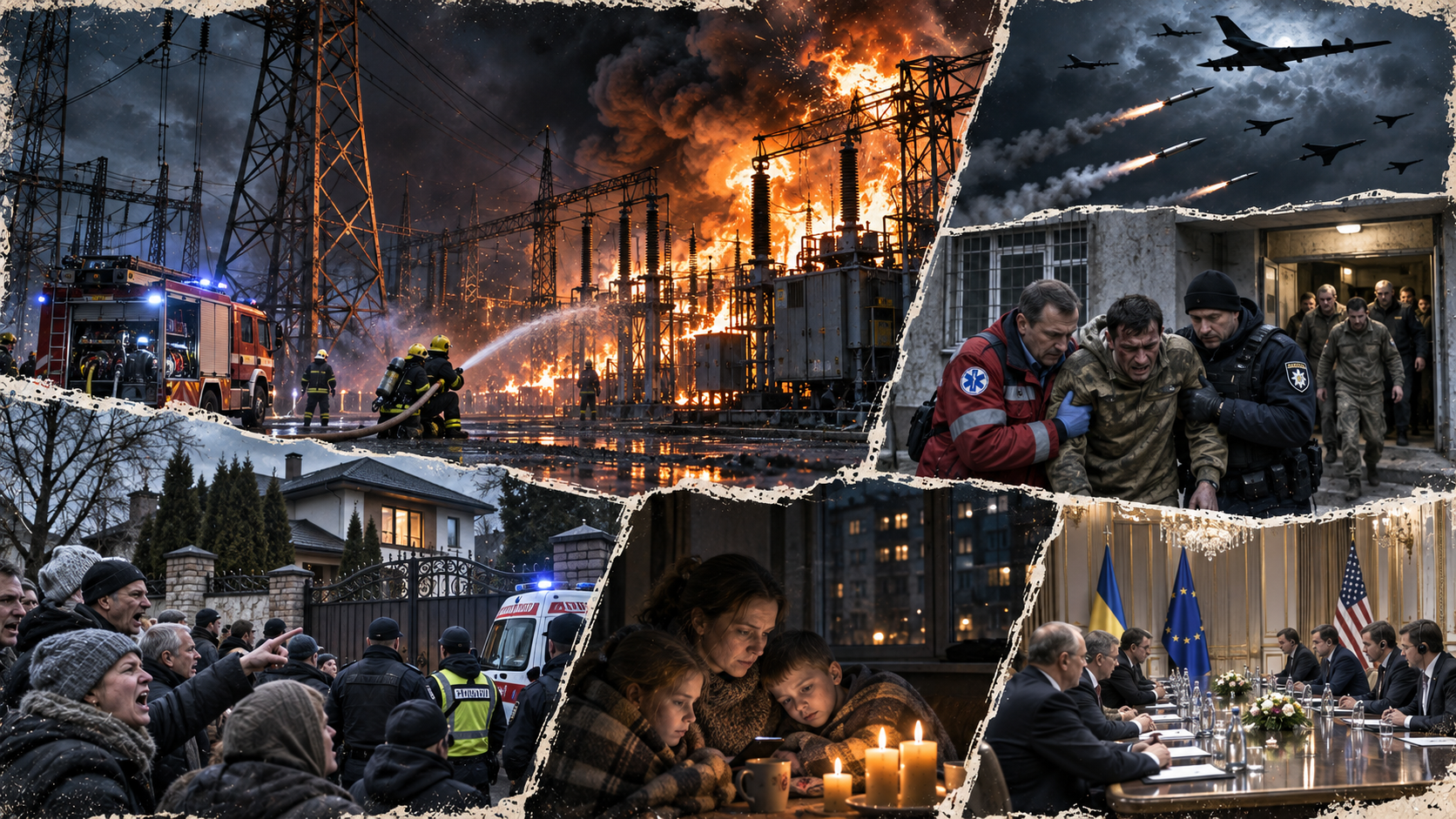
The massive missile attack that had been anticipated for several days came overnight, and may have been one of the largest single missile strikes Russia has carried out during the entire war. It was also one of the heaviest attacks on Ukraine’s energy system, causing serious damage whose effects are likely to become more severe as winter approaches. While the attack was under way, Volodymyr Zelensky was in Berlin meeting Chancellor Friedrich Merz, after previously meeting Erdoğan in Istanbul. The preceding days had already seen several very large drone waves, and a combined figure of around 1,400 drones has circulated, although that cannot be confirmed from the official Ukrainian figures.
The Russian Defence Ministry has released only a partial list of targets and has not stated the number or types of missiles used. Claims are circulating that as many as 70 heavy missiles were launched, including Iskander, Zircon and Kh-101 missiles, while some estimates put the figure at 100 or more. That does not include lighter Banderol and Dan-T missiles, which are rarely counted, as well as reports of Onyx missiles. The true number remains unclear. Fighter-bombers used glide bombs against some targets, while drones, cruise missiles launched from strategic bombers, ballistic missiles and hypersonic weapons were coordinated across an enormous area. Ukrainian air defences were placed under extreme pressure.
Power Plants, Bridges and Police Headquarters
According to the Russian Defence Ministry, the targets included the Ladyzhyn power plant in the Vinnytsia region, with a capacity of 1,800 megawatts, the Kryvyi Rih plant at 2,800 megawatts, and Prydniprovska at 1,765 megawatts in the Dnipropetrovsk region, as well as the Kharkiv power plant and several substations.
The list is not complete. The enormous substation west of Kyiv, protected by concrete shells, is also reported to have been hit. Prydniprovska appears to have suffered massive damage after repeated strikes by Iskander-M and Kh-101 missiles. Ukrainian authorities are making considerable efforts to prevent images of the damage from circulating.
The bridge at Zatoka, southwest of Odesa, was struck again after repeated attacks in September caused enormous traffic queues on the road towards Romania and the EU. According to SouthFront, 18 missiles and bombs were used against it within half an hour, and if most of them hit, the bridge may have been put out of service.
There are no reports indicating that the bridges across the Dnipro were struck, but the city of Dnipro came under heavy attack. Police headquarters suffered serious damage, and Russian sources claim it was hit by a Kh-101.
Weapons That Continue to Evolve
Ukrainian experts have recorded Geran-5 drones reaching speeds of up to 1,000 kilometres per hour during certain manoeuvres. At that point, the weapon has crossed the boundary between a drone and a cruise missile. It is probably controlled either through the Rassvet satellite system or directly from Russia, and can reach anywhere in Ukraine.
According to the engineer, it is already beyond anything Ukraine is developing, since the new jet-powered interceptor drones are designed for targets travelling at around 500 kilometres per hour.
At the same time, the air-launched hypersonic missile and the Oreshnik have both been absent for several months. Rumours suggest that between 12 and 20 Oreshnik missiles are being produced each month, and it is probably only a matter of time before both systems are used again.
There is also growing speculation about another major strike on Kyiv. If the bridges across the Dnipro are taken out of service, the logistics supporting Ukrainian forces in the east would change dramatically.
The Front: Silence That May Conceal Major Changes
The rasputitsa has been used to explain the limited reporting from the front, but according to Stanislav Krapivnik there has been no real rasputitsa this year, and October was unusually dry.
The explanation may instead be military. The Russian Defence Ministry may simply be withholding information about sensitive operations.
Rybar reports advances north of Dobropillia and fighting around Druzhkivka, but the most important developments are probably taking place in the Zaporizhzhia region around Orikhiv, in the Lyman sector, and near Velykyi Burluk.
Ukrainian reinforcements are said to have been sent to Orikhiv after Omelnyk fell, and a counterattack to retake the settlement may already be under way. Even if it succeeds, the Russians are likely to respond, Omelnyk could fall again, and the trap around Ukrainian forces in northern Orikhiv could close for good.
Around Lyman, Biletsky’s 3rd Azov Corps has been withdrawn, and Russian forces are once again on the offensive, including east of Sloviansk.
In the Kharkiv region, they are probably pressing towards Velykyi Burluk, while renewed fighting is reported around the high-ground settlement of Lyptsi north of Kharkiv. If it falls, Russian drone operators and artillery could gain much better coverage over Kharkiv itself.
Public figures put the strength of Group North at only 50,000 troops, a number that appears impossibly low for so many simultaneous operations. There are signs that major changes in the Kharkiv region and northern Donbas may become apparent next week.
Azov, Detention Sites and a Power Struggle
Ben Aris argues that Russia has overtaken the United States in weapons production because the money is being spent on systems suited to modern warfare: the Geran-5 costs a fraction of an American Reaper, hypersonic missiles are being mass-produced, and high explosives are produced in far greater quantities.
Aris argues that once one side achieves this kind of industrial superiority, the war enters its final phase, comparing the situation to the Allied air offensive against Germany in the autumn of 1944.
There are reports that parts of the Azov forces have been withdrawn from some sectors of the eastern front. According to Krapivnik, the Ukrainian offensive from Sloviansk was a catastrophic mistake, and Biletsky, who is a politician without command experience, has pulled himself and the 3rd Corps away so that any collapse cannot be associated with him. The 12th Azov Brigade, previously under Prokopenko, also appears to have disappeared. They are probably in Kyiv, because they will not want to be trapped on the eastern bank if the bridges are closed.
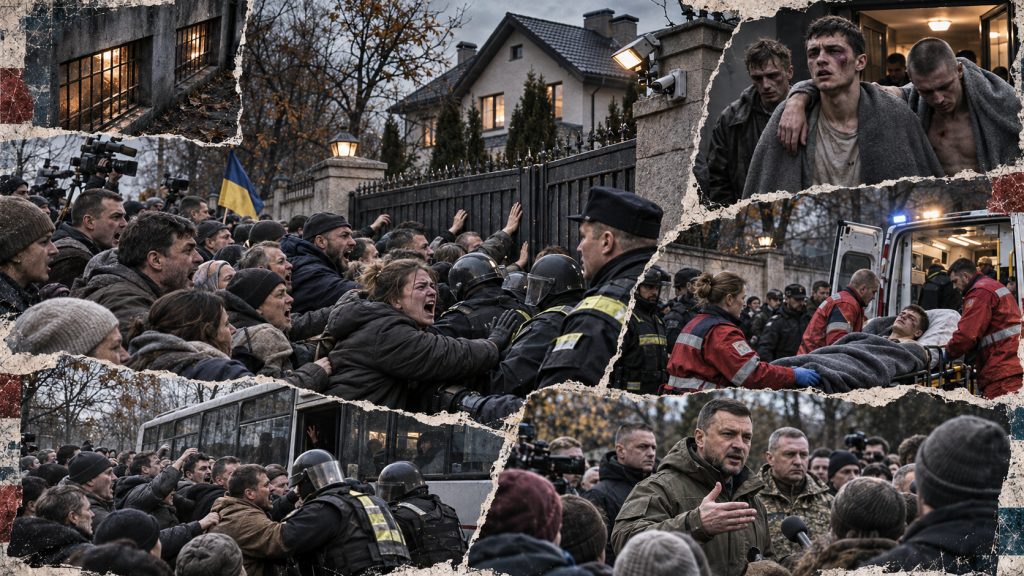
In a western suburb of Kyiv, residents became suspicious about what was happening in the basement of a house and encountered Azov guards from the National Guard. Police arrived to prevent clashes with a growing and increasingly angry crowd.
Chief of Staff Kyrylo Budanov then came to the site, and the basement turned out to be a detention facility. He began speaking Russian and acknowledged that there are probably several such sites.
That means he has known about them without taking action. The detainees are described as deserters or draft evaders, but they are citizens with constitutional rights, and the detention appears plainly unlawful.
Russian media report that Biletsky is building an Azov veterans’ organisation as a loyal nationwide cadre. If those claims are true, Azov would increasingly resemble a state within the state, complete with secret prisons.
The tip that triggered the protest is unlikely to have come from outside the political system, suggesting that a power struggle is probably under way. Budanov is defending Azov and describes its critics as servants of Russia.
Since the government and parliament are located on the western bank, Azov could retain political influence in Kyiv even if the bridges are closed.
Hackers, the Abu Dhabi Talks and Iran
False warnings about massive attacks and nuclear weapons circulated in both countries on Monday, and the emergency authorities in both Russia and Ukraine said they had been hacked. Ukraine has acknowledged that it hacked the Russian ministry. Who was behind the warnings in Ukraine remains unclear, and pressure in Kyiv is probably increasing.
Russia is sending a delegation to the US-led talks in Abu Dhabi on 10 and 11 November, with Vladimir Medinsky heading the delegation. The meeting will last two days, and Vladimir Medinsky will lead the Russian delegation.
In previous negotiations, Medinsky has said that Ukraine could lose additional regions if the war continues, and has cited the 21-year Great Northern War as an example of Russia’s capacity to sustain a long war. He has been central to Russian-Ukrainian negotiations since 2022 and has detailed knowledge of the previous negotiation tracks.
Sergei Lavrov has said that the West’s plan to inflict a strategic defeat on Russia has failed, that the United States is gradually moving forces eastward without leaving NATO, and that a settlement in Ukraine on what Moscow calls a “just basis” is a prerequisite for a new security architecture — something that will not emerge in Abu Dhabi.
He also referred to the tip from US intelligence about a planned terrorist attack at the Tsaritsyno Museum-Reserve in Moscow, where a teenager was detained.
Nor is it certain that the meeting will take place at all. Tucker Carlson claims that Donald Trump is considering the use of nuclear weapons against Iran’s Pickaxe Mountain. The claim is unconfirmed, and Carlson also says that Witkoff and Vance are arguing for diplomacy.
If fighting in the Middle East flares up again during the next ten days, the meeting could be moved, perhaps to East Asia or Turkey, although the Russians were not pleased that Erdoğan sided with Zelensky in the Black Sea dispute.
In any case, the negotiations do not appear likely to produce much, while Russian strikes are intensifying sharply.